Artwork
Cupid and Psyche
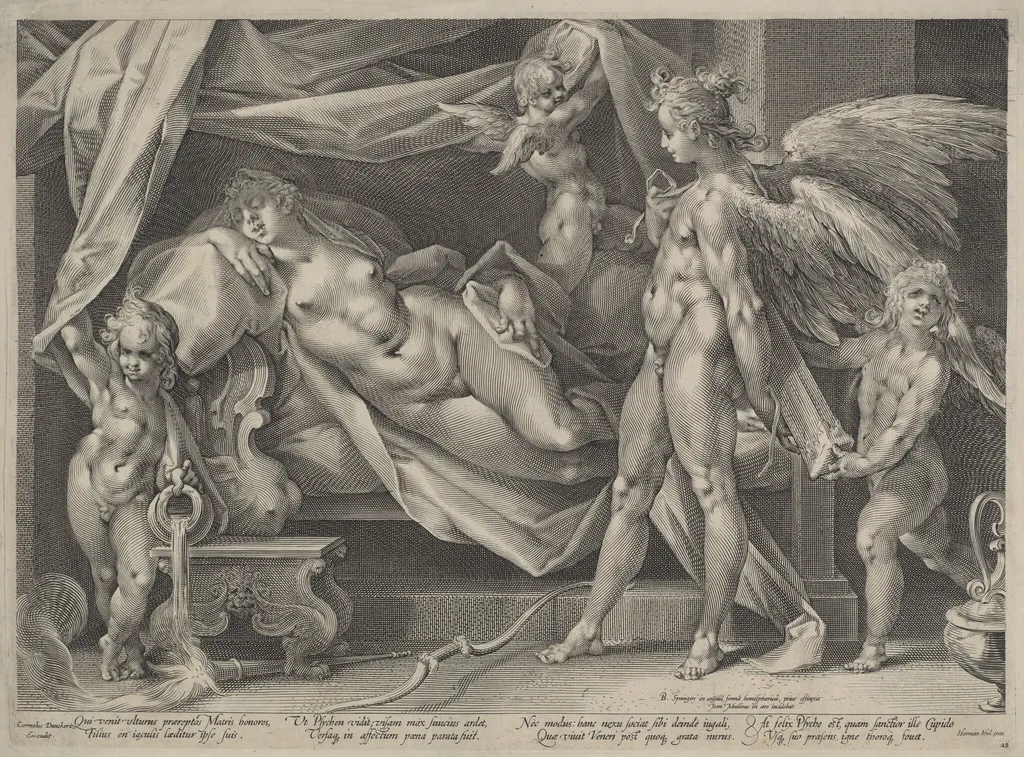
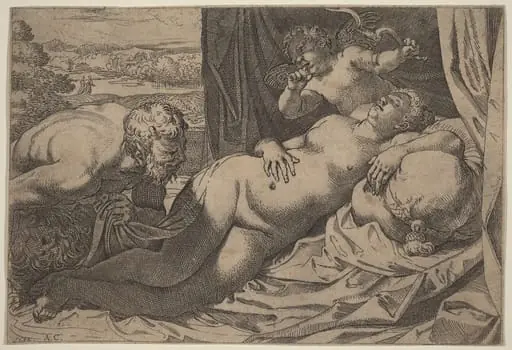
Cupid and Psyche is an ink print by the Renaissance artist Jan Muller. It dates from 1600 and is held in the collection of the National Gallery of Art.
- Inscription
- Inscribed:in image, at bottom right: B. Sprangers in argillâ, formâ hemisphaericâ, pruis effinxit / Joan: Mullerus in aere incidebat.; below image: Qui venit ulturus praereptos Matris honores / Filuis en iaculis laeditur ipse suis. / Ut Psychen vidit, visam mox saucius ardet, / versaque in affectum paena parata fuit. / Nèc modus: hanc nexu sociat sibi deindè iugali, / Quae viuit Veneri post quoque grata nurus. / At felix Psyche est, quam sanctior ille Cupido / Usque suo praesens igne thoroque fouet.; below image, at left: Cornelus Danckert / Excudit; below image, at right: Harman Mul. excu. / 28
About this work
Overview
Cupid and Psyche is an engraving on laid paper created by Jan Harmensz. Muller around 1600. The work is a representation of a scene from classical mythology.
Subject & Meaning
The engraving depicts Cupid, the winged love god, and Psyche, a woman with butterfly wings, in a tender moment. The scene is characterized by its quiet intimacy, with the two figures engaged in a soft kiss.
Technique & Style
Muller employed cross-hatching to achieve a range of tonal values and textures in the engraving. The technique involves layering fine parallel lines to create shadows and depth, giving the folds of the figures' clothing a fabric-like quality.
History & Provenance
Jan Harmensz. Muller was a Dutch engraver and painter born in Amsterdam in 1571. He trained in his family's printing business and later traveled to Italy before returning to Amsterdam, where he inherited the family business and died in 1628.
Own this work as a print
Artist & collection

Artist
Jan Harmensz. Muller (1571–1628) was a Dutch engraver and painter. Muller was born in Amsterdam. His father was a book printer, engraver and publisher. He learned the engraving trade while working in the family…

 The Loves of Mars and Venus
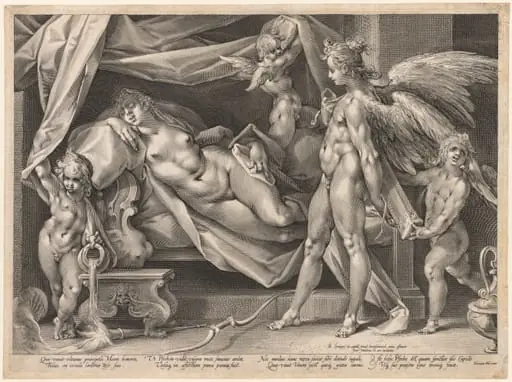 Cupid and Psyche
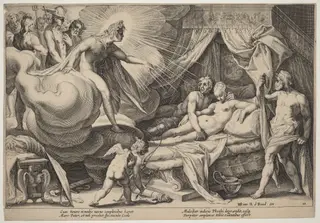 Mars and Venus Surprised
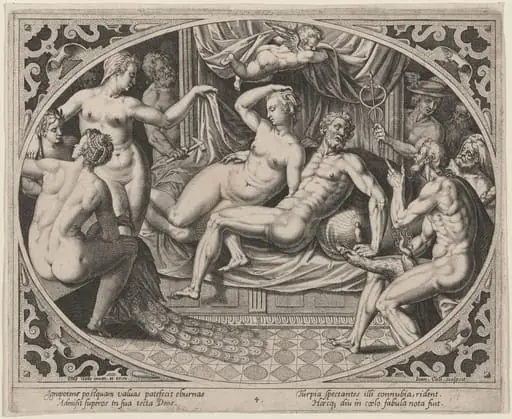 Mars and Venus Caught by the Gods
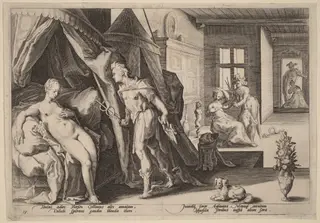 Mercury Entering Herse's Room after Changing Agraulos to Stone
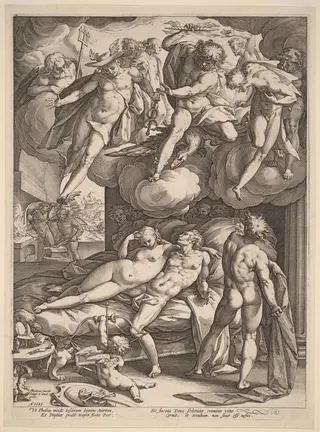 Mars and Venus Surprised by Vulcan
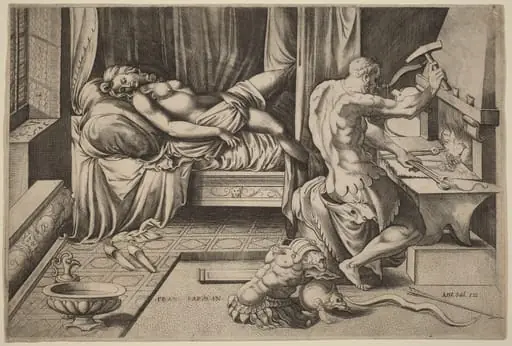 Venus Reclining with Vulcan at His Forge
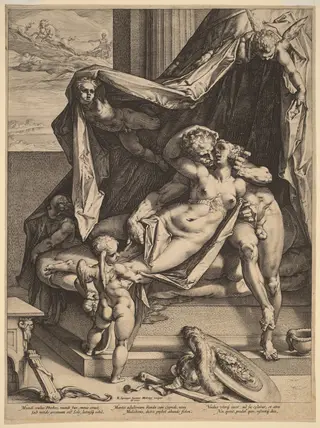 Mars and Venus
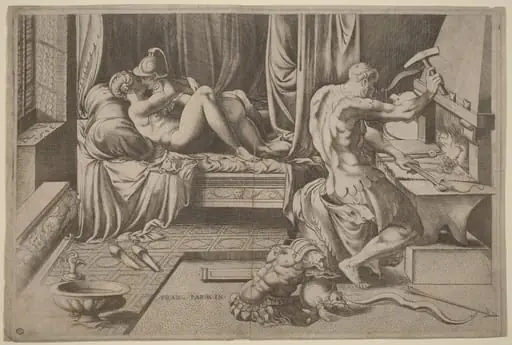 Venus and Mars Embracing with Vulcan at his Forge
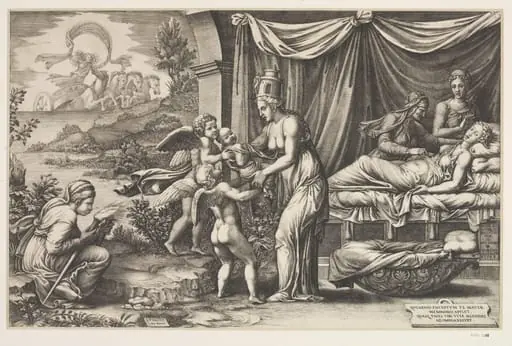 Birth of Memnon
 Venus and a Satyr
- Cupid and Psyche