Artwork
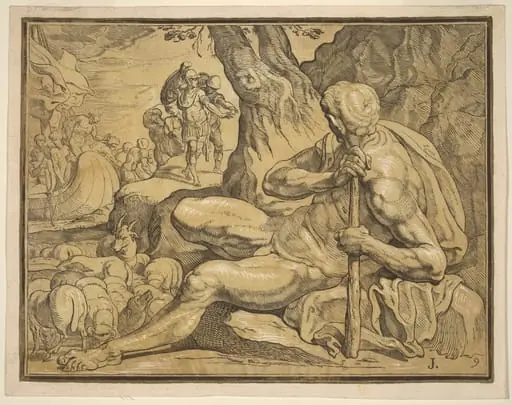
The Fight between Ulysses and Irus
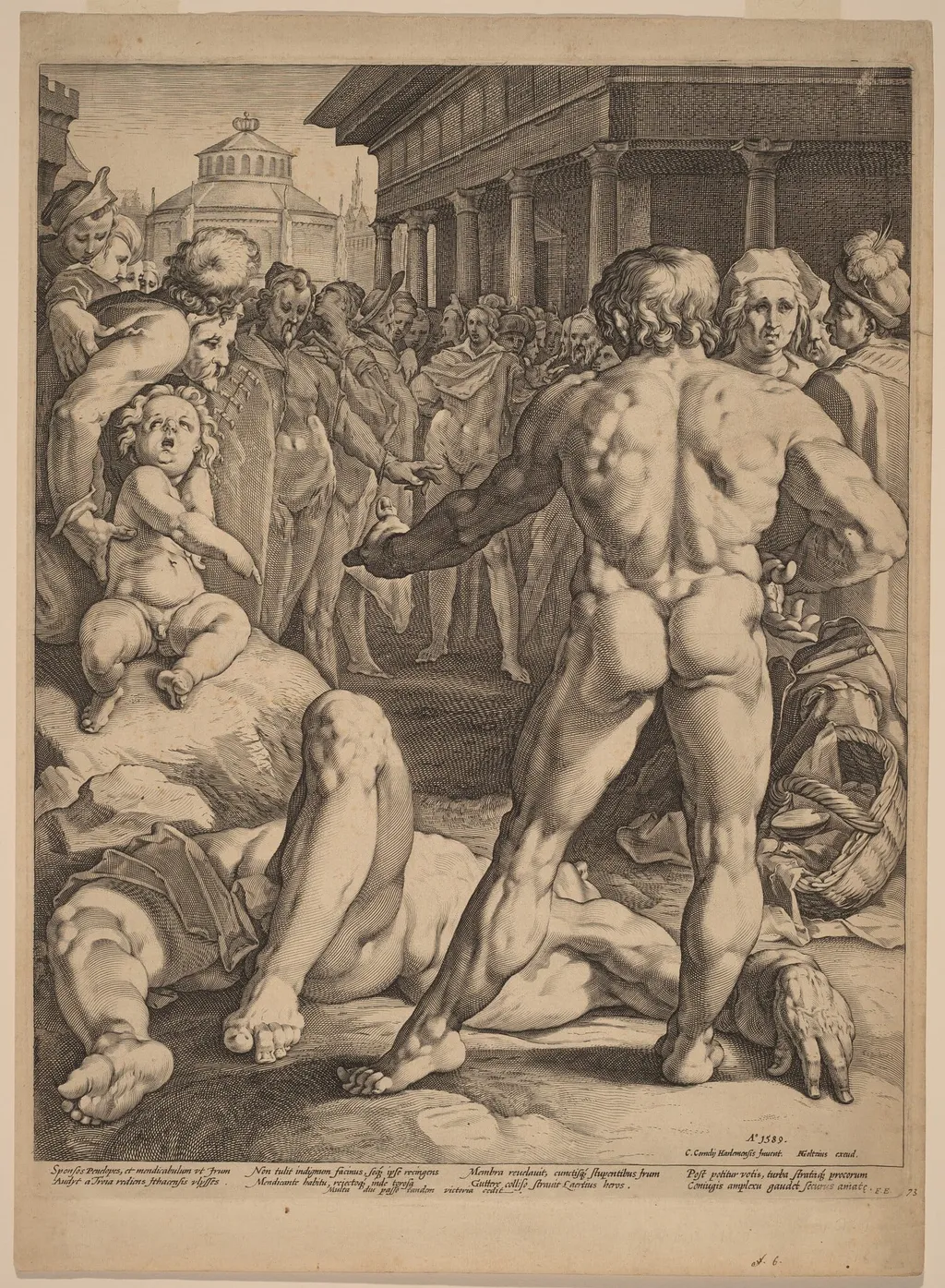
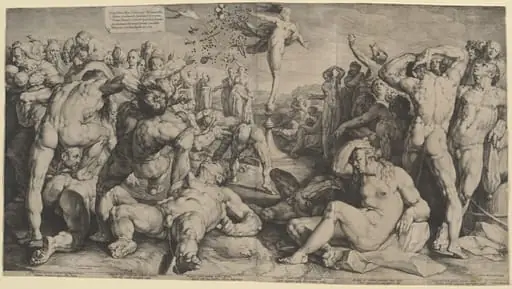
The Fight between Ulysses and Irus is an ink print by the Renaissance artist Jan Muller. It dates from 1589 and is held in the collection of the National Gallery of Art. Jan Harmensz.
- Inscription
- Inscribed:in image, at bottom right: Ao 1589 / C. Cornelij Harlemensis Inuent. HGoltzius excud.; below image: Sponsos Penelopes, et mendicabulum vt Irum / Audyt a Troia rediens Ithacensis Vlysses / Non tulit indignum facinus, seque ipse recingens / Mendicante habitu, reiectoque inde torosa / Multa diu passo tandem Victoria cedit. / Membra reuelauit, cunctisque stupentibus Irum / Guttere colliso strauit Laertius heros. / Post potitur votis, turba strataque procorum / Coniugis amplexu gaudet securus amatae. / F. E.; outside plate mark, at bottom right, in pen and brown ink by a later hand: 73 / I.(?)6.
About this work
Overview
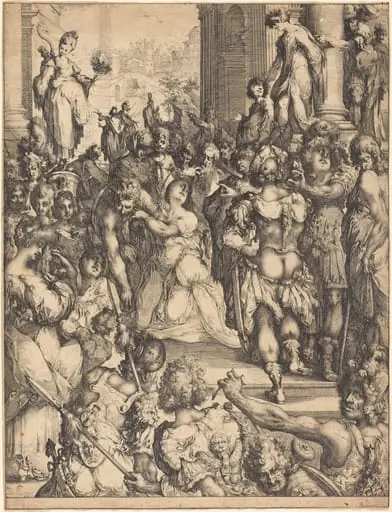
Muller’s 1589 engraving, titled The Fight between Ulysses and Irus, presents a bustling street tableau in which two nearly nude figures grapple at its center.
Jan Harmensz. Muller’s 1589 engraving, titled The Fight between Ulysses and Irus, presents a bustling street tableau in which two nearly nude figures grapple at its center. The composition captures a moment of violent confrontation surrounded by an attentive crowd, a child sprawled on the ground, and a calm dog in the periphery, all rendered on laid paper typical of late‑sixteenth‑century printmaking.
Subject & Meaning
The image illustrates a episode from Homer’s Odyssey where the hero, disguised as a beggar, squares off with the local brawler Irus. By depicting Ulysses in a raw, physical contest, the print emphasizes themes of concealed identity and the triumph of wit over brute force, echoing the poem’s larger narrative of cunning and survival.
Technique & Style
Muller employed deep chiaroscuro and incisive line work to heighten the drama of the melee. The engraving’s strong contrasts and precise hatching give the figures a three‑dimensional presence, while the crowded background, featuring architecture and a tower, recedes, ensuring the viewer’s focus remains on the central struggle.
History & Provenance
Born in Amsterdam in 1571, Muller learned engraving within his family’s printing and publishing workshop before traveling to Italy for further study. After returning, he inherited the family business and continued to work as both engraver and painter until his death in 1628. The print survives on laid paper, a common support for the period’s intaglio works.
Context
The work reflects the late Renaissance fascination with classical literature and the growing popularity of narrative prints for a literate public. By translating a Homeric episode into a vivid visual scene, Muller contributed to the broader European trend of using print media to disseminate mythological and literary subjects beyond elite circles.
Own this work as a print
Artist & collection

Artist
Jan Harmensz. Muller (1571–1628) was a Dutch engraver and painter. Muller was born in Amsterdam. His father was a book printer, engraver and publisher. He learned the engraving trade while working in the family…