Artwork
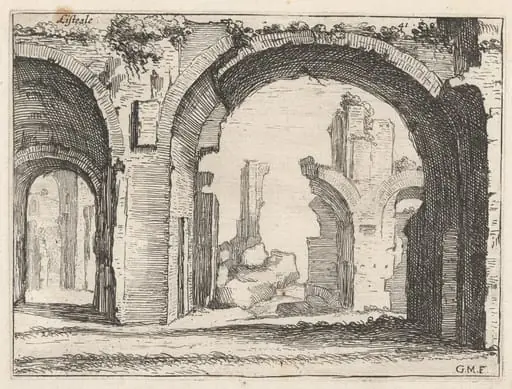
The Baths of Caracalla, Rome
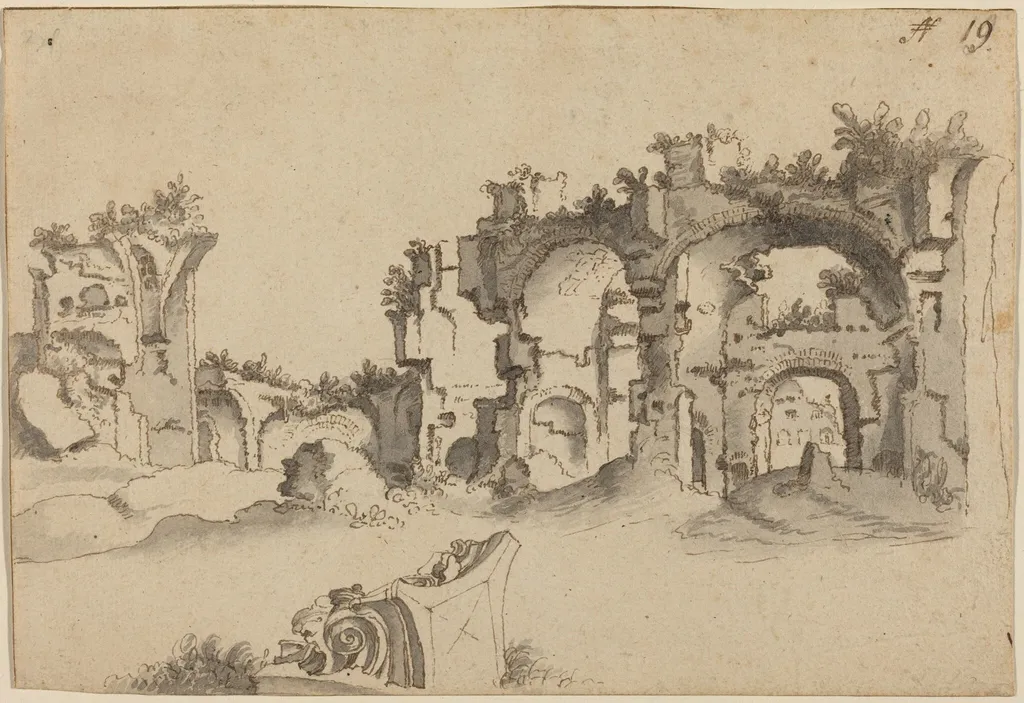
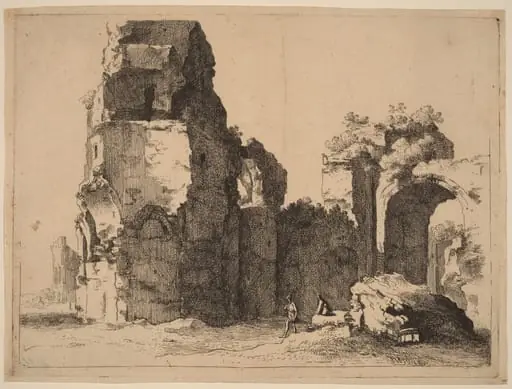
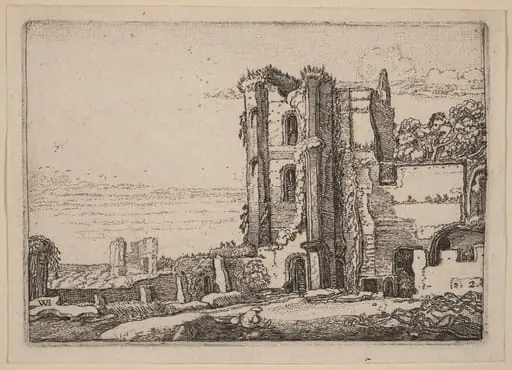
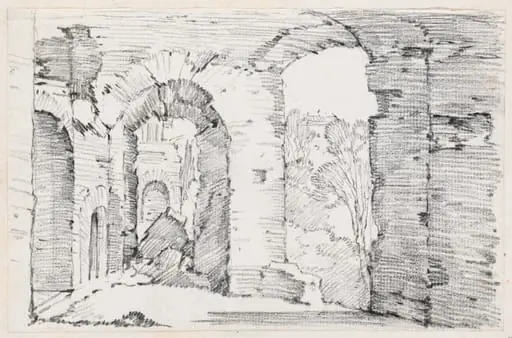
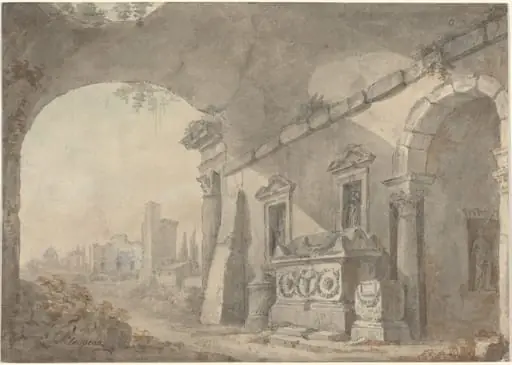
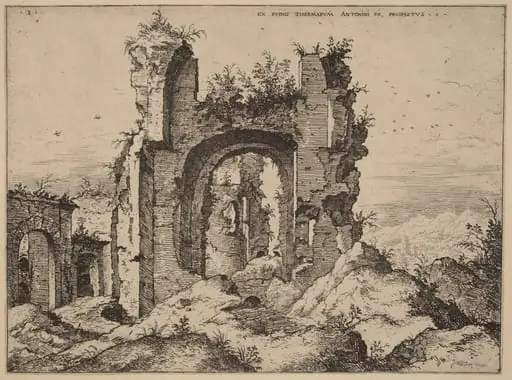
The Baths of Caracalla, Rome is an ink drawing by the Renaissance artist Willem van Nieuwlandt II. It dates from 1610 and is held in the collection of the National Gallery of Art.
- Inscription
- Inscribed:upper right in brown ink: N 19.; by later hand, lower right verso in graphite: 3250
About this work
Overview
The work captures the scale and decay of ancient architecture with quiet precision, reflecting both observation and reverence for Roman antiquity.
Created in 1610 by Willem van Nieuwlandt II, this drawing depicts the ruins of the Baths of Caracalla in Rome. Executed in pen and brown ink with gray wash on laid paper, it belongs to a tradition of topographical sketches made by Northern European artists traveling through Italy. The work captures the scale and decay of ancient architecture with quiet precision, reflecting both observation and reverence for Roman antiquity.
Subject & Meaning
The drawing focuses on the monumental remains of one of ancient Rome’s largest public bath complexes. Rather than idealizing the structure, the artist presents it as a weathered, partially collapsed ruin, emphasizing time’s passage. The absence of figures underscores solitude and historical distance, inviting contemplation of imperial legacy and the fragility of human achievement.
Technique & Style
Van Nieuwlandt employed fine pen lines for architectural detail, using cross-hatching to model volume and shadow. Gray wash was applied sparingly to suggest atmospheric depth and the play of light across stone surfaces. The restrained palette and controlled brushwork convey a sense of calm observation, aligning with Northern Renaissance traditions of topographical accuracy over dramatic embellishment.
History & Provenance
The drawing likely originated during van Nieuwlandt’s travels in Italy, part of a broader trend among Northern artists documenting classical sites in the early 17th century. Its survival suggests it was valued as a study or souvenir. While its early ownership is undocumented, it entered institutional collections in the modern era, preserved as an example of Dutch-Italian artistic exchange.
Context
In the early 1600s, Italian ruins attracted artists seeking to study classical form and engineering. Van Nieuwlandt’s work reflects this scholarly impulse, paralleling the efforts of contemporaries like Hendrik Goltzius and Cornelis Bloemaert. Unlike later romanticized depictions, his approach remains grounded in measured observation, consistent with the era’s growing interest in archaeology and historical record.
Legacy
This drawing contributes to a corpus of early modern topographical studies that helped shape European understanding of Roman antiquity. Its technical restraint and attention to architectural detail influenced later draftsmen documenting ruins. Though not widely exhibited, it remains a quiet testament to the role of drawing as a tool for historical documentation and aesthetic reflection.
Own this work as a print
Artist & collection