Artwork
Fragment of an Inscribed Architrave, Tomb of Amenemhat Surer
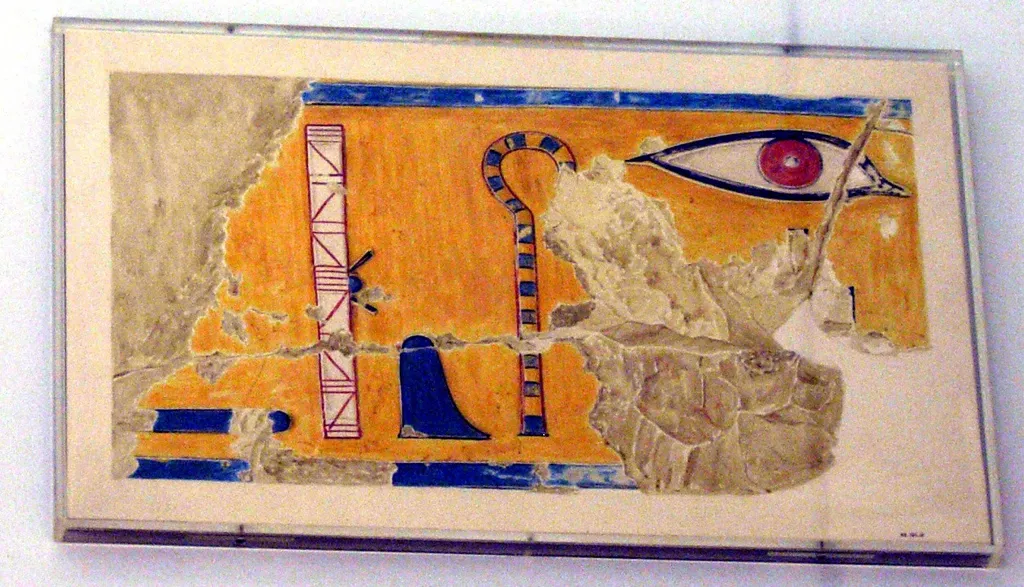
Fragment of an Inscribed Architrave, Tomb of Amenemhat Surer is an unspecified painting by Nina M. Davies. It dates from 1396 and is held in the collection of the Metropolitan Museum of Art. The work is a hand‑drawn record of a painted fragment from an ancient Egyptian tomb.
About this work
Subject & Meaning
The fragment depicts a stylized eye and associated hieroglyphic inscription, typical of funerary architrave decoration in the Theban necropolis. It represents a protective symbol linked to the deceased's name, Amenemhat Surer, and reflects the artistic conventions of the late 18th Dynasty.
Technique & Style
Davies executed the facsimile under Metropolitan Museum of Art sponsorship, later accessioning the piece under inventory number 48.
The painted fragment originates from the Tomb of Amenemhat Surer (TT 48) at Thebes, produced circa 1390 BCE as part of the Theban Tomb 48 wall decoration program. Executed in tempera or water-based paint on calcite-flecked plaster, the work functions as a painted relief fragment serving as an architrave element within the tomb's architectural scheme. The decorative surface portrays a stylized eye and associated hieroglyphic inscription rendered in flat, profile convention characteristic of New Kingdom funerary iconography.
Nina M. Davies executed the facsimile under Metropolitan Museum of Art sponsorship, later accessioning the piece under inventory number 48.105.12, where it remains preserved within the museum's collection of Ancient Egyptian wall paintings.
History & Provenance
The work is a facsimile of an inscribed architrave originally located in the Tomb of Amenemhat Surer (TT 48). It was created by Nina M. Davies, who is also known as Nina de Garis Davies, to document the ancient Egyptian inscription. The creation of this specific reproduction is dated to 1390.
The artifact is currently held in the collection of the Metropolitan Museum of Art, where it is cataloged under the accession number 48.105.12. The piece depicts an eye and hieroglyphic elements from the original tomb structure.
The fragment of an inscribed architrave from the Tomb of Amenemhat Surer is housed in the Metropolitan Museum of Art in New York, where it is cataloged under the accession number 48.105.12. It was first exhibited as part of the museum's Egyptian art collection presentation in 1948 and has since appeared in several thematic exhibitions on Middle Kingdom funerary art, including a 1975 display of Theban tomb paintings and a 2010 retrospective on Theban decorative programs. The work was documented by Nina M. Davies during her Theban Mapping Project fieldwork in 1939-1940 and remains part of the museum's permanent collection.
Context
The fragment of the inscribed architrave from the tomb of Amenemhat Surer, dated to 1390 BCE, is recognized as a significant example of Egyptian funerary art and has been studied within the broader context of New Kingdom decorative practices. Scholarship emphasizes its role in understanding the evolution of tomb architecture and funerary iconography during the 18th Dynasty. The work is attributed to Nina M. Davies, a pioneering Egyptologist and artist whose contributions advanced the documentation of Egyptian monuments through precise facsimile techniques.
This fragment is housed in the Metropolitan Museum of Art, where it is part of the museum's extensive collection of Egyptian antiquities, reflecting the institution's long-standing engagement with Egyptian archaeology and the transmission of scholarly knowledge about ancient cultures.
Overview
The work is a hand‑drawn record of a painted fragment from an ancient Egyptian tomb. The illustration captures a portion of an architrave that once bore a large, red‑eyed motif and a stylized staff with a curved top and striped decoration. Though the original stone surface is heavily broken and cracked, the drawing preserves the vivid color scheme of yellow background with blue and white accents.
Artist & collection
Artist
The Egyptologists Nina M. Davies (6 January 1881 – 21 April 1965) and Norman de Garis Davies (1865–5 November 1941) were a married couple of illustrators and copyists who worked in the early and mid-twentieth century…

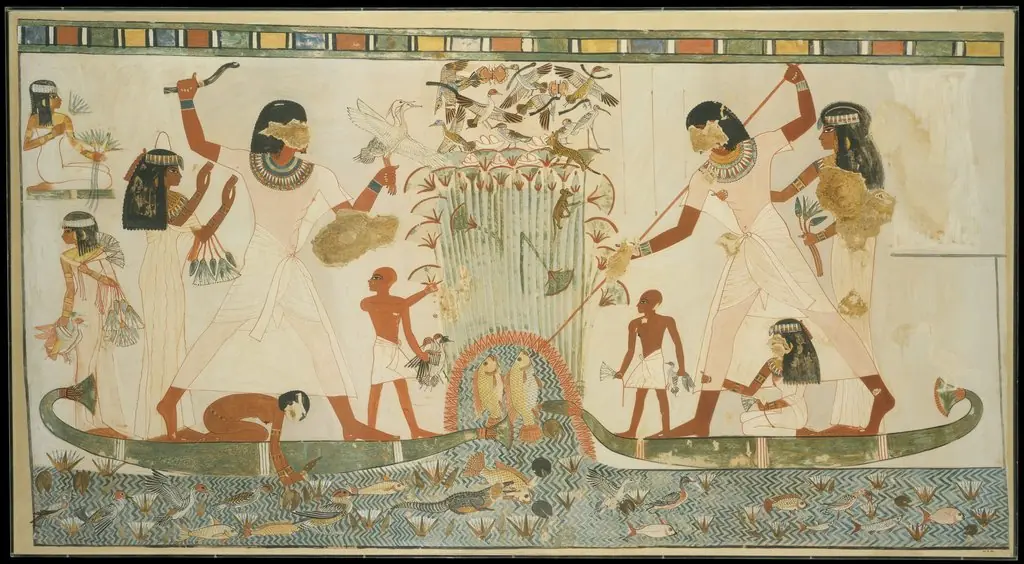 Menna and Family Hunting in the Marshes, Tomb of Menna
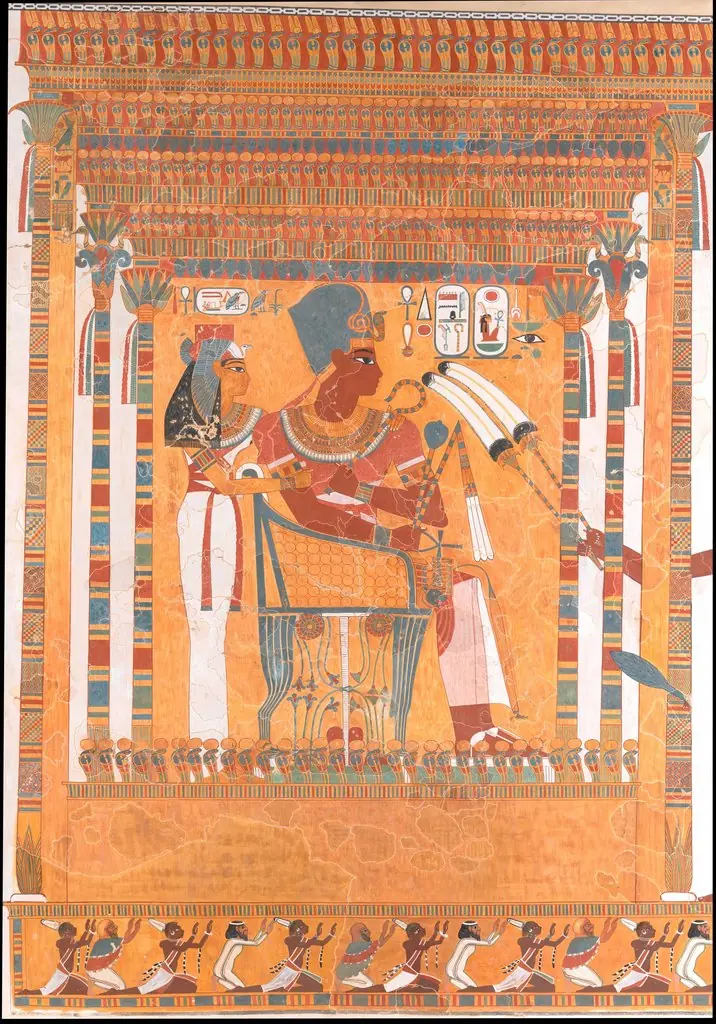 Amenhotep III and his Mother, Mutemwia, in a Kiosk
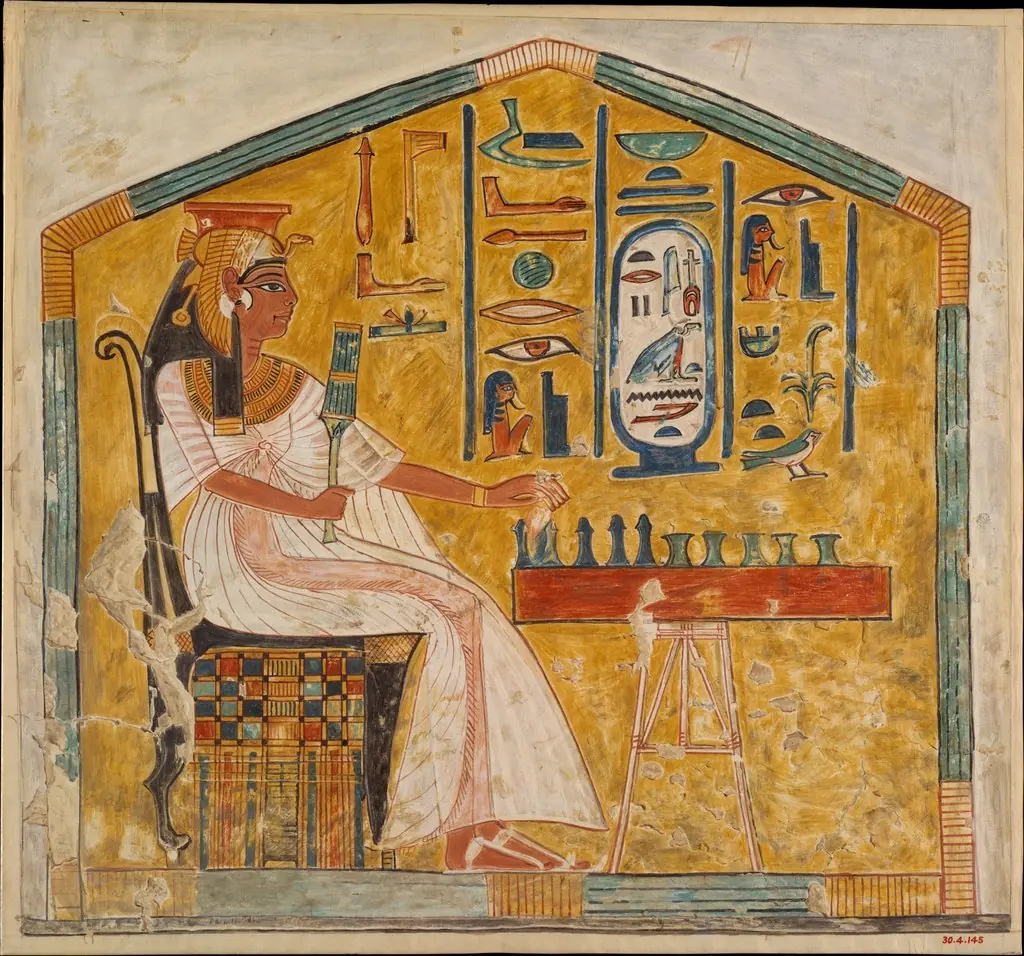 Queen Nefertari Playing Senet
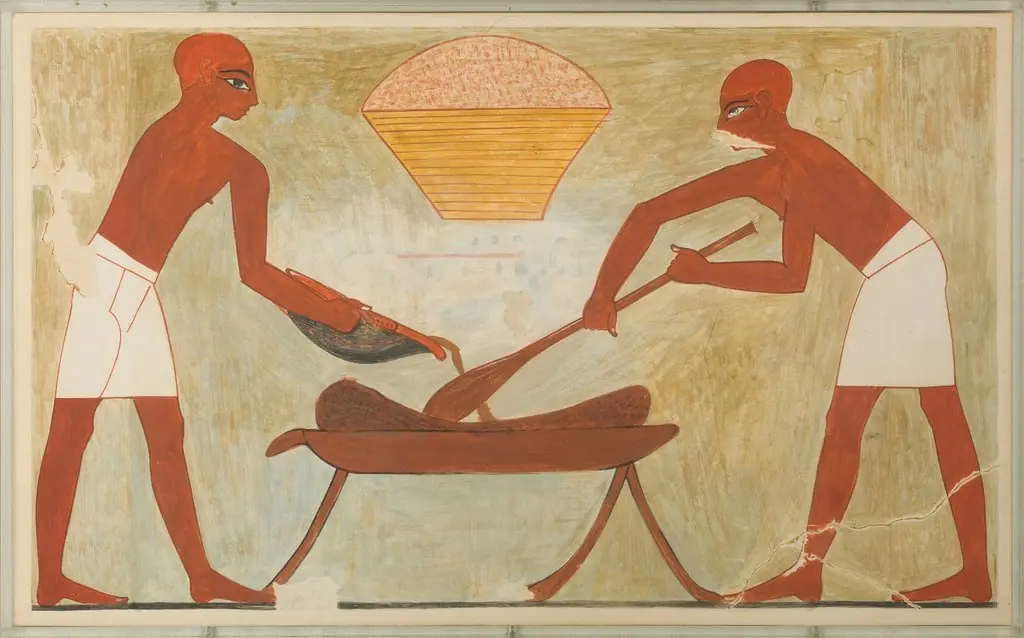 Preparing Dough, Tomb of Rekhmire
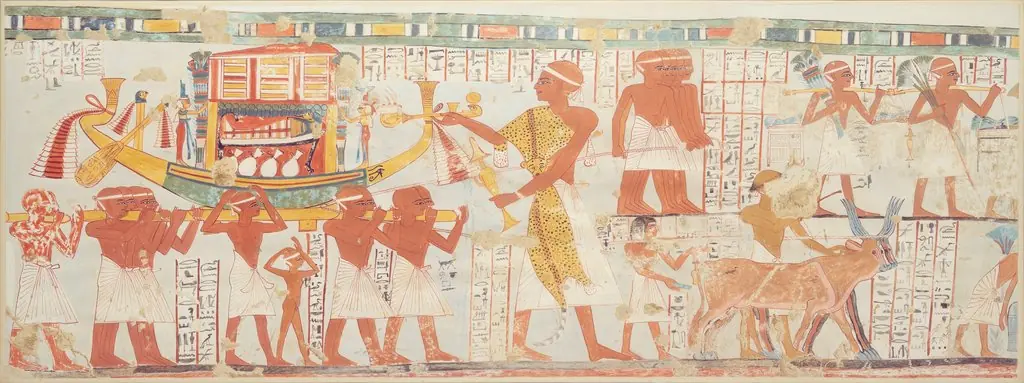 Nakhtamun's Funeral Procession, Tomb of Nakhtamun
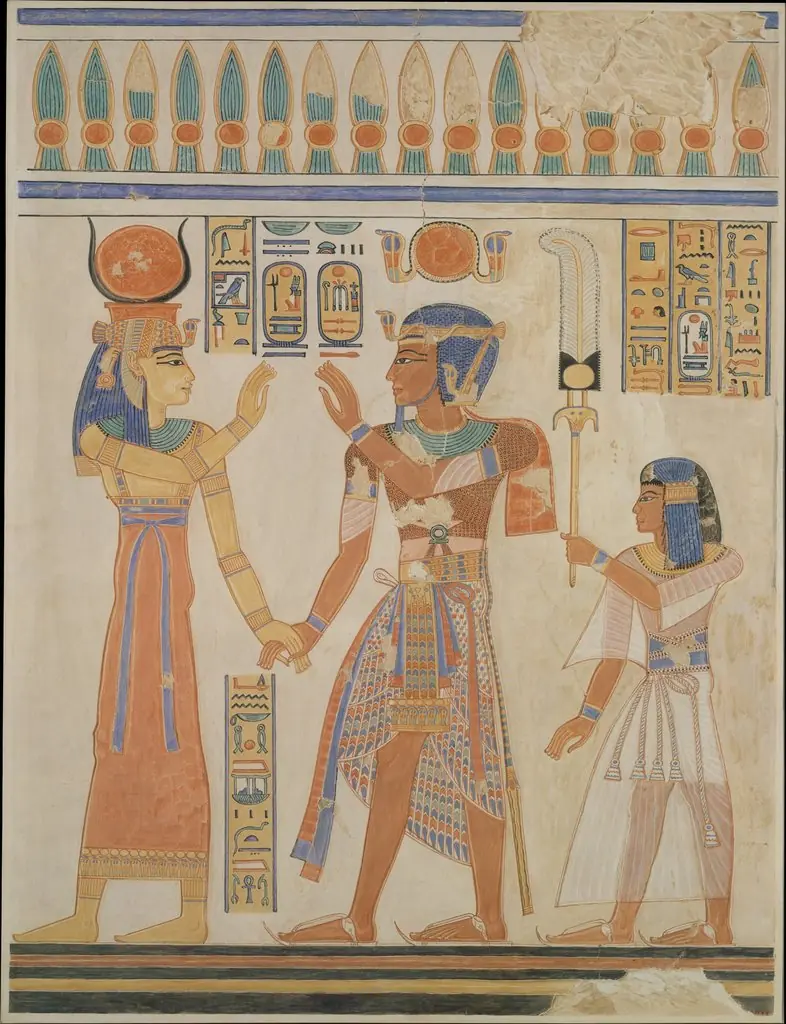 Ramesses III and Prince Amenherkhepeshef before Hathor
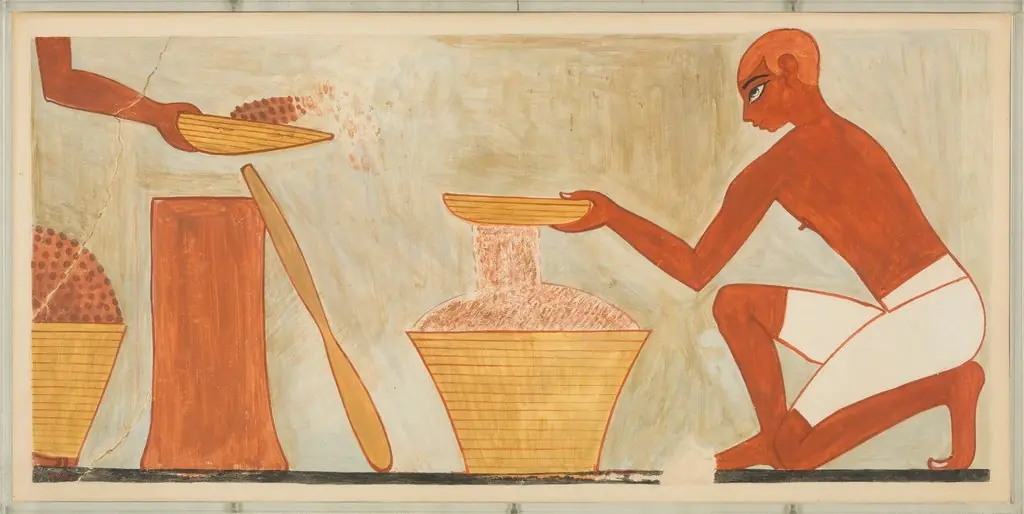 Sifting Meal, Tomb of Rekhmire
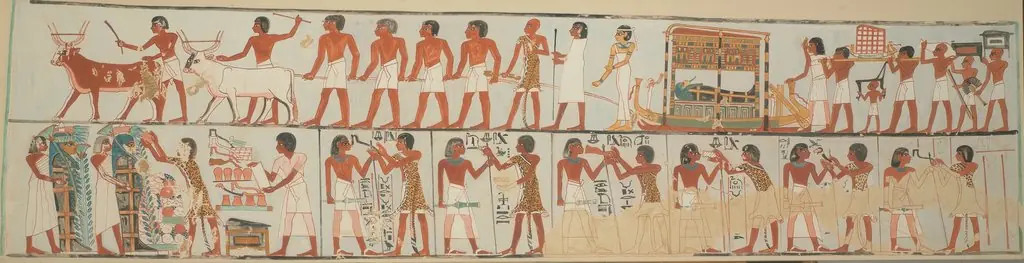 Funeral Procession, Tomb of Pairy
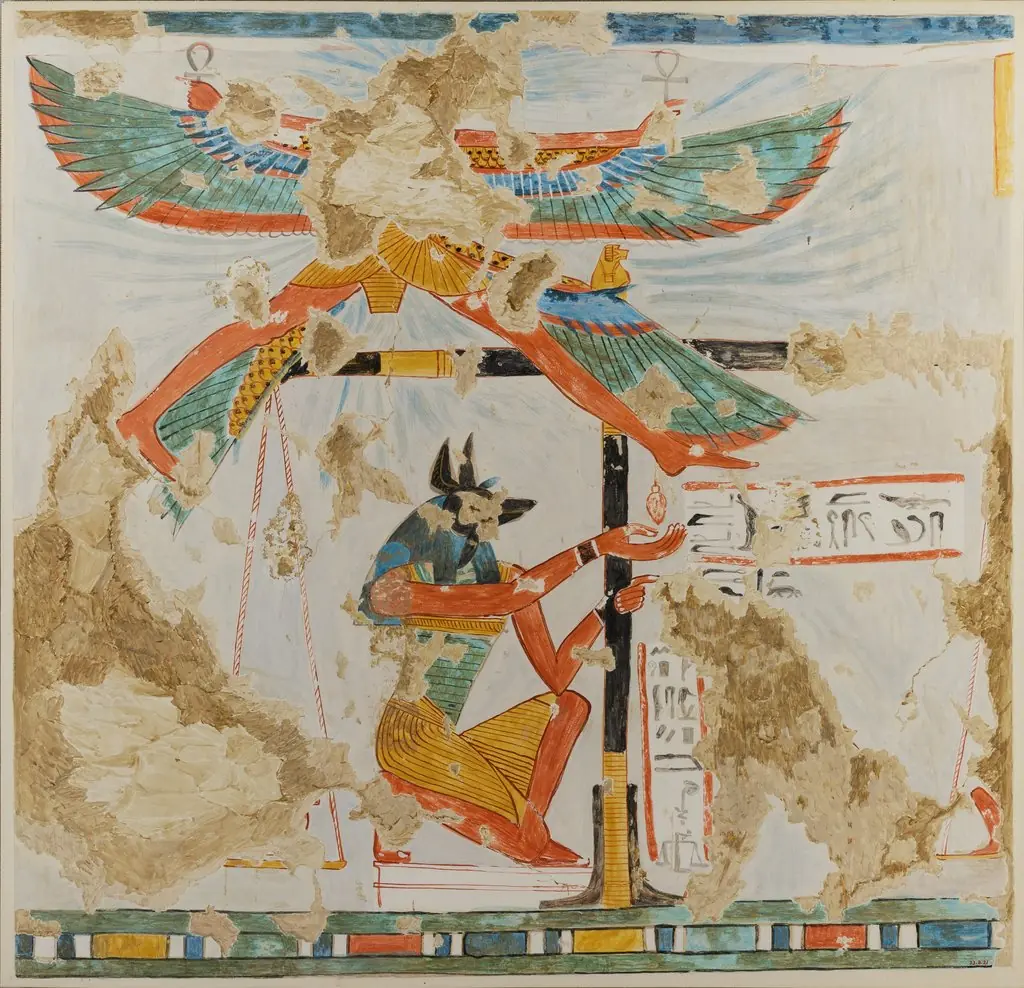 Anubis Weighing the Heart, Tomb of Nakhtamun
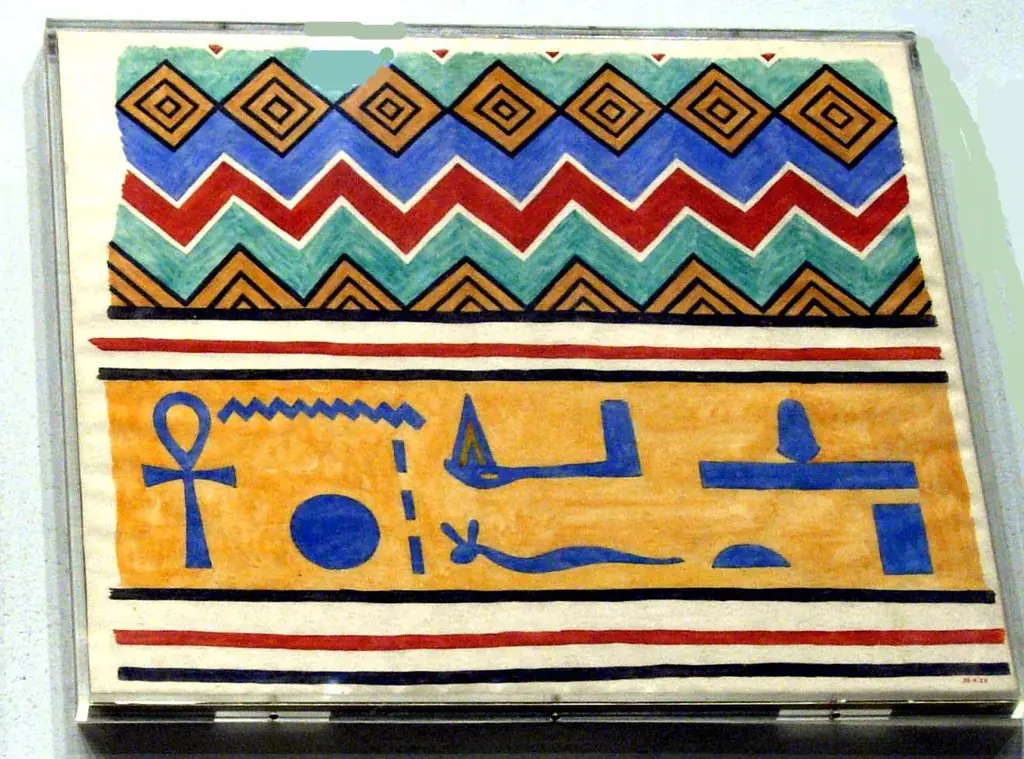 Ceiling Fragment
 Painted Restoration of the Hathor-Head Frieze in the Tomb of Senenmut
 Garden Scene, Tomb of Ipuy
 Sandal Maker, Tomb of Rekhmire
 Dragging a Statue of Thutmose I
 Amenhotep III and Queen Tiye Enthroned Beneath a Kiosk, Tomb of Anen
 Plates Illustrative Of The Researches And Operations Of G. Belzoni In Egypt And Nubia
 Statue of Deified Amenhotep I
 Ceiling Fragment