Artwork
Ibex and Dog from the Tomb of Qenamun
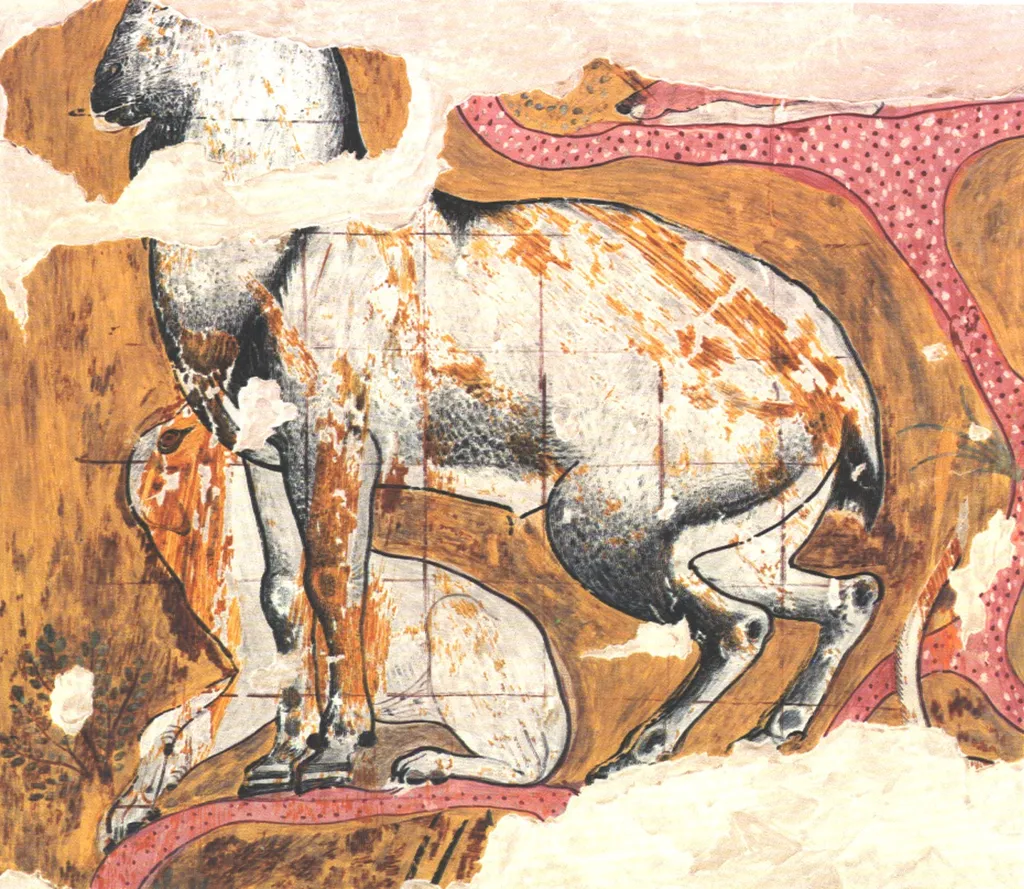
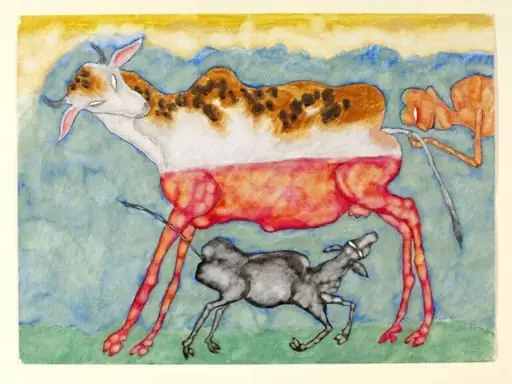
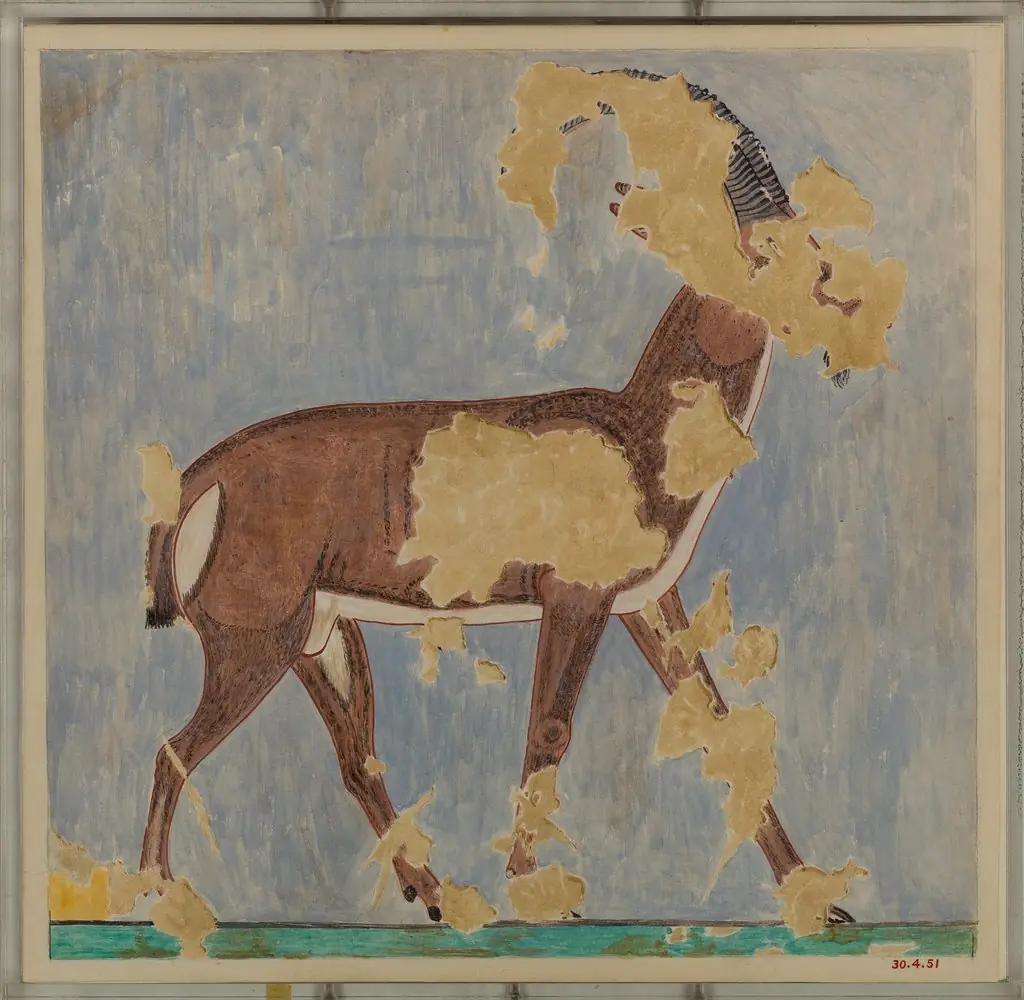
Ibex and Dog from the Tomb of Qenamun is an unspecified painting by Nina M. Davies. It dates from 1427 and is held in the collection of the Metropolitan Museum of Art. Nina M.
About this work
Subject & Meaning
The dog appears in a hunting scene that reflects the elite's mastery over nature and the symbolic triumph of order over chaos.
The painting shows a canine companion alongside a wild goat, rendered in the decorative style of Theban tomb art. The dog appears in a hunting scene that reflects the elite's mastery over nature and the symbolic triumph of order over chaos. The ibex, a frequent motif in Egyptian funerary imagery, is associated with vitality and the wild landscape, while the dog often signifies loyalty and protective power. Together they underscore themes of protection and the deceased's dominance in the afterlife.
The composition draws on traditional iconography where the dog's presence reinforces the notion of faithful guardianship, and the ibex's depiction conveys the abundance of the natural world that the tomb owner sought to command beyond death.
Technique & Style
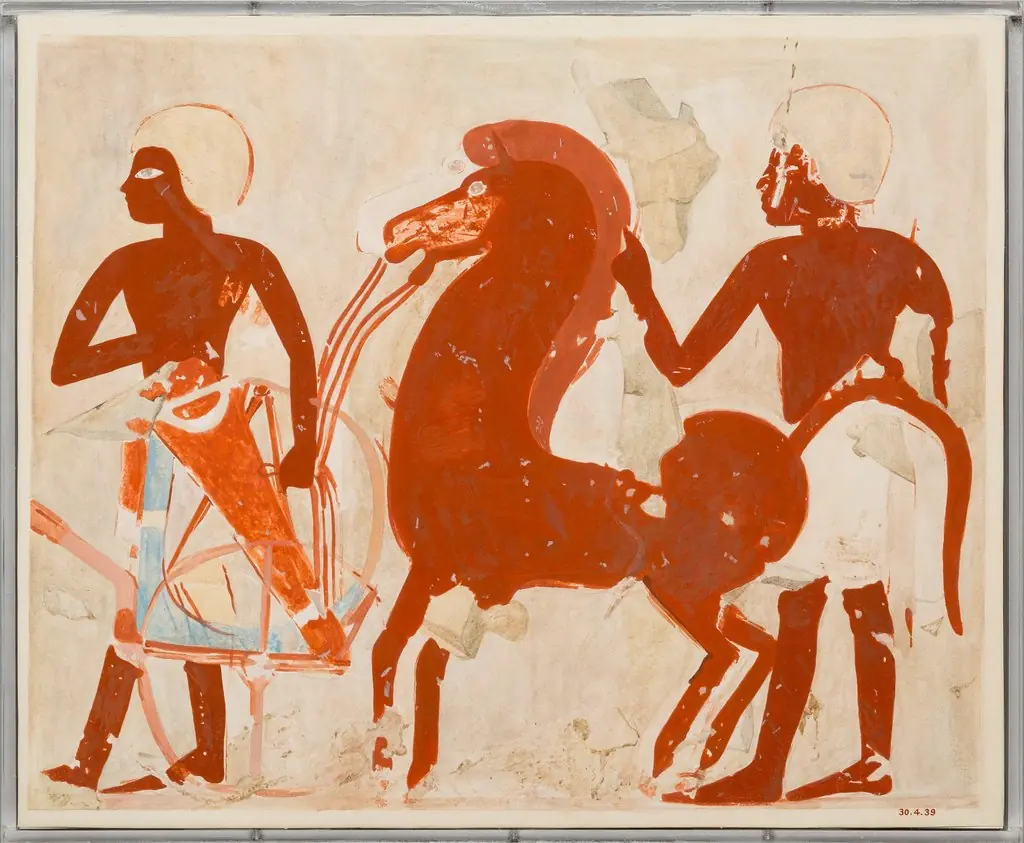
The work is a facsimile, painted in tempera on paper by Nina M. Davies, reproducing a scene from the wall decoration of the Theban tomb of Qenamun (TT 93), which dates to the 18th Dynasty reign of Amenhotep II (c. 1427 BC). It depicts a dog and an ibex within a naturalistic hunting scene typical of Theban tomb painting, with the figures outlined in fine lines and filled with color in the manner of the original. As a documentary copy, it preserves the iconography and composition of the ancient wall painting, including the dynamic motion and hierarchical scale of the source.
History & Provenance
Ibex and Dog from the Tomb of Qenamun is a facsimile painting produced by Nina M. Davies as a reproduction of wall decoration from the Theban tomb of Qenamun (TT 93). The work documents a hunting scene originally painted within the tomb, capturing its iconography of dogs and ibexes in the context of ancient Egyptian funerary art. It is held by the Metropolitan Museum of Art in New York under accession number 30.4.59, reflecting the early twentieth-century practice of recording and preserving Egyptian tomb paintings through painted copies made by Davies, who specialized in documenting decorated tombs for institutional study and publication.
Overview
Nina M. Davies’ rendering titled Ibex and Dog from the Tomb of Qenamun presents a compact tableau of a canine and an ibex positioned within the interior of an Egyptian burial chamber. The composition captures the animal figures in a moment of interaction, rendered in a limited palette of earthy browns, tans and greys that convey a sense of spatial depth.
Artist & collection
Artist
The Egyptologists Nina M. Davies (6 January 1881 – 21 April 1965) and Norman de Garis Davies (1865–5 November 1941) were a married couple of illustrators and copyists who worked in the early and mid-twentieth century…

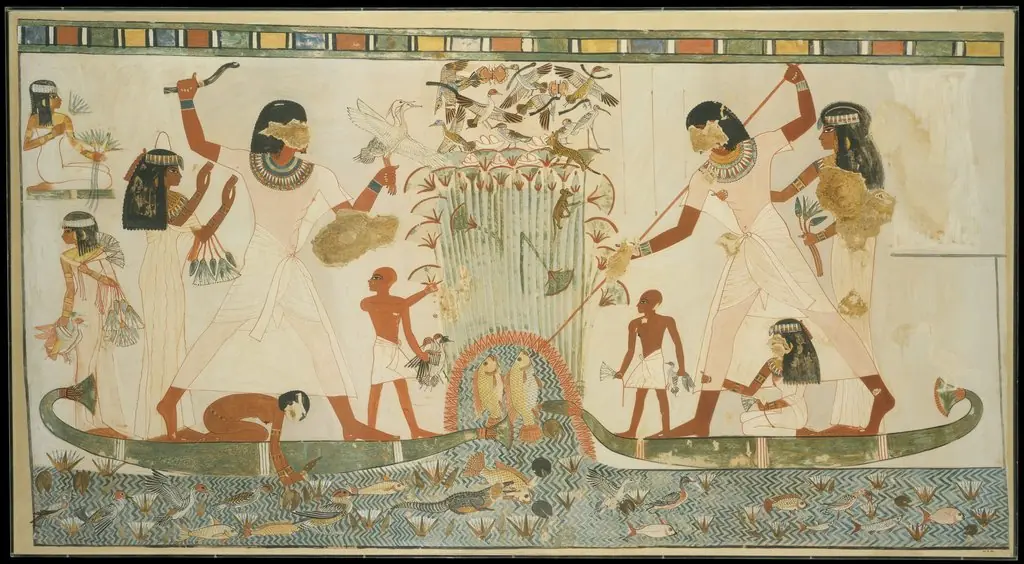 Menna and Family Hunting in the Marshes, Tomb of Menna
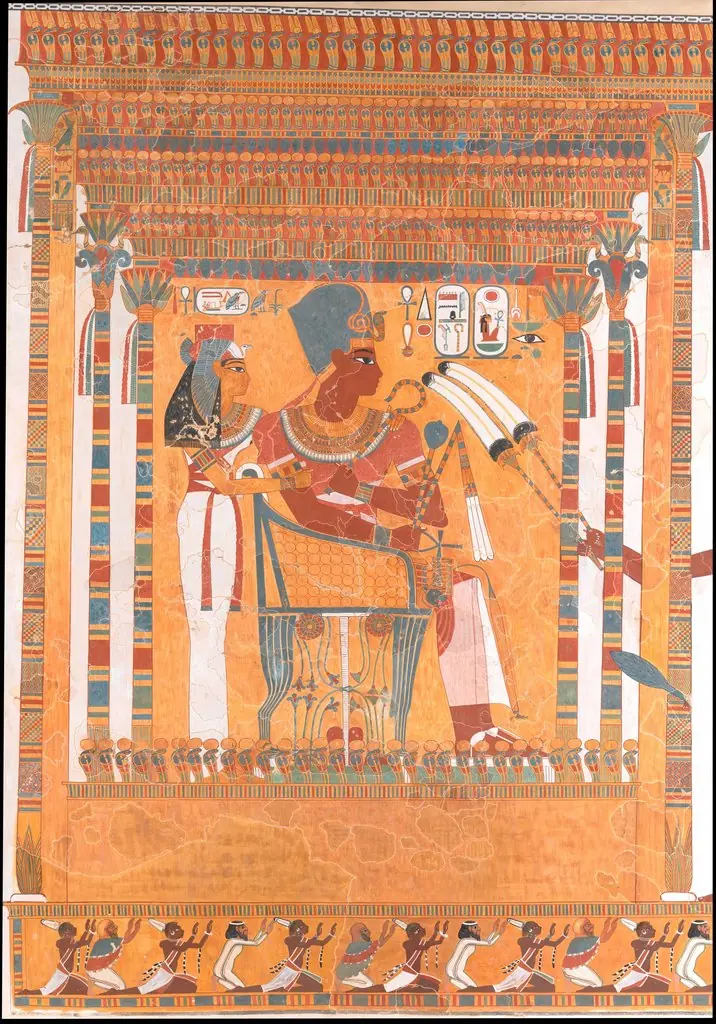 Amenhotep III and his Mother, Mutemwia, in a Kiosk
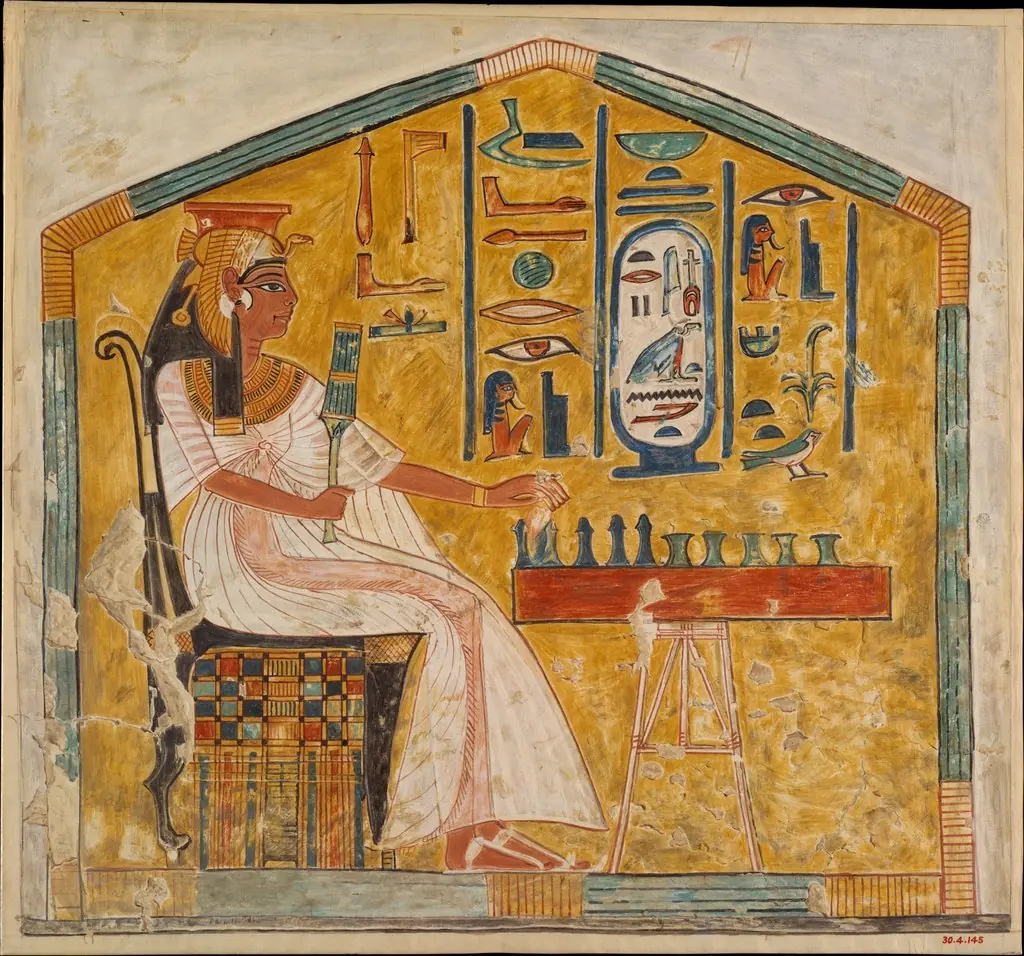 Queen Nefertari Playing Senet
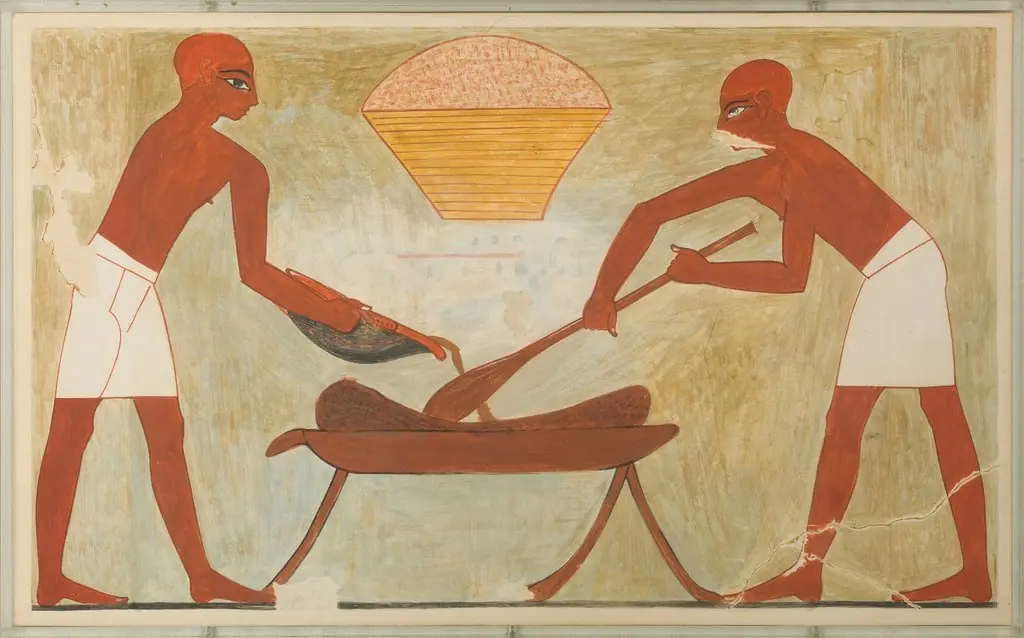 Preparing Dough, Tomb of Rekhmire
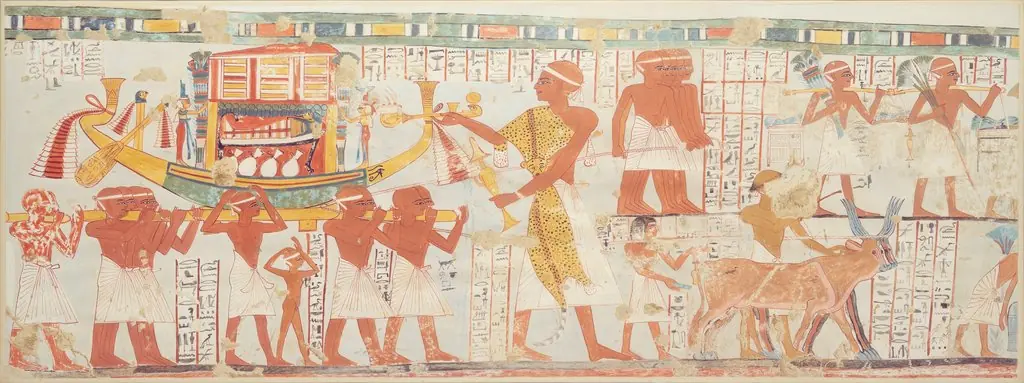 Nakhtamun's Funeral Procession, Tomb of Nakhtamun
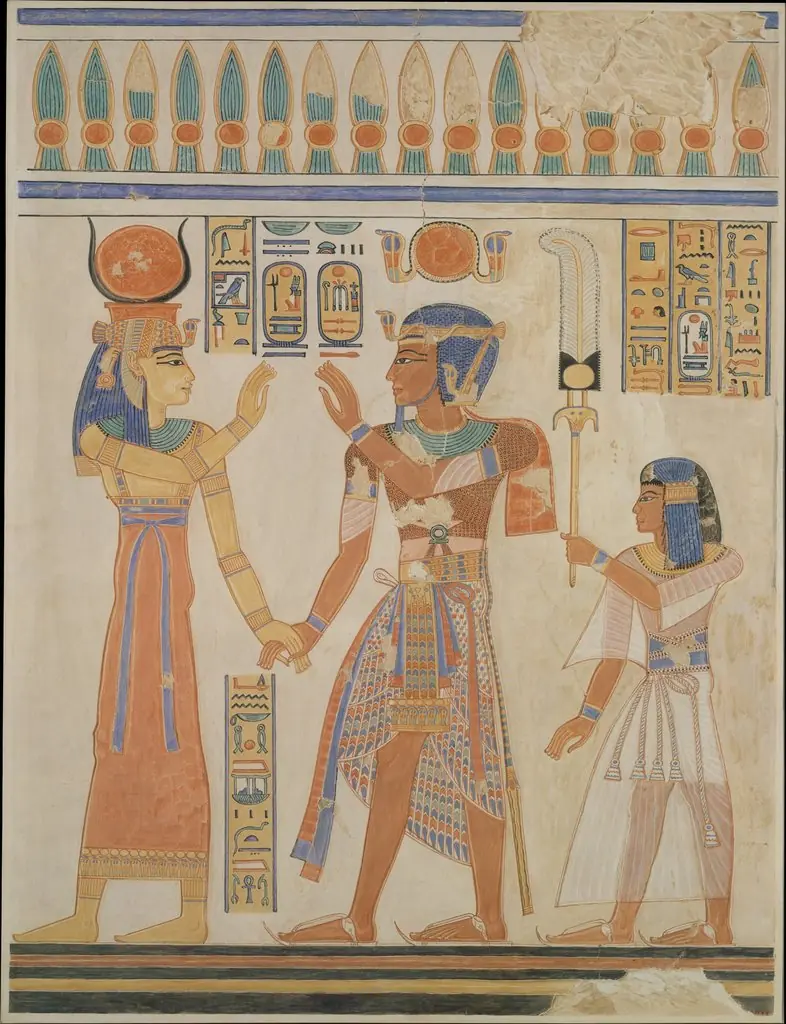 Ramesses III and Prince Amenherkhepeshef before Hathor
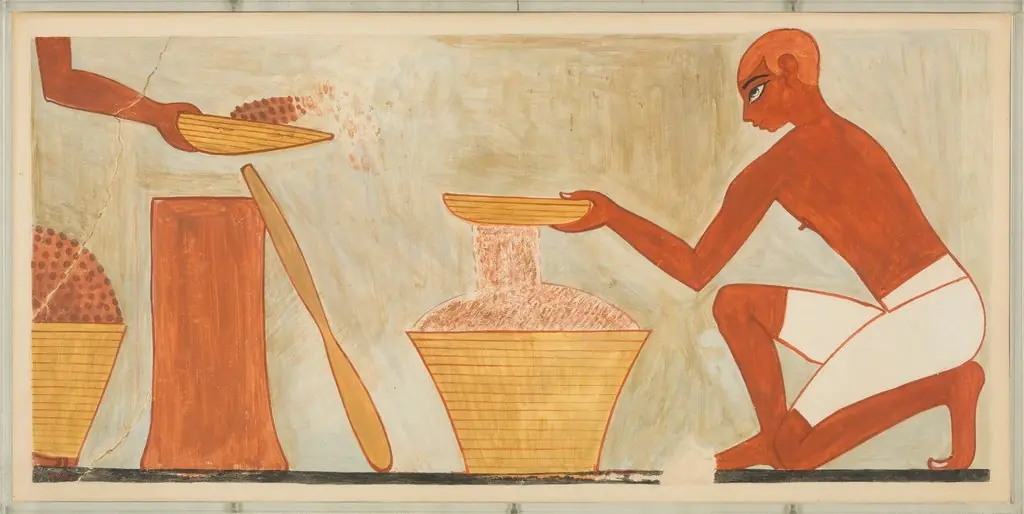 Sifting Meal, Tomb of Rekhmire
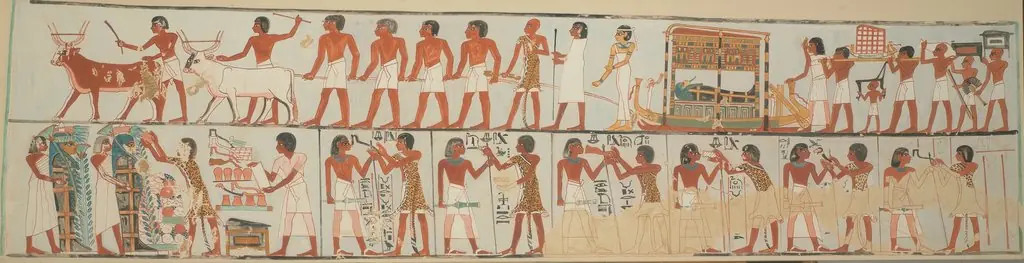 Funeral Procession, Tomb of Pairy