Artwork
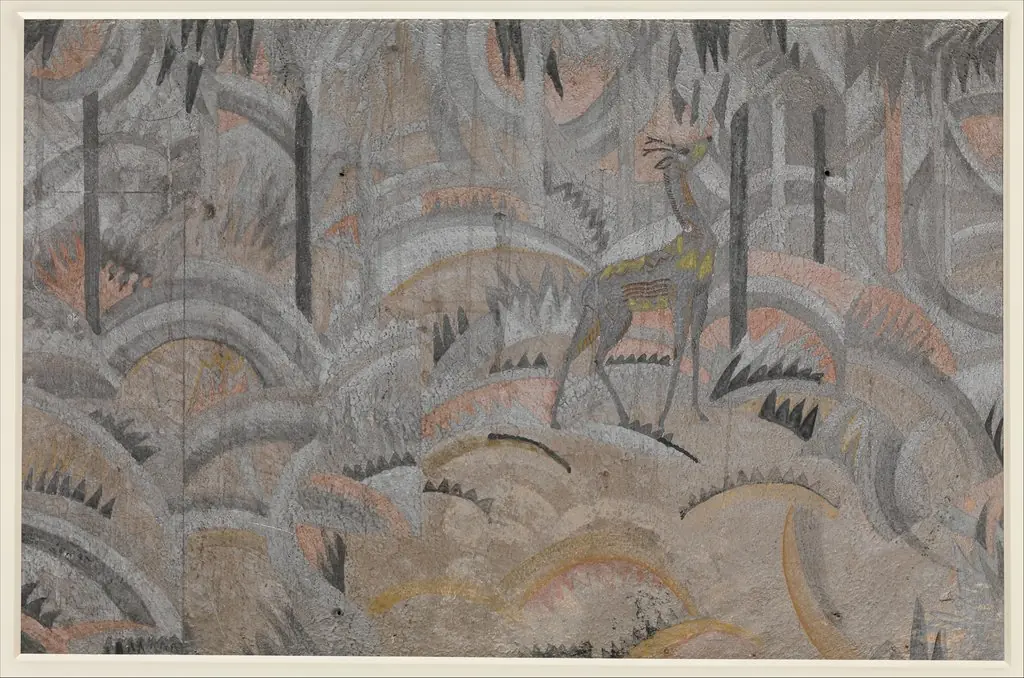
Ibex, Tomb of Amenhotep
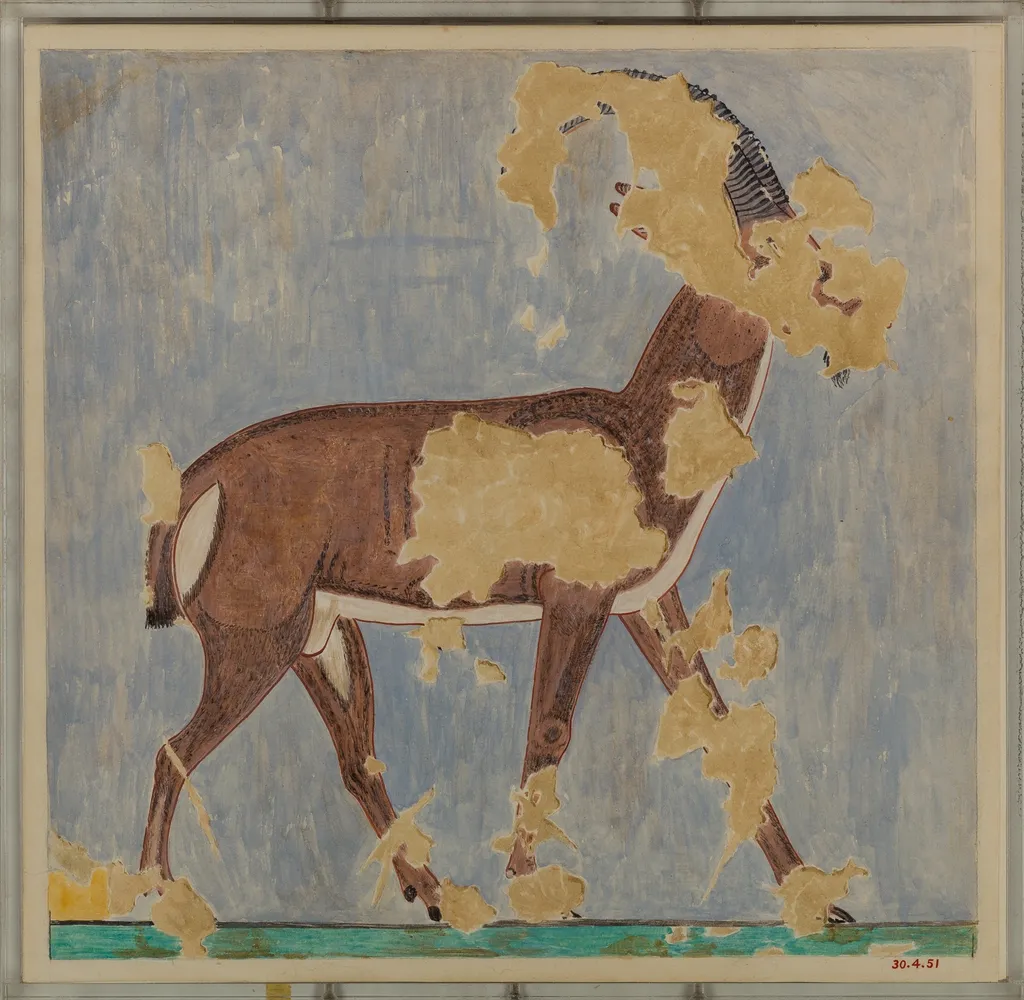
Ibex, Tomb of Amenhotep is an unspecified painting by the Byzantine icon painting artist Nina M. Davies. It dates from 1490 and is held in the collection of the Metropolitan Museum of Art.
About this work
History & Provenance
The piece is currently held in the collection of the Metropolitan Museum of Art, where it is cataloged under the accession number 30.
The work is a facsimile painting of an ibex originally located in the Tomb of Amenhotep (TT 73). It was created by Nina M. Davies, with the inception date recorded as 1490. The piece is currently held in the collection of the Metropolitan Museum of Art, where it is cataloged under the accession number 30.4.51.
No exhibition history beyond its presence in the Metropolitan Museum of Art's holdings is documented in the available sources.
Context
The ibex motif in Amenhotep's tomb demonstrates how Old Kingdom funerary painting persisted into the late 18th Dynasty through the work of Nina M. Davies, an artist associated with early 20th century Egyptological documentation efforts. Her recreation of this scene reflects scholarly interest in preserving visual records of Theban tomb art, particularly during excavations at Thebes where the Metropolitan Museum of Art later acquired the facsimile. The piece occupies a transitional space in art historical study, bridging archaic symbolic representation with modern archaeological practice, as evidenced by its inclusion in Metropolitan Museum publications during the mid-20th century.
Overview
The work titled Ibex, Tomb of Amenhotep dates to 1490 and is held in the collection of the Metropolitan Museum of Art. It presents a solitary ibex rendered against a fragmented, blue‑green surface, the figure rendered in bold, simplified forms. The piece exemplifies a blend of ancient Egyptian tomb painting tradition with stylistic cues drawn from Byzantine visual culture.
Subject & Meaning
The central figure is a dark‑brown ibex, an animal associated with mountainous terrain and occasionally symbolic of vitality in ancient iconography. In this composition the creature stands alone, without surrounding figures or narrative elements, suggesting a focus on the animal’s form rather than a mythological or funerary scene.
Technique & Style
The illustration employs a limited palette, with the ibex’s earthy tones contrasting against a mottled blue‑green ground. Thick, blocky limbs and a curved back give the animal a graphic presence. Portions of the painted surface have deteriorated, revealing areas where the pigment has peeled, which accentuates the work’s antiquated appearance.
Artist & collection
Artist
The Egyptologists Nina M. Davies (6 January 1881 – 21 April 1965) and Norman de Garis Davies (1865–5 November 1941) were a married couple of illustrators and copyists who worked in the early and mid-twentieth century…

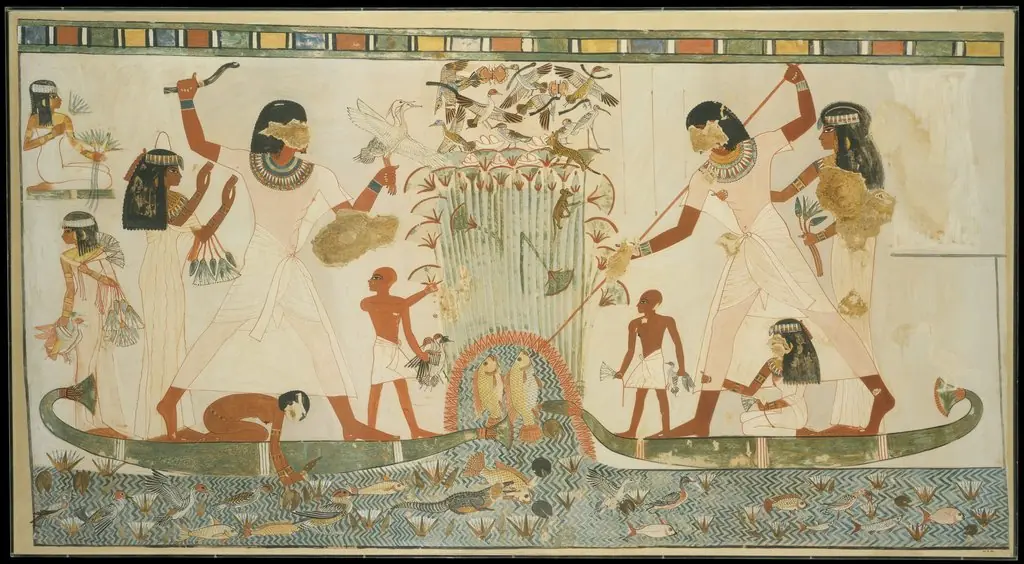 Menna and Family Hunting in the Marshes, Tomb of Menna
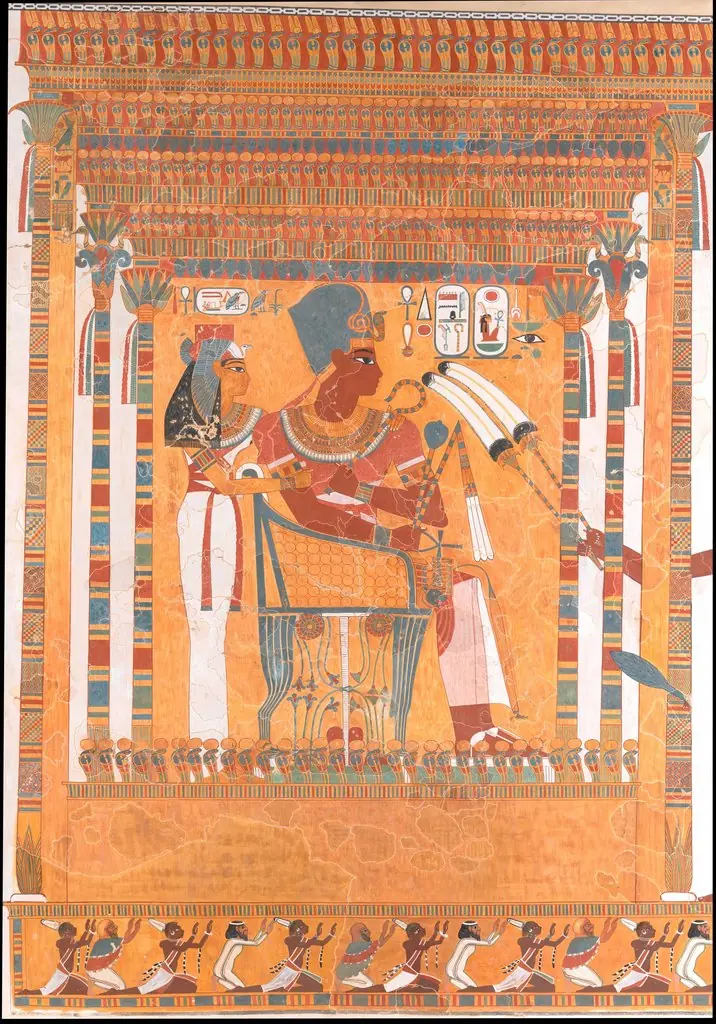 Amenhotep III and his Mother, Mutemwia, in a Kiosk
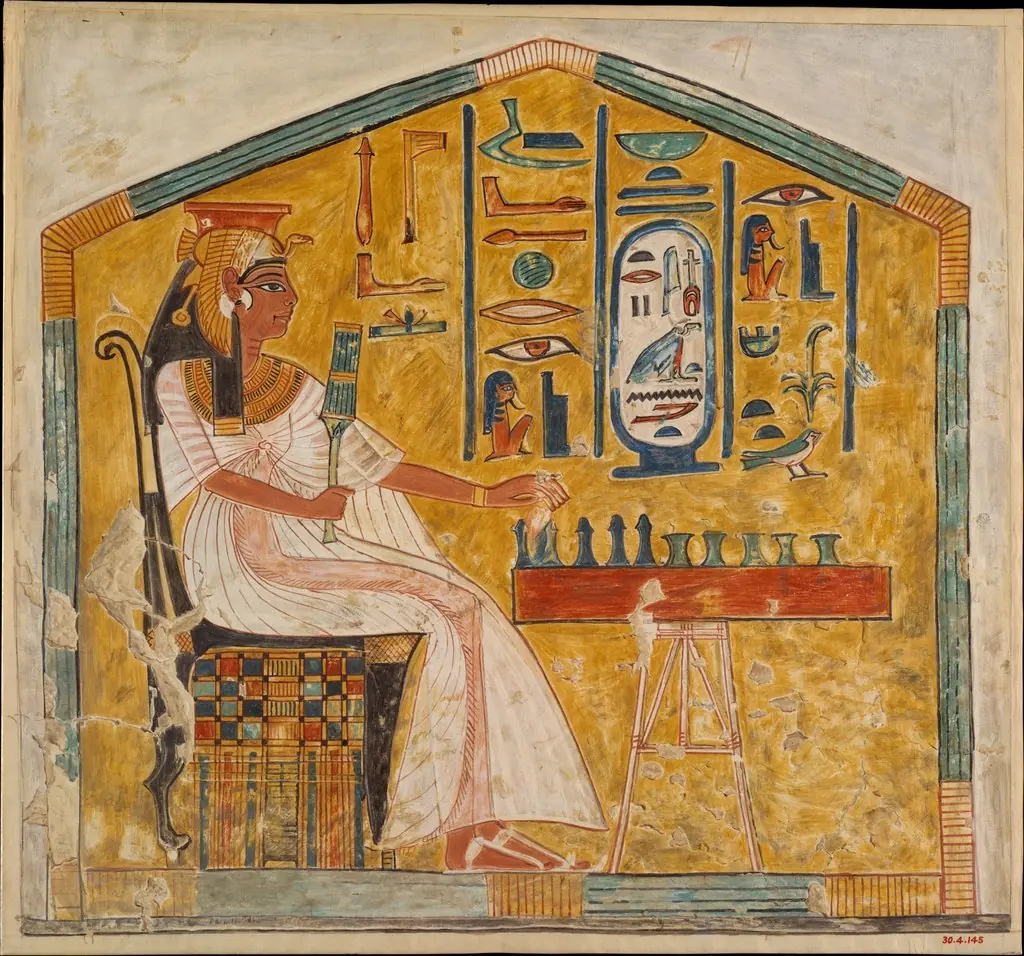 Queen Nefertari Playing Senet
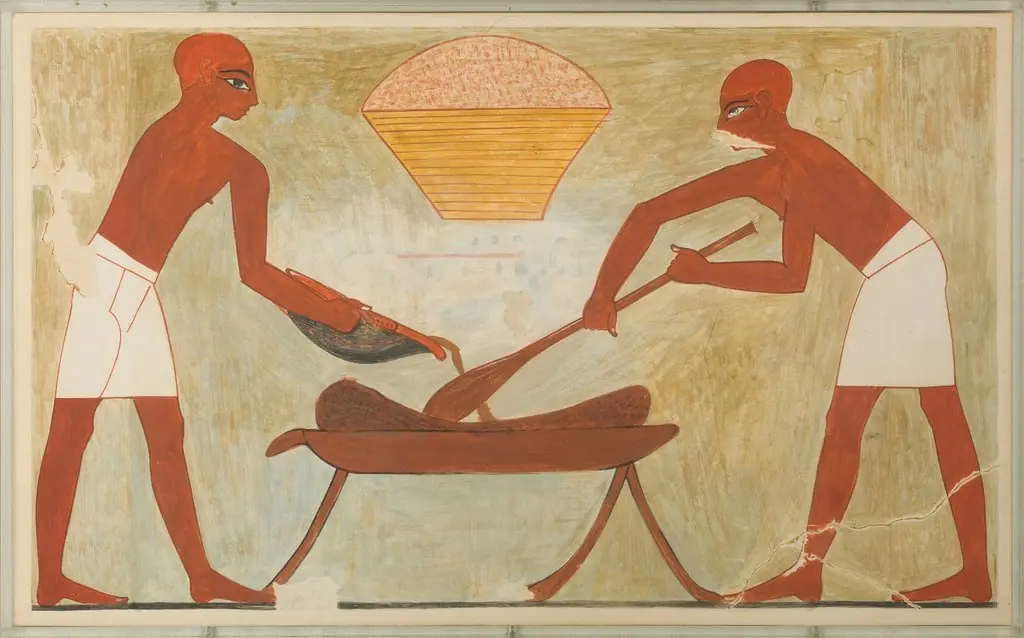 Preparing Dough, Tomb of Rekhmire
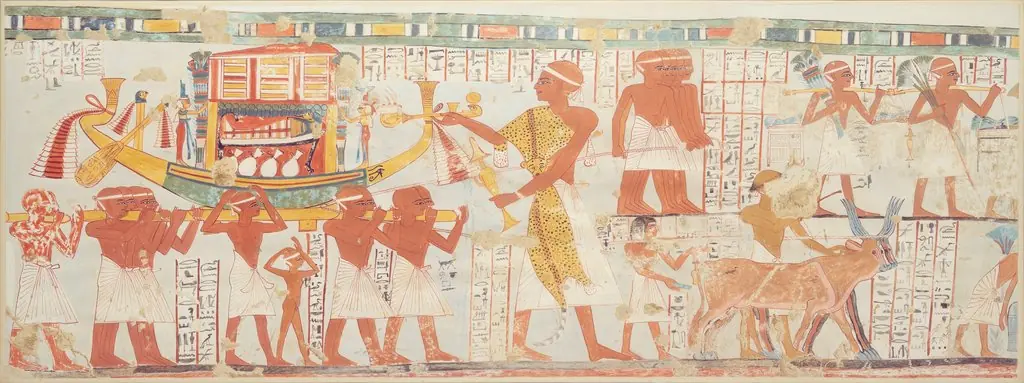 Nakhtamun's Funeral Procession, Tomb of Nakhtamun
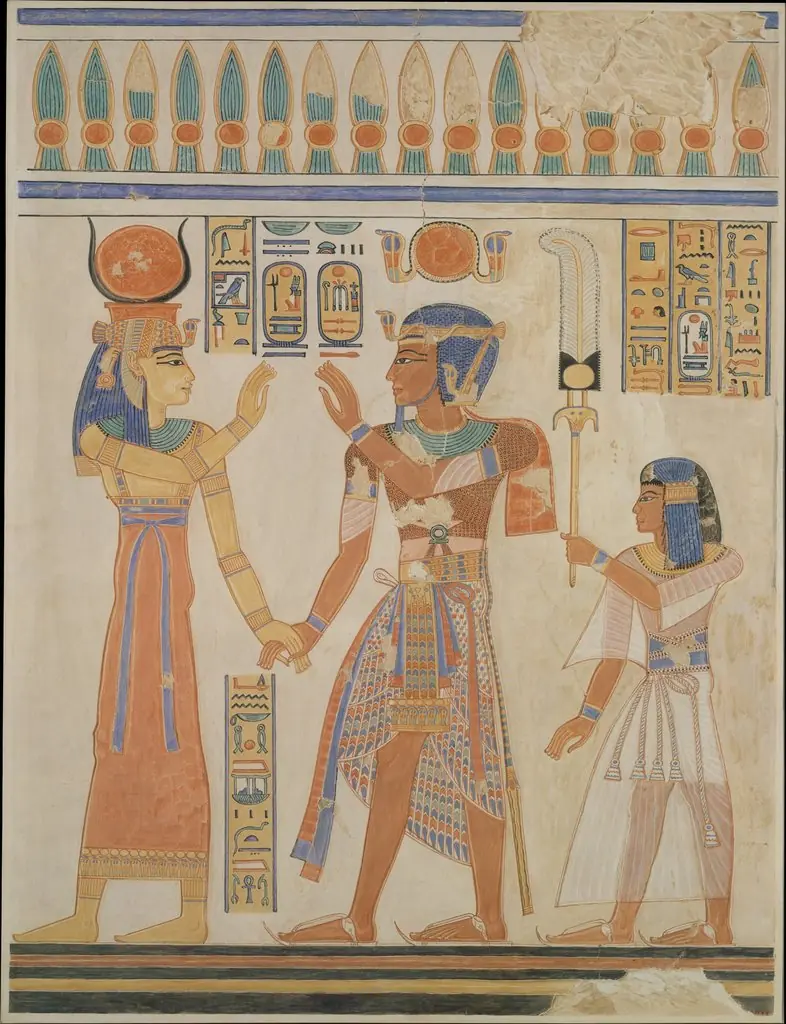 Ramesses III and Prince Amenherkhepeshef before Hathor
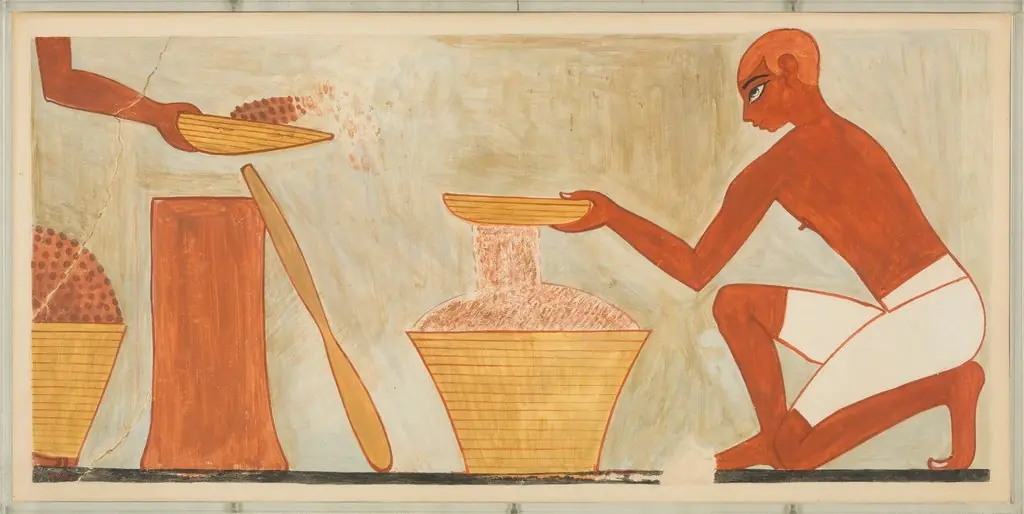 Sifting Meal, Tomb of Rekhmire
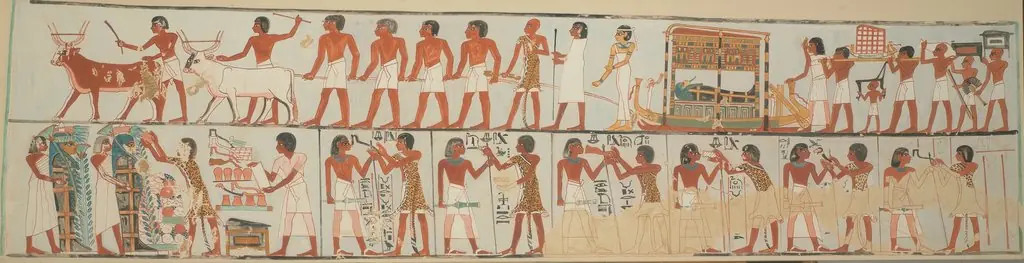 Funeral Procession, Tomb of Pairy
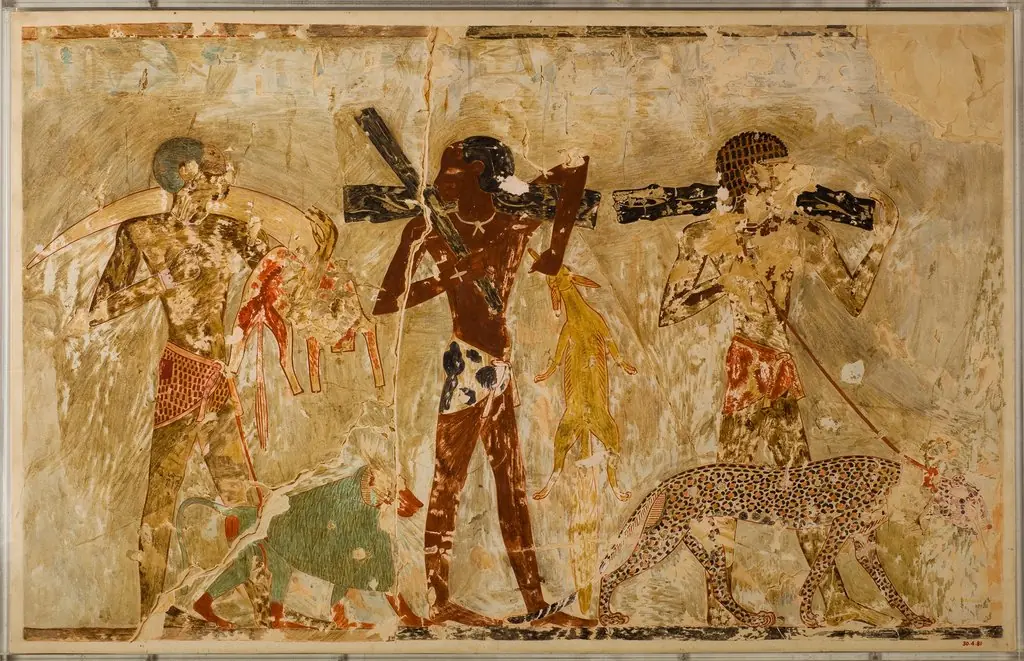 Facsimile painting from the tomb of Rekhmire
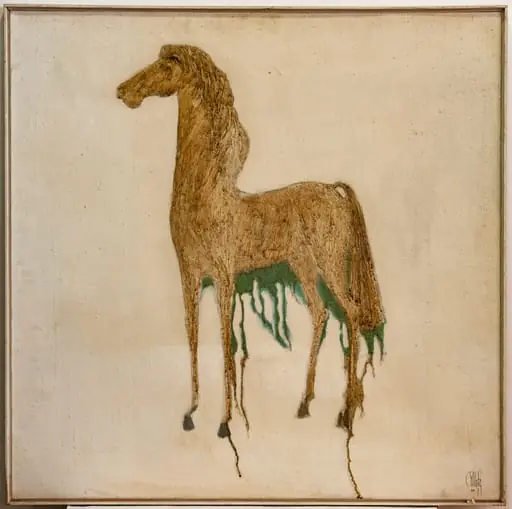 Mânzul
 Maquette
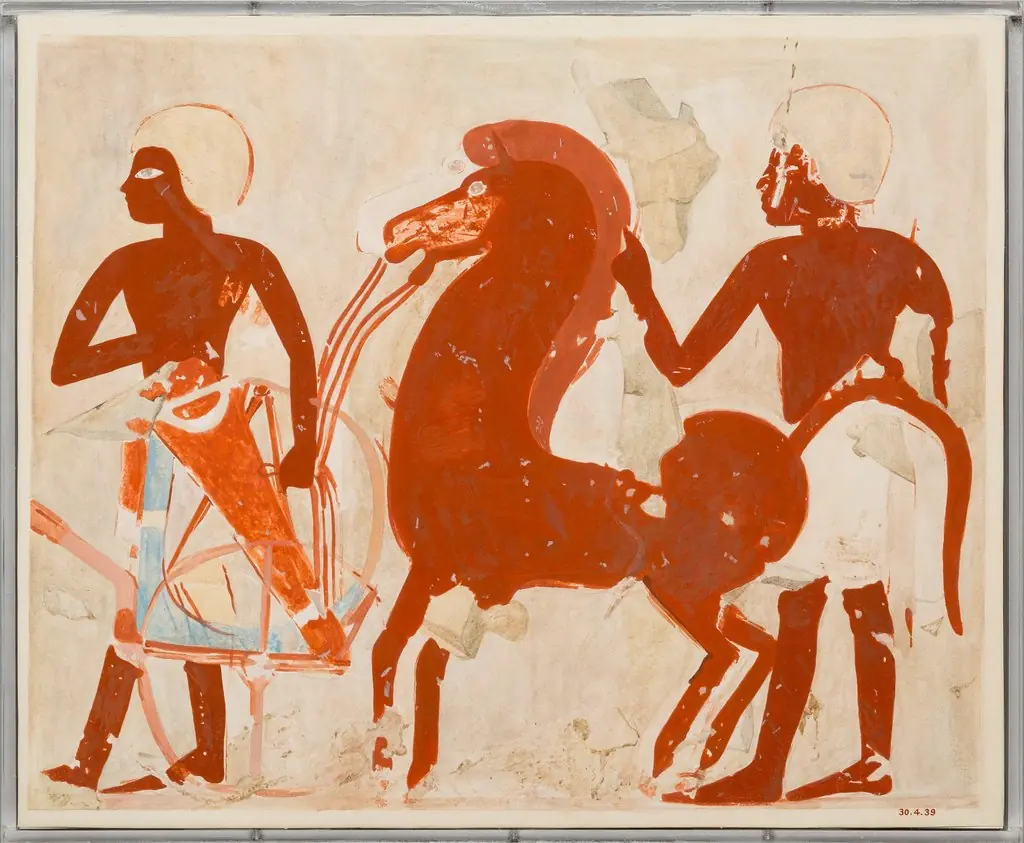 Offerings of a Chariot and Horse, Tomb of Userhat
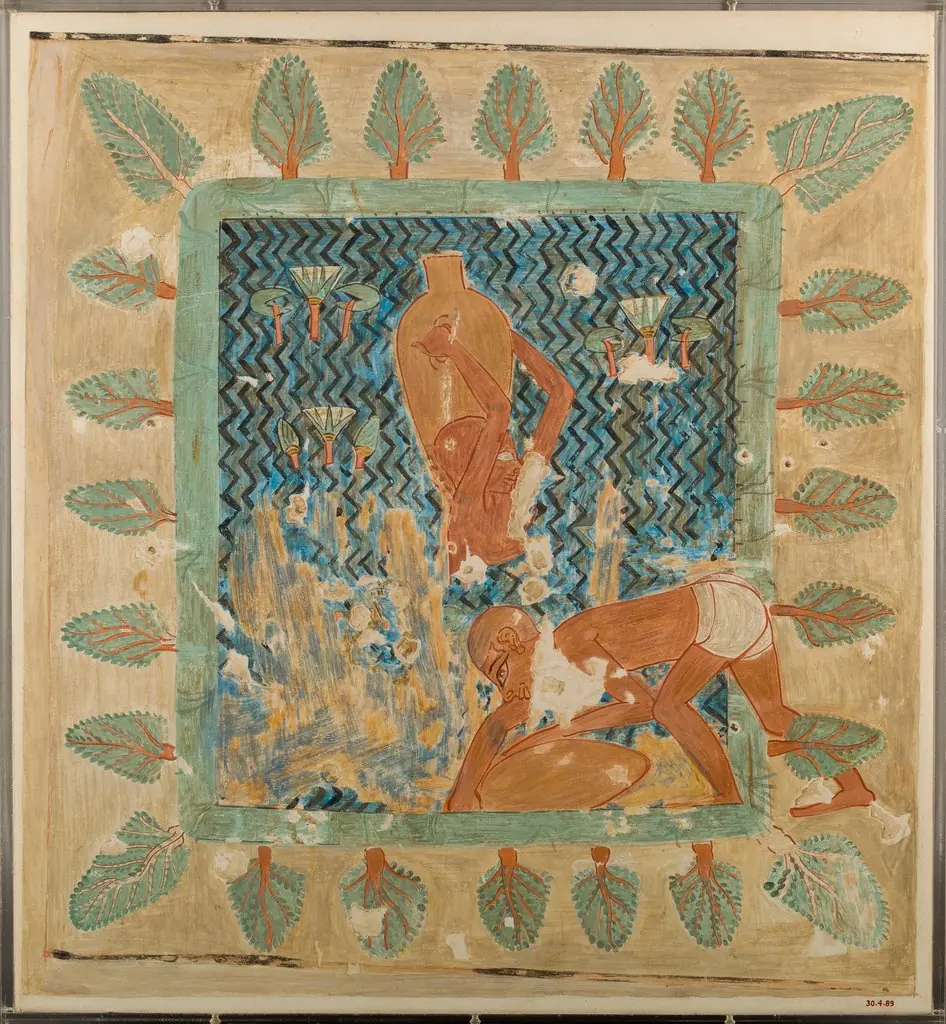 Brickmakers Getting Water from a Pool, Tomb of Rekhmire
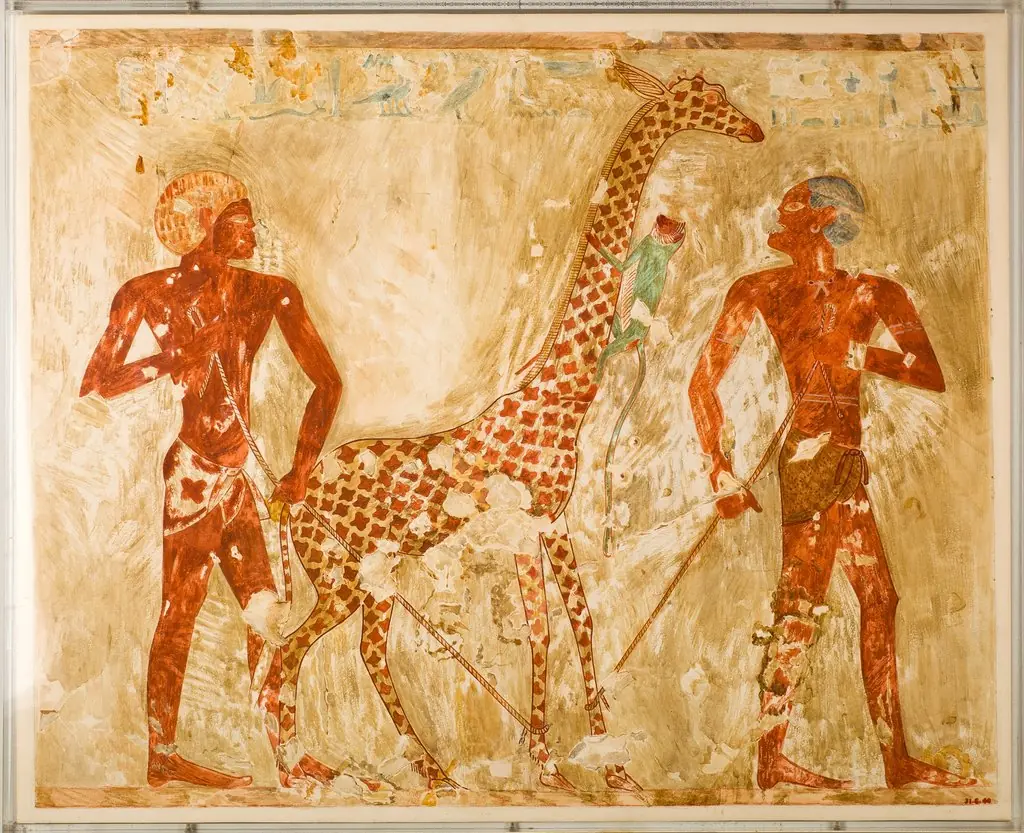 Nubians with a Giraffe and a Monkey, Tomb of Rekhmire
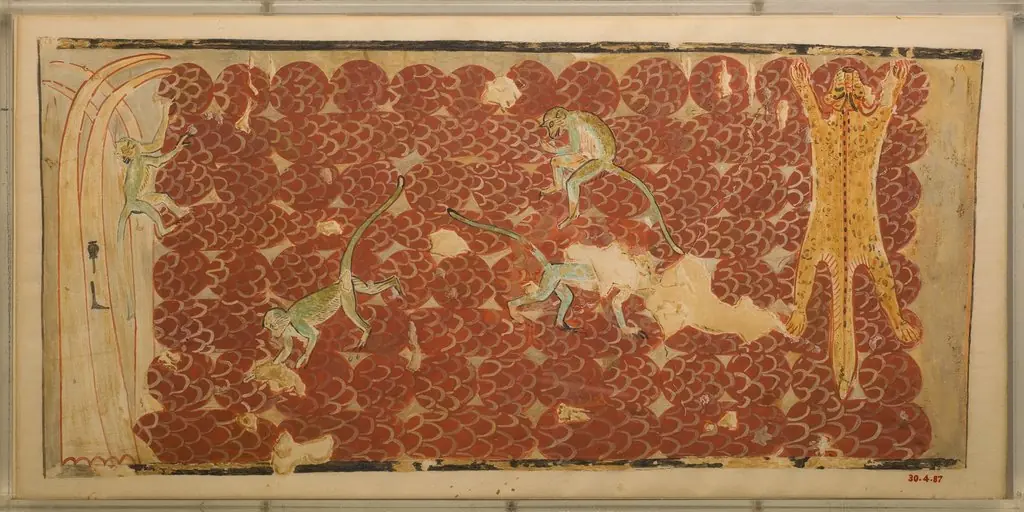 Provisions from Nubia Stored in the Temple, Tomb of Rekhmire
 Untitled
 Compoziție II
 Facsimile of Chief Four Men's Robe - Mandan