Artwork
Laden Donkeys and Ploughing, Tomb of Djar
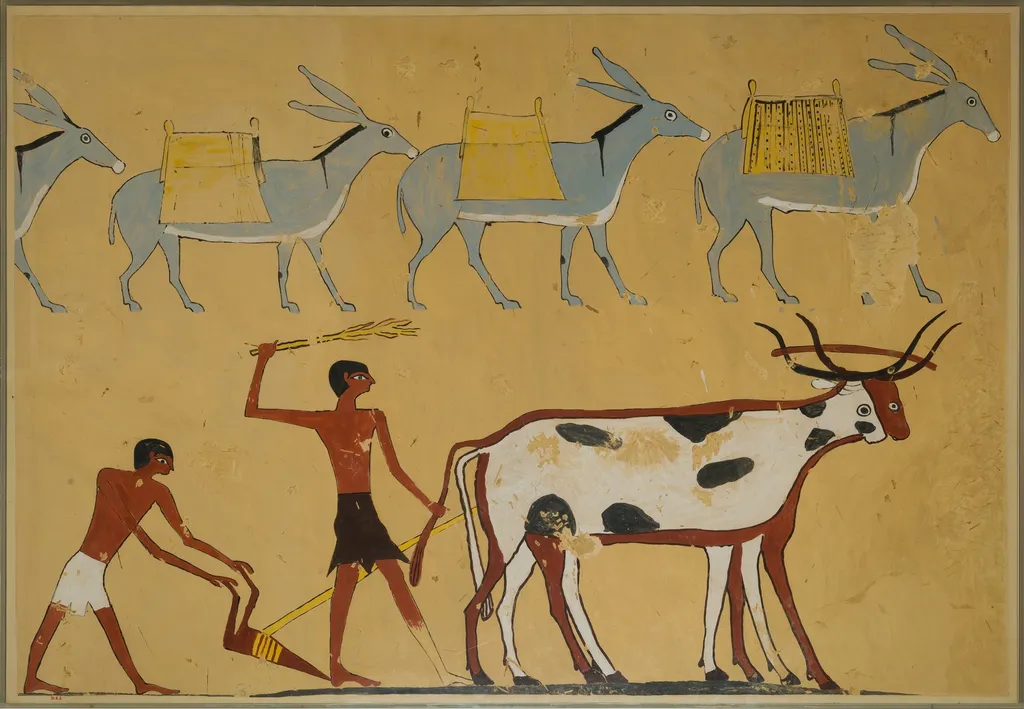
Laden Donkeys and Ploughing, Tomb of Djar is an unspecified painting by Nina M. Davies. It dates from -2059 and is held in the collection of the Metropolitan Museum of Art.
About this work
Subject & Meaning
The painting shows a man directing a team of oxen and donkeys as they pull a plough across a field, with additional donkeys bearing loads nearby.
The painting shows a man directing a team of oxen and donkeys as they pull a plough across a field, with additional donkeys bearing loads nearby. This iconography highlights the central role of agricultural labor in the tomb's narrative. The composition reflects the significance of food production and economic sustenance in the afterlife, using familiar rural activities to convey prosperity and the deceased's capacity to provide.
History & Provenance
The artwork titled Laden Donkeys and Ploughing is a facsimile painting created by Nina M. Davies, documenting scenes from the Tomb of Djar (TT 366). The original ancient Egyptian tomb is dated to approximately 2059 BCE (early 11th Dynasty / Middle Kingdom). Davies executed this copy during her work with the Metropolitan Museum of Art's expedition.
The resulting facsimile, catalogued under accession number 31.6.2, is currently held in the collection of the Metropolitan Museum of Art. While the original tomb dates to the early second millennium BCE, this painted reproduction by Davies was created in the modern era as part of the museum's documentation efforts.
Context
The work originates from the Tomb of Djar (TT 366) and was rendered as a facsimile by Nina M. Davies. The original tomb dates to approximately 2059 BCE (early 11th Dynasty / Middle Kingdom), capturing agricultural labor that depicts men, oxen, and donkeys engaged in ploughing. This piece serves as a significant record of Middle Kingdom rural life and artistic convention.
The facsimile is catalogued in the Metropolitan Museum of Art under accession number 31.6.2, preserving visual details of daily work that might otherwise be lost to deterioration within the original burial context.
Legacy
The painting Laden Donkeys and Ploughing, recorded in the Tomb of Djar and dated to the early 21st century BCE, entered the Metropolitan Museum of Art's collection as a facsimile (MET 31.6.2), underscoring its scholarly visibility. As one of the few securely attributed works by Nina M. Davies, it serves as a key visual source for studies of ancient Egyptian agricultural labor, influencing interpretations of social organization and material culture in Egyptology. Its depiction of donkeys, oxen, and a plough continues to inform both academic discourse and public exhibitions on Middle Kingdom art.
Overview
Laden Donkeys and Ploughing, Tomb of Djar is a painting by Nina M. Davies, created as part of an extensive early twentieth-century project to document ancient Egyptian tomb art. This particular work illustrates a scene from the Tomb of Djar, capturing a moment of agricultural activity. It depicts individuals engaged in farming tasks, utilizing both oxen for ploughing and donkeys for transport, offering a glimpse into historical daily life.
Technique & Style
Davies's rendering of the scene employs a direct and illustrative style. The composition features clear, flat shapes and a restrained color palette, primarily using browns, whites, and blues. This approach, characteristic of documentation drawings, prioritizes clarity in conveying the original tomb painting's details.
The calm demeanor of the animals and the straightforward portrayal of human activity contribute to a sense of observation, akin to a captured moment.
Artist & collection
Artist
The Egyptologists Nina M. Davies (6 January 1881 – 21 April 1965) and Norman de Garis Davies (1865–5 November 1941) were a married couple of illustrators and copyists who worked in the early and mid-twentieth century…

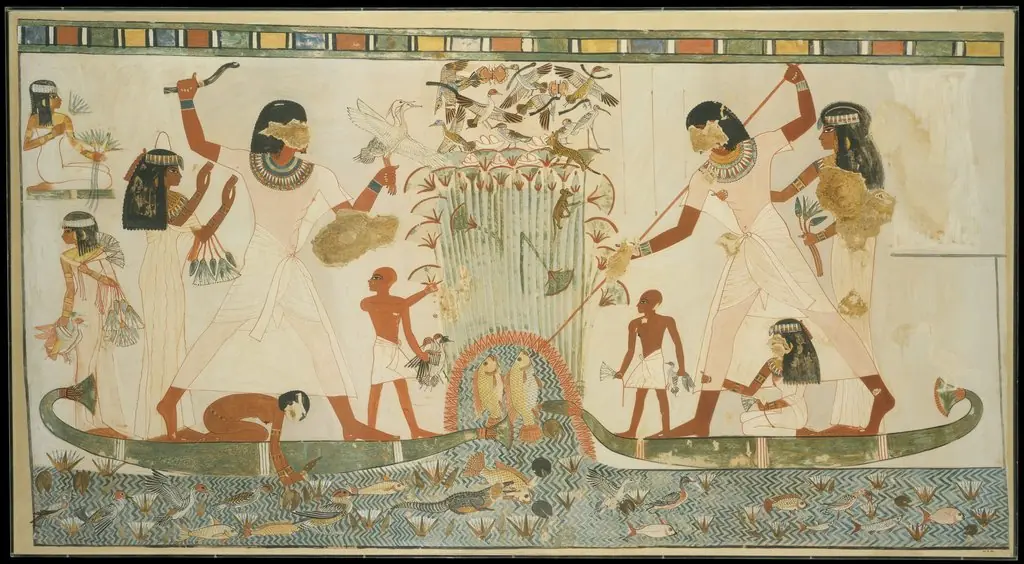 Menna and Family Hunting in the Marshes, Tomb of Menna
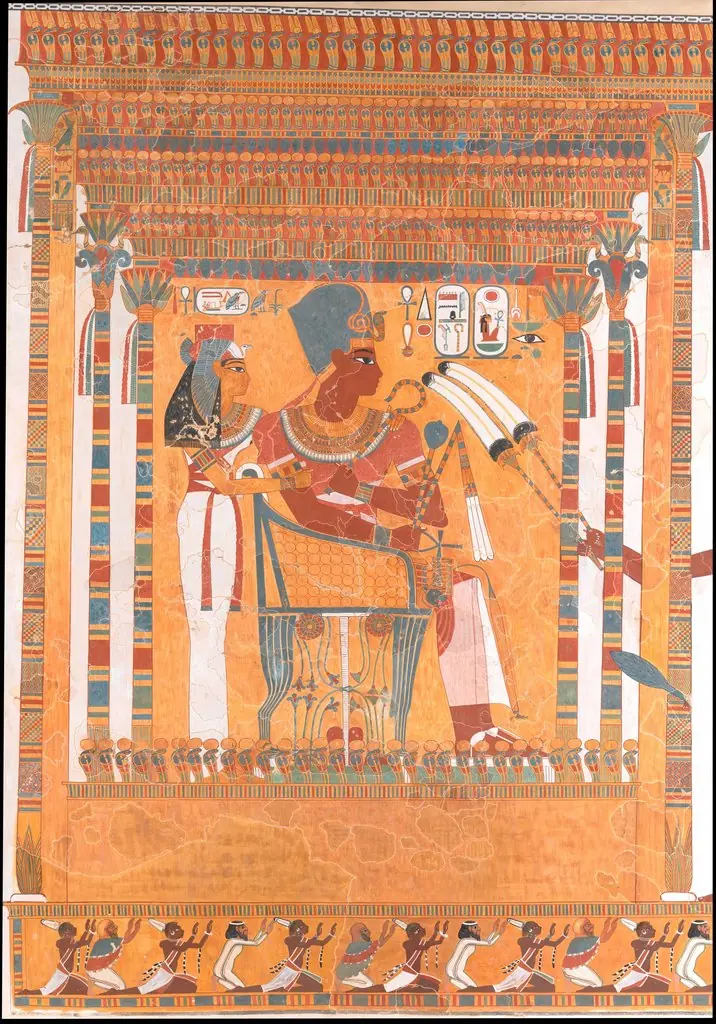 Amenhotep III and his Mother, Mutemwia, in a Kiosk
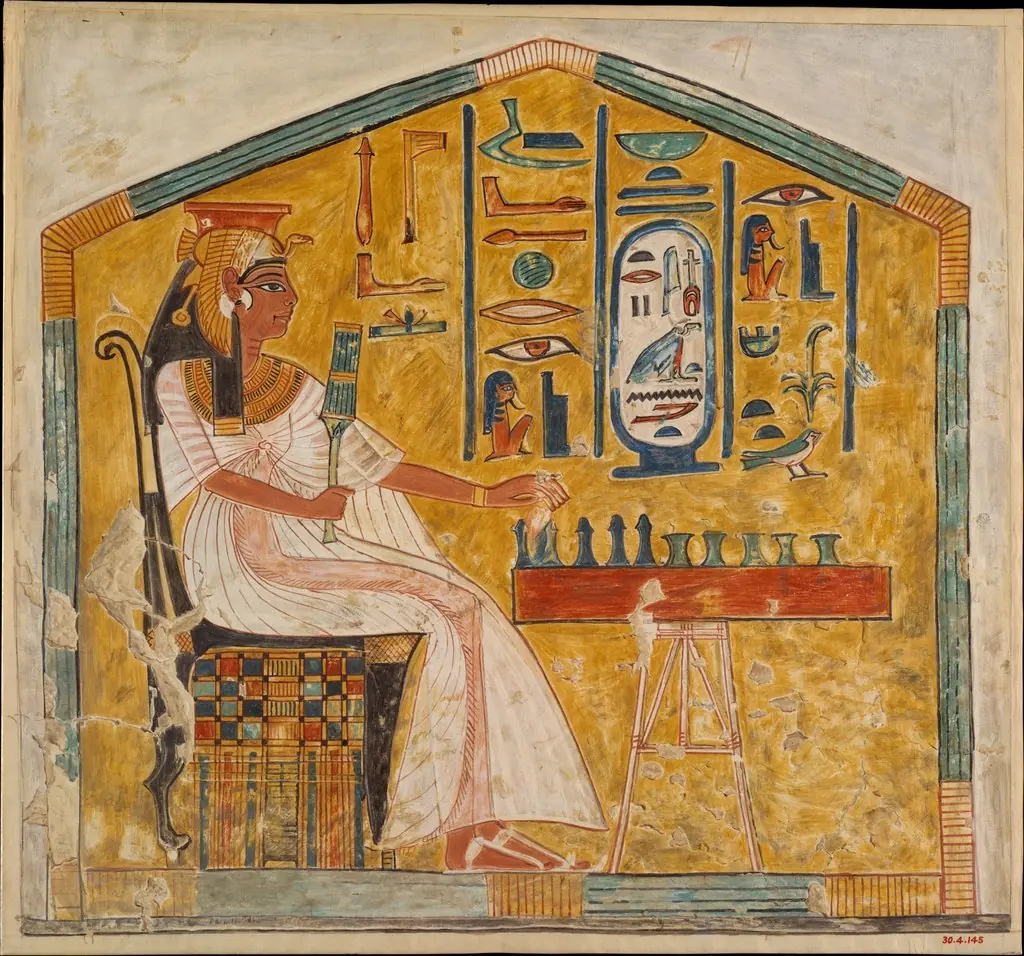 Queen Nefertari Playing Senet
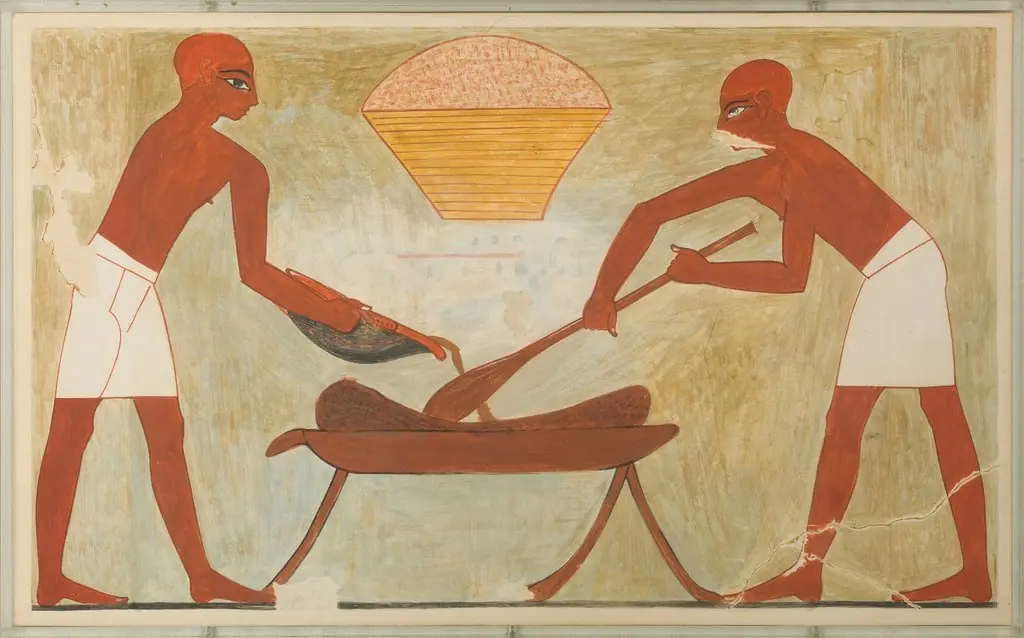 Preparing Dough, Tomb of Rekhmire
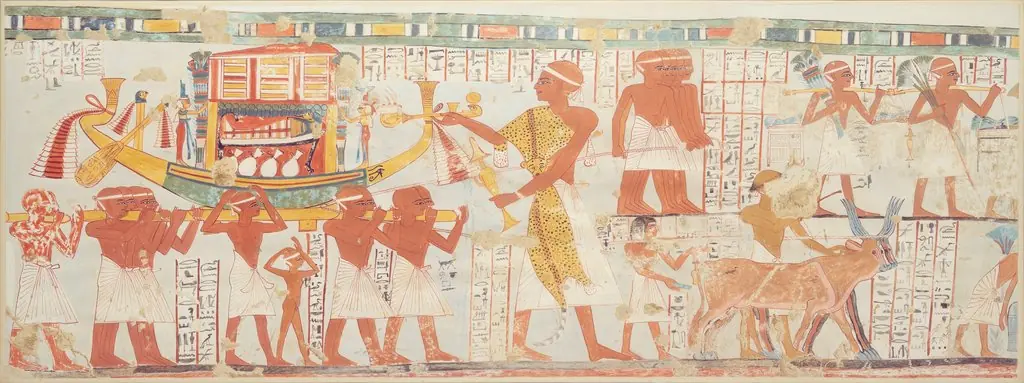 Nakhtamun's Funeral Procession, Tomb of Nakhtamun
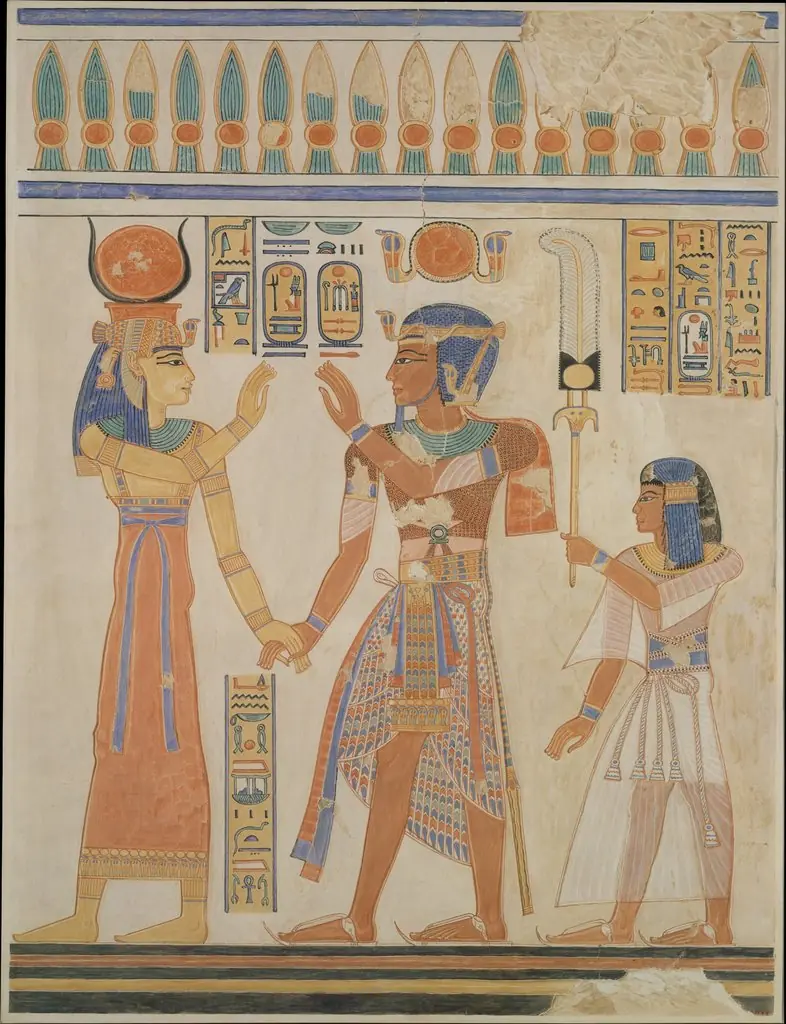 Ramesses III and Prince Amenherkhepeshef before Hathor
 Sifting Meal, Tomb of Rekhmire
 Funeral Procession, Tomb of Pairy
 Nebamun Supervising Estate Activities, Tomb of Nebamun
 Harvest Scenes, Tomb of Menna
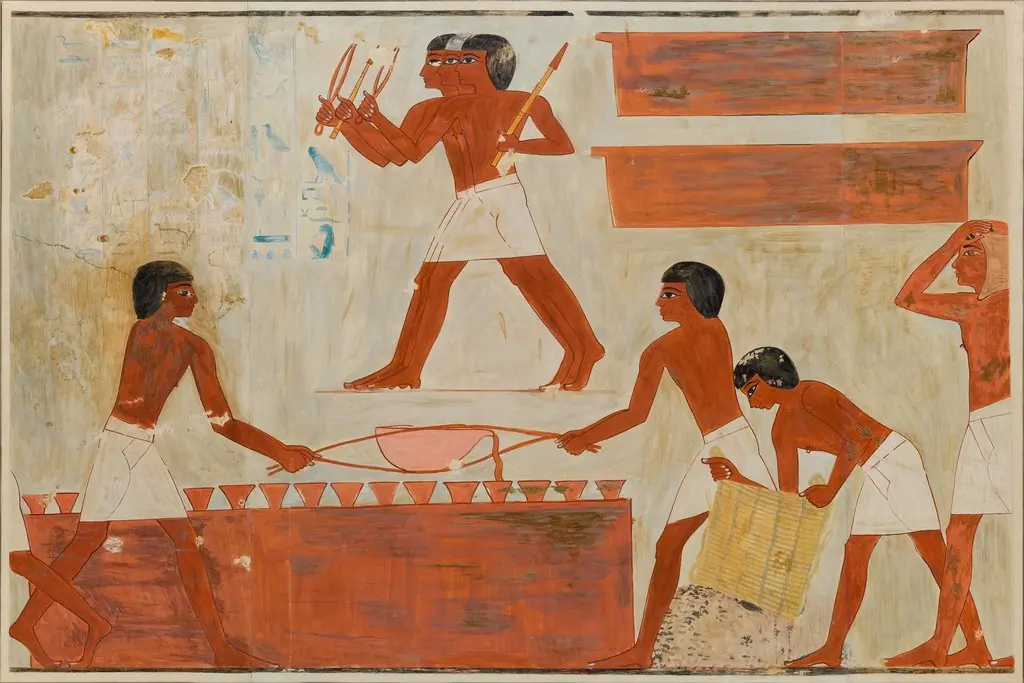 Casting Metal, Tomb of Rekhmire
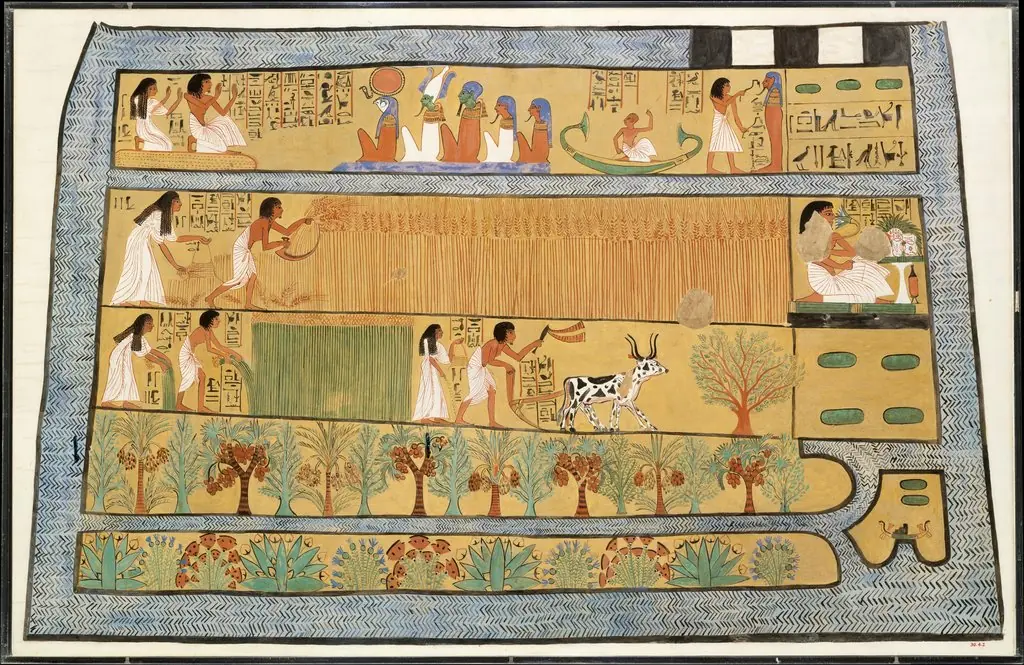 Sennedjem and Iineferti in the Fields of Iaru
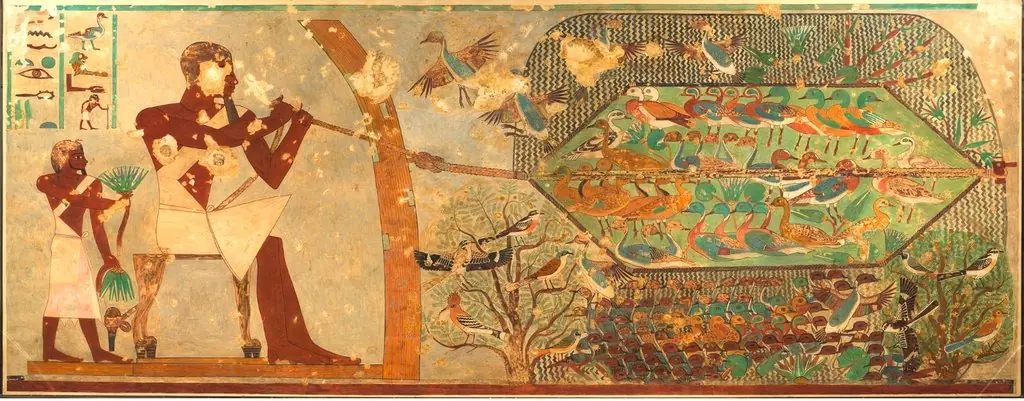 Netting Birds, Tomb of Khnumhotep
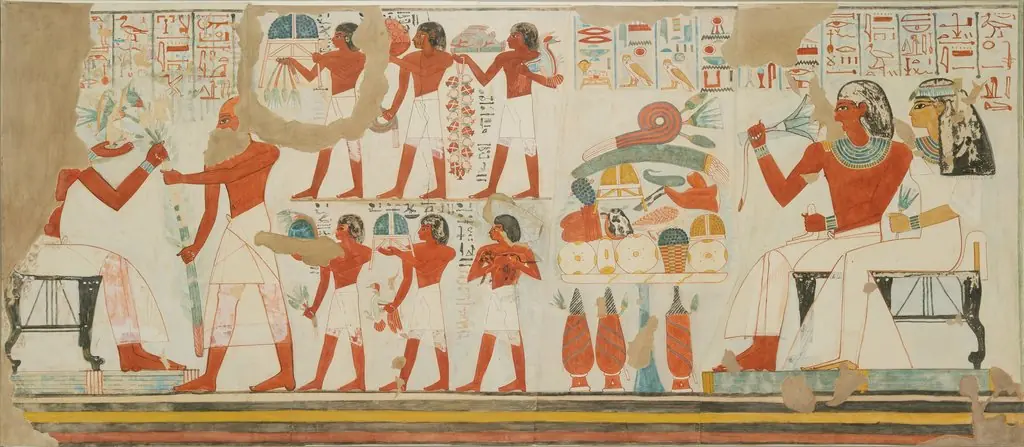 Offerings Made to the Deceased and his Wife, Tomb of Djehutyemheb
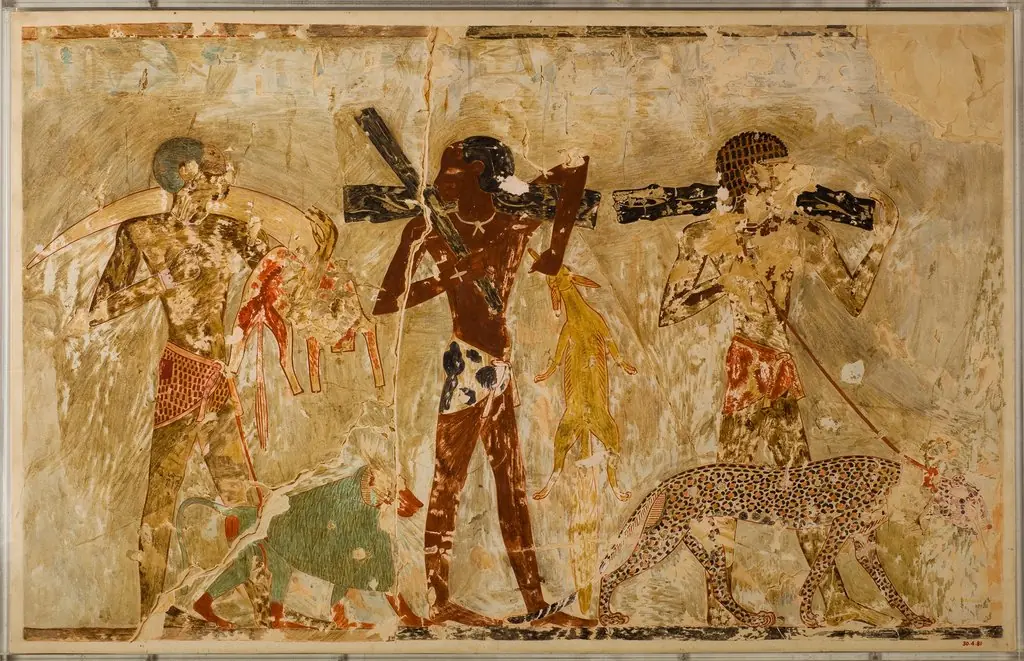 Facsimile painting from the tomb of Rekhmire
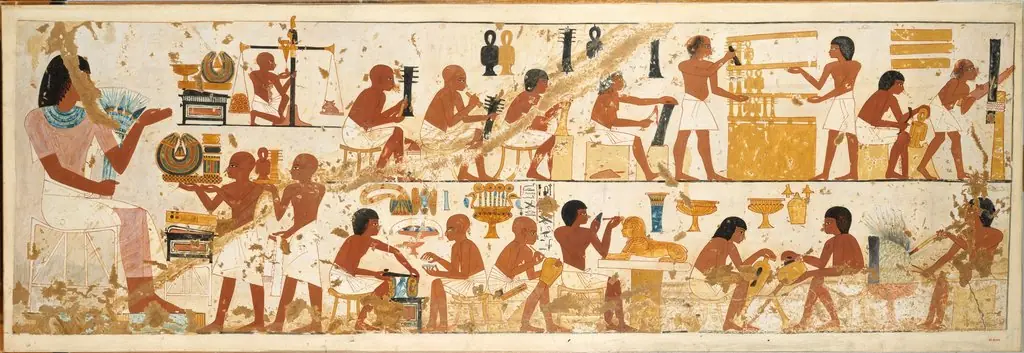 Craftsmen, Tomb of Nebamun and Ipuky
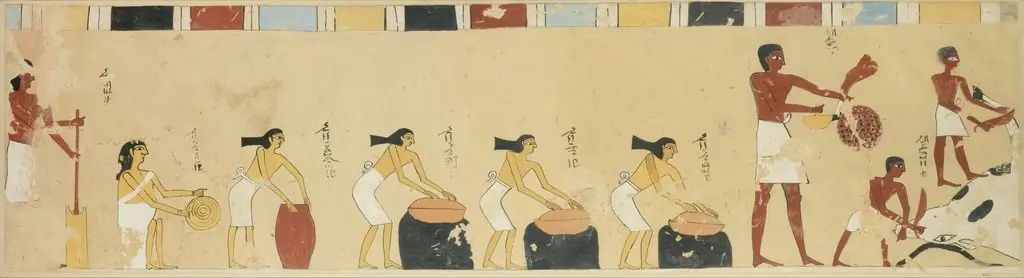 Women Preparing Food, Tomb of Djari
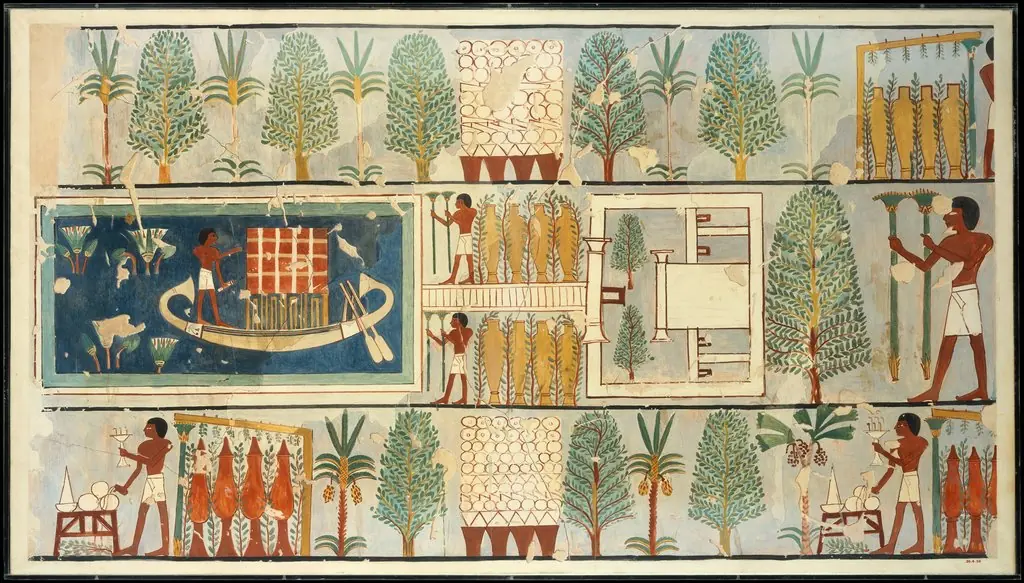 Funeral Ritual in a Garden, Tomb of Minnakht
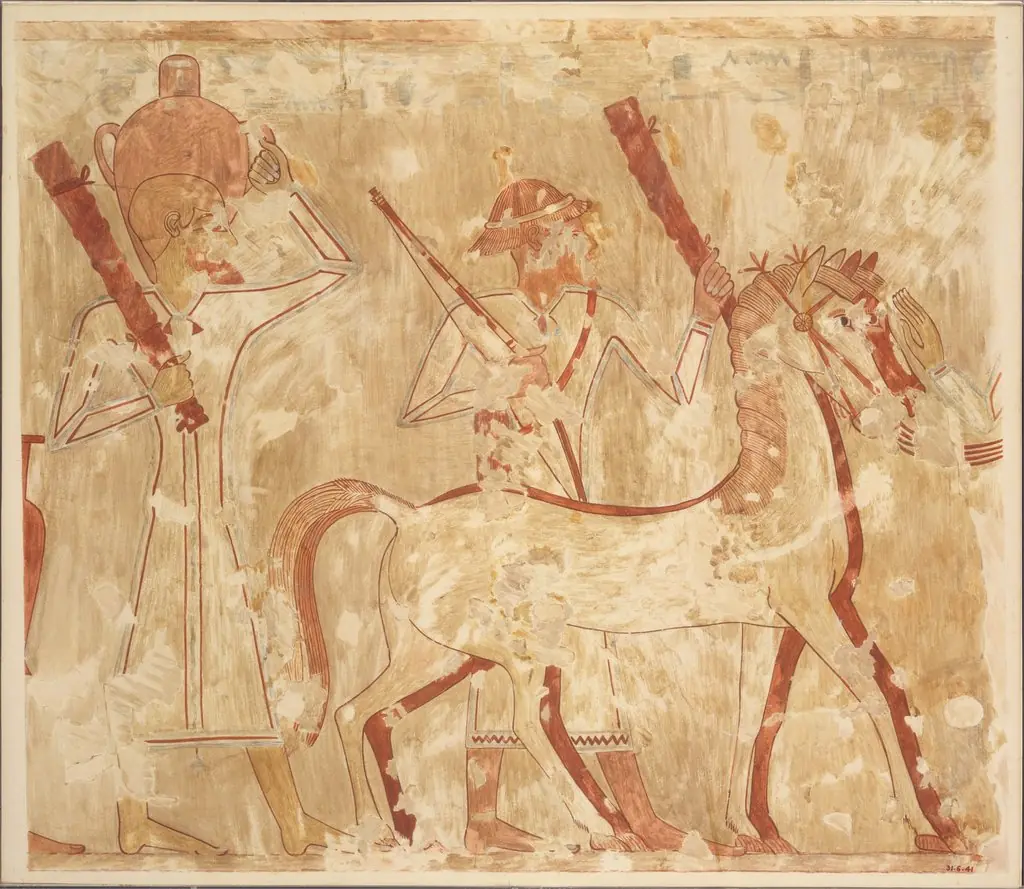
- Syrians Bringing Horses, Tomb of Rekhmire