Artwork
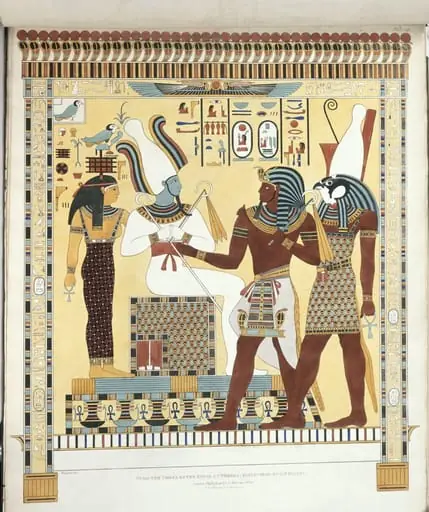
Osiris and the Four Sons of Horus
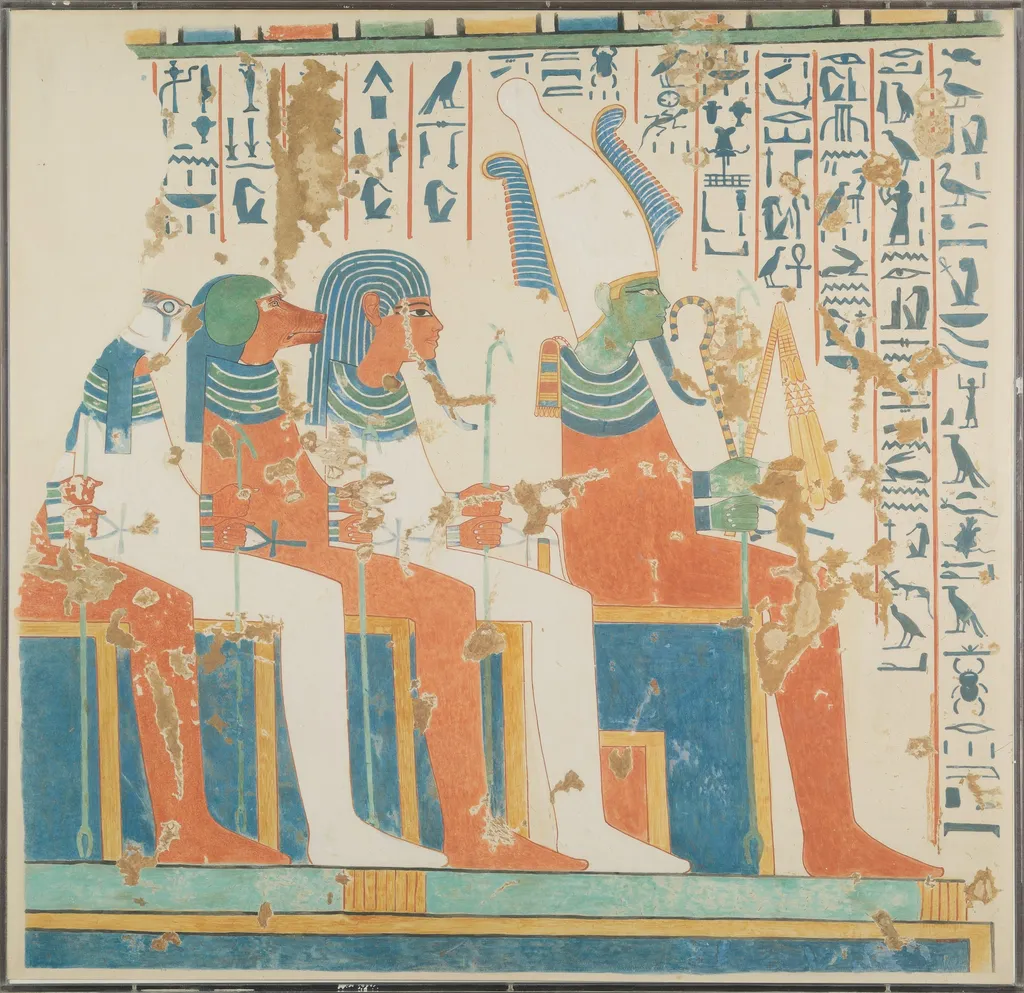
Osiris and the Four Sons of Horus is an unspecified painting by Nina M. Davies. It dates from 1400 and is held in the collection of the Metropolitan Museum of Art. Nina M.
About this work
Subject & Meaning
The imagery follows funerary iconography in which the deities protect the deceased and assist in the journey toward rebirth.
This facsimile, painted by Nina M. Davies in 1922, reproduces an ancient Egyptian funerary scene from the tomb of Nebamun (TT 181) dating to circa 1400 BCE. The composition presents Osiris, the Egyptian god of the afterlife, accompanied by the four sons of Horus, each identified by traditional attributes and hieroglyphic regalia. The imagery follows funerary iconography in which the deities protect the deceased and assist in the journey toward rebirth.
Davies rendered the scene with close attention to hieroglyphic detail and color, preserving the visual language of New Kingdom wall painting for study and display at the Metropolitan Museum of Art.
History & Provenance
The painting is a modern facsimile created by Nina M. Davies in 1922, not an ancient work. It reproduces painted scenes from the tomb of Nebamun (TT 181) in Theban Tomb 181, specifically depicting Osiris flanked by the Four Sons of Horus, and was associated with the figure of Ipuky. It was commissioned for the Metropolitan Museum of Art in New York, where it is catalogued under accession number 30.4.157. The original tomb decoration dates to approximately 1400 BCE.
Context
This painted facsimile was created by Nina M. Davies for the Metropolitan Museum of Art to reproduce imagery from the tomb of Nebamun (TT 181), illustrating Osiris surrounded by his four protective sons. Scholarship on the work emphasizes its role as a high-quality reproduction that aids the study of ancient Egyptian funerary art and informs broader understandings of New Kingdom wall painting techniques. The painting exemplifies early 20th-century efforts to document and disseminate Egyptian visual culture, positioning Davies as a key figure in the transmission of Egyptian motifs to modern museum audiences.
Overview
Nina M. Davies, a British Egyptologist and illustrator, created Osiris and the Four Sons of Horus in 1925. This painting exemplifies her work in meticulously documenting ancient Egyptian tomb art and inscriptions. It is currently part of The Metropolitan Museum of Art's collection, representing a significant effort to preserve and disseminate visual records of historical artifacts.
Technique & Style
Davies rendered this painting in a style that emulates ancient Egyptian artistic conventions. The composition features three figures seated on a bench against a white background, adorned with blue, red, and yellow hieroglyphs and symbols. The meticulous details, such as the jackal-headed figure and the green-skinned deity, reflect the characteristic forms and color palettes found in original tomb paintings.
Artist & collection
Artist
The Egyptologists Nina M. Davies (6 January 1881 – 21 April 1965) and Norman de Garis Davies (1865–5 November 1941) were a married couple of illustrators and copyists who worked in the early and mid-twentieth century…

 Menna and Family Hunting in the Marshes, Tomb of Menna
 Amenhotep III and his Mother, Mutemwia, in a Kiosk
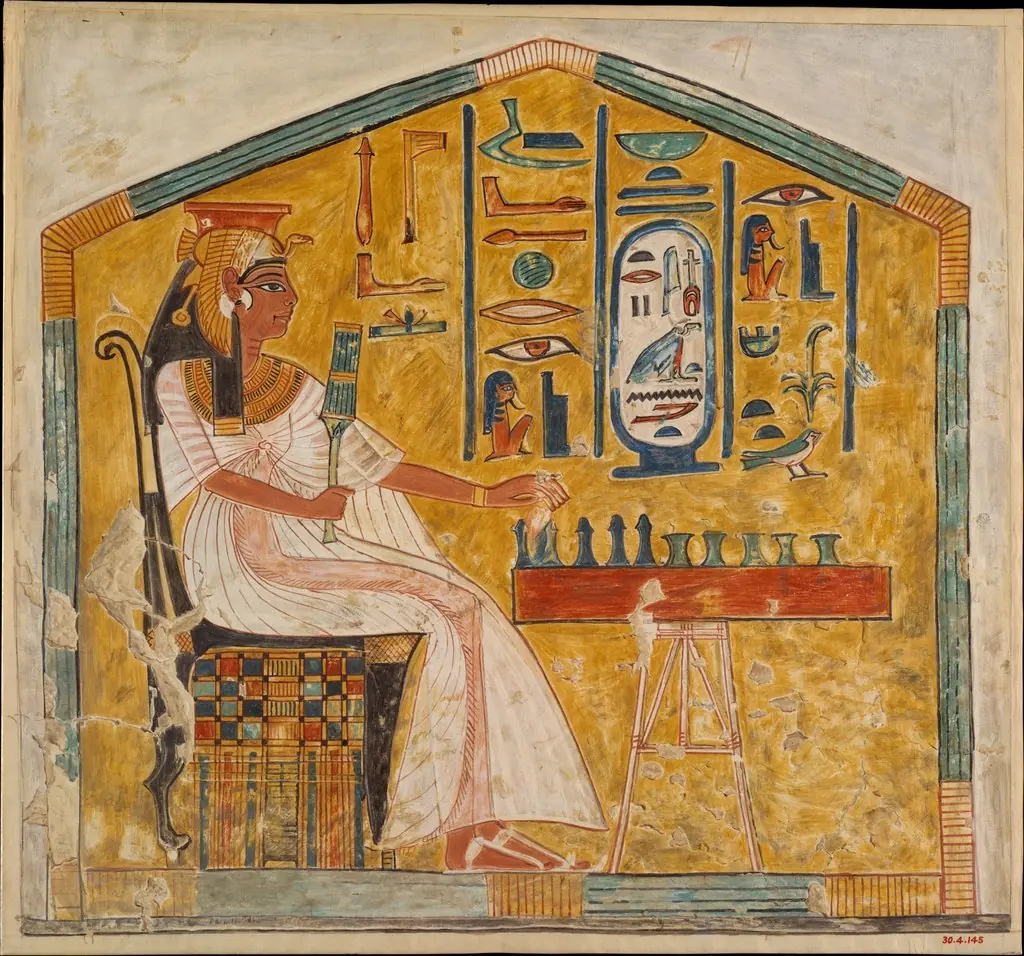 Queen Nefertari Playing Senet
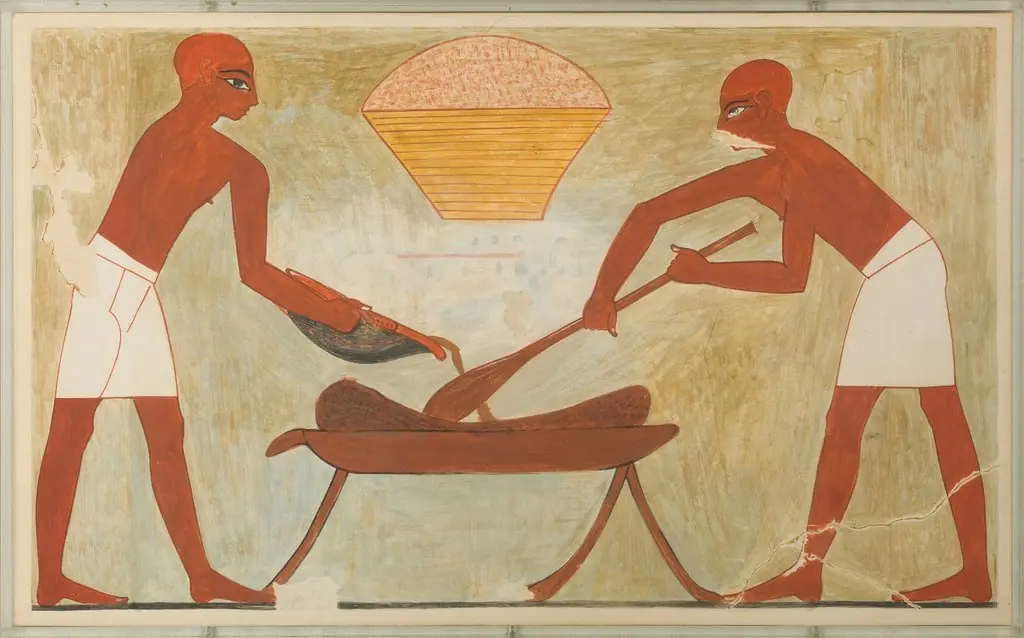 Preparing Dough, Tomb of Rekhmire
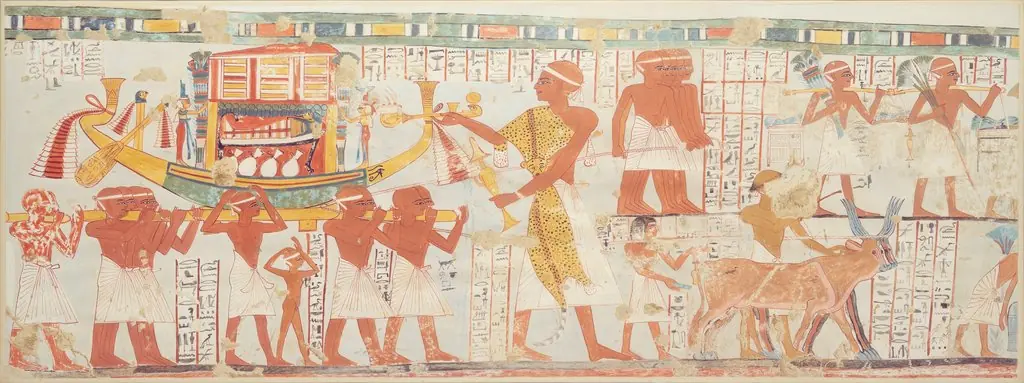 Nakhtamun's Funeral Procession, Tomb of Nakhtamun
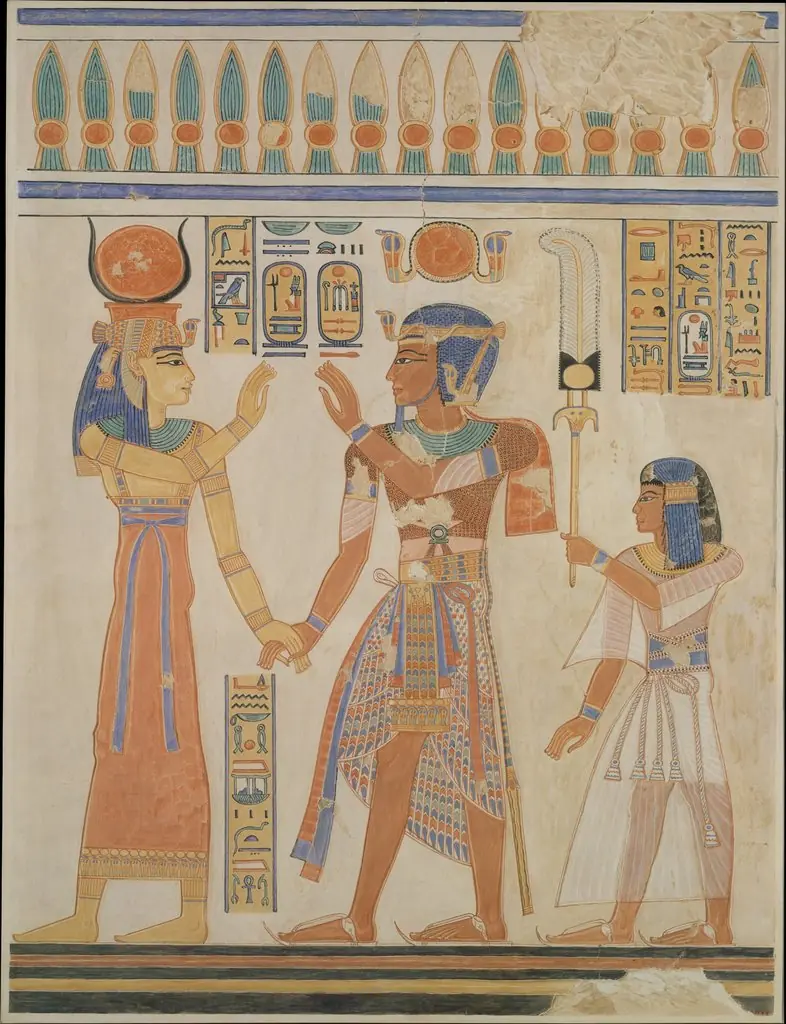 Ramesses III and Prince Amenherkhepeshef before Hathor
 Sifting Meal, Tomb of Rekhmire
 Funeral Procession, Tomb of Pairy
 Nebamun Receiving Wine
 Plates Illustrative Of The Researches And Operations Of G. Belzoni In Egypt And Nubia
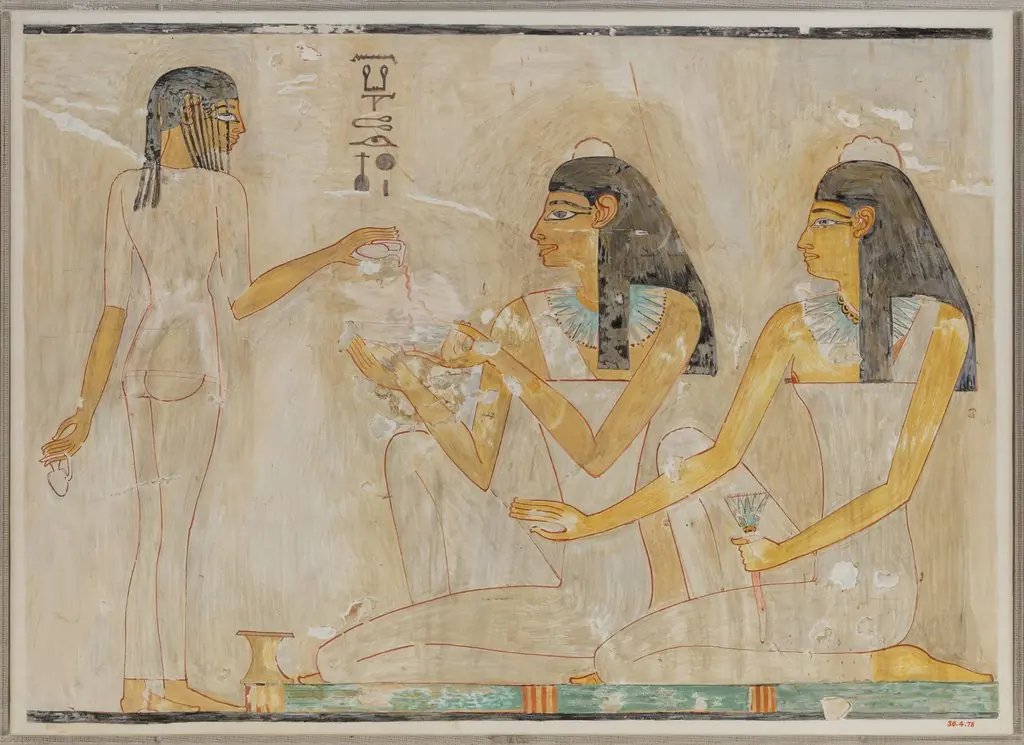 Women at a Banquet
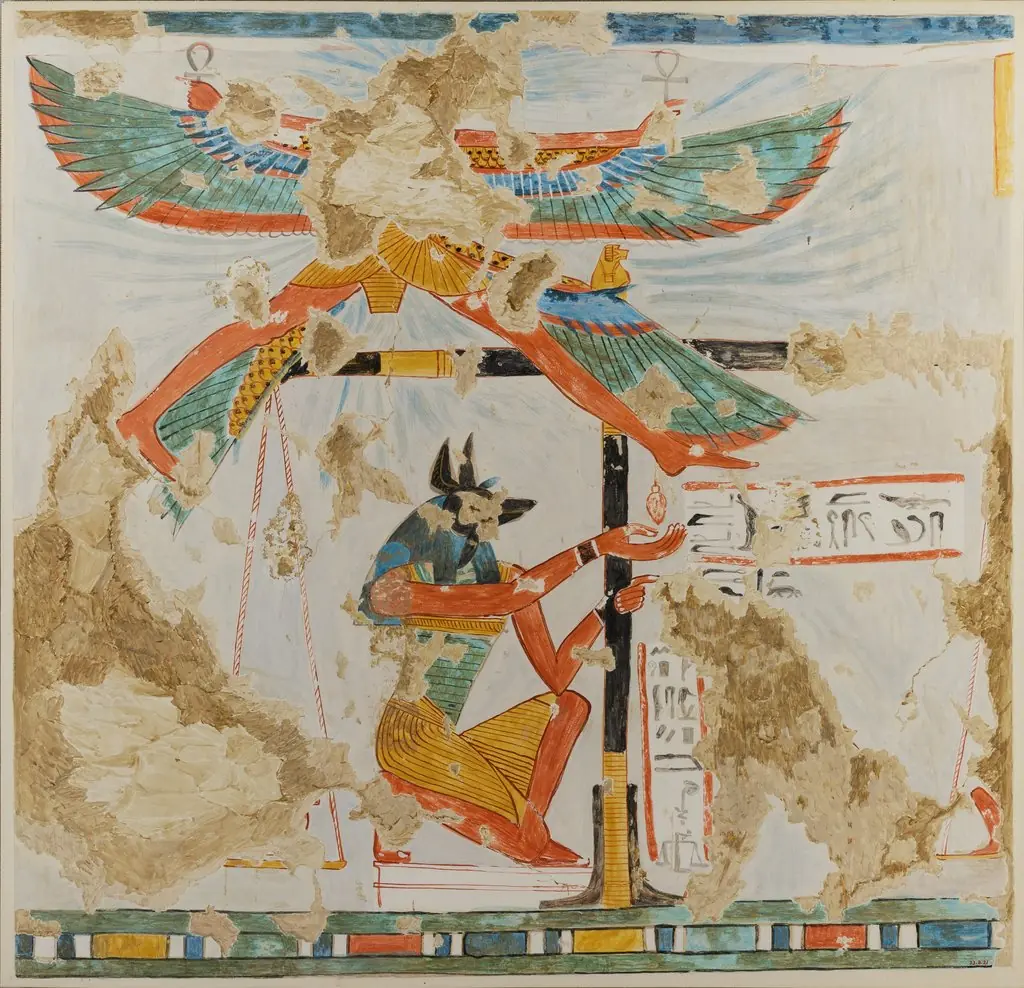 Anubis Weighing the Heart, Tomb of Nakhtamun
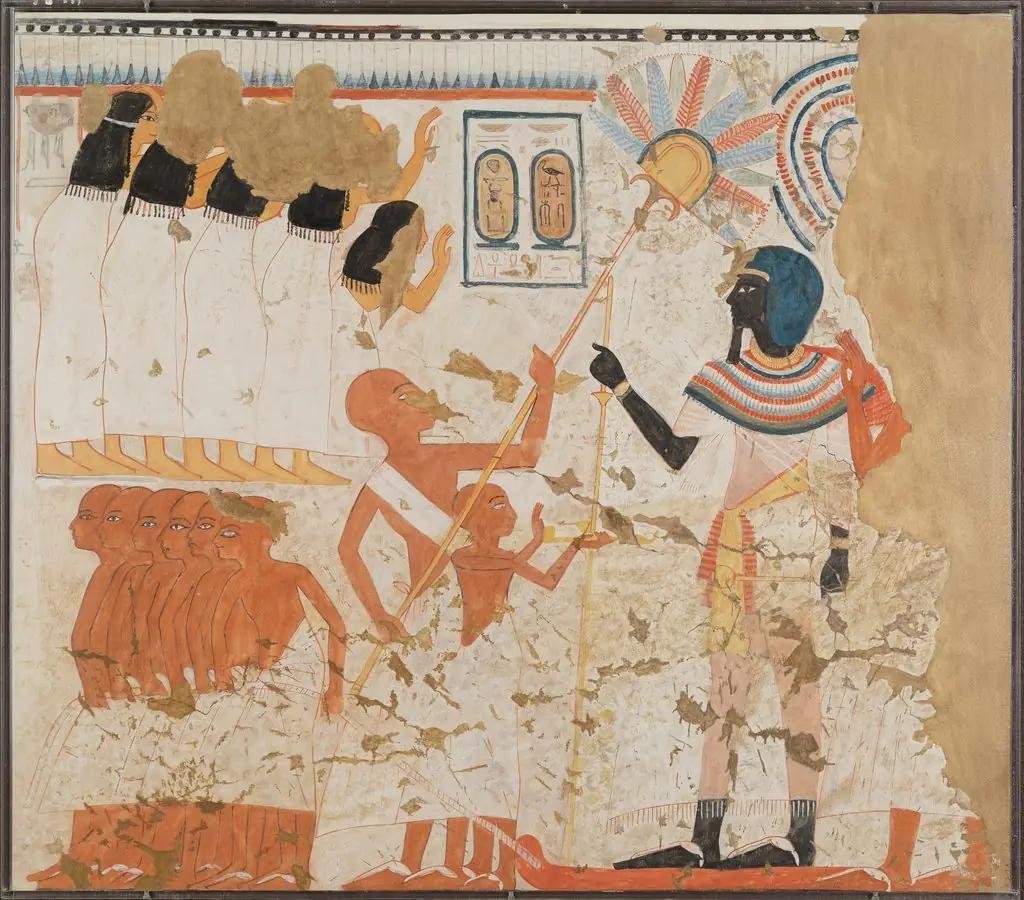 Dragging a Statue of Thutmose I
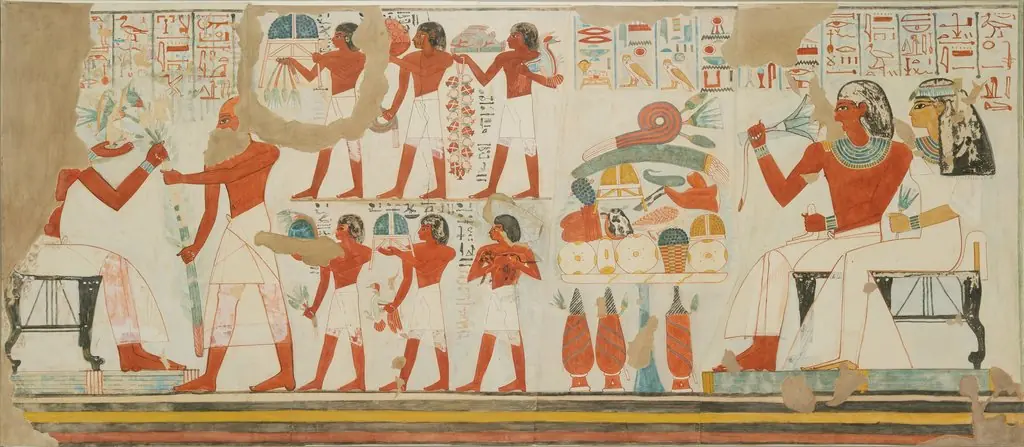 Offerings Made to the Deceased and his Wife, Tomb of Djehutyemheb
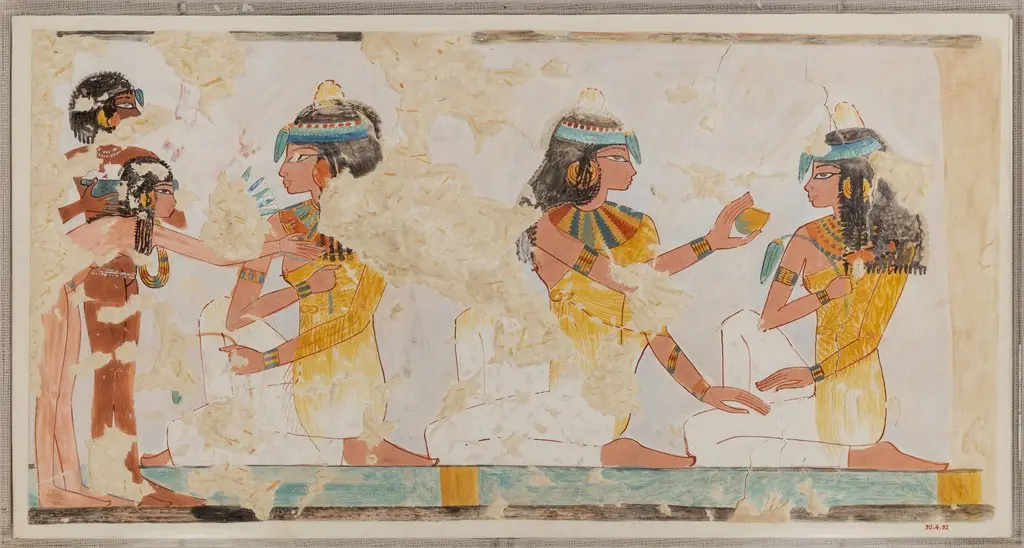 Women at a Banquet
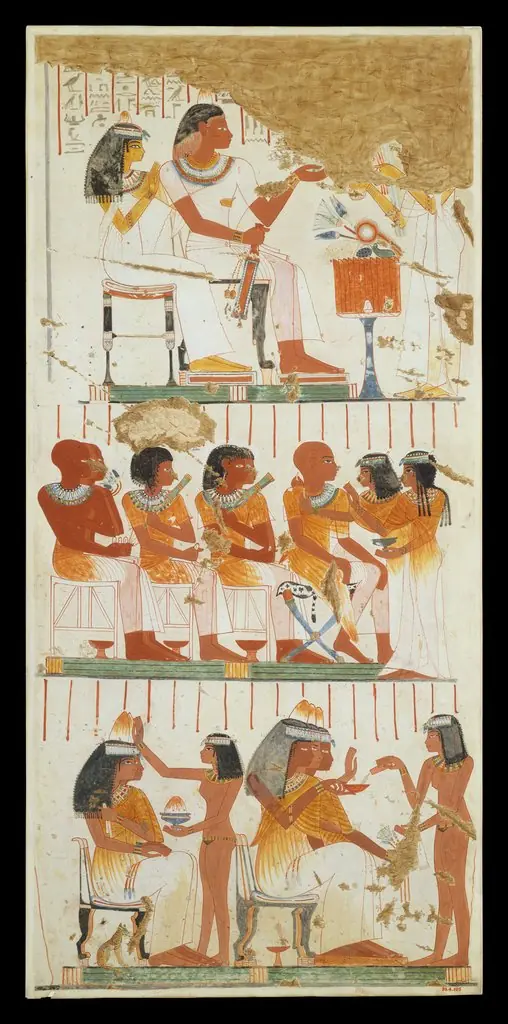 Guests at a Banquet
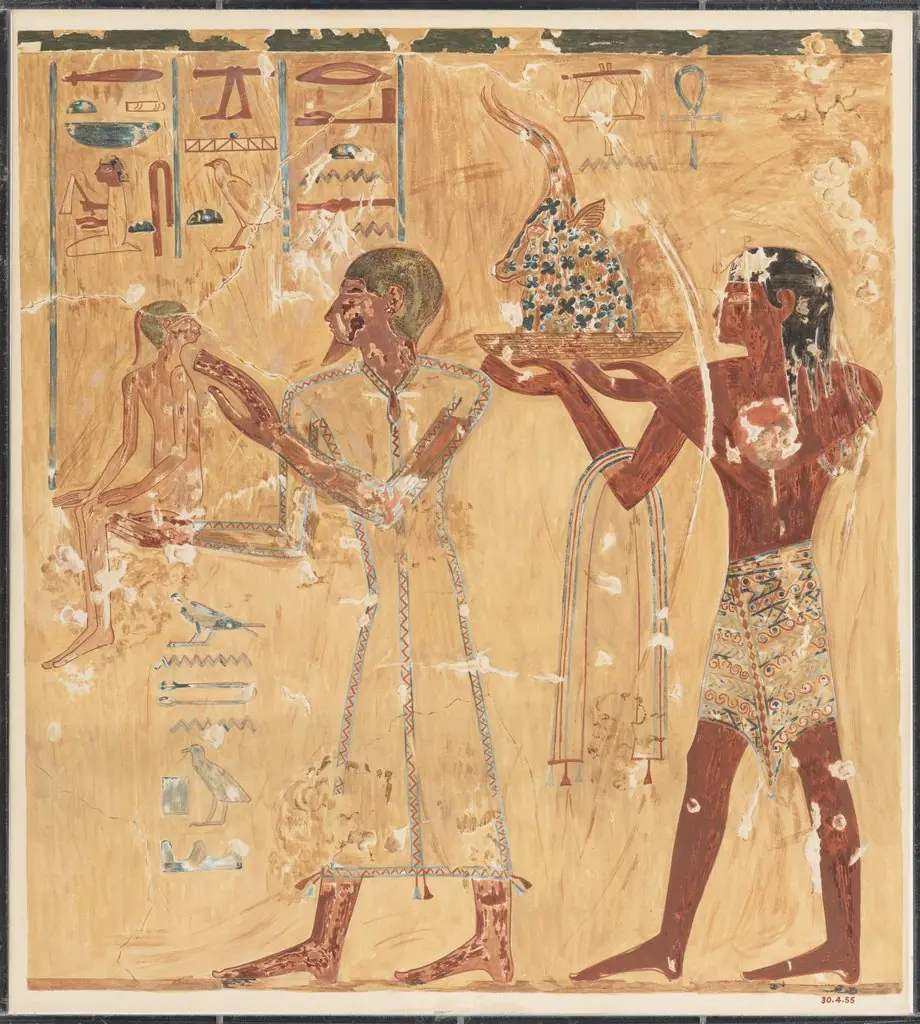 Foreigners, Tomb of Menkheperraseneb
- Osiris carrying a flail and crook