Artwork
Syrians Bringing an Ingot and a Chariot, tomb of Rekhmire
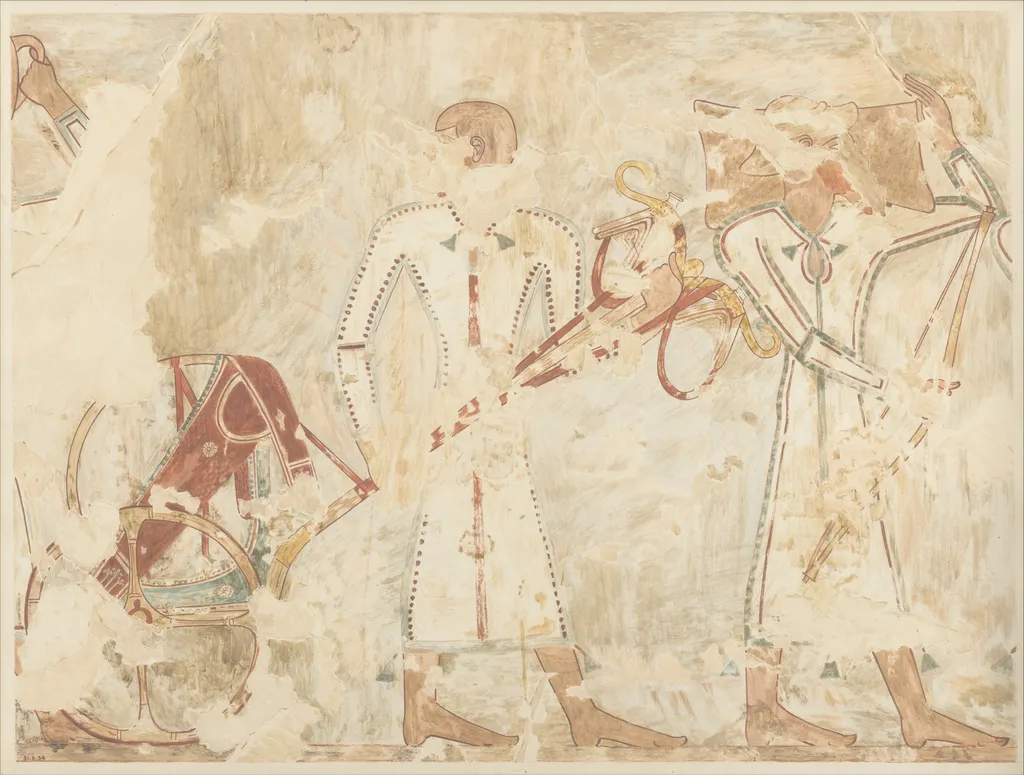
Syrians Bringing an Ingot and a Chariot, tomb of Rekhmire is an unspecified painting by Nina M. Davies. It dates from 1504 and is held in the collection of the Metropolitan Museum of Art.
About this work
Subject & Meaning
The composition emphasizes Egypt's role as a collector of exotic resources and reinforces the state's authority over peripheral regions.
The scene shows Syrian figures bearing a metal ingot and a chariot, elements that underscore the diplomatic exchange of tribute between Egypt and foreign lands during the New Kingdom. The chariot and ingot function as symbols of wealth, mobility, and foreign power, reflecting the broader theme of imperial control and reciprocal gift-giving recorded in the tomb of Rekhmire. The composition emphasizes Egypt's role as a collector of exotic resources and reinforces the state's authority over peripheral regions.
History & Provenance
The facsimile is held by the Metropolitan Museum of Art, where it forms part of the institution's collection of Nina M. Davies's copies of Egyptian tomb decoration. Its inventory designation is accession number 31.6.34, identifying it as a facsimile of the scene of Syrians bringing an ingot and a chariot from the Theban tomb of Rekhmire (TT 100). The work is documented as a painting produced in 1504, executed as a reproduction of the original wall painting in situ.
No exhibition history is recorded in the available sources beyond its presence in the Metropolitan Museum of Art's holdings.
Context
Scholarly discussion of this work situates it within the corpus of Egyptian tomb paintings reproduced by Nina M. Davies, highlighting her role in disseminating facsimile imagery of the Metropolitan Museum of Art collection. The 1504-dated scene from the tomb of Rekhmire, depicting Syrians with an ingot and chariot, is contextualized as part of Davies' systematic recording of New Kingdom funerary art, where chariot and ingot motifs signify foreign tribute and economic exchange. Art historical analysis emphasizes its placement within broader studies of Middle Kingdom tomb iconography and the transmission of Egyptian visual culture through 20th-century scholarly reproduction practices.
Overview
The wall painting from the tomb of the 18th‑dynasty official Rekhmire portrays three figures in profile: a man bearing a pole, another shouldering a metal ingot, and a third driving a two‑horse chariot. Rendered in muted earth tones with touches of green and blue, the composition is outlined in black and shows the characteristic flatness of Egyptian tomb art.
Technique & Style
Executed with mineral pigments applied to plaster, the painting employs a limited palette of reds, browns, whites, and occasional blue and green highlights. Figures are rendered in strict profile, with linear outlines and minimal modeling, reflecting the conventional Egyptian artistic canon that prioritised symbolic clarity over naturalistic depth.
Artist & collection
Artist
The Egyptologists Nina M. Davies (6 January 1881 – 21 April 1965) and Norman de Garis Davies (1865–5 November 1941) were a married couple of illustrators and copyists who worked in the early and mid-twentieth century…

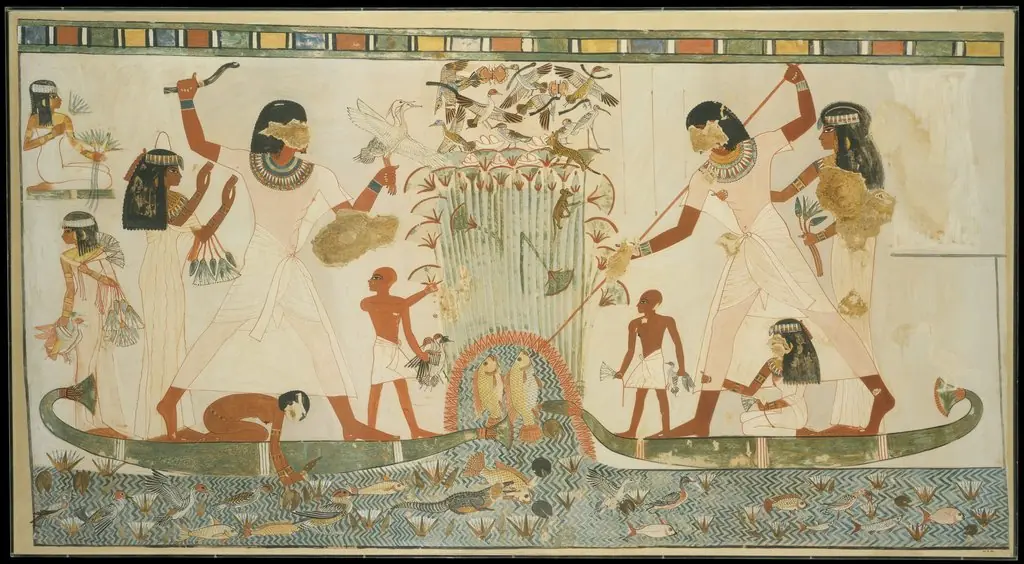 Menna and Family Hunting in the Marshes, Tomb of Menna
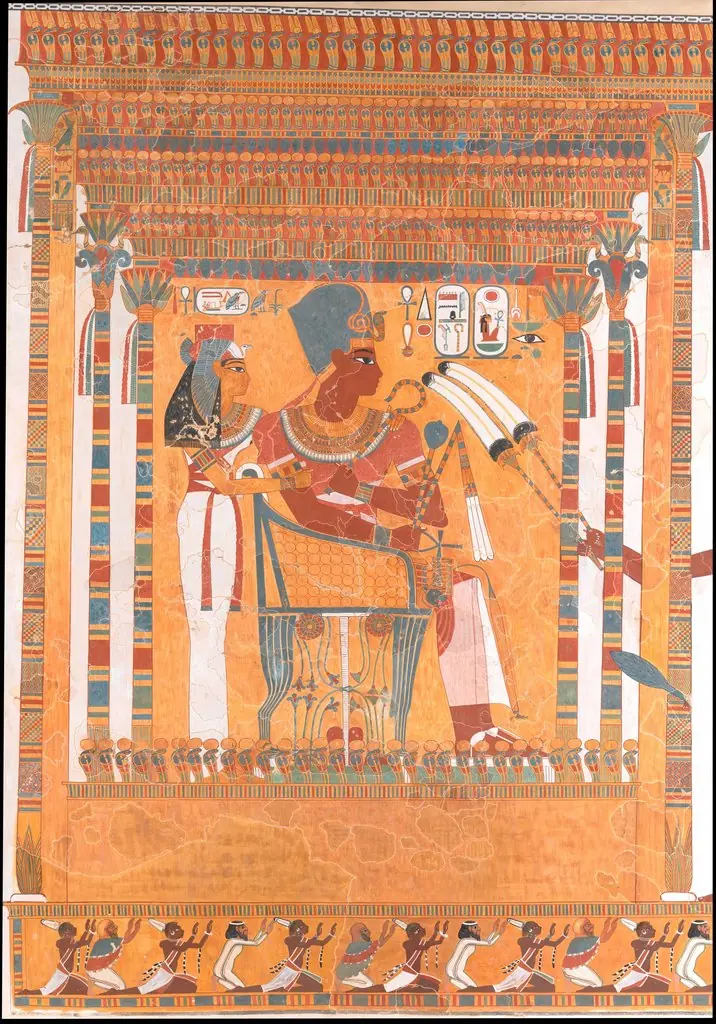 Amenhotep III and his Mother, Mutemwia, in a Kiosk
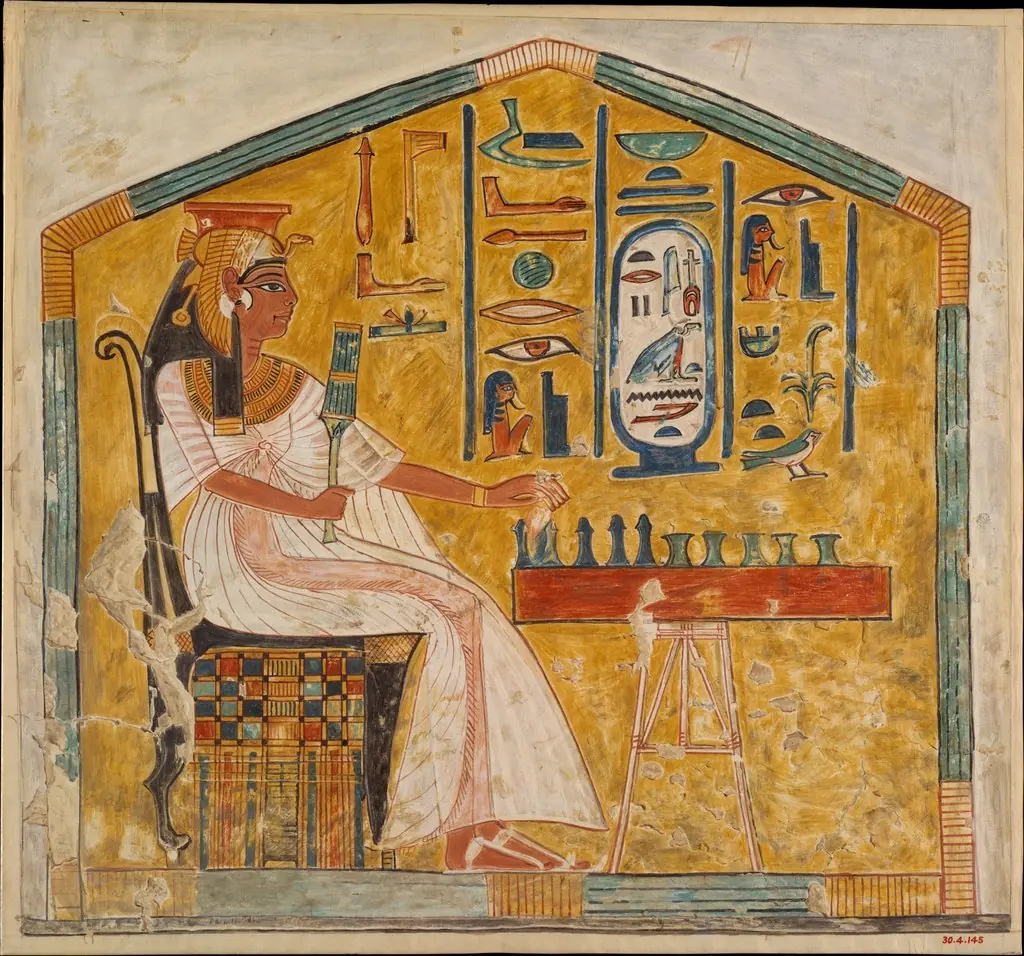 Queen Nefertari Playing Senet
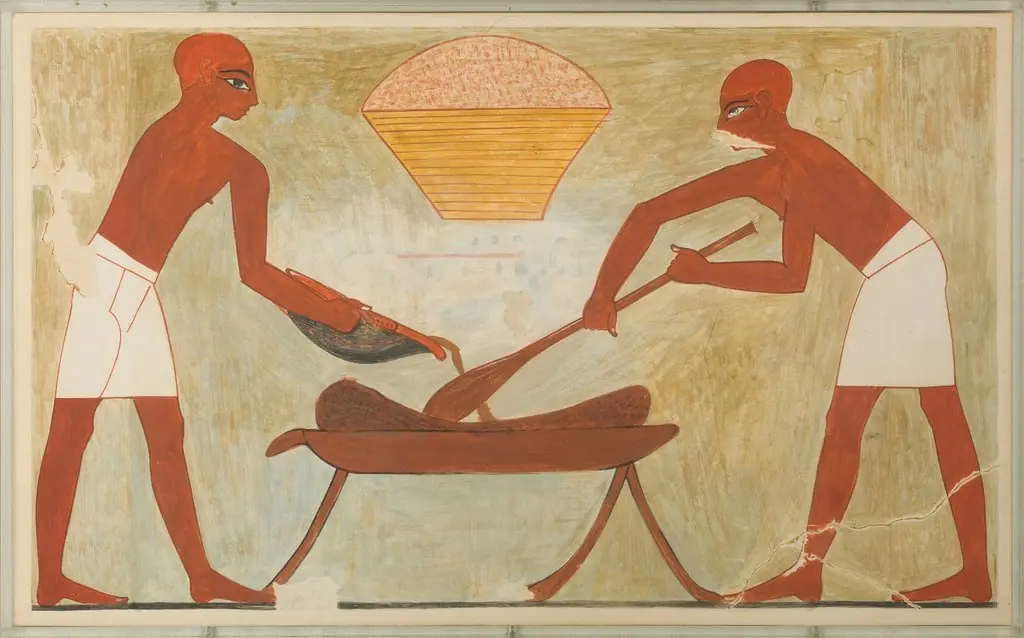 Preparing Dough, Tomb of Rekhmire
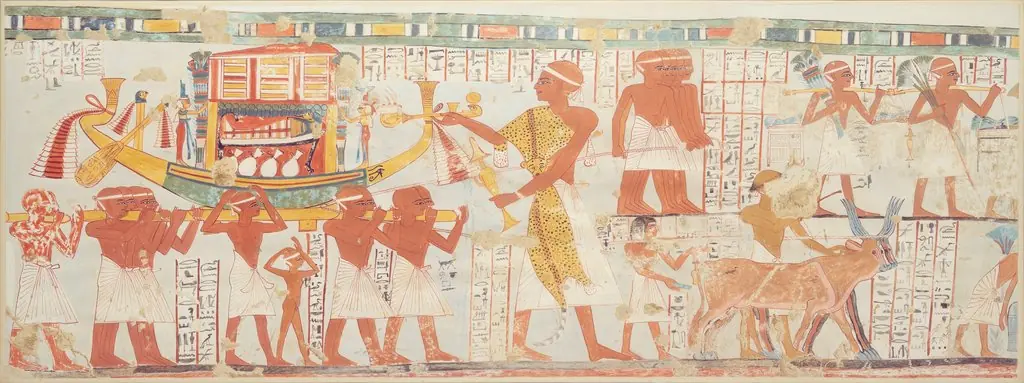 Nakhtamun's Funeral Procession, Tomb of Nakhtamun
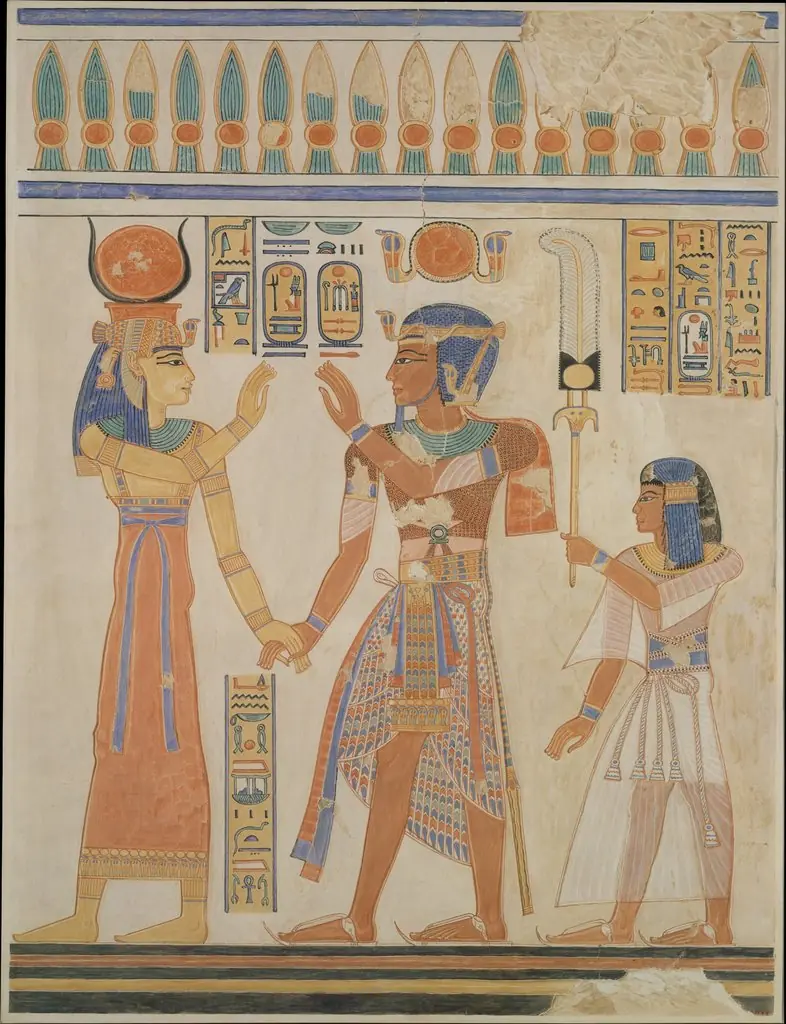 Ramesses III and Prince Amenherkhepeshef before Hathor
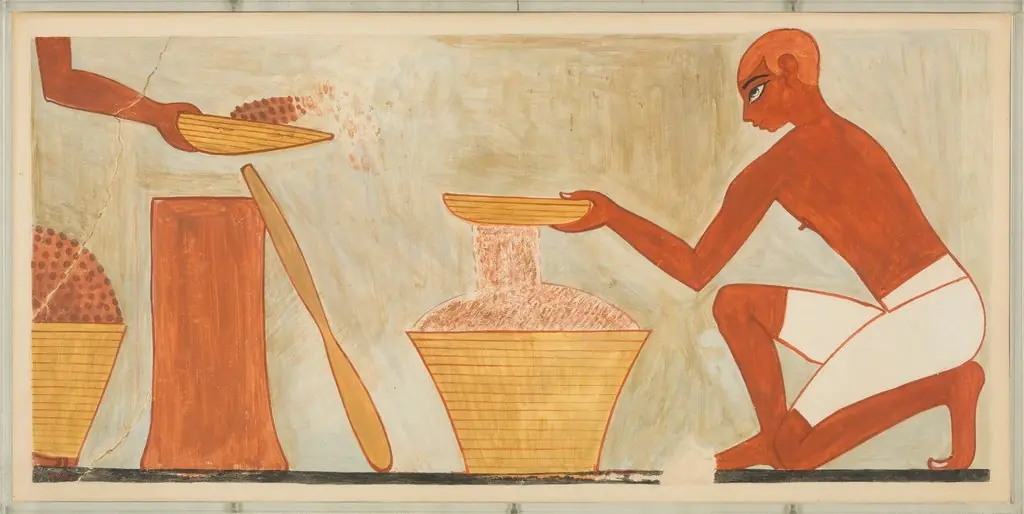 Sifting Meal, Tomb of Rekhmire
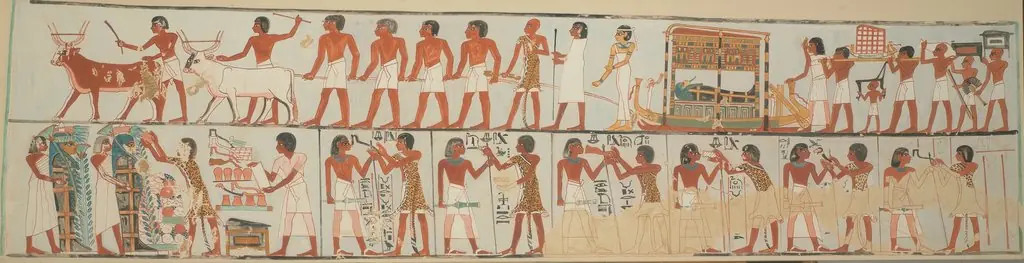 Funeral Procession, Tomb of Pairy
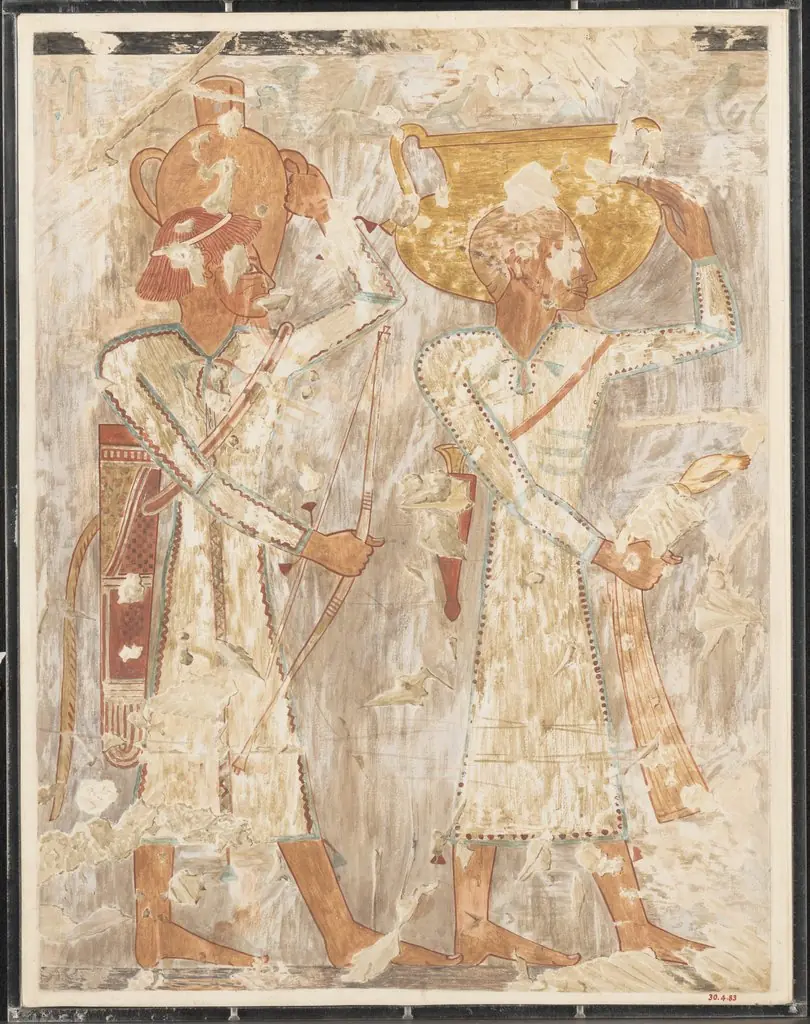
- Syrians Bringing Vessels and Weapons, Tomb of Rekhmire
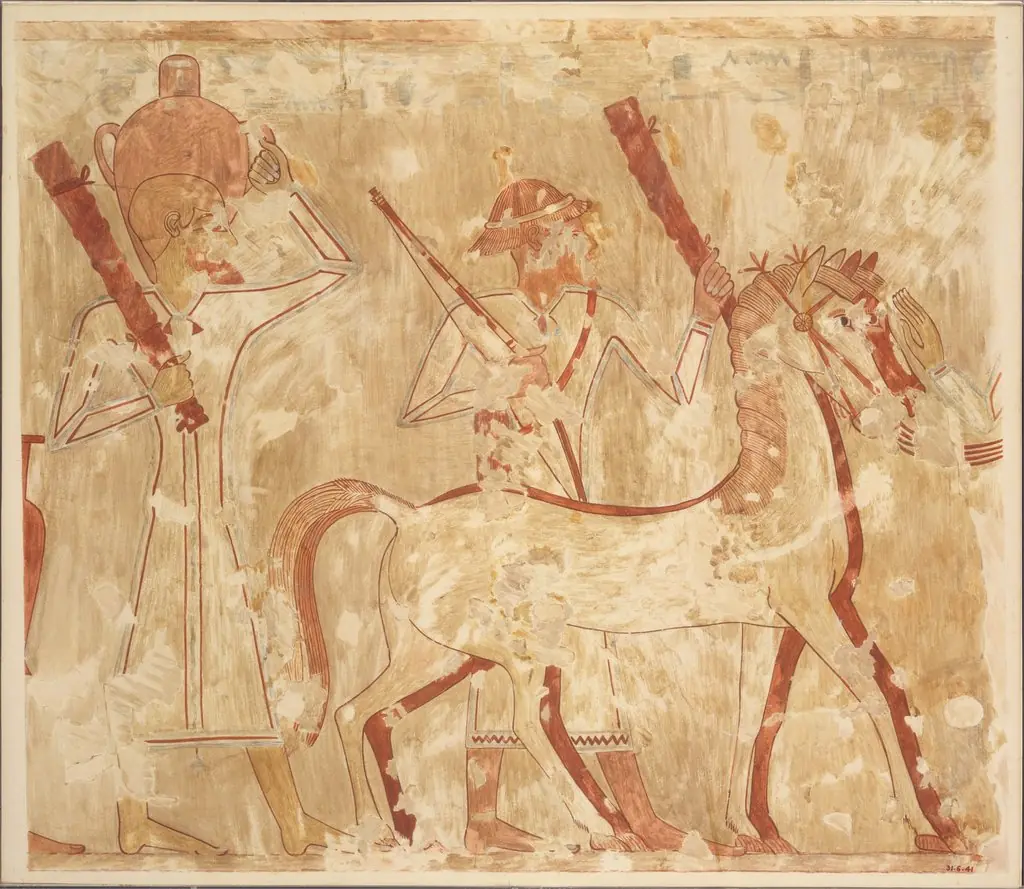 Syrians Bringing Horses, Tomb of Rekhmire
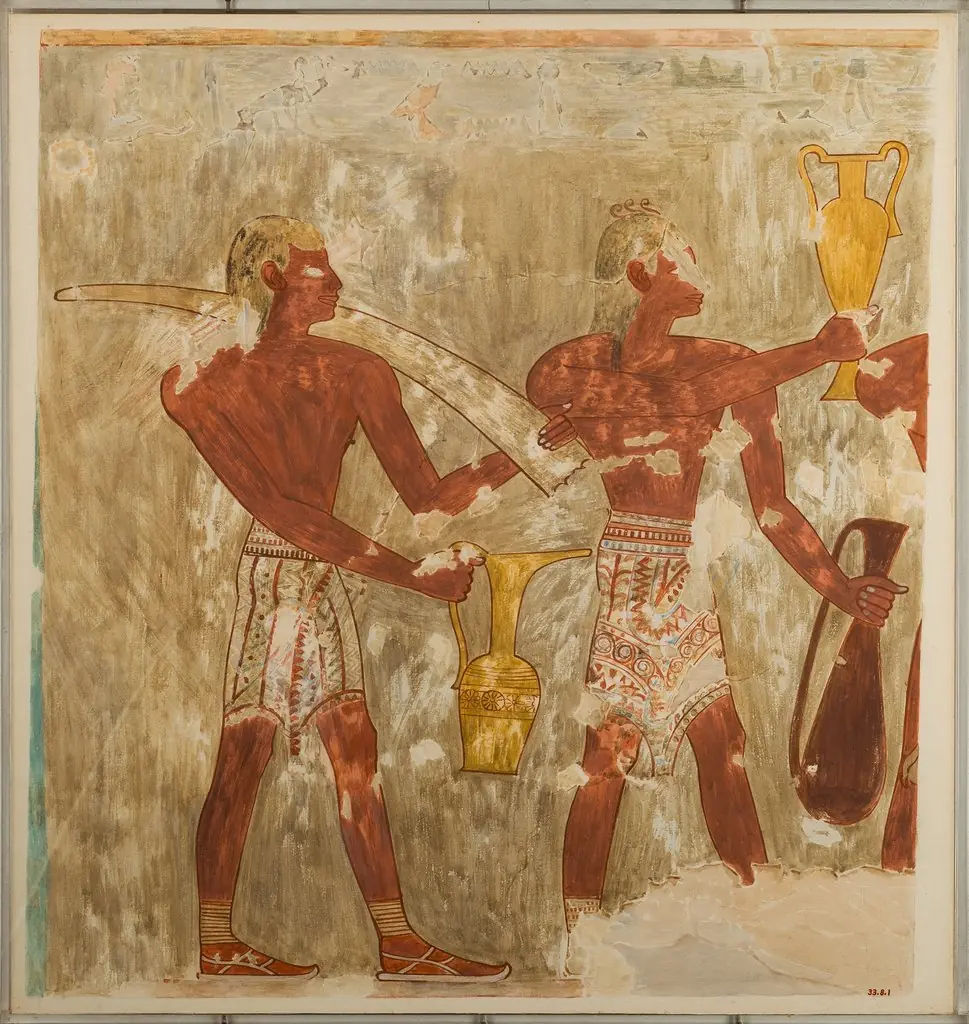 Aegean Islanders in the Tomb of Rekhmire
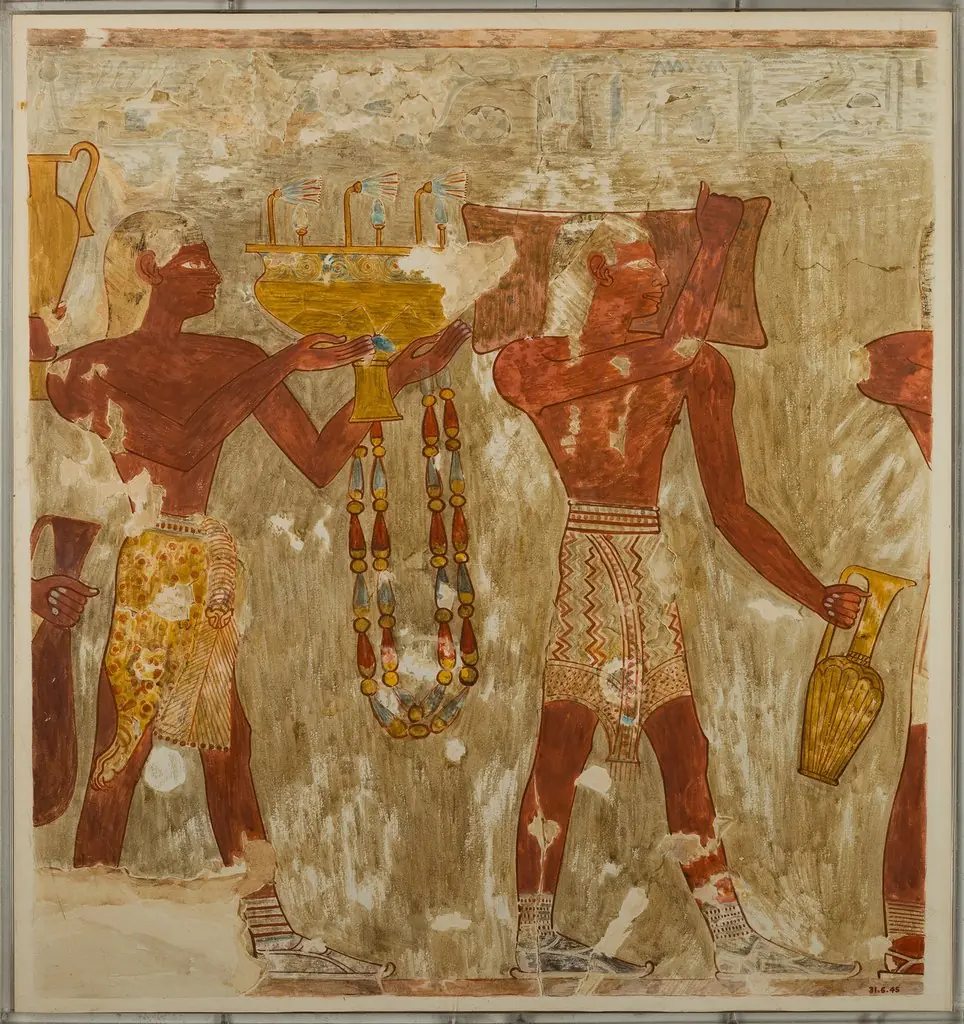 Cretans Bringing Gifts of Metal and Jewelry, Tomb of Rekhmire
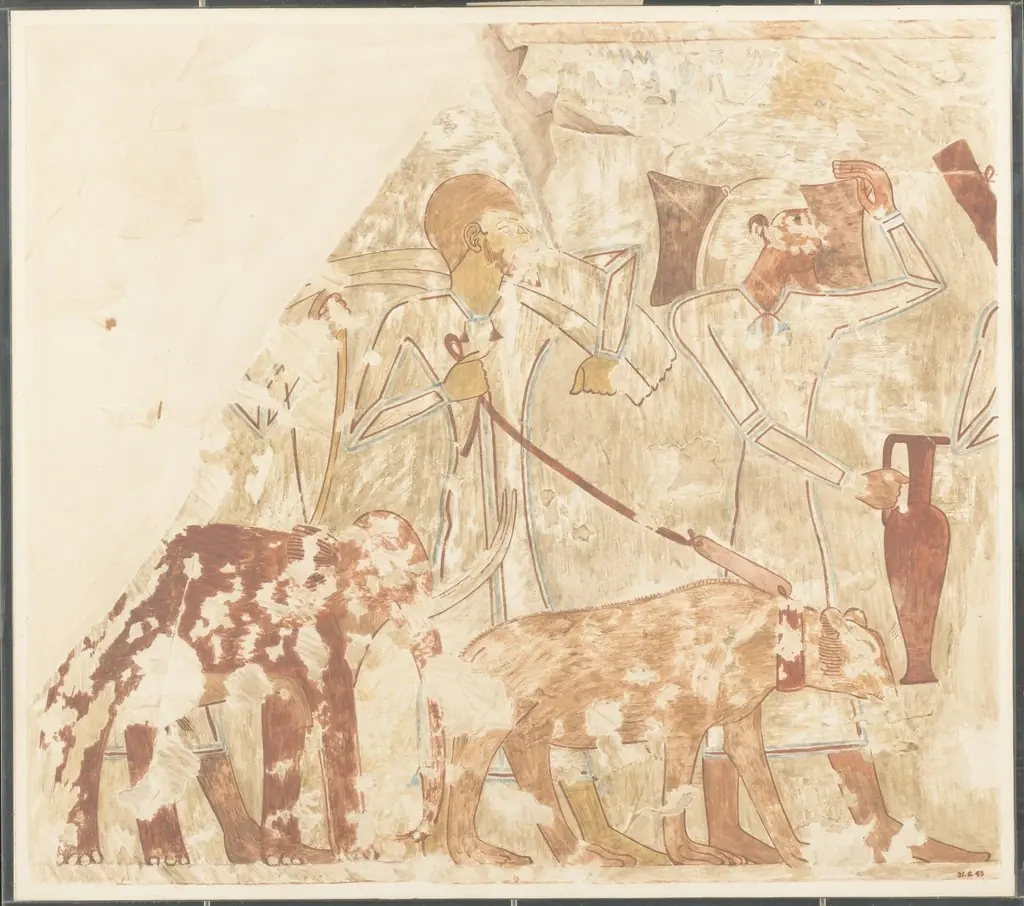 Syrians Bringing an Elephant and a Bear, Tomb of Rekhmire
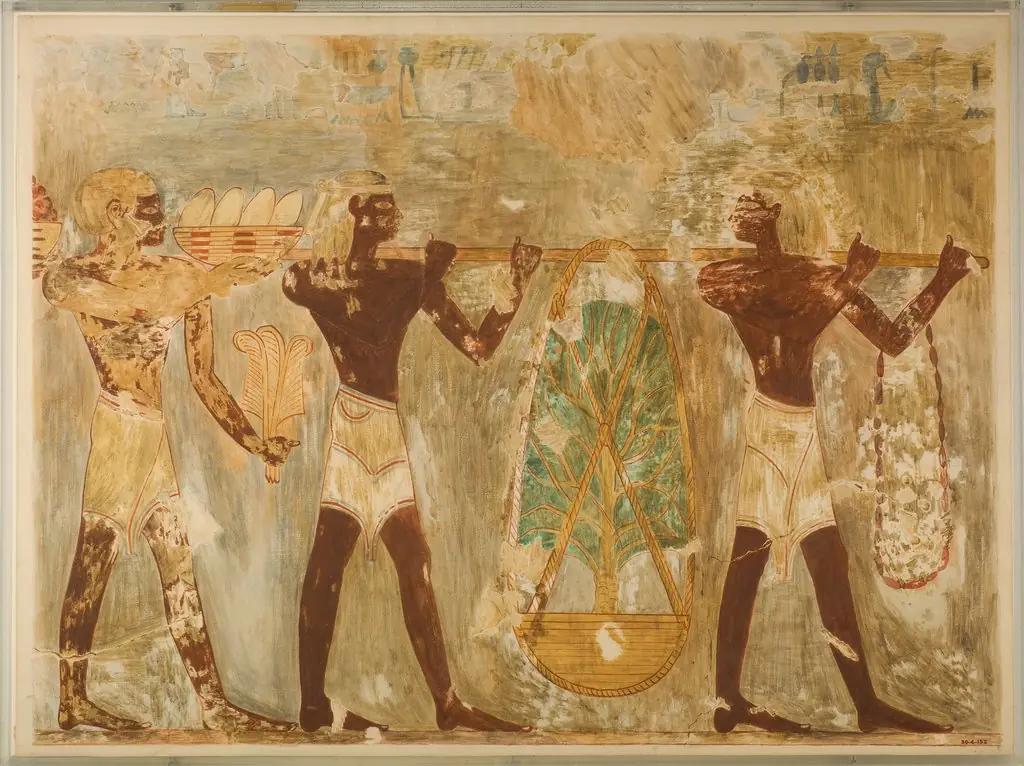 Men from Punt Carrying Gifts, Tomb of Rekhmire
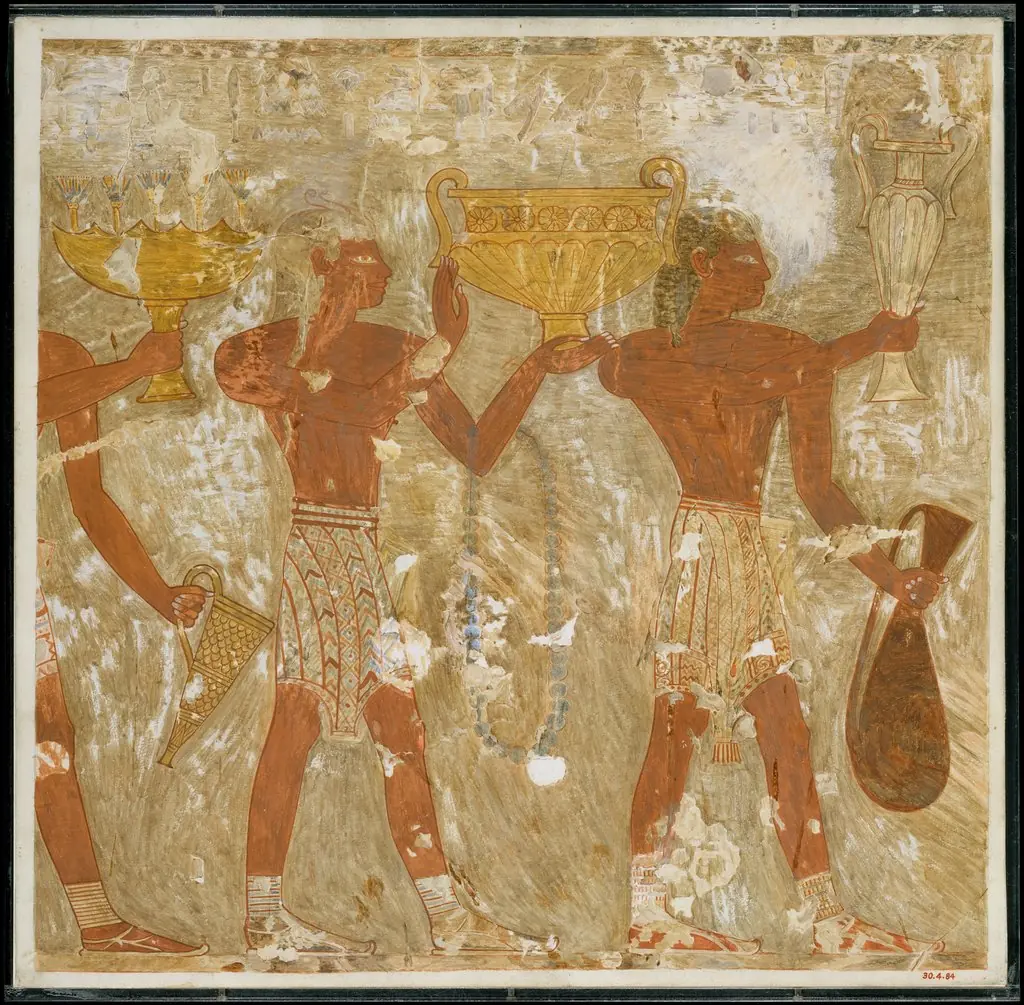 Cretans Bringing Gifts, Tomb of Rekhmire
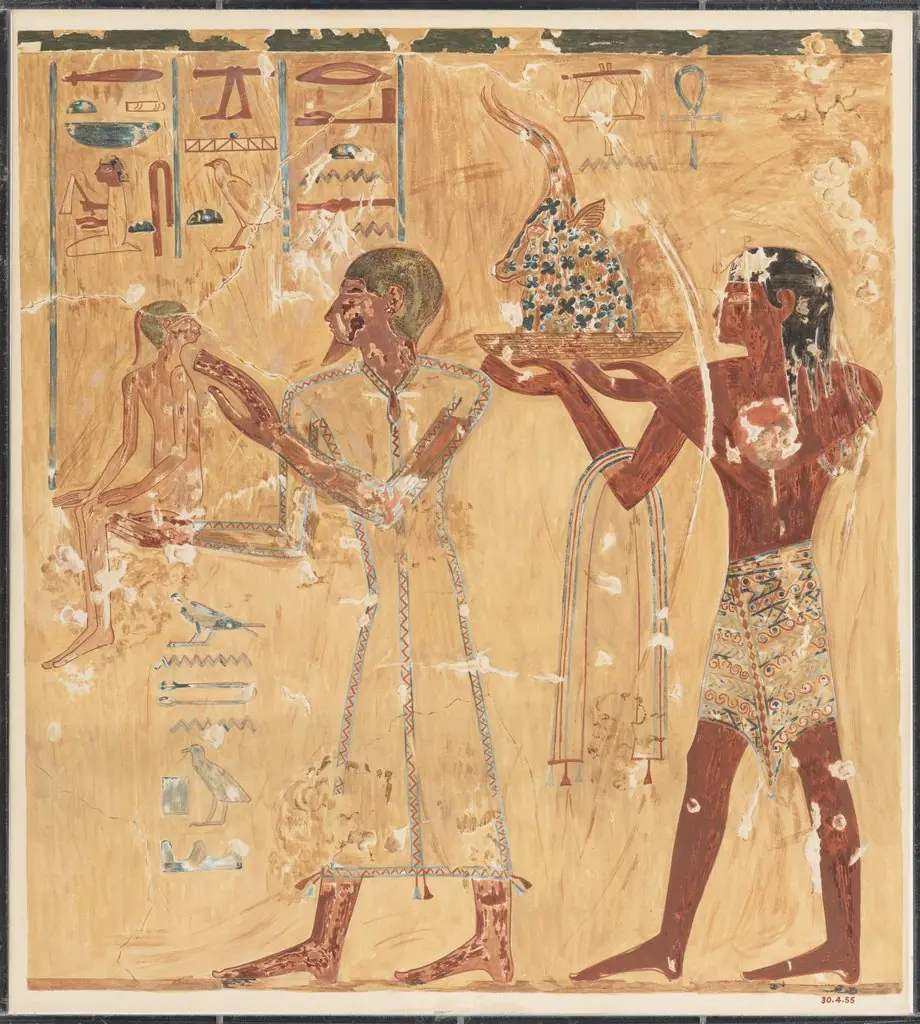 Foreigners, Tomb of Menkheperraseneb
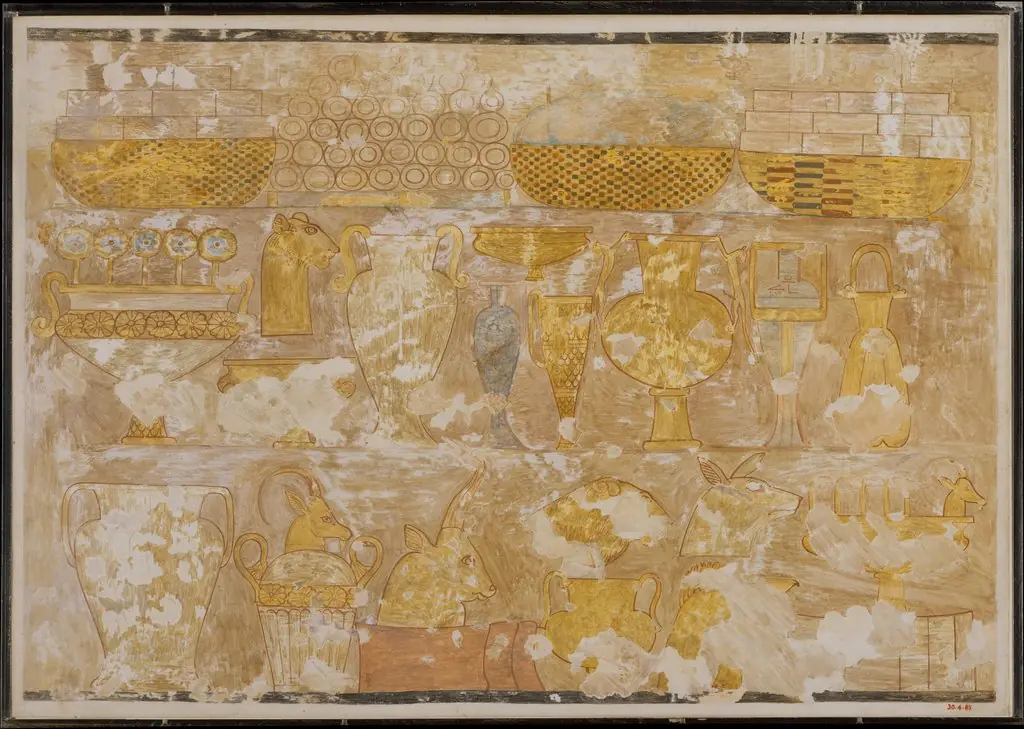 Gifts from the Keftiu, Tomb of Rekhmire
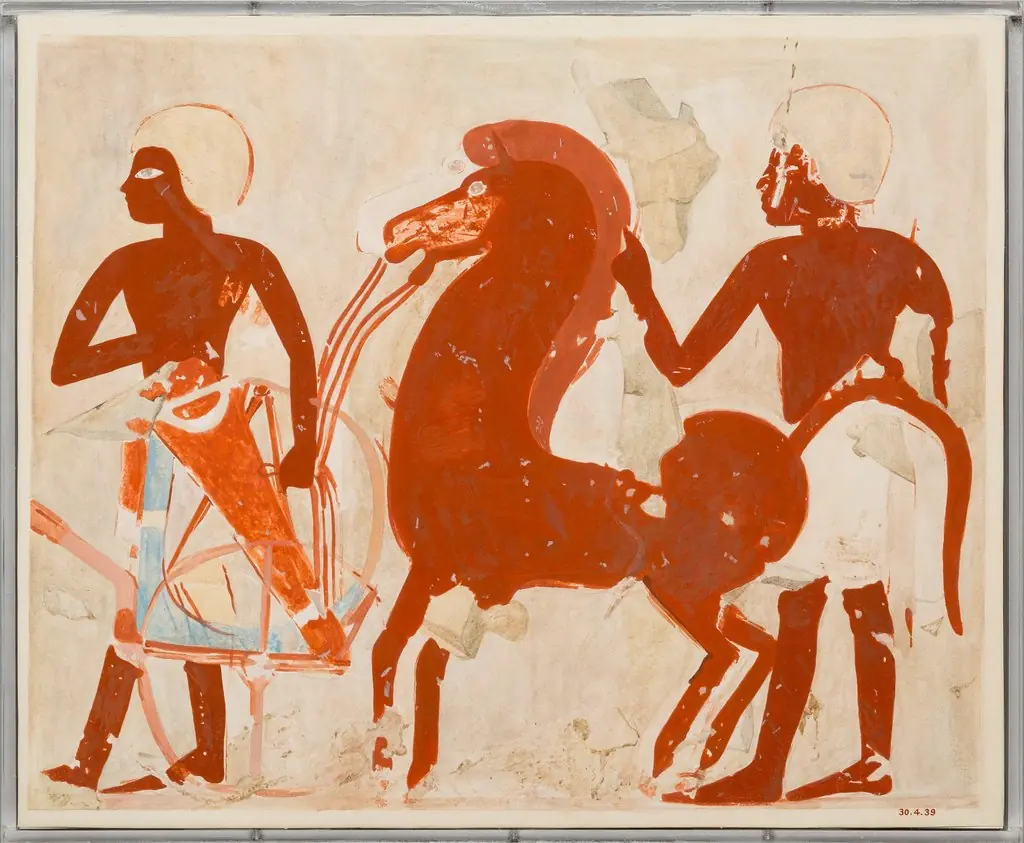 Offerings of a Chariot and Horse, Tomb of Userhat
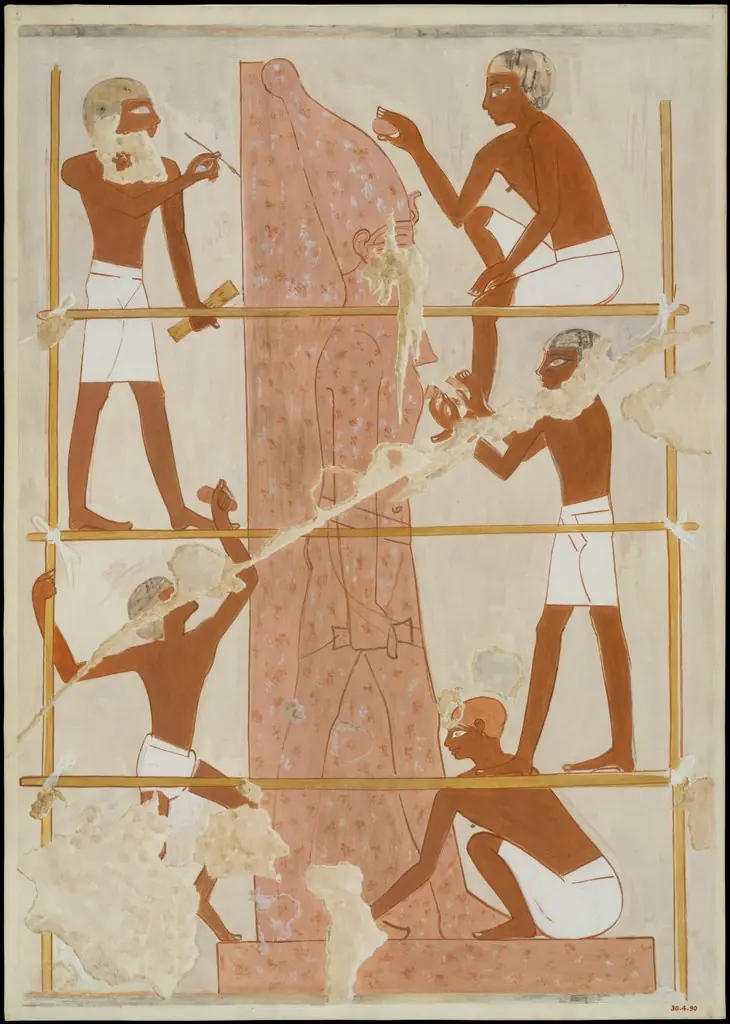 Sculptors at Work, Tomb of Rekhmire
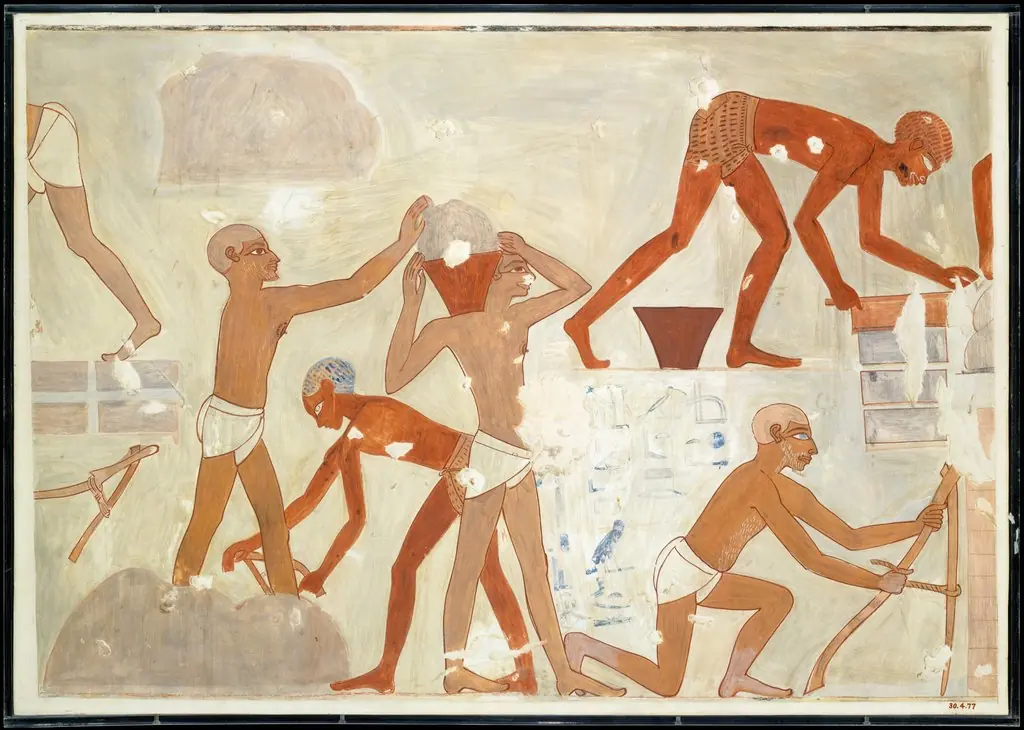 Brickmakers, Tomb of Rekhmire