Artwork
Cretans Bringing Gifts, Tomb of Rekhmire
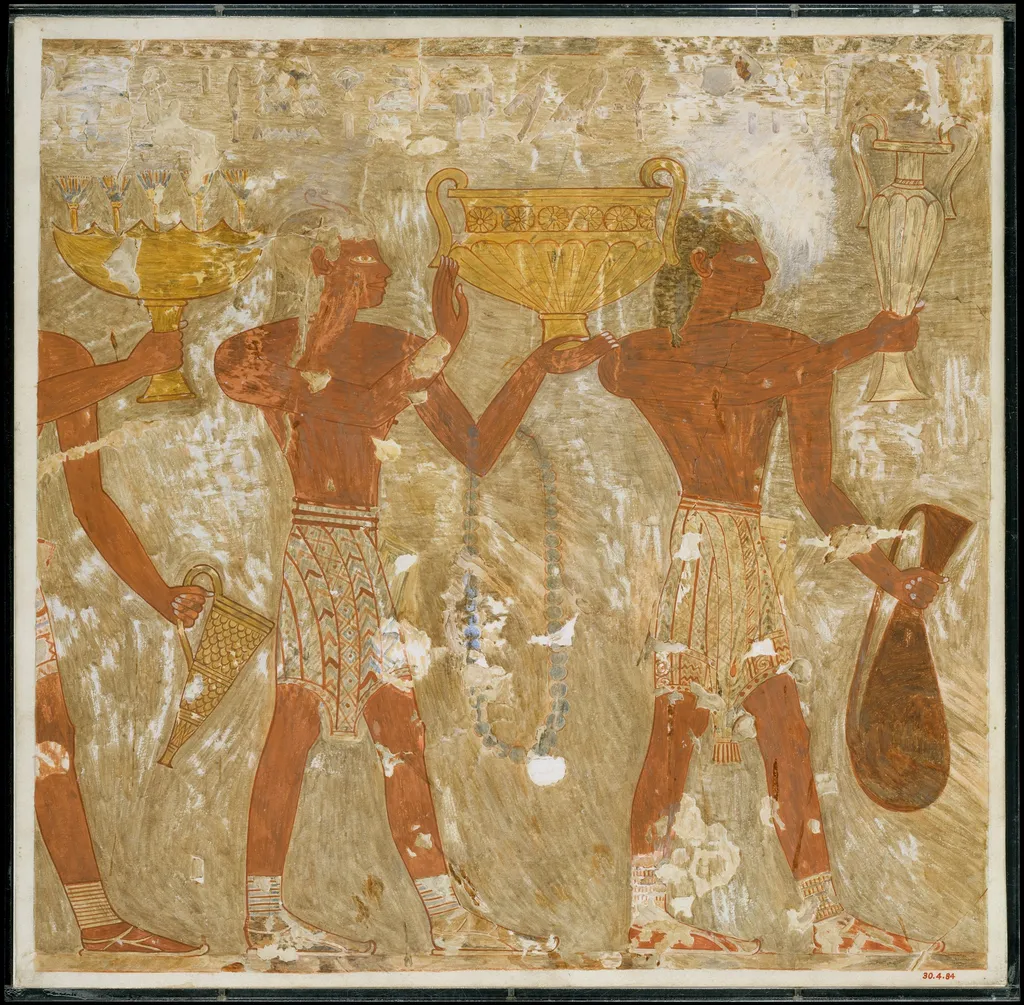
Cretans Bringing Gifts, Tomb of Rekhmire is an unspecified painting by the Byzantine icon painting artist Nina M. Davies. It dates from 1490 and is held in the collection of the Metropolitan Museum of Art. The wall painting titled Cretans Bringing Gifts originates from the tomb of Rekhmire, a high‑ranking official of Egypt’s 18th Dynasty.
About this work
Subject & Meaning
The inclusion of foreign emissaries among Egyptian officials and scribes visually asserts the pharaoh’s authority over distant lands and their produce.
The scene depicts a delegation of men identified as Cretans, labeled in Egyptian sources as Keftiu, bringing tribute to an Egyptian official. The figures carry characteristic Aegean vessels and containers, including a distinctive bull’s-head rhyton and a handled box, which signal diplomatic gift-giving rather than trade. Their attire, short kilts, sashes, and sandals, aligns with Aegean fashion of the mid-fifteenth century BCE, underscoring the cultural exchange between the Minoan world and New Kingdom Egypt.
The tomb context, TT 100 of Rekhmire at Sheikh Abd el-Qurna, frames the image as part of a broader program celebrating Egyptian dominion and cosmopolitan relations. The inclusion of foreign emissaries among Egyptian officials and scribes visually asserts the pharaoh’s authority over distant lands and their produce.
History & Provenance
This work is a facsimile painting created in 1479 by Nina M. Davies. It reproduces a scene from the Tomb of Rekhmire (TT 100) depicting foreigners, specifically the Keftiu, bringing gifts. The piece currently resides in the collection of the Metropolitan Museum of Art, where it is held under the accession number 30.4.84.
Overview
The wall painting titled Cretans Bringing Gifts originates from the tomb of Rekhmire, a high‑ranking official of Egypt’s 18th Dynasty. Executed in the traditional Egyptian style, the scene portrays four male figures bearing vessels against a muted, earthy background. The work is part of the Metropolitan Museum of Art’s collection and is known primarily through the early‑20th‑century documentation of the Davies couple.
Technique & Style
Rendered in a limited palette of browns, whites and yellows, the figures are outlined in crisp lines while the background is filled with a light brown wash. The surface retains a tactile quality, with visible brushwork that conveys a slightly rough texture, characteristic of tomb wall paintings that were applied directly onto plaster.
Context
Rekhmire served as vizier under Pharaohs Thutmose III and Amenhotep II, and his tomb at Thebes is celebrated for its extensive decorative program. The inclusion of Cretan gifts reflects the broader network of trade and diplomatic contacts that Egypt maintained with the Aegean world during the New Kingdom.
Legacy
The painting’s presence in a major Western museum and its documentation by the Davies couple have made it a frequently cited example of cross‑cultural exchange in New Kingdom art, informing both academic research and public exhibitions on ancient Egyptian international relations.
Artist & collection
Artist
The Egyptologists Nina M. Davies (6 January 1881 – 21 April 1965) and Norman de Garis Davies (1865–5 November 1941) were a married couple of illustrators and copyists who worked in the early and mid-twentieth century…

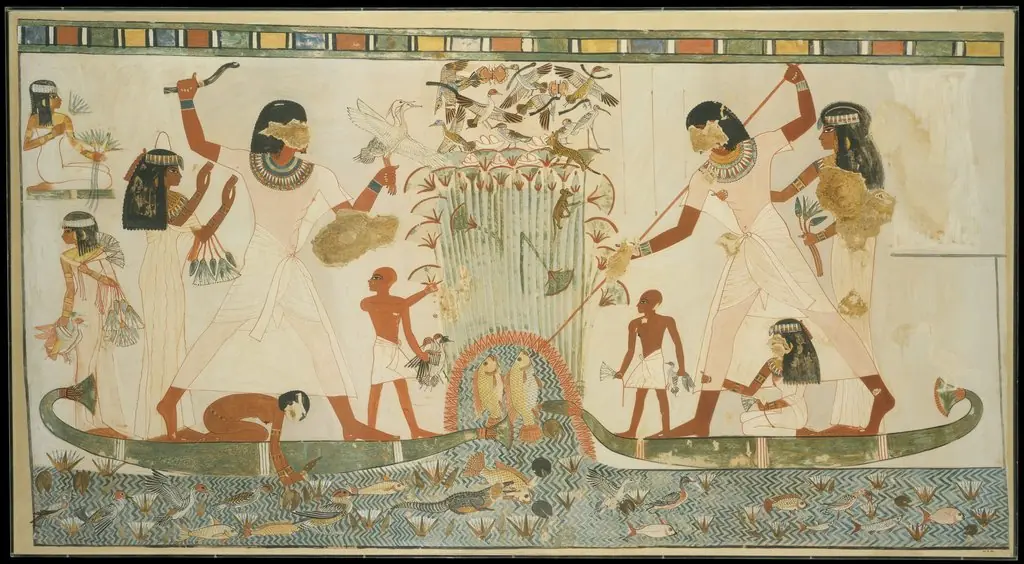 Menna and Family Hunting in the Marshes, Tomb of Menna
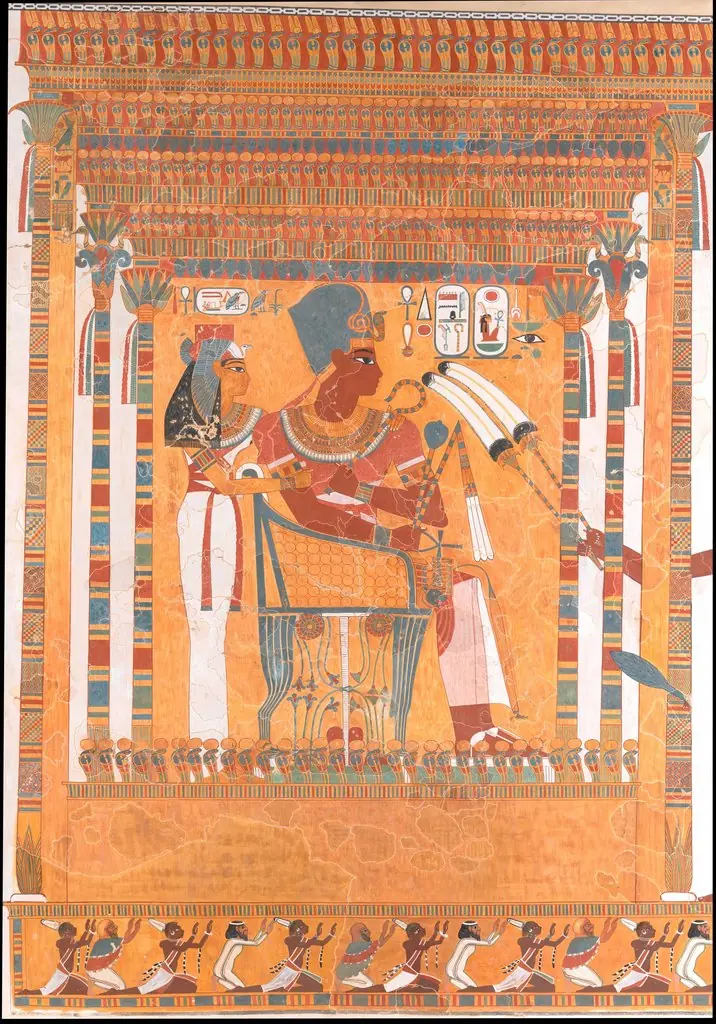 Amenhotep III and his Mother, Mutemwia, in a Kiosk
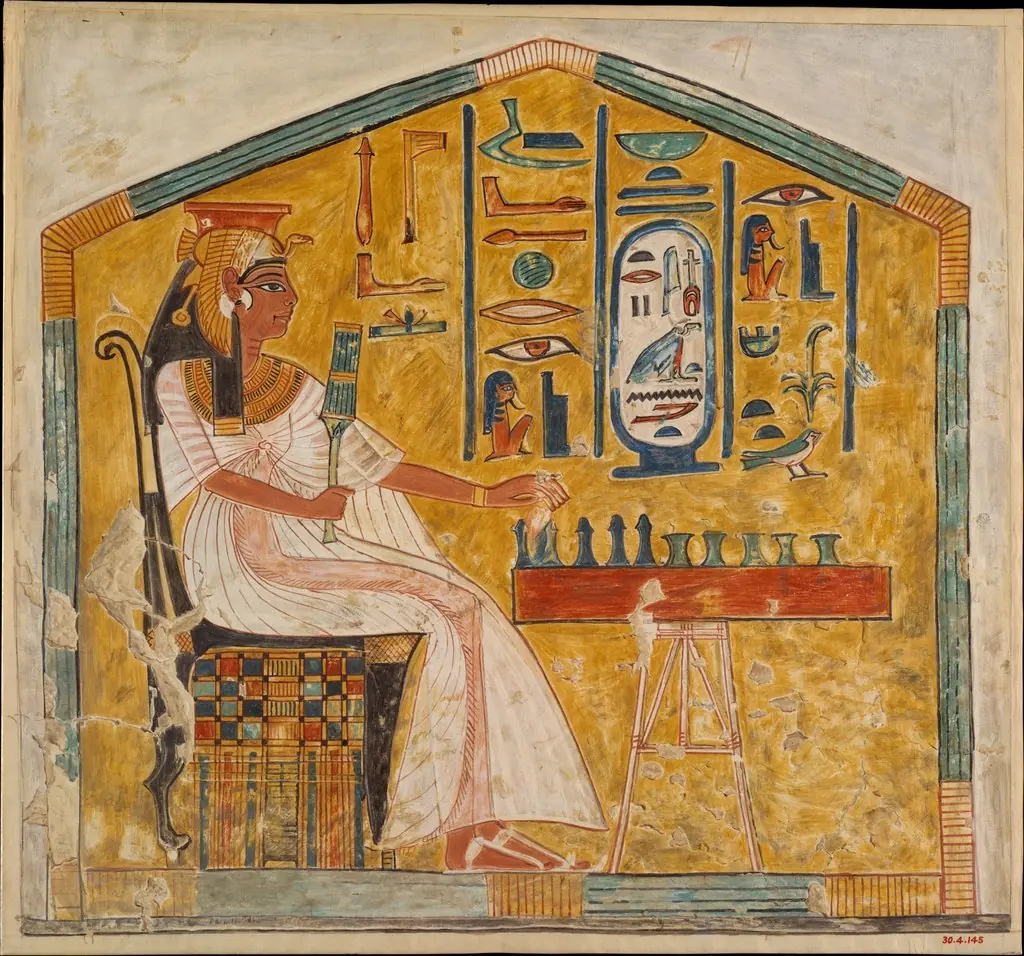 Queen Nefertari Playing Senet
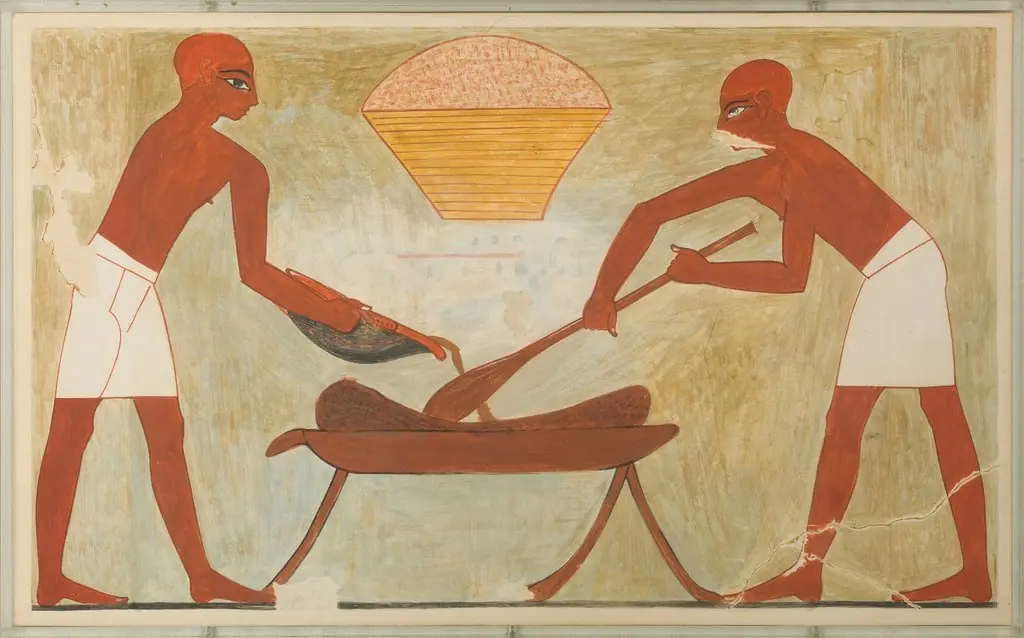 Preparing Dough, Tomb of Rekhmire
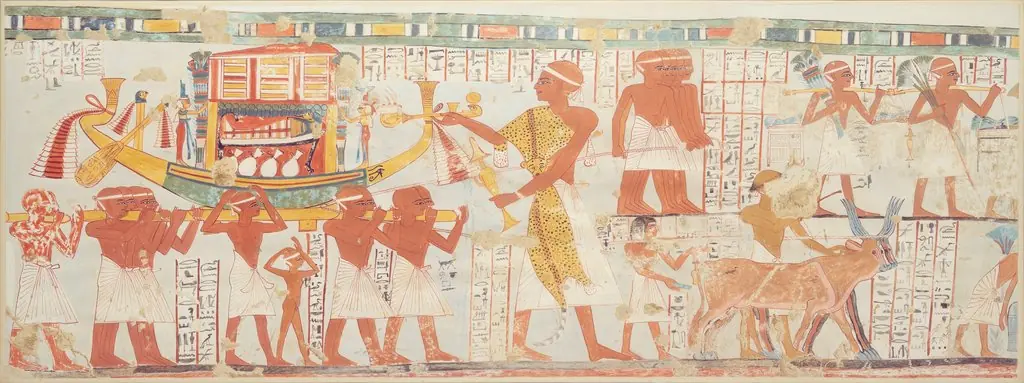 Nakhtamun's Funeral Procession, Tomb of Nakhtamun
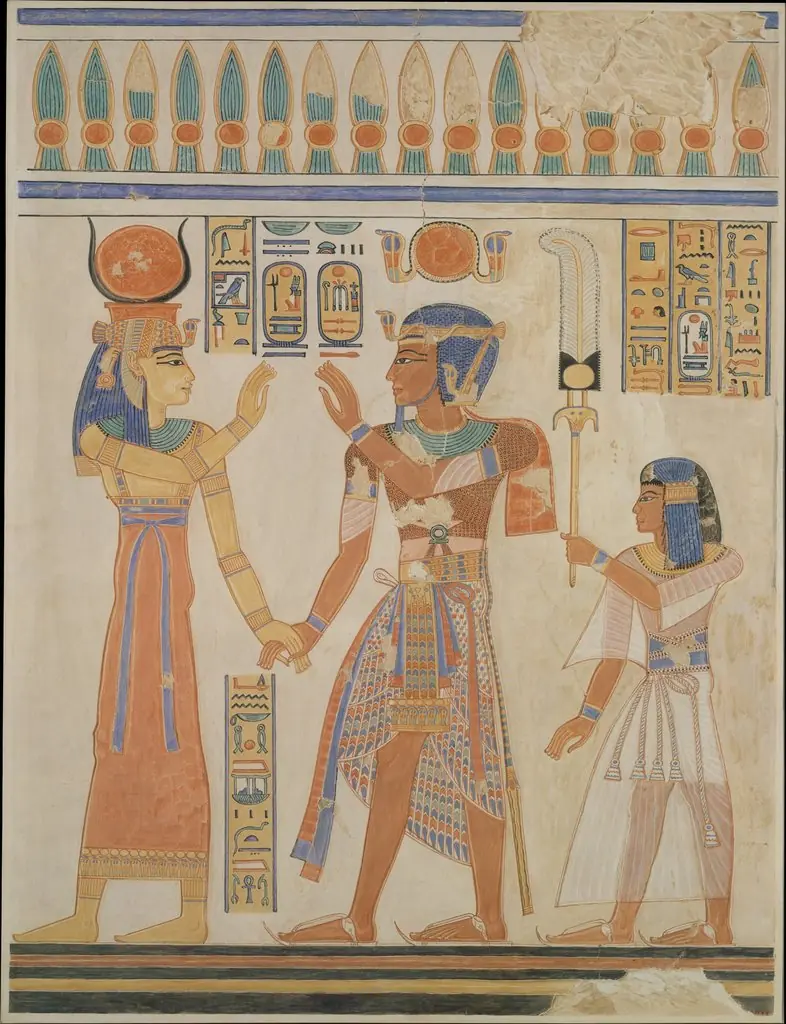 Ramesses III and Prince Amenherkhepeshef before Hathor
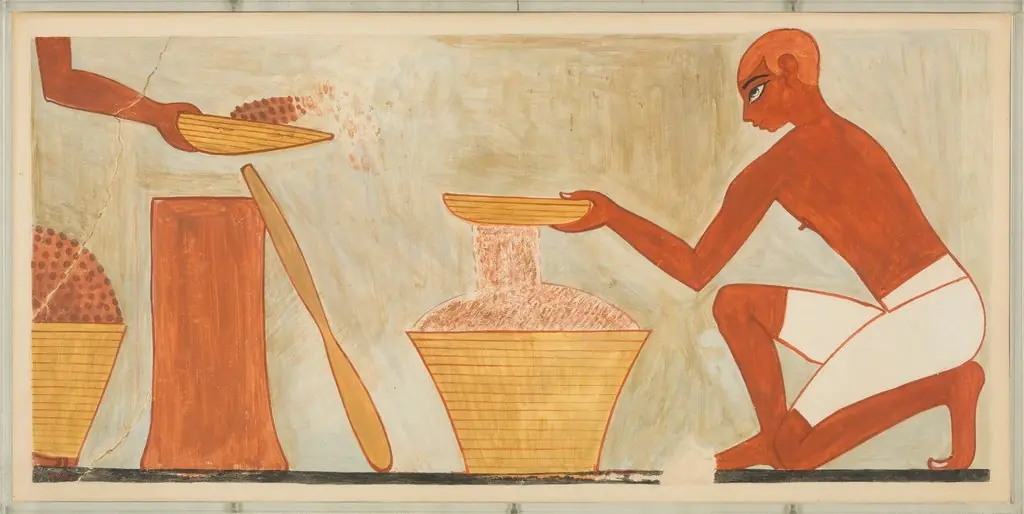 Sifting Meal, Tomb of Rekhmire
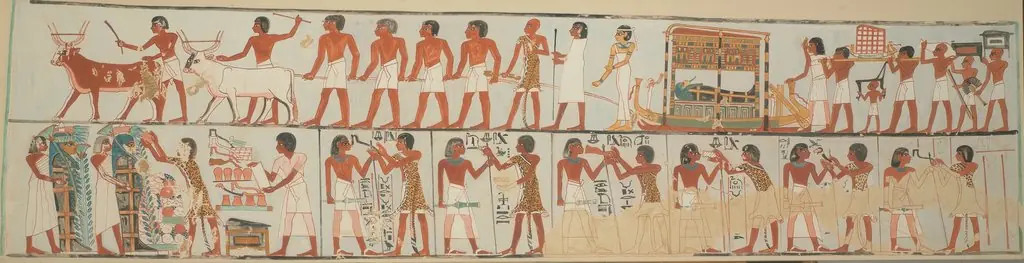 Funeral Procession, Tomb of Pairy
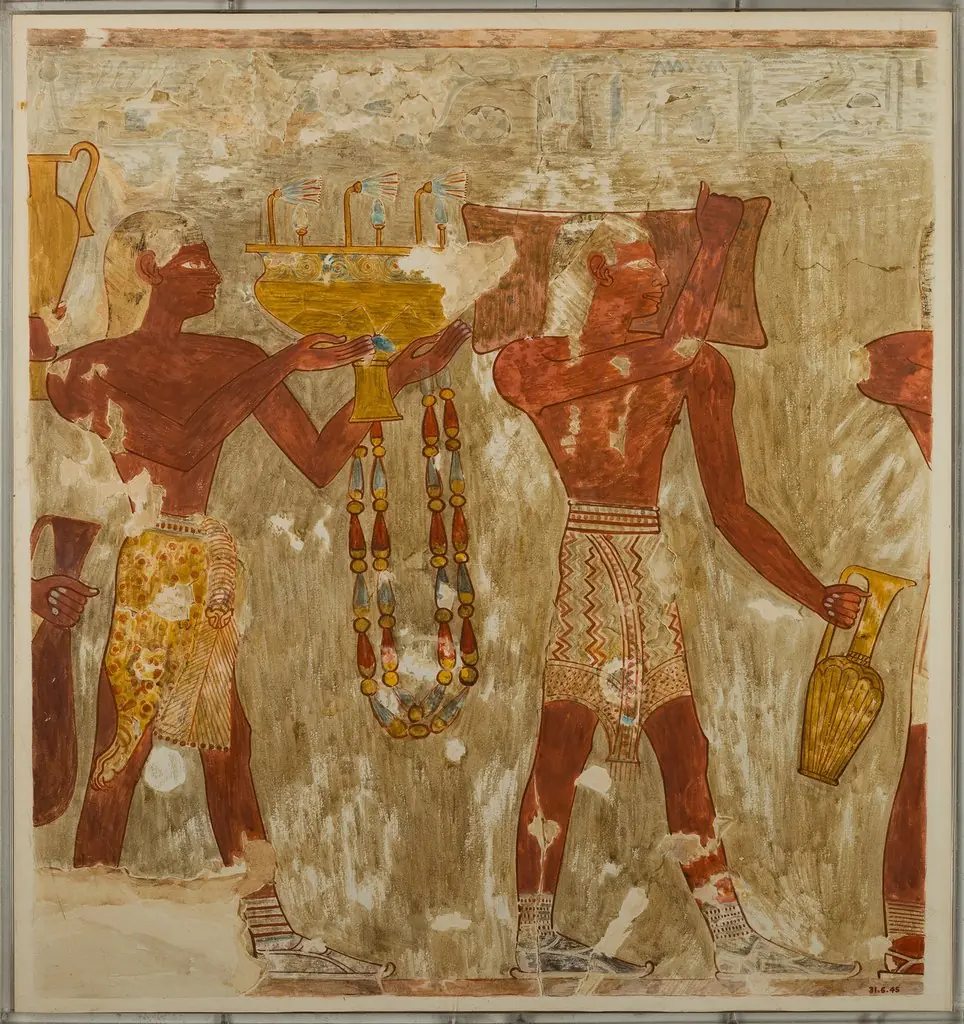
- Cretans Bringing Gifts of Metal and Jewelry, Tomb of Rekhmire
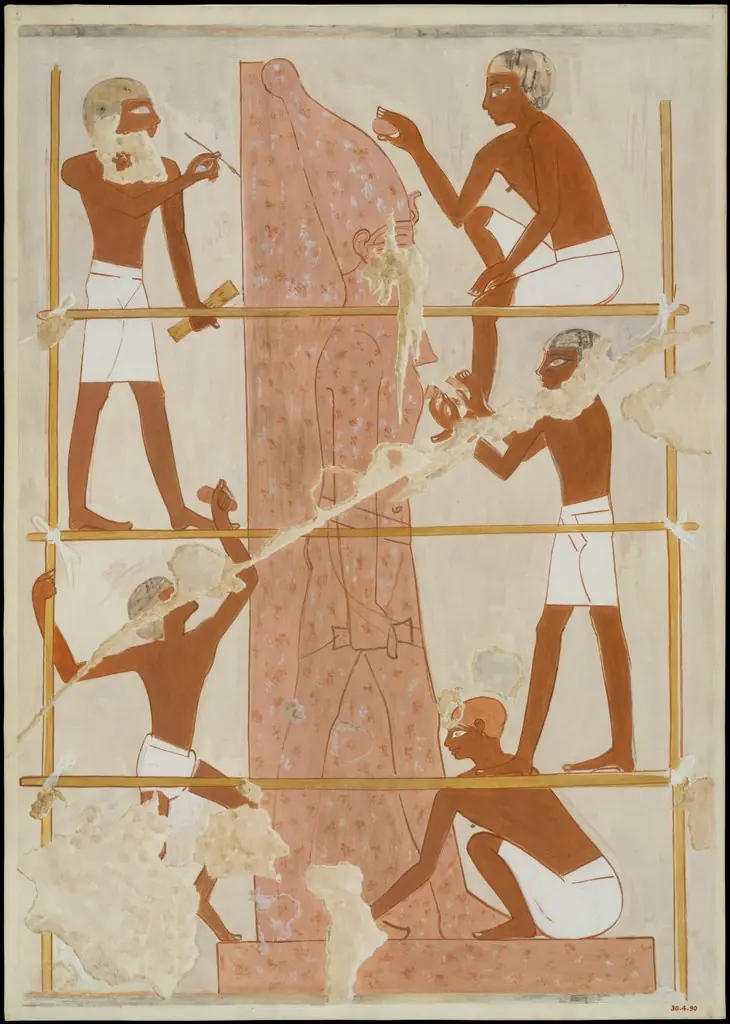 Sculptors at Work, Tomb of Rekhmire
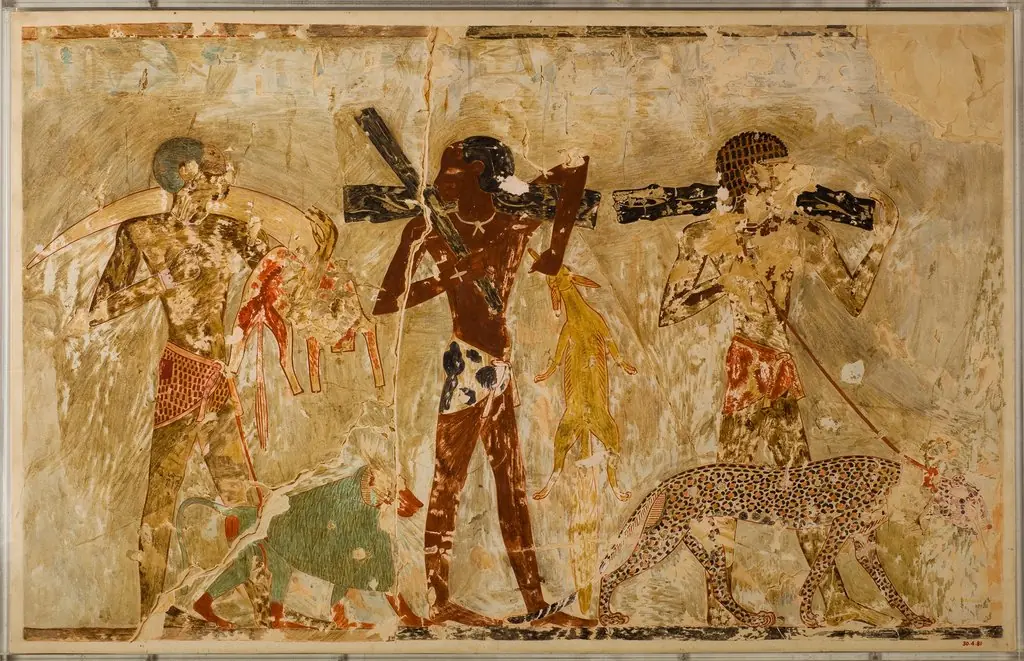 Facsimile painting from the tomb of Rekhmire
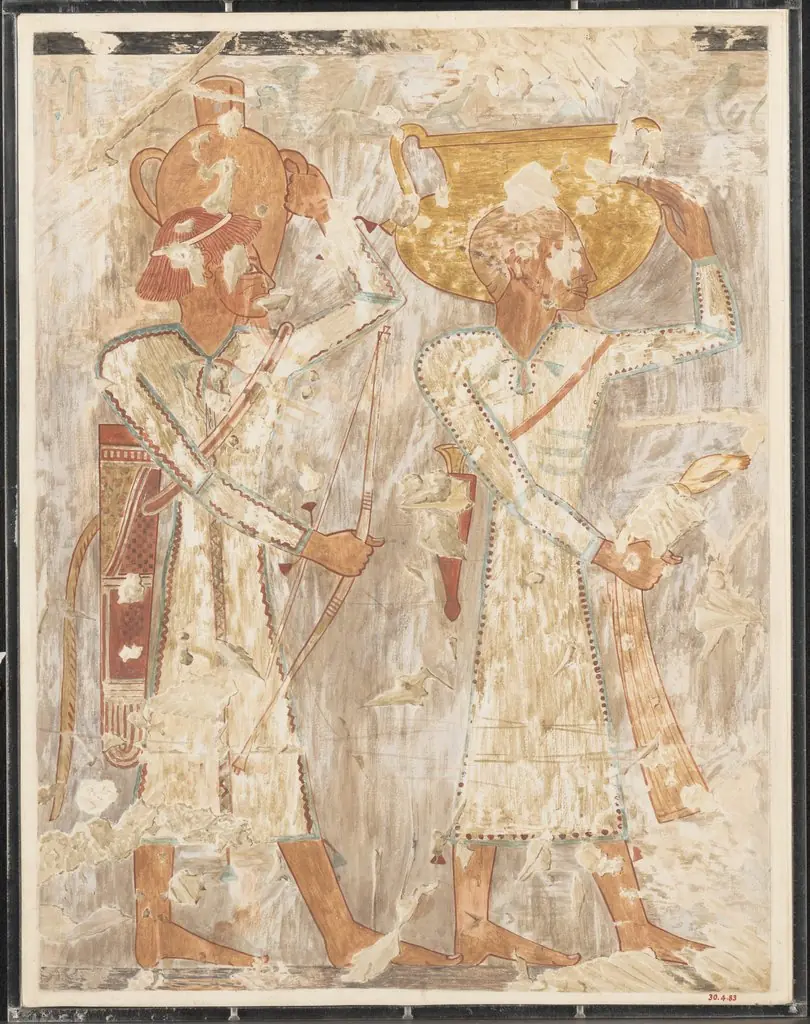 Syrians Bringing Vessels and Weapons, Tomb of Rekhmire
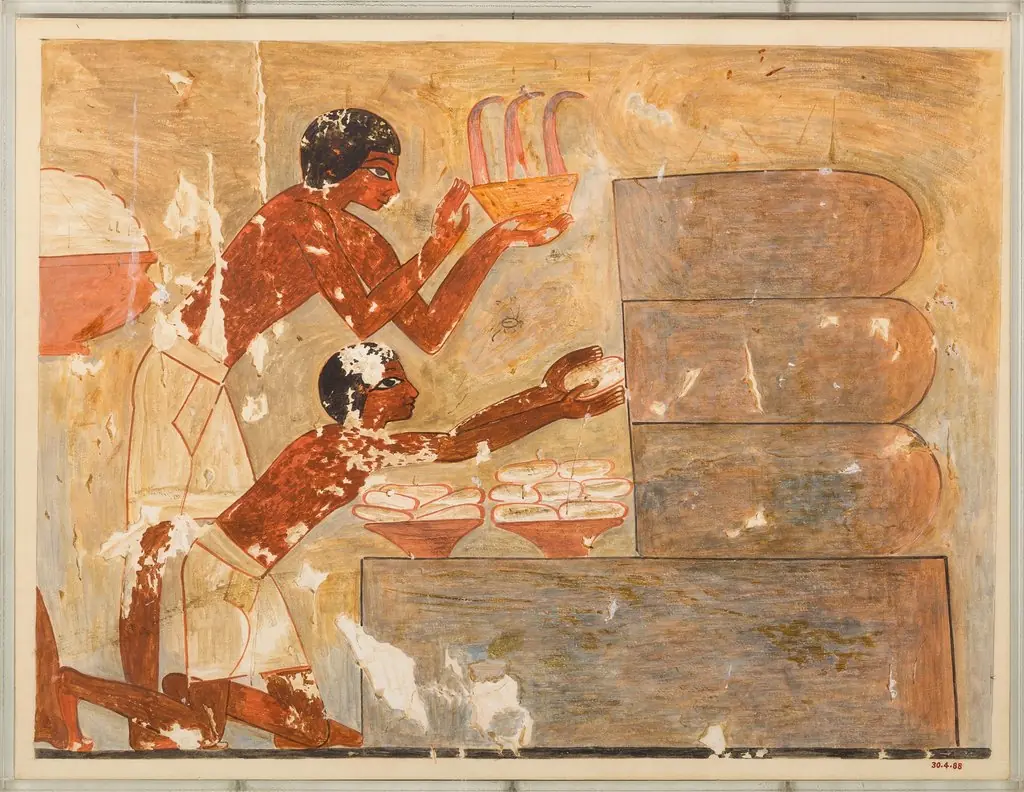 Gathering Honey, Tomb of Rekhmire
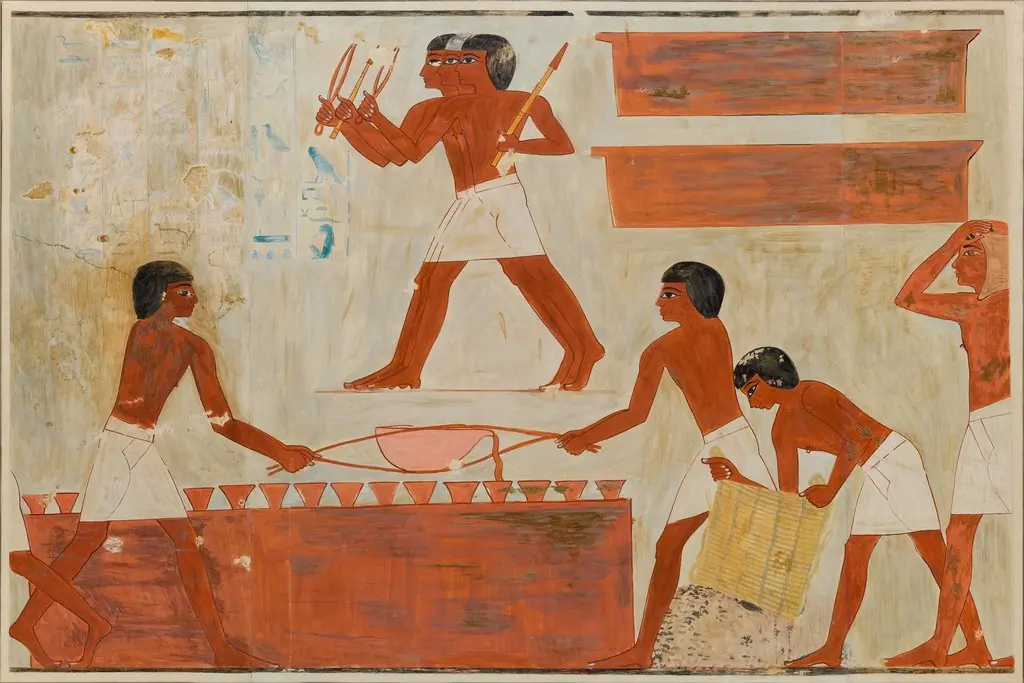 Casting Metal, Tomb of Rekhmire
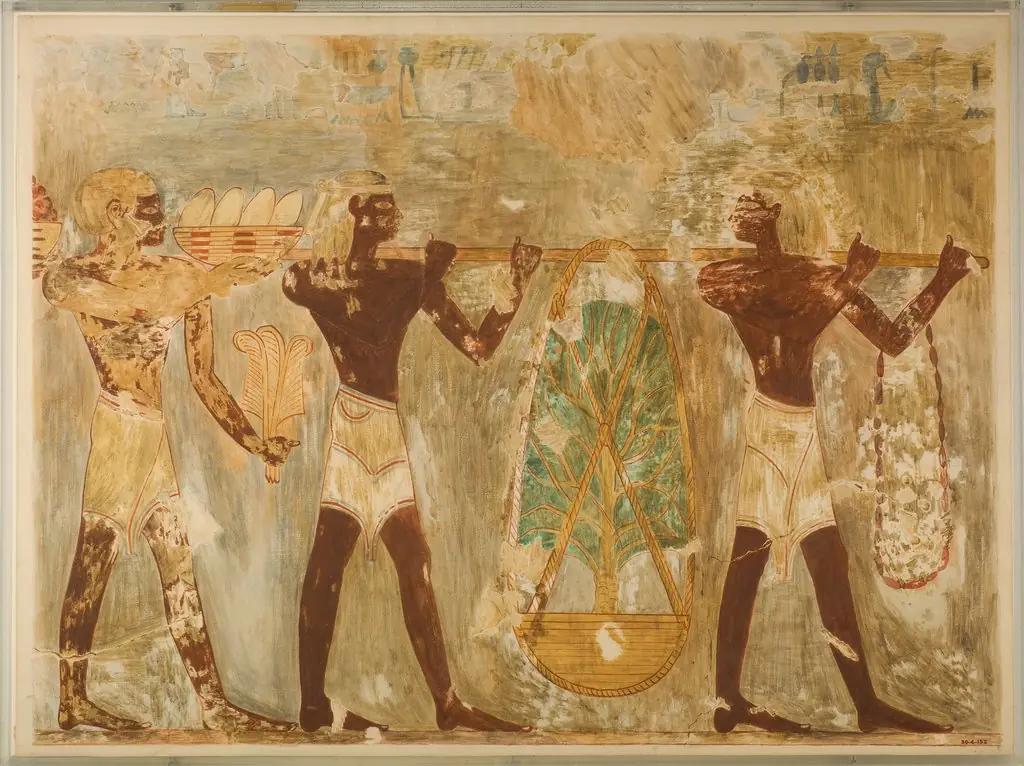 Men from Punt Carrying Gifts, Tomb of Rekhmire
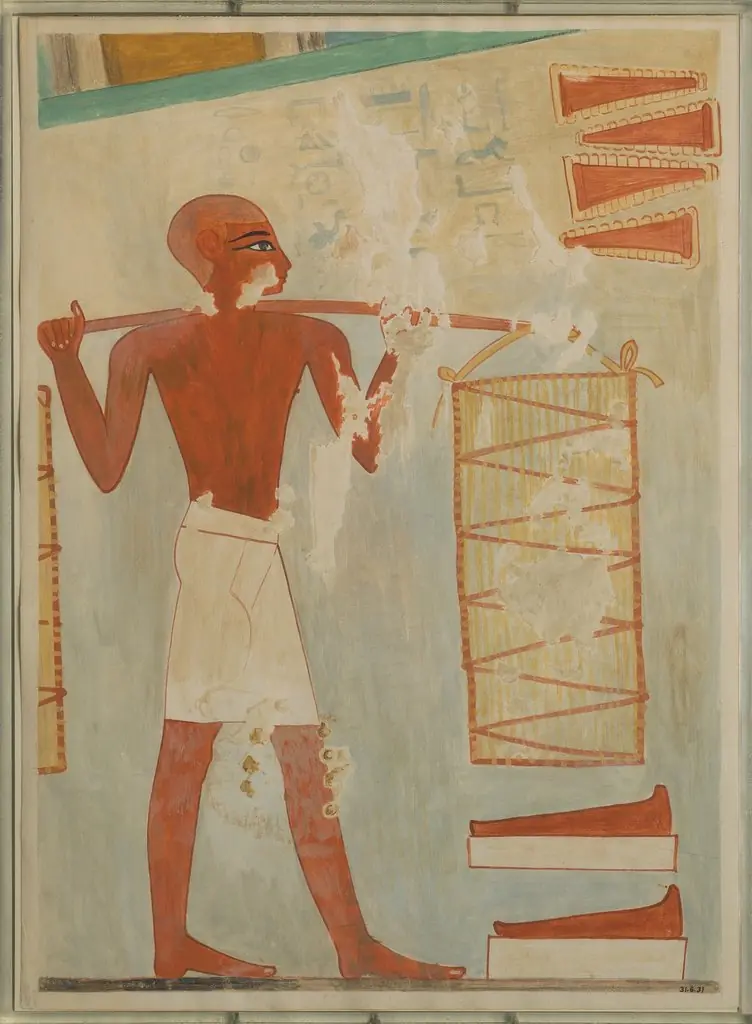 Man Carrying Loaves, Tomb of Rekhmire
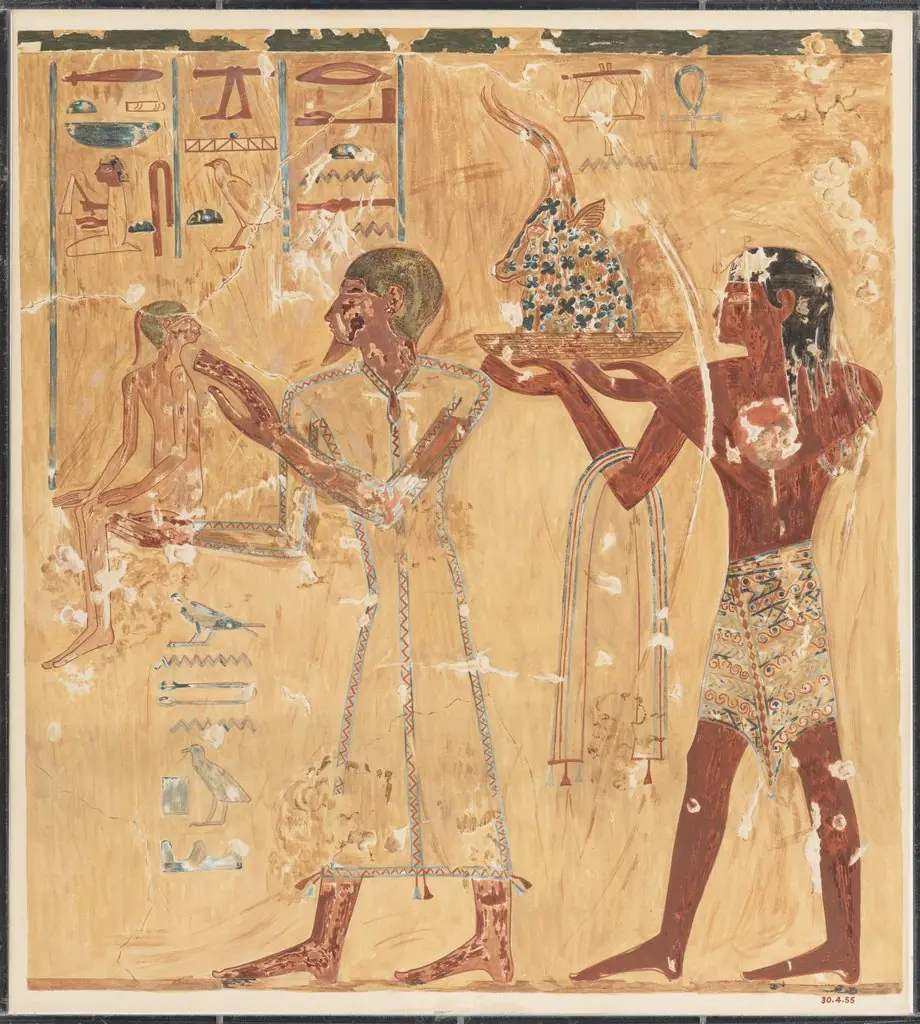 Foreigners, Tomb of Menkheperraseneb
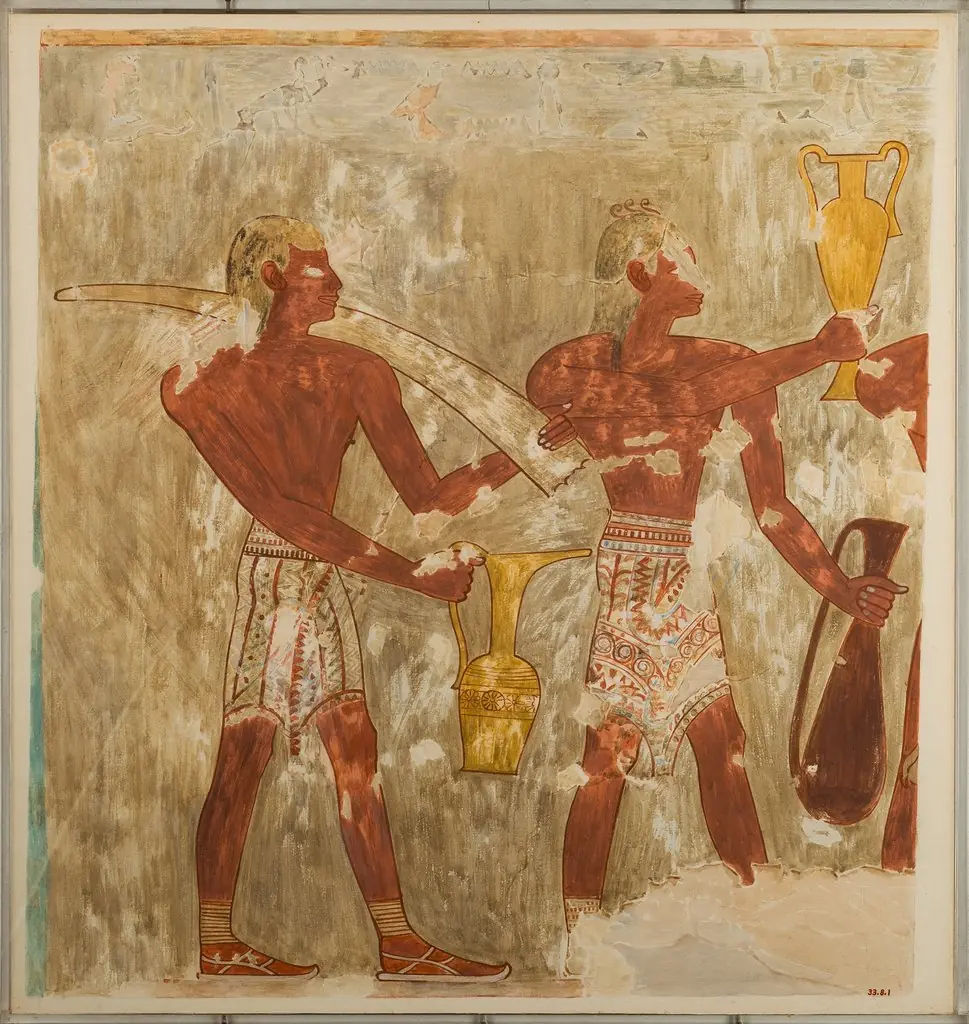 Aegean Islanders in the Tomb of Rekhmire
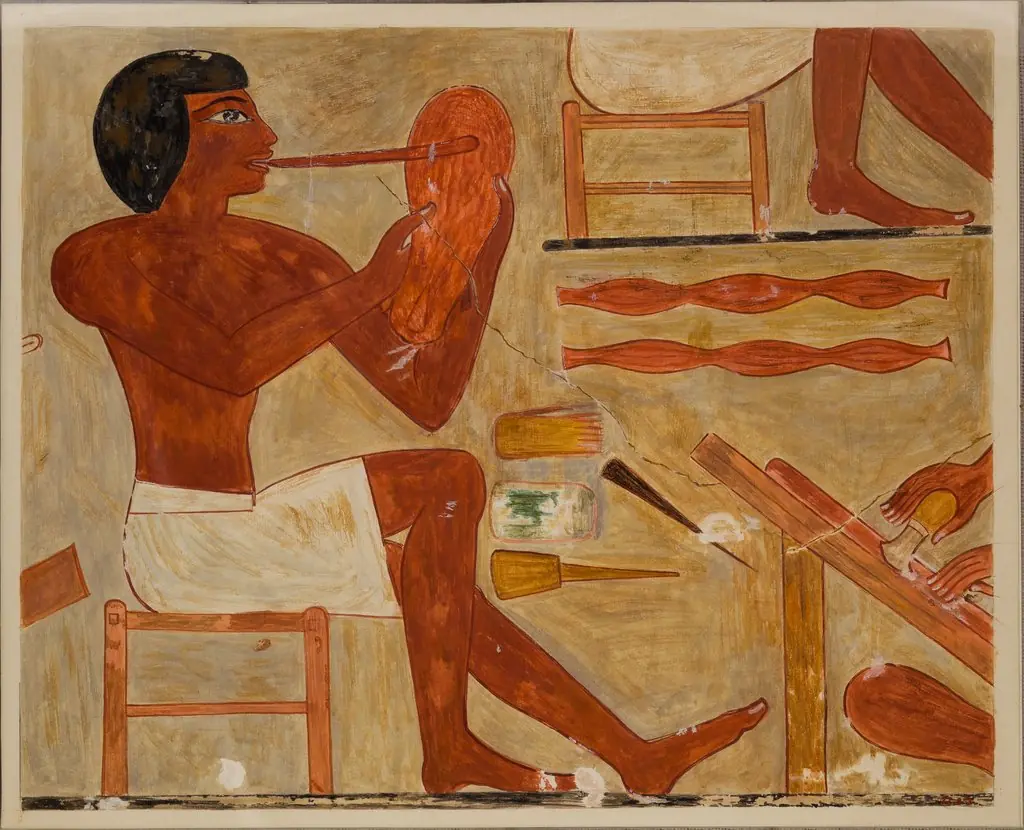 Sandal Maker, Tomb of Rekhmire
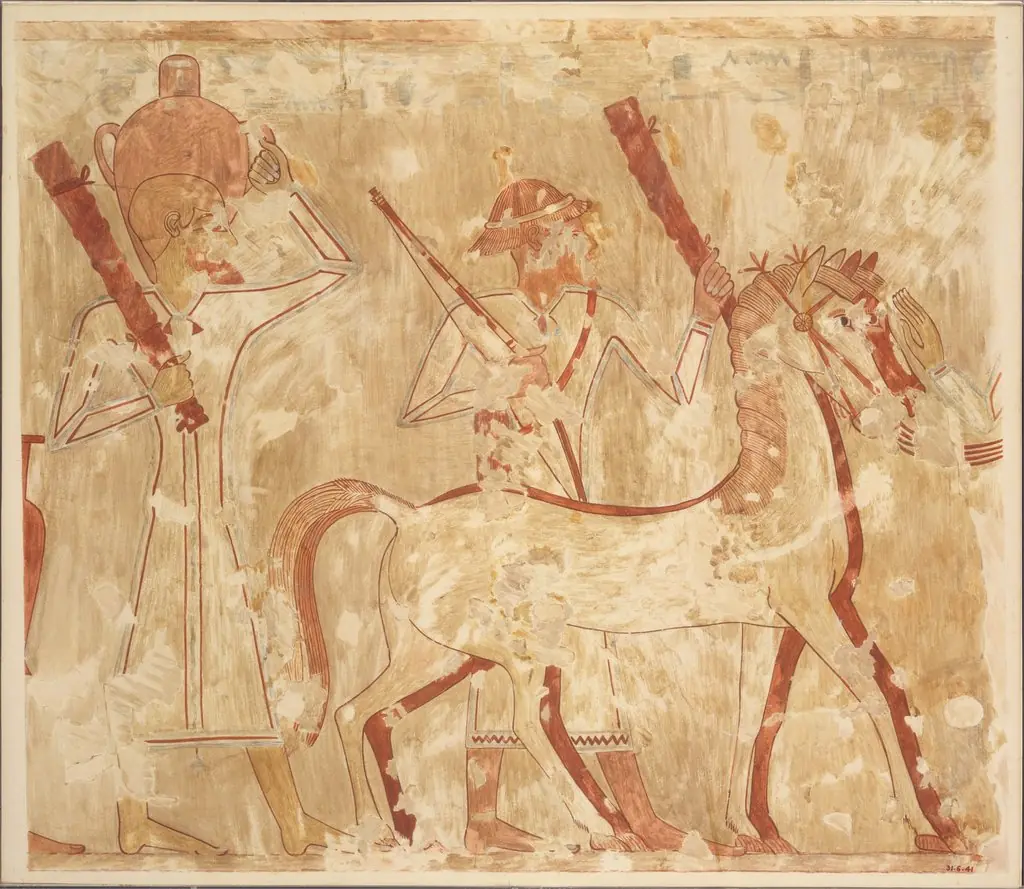 Syrians Bringing Horses, Tomb of Rekhmire