Artwork
Bacchus Accompanied by a Leopard and a Tiger
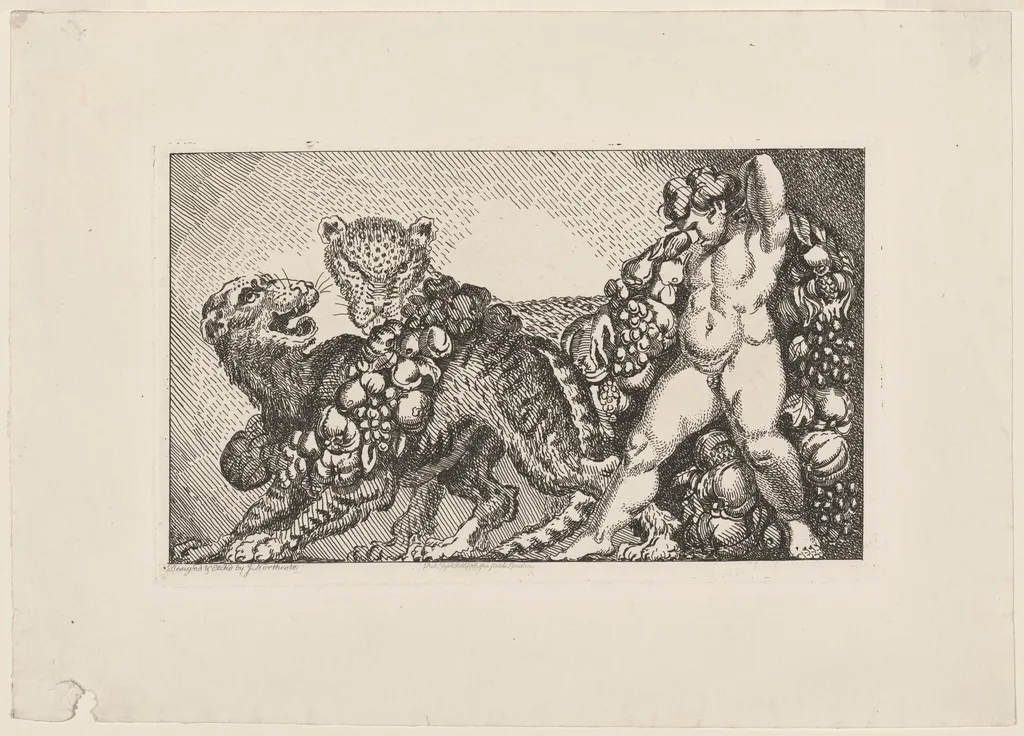
Bacchus Accompanied by a Leopard and a Tiger is an ink print by the Romanticist artist James Northcote. It dates from 1798 and is held in the collection of the National Gallery of Art.
- Inscription
- Inscribed:lower left in plate: Designd & Etch'd by J. Northcote; lower center in plate: Pub.d by R. Pollard, Spitalfields, London
About this work
Overview
Created circa 1798, this black‑and‑white etching portrays the Roman god of wine, Bacchus, in a wooded setting accompanied by a leopard and a tiger.
Created circa 1798, this black‑and‑white etching portrays the Roman god of wine, Bacchus, in a wooded setting accompanied by a leopard and a tiger. The figure leans against a tree, half‑clothed, clutching clusters of grapes and pomegranates, while the two big cats sit calmly nearby. The composition is framed by dense foliage, giving the work a sense of untamed nature juxtaposed with the deity’s revelry.
Subject & Meaning
The print draws on classical mythology, presenting Bacchus as a patron of both cultivated abundance and wild ferocity. The grapes symbolize viticulture and celebration, whereas the pomegranates evoke themes of fertility and death. The presence of the leopard and tiger, traditionally linked to the god’s entourage, underscores his dominion over both civilized and untamed realms, suggesting a balance between order and chaos.
Technique & Style
Executed in etching on wove paper, the image relies on fine line work and cross‑hatching to model volume and texture. Northcote manipulates tonal gradations to render the musculature of the animals and the drapery of the figure, achieving a three‑dimensional effect despite the monochrome medium. The dense vegetal background is rendered with delicate stippling, creating depth and contrast that separate the figures from their surroundings.
History & Provenance
The work was produced by James Northcote, a British painter who attained Royal Academy membership in 1787. Although primarily known for his oil paintings, Northcote explored printmaking in the late 1790s, and this etching represents one of his few ventures into the medium. Its early ownership records are sparse, but it entered public collections in the 19th century as part of the growing interest in classical subjects among British collectors.
Context
At the turn of the 19th century, British artists frequently revisited classical iconography, aligning with the neoclassical taste that dominated academic circles. Northcote’s choice of Bacchus reflects this trend, while the inclusion of exotic animals mirrors the period’s fascination with natural history and the expanding knowledge of foreign fauna brought back from colonial expeditions.
Own this work as a print
Artist & collection
Artist
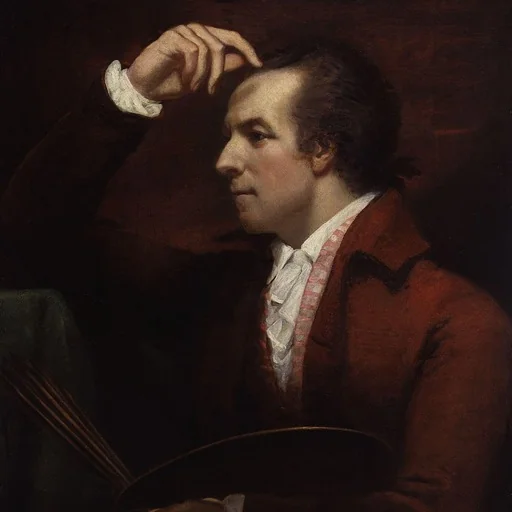
James Northcote was a British painter. He became a member of the Royal Academy in 1787, and a member of the Royal Institute of the Netherlands in 1809.

- A Man Trapped between a Lion and a Serpent
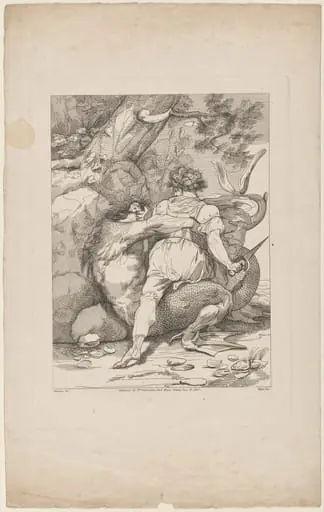 Man Attacking a Monster
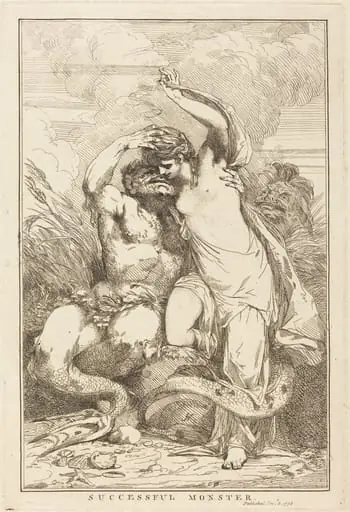 Successful Monster
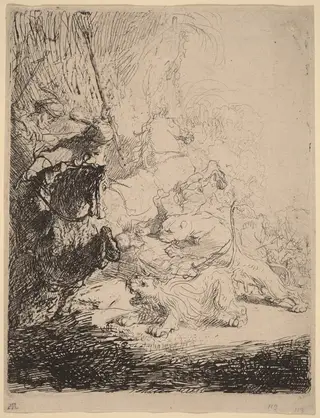 The Small Lion Hunt (with Two Lions)
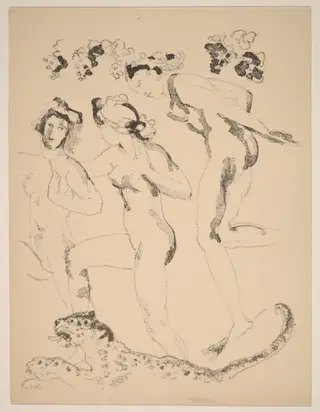 Bacchantes
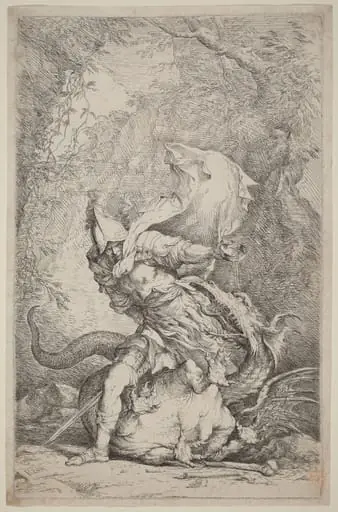 Jason and the Dragon
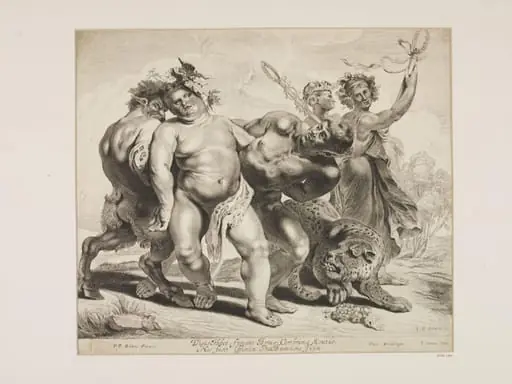 The March of Silenus
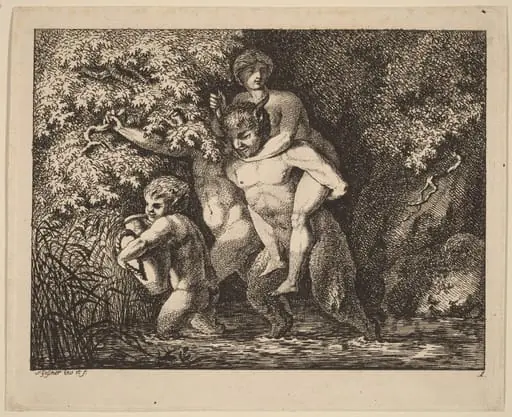 Satyr Carrying a Nymph
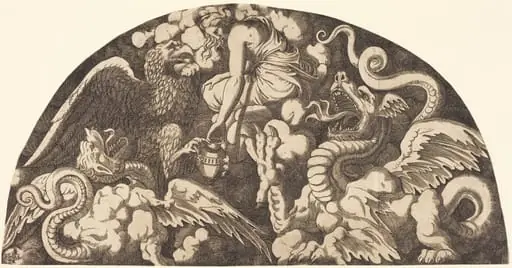 Jupiter Bringing Water of the Styx to Psyche
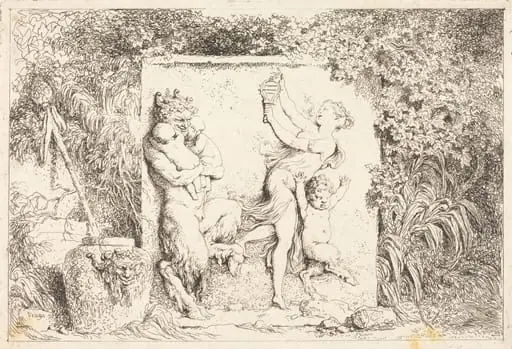 The Satyrs' Dance (Danse de satyres)
![The Amorous Lion [Le lion amoureux], by Félix Bracquemond](https://artifactworldgallery.com/img/felix-bracquemond--the-amorous-lion-le-lion-amoureux--5d353e25984ceddb-w320.webp) The Amorous Lion [Le lion amoureux]
The Amorous Lion [Le lion amoureux]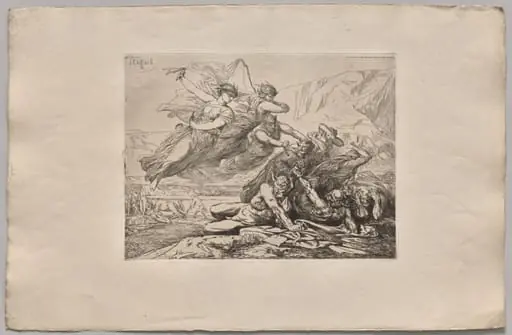 Justice, Vengence, and Truth