Artwork
The Pardon in Brittany
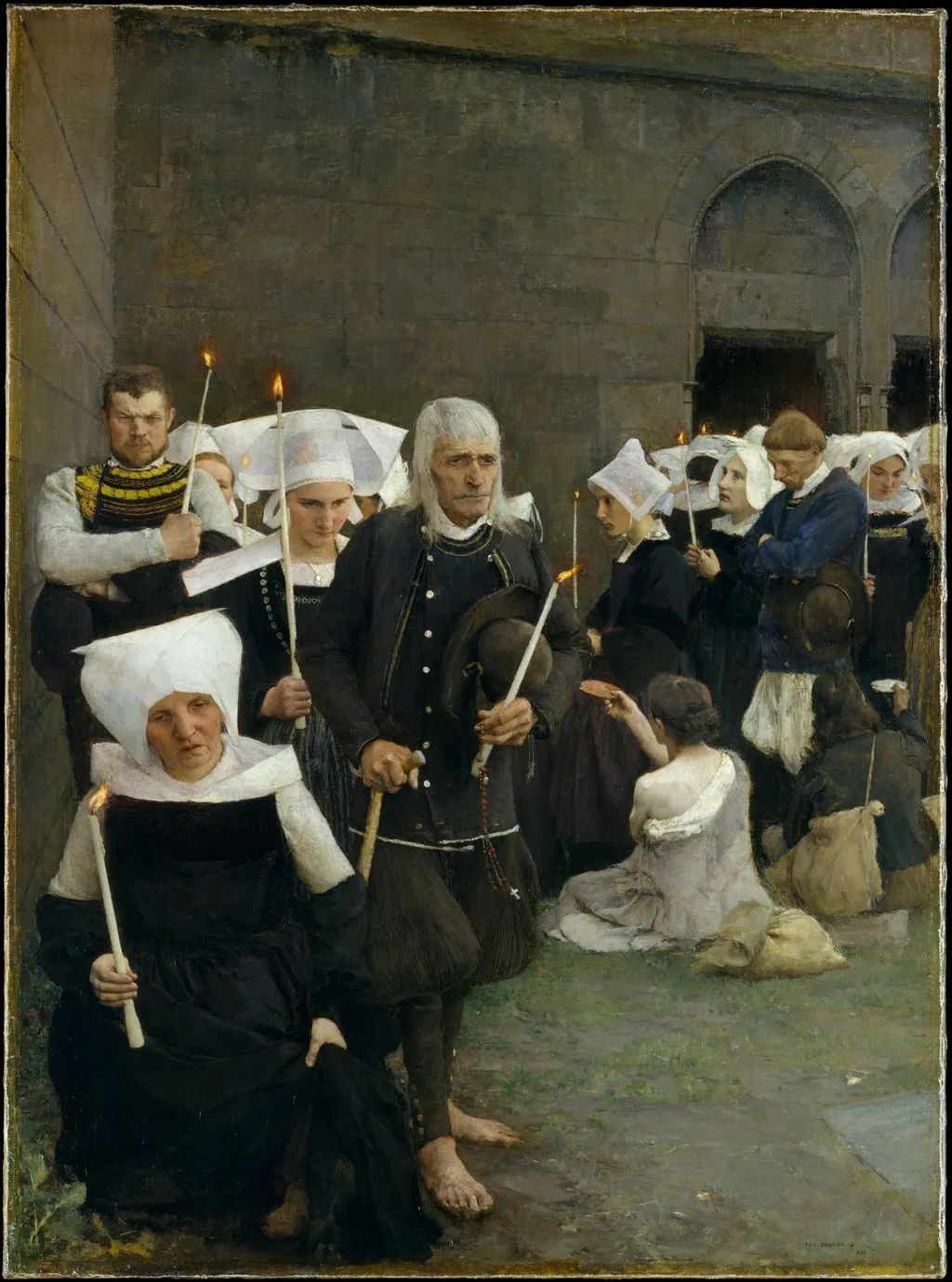
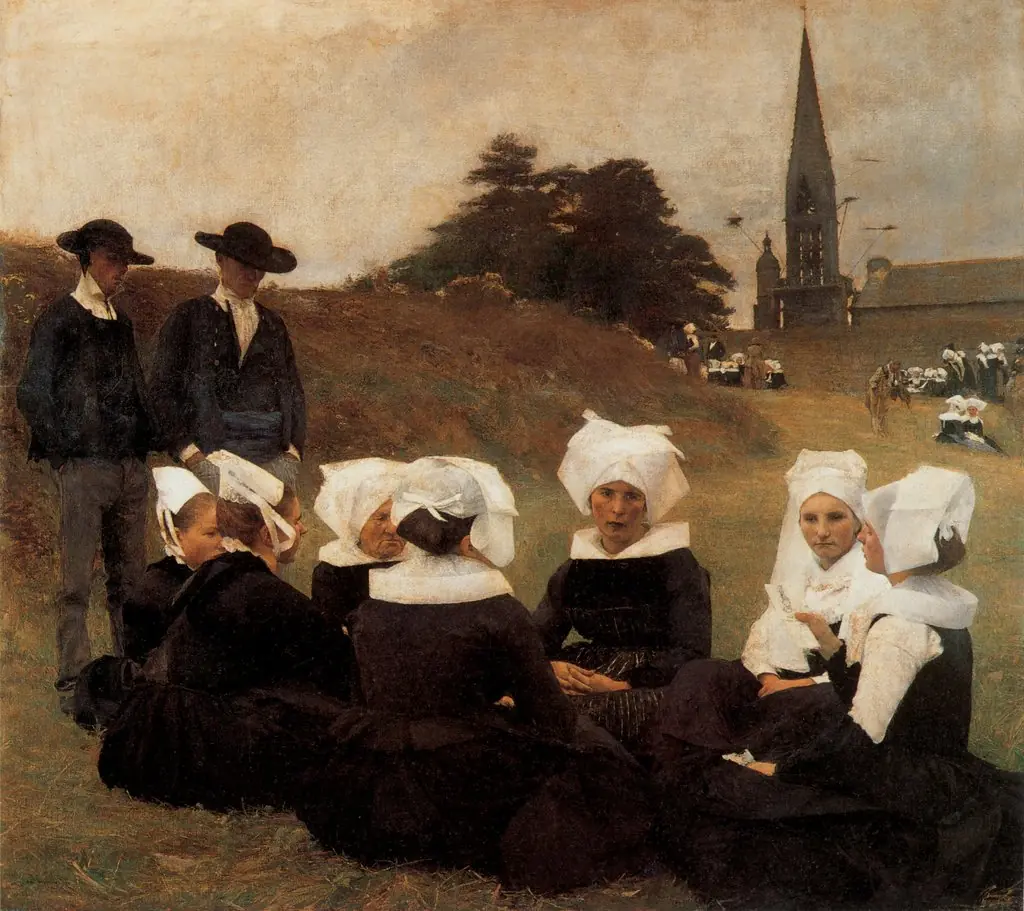
The Pardon in Brittany is an oil painting by the Academic Art artist Pascal Dagnan-Bouveret. It dates from 1894 and is held in the collection of the Metropolitan Museum of Art.
About this work
Subject & Meaning
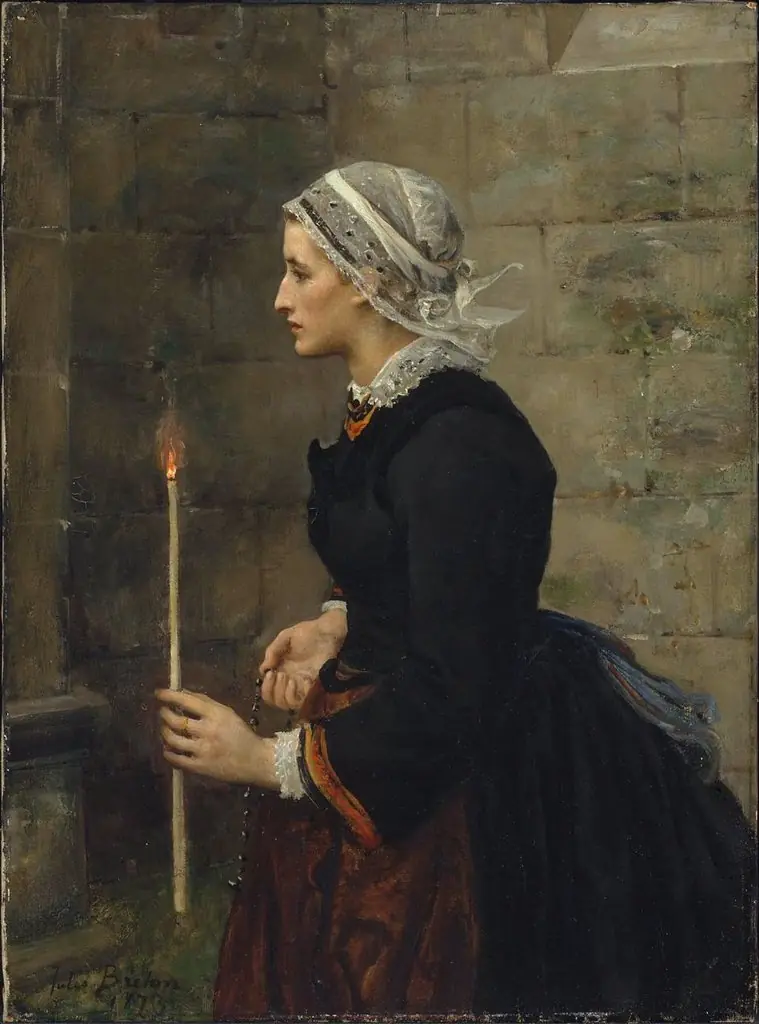
The inclusion of the candle serves as a central iconographic element, symbolizing faith and the spiritual light sought by the pilgrims during their journey.
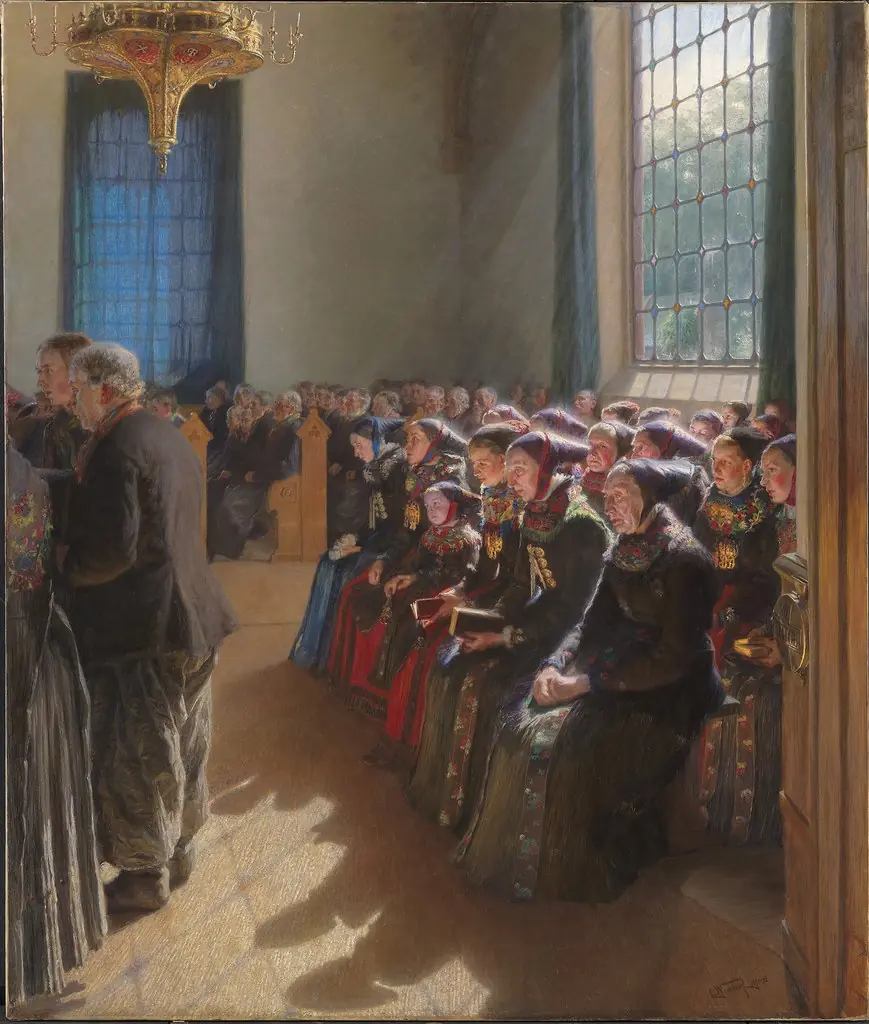
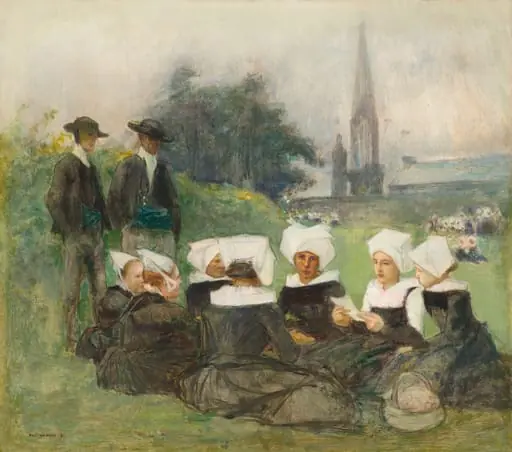
The Pardon in Brittany depicts a solemn religious scene featuring a man, a woman, and a candle, set within the context of a Breton pardon, or pilgrimage. Created by Pascal Dagnan-Bouveret in 1886, the work captures the quiet devotion characteristic of the movement's academic art style. The inclusion of the candle serves as a central iconographic element, symbolizing faith and the spiritual light sought by the pilgrims during their journey.
The figures are portrayed with a sense of reverence, highlighting the deep-rooted religious traditions of Brittany. The painting was first exhibited at the Salon of 1887, where it garnered attention for its realistic portrayal of peasant life intertwined with spiritual practice. The composition emphasizes the intimate connection between the human figures and their faith, representing the enduring cultural and religious identity of the region.
Technique & Style
Executed in 1886, The Pardon in Brittany is an oil painting on canvas by Pascal Dagnan-Bouveret, a work firmly situated within the Academic art movement. The composition measures 114.6 by 84.8 centimeters and depicts a solemn interior scene featuring male and female figures illuminated by candlelight. This specific handling of light and subject matter reflects the artist's naturalist approach, which was showcased when the piece was exhibited at the Salon of 1887.
The work's classification as a painting and its material construction of oil on canvas align with the traditional techniques favored by the artist during this period of his career.
History & Provenance
The Pardon in Brittany is an oil on canvas painting executed by Pascal Dagnan‑Bouveret in 1886. The work measures 114.6 cm by 84.8 cm and was first shown at the Salon of 1887. It portrays a woman, a man and a candle in a Breton setting, reflecting the academic style of the period.
After its creation, the painting entered the collection of the Metropolitan Museum of Art, where it remains on view. Its provenance therefore traces from the artist’s studio to the museum’s holdings, with no recorded private sales or further transfers.
The painting The Pardon in Brittany (1886) by Pascal Dagnan‑Bouveret is held in the Metropolitan Museum of Art in New York, where it is part of the museum’s collection; its accession number is not specified in the available records. The work measures 114.6 cm by 84.8 cm, is executed in oil on canvas, and was first exhibited at the Salon of 1887. These details are drawn from the documented provenance and exhibition history of the piece.
Overview
Pascal Dagnan-Bouveret completed The Pardon in Brittany in 1894, an oil painting currently housed at The Metropolitan Museum of Art. This work captures a solemn procession of figures, illuminated by the candles they carry, against a somber background. While the artist was a key figure in the naturalist school, the painting is also identified with the post-impressionist movement, reflecting a blend of detailed observation and expressive light.
Own this work as a print
Artist & collection
Artist
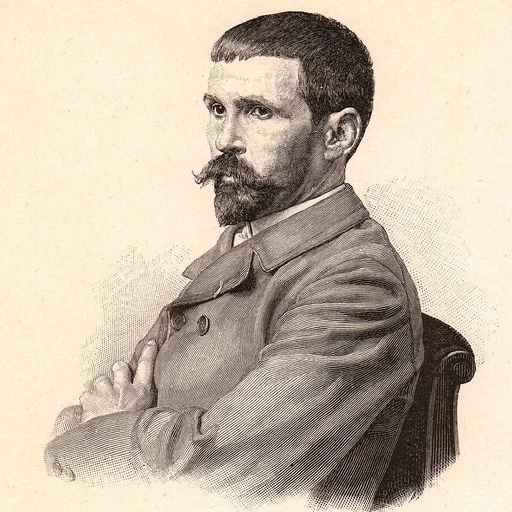
Pascal-Adolphe-Jean Dagnan-Bouveret (7 January 1852 – 3 July 1929) was a French painter, one of the leading members of the naturalist school.