Artwork
The larder
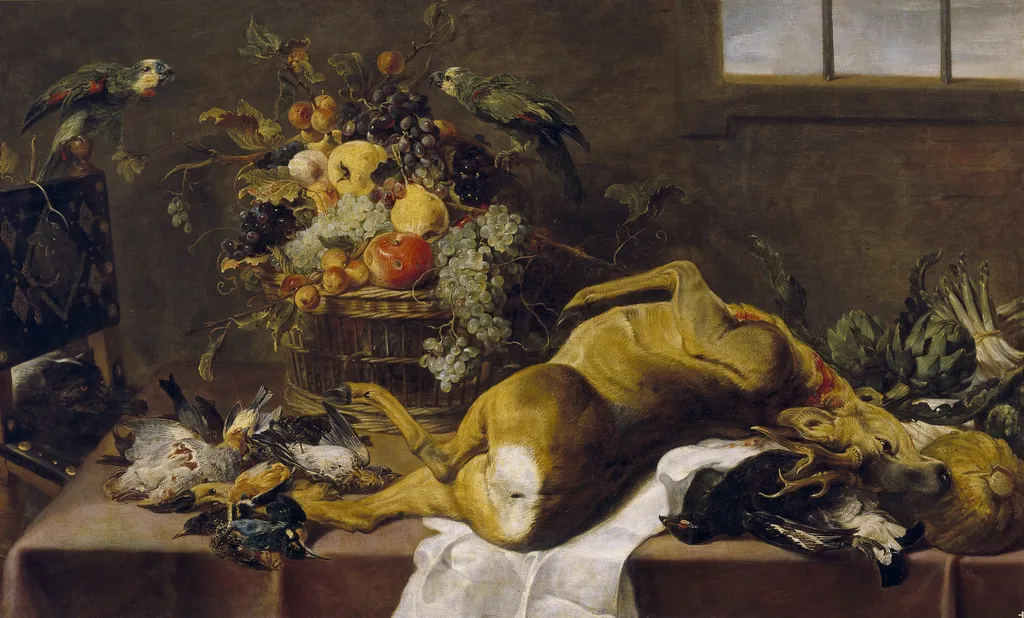
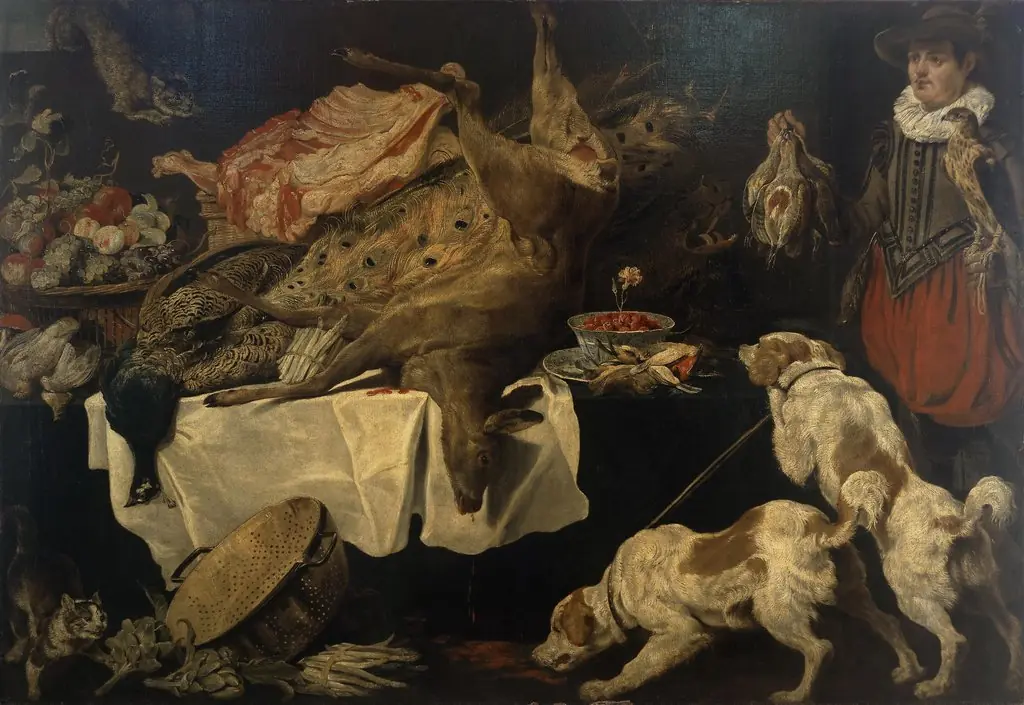
The larder is an oil painting by the Flemish Baroque painting artist Paul de Vos. It dates from 1601 and is held in the collection of the Museo del Prado.
About this work
Technique & Style
It depicts a still life scene featuring basketry and a seat, rendered with the characteristic brushwork of early 17th‑century Flemish practice.
The painting is executed in oil on canvas, measuring 117 cm in height and 191 cm in width. It depicts a still life scene featuring basketry and a seat, rendered with the characteristic brushwork of early 17th‑century Flemish practice. The work has been transferred through several Spanish royal collections, including those of Ferdinand VII, Charles III, Philip V, and Elisabeth Farnese, before entering the holdings of the Museo del Prado.
The surface shows signs of age, with a varnish layer that has yellowed over time, affecting the clarity of the color palette. No structural damage is noted on the canvas support, and the paint layer remains largely intact, preserving the original tonal harmony and compositional balance.
History & Provenance
The still life The Larder by Paul de Vos dates to 1601, as recorded in both the artist’s corpus and the Museo del Prado’s records.
By the early nineteenth century it belonged to the Spanish royal collection: it is documented among works owned by Elisabeth Farnese, Philip V, Charles III, and Ferdinand VII before entering the Museo del Prado. The painting was housed at the Royal Palace of Aranjuez and later at the Royal Palace of La Granja de San Ildefonso before transfer to the Prado.
The painting The Larder by Paul de Vos is held in the collection of the Museo del Prado. The work has been associated with several locations within the Spanish royal holdings, including the Royal Palace of Aranjuez and the Royal Palace of La Granja de San Ildefonso. Historically, the piece was owned by Spanish monarchs and royalty, specifically Philip V, Elisabeth Farnese, Charles III, and Ferdinand VII.
The provided sources do not list a specific inventory or accession number for the work, nor do they detail a chronological exhibition history beyond its presence in these royal palaces.
Context
Paul de Vos painted The larder in 1601, an oil on canvas still life now housed in the Museo del Prado. The work entered the Spanish royal collections through successive monarchs including Philip V and Charles III, reflecting its high esteem in 17th-century elite taste. Scholarship emphasizes its role within the artist’s oeuvre and the broader development of Flemish-influenced Spanish still life painting, situating it at the intersection of Northern technical innovation and Iberian courtly patronage.
Legacy
The painting's enduring reputation rests on its sophisticated rendering of everyday objects and its role within the Spanish still-life tradition, as recorded in major institutional catalogues. Its composition influenced later artists who emphasized the symbolic weight of humble household items, a thread noted in art historical surveys. The work remains accessible to the public through its inclusion in prominent museum inventories, reflecting its continued scholarly and curatorial relevance.
Overview
The Larder, an oil on canvas painted in the early 17th century, presents a meticulously arranged still-life scene. Central to the composition is a dead rabbit lying on a table, surrounded by a collection of plucked birds, a draped cloth, and a basket overflowing with fruit and foliage. The work is part of the Museo del Prado’s holdings in Madrid.
Subject & Meaning
The tableau juxtaposes the lifeless animal with vibrant produce, suggesting themes of abundance and the transient nature of sustenance. Live parrots perched on a windowsill observe the display, adding a note of vitality that contrasts with the surrounding dead game, inviting reflection on the cycle of hunting and consumption.
Own this work as a print
Artist & collection
Artist
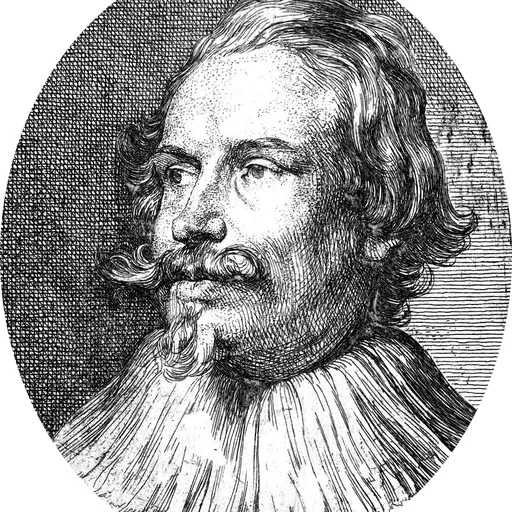
Paul de Vos (1591/92, or 1595 in Hulst – 30 June 1678 in Antwerp) was a Flemish Baroque painter who specialized in mainly in compositions of animals, hunting scenes and still lifes.

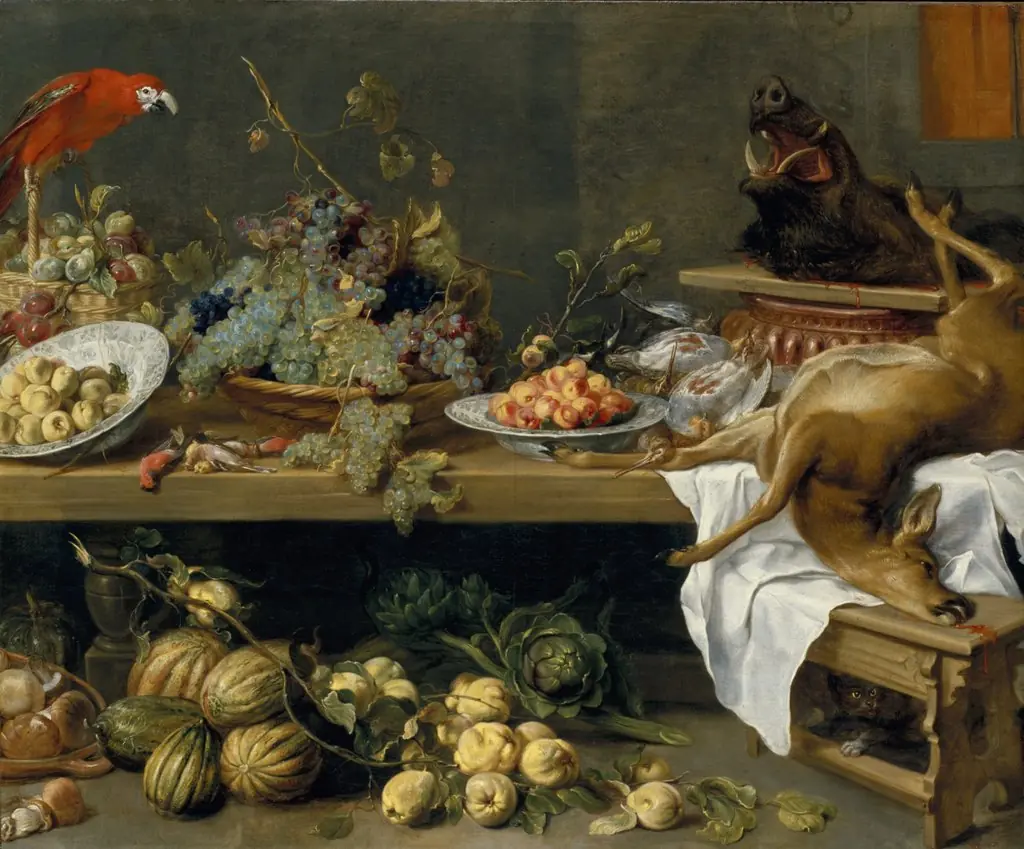 Still Life with Fruit, Vegetables and Dead Game
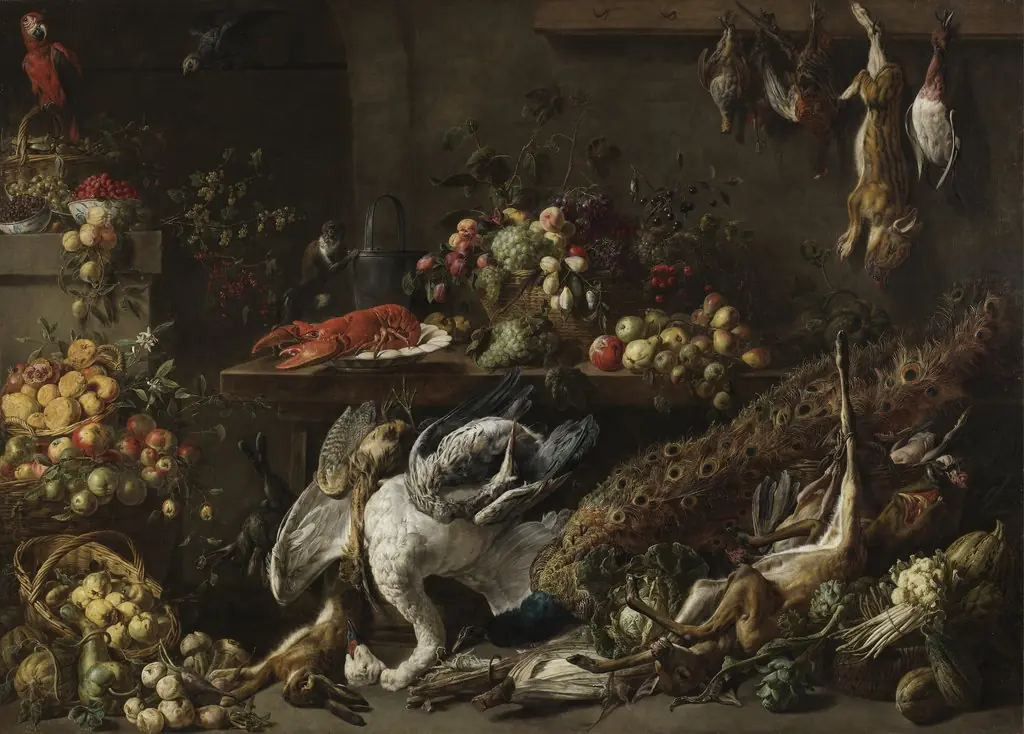
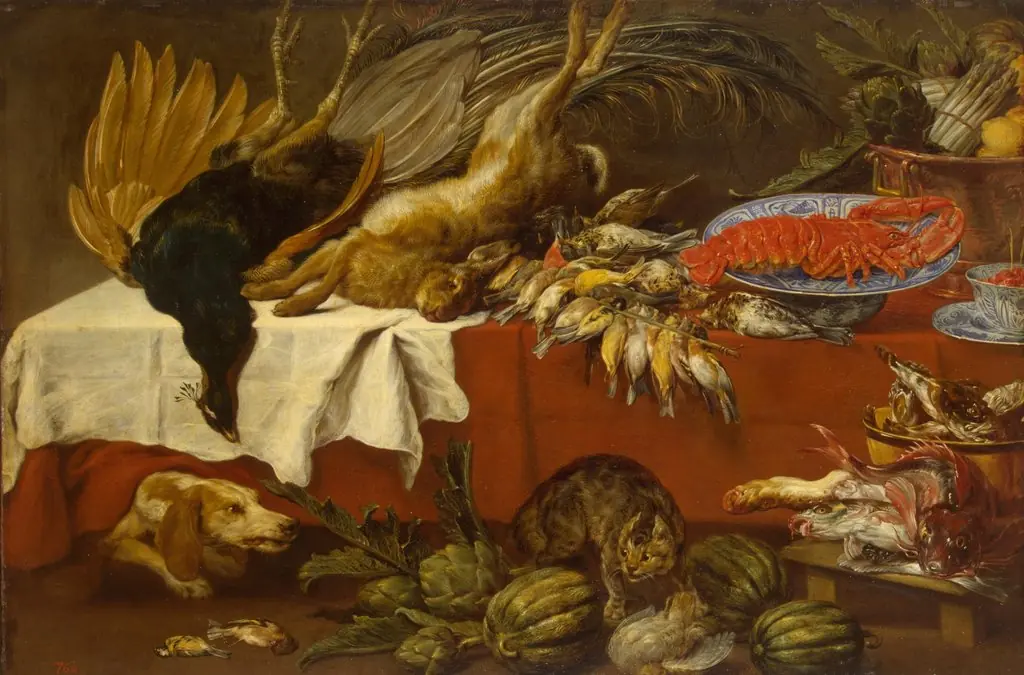 Still Life with Dead Game and Lobster
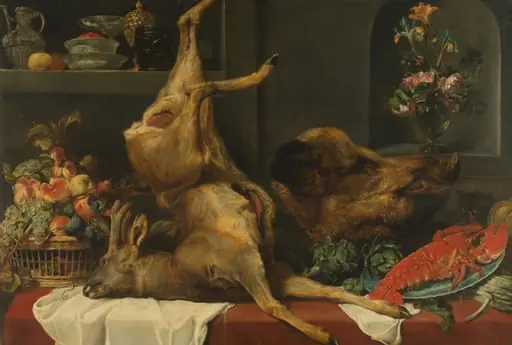 Larder Still life
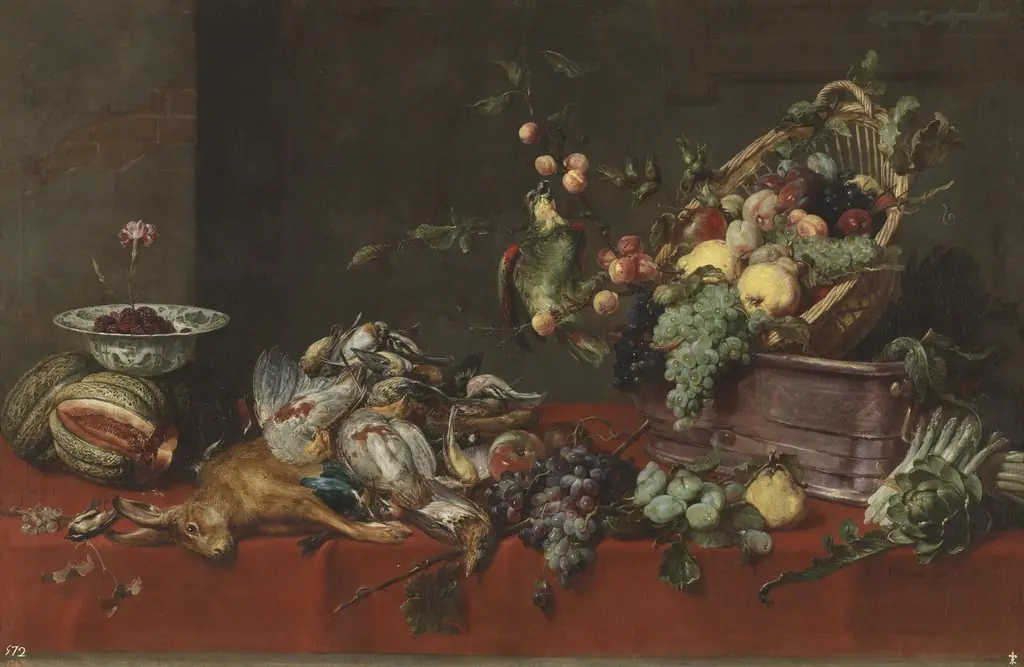 A still life with game, vegetables and fruit on a table, with a parrot on a branch
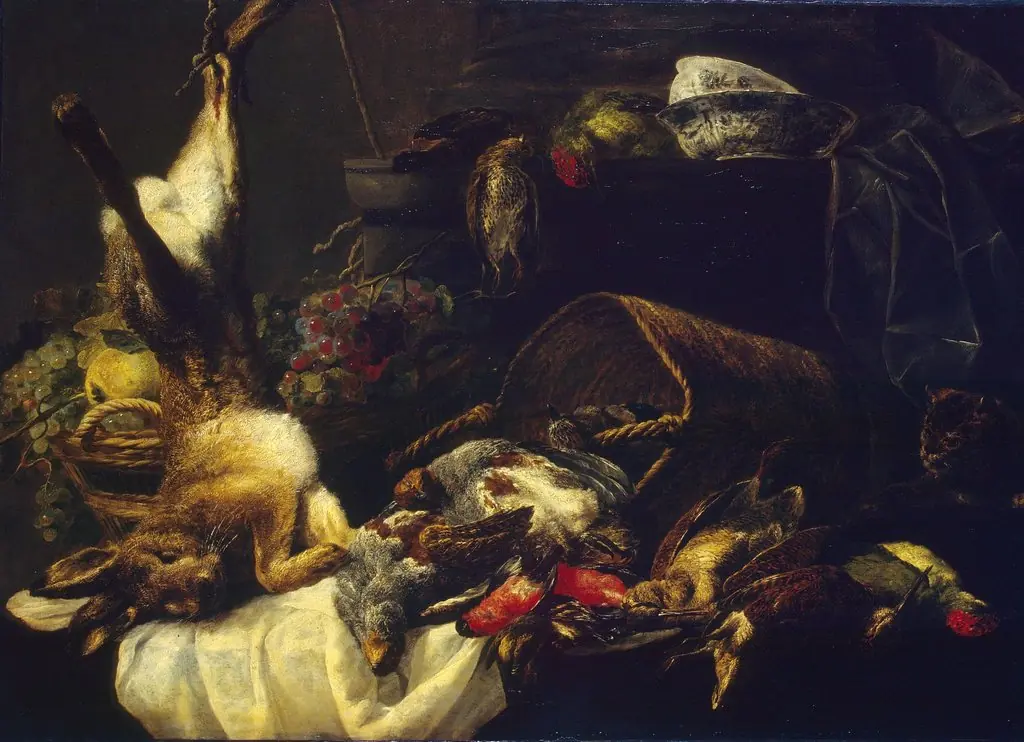 Dead Game
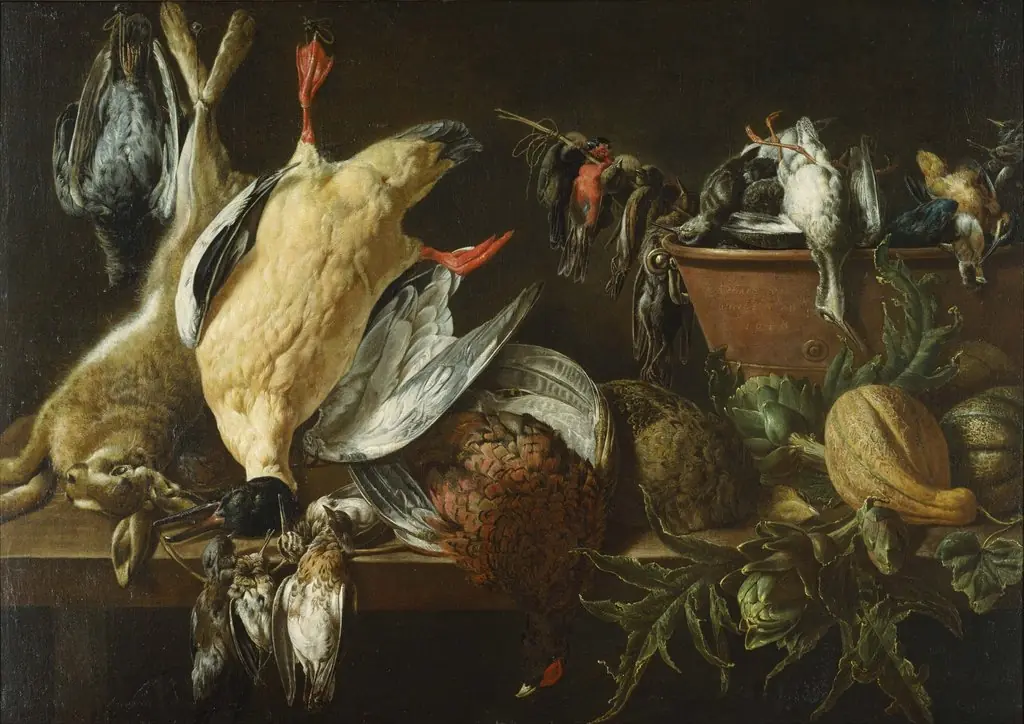 Still Life with Games and Vegetables
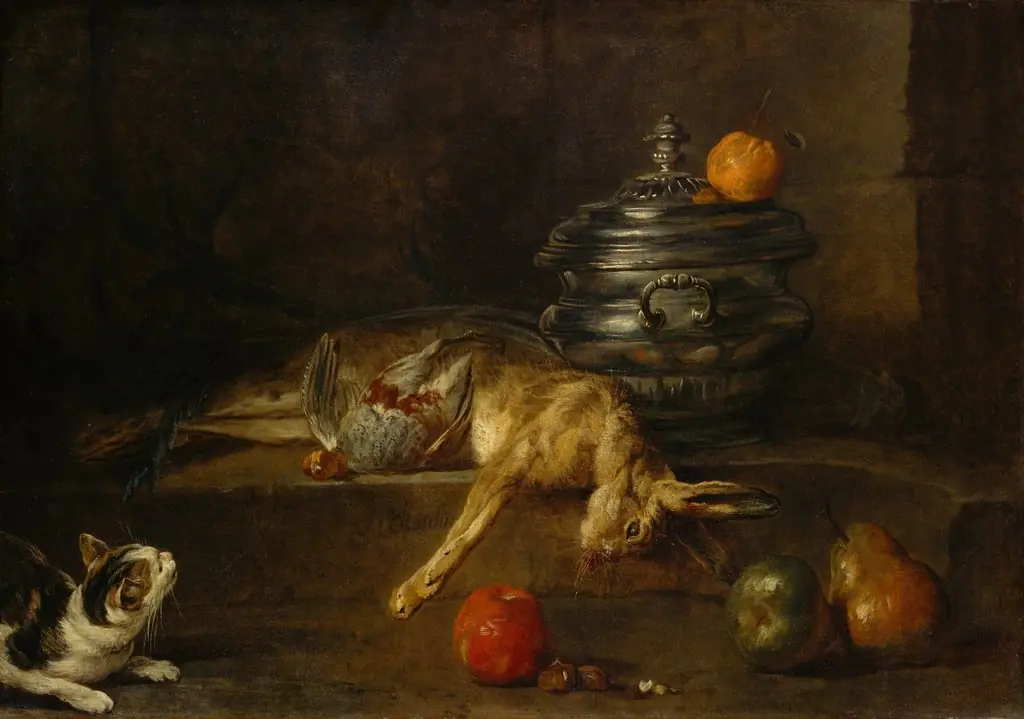 The Silver Tureen
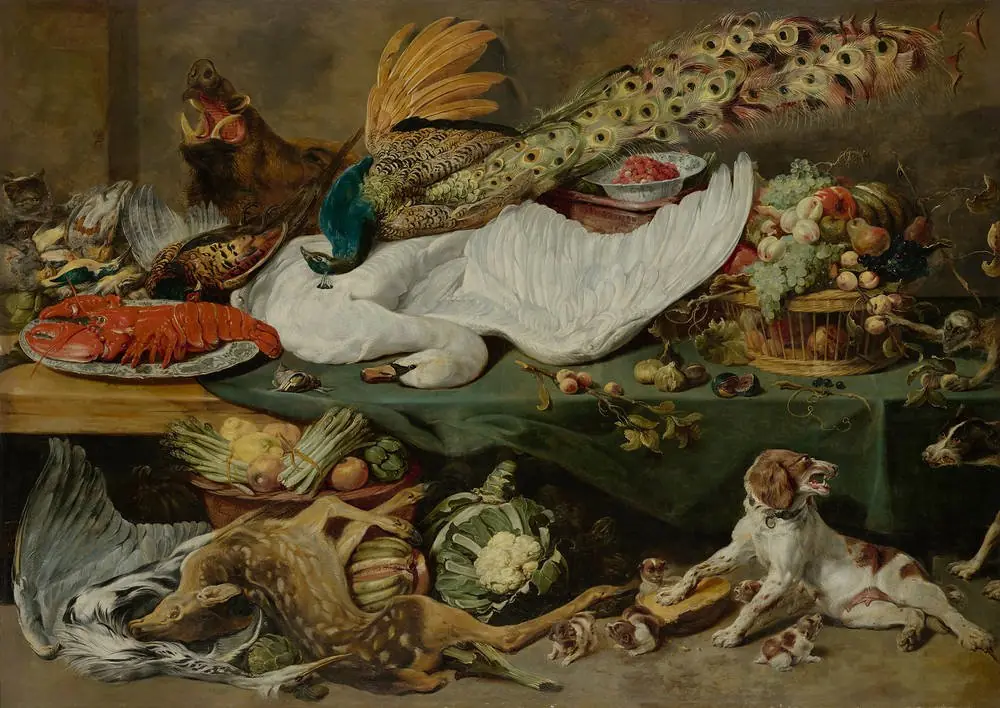 Still-life with a Spaniel and her Pups
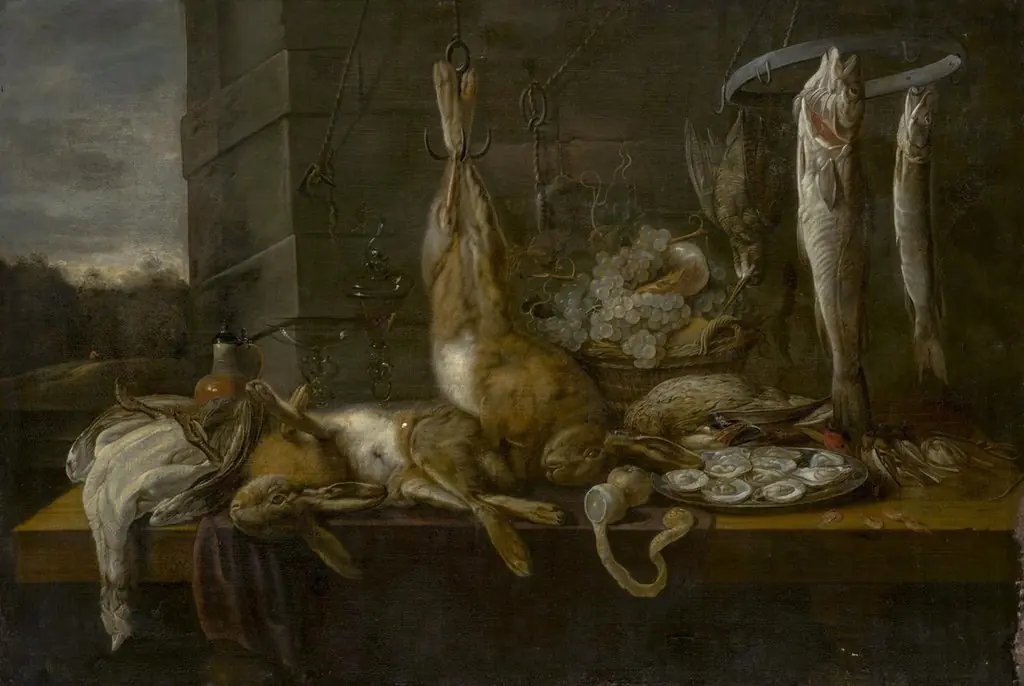 Still life of dead game
 Hunter and Dogs by a Table with Dead Game and Fruit