Artwork
The Gun Pit, No.I
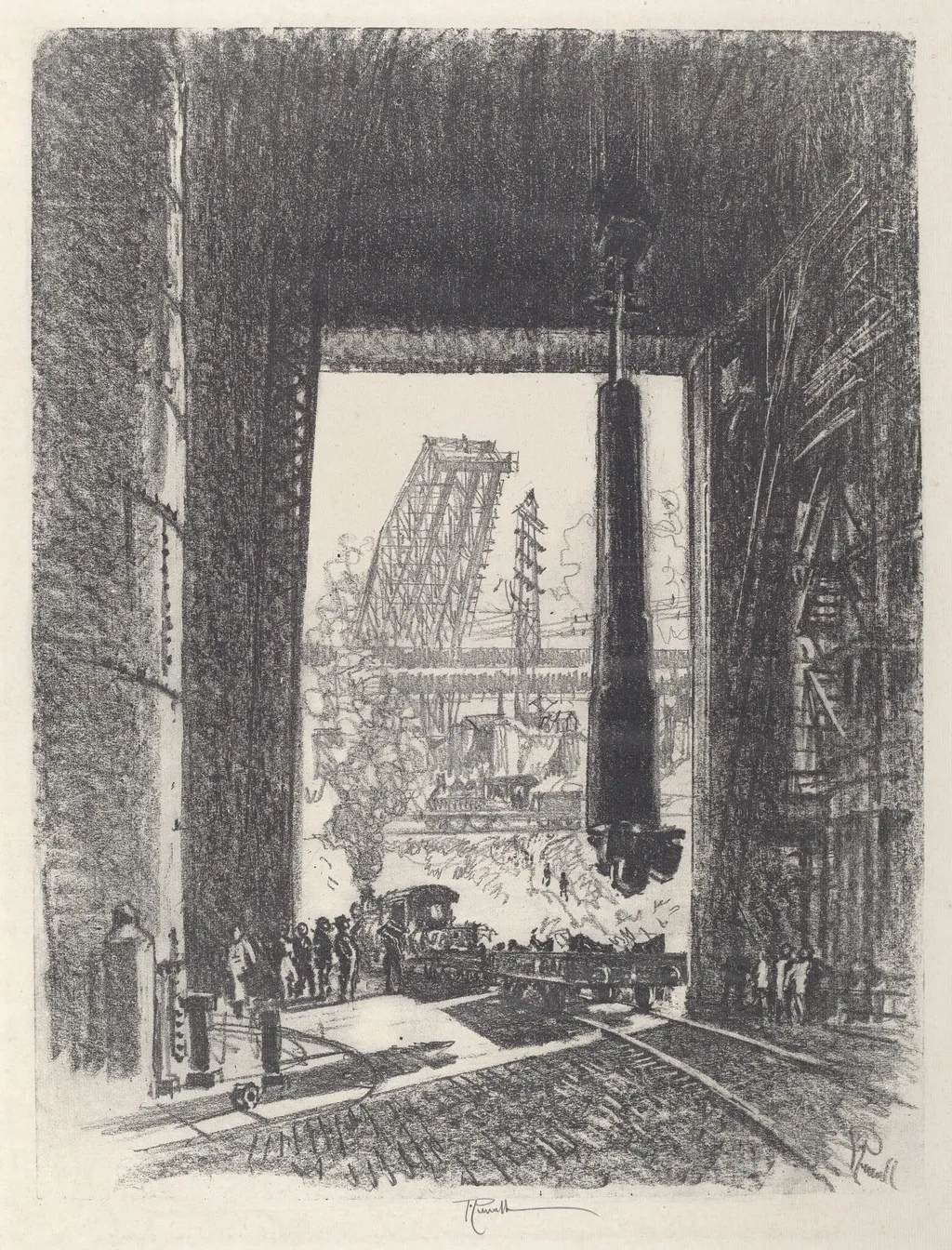
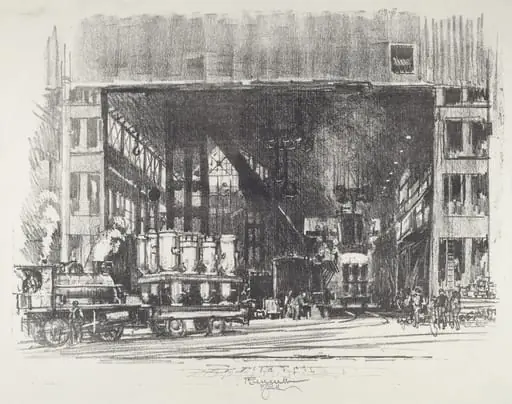
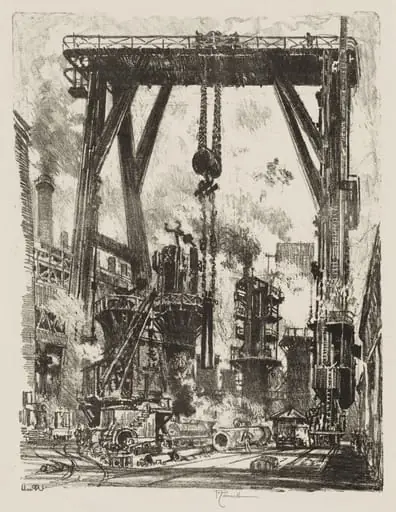
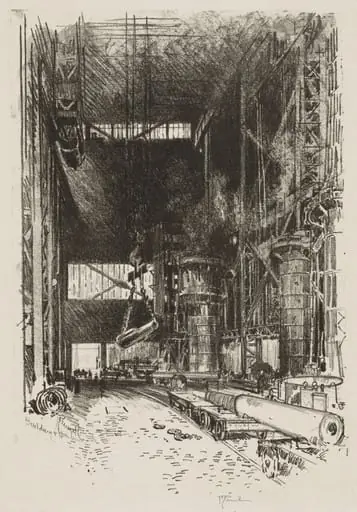
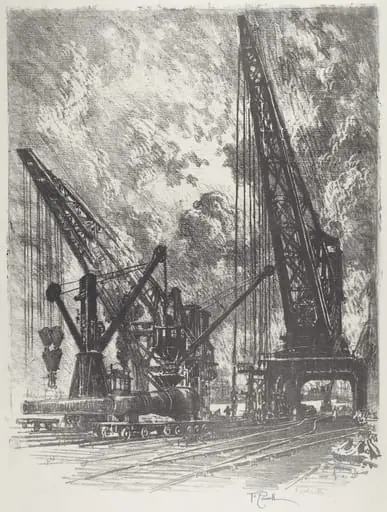
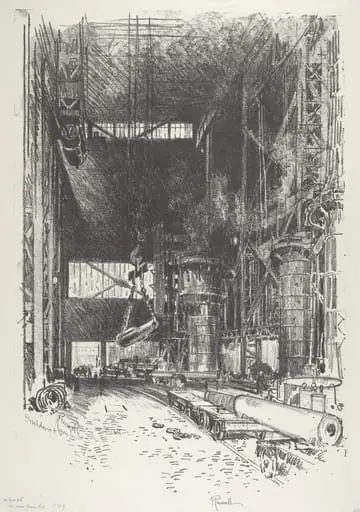
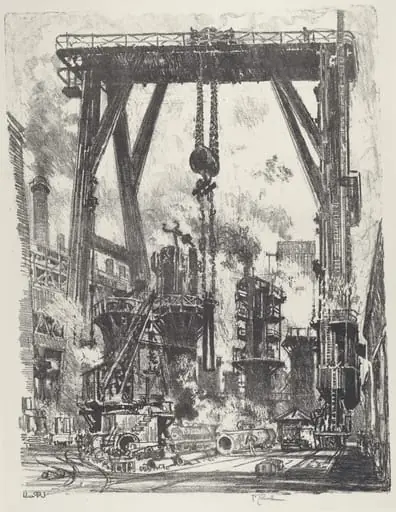
The Gun Pit, No.I is an ink print by Joseph Pennell. It dates from 1917 and is held in the collection of the National Gallery of Art. Created in 1917, The Gun Pit, No.
About this work
Overview
Pennell, trained in Philadelphia and later influenced by European aesthetics, turned his focus to military infrastructure as World War I unfolded.
Created in 1917, The Gun Pit, No.I is a lithograph by American artist Joseph Pennell, produced during his engagement with wartime documentation. Pennell, trained in Philadelphia and later influenced by European aesthetics, turned his focus to military infrastructure as World War I unfolded. This print captures a static yet charged moment on the front, rendered through the tonal possibilities of lithographic stone.
It belongs to a series recording industrial and combat sites, reflecting his commitment to recording modern warfare’s physical reality.
Subject & Meaning
The image centers on a heavy artillery piece embedded in a deep, earth-walled pit, its barrel thrust forward as if ready to fire. Around it, soldiers in period uniforms stand alert, their postures suggesting vigilance rather than action. The blurred background hints at distant structures and terrain, evoking the chaos of the battlefield without depicting direct combat.
The composition emphasizes the machine’s dominance and the human figures’ quiet endurance, conveying the tension of waiting within the machinery of war.
Technique & Style
Pennell employed lithography to achieve rapid, expressive lines and varied tonal gradations. The dark, dense contours of the gun and pit contrast with the loose, sketchy rendering of the surrounding landscape and figures. His hand retains the immediacy of a drawing, using minimal strokes to suggest texture and movement.
The lack of fine detail in the background enhances the sense of distance and disorientation, reinforcing the print’s documentary urgency over polished finish.
History & Provenance
Pennell was commissioned by the U.S. government during World War I to record military installations and war-related sites in Europe. The Gun Pit, No.I was produced as part of this official effort, likely during his time in France or Belgium. The work entered public collections shortly after its creation, preserved as a record of American artists’ contributions to wartime documentation. Its provenance traces back to government archives and later institutional acquisitions.
Context
In 1917, as the United States entered the war, artists were mobilized to visually chronicle the conflict for public and military audiences. Pennell’s work aligned with broader efforts to translate the scale and machinery of modern warfare into accessible imagery. Unlike heroic battle scenes, his focus on static positions and industrial forms reflected a growing interest in the impersonal, mechanical nature of trench warfare, distinguishing his approach from traditional war art.
Legacy
Pennell’s lithographs, including The Gun Pit, No.I, contributed to the recognition of printmaking as a legitimate medium for documentary realism. His unembellished depictions of war infrastructure influenced later generations of artists documenting industrial and military subjects. Though less celebrated than his European contemporaries, his body of wartime work remains a significant archive of early 20th-century visual testimony to the changing nature of conflict.
Own this work as a print
Artist & collection
Artist
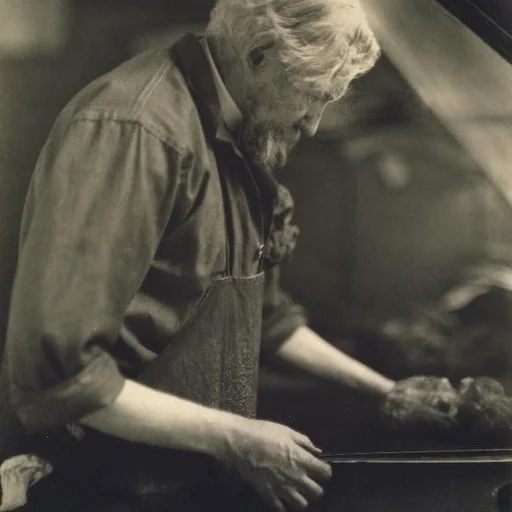
Joseph Pennell (July 4, 1857 – April 23, 1926) was an American draftsman, etcher, lithographer, and illustrator for books and magazines.