Artwork
MOTIV VECHI BUCUREȘTEAN ( Str. TAICA LAZĂR)
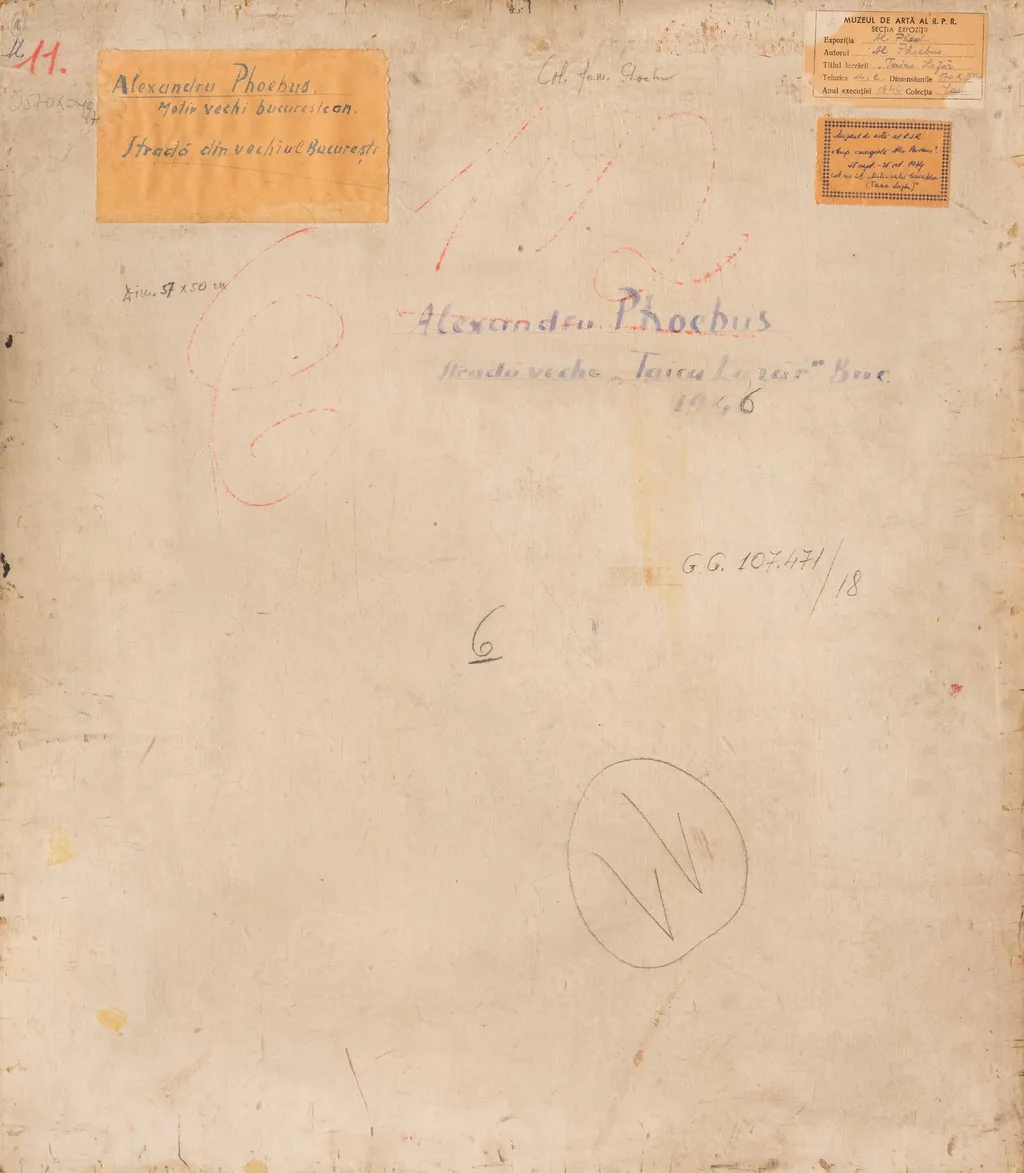
MOTIV VECHI BUCUREȘTEAN ( Str. TAICA LAZĂR) is an unspecified painting by Alexandru Phoebus. It dates from 1946 and is held in the collection of the National Museum of Art of Romania.
About this work
Overview
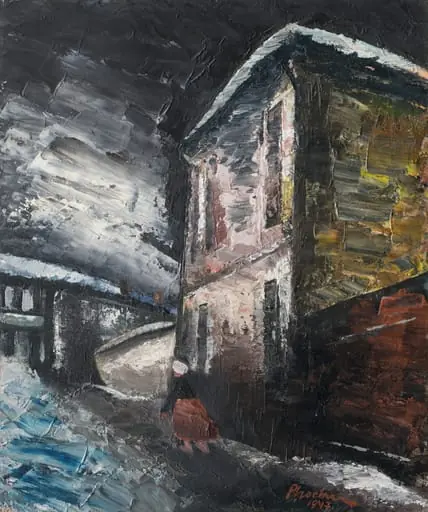
Alexandru Phoebus’s 1946 work titled Motiv Vechi Bucureștean (Str. Taica Lazăr) captures a quiet urban moment on a Bucharest street. The composition presents a modest row of historic houses opposite a paved roadway, where a few pedestrians traverse the sidewalk beneath a line of trees.
Subject & Meaning
The painting documents everyday life in post‑war Bucharest, emphasizing the coexistence of varied architectural details, balconies, ornamental facades, and modest dwellings, alongside ordinary city dwellers. The scene suggests a continuity of daily routines amid a cityscape marked by layered histories.
Technique & Style
Executed in a realistic manner, Phoebus renders the architecture and figures with careful observation. A restrained palette of earth tones, browns, grays, and tans, dominates, lending the image a subdued atmosphere that highlights texture over dramatic color.
History & Provenance
Created in 1946, shortly after World War II, the work reflects Phoebus’s interest in recording Bucharest’s urban environment during a period of reconstruction. The painting’s provenance remains within private collections, with limited public exhibition history.
Context
The piece belongs to a broader trend among Romanian artists of the mid‑20th century who turned to cityscapes to document rapid social and architectural changes. By focusing on a specific street, Phoebus contributes to a visual archive of Bucharest’s historic neighborhoods.
Own this work as a print
Artist & collection