Artwork
Processional Crucifix
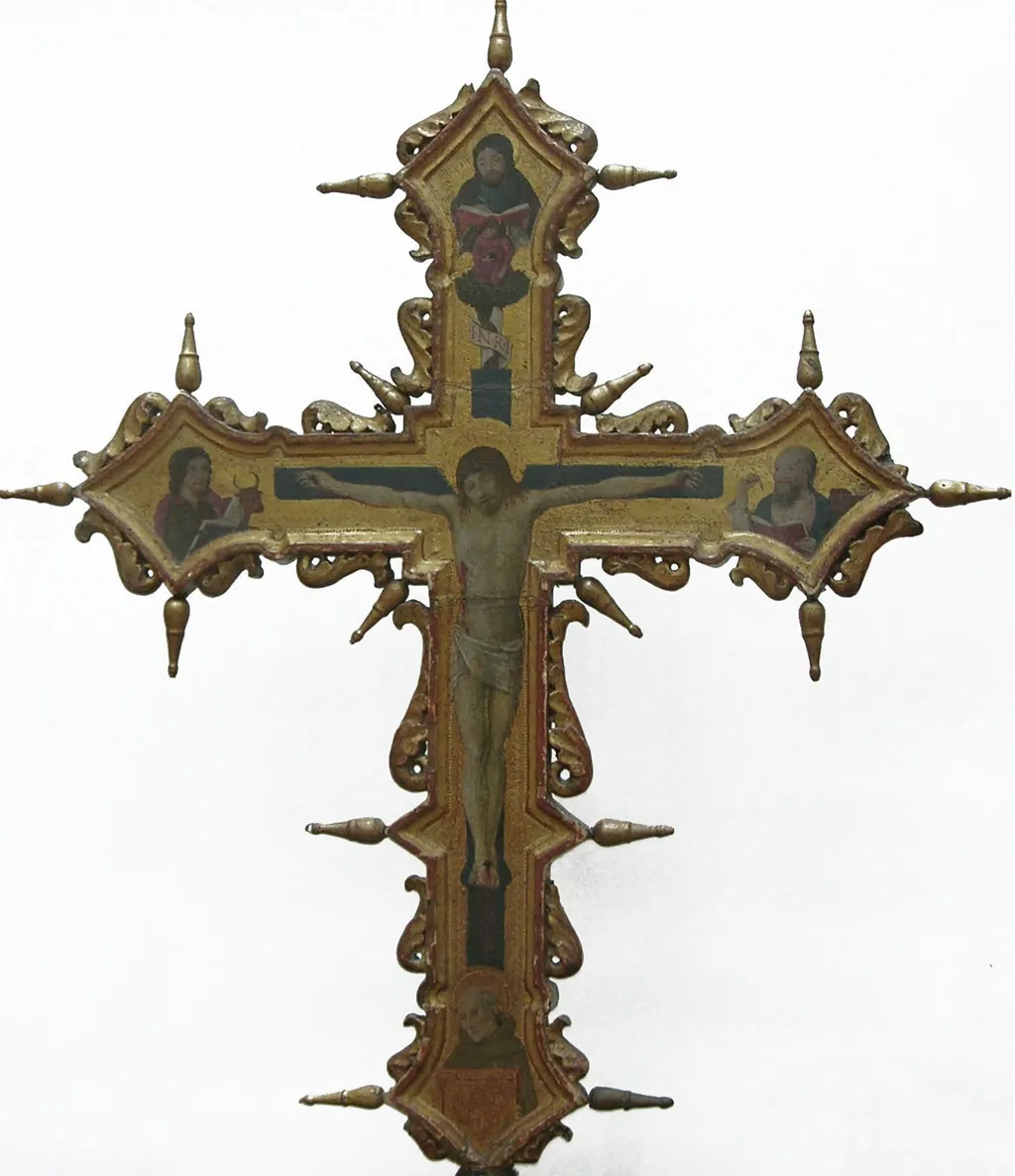
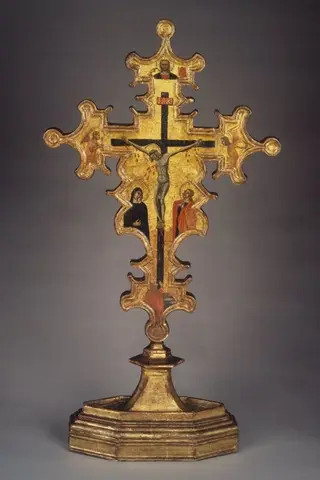
Processional Crucifix is a tempera painting by the Early Renaissance artist Pietro di Francesco degli Orioli. It dates from 1490 and is held in the collection of the Metropolitan Museum of Art.
About this work
Subject & Meaning
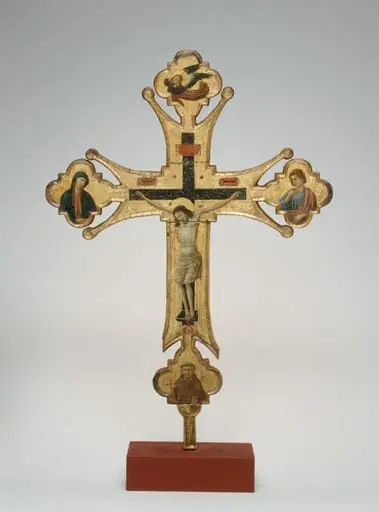
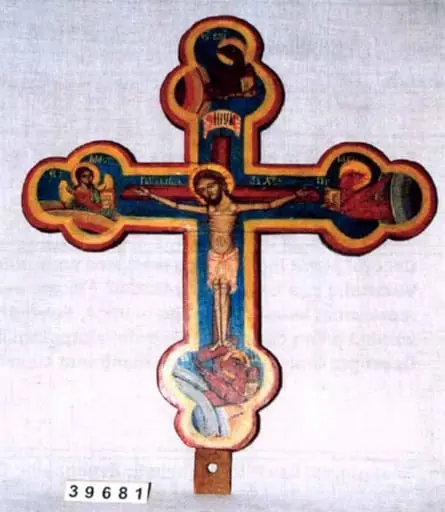
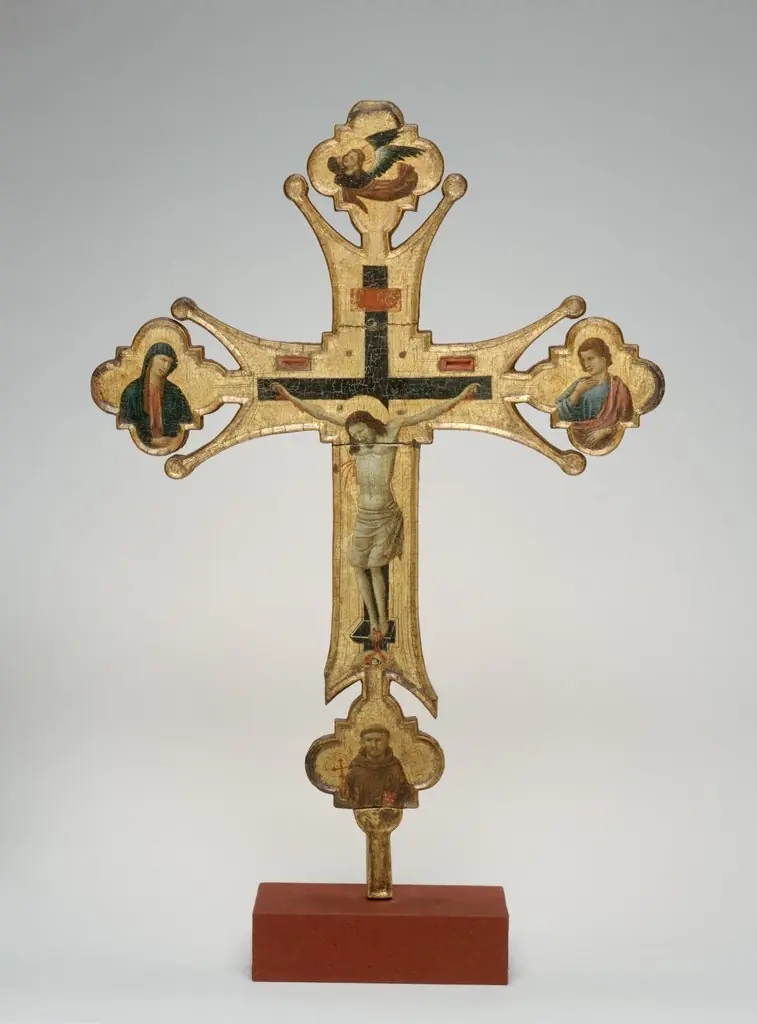
The work shows a processional crucifix centered on the cross bearing the crucified Christ.
The work shows a processional crucifix centered on the cross bearing the crucified Christ. Flanking the cross are two saints: Jerome, identifiable by his cardinal’s hat and scholarly attributes, and Francis of Assisi, marked by his humble habit and the stigmata. Their presence underscores themes of penitence, contemplative learning, and Franciscan ideals of poverty and devotion, transforming the crucifix into a devotional object that invites the viewer to meditate on Christ’s sacrifice alongside exemplars of Christian virtue.
Technique & Style
The work is a tempera painting executed on a wooden panel, typical of late fifteenth‑century Italian devotional art. Pietro di Francesco degli Orioli completed the piece in 1480, employing tempera pigments mixed with egg yolk to achieve flat, luminous surfaces on the panel support. The composition presents a crucifixion scene that includes a central cross, the figure of Christ, and the saints Jerome and Francis of Assisi, arranged in a hierarchical, symmetrical manner characteristic of processional crucifixes used in liturgical processions.
The painting was originally owned by Stefano Bardini and later sold through Michael Dreicer before entering the collection of the Metropolitan Museum of Art, where it remains on display. Its formal qualities reflect a blend of narrative clarity and ornamental detail, with careful attention to the drapery and gold background typical of the period.
History & Provenance
The Processional Crucifix is a tempera panel painting created by Pietro di Francesco degli Orioli in 1480. The work subsequently entered the collection of Stefano Bardini, the prominent Italian antiquarian and dealer. It later passed into the ownership of Michael Dreicer before being acquired by the Metropolitan Museum of Art, where it is currently held.
Overview
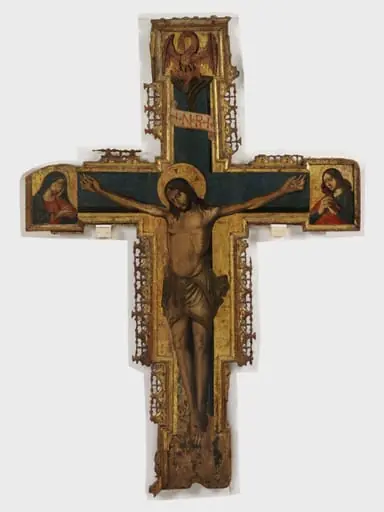
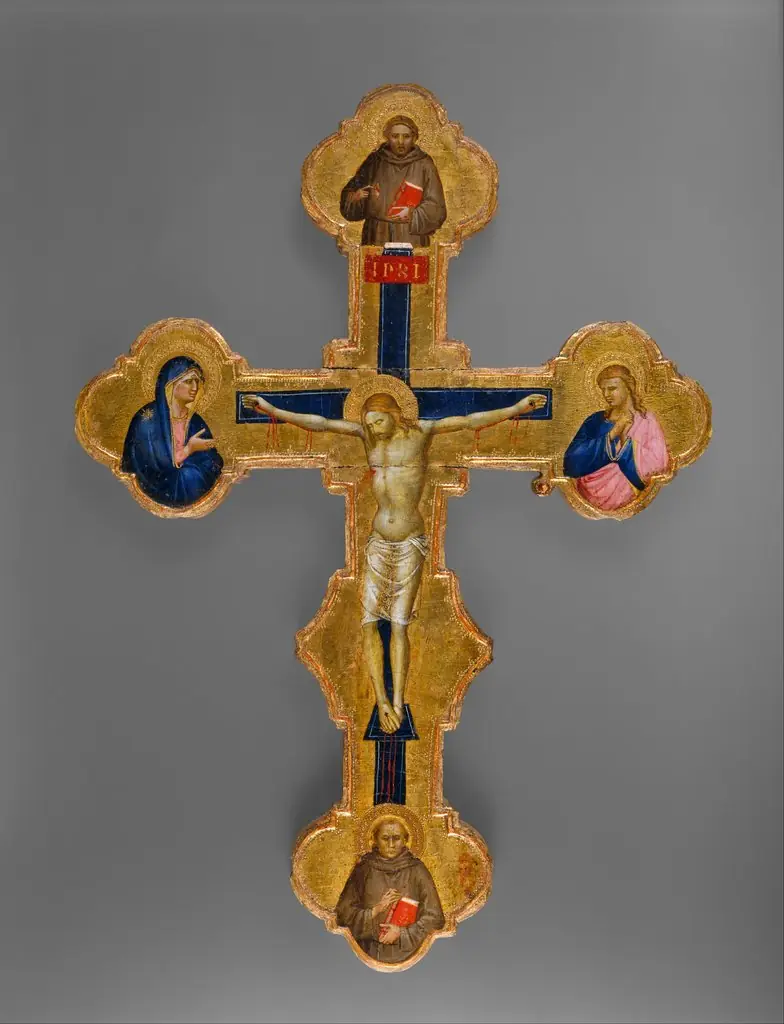
This artwork is a painted Processional Crucifix, designed to be carried during religious ceremonies. Its form is a golden cross, elaborately decorated, with various scenes and figures depicted within its arms. The overall impression is one of weight and ornamentation, reflecting its ceremonial function and the devotional context for which it was created.
Context
As a processional crucifix, this object was intended for public display and movement during religious rites. Its substantial and decorative nature suggests it would have been a focal point in liturgical parades, carried by clergy or acolytes. Such objects served not only as devotional aids but also as visual affirmations of faith and the presence of the church within the community.
Own this work as a print
Artist & collection
Artist
Pietro di Francesco degli Orioli
Pietro di Francesco degli Orioli (1458–1496) was an artist, born in Siena.