Artwork
Processional Cross
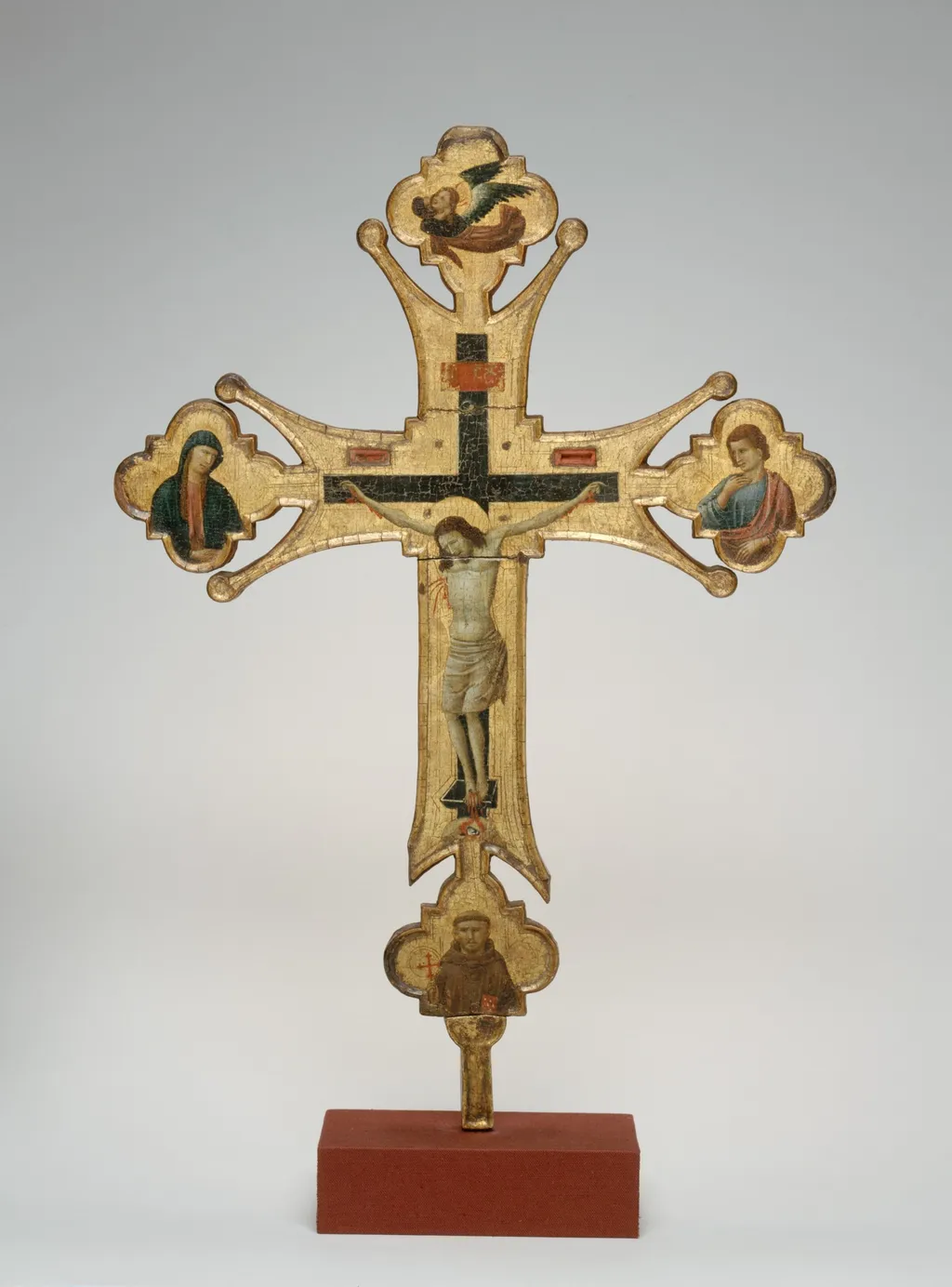
Processional Cross is an unspecified painting. It dates from 1320 and is held in the collection of the Cleveland Museum of Art.
About this work
History & Provenance
No further details regarding specific commissioners or intermediate ownership prior to its museum acquisition are provided in the available records.
The Processional Cross was created in 1320 by the artist known as the Master of Santa Chiara. This Italian religious painting, measuring 61.3 by 44.2 units, entered the collection of the Cleveland Museum of Art, where it is currently housed. The work is identified within the museum's records by the accession number 1943.280, indicating its acquisition year.
No further details regarding specific commissioners or intermediate ownership prior to its museum acquisition are provided in the available records.
The Processional Cross is held by the Cleveland Museum of Art. Its accession number is 1943.280, indicating that it entered the collection in 1943. The work is catalogued as a religious painting dating to 1320.
No exhibition history beyond its presence in the Cleveland Museum of Art's collection is documented in the available sources.
Overview
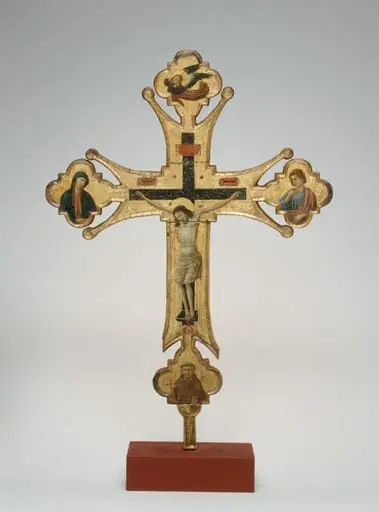
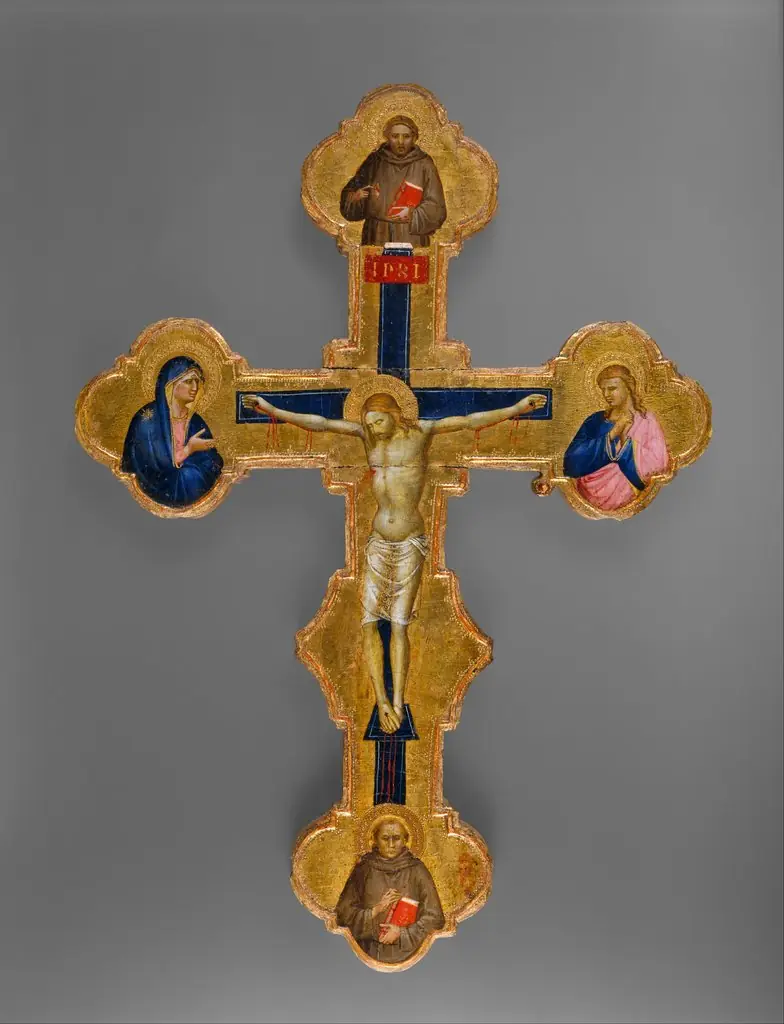
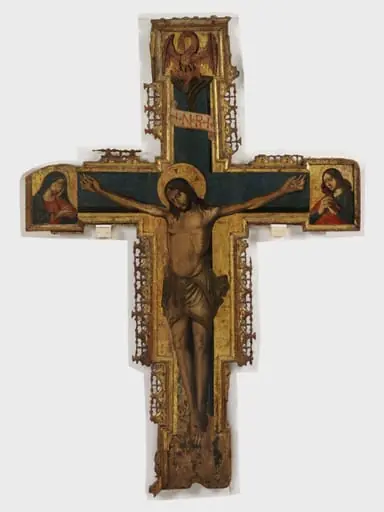
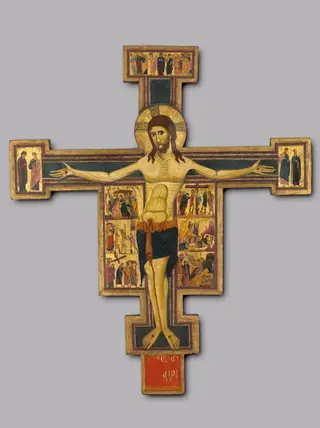
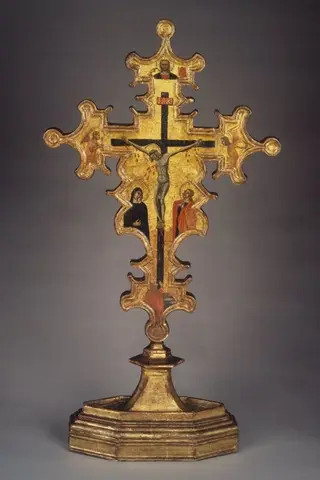
This painted Processional Cross features a central crucified figure flanked by additional devotional scenes on its arms. Adorned with gold leaf, the tall structure is embellished with small, framed images. Its design suggests a functional purpose in religious ceremonies, intended to be carried during processions. The overall aesthetic emphasizes clear forms and symbolic representation over naturalistic detail, characteristic of its period.
Subject & Meaning
At the cross's center, a figure is depicted affixed to the crossbeam, clad in a simple garment. Each of the cross's arms presents two further figures, either kneeling or standing within arched frames. These individuals are rendered in vibrant blue, red, and gold robes, contributing to the devotional narrative.
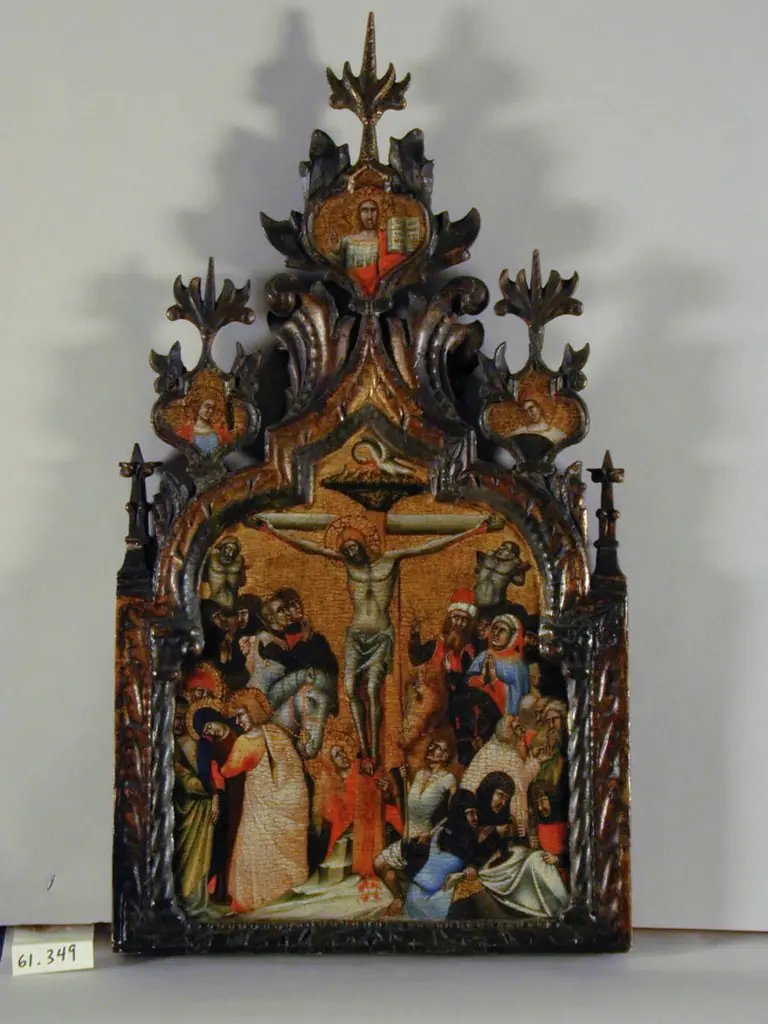
A small face emerges from a leafy design at the top, adding another symbolic element to the composition.
Technique & Style
The artwork employs a distinct visual language characterized by its two-dimensional quality. Figures appear flat, defined by strong colors and crisp outlines rather than volumetric modeling. Their expressions are composed and somewhat rigid, reminiscent of sculpted forms.
The extensive use of a gold background serves to isolate and highlight the painted elements, contributing to the cross's striking clarity and spiritual presence.
Artist & collection