Artwork
Jo Bap Piranesi Venet Architectus (Portrait of Piranesi)

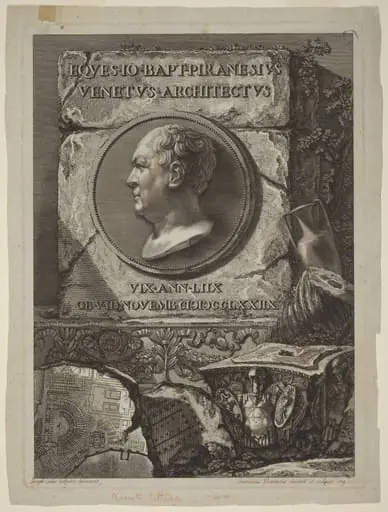
Jo Bap Piranesi Venet Architectus (Portrait of Piranesi) is an ink print by the Romanticist artist Felice Polanzani. It dates from 1750 and is held in the collection of the National Gallery of Art.
About this work
Overview
Jo Bap Piranesi Venet Architectus is an engraving by Felice Polanzani, dated to 1750, portraying a profiled figure against a backdrop of ruins. The work is part of the collection at the National Gallery of Art in Washington.
Subject & Meaning
The engraving depicts a serious-looking man with curly hair and a high-collared shirt, identified as Piranesi, an architect from Venice. His contemplative pose, with chin resting on his hand, suggests introspection.
Technique & Style
Polanzani employed a technique common in 18th-century engravings, using tiny lines to create shading and texture, thereby achieving depth in the black-and-white image. The contrast between the detailed figure and the expansive, ruined landscape behind him is notable.
History & Provenance
Created in 1750, the engraving is now housed at the National Gallery of Art in Washington, D.C., as part of its print collection.
Context
This work reflects the artistic and architectural interests of the time, highlighting Piranesi's profession against a backdrop that may allude to the transience of structures, a common theme in depictions of ruins during the Enlightenment era.
Legacy
While specific lasting impacts of this engraving are not widely documented, it contributes to the broader legacy of 18th-century printmaking and the representation of architectural figures in art.
Own this work as a print
Artist & collection