Artwork
Peisaj de toamnă
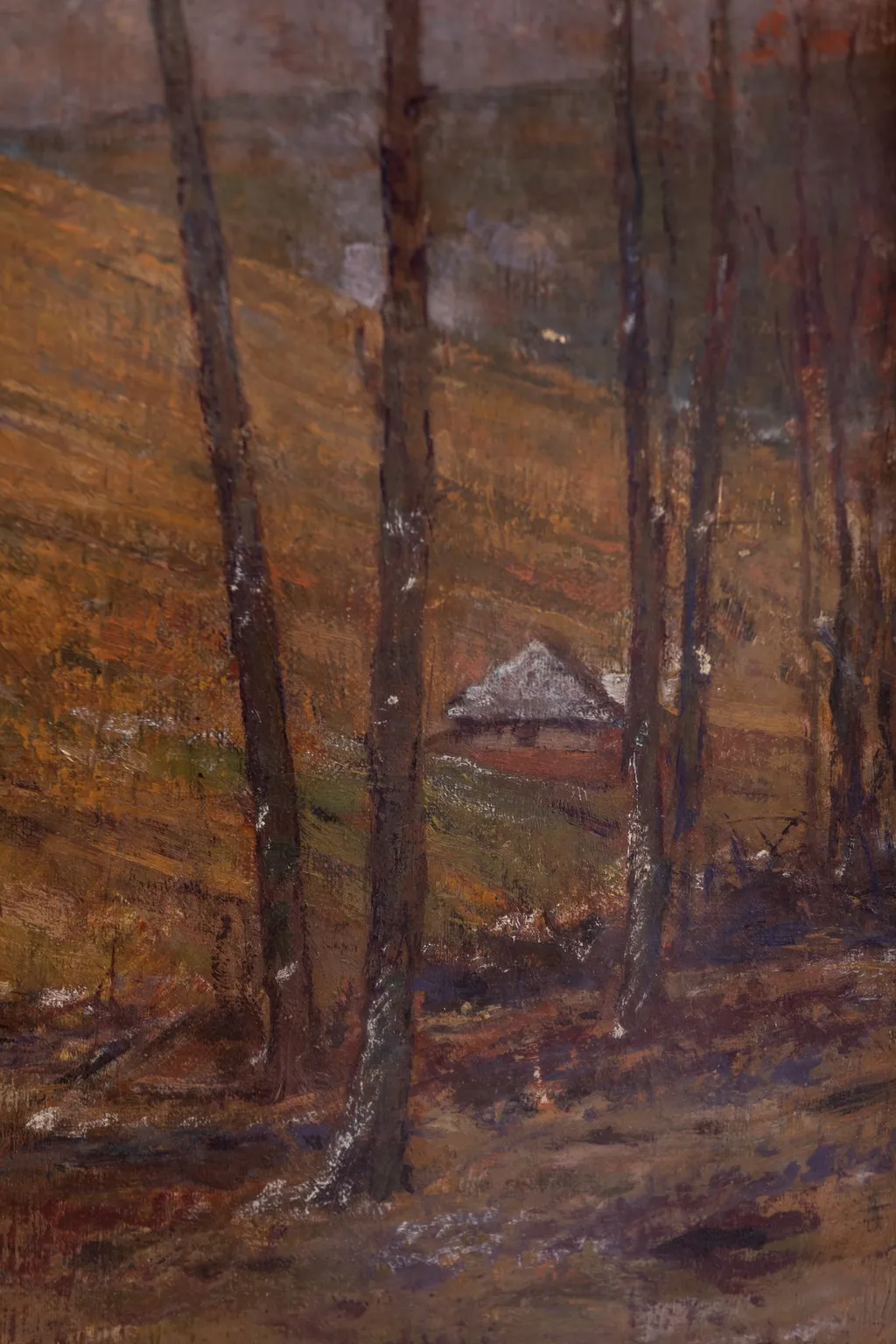
Peisaj de toamnă is an unspecified painting by Gheorghe Popovici. It dates from 1850 and is held in the collection of the Moldova National Museum Complex.
About this work
Overview
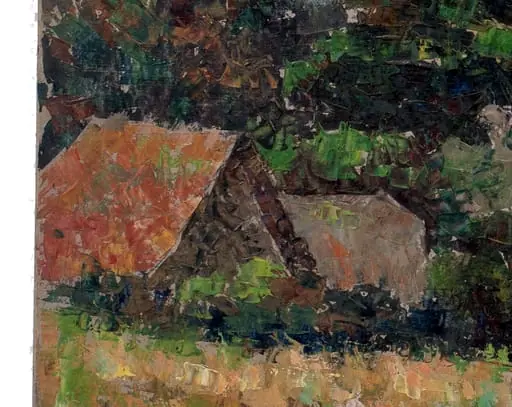
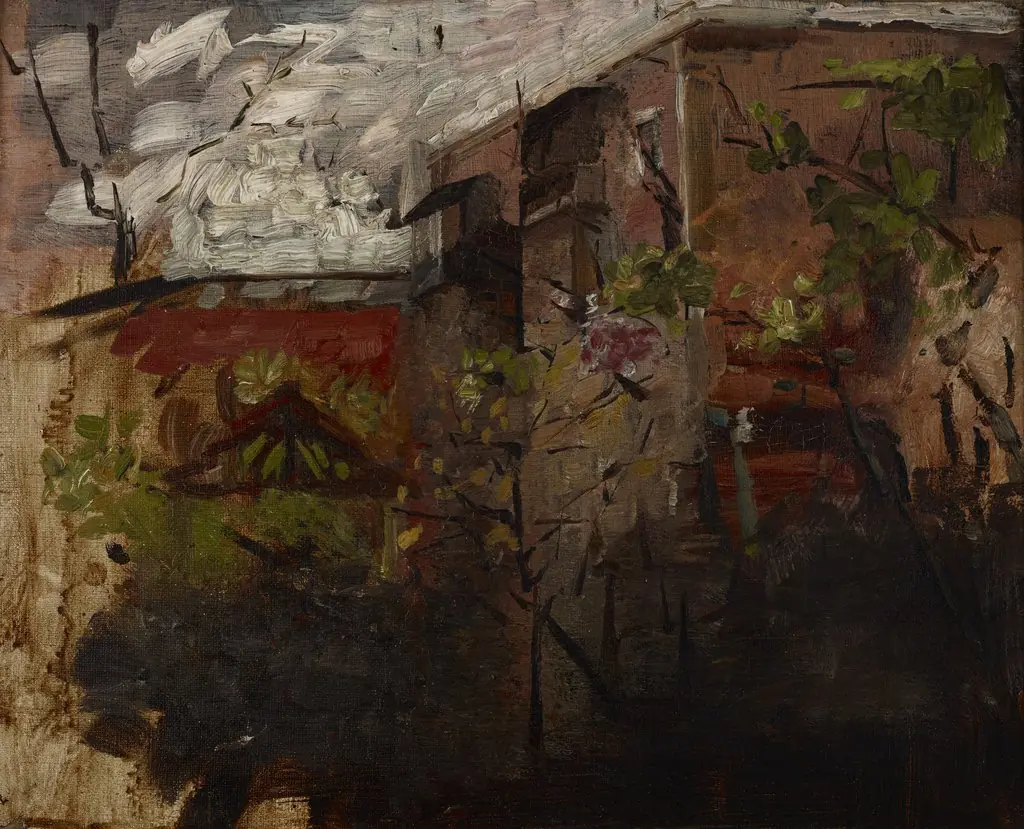
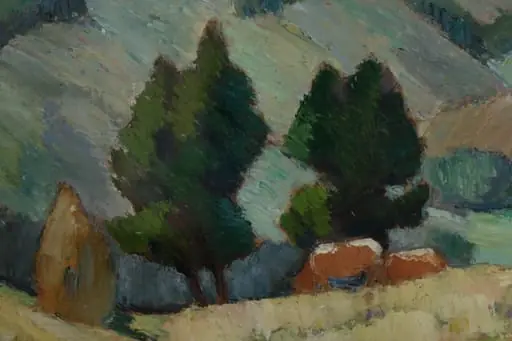
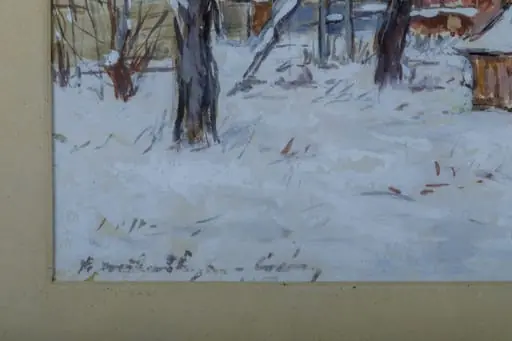
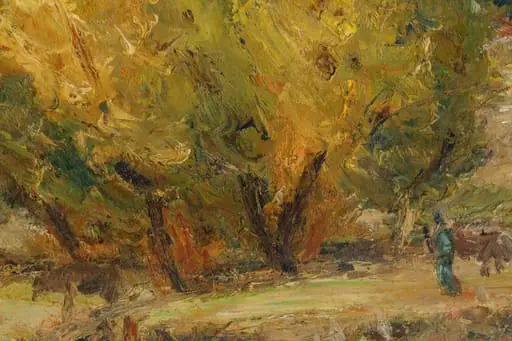
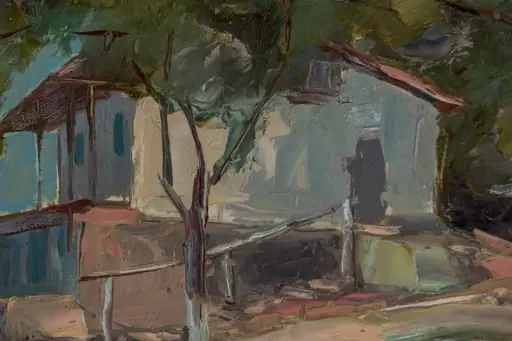
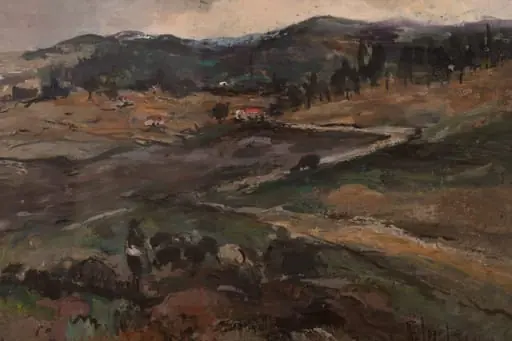
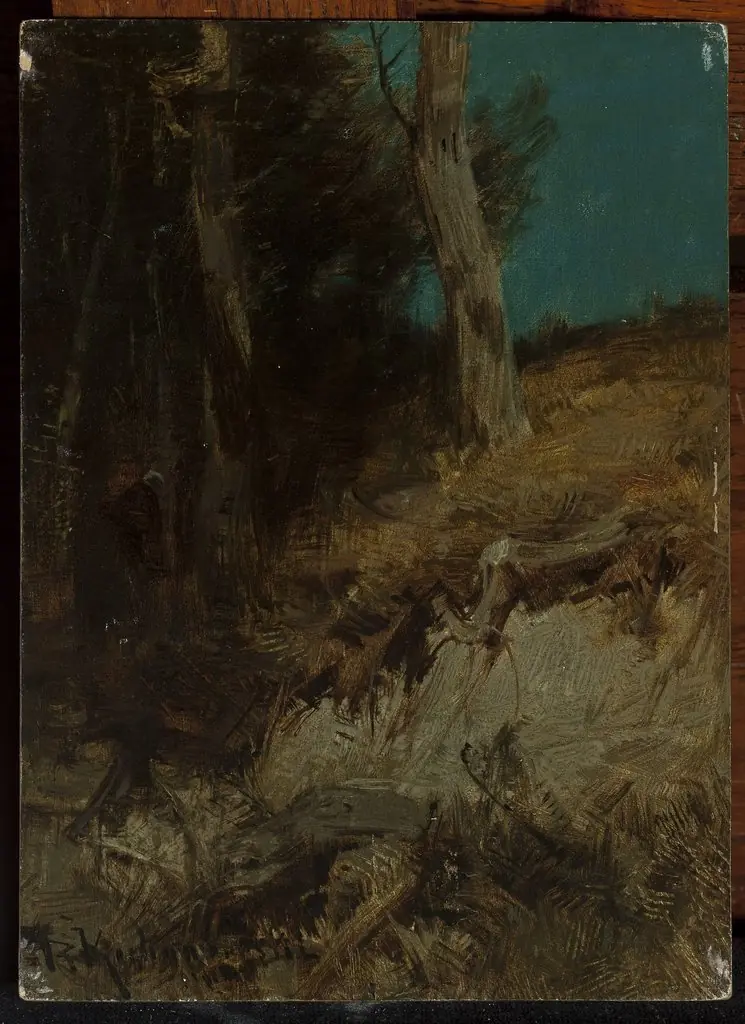
Created around 1850, Gheorghe Popovici’s “Peisaj de toamnă” depicts a tranquil woodland setting in the autumn season. A modest dwelling is nestled amid slender trees that stretch toward the horizon, their trunks rendered with a delicate, almost fleeting quality. The overall composition conveys a sense of quiet solitude, inviting the viewer to linger in the subdued, seasonal atmosphere.
Subject & Meaning
The painting centers on a small, unobtrusive house that appears almost swallowed by the surrounding forest, suggesting a long‑standing relationship between human habitation and nature. The muted palette of browns, yellows and hints of green emphasizes the fleeting character of fall, while the composition’s gentle recession into depth evokes contemplation of time’s passage and the endurance of simple rural life.
Technique & Style
Popovici employs loose, textured brushwork, particularly evident in the foliage where strokes are applied in a semi‑impasto manner, creating a tactile surface. Light and shadow are handled with subtle gradations, allowing the warm tones to glow without harsh contrast. The overall effect is a slightly blurred, atmospheric rendering that balances detail with an impression of movement.
History & Provenance
The work dates to the mid‑19th century, a period when Popovici was active in the Romanian art scene, though it does not align with any specific avant‑garde movement of the time. Documentation places the painting in private collections before it entered its current institutional setting, reflecting a typical trajectory for regional landscape works of that era.
Context
During the 1850s, Romanian artists often turned to local scenery to articulate national identity, favoring natural motifs over academic subjects. “Peisaj de toamnă” fits within this broader trend, offering a modest yet evocative portrayal of the countryside that aligns with contemporary interests in rural authenticity and the emotive potential of landscape painting.
Own this work as a print
Artist & collection
Artist
Gheorghe Popovici made prints, paintings, and textiles in the early 1900s. Look at his 1903 woven “Struguri” and the 1914 print “Regina Elisabeta” to see how pattern and portrait blend. His autumn landscape “Peisaj de…