Artwork
名繪集珍 冊 唐戴嵩乳牛圖
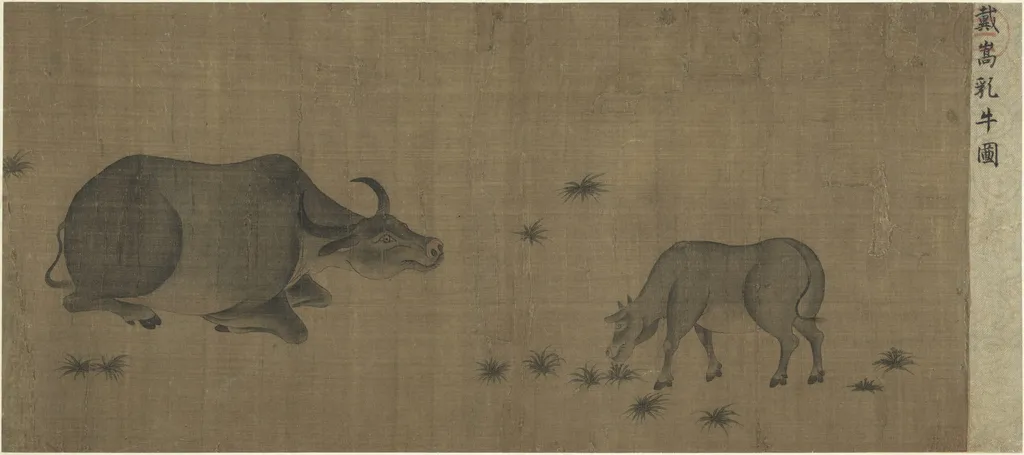
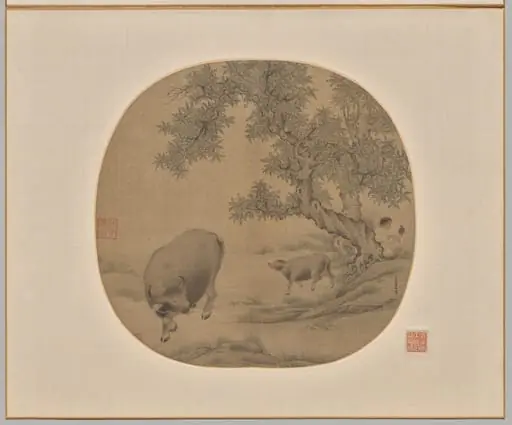
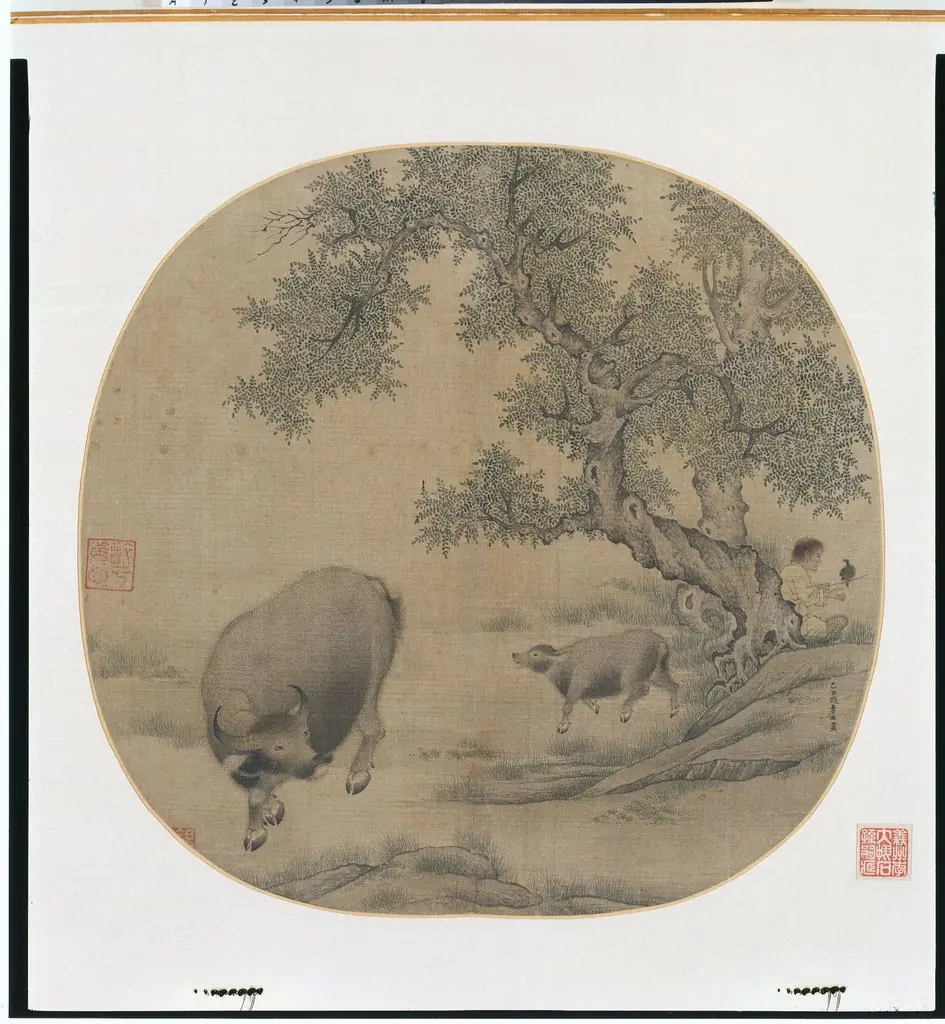
名繪集珍 冊 唐戴嵩乳牛圖 is an unspecified painting by Q3206108. It is held in the collection of the National Palace Museum. This silk painting, part of a collected album of renowned works, portrays two cattle in a quiet rural setting.
About this work
Overview
The light brown background, lightly textured with sparse grasses, frames the animals without distraction, focusing attention on their forms and subtle gestures.
This silk painting, part of a collected album of renowned works, portrays two cattle in a quiet rural setting. Rendered in ink on fine silk, the composition emphasizes stillness and naturalism. The larger ox faces right with its head lowered; the smaller one, positioned to the right, bends downward as if grazing. The light brown background, lightly textured with sparse grasses, frames the animals without distraction, focusing attention on their forms and subtle gestures.
Subject & Meaning
The depiction of two cattle in tranquil repose reflects a traditional Chinese appreciation for agricultural life and harmony with nature. The animals’ calm postures suggest quiet dignity rather than labor or dominance. Their interaction, though non-aggressive, implies a bond of coexistence. Such imagery often carried moral or philosophical undertones, valuing humility, patience, and the quiet rhythms of rural existence over human intervention.
Technique & Style
The artist employed fine, controlled brushstrokes to model the oxen’s muscular forms using varying tones of ink, avoiding outlines in favor of tonal gradations. The silk support enhances the subtlety of these washes, allowing ink to bleed slightly and soften edges, lending a naturalistic texture to fur and skin. The background is minimally detailed, with faint strokes suggesting grasses, reinforcing the focus on the animals and their serene atmosphere.
History & Provenance
The work is attributed to the Tang dynasty painter Dai Song, though its exact origin remains uncertain due to the common practice of later artists copying or imitating his style. It was later included in a curated album of celebrated paintings, likely compiled during the Song or Yuan dynasties. Its preservation on silk indicates it was valued as a refined object, possibly collected by court or scholarly patrons interested in early animal painting traditions.
Context
During the Tang dynasty, depictions of livestock became more common in Chinese painting, reflecting broader cultural interest in agriculture and the natural world. Artists like Dai Song were noted for their ability to capture animals with psychological nuance, moving beyond mere representation. This work aligns with a growing trend of ink painting that favored simplicity, observation, and restraint, contrasting with more ornate court styles of the period.
Legacy
Though the original Tang painting may not survive intact, this version preserves key stylistic elements associated with Dai Song’s tradition. Later collectors and scholars referenced such works as exemplars of authentic animal painting, influencing generations of ink painters who sought to convey life through minimal means. Its inclusion in collected albums ensured its continued visibility, anchoring its aesthetic principles within the canon of Chinese art.
Artist & collection
Artist