Artwork
After Sir Christopher Wren
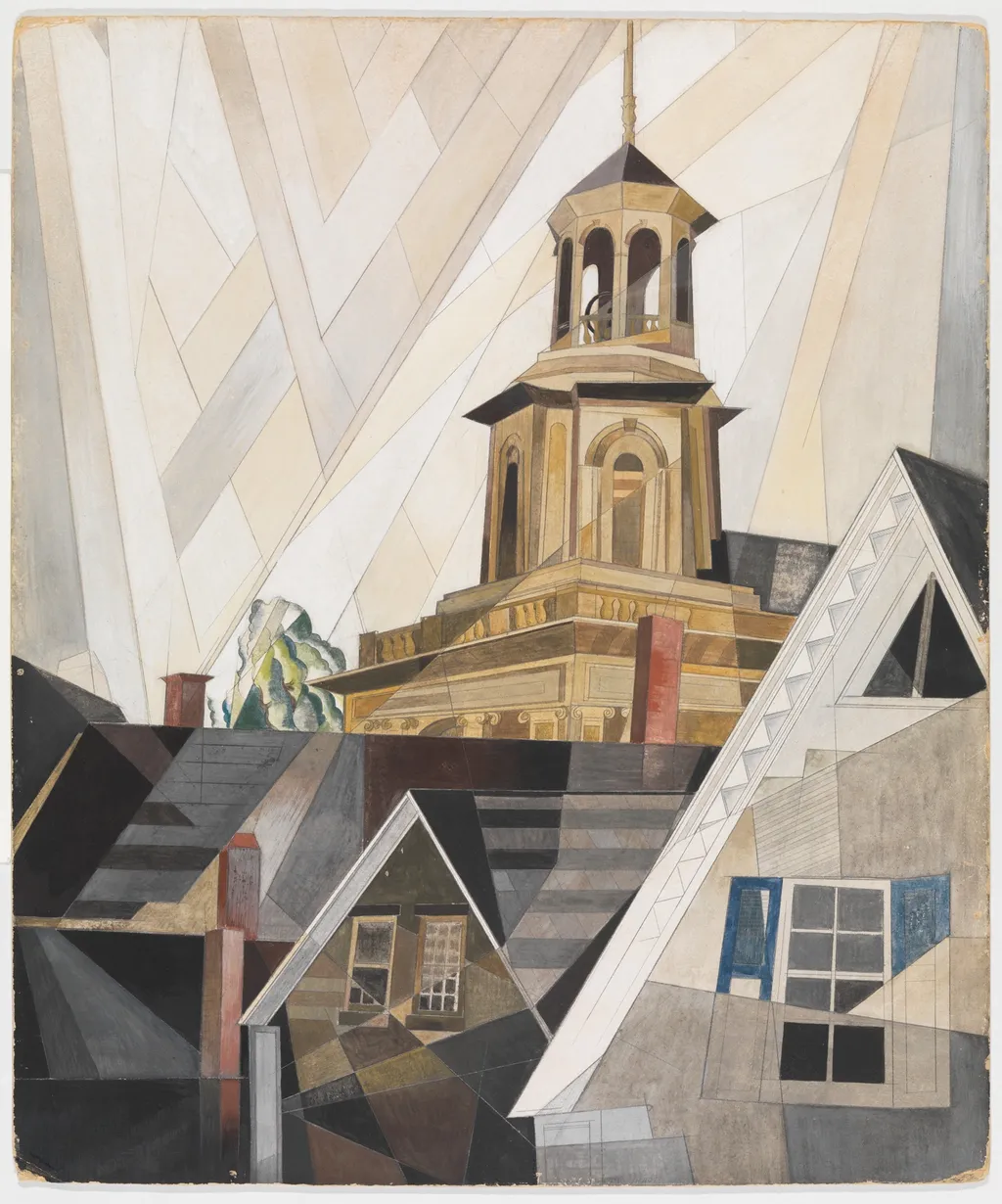
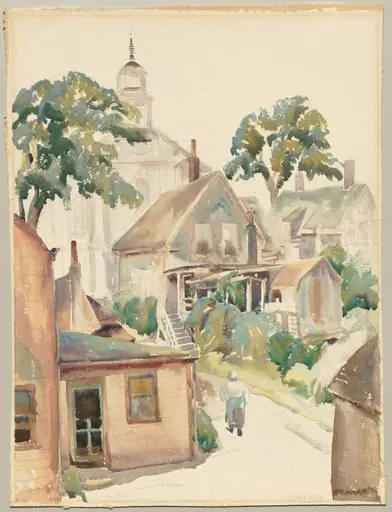
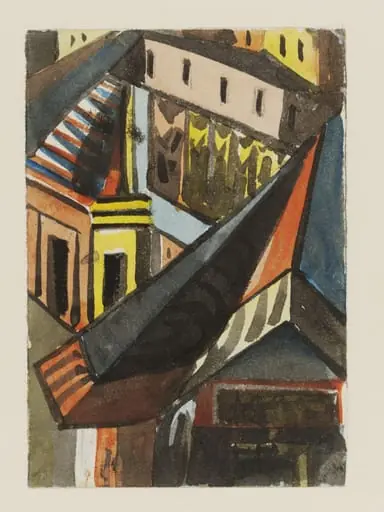
After Sir Christopher Wren is an unspecified painting by Charles Demuth. It dates from 1920 and is held in the collection of the Metropolitan Museum of Art.
About this work
Subject & Meaning
By reproducing a Wren‑designed structure, the work evokes themes of architectural heritage and the continuity of English design traditions.
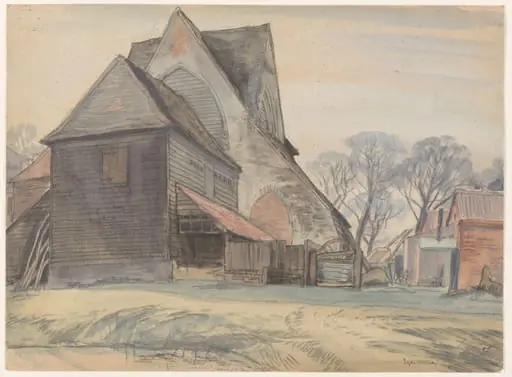
The painting shows a church building rendered in a style that references the work of Sir Christopher Wren, the renowned English architect of the 17th‑century Baroque period. By reproducing a Wren‑designed structure, the work evokes themes of architectural heritage and the continuity of English design traditions. The depiction functions as a visual homage, linking the subject to the classical elegance and ecclesiastical symbolism associated with Wren’s churches, while also suggesting a contemplation of historical legacy within a modern artistic context.
History & Provenance
Charles Demuth created the painting After Sir Christopher Wren in 1920. The work depicts a church building and is currently held in the collection of the Metropolitan Museum of Art. While the title references the architect Sir Christopher Wren, the specific commission details and the chain of ownership prior to its acquisition by the museum are not detailed in the available records.
After Sir Christopher Wren is held by the Metropolitan Museum of Art, where it is cataloged under the accession number 1943.176. The painting entered the museum's collection in 1943, following its creation in 1920 by Charles Demuth. It has been part of exhibitions at the Metropolitan Museum of Art, including displays highlighting early American modernist works.
Overview
Charles Demuth’s 1920 painting After Sir Christopher Wren presents an architectural composition centered on a towering church spire, its bell chamber rendered as a small, capped element. The work is part of the Metropolitan Museum of Art’s collection and reflects Demuth’s interest in urban forms and their abstracted representation.
Technique & Style
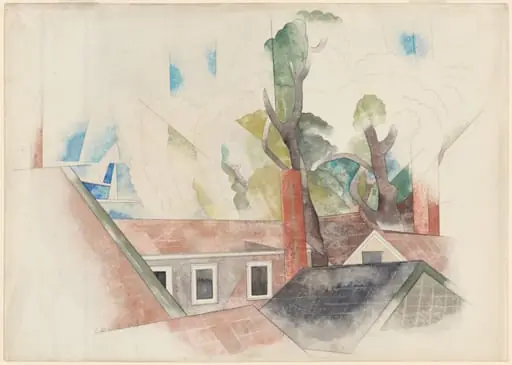
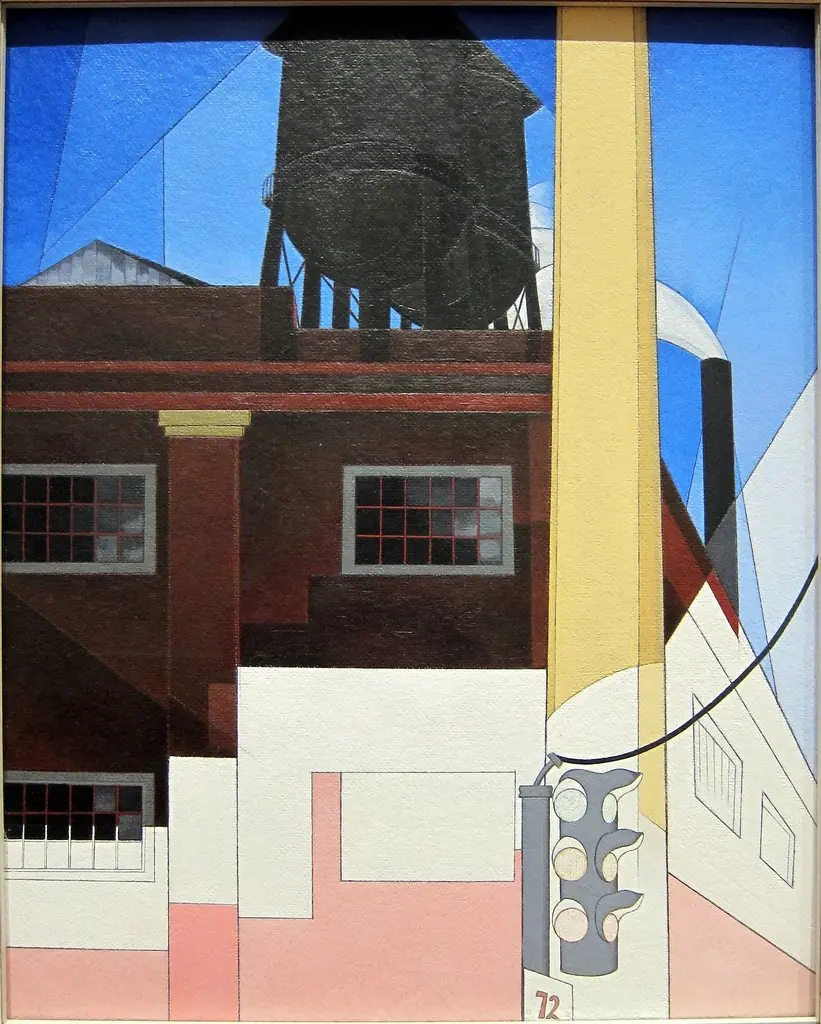
Demuth reduces the scene to geometric planes, employing flat blocks of brown, gray, and black. Sharp lines delineate the forms, and the perspective is deliberately skewed, giving the buildings a slightly tilted, puzzle‑like quality. The absence of gradated shading underscores a modernist departure from realistic rendering.
Own this work as a print
Artist & collection
Artist
Charles Henry Buckius Demuth (November 8, 1883 – October 23, 1935) was an American painter who specialized in watercolors and turned to oils late in his career, developing a style of painting known as Precisionism.