Artwork
Bridge Builders
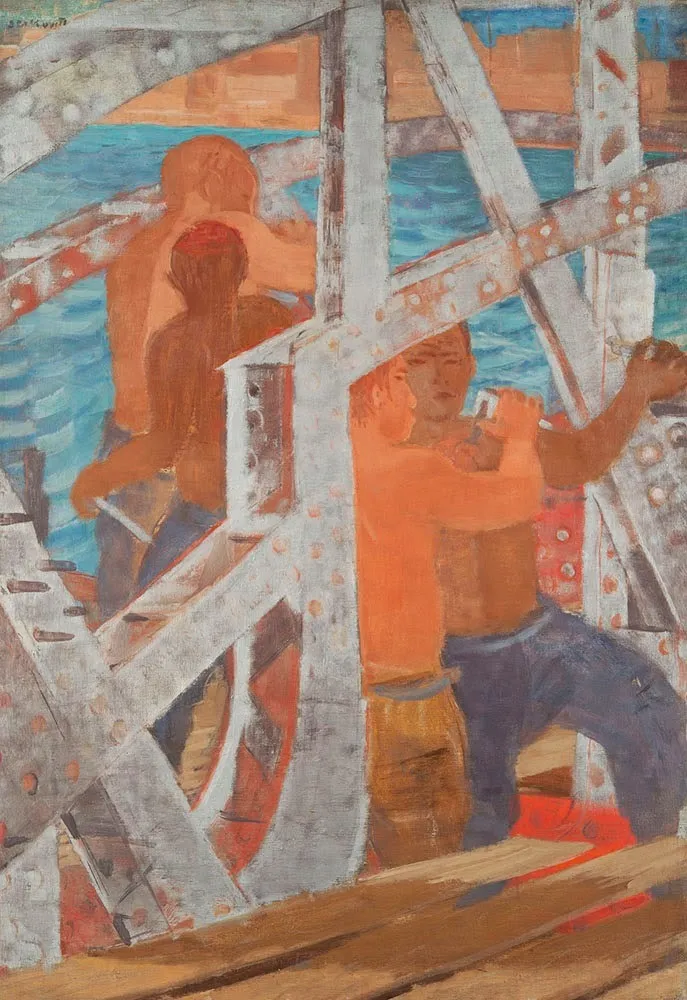
Bridge Builders is an unspecified painting by the Mexican Muralist artist Gyula Derkovits. It dates from 1932 and is held in the collection of the Hungarian National Gallery.
About this work
Overview
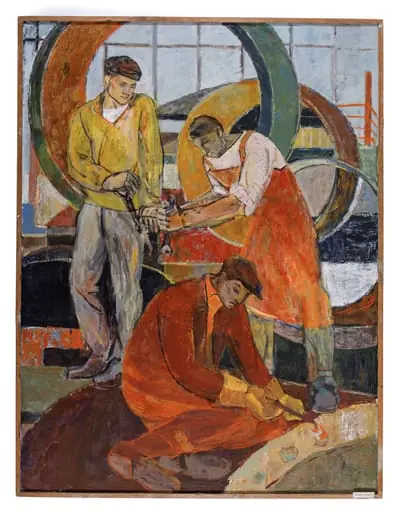
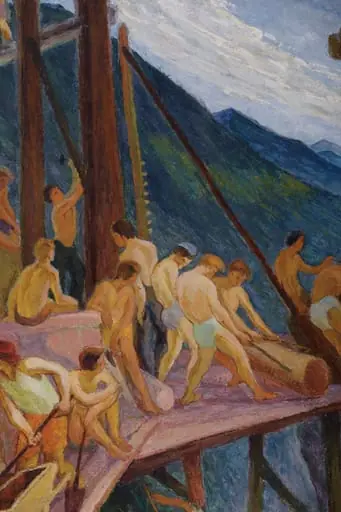
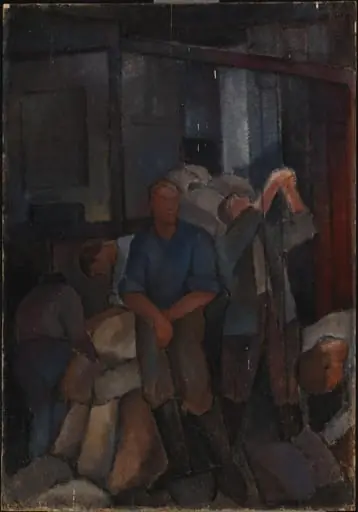
Gyula Derkovits painted Bridge Builders in 1932. The oil work is part of the collection of the Hungarian National Gallery. It depicts a construction site where three laborers are engaged with a massive metal framework that suggests a bridge in progress.
Subject & Meaning
The composition centers on three shirtless workers, their bare torsos and trousers emphasizing physical effort. One figure grips a tool, while the others handle the structural beams. The scene foregrounds manual labor and industrial development, reflecting a focus on the working class and the transformative impact of infrastructure.
Technique & Style
Derkovits employs a palette dominated by cool blues and warm oranges, creating a visual tension that enlivens the metal skeleton. Brushwork is loose and expressive, imparting a sense of motion and vigor to the figures and the surrounding structure. The geometric arrangement of the beams underscores the industrial subject.
History & Provenance
Since its completion, Bridge Builders has remained in Hungary, eventually entering the holdings of the Hungarian National Gallery. The painting has been exhibited in several retrospectives of Derkovits’s oeuvre, illustrating his role in early twentieth‑century Hungarian art.
Context
Created during a period of heightened social awareness, the work aligns with contemporary artistic currents that addressed economic and class issues. Derkovits’s focus on laborers and industrial scenes places the painting within a broader movement that sought to document and critique the realities of modern industrial society.
Artist & collection
Artist
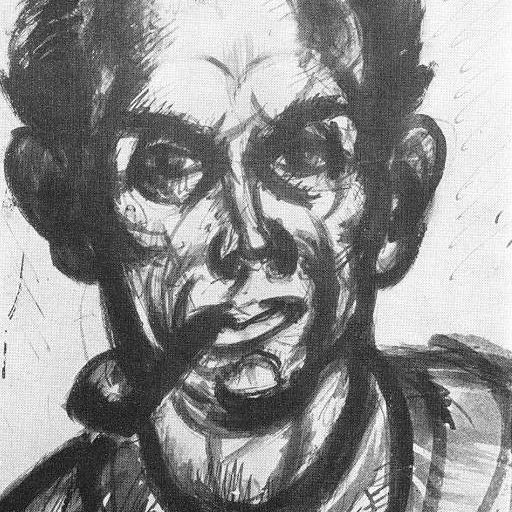
Gyula Derkovits (13 April 1894, Szombathely, 18 June 1934, Budapest) was a Hungarian painter and graphic artist whose work shows elements of Expressionism, Cubism and Constructivism.