Artwork
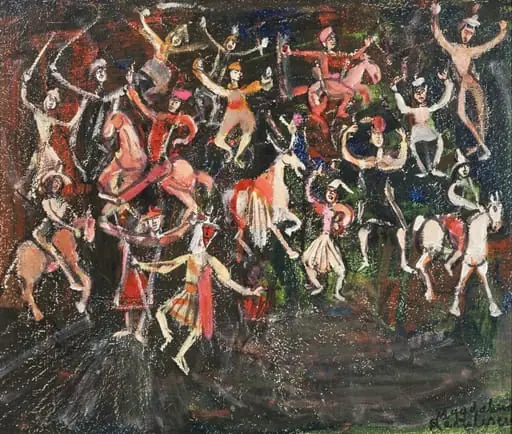
Nunta tătărască
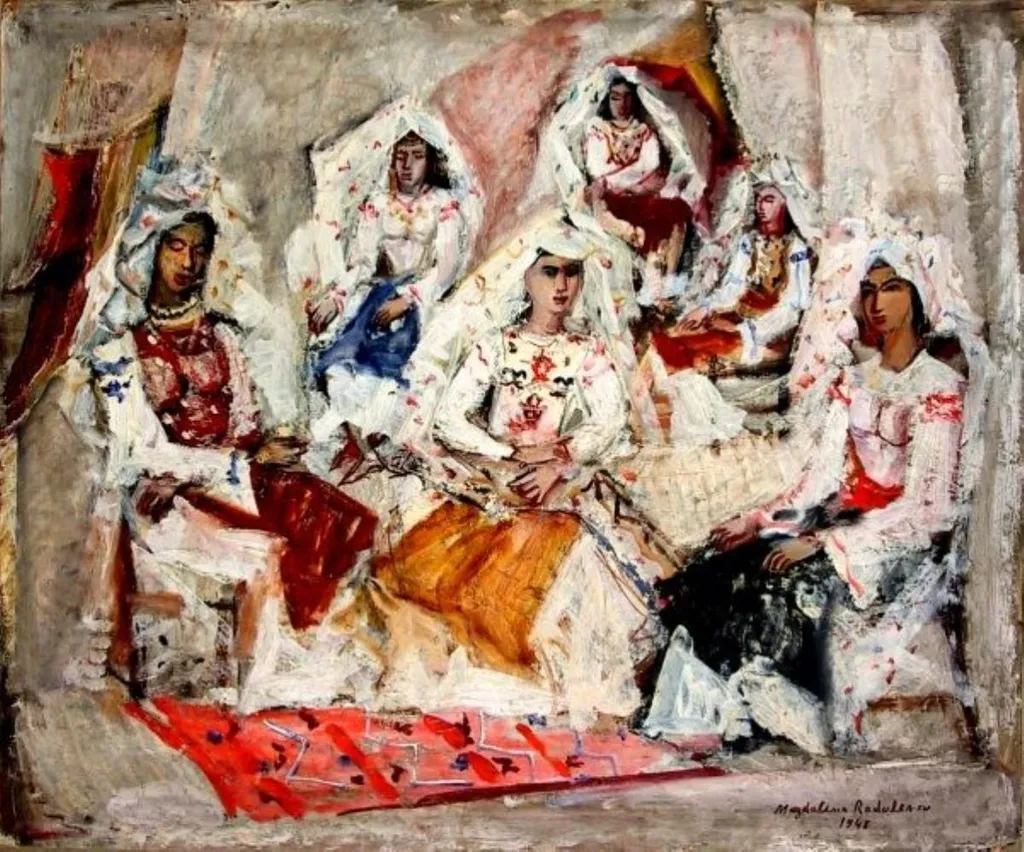
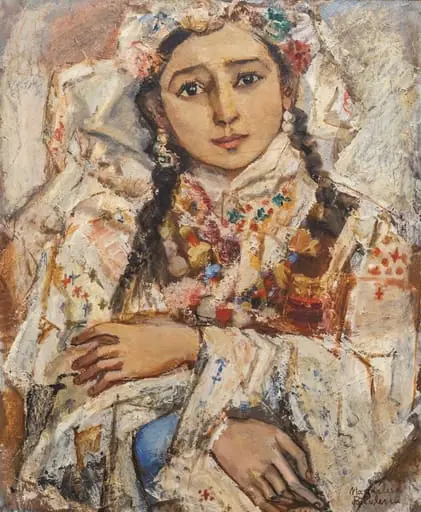
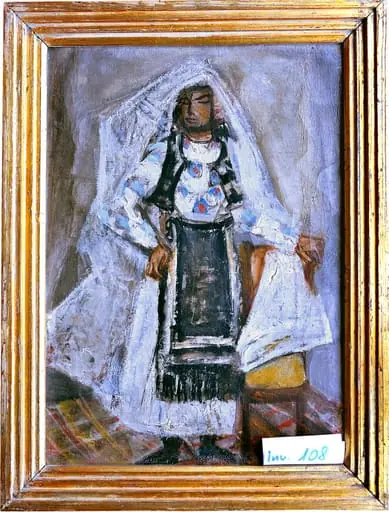
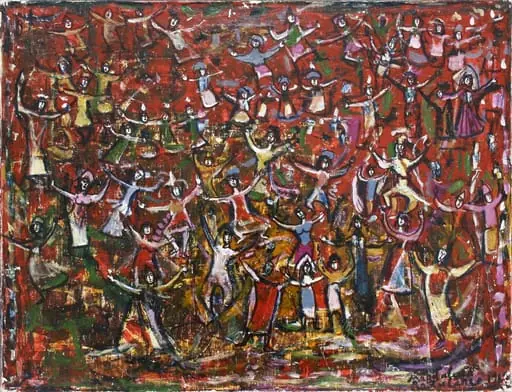
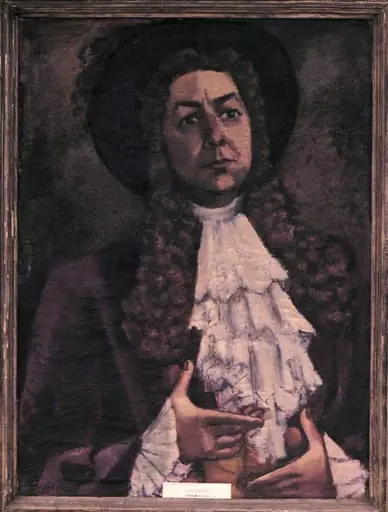
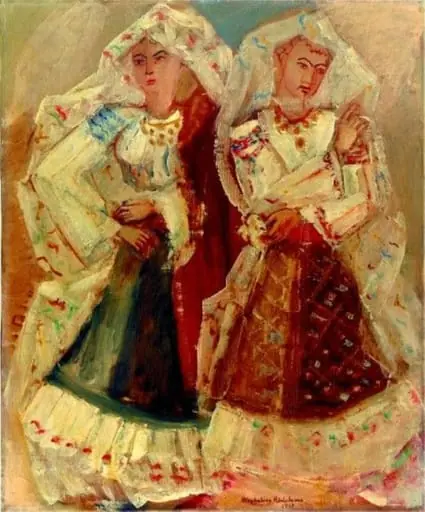
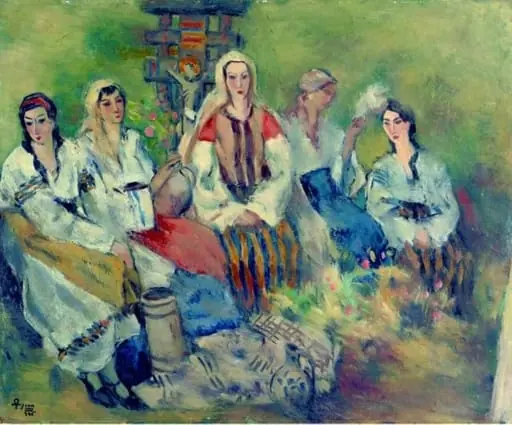
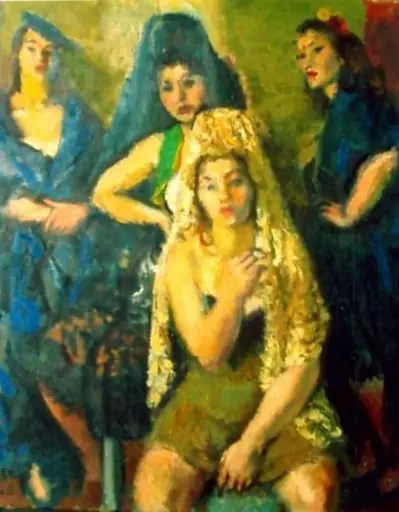
Nunta tătărască is an unspecified painting by the Naïve art artist Magdalena Rădulescu. It dates from 1941 and is held in the collection of the Brukenthal National Museum.
About this work
Overview
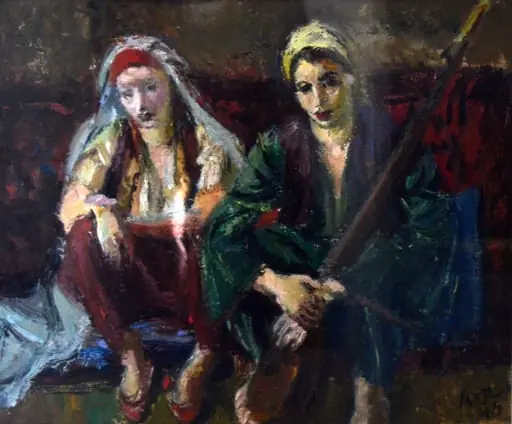
Created in 1941 by Romanian artist Magdalena Rădulescu, the work titled Nunta tătărască presents a compact interior scene populated by six women.
Created in 1941 by Romanian artist Magdalena Rădulescu, the work titled Nunta tătărască presents a compact interior scene populated by six women. The composition is dominated by muted whites, grays and earth tones, punctuated only by a vivid red blanket on the floor and occasional color accents on the figures’ garments. The overall atmosphere is dim and somewhat claustrophobic, emphasizing the presence of the group over any surrounding detail.
Subject & Meaning
The six women, either seated or standing, occupy a modest, cluttered room that suggests a domestic or communal gathering place. Their faces are rendered indistinct, their expressions ambiguous, which invites contemplation of collective identity rather than individual narrative. Simple dresses and headscarves hint at a traditional or rural setting, while the lack of clear emotional cues may reflect themes of anonymity, shared experience, or the muted lives of women in that era.
Technique & Style
Rădulescu employs a pronounced impasto technique, applying paint in thick, uneven strokes that give the surface a tactile, rough quality. This textural approach accentuates the muted palette and creates a sense of physical presence within the cramped space. The brushwork is expressive rather than precise, contributing to the blurred facial features and reinforcing the overall mood of obscured individuality.
Context
The painting emerged during World War II, a period when Romanian society faced significant upheaval. While specific references to a Tatar wedding are not evident, the title suggests an association with Tatar cultural practices, possibly reflecting the artist’s interest in minority traditions within the region. The work’s subdued coloration and somber tone may echo the broader atmosphere of uncertainty and hardship prevalent at the time.
Legacy
Nunta tătărască remains a notable example of Rădulescu’s early oeuvre, illustrating her engagement with texture and social subject matter. The piece is referenced in studies of Romanian art from the 1940s as an illustration of how artists employed impasto to convey emotional distance and communal narratives. It continues to be cited in discussions of gender representation and minority cultural motifs within Eastern European modernism.
Artist & collection

Artist
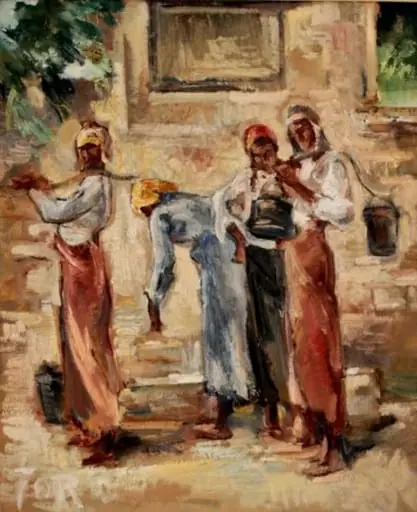
Magdalena Rădulescu was a Romanian modernist painter and illustrator. She was known for her symbolist and expressionist paintings, inspired by Romanian traditions and folklore. Rădulescu lived most of her life in…