Artwork
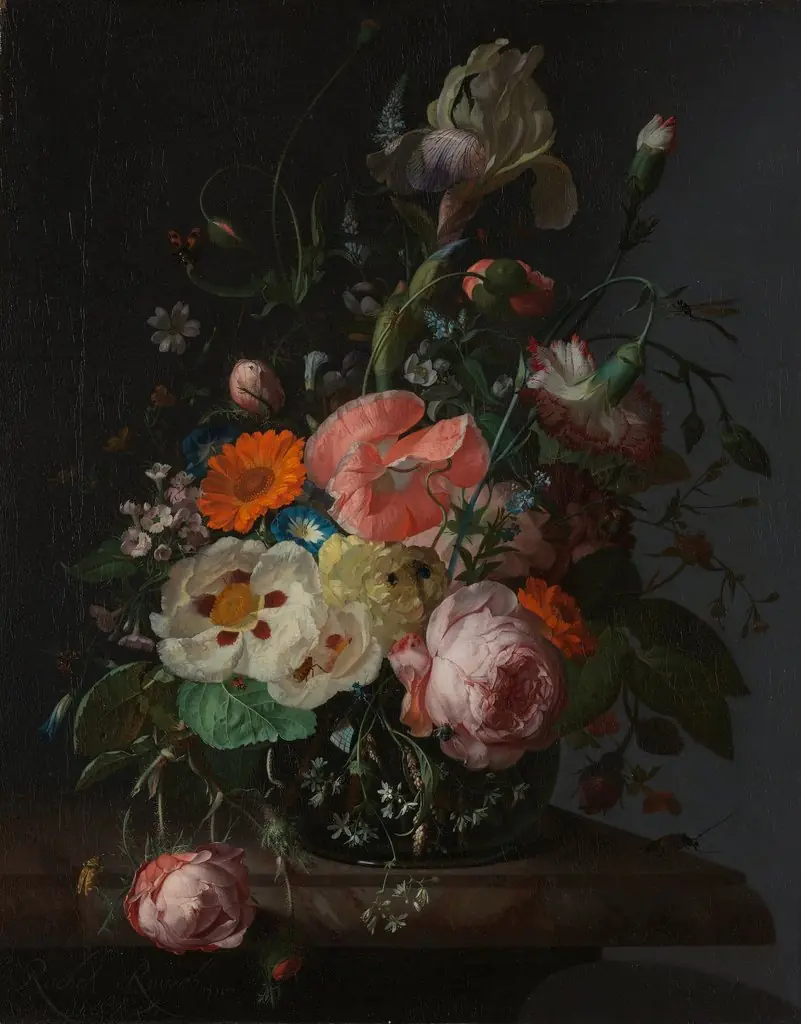
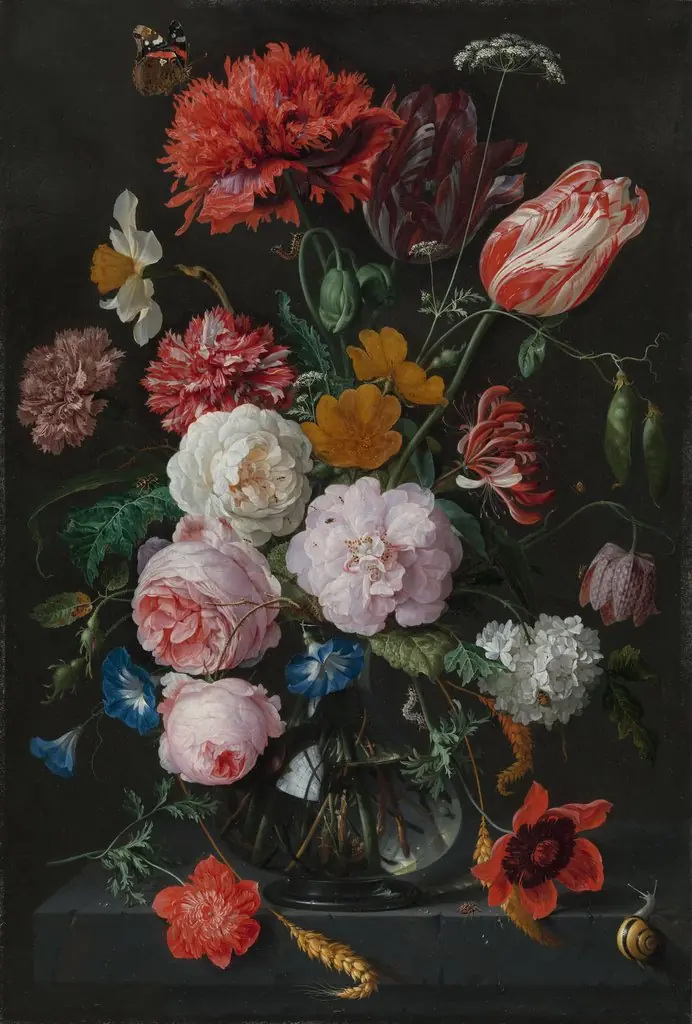
Still Life with Flowers in a Glass Vase
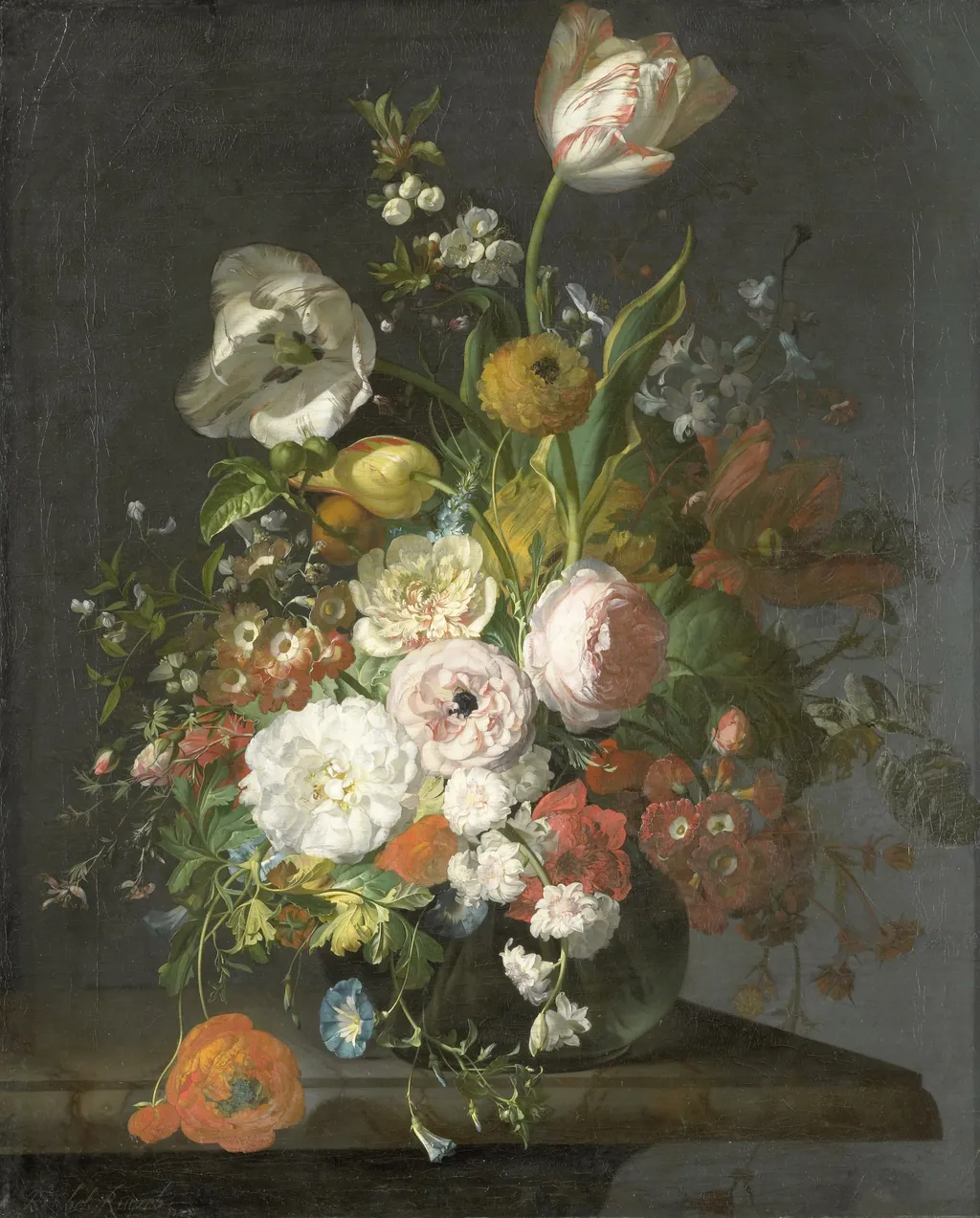
Still Life with Flowers in a Glass Vase is an oil painting by the Dutch Golden Age artist Rachel Ruysch. It dates from 1700 and is held in the collection of the Rijksmuseum.
About this work
Technique & Style
Still Life with Flowers in a Glass Vase is an oil painting executed on canvas, a support and medium combination typical of Dutch still life production in the early eighteenth century. The work measures 65 cm in height by 53.5 cm in width. Painted in 1700, it belongs to the still life genre and depicts a bouquet of flowers arranged in a vase, a subject that allowed the artist to demonstrate careful handling of varied floral forms and textures through layered oil glazes.
The canvas support and oil medium provided a stable ground for the detailed rendering associated with floral still life, while the relatively modest dimensions indicate an intimate cabinet-picture scale rather than a large decorative panel.
History & Provenance
By the early eighteenth century the painting had entered the collection of the Rijksmuseum in Amsterdam, where it has remained as part of the museum’s holdings.
The still life was painted by Rachel Ruysch in 1700, as indicated by the artist’s date on the work and corroborated by its Wikidata record, which assigns the inception year to 1700 and lists the canvas dimensions as 65 cm by 53.5 cm.
By the early eighteenth century the painting had entered the collection of the Rijksmuseum in Amsterdam, where it has remained as part of the museum’s holdings.
The painting is held at the Rijksmuseum, Amsterdam, where it is inventoried as SK-C-1932.
It has been shown in several museum presentations: it was exhibited at the Rijksmuseum in 1932, then again in the museum’s 1950 display, and included in the 2017 exhibition Still Life: 1600–1800 held at the Rijksmuseum.
Overview
Created in 1700 by Dutch painter Rachel Ruysch, this oil on canvas presents a carefully arranged bouquet within a tall, transparent vase. The composition is set against a dark backdrop, allowing the vivid hues of the flowers to dominate the visual field. The work is part of the Rijksmuseum’s permanent collection and exemplifies the meticulous still‑life tradition of the Dutch Golden Age.
Subject & Meaning
The painting gathers a variety of blossoms, white roses, pink peonies, orange poppies, blue violets, yellow daisies, and a striking tulip, spilling over the rim of the glass vessel. By juxtaposing flowers at different stages of bloom and subtle signs of decay, Ruysch alludes to the fleeting nature of beauty and the passage of time, a common theme in 17th‑century still‑life symbolism.
Context
During the late 17th and early 18th centuries, Dutch artists increasingly focused on botanical accuracy and decorative elegance in still‑life painting. Ruysch, trained by her father and later by the court painter Willem van Aelst, combined scientific observation with artistic flourish, positioning her work within a broader European fascination with exotic plants and the decorative arts of the period.
Own this work as a print
Artist & collection
Artist
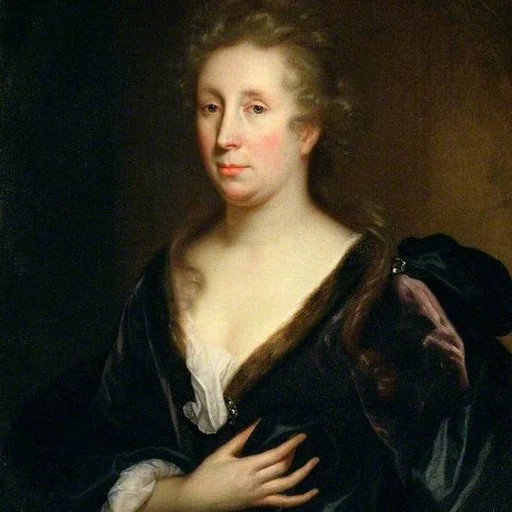
Rachel Ruysch (3 June 1664 – 12 October 1750) was a Dutch still-life painter from the Dutch Republic.