Artwork
The Blue Passion-flower
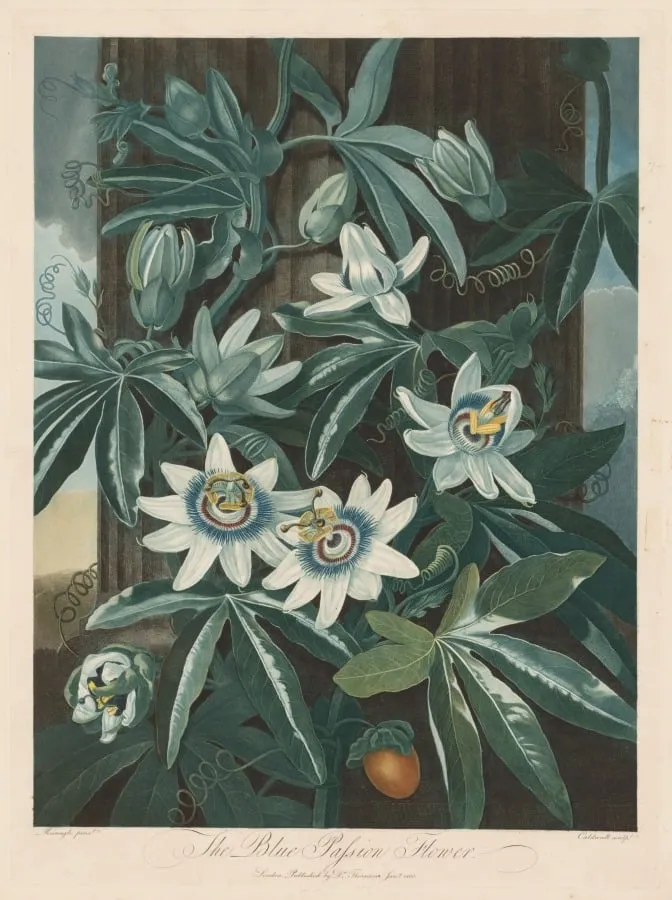
The Blue Passion-flower is a print by the Romanticist artist Robert John Thornton. It dates from 1803 and is held in the collection of the Cleveland Museum of Art.
- Accession no.
- 1939.293
About this work
Overview
The Blue Passion‑flower is an 18th‑century print depicting a solitary flower with its petals fully opened, supported by a winding stem and a few leaves. The image is part of the extensive botanical volume The Temple of Flora, which assembled a series of detailed floral illustrations.
Technique & Style
The print combines mezzotint, which creates deep shadows by roughening the plate and then smoothing areas for lighter tones, with stipple, a method that builds value through clusters of dots. These processes allow the work to reproduce a broad tonal range, evoking the richness of oil paint and the translucency of watercolor within a single sheet.
Subject & Meaning
The composition focuses on the blue passion‑flower, a species noted for its strikingly colored, widely spread petals and intricate vine. The botanical accuracy reflects the period’s interest in cataloguing plant forms for scientific and aesthetic purposes.
History & Provenance
Commissioned for The Temple of Flora, the print was produced by leading engravers of the era, who were selected to achieve a high degree of realism. The volume was intended as a reference for scholars and collectors, and the print has remained associated with that publication since its original release.
Context
During the 1700s, advances in engraving and etching expanded the possibilities for reproducing natural subjects. Techniques such as mezzotint, stipple, and aquatint emerged to simulate the subtle gradations of tone found in painting and wash, meeting the growing demand for detailed botanical documentation.
Artist & collection

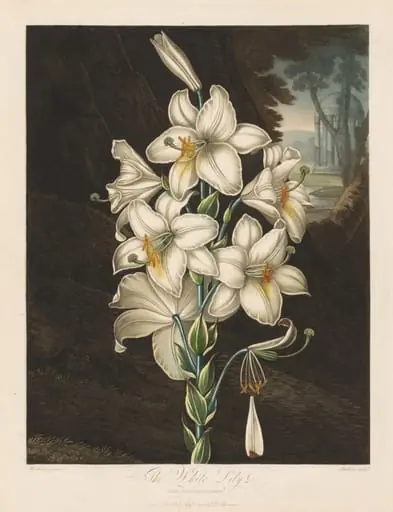 The Temple of Flora, or Garden of Nature: The White Lily with Variegated Leaves
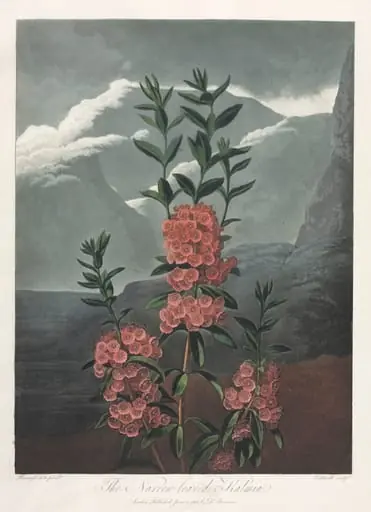 The Temple of Flora, or Garden of Nature: The Narrow-leaved Kalmia
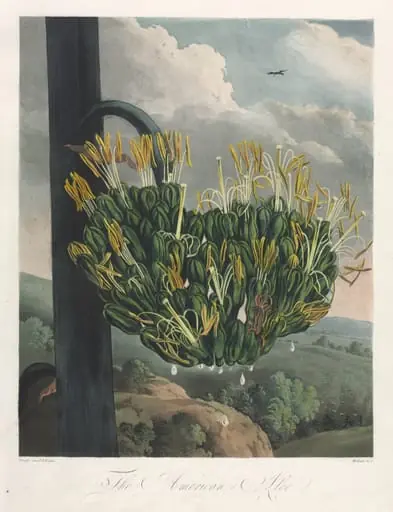 The Temple of Flora, or Garden of Nature: The American Aloe
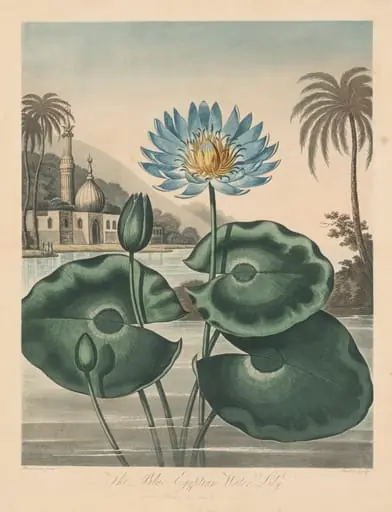 The Temple of Flora, or Garden of Nature: Blue Egyptian Waterlily
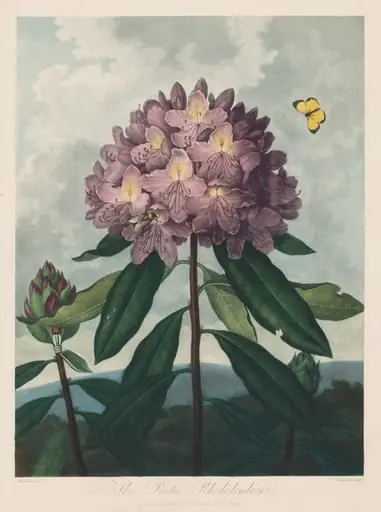 The Temple of Flora, or Garden of Nature: The Pontic Rhododendron
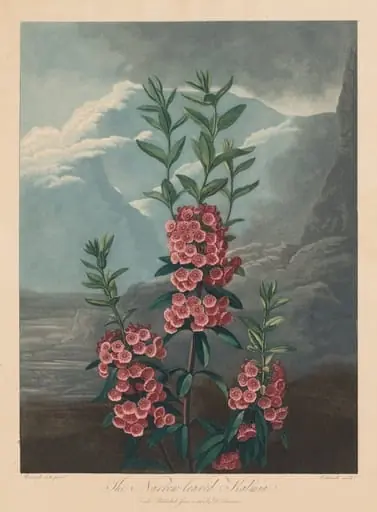 The Temple of Flora, or Garden of Nature: The Narrow-leaved Kalmia, Mountain Laurel
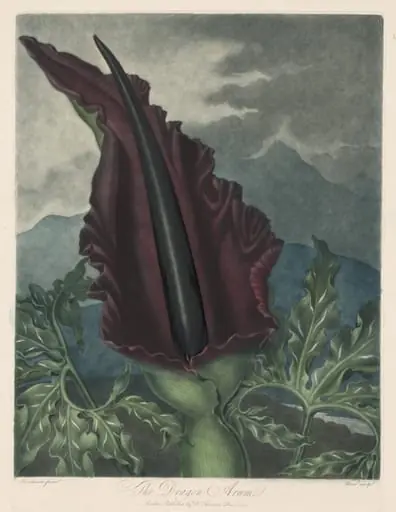 The Dragon Arum, Black Calla or Solomon's Lily
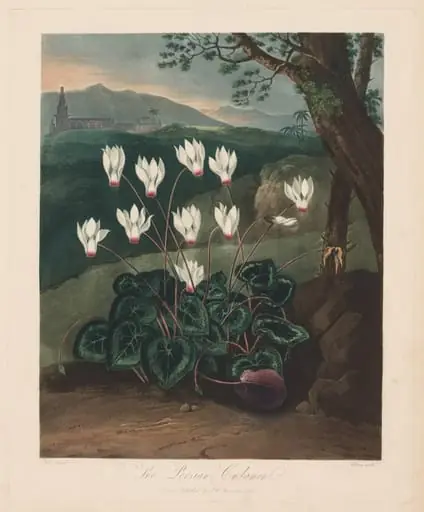 The Temple of Flora, or Garden of Nature: The Persian Cyclamen
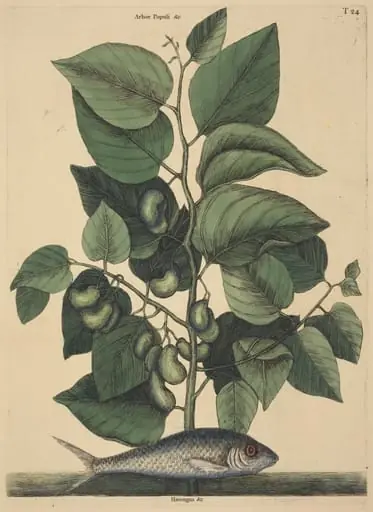 The Pilchard (Argentina carolina)
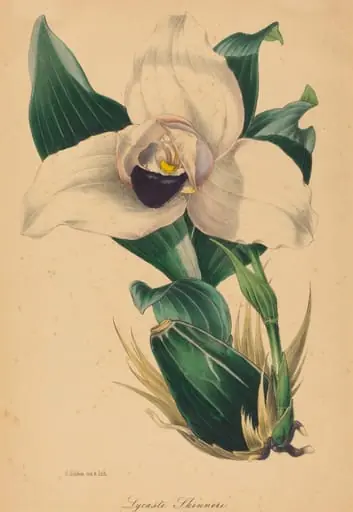 Lycaste Skinneri
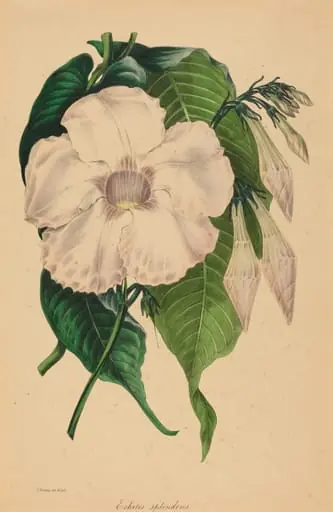 Echites splendens
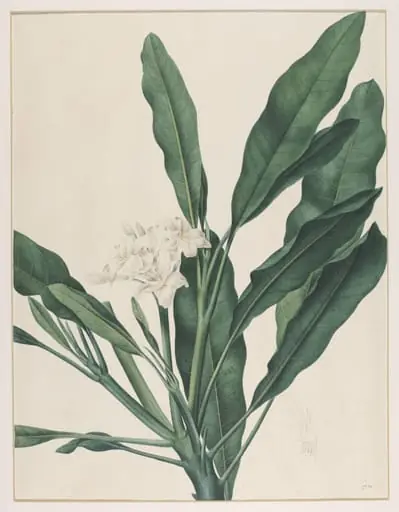 Fumaria Obliquefolia
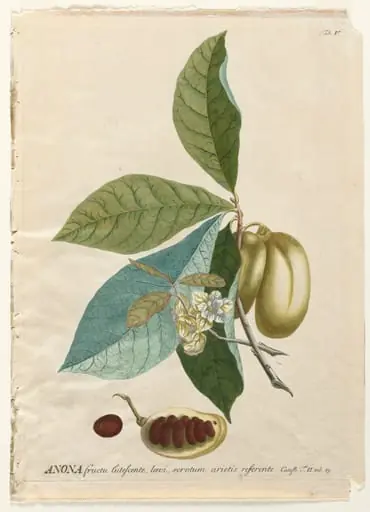 Plantae Selectae: No. 5 - Anona
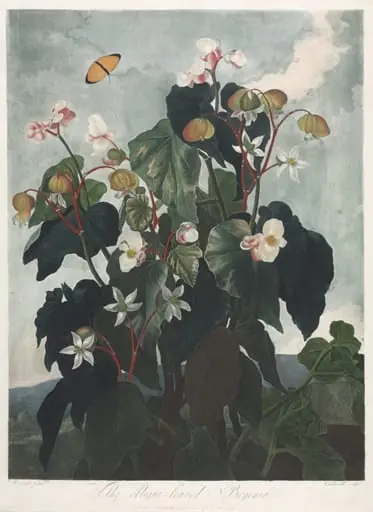 The Temple of Flora, or Garden of Nature: The Obique-leaved Begonia
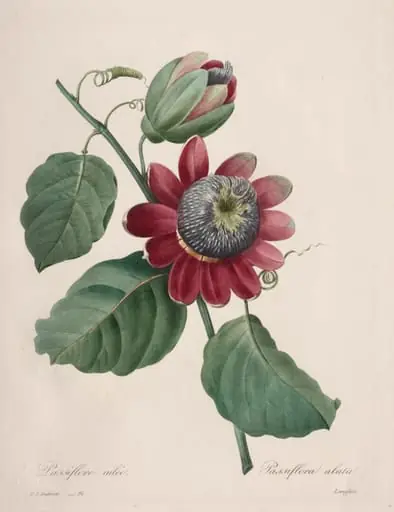 Choix des plus belles fleurs...plus beaux fruits: Passiflore ailee
 Bananas
 Untitled
 Plantae et Papiliones rariores: Martynia
- The Temple of Flora, or Garden of Nature: The Blue Passion Flower