Artwork
Peisaj
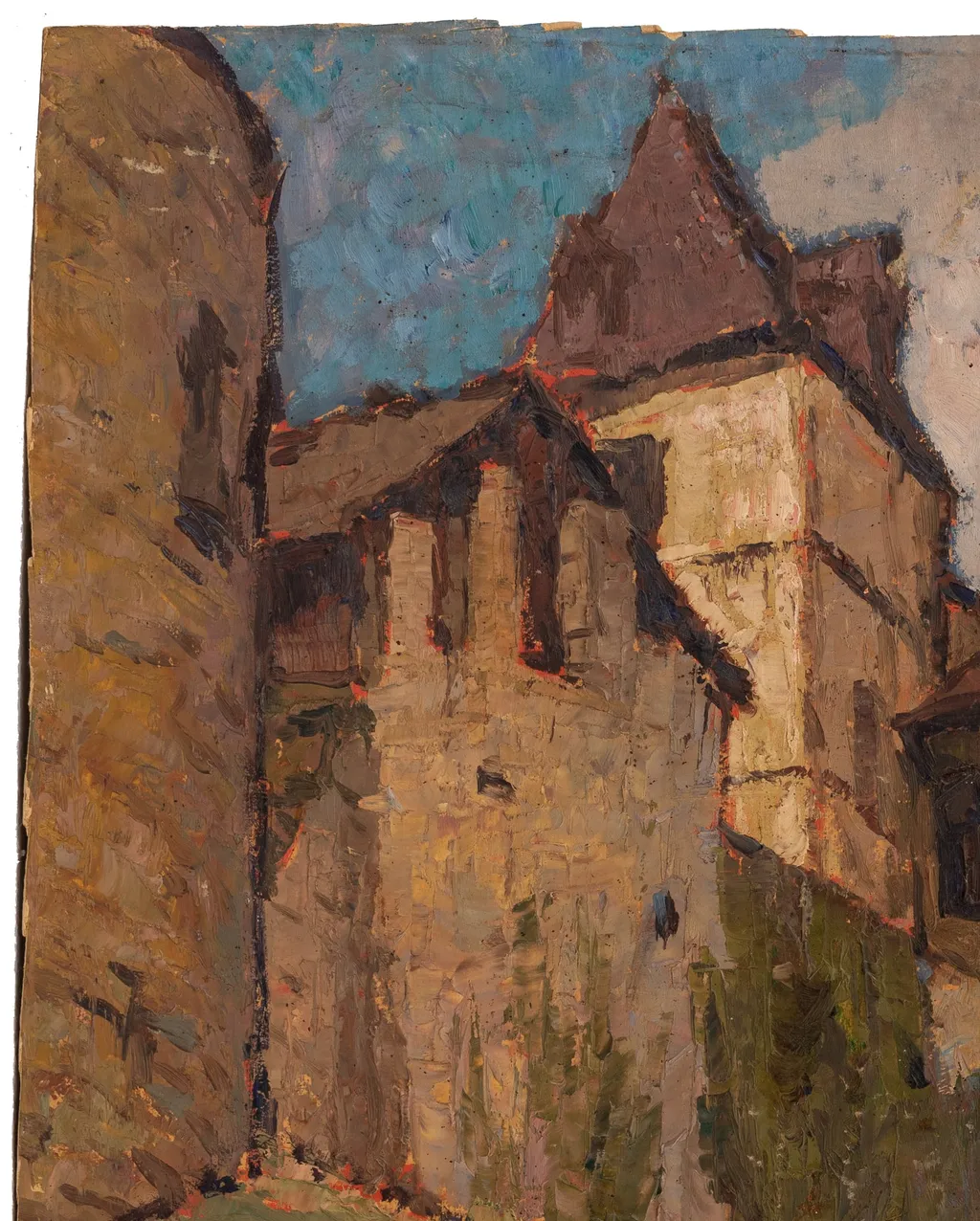
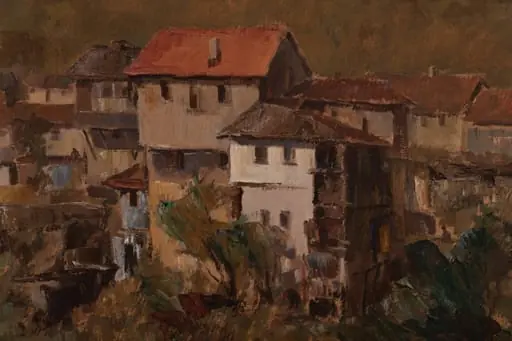
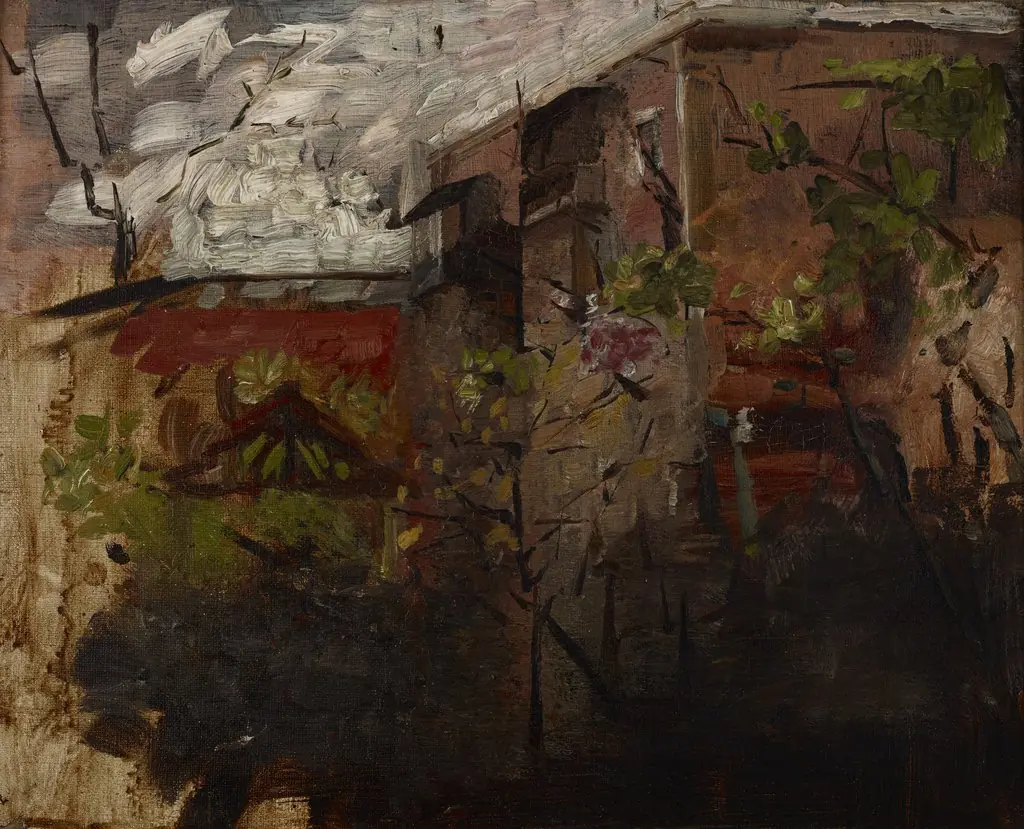
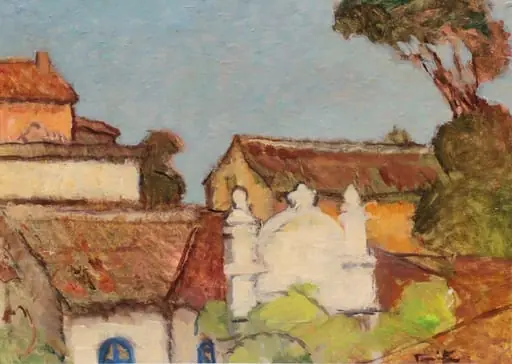
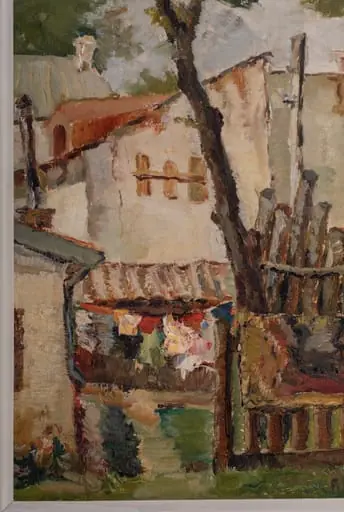
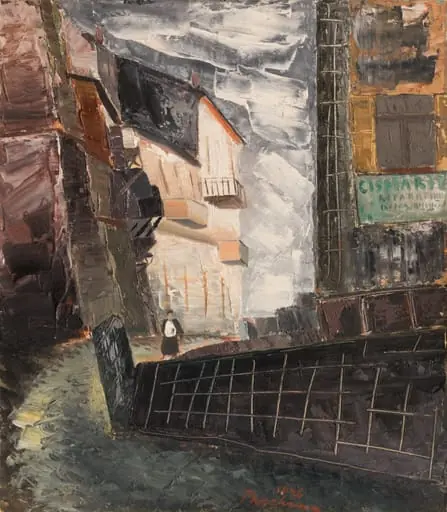
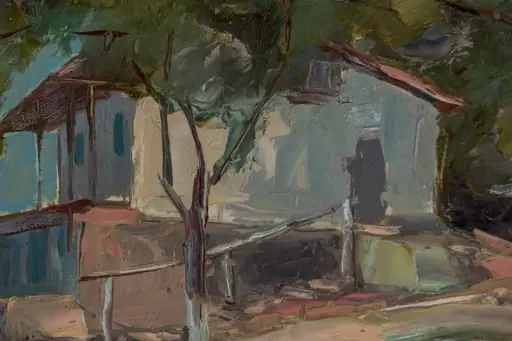
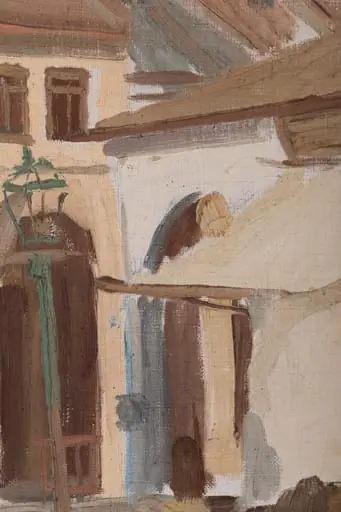
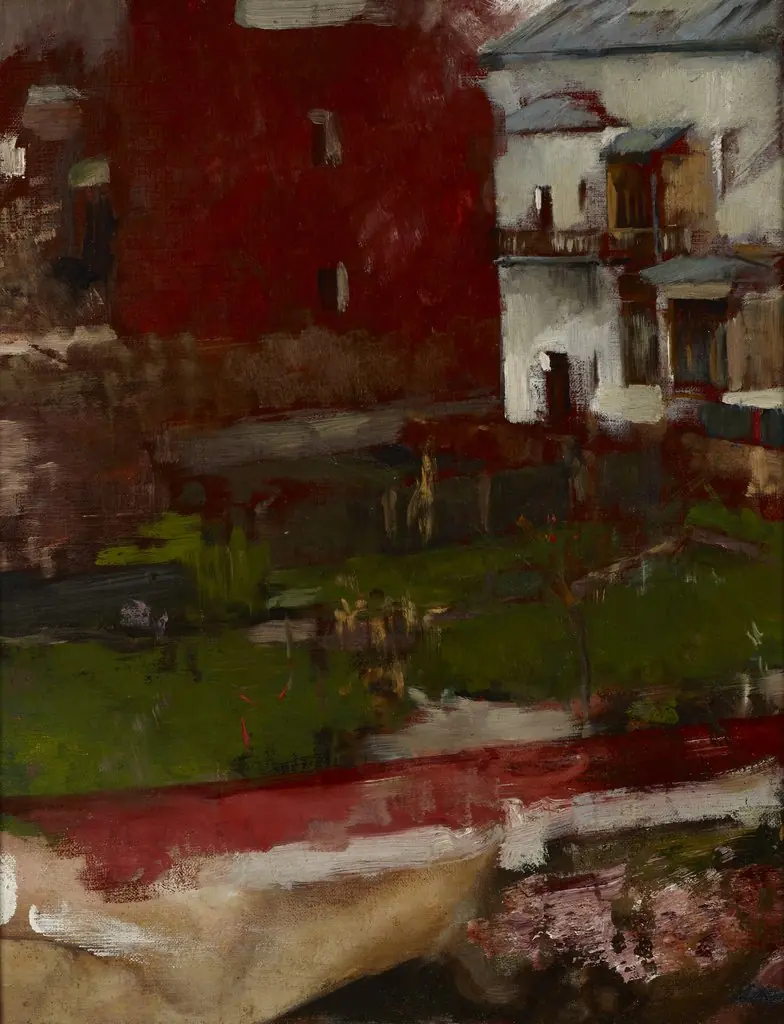
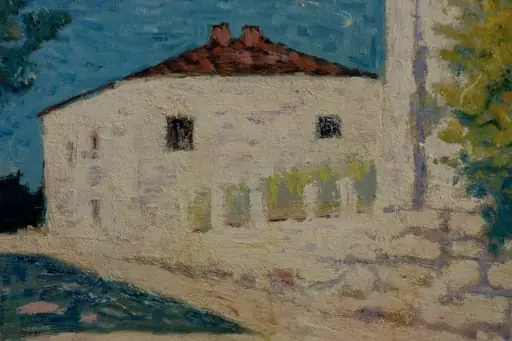
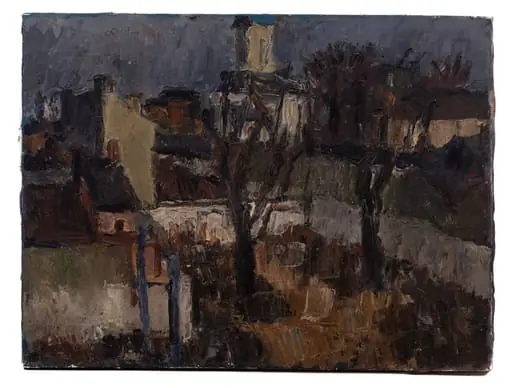
Peisaj is an unspecified painting by Paul Scorțescu. It is held in the collection of the Moldova National Museum Complex. This work presents a landscape with minimal detail, emphasizing texture over precision.
About this work
Overview
The surface is visibly hand-applied, with brushstrokes left unblended, creating a tactile, almost sculptural quality.
This work presents a landscape with minimal detail, emphasizing texture over precision. A structure with a steep roof dominates the composition, rendered in thick, uneven layers of pigment. The surface is visibly hand-applied, with brushstrokes left unblended, creating a tactile, almost sculptural quality. The palette is restrained, relying on muted browns and blues to convey atmosphere rather than narrative.
Subject & Meaning
The subject is a simple rural structure, possibly a shed or outbuilding, set against a sparse sky. A vertical tree trunk bisects the scene, anchoring the composition without offering clear symbolic meaning. The lack of figures or contextual elements suggests an interest in form and presence rather than storytelling. The unfinished appearance invites contemplation of the act of painting itself.
Technique & Style
The artist employs impasto techniques, applying paint thickly and directly to the surface, allowing brushmarks to remain visible. No attempt is made to smooth transitions or soften edges. The rough texture of the walls and the abrupt handling of the sky reflect a deliberate rejection of polish. This approach prioritizes physicality and immediacy over illusionistic realism.
History & Provenance
The work’s origins are undocumented, with no known exhibition history or collector record. It appears to be a study or sketch rather than a finished commission, likely created in a private setting. Its raw quality suggests it was made quickly, possibly en plein air, and retained by the artist for personal reasons rather than public display.
Context
This piece aligns with late 19th- and early 20th-century movements that valued expressive brushwork over academic refinement. Similar approaches appear in the works of artists exploring the materiality of paint, often in response to industrialization and changing perceptions of nature. Its unpolished state reflects a broader shift toward authenticity in artistic process.
Legacy
Though not widely recognized, the work exemplifies a quiet tradition of painterly experimentation that influenced later abstract and expressionist practices. Its emphasis on texture and process, rather than representation, anticipates postwar concerns with material presence. It remains a modest but instructive example of paint as physical substance.
Artist & collection
Artist
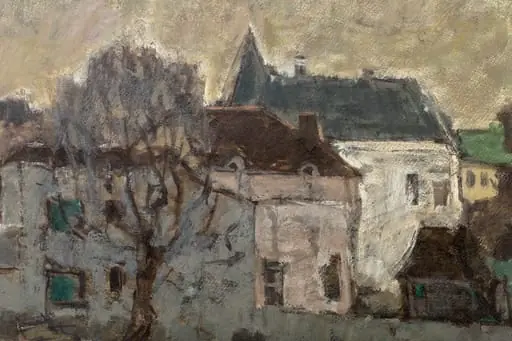
Paul Scorțescu’s paintings sit in the early-20th-century Romanian scene, where artists were mixing realism with fresh color.