Artwork
I.G. Duca pe catafalc la Ateneul Român – 1 ianuarie 1934
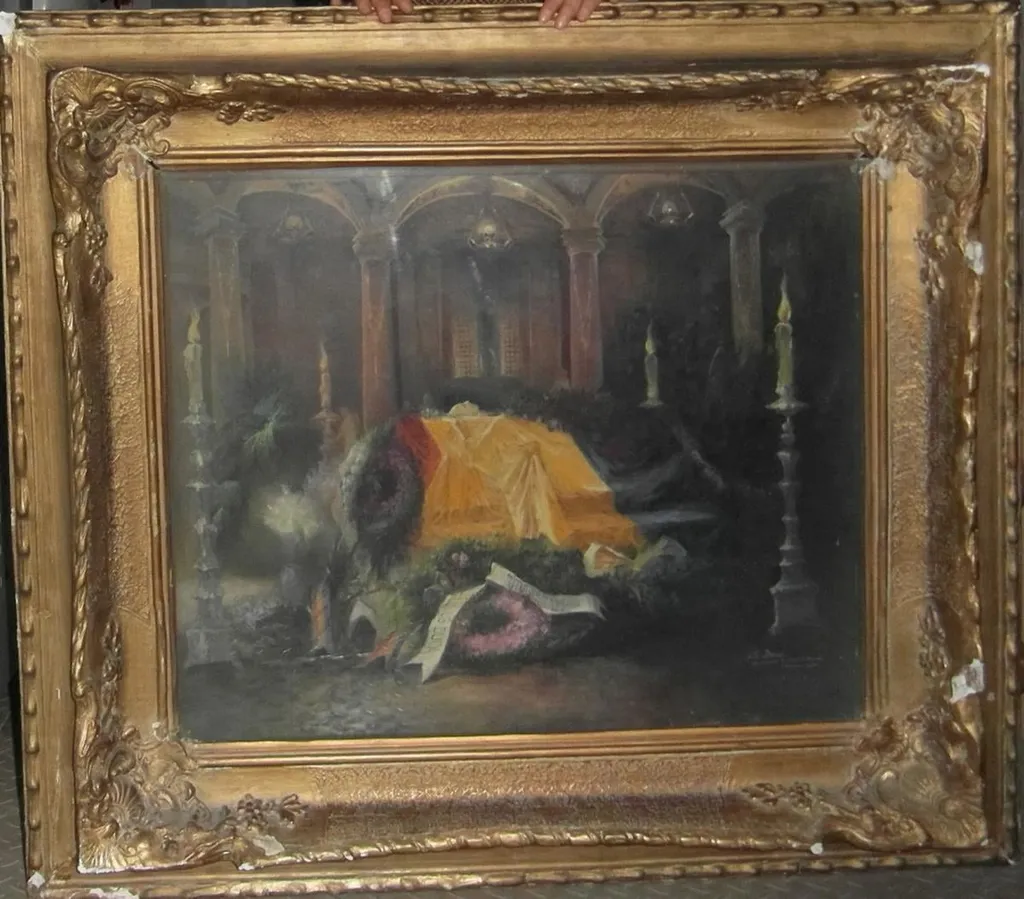
I.G. Duca pe catafalc la Ateneul Român – 1 ianuarie 1934 is a print by Alexandru Severin. It dates from 1934 and is held in the collection of the National Museum of Romanian History.
About this work
Overview
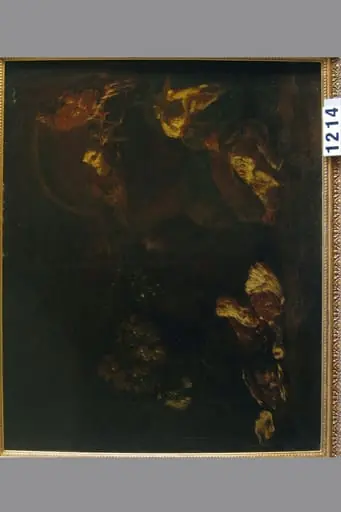
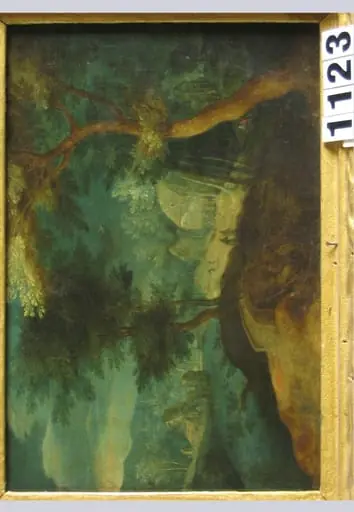
This 1934 image by Alexandru Severin captures the funeral of I.G. Duca, Romania’s prime minister, held at the Romanian Athenaeum on January 1. The composition centers on a casket draped in yellow fabric, placed on a raised platform beneath arched architecture. Dim ambient light and flickering candles create a somber, enclosed atmosphere, emphasizing stillness and reverence over spectacle.
Subject & Meaning
The yellow drape, a traditional symbol of mourning in Romanian culture, contrasts with the muted tones of the surroundings, drawing attention to the loss.
The painting documents the state funeral of I.G. Duca, assassinated days earlier, transforming a private moment of mourning into a public act of national grief. The yellow drape, a traditional symbol of mourning in Romanian culture, contrasts with the muted tones of the surroundings, drawing attention to the loss. The arrangement of flowers and wreaths reflects formal tribute, while the empty space around the casket underscores absence.
Technique & Style
Severin employs subtle chiaroscuro to model form and depth within the confined interior. Light falls gently on the yellow cloth and floral arrangements, while shadows soften the arches and red curtains, creating a sense of quiet intimacy. The palette is restrained, ochres, deep reds, and grays, enhancing the solemnity. Brushwork is controlled, avoiding dramatic flourishes to preserve the dignity of the scene.
History & Provenance
Created shortly after Duca’s assassination in December 1933, the work was likely commissioned to commemorate the state funeral held at the Athenaeum on January 1, 1934. It entered public collections in Romania, serving as a visual record of a pivotal political moment. Its preservation reflects its role as both historical document and cultural artifact of interwar Romanian memory.
Context
Duca’s murder by the Iron Guard marked a turning point in Romania’s political instability during the 1930s. The funeral, held in the nation’s most prestigious cultural venue, was a carefully staged event meant to assert state authority amid rising extremism. Severin’s depiction avoids overt politics, focusing instead on ritual and collective sorrow, aligning with official efforts to project unity.
Legacy
The image endures as a quiet testament to a moment when public mourning intersected with political crisis. It is not widely reproduced, but within Romanian art history, it remains a significant example of early 20th-century documentary painting. Its restraint and emotional precision distinguish it from more theatrical representations of death, offering a sober reflection on loss.
Artist & collection
Artist
Alexandru Severin handled clay like a baker kneading dough, fast, warm, and a little messy.