Artwork
Still Life: Fruit
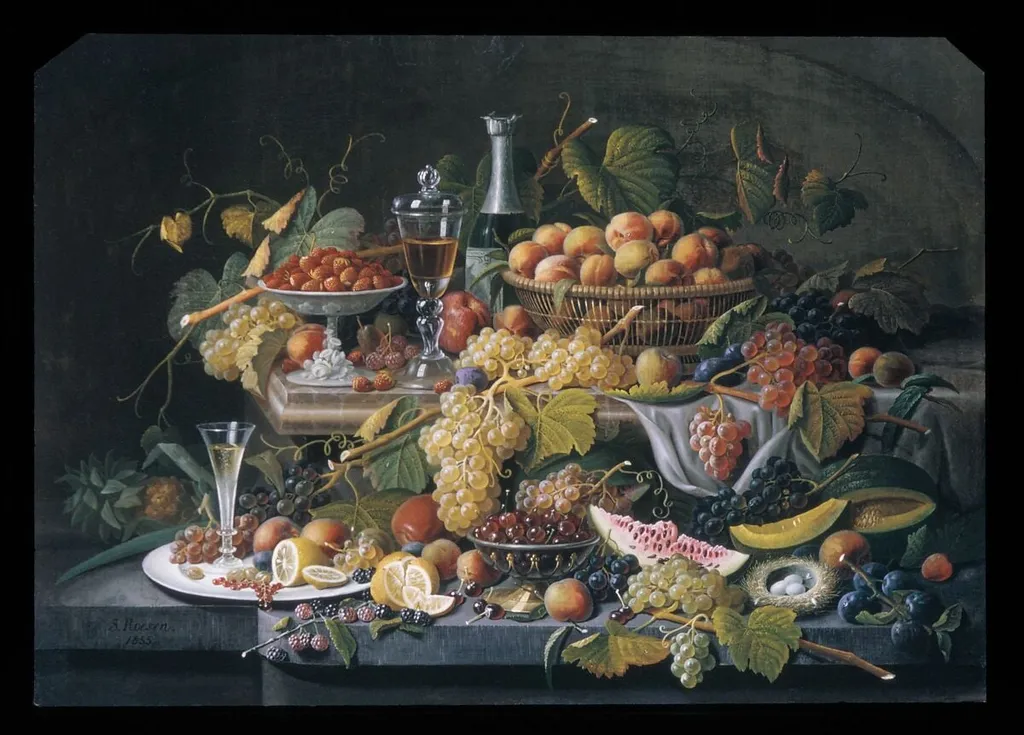
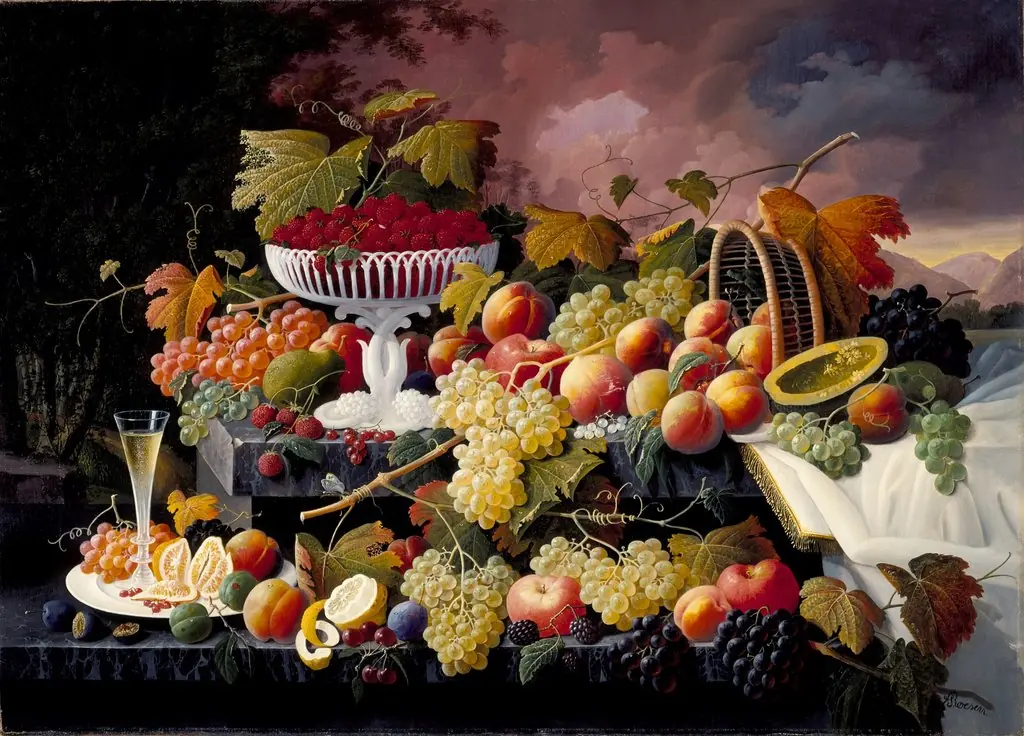
Still Life: Fruit is an oil painting by the Biedermeier artist Severin Roesen. It dates from 1855 and is held in the collection of the Metropolitan Museum of Art.
About this work
Bubbling champagne and a pineapple sit among heaps of seeded melon, grapes, and peaches on a marble ledge in Severin Roesen's 1855 Still Life: Fruit. The German-born painter, who fled the 1848 revolutions for New York, filled the 36-by-50-inch canvas with more than a dozen kinds of fruit, a nod to booming American trade and mid-century abundance.
Overview
This oil on canvas, measuring 36 by 50 inches, showcases an abundance of items including a pineapple, various melons, grapes, and a bottle of champagne.
Severin Roesen's Still Life: Fruit, painted in 1855, presents an opulent array of produce and drink on a marble surface. This oil on canvas, measuring 36 by 50 inches, showcases an abundance of items including a pineapple, various melons, grapes, and a bottle of champagne. The German-born artist, who arrived in New York following the 1848 revolutions, created a detailed composition that reflects the era's expanding access to diverse foodstuffs. The Metropolitan Museum of Art acquired this work in 1963.
Subject & Meaning
The painting's lavish display, featuring a tropical pineapple, numerous seeded fruits, and sparkling champagne, speaks to the burgeoning agricultural and trade networks of mid-19th-century America. Such a diverse collection of produce, arranged on a marble ledge, would have been a testament to the nation's growing prosperity and its ability to access goods from distant lands. Scholars interpret elements like the pineapple and abundant seeds as symbolic of America's perceived boundless potential and future wealth.
Technique & Style
Roesen's background as a porcelain painter is evident in the meticulous detail and precise rendering of each element within Still Life: Fruit. He applied a refined draftsmanship to the canvas, carefully depicting the textures of fruit skins, the translucence of grapes, and the effervescence of champagne. This exacting approach creates an exuberant and highly realistic tableau, where every item contributes to the overall sense of abundance and visual richness.
History & Provenance
Severin Roesen completed Still Life: Fruit in 1855, during his residence in New York. The painting was subsequently exhibited through the American Art-Union in the same decade, indicating its early public exposure. Decades later, The Metropolitan Museum of Art acquired this work in 1963, utilizing funds from the Rogers Fund.
It has since been a part of the museum's American Wing collection, cataloged under the object number 63.99.
Context
Roesen's arrival in New York around 1848 was prompted by political unrest during the German revolutions. His decade in the city, during which Still Life: Fruit was created, coincided with a period of significant economic expansion in the United States. Later, in Williamsport, Pennsylvania, his detailed still lifes found favor among lumber-industry patrons, who saw in these lavish compositions a reflection and affirmation of their own burgeoning prosperity and the nation's material wealth.
Artist & collection
Artist
Severin Roesen (c. 1815 in Boppard – c. 1872) was a Prussian-American painter known for his abundant fruit and flower still lifes, and is today recognized as one of the major American painters in that genre from the nineteenth century.

 An Abundance of Fruit
 Fruit Still Life in a Landscape
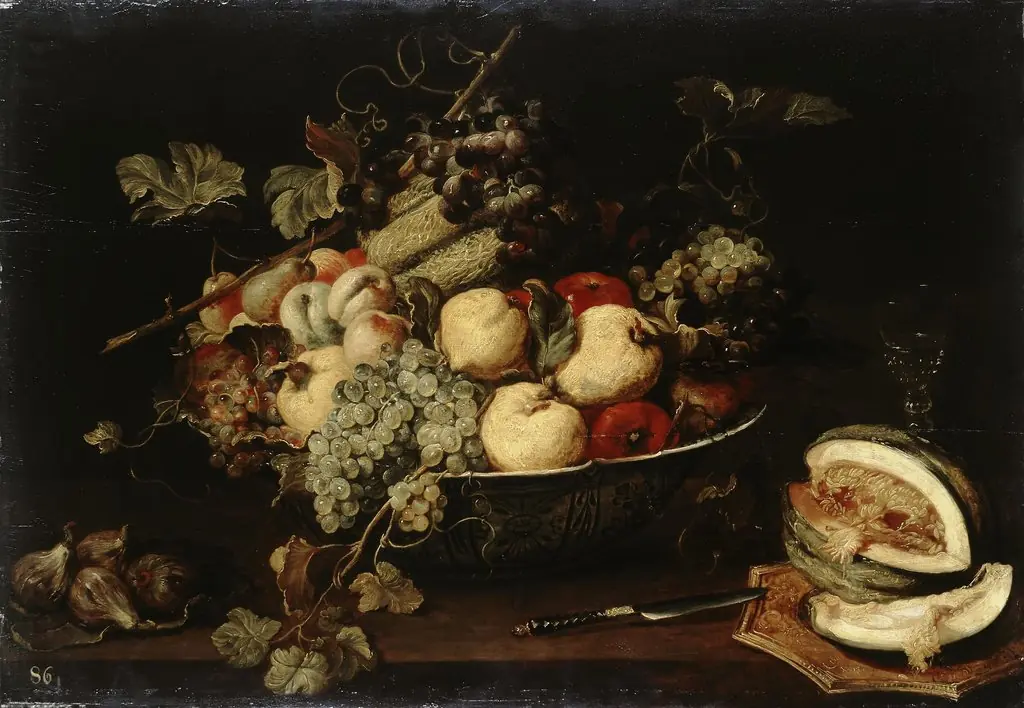 Fruit in a Bowl and a Sliced Melon
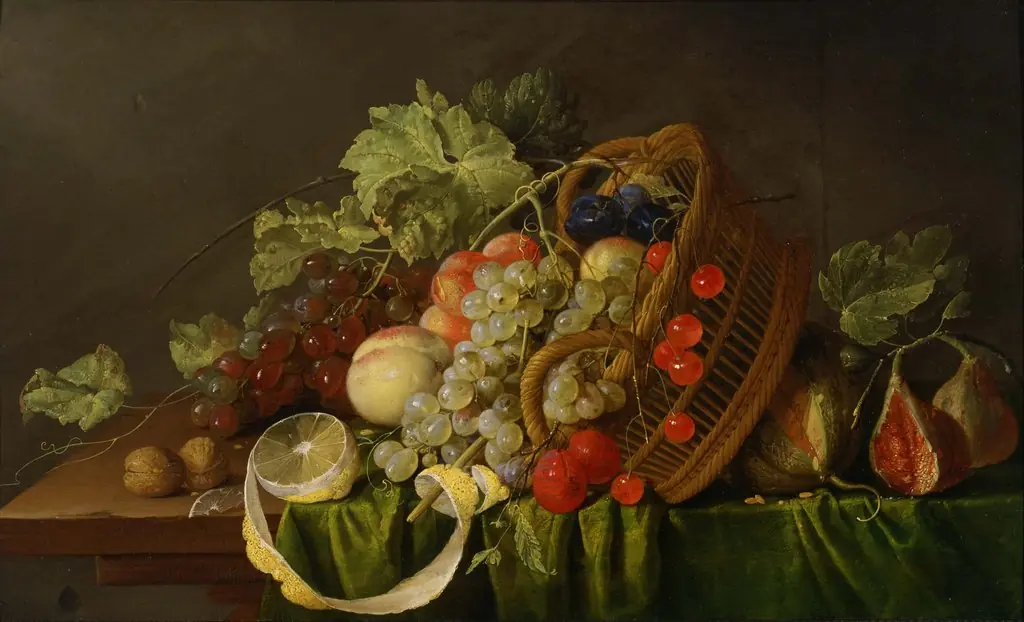 Still Life with a Basket of Fruit
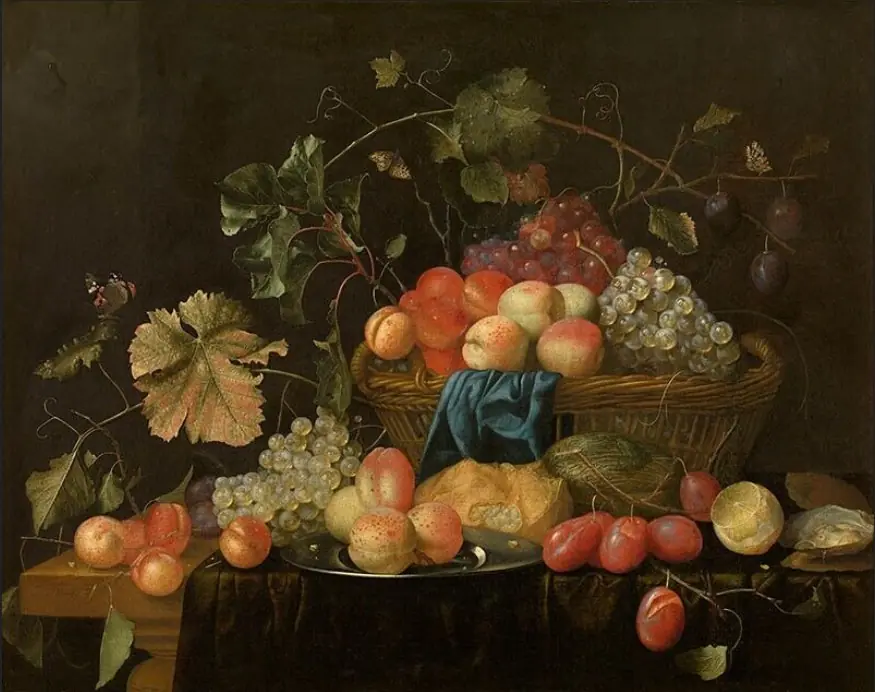 Fruit
Fruit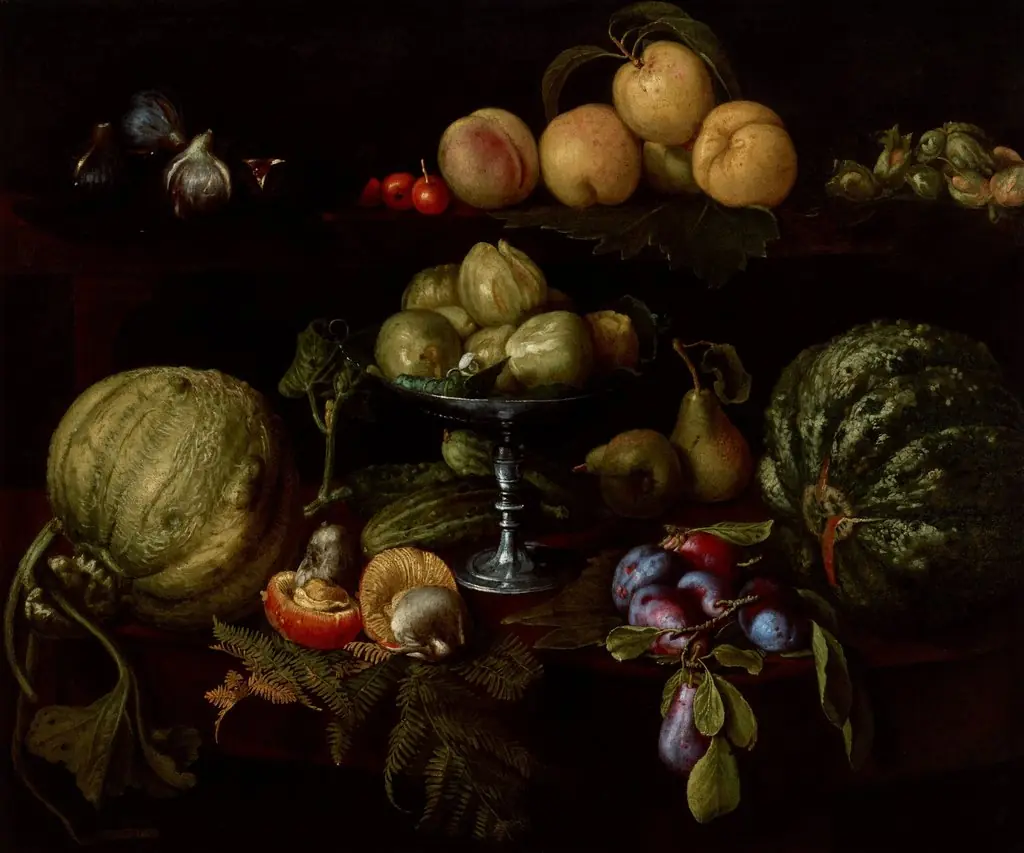 Figs on a Tazza with Pears, Quinces, Melons, Plums, Mushrooms on a Table, with Figs, Cherries, Peaches, and Acorns on a Ledge Above
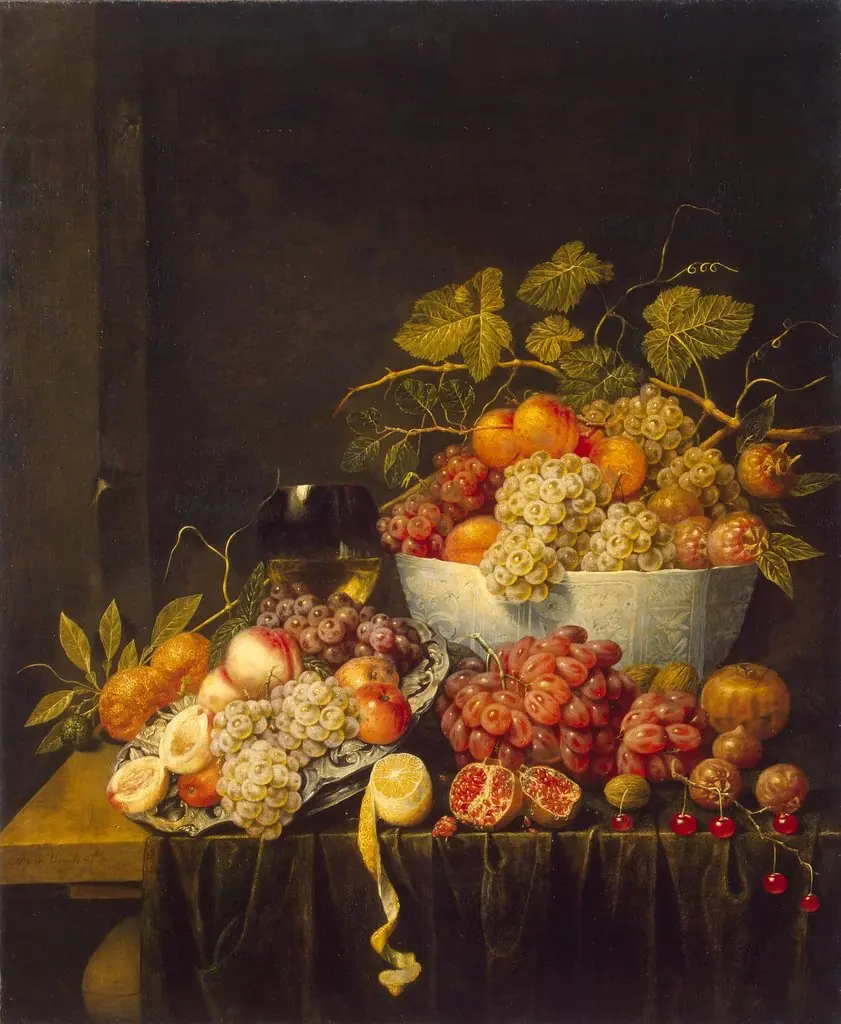 Still Life with Grapes
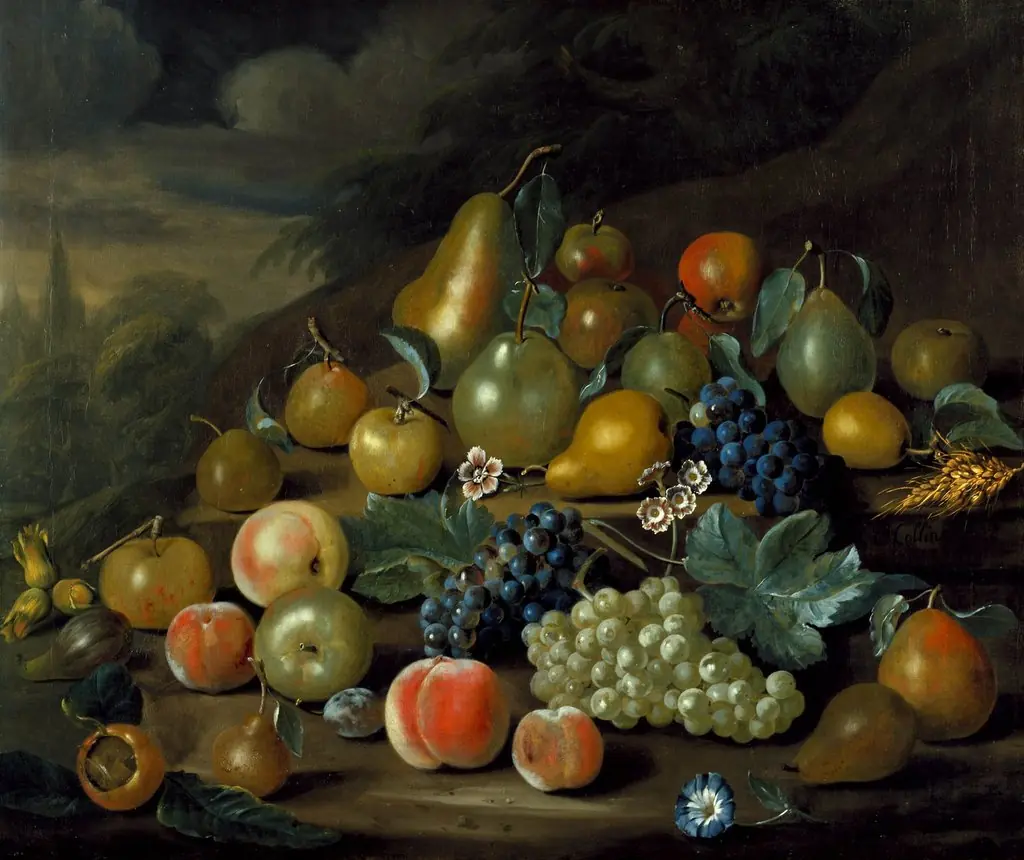 A Still Life of Pears, Peaches and Grapes