Artwork
The Tomb of Michiel de Ruyter in the Nieuwe Kerk, Amsterdam
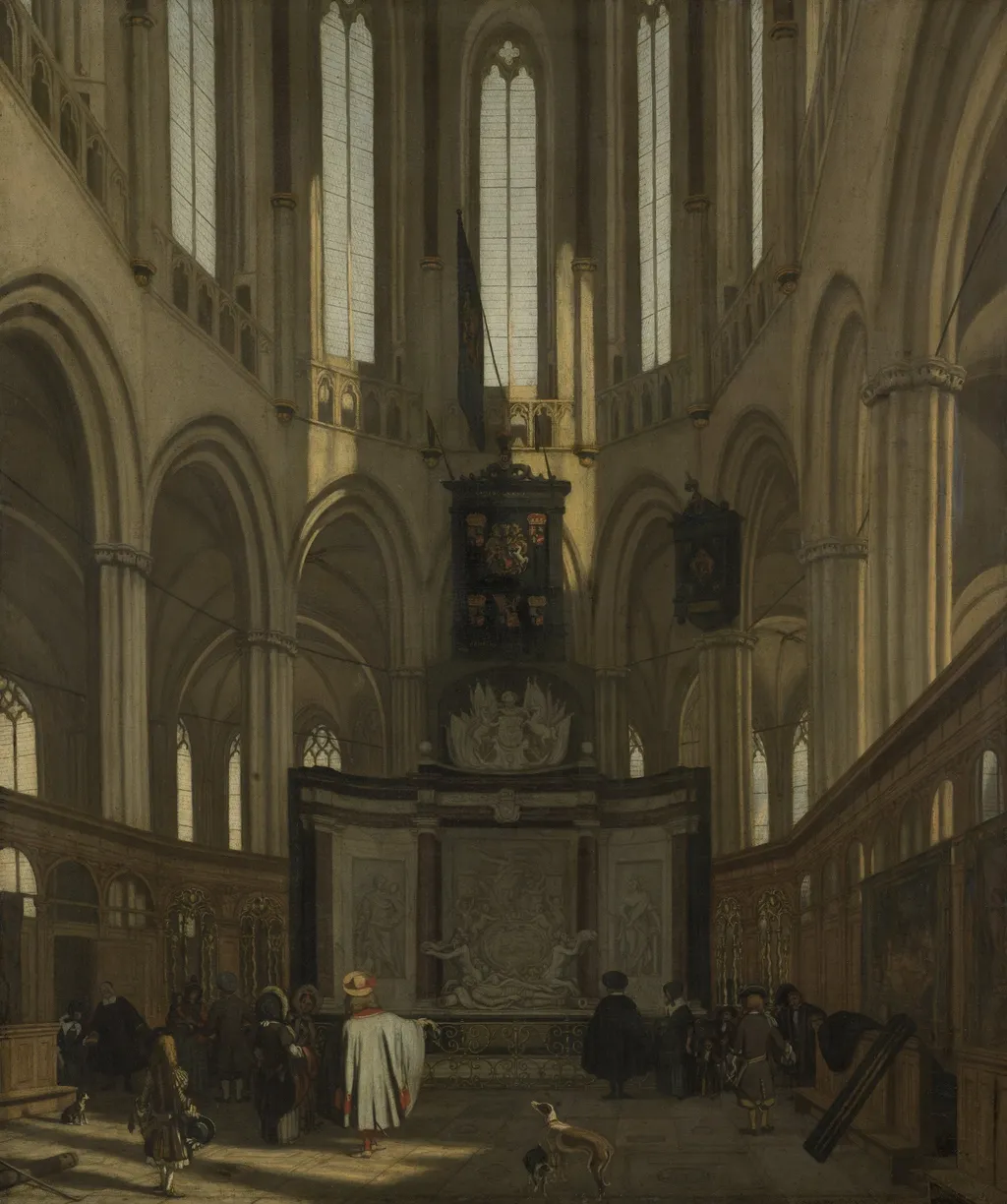
The Tomb of Michiel de Ruyter in the Nieuwe Kerk, Amsterdam is an oil painting by the Dutch Golden Age artist Emanuel de Witte. It dates from 1692 and is held in the collection of the Rijksmuseum.
About this work
Subject & Meaning
The painting depicts the grand marble tomb of Michiel de Ruyter, a celebrated 17th‑century Dutch admiral, installed in the Nieuwe Kerk in Amsterdam.
The painting depicts the grand marble tomb of Michiel de Ruyter, a celebrated 17th‑century Dutch admiral, installed in the Nieuwe Kerk in Amsterdam. Emanuel de Witte’s composition emphasizes the tomb’s classical architecture and maritime motifs, including carved anchors and naval trophies, which signal de Ruyter’s identity and legacy. The church’s Gothic interior frames the monument with soaring columns and arched windows, underscoring its sacred setting and the admiral’s status as a national hero.
Symbolically, the tomb’s placement within the church aligns de Ruyter’s earthly achievements with spiritual commemoration, reflecting early modern Dutch practices of honoring distinguished citizens in sacred spaces. De Witte’s rendering elevates the monument into a focal point of reverence, merging civic pride with religious tradition.
Technique & Style
Created in 1683 by Emanuel de Witte, this artwork is an oil painting executed on a canvas support. The piece measures 123.5 cm in height and 105 cm in width. Classified within the religious art genre, the work depicts the tomb of Michiel de Ruyter located in the Nieuwe Kerk, Amsterdam.
The handling of the medium captures the interior setting and the specific funerary monument with the characteristic style of De Witte's period.
History & Provenance
The Tomb of Michiel de Ruyter was painted by Emanuel de Witte in 1683 as a commemorative work for the deceased admiral Michiel de Ruyter. It entered the collection of Jan Coenraad de Ruyter de Wildt, a descendant of the admiral, before being acquired by the Rijksmuseum and the Amsterdam Museum, where it remains on display in hall 2.15.
The painting is held by the Amsterdam Museum and is listed in its collection under the inventory number not specified in the provided sources. It has been displayed in hall 2.15 within the museum. The work was created in 1683 by Emanuel de Witte and remains part of the museum's religious art holdings. It was formerly owned by Jan Coenraad de Ruyter de Wildt.
Context
Emanuel de Witte painted The Tomb of Michiel de Ruyter in 1683, a religious work depicting the memorial of Michiel de Ruyter in Amsterdam's Nieuwe Kerk. The painting, executed in oil on canvas, measures 123.5 cm by 105 cm and belongs to the religious art genre. It is held in the collection of Jan Coenraad de Ruyter de Wildt and is displayed at the Amsterdam Museum in hall 2.15.
Scholarship situates the work within de Witte's broader religious oeuvre and as part of 17th-century Dutch commemorative practices.
Overview
Emanuel de Witte’s 1692 oil on canvas records the interior of Amsterdam’s Nieuwe Kerk as it appeared around the tomb of the celebrated naval commander Michiel de Ruyter. The composition frames a vaulted nave lit by daylight through narrow stained‑glass windows, drawing attention to a raised monument beneath an ornamental canopy, surrounded by clergy and mourners.
Own this work as a print
Artist & collection
Artist
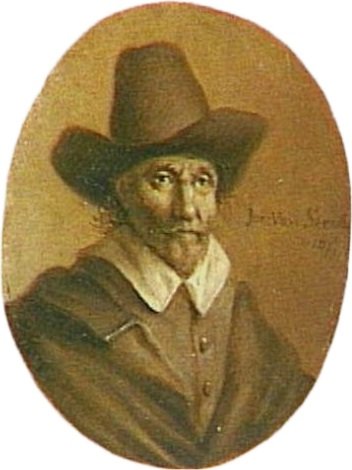
Emanuel de Witte (1617–1692) was a Dutch perspective painter. In contrast to Pieter Jansz Saenredam, who emphasized architectural accuracy, De Witte was more concerned with the atmosphere of his interiors. Though few in…

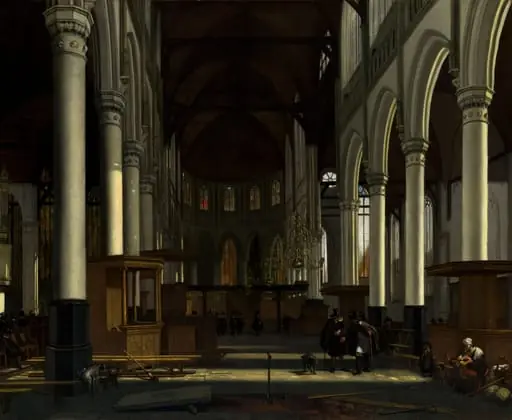 The Interior of the Oude Kerk, Amsterdam
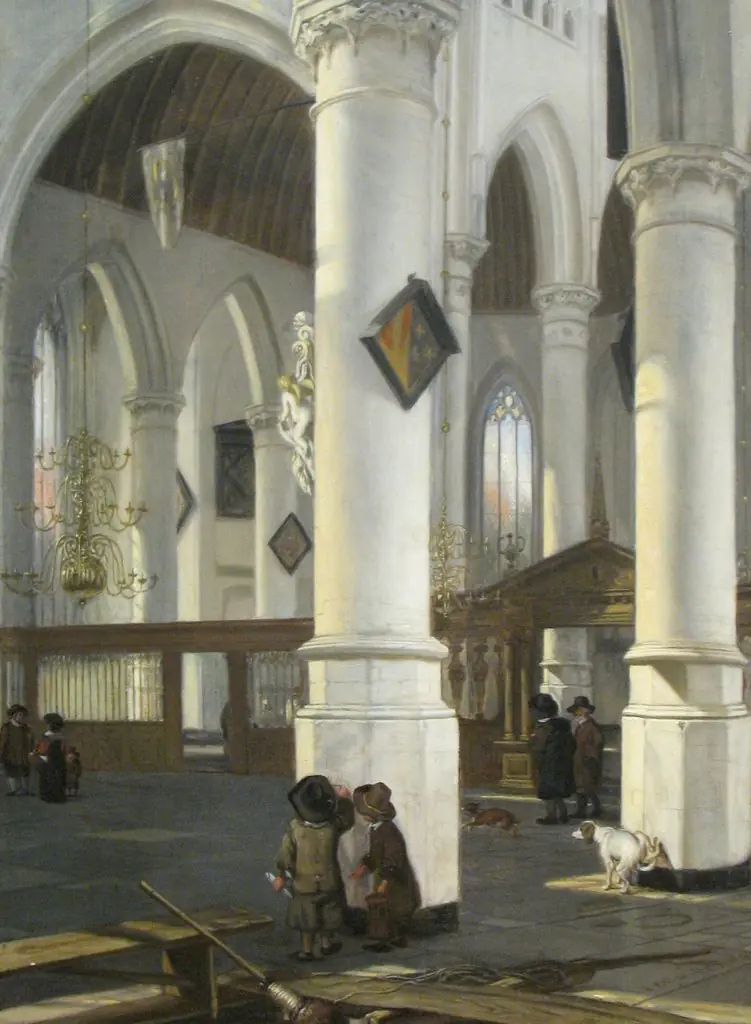 Interior of the Oude Kerk, Delft
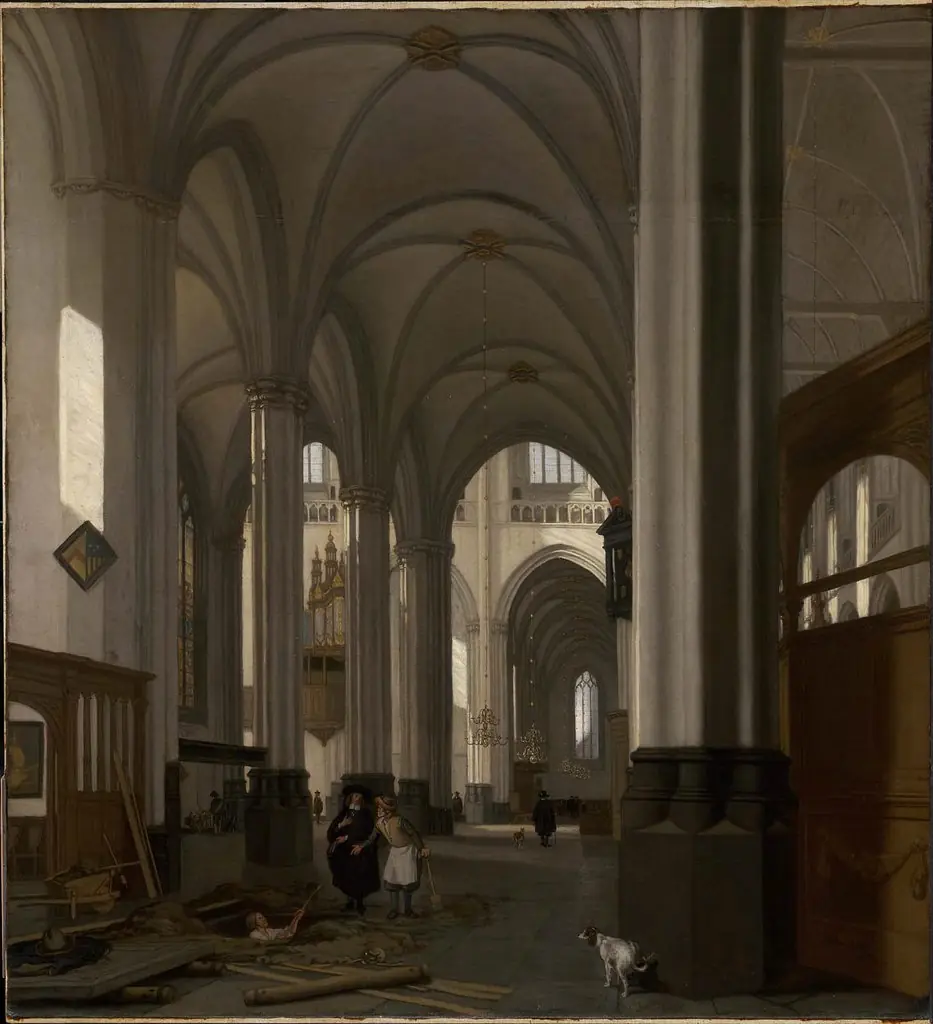
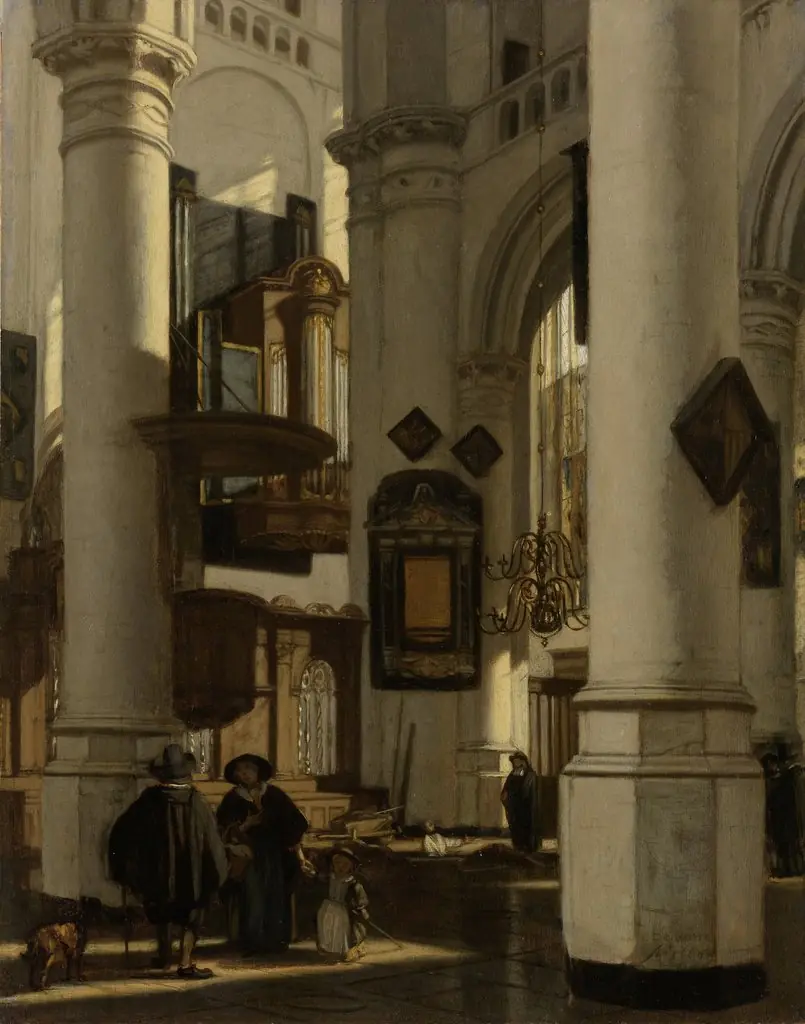 Interior of a Protestant, Gothic Church, with a Gravedigger in the Choir
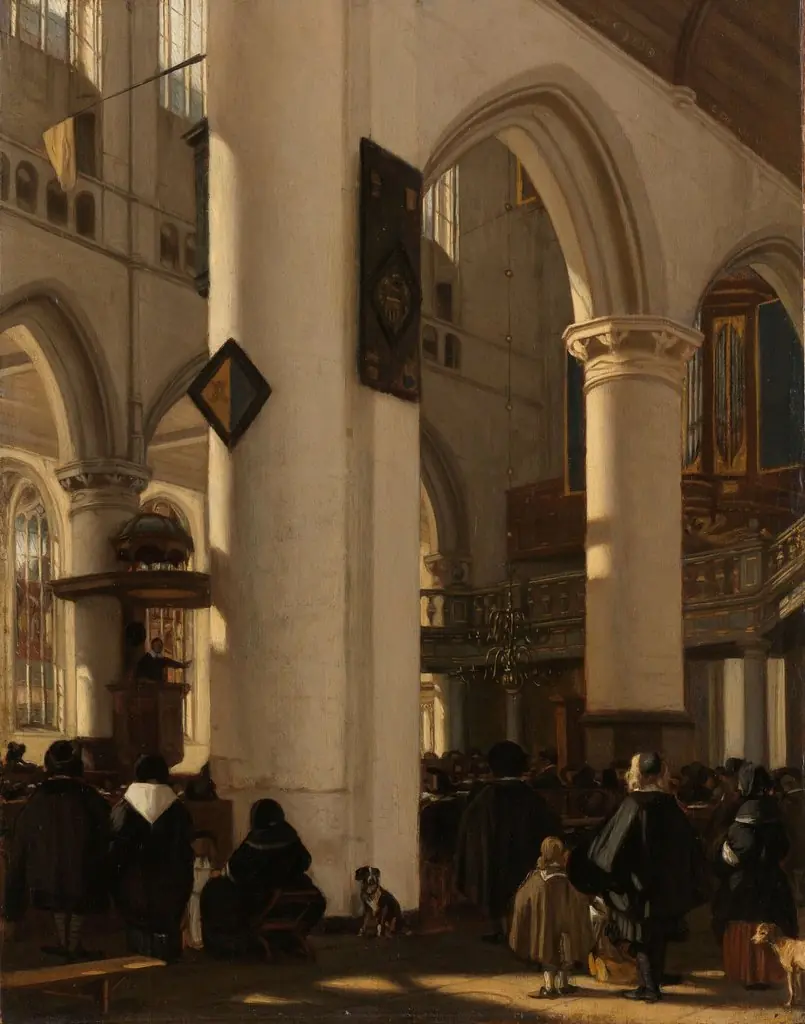 Interior of a Protestant, Gothic Church during a Service
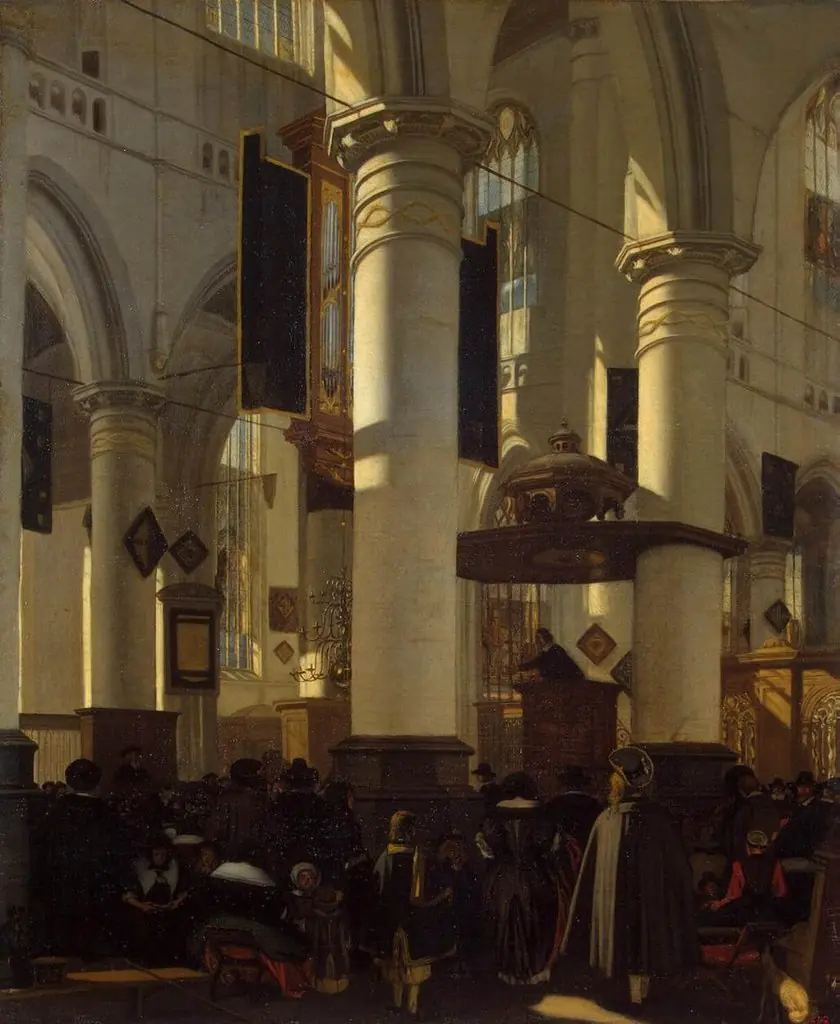 Interior of a Church
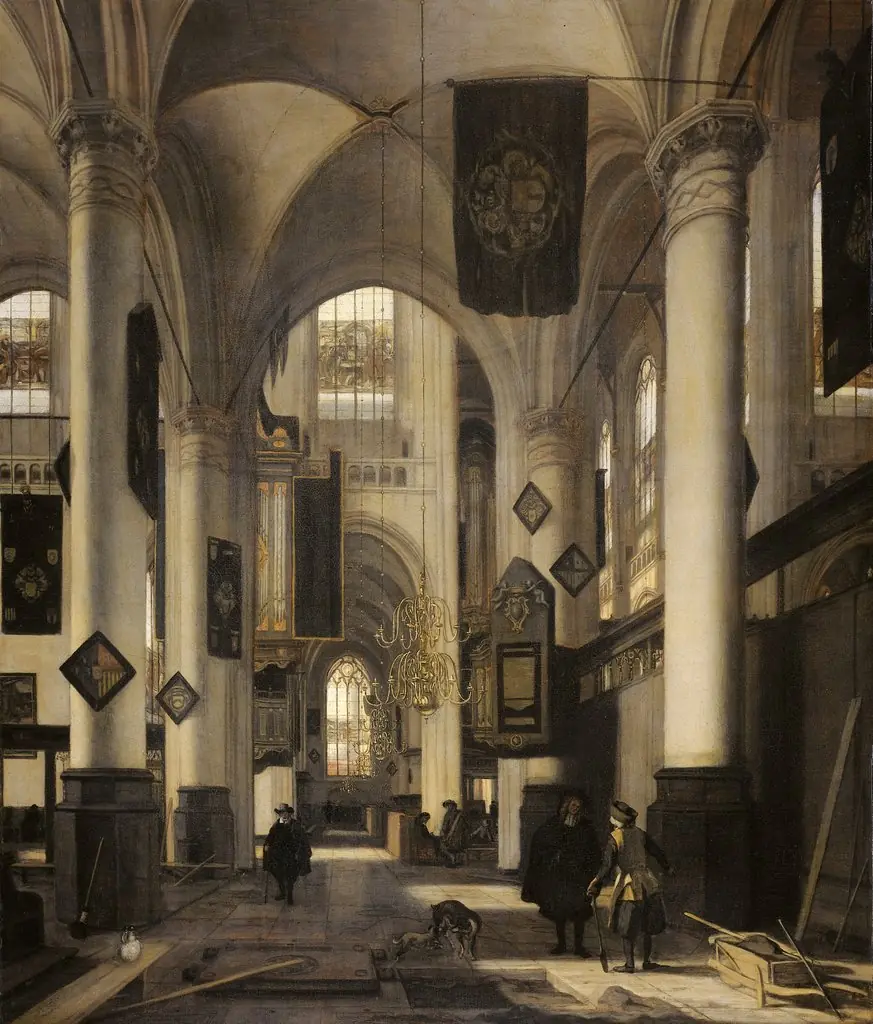 Interior of a Protestant Gothic Church
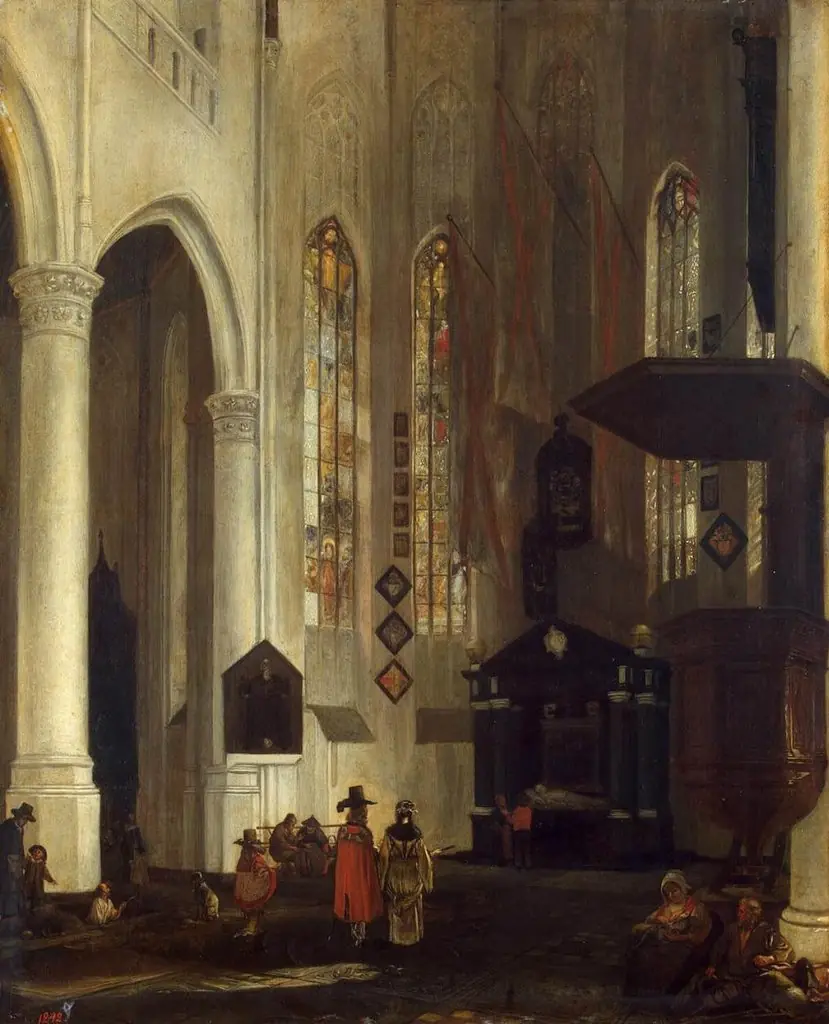 Old Church (Oudekerk) in Delft with the Tomb of Admiral Pieter Pieterszoon Hein (Heyn)
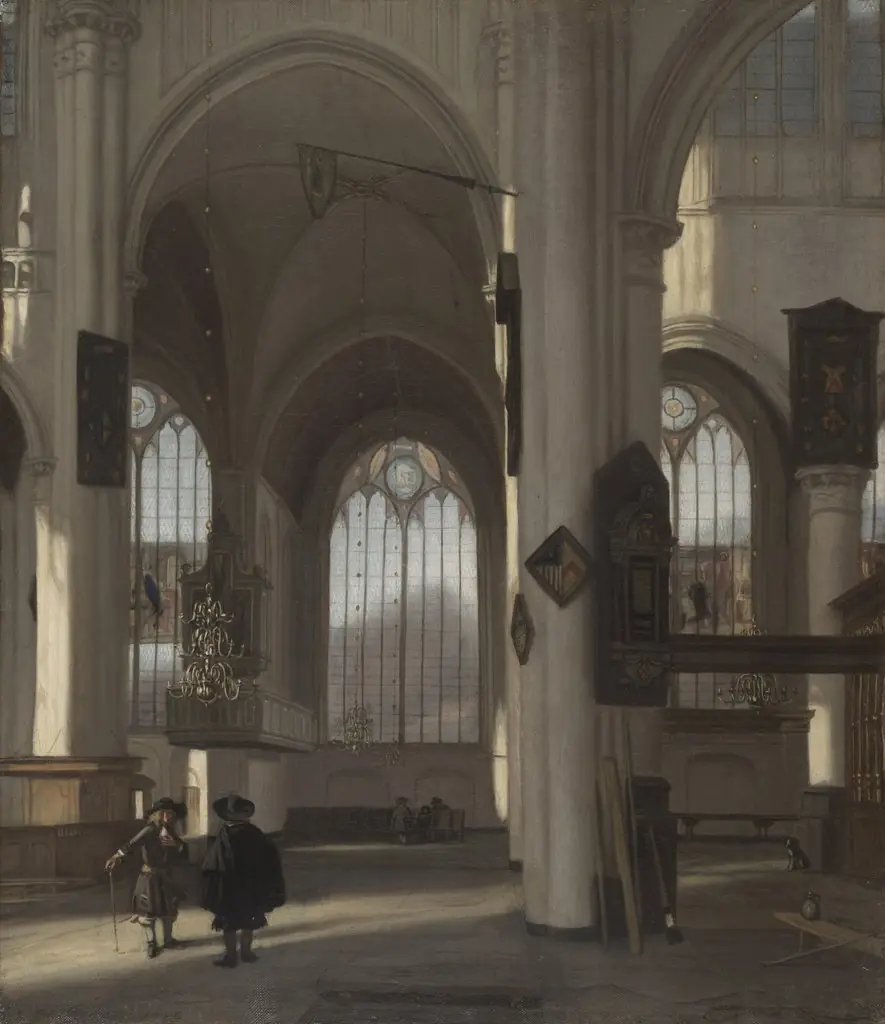 Interior of a Church
- Interior of the Nieuwe Kerk, Amsterdam
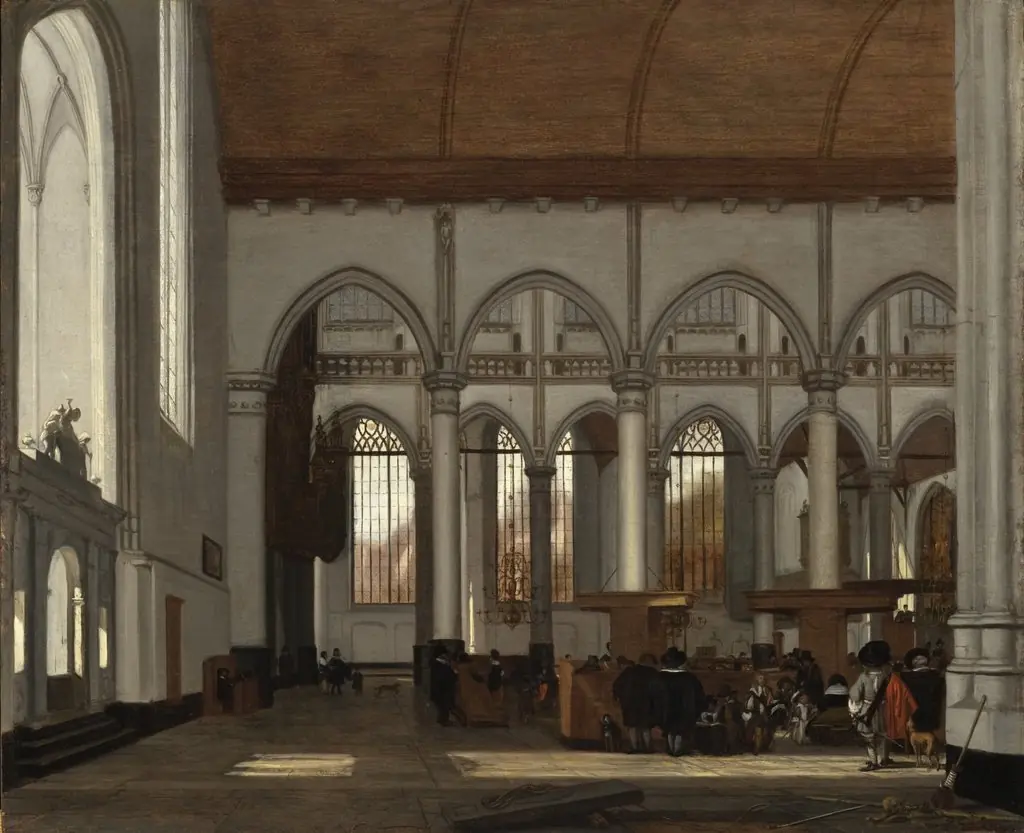 Interior of the Oude Kerk, Amsterdam
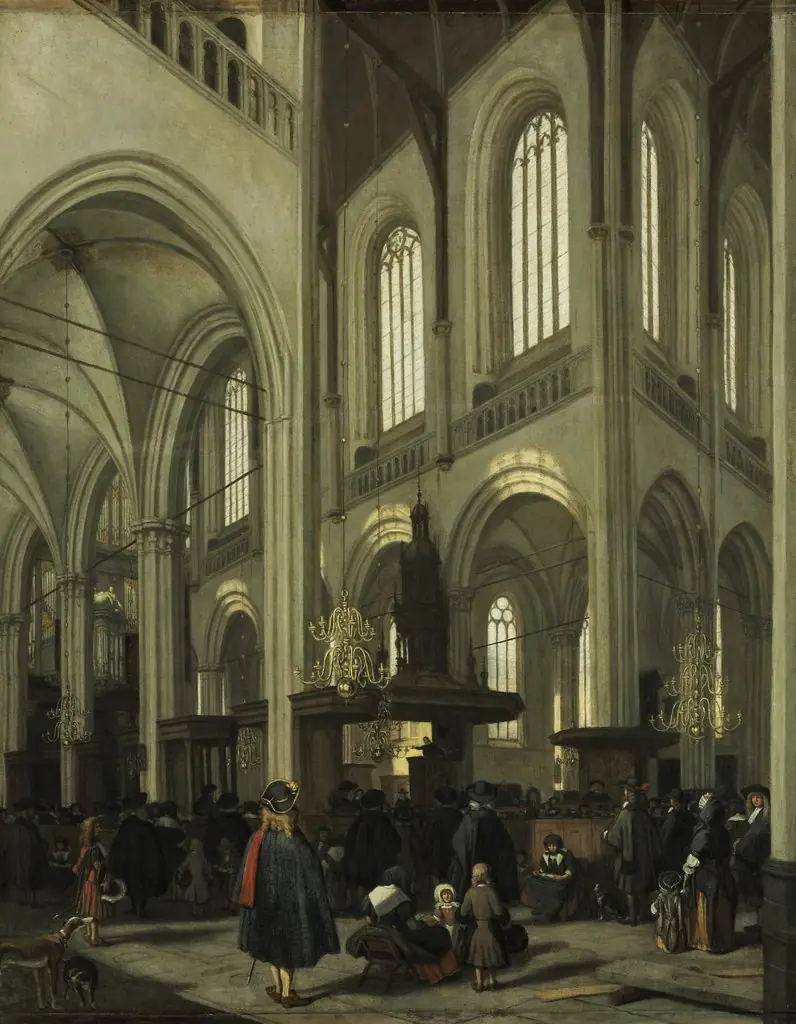 Interior of the Nieuwe Kerk in Amsterdam
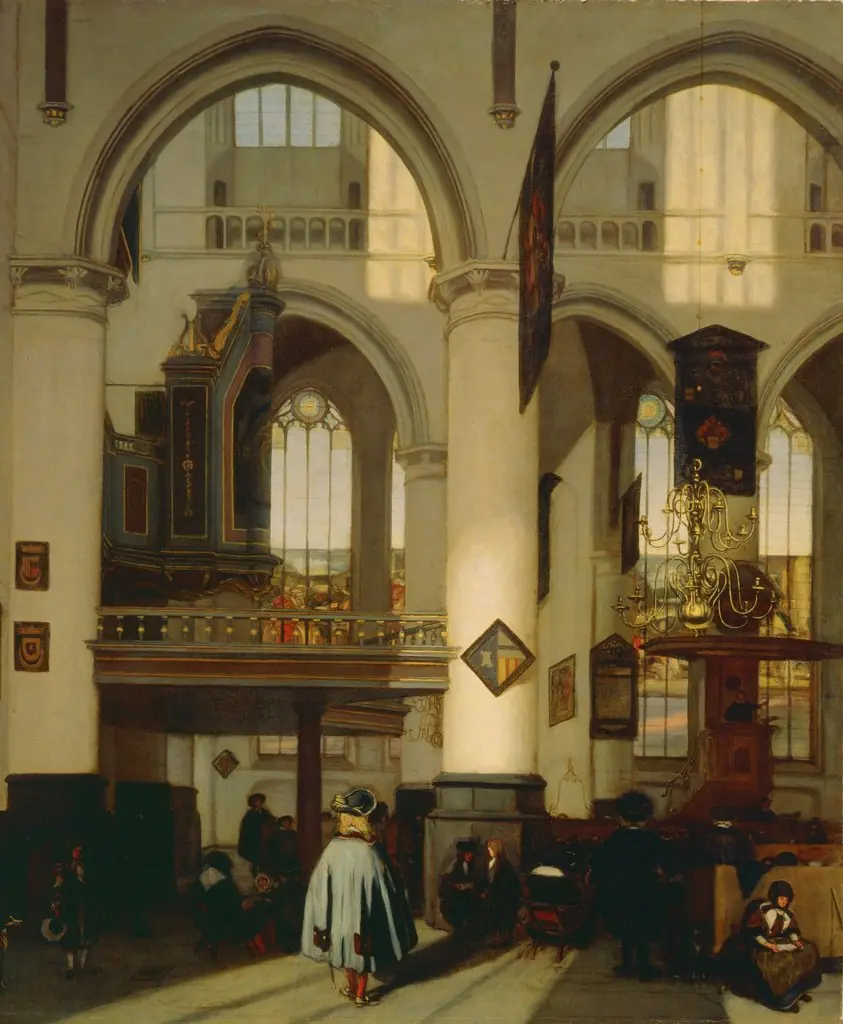 Interior of the Oude Kerk in Amsterdam
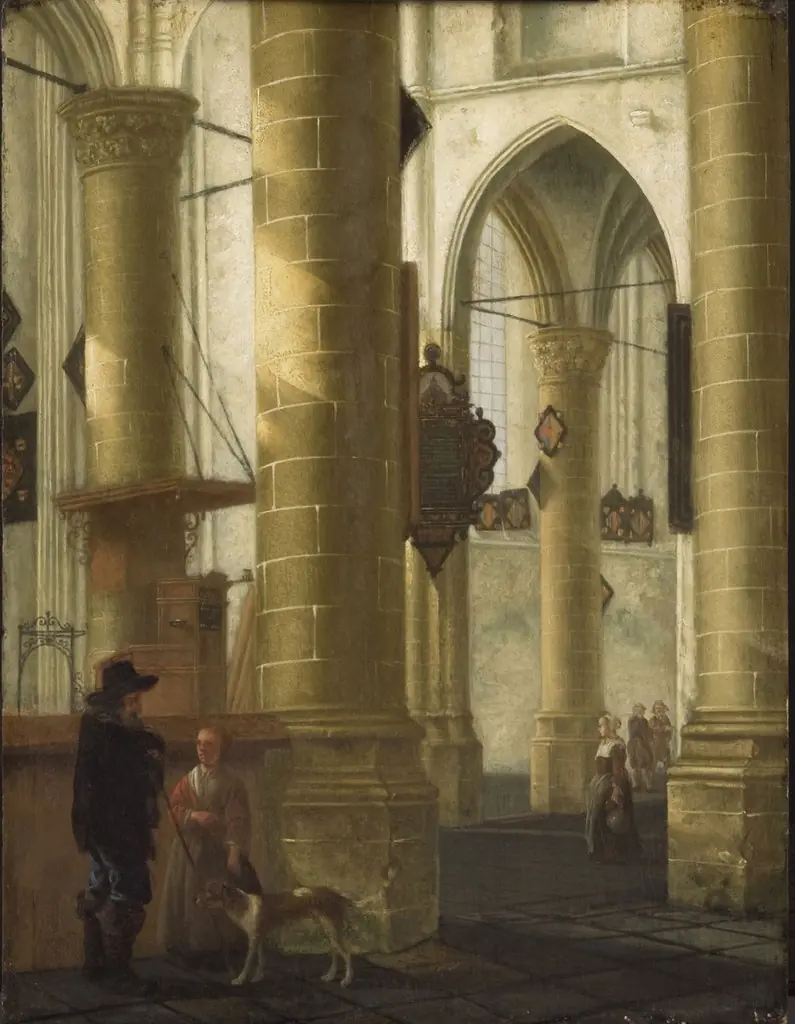 Interior of the Groote Kerk, Dordrecht
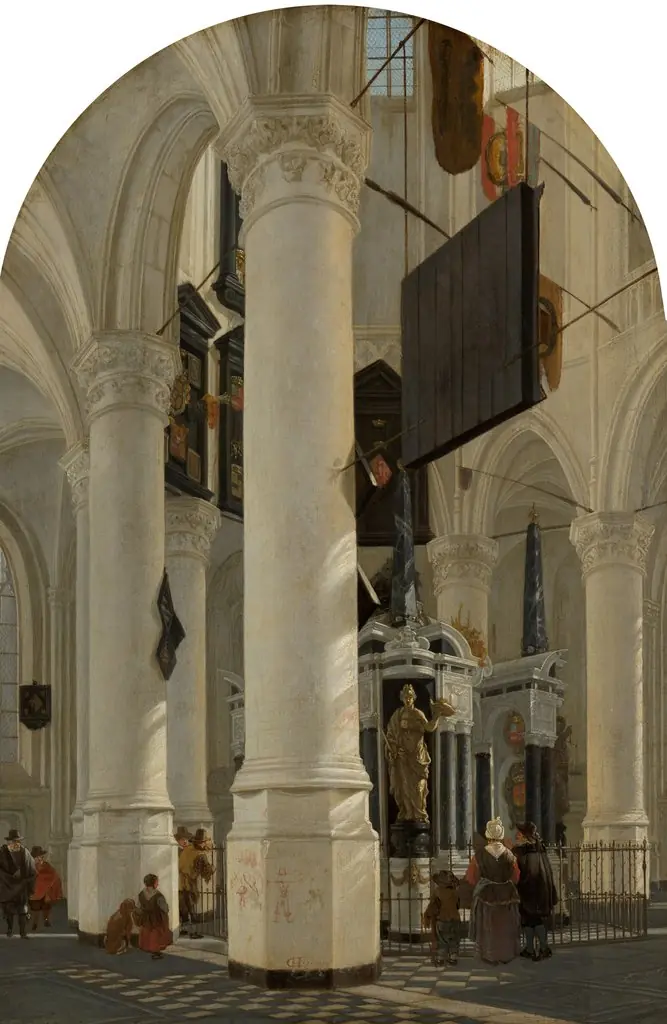 The Tomb of William the Silent in the Nieuwe Kerk in Delft
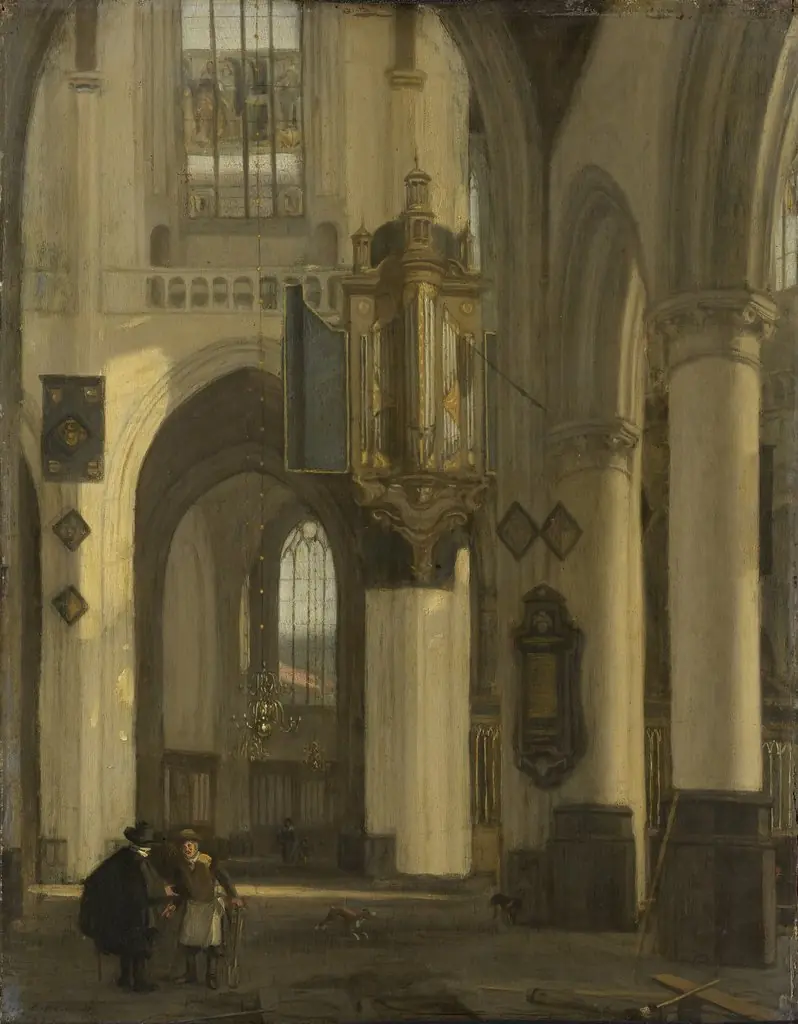 Interior of a Protestant Gothic church with motifs of the Oude and the Nieuwe Kerk in Amsterdam
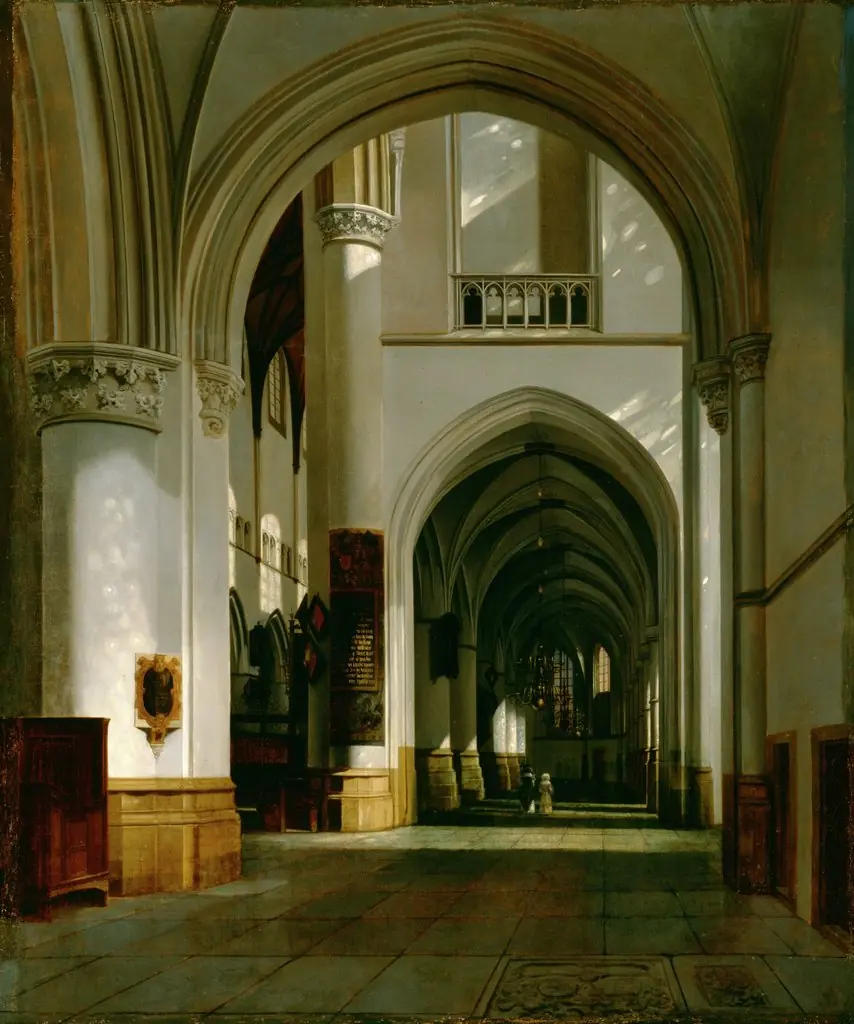 Interior of the Grote Kerk, Haarlem
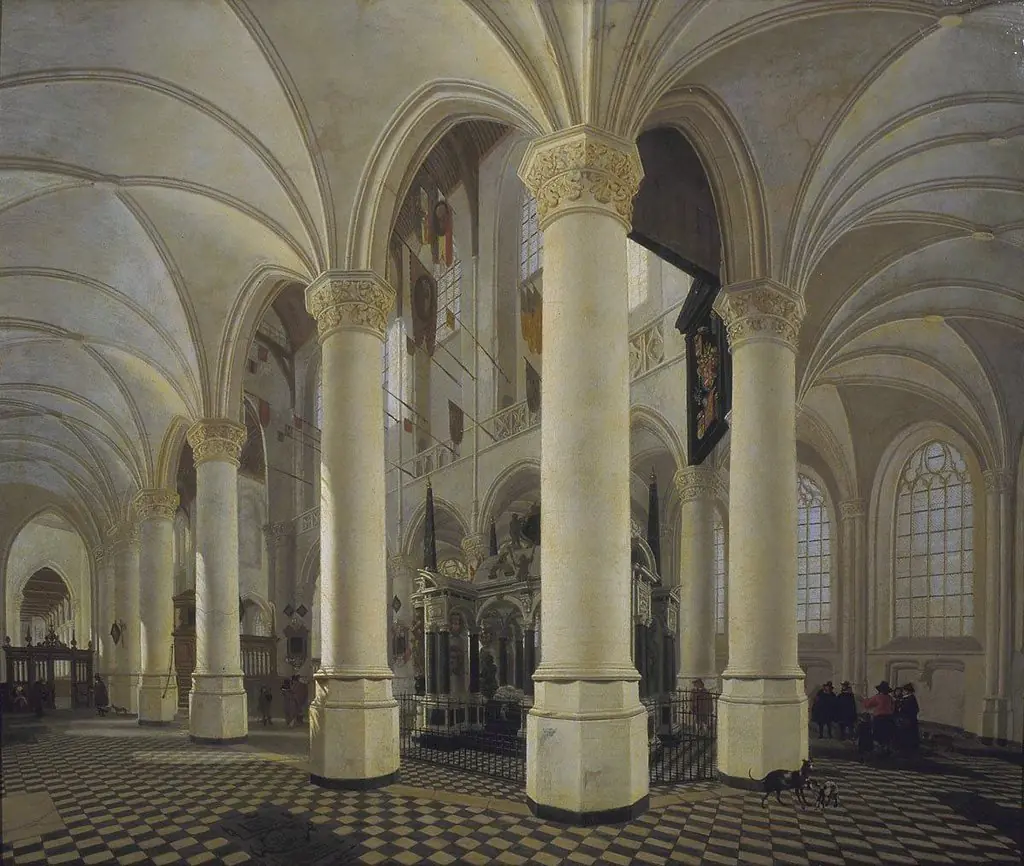 Choir of the Nieuwe Kerk in Delft with the tomb of William the Silent