Artwork
A Selection of Twenty of the Most Picturesque Views in Paris: The Water Works at Marli, and St. Germain en Laye seen in the distance
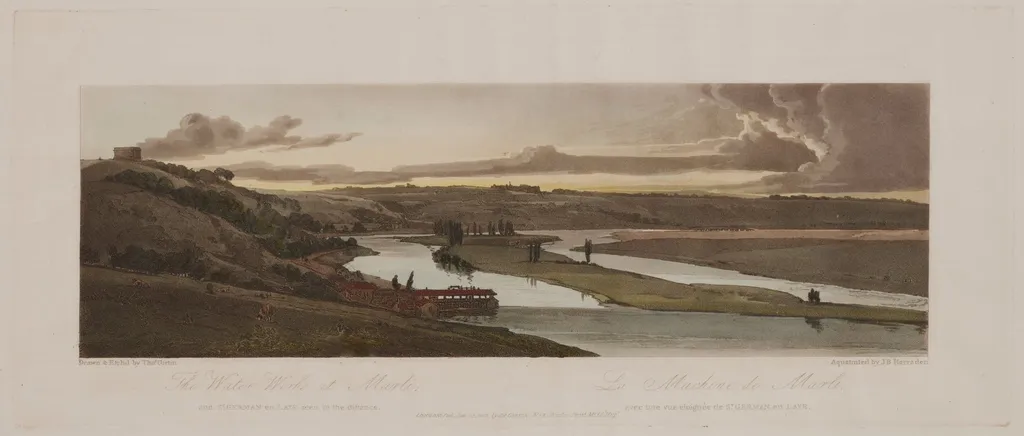
A Selection of Twenty of the Most Picturesque Views in Paris: The Water Works at Marli, and St. Germain en Laye seen in the distance is a print by the Romanticist artist Thomas Girtin. It is held in the collection of the Cleveland Museum of Art. This watercolor, part of a series titled A Selection of Twenty of the Most Picturesque Views in Paris, depicts a broad, mist‑filled river.
- Accession no.
- 2006.226
- Credit line
- Gift of John Bonebrake
About this work
Overview
This watercolor, part of a series titled A Selection of Twenty of the Most Picturesque Views in Paris, depicts a broad, mist‑filled river. A stone waterworks occupies the left foreground while a pale castle rises on the distant bank, all rendered in delicate washes that suggest depth without heavy brushwork.
Subject & Meaning
The composition presents a tranquil riverscape that emphasizes the interplay of water, architecture, and atmospheric light. By reducing the scene to simple, monumental forms, the artist invites contemplation of the landscape’s serene character rather than narrative detail.
Technique & Style
The artist employed watercolor in a manner traditionally associated with oil painting, layering translucent washes to achieve tonal richness. Overlapping blues create a luminous sky, and the subtle gradations of tone echo the sfumato effect, softening edges and unifying the scene.
History & Provenance
Created after a brief French visit made possible by the 1801 Peace of Amiens, the work derives from on‑site graphite sketches of Paris and its surroundings. Following the artist’s death from tuberculosis, the series was issued by his widow and brother, ensuring its circulation among early 19th‑century audiences.
Artist & collection

Artist
Thomas Girtin (18 February 1775 – 9 November 1802) was an English watercolourist and etcher. A friend and rival of J. M. W. Turner, Girtin played a key role in establishing watercolour as a reputable art form.

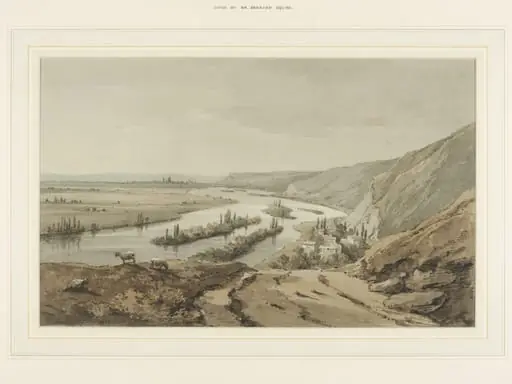 Distant view of Rouen
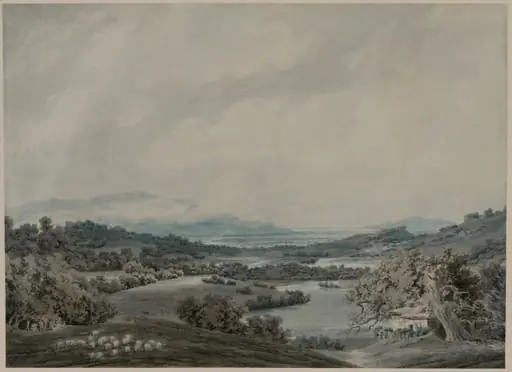
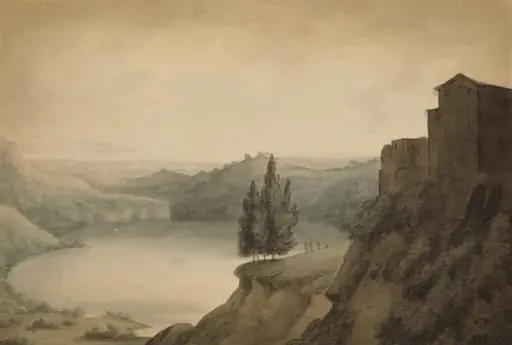 The Lake of Nemi
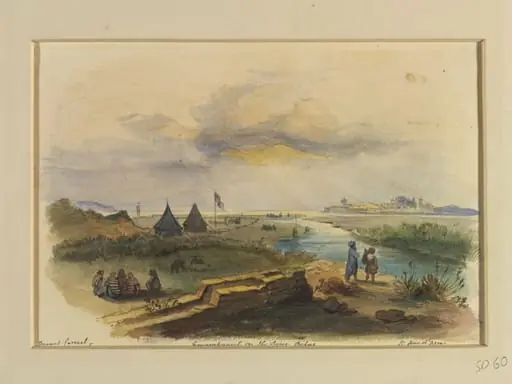 Encampment on the River Belus
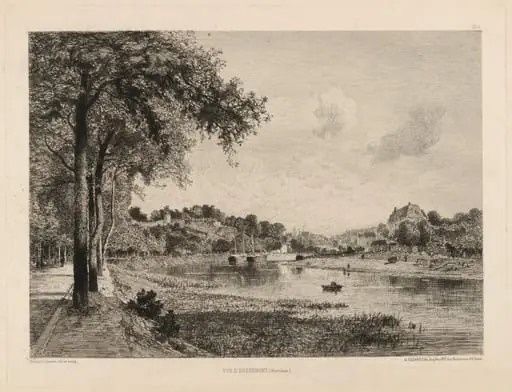 Vue d’Hennebont (Morbihan)
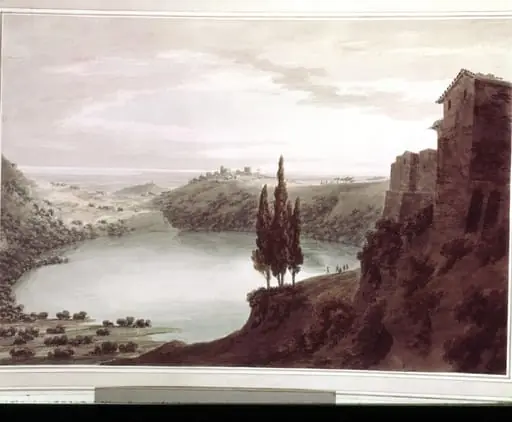 The Lake of Nemi
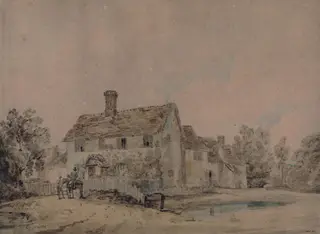
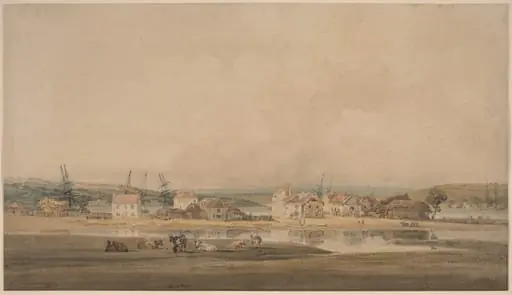 Village along a River Estuary in Devon
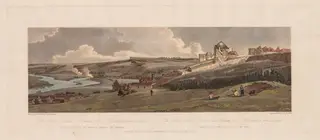 A Selection of Twenty of the Most Picturesque Views in Paris: View from Palace Terrace, at St. Germain en Laye, the Aquaduct of Marli seen in the Distance
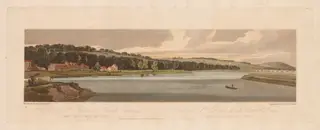 A Selection of Twenty of the Most Picturesque Views in Paris: View of St. Cloud & Mount Calvary taken from Pont de Sêve
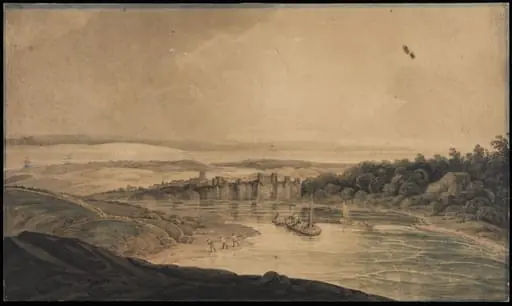 Chepstow Castle on the Wye, Monmouthshire
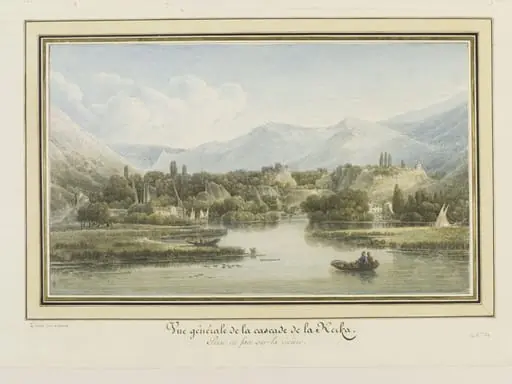 Voyage Pittoresque et Historique de l'Istrie et de la Dalmatie