Artwork
Warkworth Hermitage, Northumberland
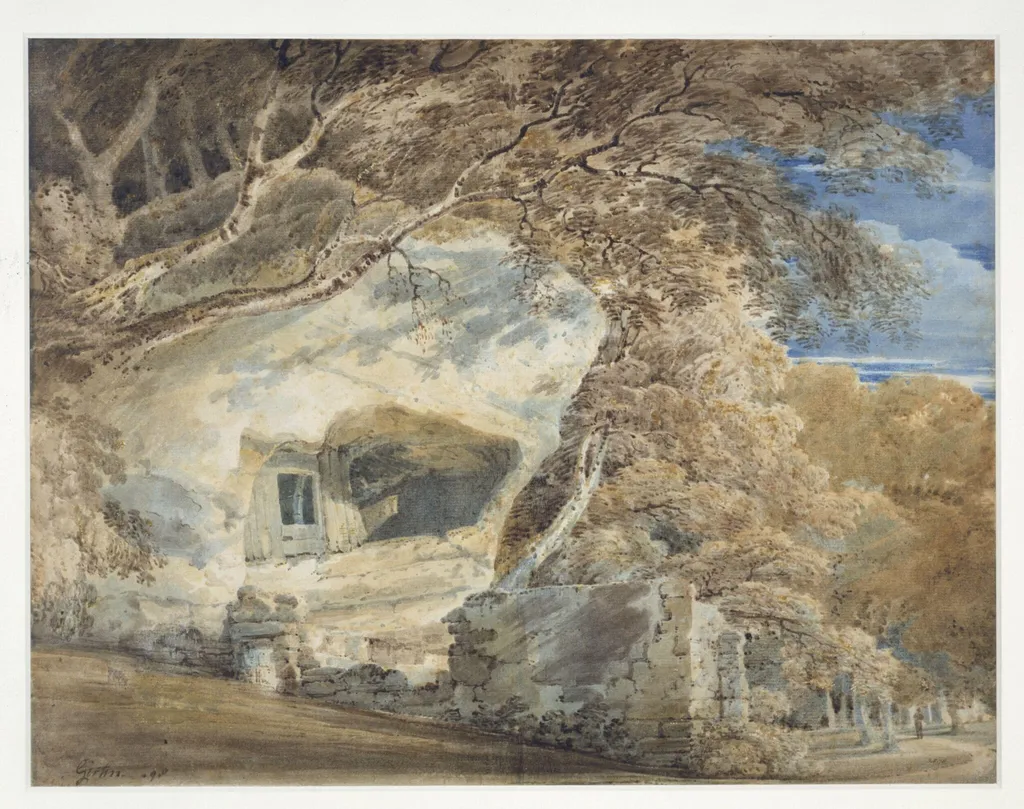
Warkworth Hermitage, Northumberland is a watercolor work on paper by the Romanticist artist Thomas Girtin. It dates from 1798 and is held in the collection of the Victoria and Albert Museum.
About this work
Overview
Warkworth Hermitage, Northumberland is a watercolour on paper created by Thomas Girtin in 1798. The work depicts a rocky landscape with a cave.
Subject & Meaning
The painting shows a rugged hillside with a central cave opening, uneven terrain, and sparse trees. A winding path ascends the hill, set against a pale blue sky merging with the horizon.
Technique & Style
Girtin employed soft, blended colours to capture the play of light on the rocks and cave. Loose brushstrokes convey a sense of natural roughness, characteristic of his approach to representing the landscape.
History & Provenance
The watercolour was signed and dated by the artist. A version or related replica was exhibited at the Royal Academy in 1799, listed as catalogue number 396.
Own this work as a print
Artist & collection

Artist
Thomas Girtin (18 February 1775 – 9 November 1802) was an English watercolourist and etcher. A friend and rival of J. M. W. Turner, Girtin played a key role in establishing watercolour as a reputable art form.

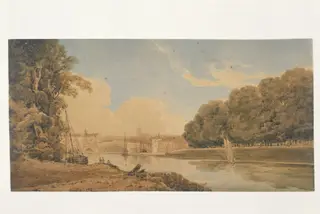
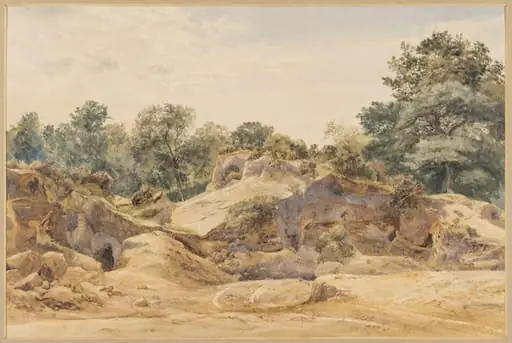 Gravel Pit at Hampstead, 1855
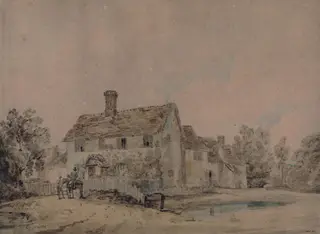
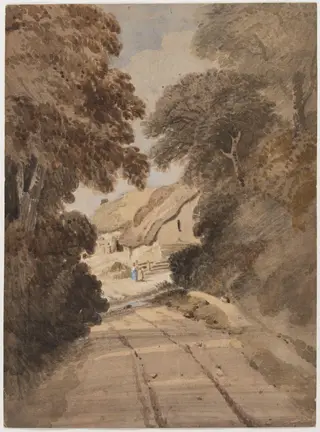 Lane and Cottages
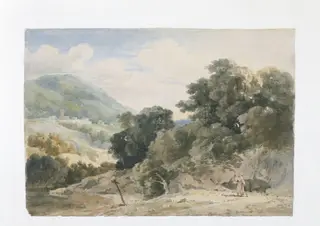
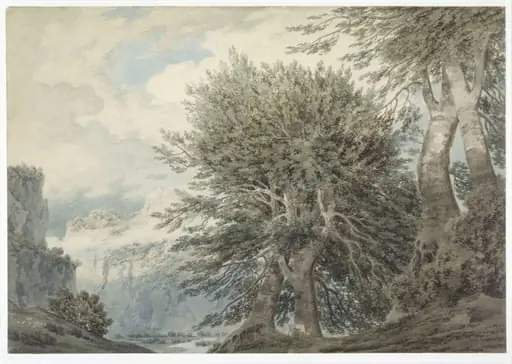 Mountainous landscape with beech trees
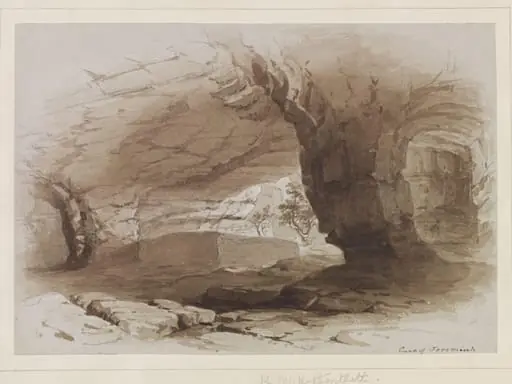 Cave of Jeremiah, Jerusalem
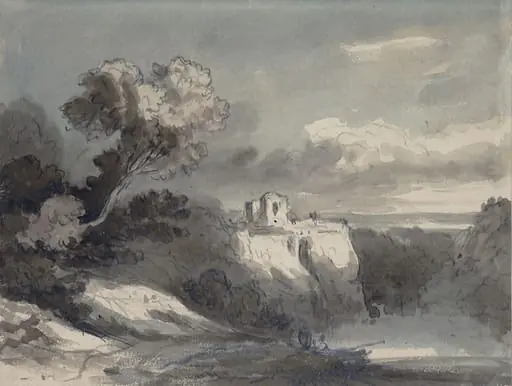 Landscape with Castle on a Cliff
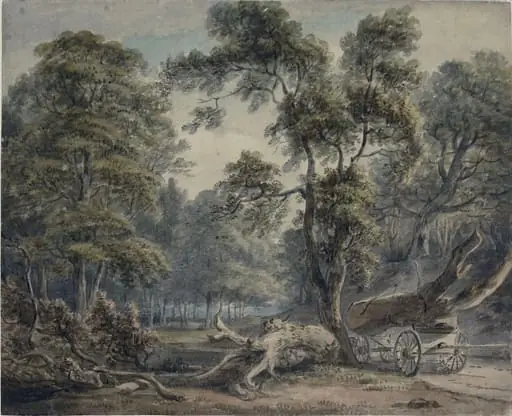 Scene in Windsor Forest
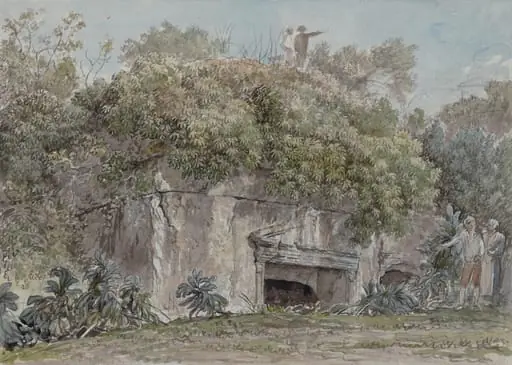 Ruins near Castel Gandolfo
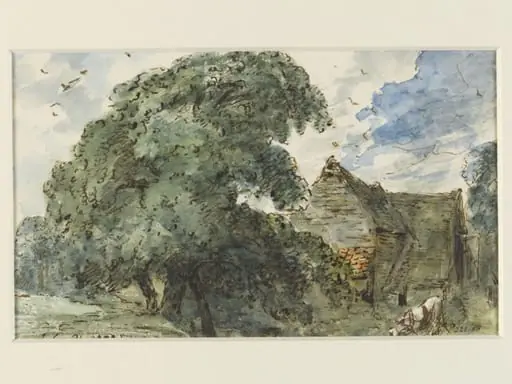 A barn, trees and a grey horse, near East Bergholt
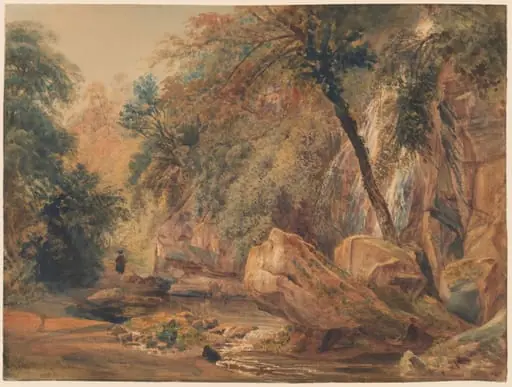 Waterfall in the Dingle at Badger Hall
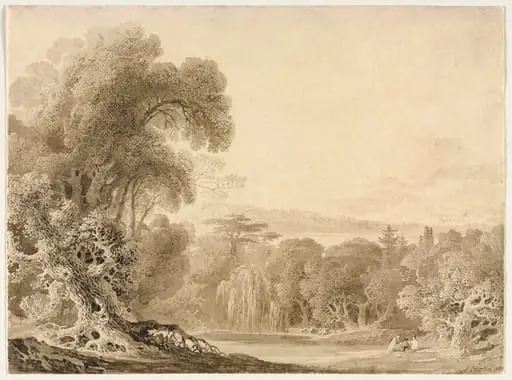 Figures Seated by a Lake in a Wooded Landscape
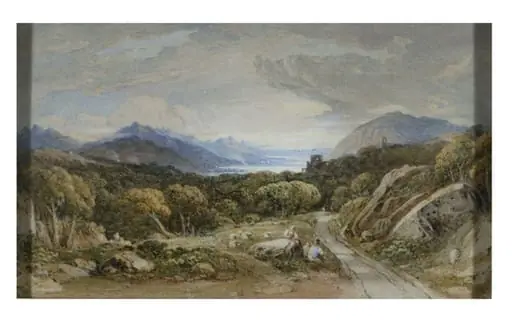 Mountain Landscape