Artwork
Italian Street Scene
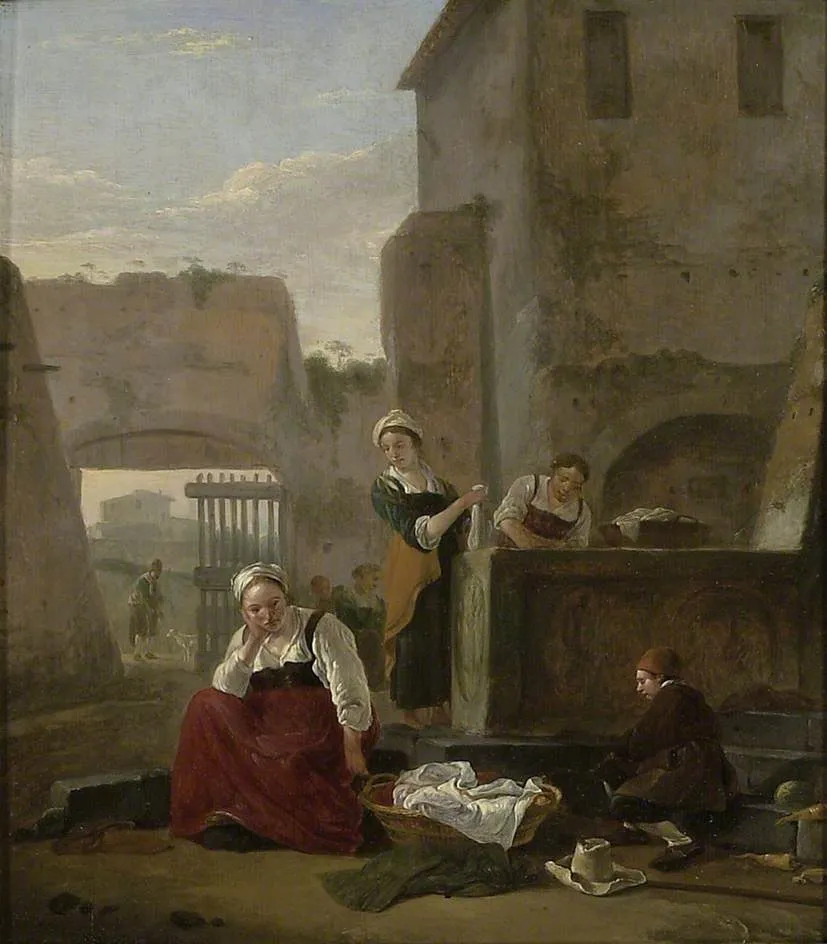
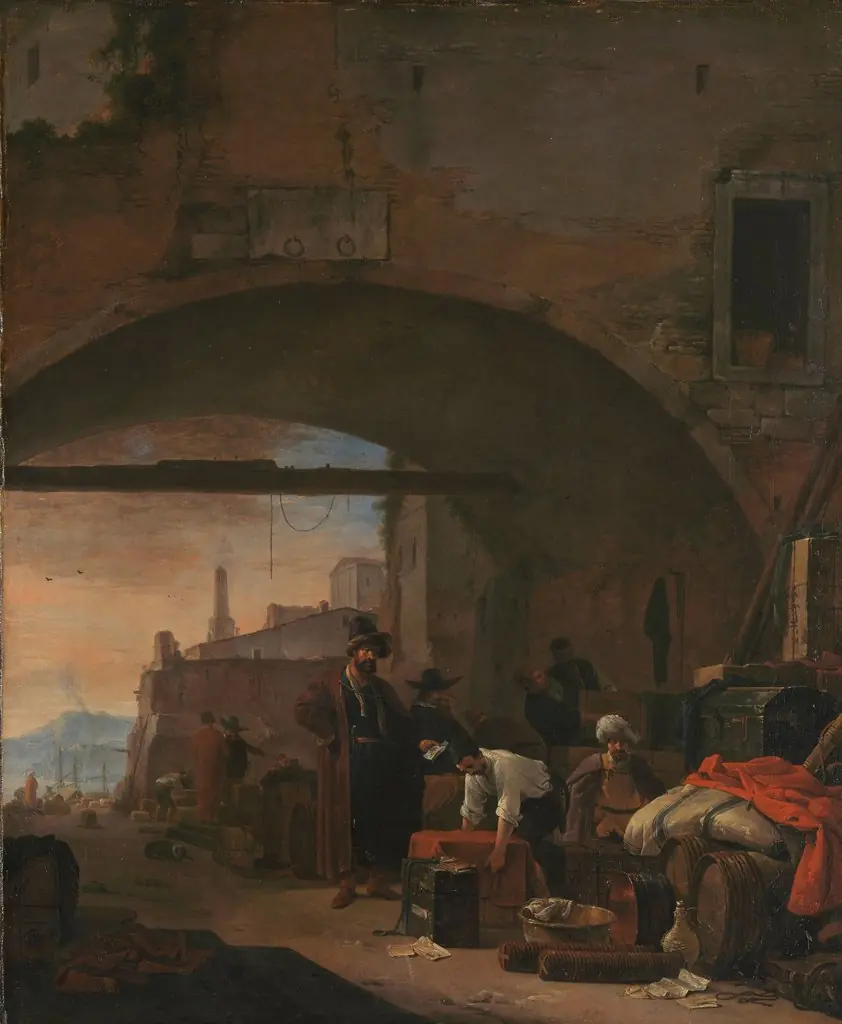
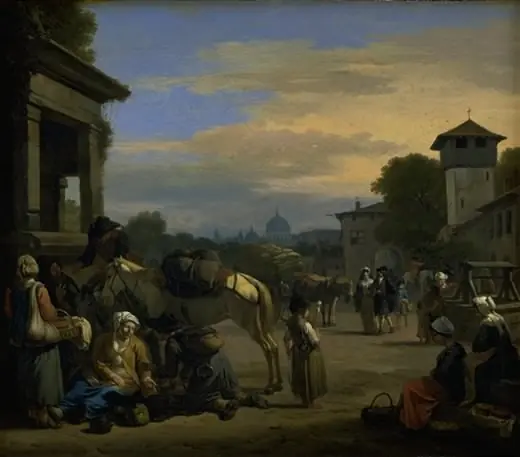
Italian Street Scene is an oil painting by the Dutch Golden Age artist Thomas Wijck. It dates from 1650 and is held in the collection of the Ashmolean Museum.
About this work
Overview
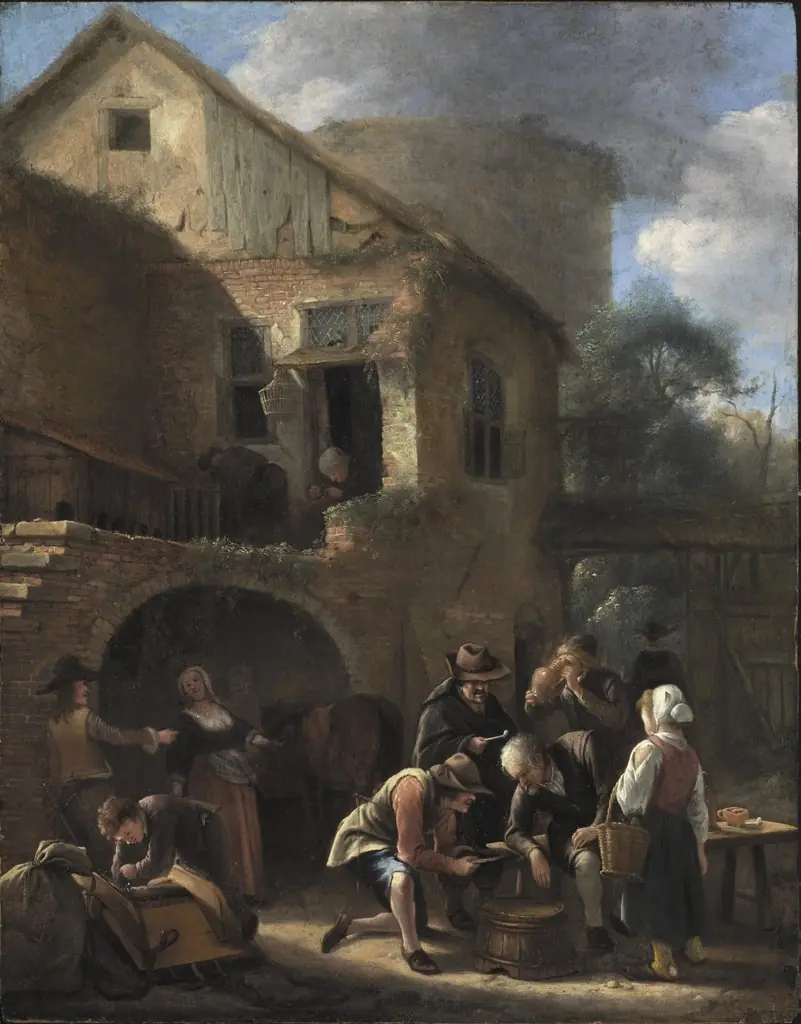
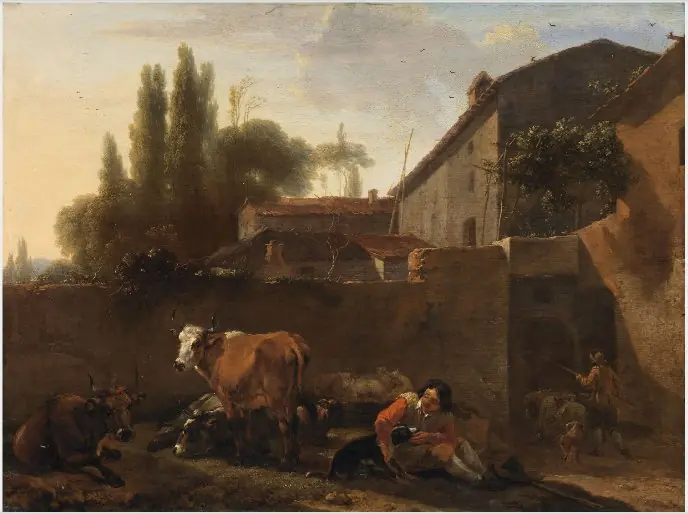
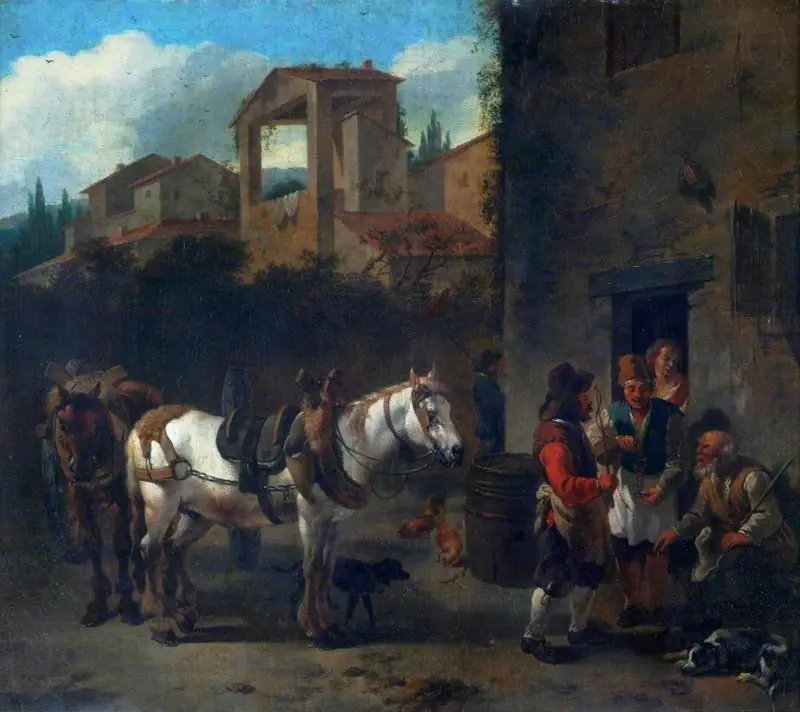
Painted in 1650 by the Dutch artist Thomas Wijck, 'Italian Street Scene' is an oil-on-canvas work that exemplifies the 17th-century Dutch fascination with Italianate genre painting. The composition centers on a sunlit, cobblestoned thoroughfare flanked by weathered architectural structures, likely evoking the atmosphere of a Roman or Neapolitan quarter. In the immediate foreground, a woman bends over a tub washing clothes, while another figure sits nearby, creating a focal point of domestic labor amidst the bustle.
The background recedes into a lively street populated by various figures engaged in conversation and transit, demonstrating Wijck's skill in populating scenes with anecdotal detail. Wijck, who traveled to Italy in the 1640s, specialized in such scenes that blended observed Italian light and architecture with Northern European attention to texture and narrative. This work reflects the artist's mature style, where the interplay of light and shadow defines the spatial depth and the figures are rendered with a naturalistic, unidealized quality typical of the genre.
The painting serves as a document of the period's artistic exchange, capturing the imagined daily life of Italy through the lens of a Northern European observer.
Subject & Meaning
In the foreground, a woman kneels at a tub, washing garments, while another figure rests nearby, suggesting a pause in labor. Additional pedestrians populate the street, hinting at commerce and social interaction. The scene emphasizes ordinary tasks and communal spaces, reflecting the artist’s interest in the rhythms of everyday existence rather than grand historical narratives.
Technique & Style
Wijck employs a palette that juxtaposes warm, earthy hues of the surrounding buildings with cooler blues of the water, creating visual depth. Brushwork is confident and vigorous, imparting a sense of movement to the figures and surrounding environment. The handling of light and shadow contributes to a three‑dimensional feel, characteristic of mid‑17th‑century Dutch genre painting.
History & Provenance
Created circa 1650, the painting entered the Ashmolean Museum’s holdings through acquisition in the 20th century, though earlier ownership records are sparse. Its presence in a major public collection underscores its relevance to studies of Dutch artists who traveled to Italy and incorporated Mediterranean motifs into their work.
Artist & collection