Artwork
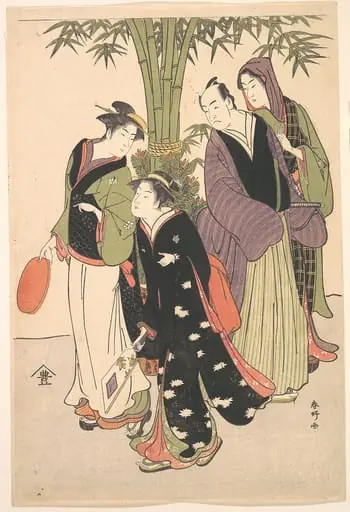
鳥居清長画 初春の越後屋|Group before the Echigo-ya Dry-goods Shop on New Year's Day
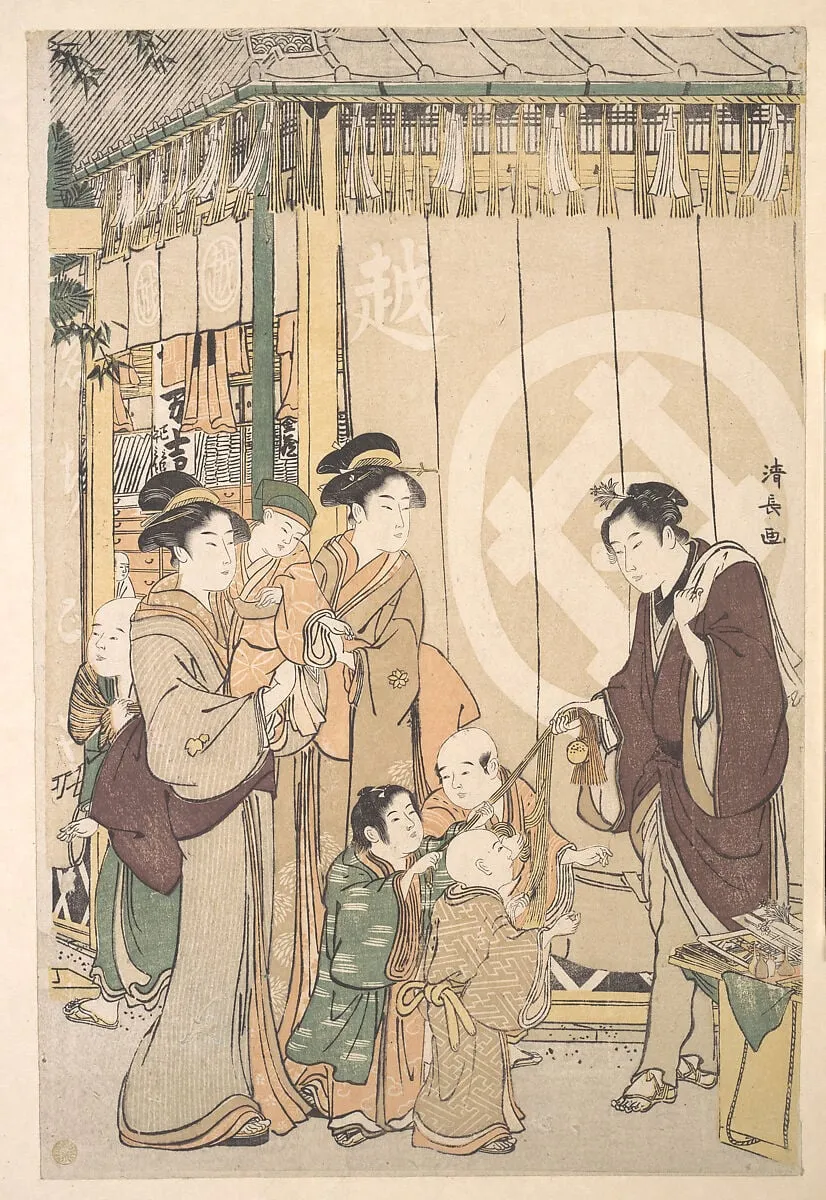
鳥居清長画 初春の越後屋|Group before the Echigo-ya Dry-goods Shop on New Year's Day is an ink print by the Romanticist artist Torii Kiyonaga. It dates from 1789 and is held in the collection of the Metropolitan Museum of Art.
About this work
Overview
This woodblock print, created around 1789, is one of a triptych by Torii Kiyonaga. It is held at The Metropolitan Museum of Art.
Subject & Meaning
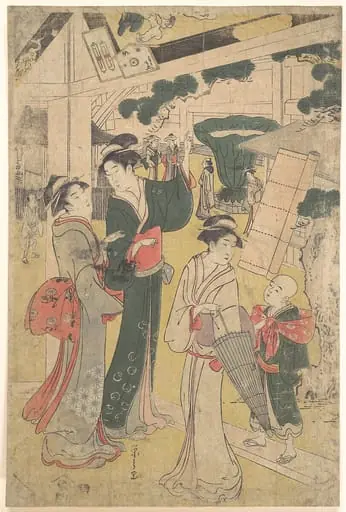
The print depicts a group of traditionally dressed individuals gathered before the Echigo-ya dry-goods shop on New Year's Day. The scene captures a moment of communal attention, with figures holding various objects such as fans and bundles of cloth.
Technique & Style
Executed in ink and color on paper, the print exemplifies the nishiki-e technique characteristic of Japanese woodblock printing. The composition and attire of the figures reflect the artistic style of the late 18th century.
Context
The Echigo-ya shop, identified by its sign, appears to be a textile merchant, with rolls of cloth and fabrics on display. The New Year's Day setting suggests a festive or celebratory atmosphere.
Artist & collection

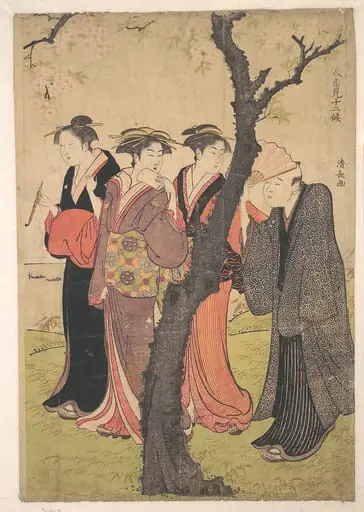
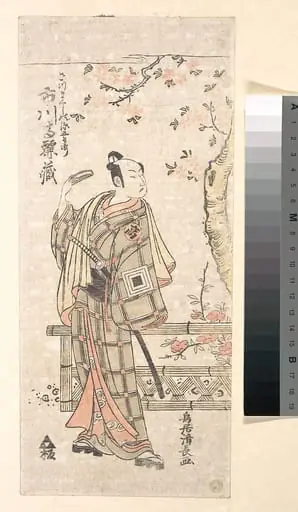
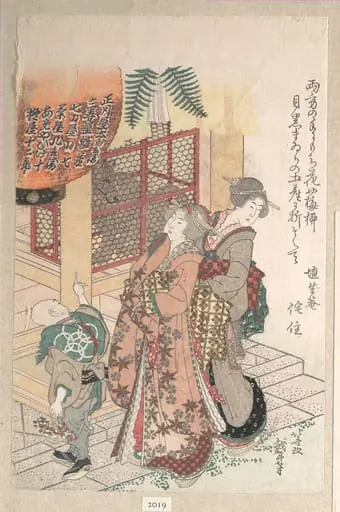
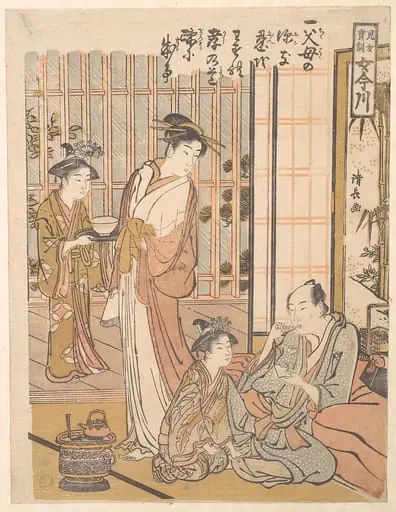
- 初詣|Young Women Visiting a Shinto Shrine
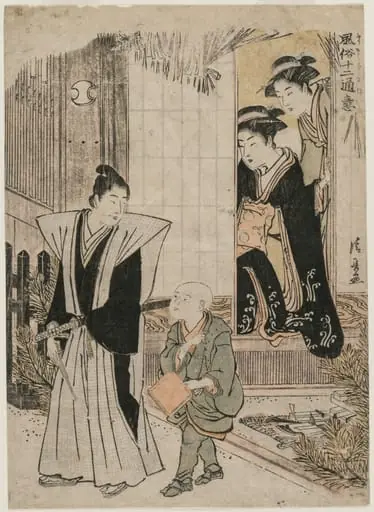 The First Month (from the series Popular Presentations)
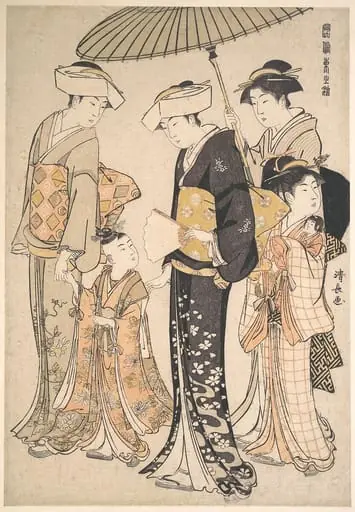 「風俗東之錦」 姫君と侍女四人|High-Ranking Samurai Girl with Four Attendants, from the series A Brocade of Eastern Manners (Fūzoku Azuma no nishiki)
 Untitled
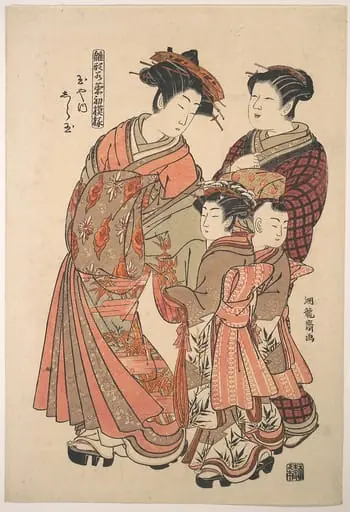 『雛形若菜初模様 玉や内 しら玉』|The Courtesan Shiratama of the Tamaya Brothel, from the series “A Pat-tern Book of the Year’s First Designs, Fresh as Spring Herbs” (“Hinagata wakana hatsu moyō”)
 Untitled
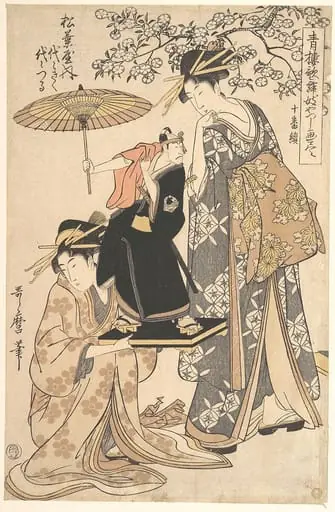 青楼歌舞妓やつし画尽 十番続|The Oiran Yoyogiku of Matsubaya Standing under a Cherry Tree
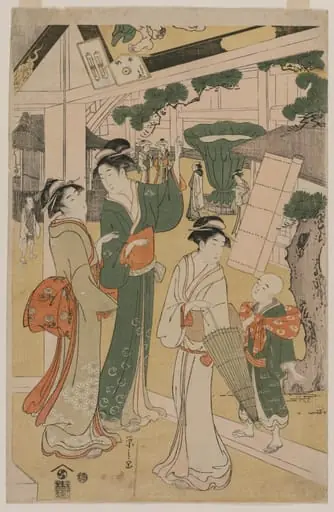 Print from Women Resting in the Votive Picture Hall at Asakusa
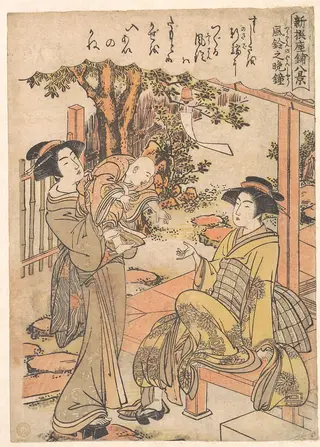 Untitled
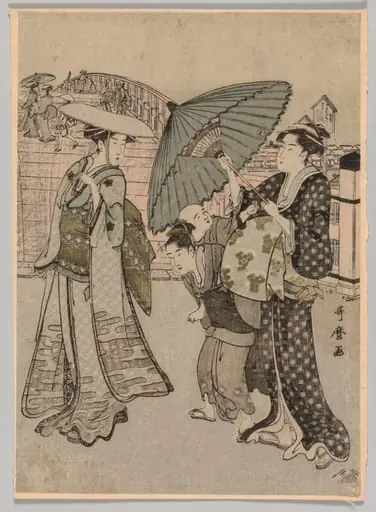 No Title
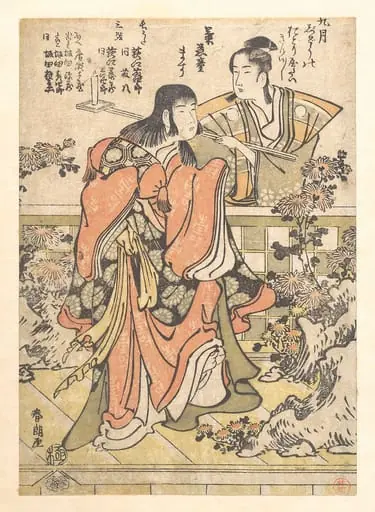 Untitled
 勝川春好画 三代目瀬川菊之丞・二代目市川門之助|Kabuki Actors Segawa Kikunojō III and Ichikawa Monnosuke II and Two Courtesans Celebrating the New Year