Artwork
Uzume no Mikoto from The Cave Door of Spring
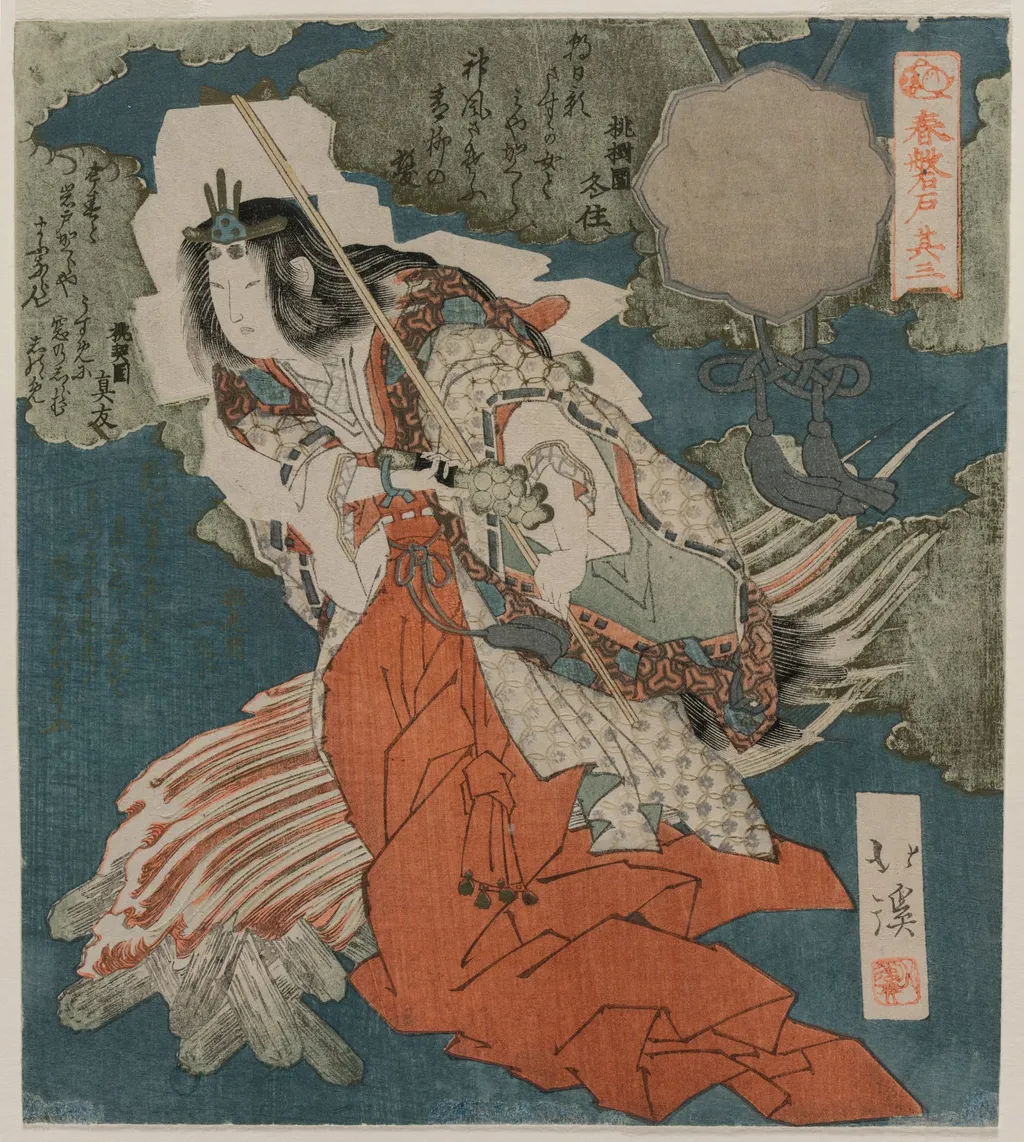
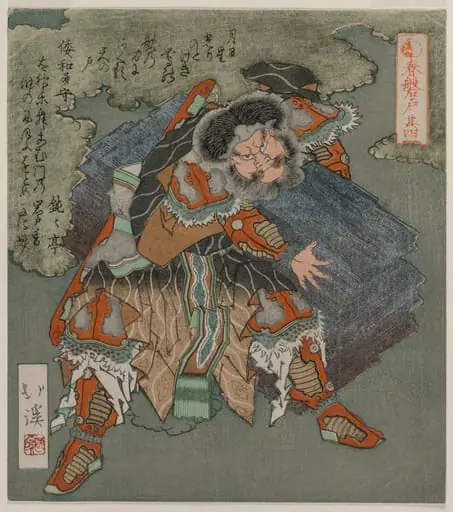
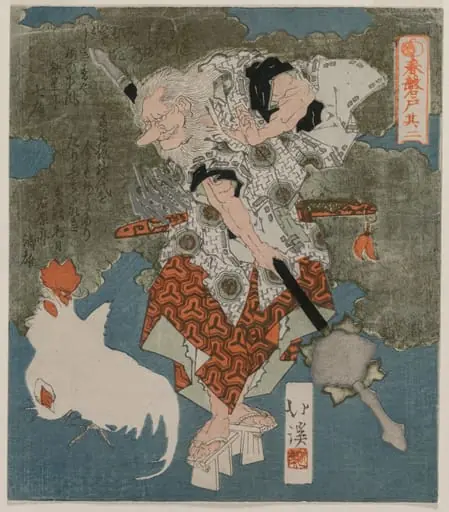
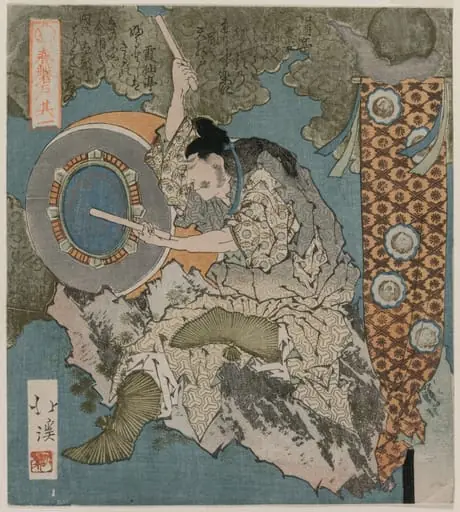
Uzume no Mikoto from The Cave Door of Spring is a print by the Romanticist artist Totoya Hokkei. It dates from 1825 and is held in the collection of the Cleveland Museum of Art. These elegant surimono prints come from a set of five images inspired by the legend of the Shinto Supreme Sun Goddess, Amaterasu.
- Accession no.
- 1940.990.3
- Credit line
- Bequest of James Parmelee
About this work
Overview
These elegant surimono prints come from a set of five images inspired by the legend of the Shinto Supreme Sun Goddess, Amaterasu.
These elegant surimono prints come from a set of five images inspired by the legend of the Shinto Supreme Sun Goddess, Amaterasu. She was once so offended by her brother that she retreated into a cave, leaving the earth in darkness. Several attempts to lure her out with cocks crowing, music-making, and a goddess dancing failed, but a mirror hung from a nearby tree made Amaterasu curious, bringing her to the entrance of the cave.
A stone was quickly placed at the entrance to block her way back into the cave, and light was restored to the world. Each print is set against a blue evening sky with embossed clouds enriched with gold, silver, and copper.
Own this work as a print
Artist & collection
Artist
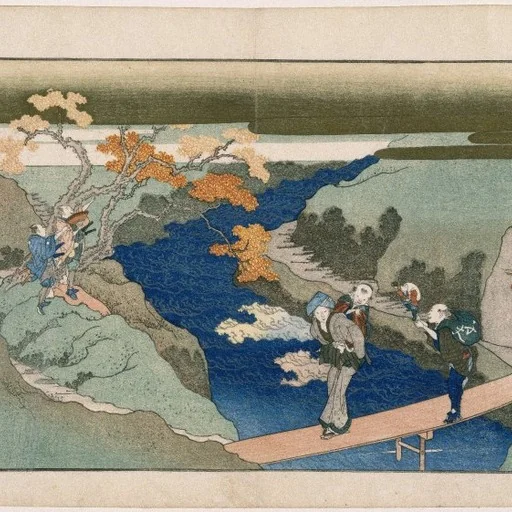
Totoya Hokkei (魚屋 北渓; 1780–1850) was a Japanese artist best known for his prints in the ukiyo-e style.

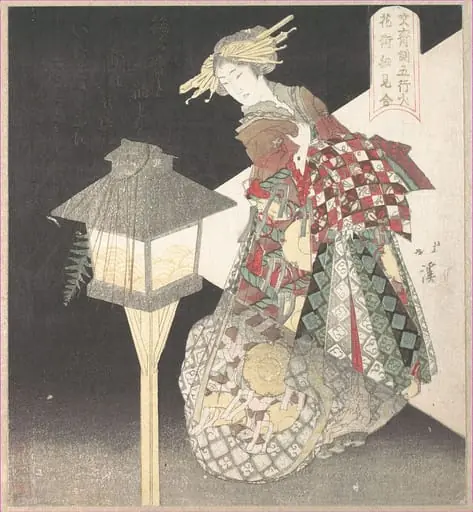 「文齊側五行火 花街細見合」|Courtesan by a Lantern, “Fire,” from the series Five Elements for the Bunsai Poetry Group, a Guide to the Yoshiwara Pleasure Quarters
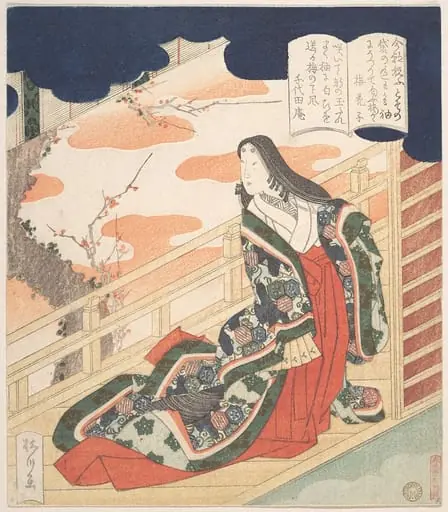 Untitled
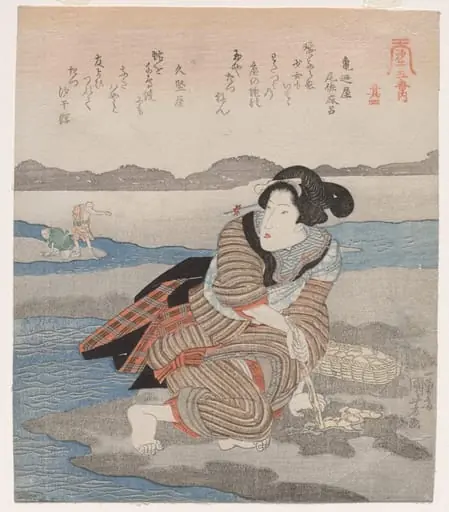 Fourth Print from A Low Tide Pentaptych
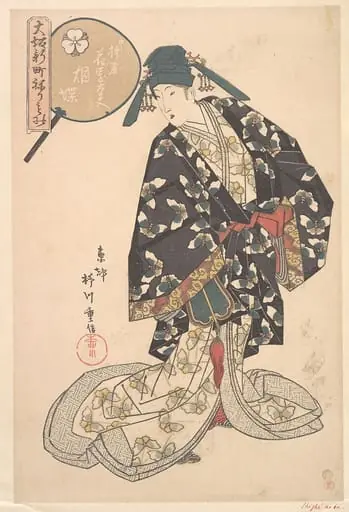 Untitled
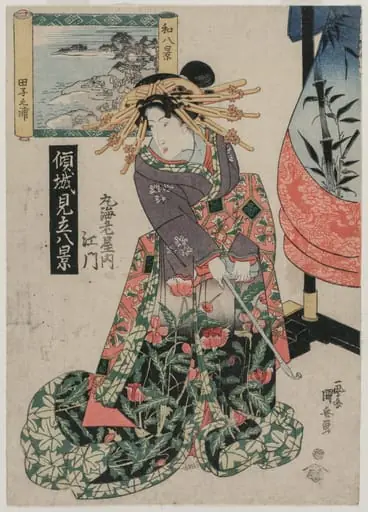 The Courtesan Emon of Maruebiya with a View of Tago Bay (form the series Courtesans with a Playful Group of Eight Views)
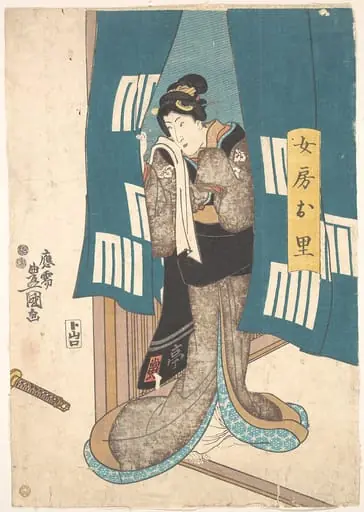 Untitled
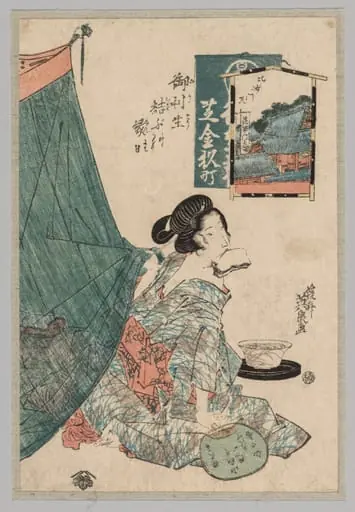 Woman with Papers in Mouth and Fan in Hand