Artwork
清 緙絲龍舟競渡圖|Dragon-boat festival performance
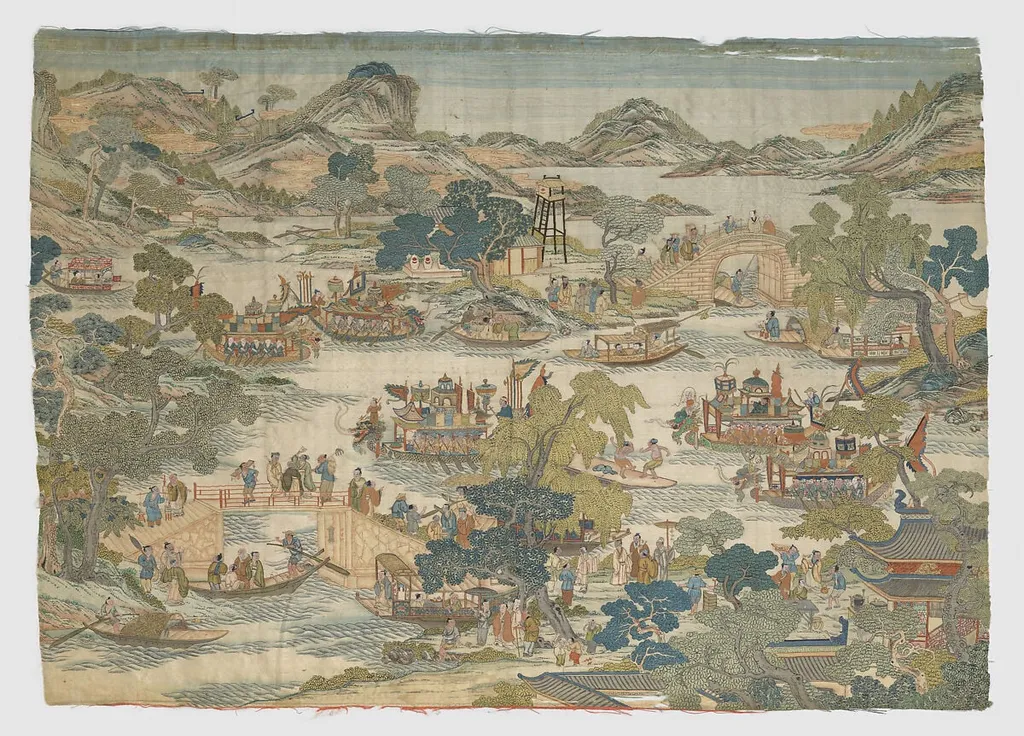
清 緙絲龍舟競渡圖|Dragon-boat festival performance is an unspecified painting. It dates from 1799 and is held in the collection of the Metropolitan Museum of Art.
- Accession no.
- 49.47
- Credit line
- Bequest of Alice E. Getty, 1949
About this work
A silk tapestry of a dragon boat race: crews in long boats paddle hard beside a wooden bridge, bright threads standing out against the soft green water. The detail is the point. Each paddler's clothes are stitched with thin metal thread that catches the light, and small flags fly from the boats. Woven in the kesi technique around 1799.
Subject & Meaning
The inclusion of the bridge and the active boats suggests a communal gathering place, emphasizing the social and celebratory nature of the festival.
Created in 1799, this Chinese kesi tapestry depicts a vibrant landscape centered on a dragon-boat festival performance. The composition features boats navigating waterways, likely engaged in competitive racing, set against a backdrop that includes a bridge. As a genre landscape, the work captures a specific cultural event rather than a purely imaginary scene.
The inclusion of the bridge and the active boats suggests a communal gathering place, emphasizing the social and celebratory nature of the festival. While the specific symbolic intent of every element is not detailed in available records, the depiction of the performance itself serves as a representation of traditional seasonal customs and public spectacle in late Qing dynasty China.
Technique & Style
The work is a Qing-period silk tapestry (kesi) executed in the 1790s, employing a silk warp with weft woven in metal thread to achieve a luminous surface. As a landscape, it portrays a riverine scene with a bridge and a boat in ceremonial motion, reflecting the genre's emphasis on harmonious natural and architectural elements. The tapestry technique, characteristic of Qing textile art, combines a fine silk support with intricate metal-thread detailing, producing a richly textured depiction.
The piece, attributed to an anonymous hand, is part of the Metropolitan Museum of Art collection and was created in China in 1799.
History & Provenance
Created in 1799 in China, this silk and metal-thread tapestry (kesi) depicting a dragon-boat festival performance was produced by an unknown artist. Classified within the landscape genre, the work is held in the collection of the Metropolitan Museum of Art's department of Asian Art. The specific circumstances of its commission and its ownership chain prior to museum acquisition are not recorded in the available sources, and no exhibition history or accession number is documented.
Its inception is firmly dated to the turn of the nineteenth century, representing an anonymous contribution to Qing dynasty textile arts preserved within a major American institution.
Overview
This Qing dynasty tapestry, titled Dragon-boat festival performance, is a fine example of kesi, a traditional Chinese silk and metal thread weaving technique. It vividly portrays a dynamic dragon boat race unfolding on a river, with numerous participants engaged in a spirited competition. The artwork is housed in the collection of the Metropolitan Museum of Art, offering a glimpse into historical Chinese festive traditions through intricate textile art.
Artist & collection

 Pastimes and Pleasures in the Eastern Hills of Kyoto
 The Banquet of Seowangmo (Xiwangmu), Queen Mother of the West
 洛中洛外図屏風|Scenes in and around the Capital
 Night Festival of Tsushima Shrine
 秋夜長物語絵巻断簡|The Final Scene from A Long Tale for an Autumn Night (Aki no yonaga monogatari)
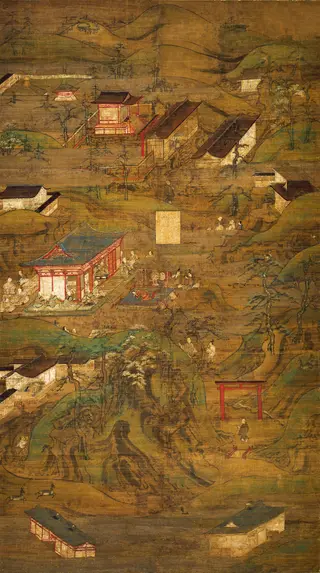 Illustrated Legends of the Tenchi-in (Tenchi-in engi)
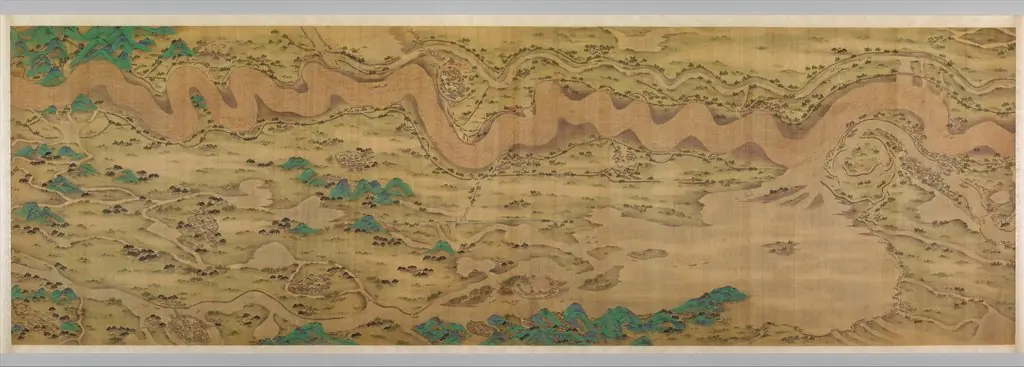 Ten Thousand Miles along the Yellow River
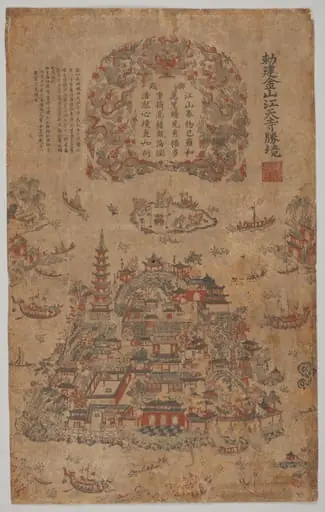 Scenic Spots of Jiangtian Temple on Jinshan, Built by Imperial Command
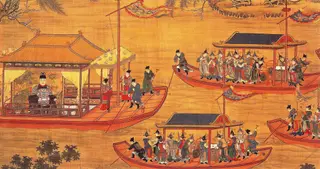 Imperial Procession Returning to the Palace