Artwork
Barber Cleaning a Woman’s Ear
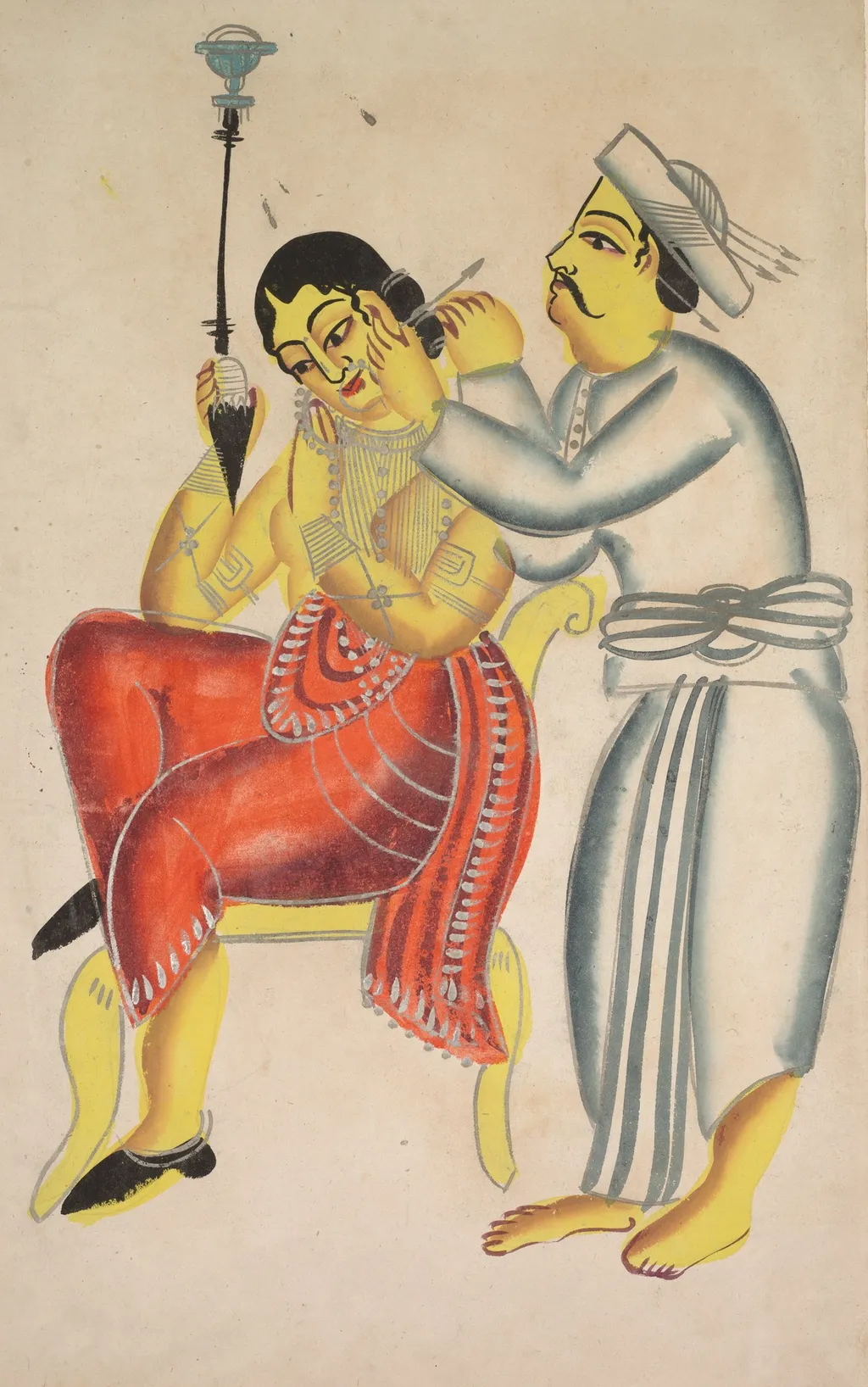
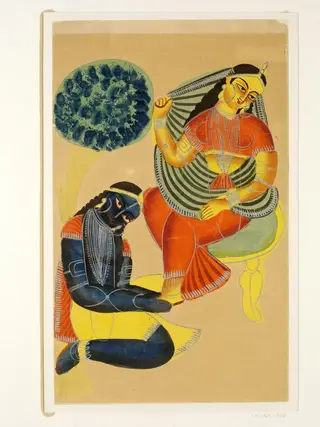
Barber Cleaning a Woman’s Ear is an unspecified painting. It dates from 1896 and is held in the collection of the Cleveland Museum of Art. The work depicts a barber attending to a seated woman, scissors in hand, as she rests on a low stool.
About this work
Subject & Meaning
The composition juxtaposes professional service with intimate domestic space, suggesting commentary on class relations and the commodification of bodily care.
The painting shows a barber seated on a stool, attended to by a woman holding a basin and a razor, with a second figure observing the scene. This domestic interlude reflects late‑19th‑century Indian attitudes toward personal grooming and the social ritual of ear cleaning, a practice associated with hygiene and status. The composition juxtaposes professional service with intimate domestic space, suggesting commentary on class relations and the commodification of bodily care.
Technique & Style
The work is executed in oil on canvas, a standard support for late 19th-century easel painting. Its handling suggests careful surface preparation typical of academic practice, while the formal composition emphasizes a tight, narrative focus on the barber’s gestures and the sitter’s profile. Stylistically, the piece reflects a realist approach with restrained brushwork that delineates texture in the hair and clothing, aligning with broader trends in colonial-era Indian portraiture.
History & Provenance
Barber Cleaning a Woman's Ear was created in 1890, according to the work's cataloguing data. The painting is recorded as having been produced in Kolkata, situating its origin within that city's artistic milieu of the period. It is held in the collection of the Cleveland Museum of Art, where it is catalogued under the accession number 2003.117.
No information is available regarding the artist responsible for the work, the circumstances of its commission, or the chain of ownership preceding its acquisition by the museum.
Barber Cleaning a Woman's Ear is held by the Cleveland Museum of Art, where it is recorded under the inventory number 2003.117. The painting, dated 1890 and produced in Kolkata, entered the museum's collection, which is the only institutional holding documented for the work in the available sources.
Legacy
The painting has been cited in studies of colonial-era visual culture for its nuanced portrayal of gendered service dynamics, though its influence on later artistic movements remains marginal. Scholars note its inclusion in early exhibitions of Indian modernism at the Calcutta Art Club in 1892, a context that underscores its contemporaneous relevance. The work is held in the collection of the Cleveland Museum of Art, where it is recognized as part of the institution’s foundational acquisitions of colonial-era Indian artworks.
Overview
The work depicts a barber attending to a seated woman, scissors in hand, as she rests on a low stool. She is clothed in a vivid red sari edged with gold, while the barber is wrapped in a plain white cloth around his waist. The composition is rendered with clear outlines and uniform areas of colour, emphasizing the intimate, everyday action.
Context
Kalighat artists responded to the social changes of British‑ruled India, producing affordable prints for a growing middle class. Their subjects often included street vendors, performers, and domestic activities, offering a visual record of contemporary customs and attire, as seen in the woman’s red sari and jewelry.
Artist & collection

- Barber Cleaning a Woman’s Ear
 Nabin and Elokeshi
 Devi as Bagala
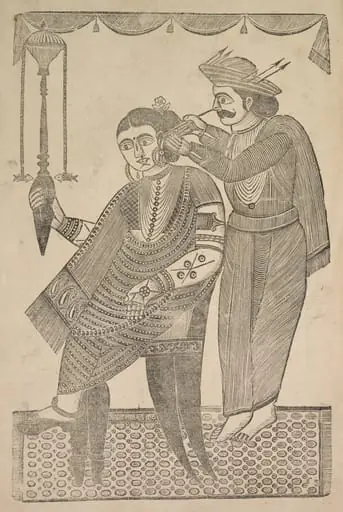 A Barber Cleaning the Ear of a Courtesan
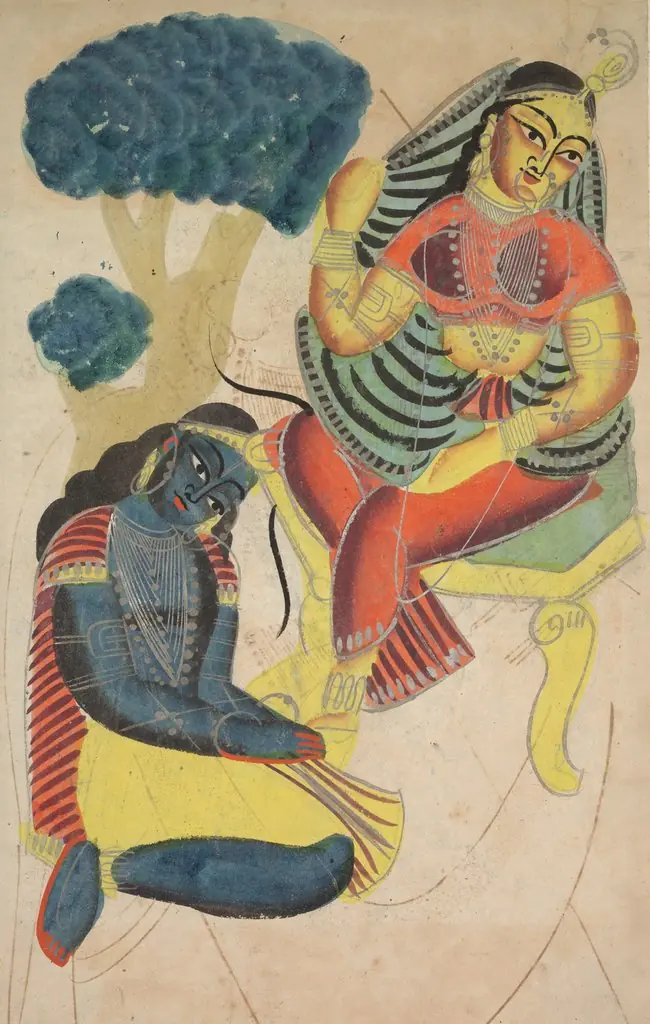 Krishna Stroking Radha's Feet (verso), from a Kalighat album
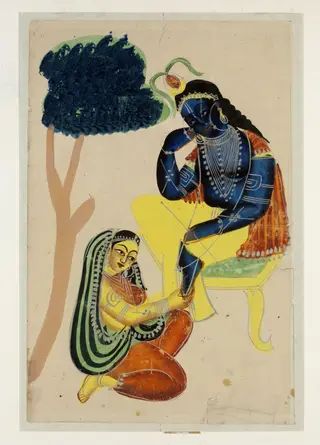 Radha and Krishna
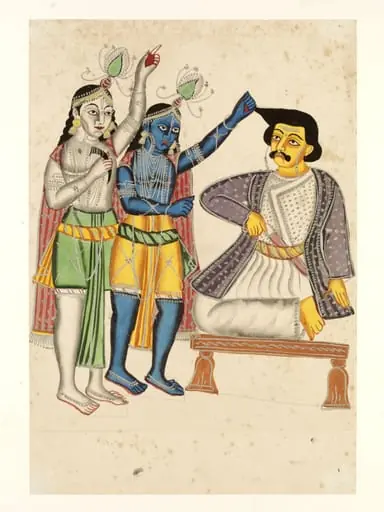 Krishna, Balarama and Kansa
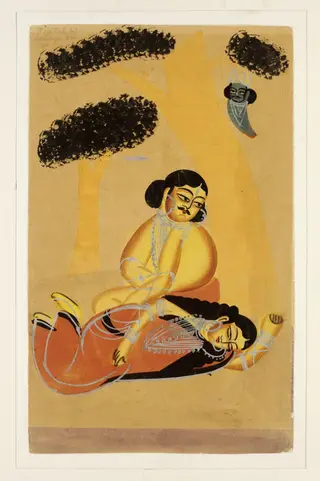 Nala and Damayanti
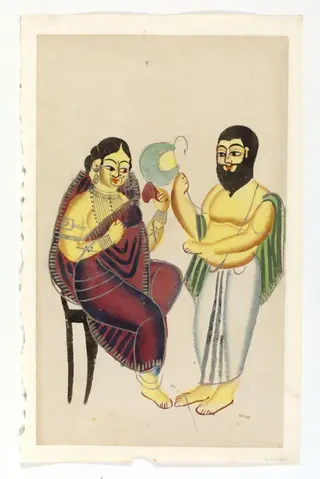 Elokeshi and Madhavchandra Giri (the Mahant)
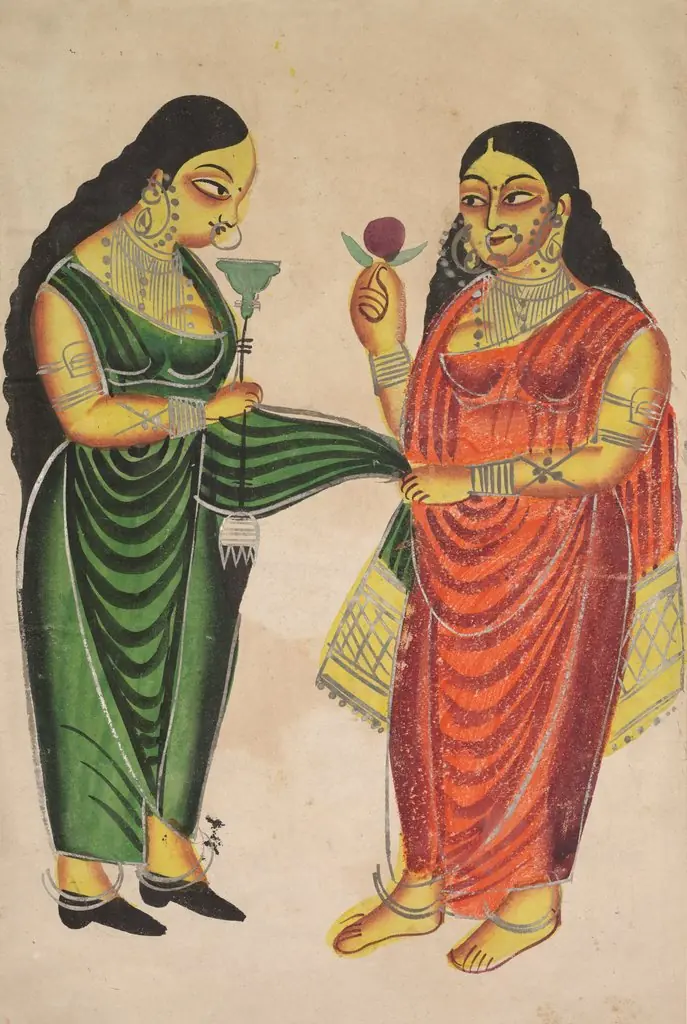 Maid bringing a hookah to a lady (recto), from a Kalighat album
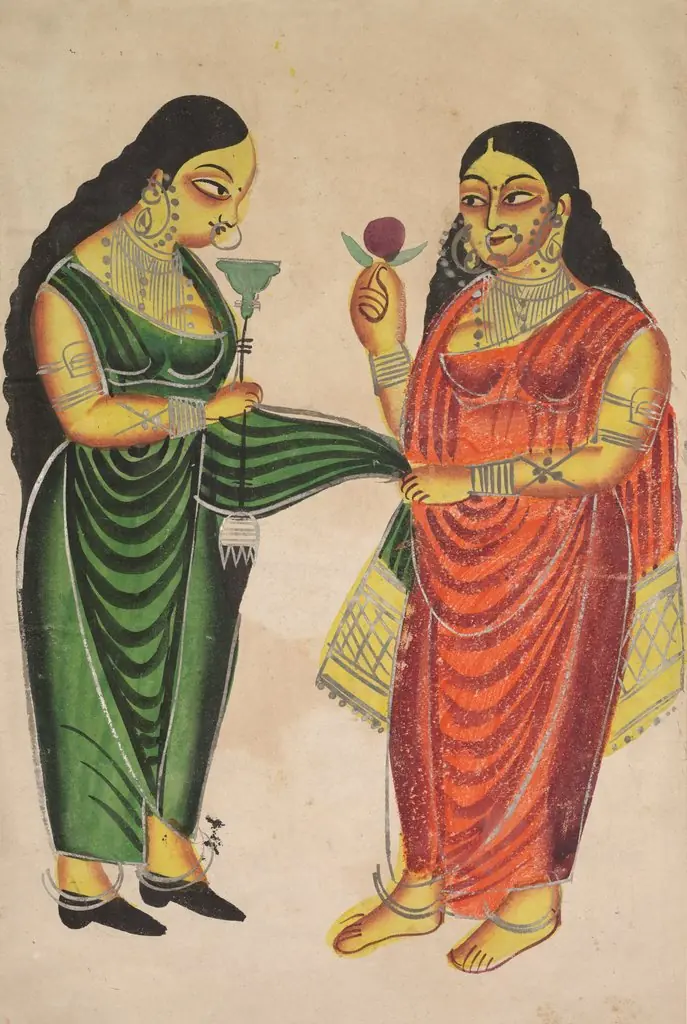 Leaf from a Kalighat album: Maid bringing a hookah to a lady (recto); Krishna weighed against precious objects(?) (verso)
 Krishna and Radha