Artwork
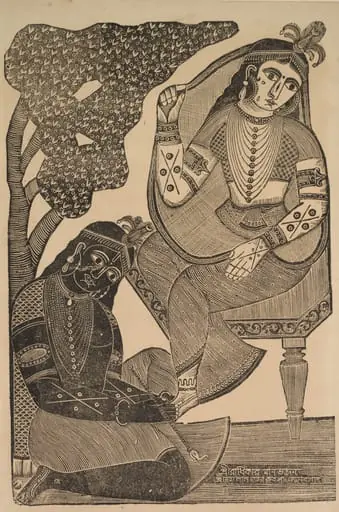
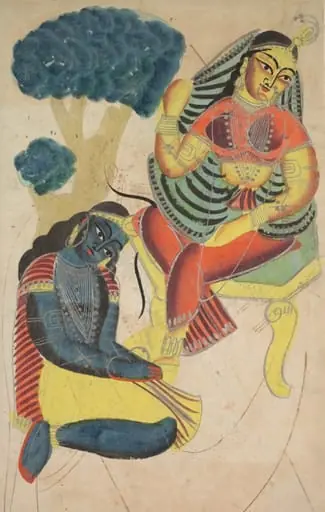
Krishna Stroking Radha's Feet (verso), from a Kalighat album
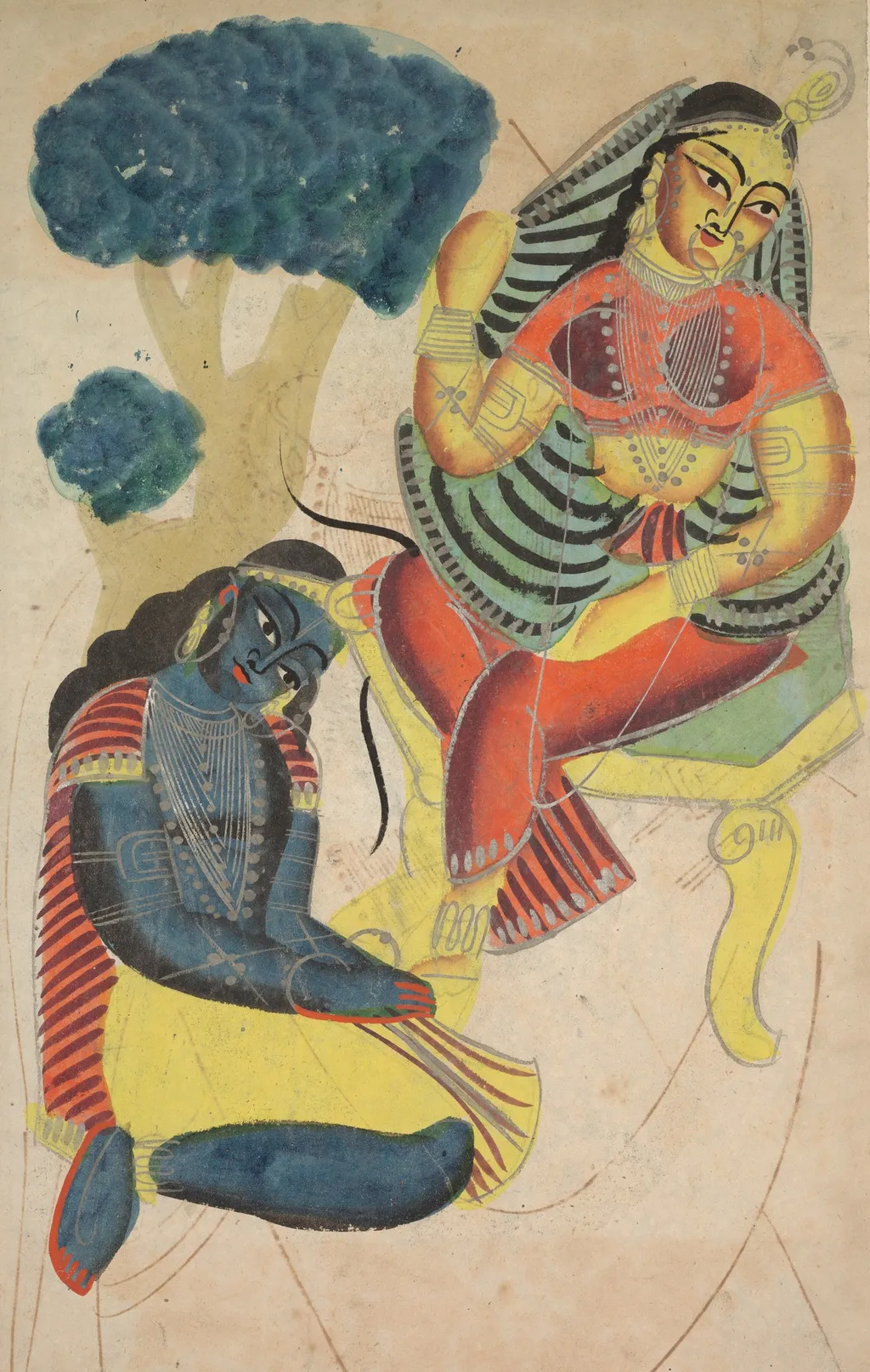
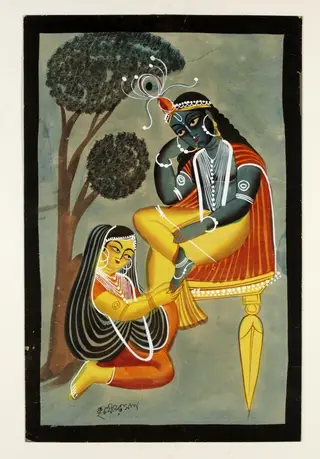
Krishna Stroking Radha's Feet (verso), from a Kalighat album is an unspecified painting. It dates from 1896 and is held in the collection of the Cleveland Museum of Art. This painting, titled Krishna Stroking Radha's Feet, originates from a Kalighat album.
About this work
Subject & Meaning
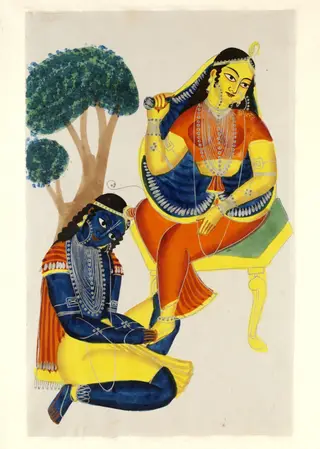
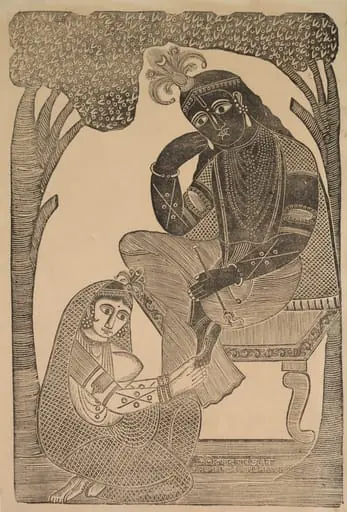
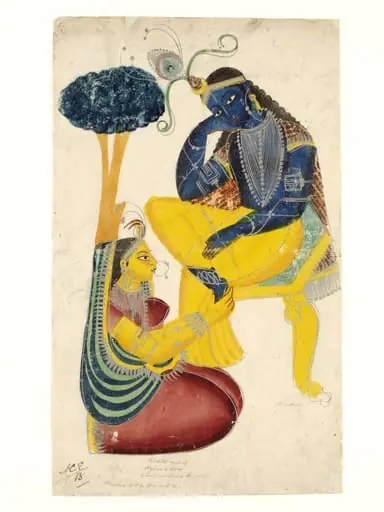
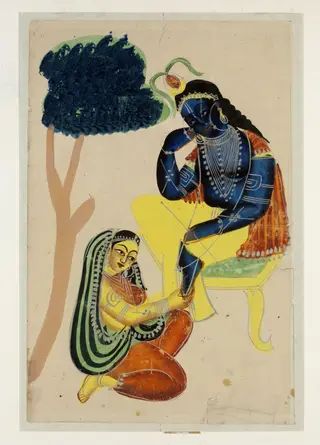
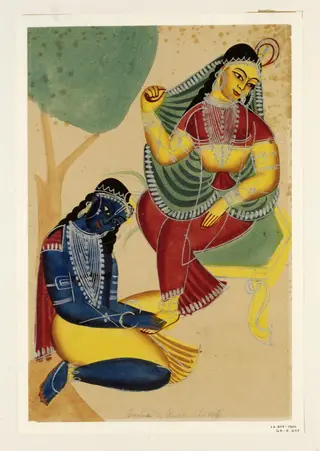
The painting portrays Krishna stroking Radha's feet, an intimate moment from the Vaishnava love tradition. Executed as a Kalighat work circa 1890 in Kolkata, it depicts Krishna (the divine lover) engaging in a tender gesture toward Radha, highlighting the personal, devotional character of the imagery.
History & Provenance
Created in Kolkata in 1890, this painting is attributed to an unknown artist working within the Kalighat tradition.
Created in Kolkata in 1890, this painting is attributed to an unknown artist working within the Kalighat tradition. The work, identified as the verso side of a leaf from a Kalighat album, depicts the deity Krishna. It entered the collection of the Cleveland Museum of Art, where it is cataloged under the accession number 2003.133.b. No specific details regarding the original commissioner or the intermediate ownership chain prior to its acquisition by the museum are provided in the available records.
Overview
This painting, titled Krishna Stroking Radha's Feet, originates from a Kalighat album. It depicts two figures seated beneath a sparse, dark tree. The composition focuses on an intimate moment between the dark-skinned figure, Krishna, and his consort Radha, who is adorned in vibrant attire and holds a fan.
The artwork's simple yet striking visual language is characteristic of the Kalighat tradition, presenting a devotional scene with directness and emotional resonance.
Technique & Style
Rendered with a distinctive aesthetic, the painting features stylized figures defined by bold outlines and areas of flat, unmodulated color. The faces are simplified, contributing to an overall sense of calm and introspection. Bright hues, particularly in the figures' garments, contrast sharply with the plain background and the dark, abstract form of the tree. This direct and graphic approach is a hallmark of Kalighat painting, emphasizing narrative clarity over naturalistic detail.
Context
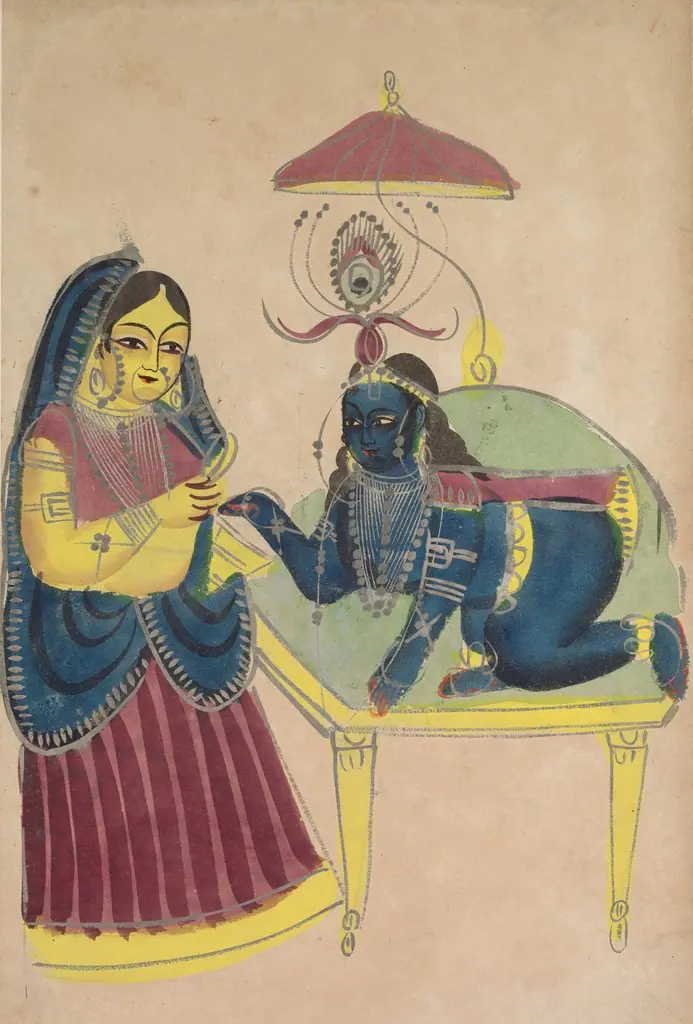
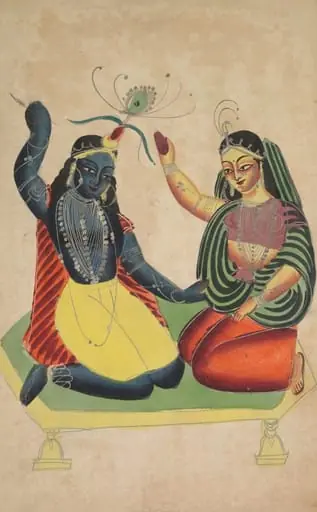
This painting belongs to the Kalighat school, a popular art form that emerged in 19th-century Calcutta (now Kolkata), India, around the Kalighat Kali Temple. Artists created these works, often on paper, for pilgrims and local patrons. Kalighat paintings are known for their vibrant colors, bold lines, and accessible depictions of Hindu deities, mythological narratives, and everyday life, serving as devotional souvenirs and reflections of contemporary culture.
Artist & collection