Artwork
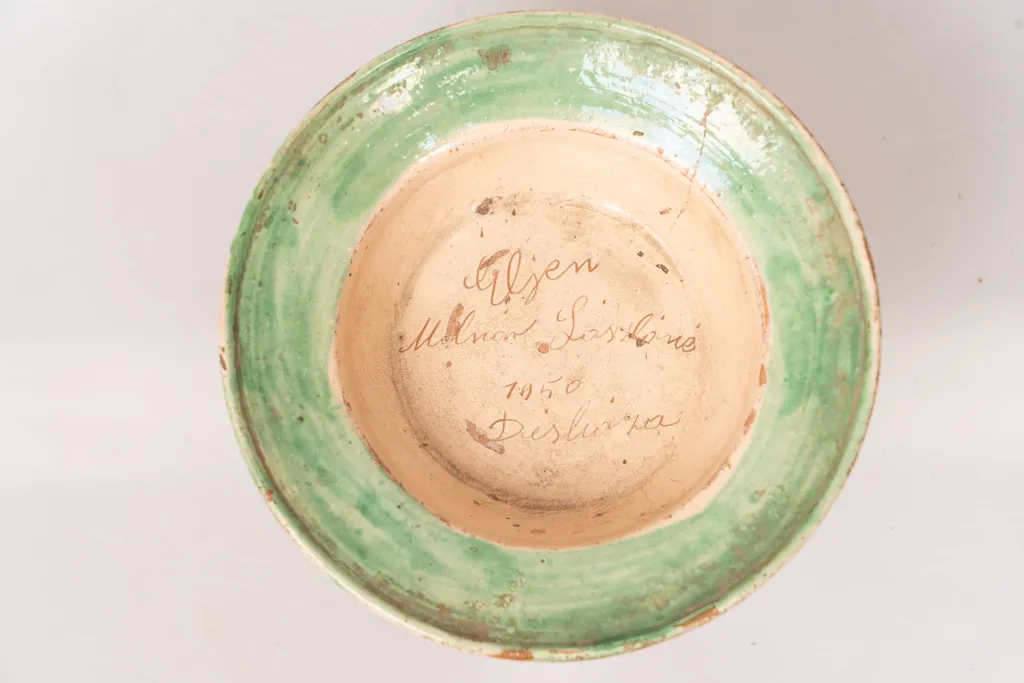
Farfurie adâncă, cu corp tronconic și buză evazată; piesa este modelată din lut la roata olarului și angobată cu humă albă pe fața interioară. Buza farfuriei este pictată cu pensula cu pigment verde deschis iar pe fundul farfuriei există o inscripție incizată în pasta albă a angobei: "Éljen Molnár Lászlóné 1950 Désháza". Cromatica: alb, verde-deschis. Fața interioară a farfuriei este acoperită cu un strat de smalț transparent.
Farfurie adâncă, cu corp tronconic și buză evazată; piesa este modelată din lut la roata olarului și angobată cu humă albă pe fața interioară. Buza farfuriei este pictată cu pensula cu pigment verde deschis iar pe fundul farfuriei există o inscripție incizată în pasta albă a angobei: "Éljen Molnár Lászlóné 1950 Désháza". Cromatica: alb, verde-deschis. Fața interioară a farfuriei este acoperită cu un strat de smalț transparent. is a photography by Unknown. It dates from 1950 and is held in the collection of the Ethnographical Museum of Transylvania. This ceramic bowl, dated 1950, features a tronconic body, wide mouth, and green-painted rim.
About this work
To learn more about similar pieces, you might want to explore the work of Unknown, the artist who created this bowl.
This image shows a green-rimmed, white ceramic bowl. The bowl is shallow and has a wide mouth. It appears to be handmade, with visible imperfections in the glaze and shape. The inside of the bowl is a lighter shade of green than the outside.
The bowl has an inscription on the bottom, which reads "Éljen Molnár Lászlóné 1950 Désháza". This suggests that the bowl was made in 1950, and may have been created by or for someone named Molnár Lászlóné.
The bowl is a unique and interesting piece of ceramics. To learn more about similar pieces, you might want to explore the work of Unknown, the artist who created this bowl.
Overview
This ceramic bowl, dated 1950, features a tronconic body, wide mouth, and green-painted rim. Crafted from wheel-thrown clay, its interior face is coated with white engobe and a transparent glaze.
Subject & Meaning
The bowl's subject is largely functional, though the inscribed dedication "Éljen Molnár Lászlóné 1950 Désháza" suggests a personal or commemorative purpose, honoring or created for Molnár Lászlóné.
Technique & Style
Techniques employed include wheel-throwing, white engobe application on the interior, and hand-painting with light green pigment on the rim. The style reflects traditional ceramic practices with visible handmade imperfections.
History & Provenance
Produced in 1950 in Désháza, the bowl's creator remains unknown. The inscription provides the sole provenance detail, linking it to Molnár Lászlóné, possibly the recipient or inspiration.
Context
The piece contextualizes mid-20th-century ceramic craftsmanship in Désháza, blending functional pottery with personalized elements, characteristic of regional folk or domestic wares.
Legacy
As an undocumented artist's work, the bowl's legacy lies in its representation of everyday ceramic art from 1950 Désháza, offering insight into local crafting traditions rather than influencing broader artistic movements.
Artist & collection
Museum
Ethnographical Museum of Transylvania
Continue through works from the same source collection.
 Domestic Scene
 Giacomo and Cardinal Marco, investing Andrea, Abbot of San Zeno, with his Benefice
 The Nymph of Fontainebleau
 Portrait of a Woman
 Madonna and Child with Saints in the Enclosed Garden
 Venus and Minerva
 Family Group of Four on Sofa
 Wall painting from Room H of the Villa of P. Fannius Synistor at Boscoreale
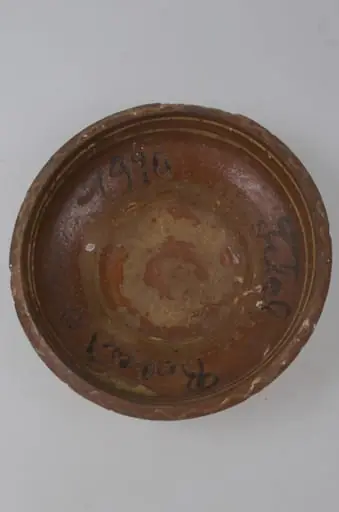 Vasul de tip strachină este lucrat la roata olarului având formă tronconică, pereții adânciți, buza evazată și fundul plat. Acesta este smălțuit pe interior și prezintă scurgeri de smalț pe pereții exteriori ai vasului. Motivele decorative sunt dispuse pe pereții interiori ai vasului și pe buza vasului fiind atât motive floral vegetale stilizate cât și motive geometrice: cercuri concentrice și linia vălurită. De menționat este faptul că motivele fitomorfe sunt dispuse într-un registru delimitat de două cercuri paralele. Cromatică: fundal cărămiziu; motive: alb; maron; crem
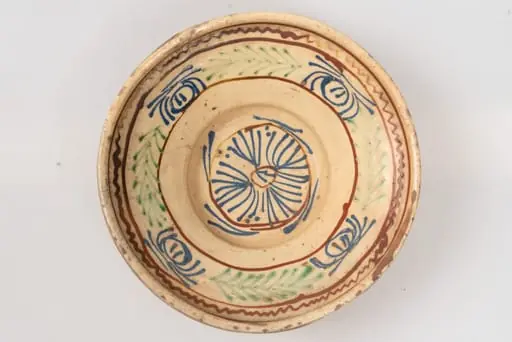 Farfurie adâncă, de tip castron, cu fund îngust, corp tronconic și buză dreaptă, verticală; este angobată pe fața interioară și pe suprafața exterioară a buzei cu un strat de humă albă. Este decorată prin pictare cu cornul cu motive florale și fitomorfe geometrizate: pe fundul farfuriei este pictată o floare cu petalele din linii subțiri albastre și centrul marcat cu un cerc mic maro, încadrată într-un cerc de asemenea de culoare maro. Peretele farfuriei este decorat cu patru grupuri de motive formate din linii verzi, sugerând o ramură cu frunze, intercalate de patru flori geometrizate, realizate din linii albastre. Decorul este completat cu trei linii circulare simple și o linie circulară ondulată. Suprafața ornamentată a farfuriei este acoperită cu un strat de smalț transparent. Cromatica: alb, verde, albastru, maro.
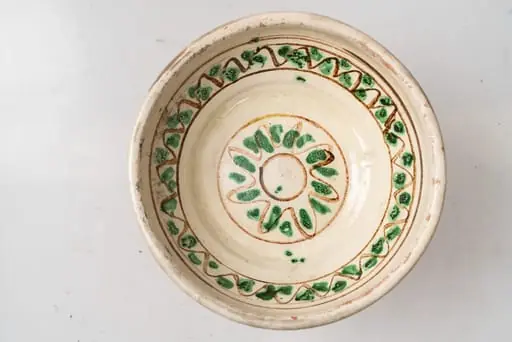 Farfurie adâncă de tip castron, cu fund larg, corp tronconic ușor rotunjit și buză îngustă rotunjită; piesa este modelată din lut la roata olarului și angobată cu humă albă pe fața interioară. Decorul este realizat prin pictare cu cornul și cu pensula și se compune din motive vegetale și florale foarte stilizate (o floare centrală cu petale alungite, desenată cu contur maro și umplută cu puncte verzi, neglijent realizate, încadrată într-un cerc de culoare maro; un registru decorativ în zona mediană a peretelui, format dintr-o linie ondulată sub formă de cerc, având puncte verzi între bucle și încadrată între două cercuri de culoare maro). Cromatica: alb, verde, maro. Farfuria este acoperită pe fața ornamentată cu un strat de smalț transparent.
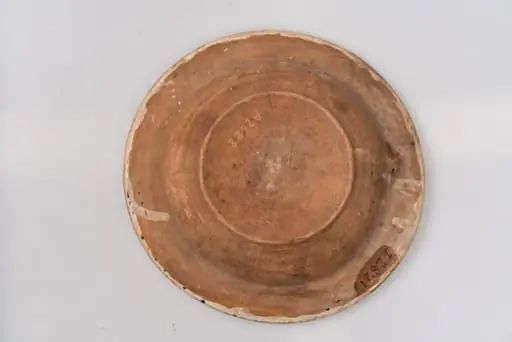 Farfurie adâncă cu buză evazată; este acoperită pe suprafața interioară cu un strat de angobă albă peste care este pictat cu cornul și cu pensula decorul monocromatic format din motive florale și vegetale stilizate: registrul central de pe fundul farfuriei conține un buchet format dintr-o floare de crin și două flori rotunde cu petale formate din linii drepte și patru grupuri de puncte sugerând niște flori mici. De o parte și de alta a florii de crin apare înscris anul fabricării piesei, 1794. Registrul decorativ de pe buza farfuriei, încadrat între două linii circulare, se compune dintr-un șir continuu format din opt flori mici de lalea cu tije în formă de S și frunze, sugerate prin linii paralele și puncte. Muchia buzei este decorată cu mici linii paralele. Suprafața ornamentată a farfuriei este acoperită cu un strat de smalț transparent. Cromatica: alb, albastru.
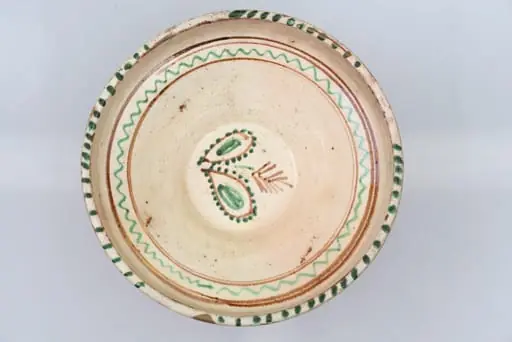 Farfurie adâncă de tip castron, cu baza îngustă, corp tronconic și buza dreaptă, verticală. Suprafața interioară a farfuriei este acoperită cu un strat de angobă albă, peste care s-a pictat cu cornul decorul format din motive decorative geometrice și un motiv vegetal stilizat: central pe fundul farfuriei se regăsesște un motiv vegetal format din două frunze cu contur dintr-o linie maro și puncte verzi având în centru o floare cu petale formate din linii simple maro. Bordura interioară a farfuriei este decorată cu două linii circulare maro între care se găsește o linie circulară ondulată, de culoare verde. Muchia buzei este decorată cu trei grupuri de linii mici drepte, de culoare verde. Suprafața exterioară a buzei este decorată cu două linii circulare simple realizate prin incizare. Suprafața ornamentată a farfuriei este acoperită cu un strat de smalț transparent. Cromatica: alb, verde, maro.
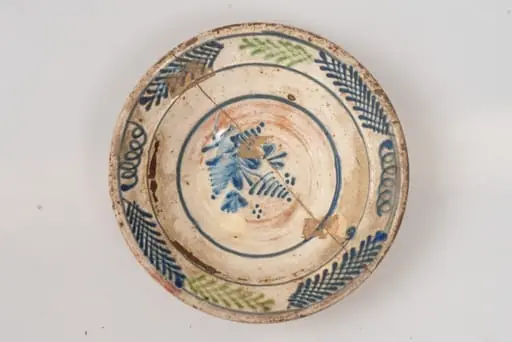 Farfurie adâncă, acoperită pe fața interioară cu un strat de humă albă peste care este pictat cu cornul decorul format din motive florale și vegetale stilizate: central pe fundul farfuriei este pictată o tulpină cu trei flori albastre (realizate din linii paralele descrescătoare ca mărime, dispuse sub formă de triunghi), și frunze albastre, încadrată într-un cerc albastru. Buza farfuriei este decorată cu șase grupuri de motive realizate din linii hașurate intersectat, patru grupuri de culoare albastră, celălalte două de culoare verde, sugerând niște ramuri cu frunze. Două linii mici buclate, așezate diametral opus, completează decorul de pe buza farfuriei. Muchia interioară a buzei și marginea ei sunt marcate de câte o linie circulară de culoare albastră, linii ce încadrează decorul din această zonă. Suprafața ornamentată a farfuriei este acoperită cu un strat de smalț transparent. Cromatica: alb, albastru, verde.
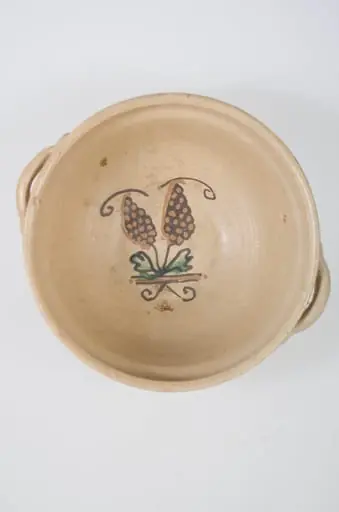 Farfurie de formă tronconică cu buza răsfrântă. Vasul este smălțuit atât la interior cât și la exterior. Decorul este amplasat pe fundul vasului motive florale (buchet) și motive fitomorfe (vrej). Cromatică; fond: alb-crem; motive: galben; negru; verde.
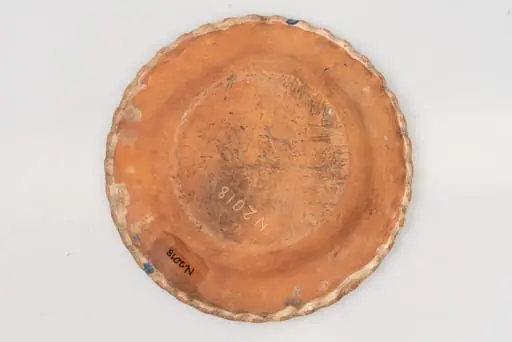 Farfurie de formă aplatizată, cu muchia buzei ușor ondulată. Este acoperită pe suprafața interioară cu un strat de angobă albă peste care este pictat cu pensula monocromatic format din motive geometrice și florale stilizate: registrul central de pe fundul farfuriei conține o tulpină cu trei flori de crin stilizate și două frunze la bază. Registrul decorativ marginal de pe buza farfuriei, înscris între două linii circulare albastre, conține un șir continuu de frunze duble între care se găsesc motive punctate (linii). Suprafața ornamentată a farfuriei este acoperită cu un strat de smalț transparent. Cromatica: alb, albastru.
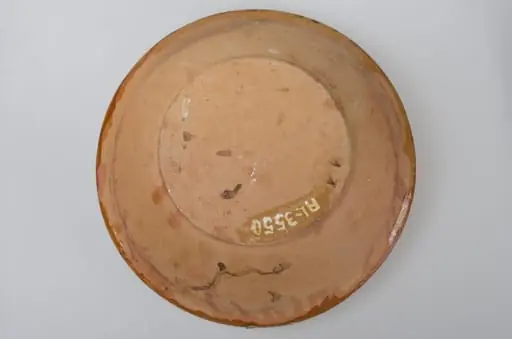 Vas de formă tronconică cu buza dreapta. Decorul este amplasat pe toată suprafața interioară și parțial în exterior, pe buză. Acesta este compus din motive geometrice (val); motive fitomorfe, plasate pe fund (frunza) și motive florale, tot pe fund (pansea). Blidul este smălțuit la interior și pe zona exterioară a buzei. Cromatică: fond: maron; motive: alb, verde.
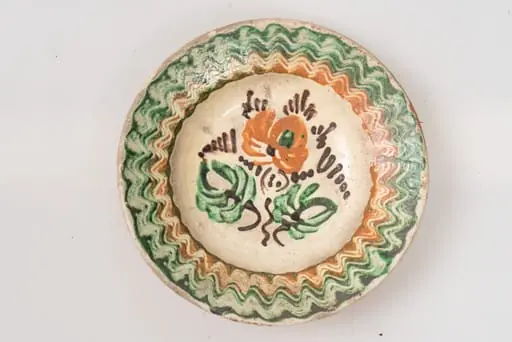 Farfurie adâncă, angobată pe suprafața interioară cu un strat de humă albă, peste care este pictat cu cornul și cu pensula decorul format din motive florale stilizate și geometrice: fundul farfuriei conține un buchet format din trei flori cu petale alungite, două de culoare verde, cea de-a treia de culoare siena arsă, și din elemente vegetale de culoare maro. Buza farfuriei este ornamentată cu linii ondulate de culoare siena arsă și verde. Suprafața ornamentată a farfuriei este acoperită cu un strat de smalț transparent. Cromatica: alb, verde, siena arsă, maro.