Artwork
Farfurie de formă aplatizată, angobată pe fața interioară cu un strat de humă albă peste care este pictat cu pensula decorul format din motive vegetale fin realizate: o ramură mai mare cu frunze de culoare maro și verde și cu flori galbene și, diametral opus de ea, o ramură mai mică, cu frunze verzi și maro și boboci galbeni. Pe fundul farfuriei este înscris cu culoare maro anul fabricării piesei: 1807. Suprafața ornamentată a farfuriei este acoperită cu un strat de smalț transparent. Cromatica: alb, verde, maro, galben.
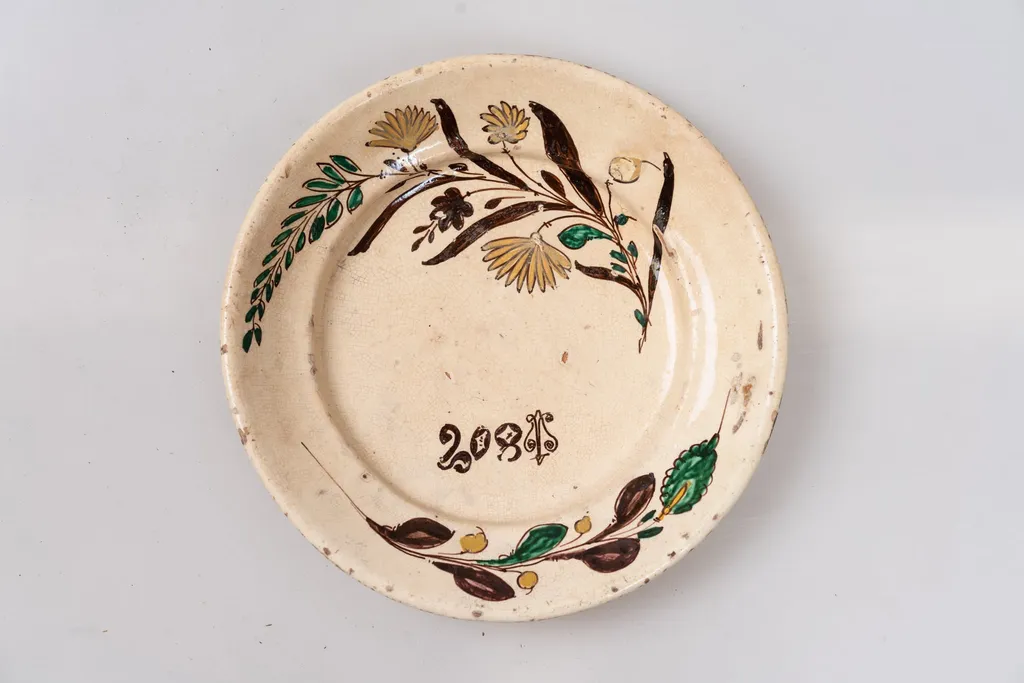
Farfurie de formă aplatizată, angobată pe fața interioară cu un strat de humă albă peste care este pictat cu pensula decorul format din motive vegetale fin realizate: o ramură mai mare cu frunze de culoare maro și verde și cu flori galbene și, diametral opus de ea, o ramură mai mică, cu frunze verzi și maro și boboci galbeni. Pe fundul farfuriei este înscris cu culoare maro anul fabricării piesei: 1807. Suprafața ornamentată a farfuriei este acoperită cu un strat de smalț transparent. Cromatica: alb, verde, maro, galben. is a print by Unknown. It dates from 1850 and is held in the collection of the Ethnographical Museum of Transylvania. A flattened, round plate dated 1807 features a painted interior decorated with two opposing botanical motifs.
About this work
If you like this style, check out the Museum of Ethnography for more everyday objects turned into art.
This is a plain, round dish with a simple painted border. The rim has two branches—one big, one small—covered in green leaves, yellow flowers, and little buds. The background is a soft cream color, and the paint is slightly faded in spots. The center is empty, and the bottom has the number "1807" written in dark brown.
The dish looks hand-painted, with careful details in the leaves and flowers. The colors are mostly earthy—greens, browns, and yellows—with a clear, glossy finish over the paint.
If you like this style, check out the Museum of Ethnography for more everyday objects turned into art.
Overview
A flattened, round plate dated 1807 features a painted interior decorated with two opposing botanical motifs. A larger branch displays brown‑green leaves and yellow flowers, while a smaller branch opposite it bears green‑brown foliage and yellow buds. The background is a muted white, and the painted surface is sealed with a clear glaze that gives it a glossy sheen.
Subject & Meaning
The decorative scheme centers on stylized plant forms, reflecting a decorative tradition that emphasizes natural motifs rendered in a simplified, ornamental manner. The juxtaposition of the two branches creates a balanced visual rhythm, suggesting harmony between growth and renewal, common themes in early nineteenth‑century folk ornamentation.
Technique & Style
The design was applied by hand with fine brushes, allowing precise rendering of leaves and blossoms. After painting, a transparent enamel glaze was fired over the surface, preserving the pigments and providing a smooth, reflective finish. The palette—white, green, brown, and yellow—derives from locally available mineral pigments typical of the period.
History & Provenance
Inscribed with the year 1807 in brown pigment along the rim, the plate originates from a domestic production context, likely serving both functional and decorative purposes. Its survival suggests careful use and preservation, though specific ownership records are not documented.
Context
Such painted ceramics were common in regional households of the early 1800s, where everyday objects were embellished with folk motifs. The emphasis on botanical imagery aligns with contemporary decorative trends that drew inspiration from nature and agricultural life.
Legacy
While modest in scale, the plate exemplifies the integration of utilitarian objects into the visual culture of its time, offering insight into the aesthetic values and craft practices of early nineteenth‑century domestic artisans.
Artist & collection
Museum
Ethnographical Museum of Transylvania
Continue through works from the same source collection.
 Domestic Scene
 Giacomo and Cardinal Marco, investing Andrea, Abbot of San Zeno, with his Benefice
 The Nymph of Fontainebleau
 Portrait of a Woman
 Madonna and Child with Saints in the Enclosed Garden
 Venus and Minerva
 Family Group of Four on Sofa
 Wall painting from Room H of the Villa of P. Fannius Synistor at Boscoreale
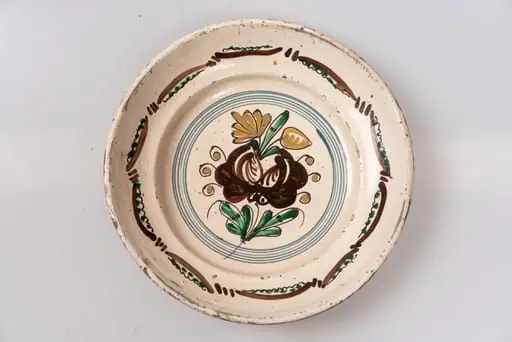 Farfurie adâncă, cu fund larg și buză evazată ușor concavă spre interior; este acoprită pe fața interioară cu un strat de humă albă peste care este pictat cu cornul și cu pensula decorul format din motive florale și vegetale stilizate, realizate cu contur fin, de culoare maro: central pe fundul farfuriei un buchet format dintr-o floare mare de culoare maro, o floare mai mică cu petale alungite, galbene, și un boboc galben, cu frunze verzi, buchet înscris între cercuri subțiri albastre. Buza este decorată cu un șir format dintr-un motiv repetitiv, format dintr-o linie mică maro, ușor curbă, puncte verzi și linie subțire ondulată; motivele sunt separate între ele de câte 2-3 linii mici maro. Fața ornamentată a farfuriei este acoperită cu un strat de smalț transparent. Cromatica: alb, verde, albastru, maro, galben.
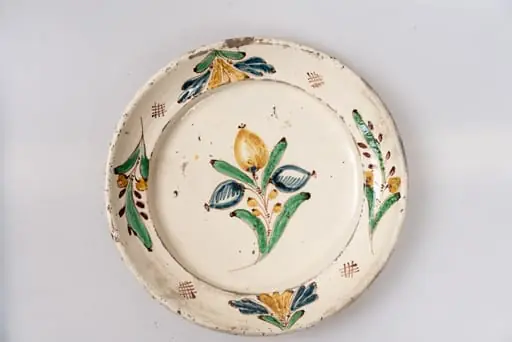 Farfurie de formă aplatizată, cu fund larg și buză ușor concavă spre interior; piesa este angobată pe fața interioară cu un strat de humă albă peste care este pictat cu cornul și cu pensula, cu contur din linii fine de culoare maro, decorul format din motive florale și fitomorfe stilizate: central pe fundul farfuriei este pictată o tulpină cu trei boboci, unul galben, ceilalți doi de culoare albastră, și frunze verzi. Buza farfuriei este decorată cu patru motive florale și vegetale dispuse simetric și separate de patru motive mici formate din linii hașurate intersectat, de culoare maro. Suprafața ornamentată a farfuriei este acoperită cu un strat de smalț transparent. Cromatica: alb, maro, albastru, verde, galben.
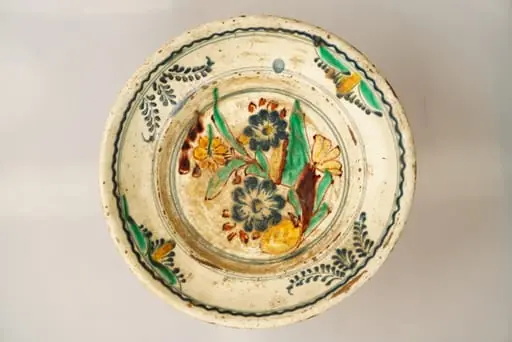 Farfurie adâncă, cu buza dreaptă evazată; suprafața exterioară este acoperită cu un strat de angobă albă peste care este pictat cu cornul și cu pensula decorul format din motive florale și geometrice, dispuse astfel: registrul decorativ de pe fundul farfuriei conține, încadrat într-un cerc dublu albastru, un buchet desenat cu contur subțire maro, format din două flori cu petale ușor alungite albastre, un boboc și două flori galbene și din frunze verzi. Registrul decorativ de pe buza farfuriei, marcat de două linii circulare duble albastre, conține două motive decorative formate din trei frunze realizate din linii mici albastre și două motive formate din două frunze verzi și o floare centrală galbenă, decorată cu linii mici albastre. Marginea buzei este decorată cu o linie circulară albastră. Suprafața ornamentată a farfuriei este acoperită cu un strat de smalț transparent. Cromatica: alb, galben, verde, maro, albastru.
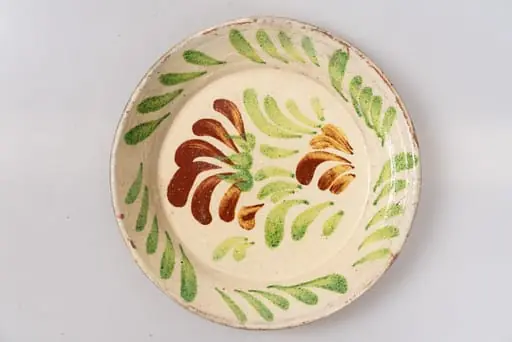 Farfurie semi-adâncă, cu fund întins, corp îngust și buză evazată; este angobată pe fața interioară cu un strat de humă albă și decorată prin pictare cu pensula cu motive florale și fitomorfe stilizate: central pe fundul farfuriei este reprezentată o floare cu petale alungite de culoare maro și frunze verzi și maro. Buza este ornamentată cu un șir de frunze verzi foarte stilizate. Cromatica: alb, verde, maro. Suprafața ornamentată a farfuriei este acoperită cu un strat de smalț transparent.
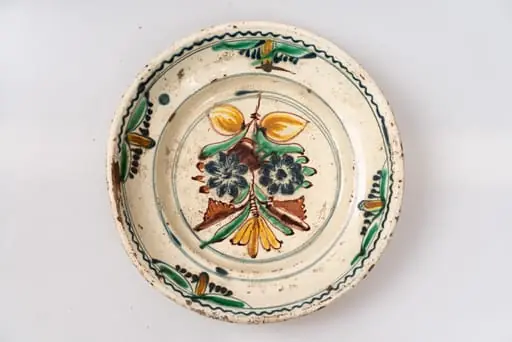 Farfurie semi-adâncă, cu buza evazată și muchia buzei rotunjită; este acoperită pe suprafața interioară cu un strat de angobă albă, peste care este pictat cu cornul și cu pensula decorul format din motive florale și geometrice, realizate cu contur din linii fine maro: central pe fundul farfuriei, încadrat într-un cerc albastru format dintr-o linie spiralată subțire, este pictat un buchet format din două flori albstre, o floare galbenă cu petale lungi, doi boboci galbeni și frunze verzi. Registrul decorativ marginal, încadrat între două cercuri albastre, conține patru motive vegetale stilizate, aproximativ identice, dispuse în cruce (două frunze verzi și una centrală galbenă, decorate cu puncte alungite de culoare albastru-închis). Muchia buzei este marcată cu o linie circulară ondulată de culoare albastră. Suprafața ornamentată a farfuriei este acoperită cu un strat de smalț transparent. Cromatica: alb, galben, verde, maro, albastru.
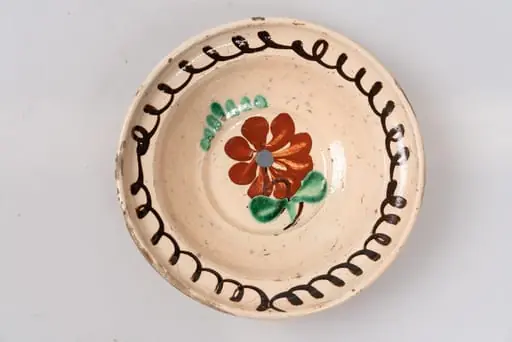 Farfurie adâncă, cu fund îngust, buza evazată cu muchia verticală; este angobată pe fața interioară cu un strat de humă albă și decorată prin pictare cu pensula și cu cornul cu motive florale, fitomorfe și geometrice: central pe fundul farfuriei este reprezentată o floare cu petale de culoare maro, cu mijlocul marcat printr-un punct gri și două frunze verzi. În partea superioară a florii, șapte linii verzi, scurte, completează decorul. Buza este ornamentată cu o linie buclată continuă, de culoare maro-închis. Cromatica: alb, verde, maro, maro-închis, gri. Suprafața ornamentată a farfuriei este acoperită cu un strat de smalț transparent.
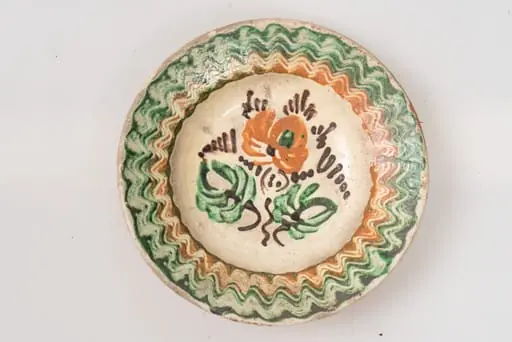 Farfurie adâncă, angobată pe suprafața interioară cu un strat de humă albă, peste care este pictat cu cornul și cu pensula decorul format din motive florale stilizate și geometrice: fundul farfuriei conține un buchet format din trei flori cu petale alungite, două de culoare verde, cea de-a treia de culoare siena arsă, și din elemente vegetale de culoare maro. Buza farfuriei este ornamentată cu linii ondulate de culoare siena arsă și verde. Suprafața ornamentată a farfuriei este acoperită cu un strat de smalț transparent. Cromatica: alb, verde, siena arsă, maro.
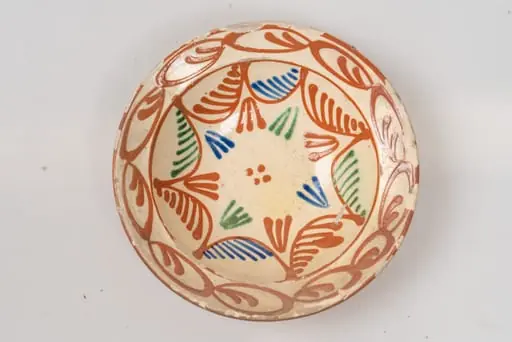 Farfurie adâncă, cu buză relativ îngustă, evazată; este acoperită pe suprafața interioară cu un strat de angobă albă, peste care este pictat cu cornul decorul format din motive geometrice: fundul farfuriei și peretele acesteia este decorat cu motive formate din linii curbe de culoare maro, ce au pe suprafața interioară linii oblice paralele, inegale ca mărime, de culoare verde, albastru, maro; grupuri de câte trei linii colorate, în formă de V și patru puncte centrale, de culoare maro. Buza farfuriei este decorată cu un șir continuu din motive formate din linii ovale, de culoare maro, cu câte două linii sub formă de virgulă în interior. Suprafața ornamentată a farfuriei este acoperită cu un strat de smalț transparent. Cromatica: alb, albastru, verde, maro.
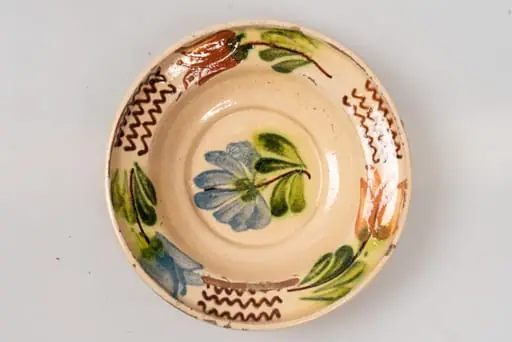 Farfurie adâncă, cu buza evazată și muchia buzei ridicată. Piesa este acoperită pe suprafața interioară cu un strat de angobă albă peste care este pictat cu pensula și cu cornul decorul format din motive florale și geometrice: fundul farfuriei conține o floare cu petale alungite de culoare albastră și frunze verzi. Alte trei flori (una cu petale de culoare albastră, a doua de culoare maro-roșcat iar cea de-a treia de culoare siena arsă), cu tulpină maro și frunze verzi, decorează buza farfuriei. Între cele trei flori, sunt pictate trei motive aproximativ identice, formate din trei linii vălurite paralele, de culoare maro. Suprafața ornamentată a farfuriei este acoperită cu un strat de smalț transparent. Cromatica: alb, verde, siena arsă, maro, maro-roșcat, albastru.
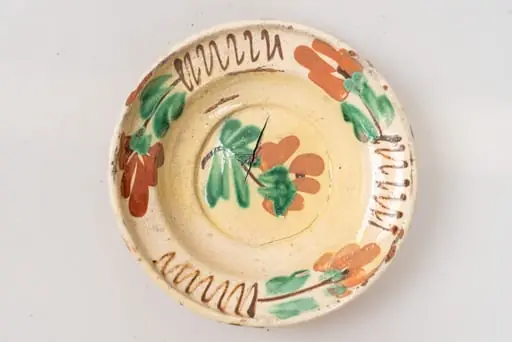 Farfurie adâncă, angobată pe fața interioară cu un strat de humă albă. Este decorată prin pictare cu pensula și cu cornul cu motive florale, fitomorfe și geometrice: central pe fundul farfuriei este reprezentată o floare stilizată, cu petale de culoare siena arsă și frunze verzi, iar buza farfuriei este decorată cu trei flori de culoare maro-roșcat, siena arsă și galben ocru, cu frunze verzi; între flori sunt pictate trei motive formate din câte o linie șerpuită de culoare maro. Cromatica: alb, maro-roșcat, maro, verde, siena arsă, galben ocru. Suprafața ornamentată a farfuriei este acoperită cu un strat de smalț transparent.
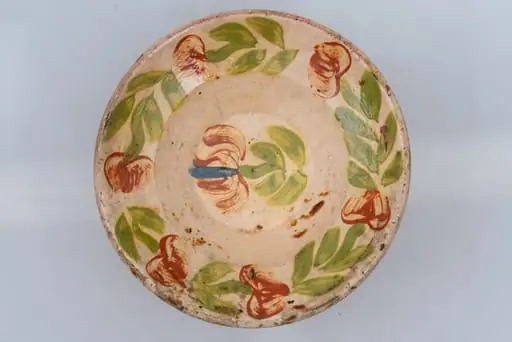 Farfurie adâncă, acoperită pe suprafața interioară cu un strat de angobă albă. Decorul este realizat prin pictare cu pensula și se compune din motive florale și fitomorfe: central pe fundul farfuriei este pictată o floare cu patru petale alungite de culoare maro deschis si o petală albastră și frunze verzi. Decorul de pe buza farfuriei se compune dintr-un șir de flori de culoare maro cu frunze verzi. Suprafața ornamentată a farfuriei este acoperită cu un strat de smalț transparent. Cromatica: alb, verde, albastru, maro-deschis.