Artwork
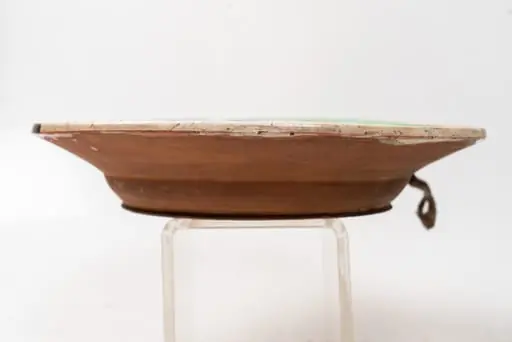
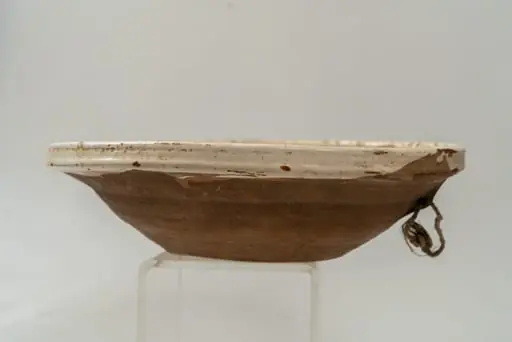
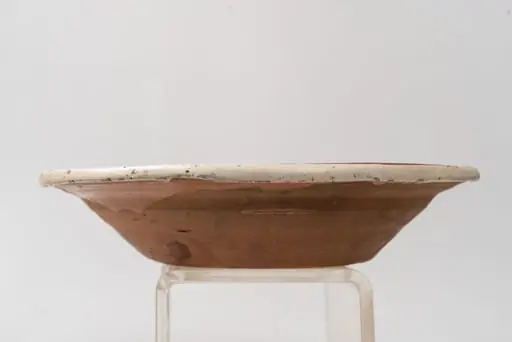
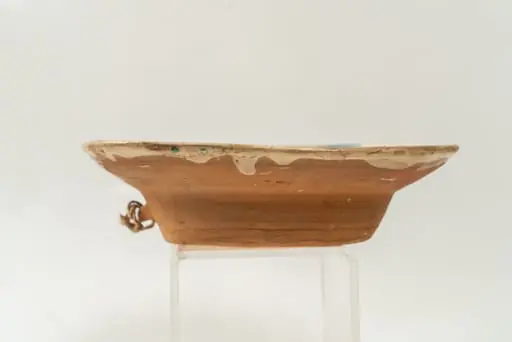
Farfurie mică, adâncă, cu corp îngust, tronconic și buza îngustă, răsfrântă și muchia buzei ondulată. Piesa este modelată la roata olarului și acoperită cu un strat de angobă albă pe fața interioară. Peste stratul de angobă a fost așternut un start de pigment galben, iar central pe fundul farfuriei există câteva pete de culoare verde. Cromatica: galben, verde. Fața interioară a farfuriei este acoperită cu un start de smalț transparent.
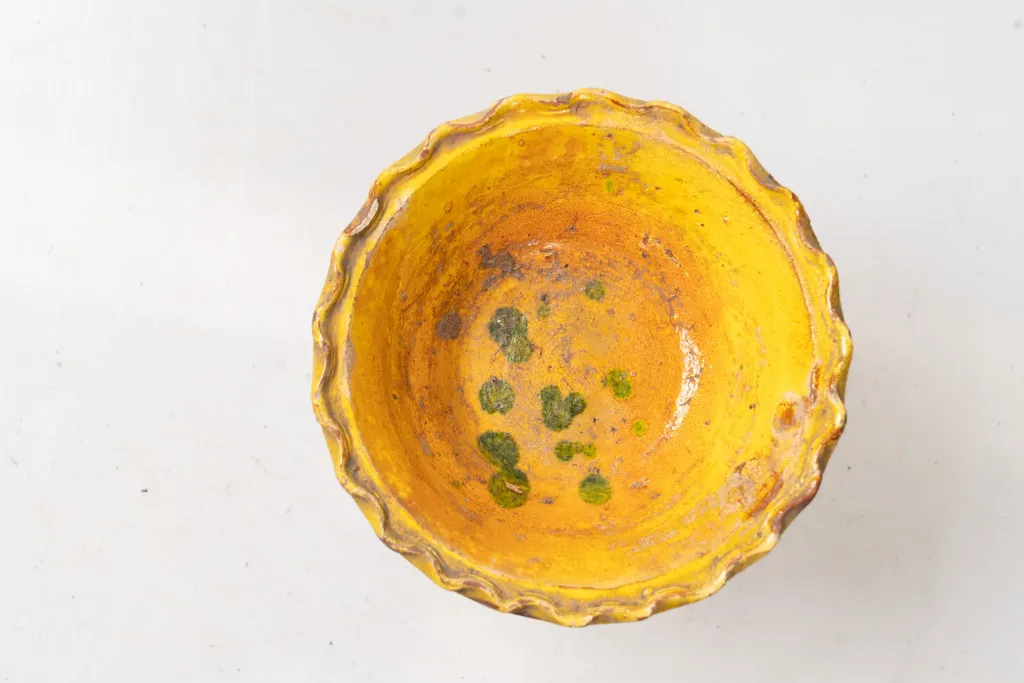
Farfurie mică, adâncă, cu corp îngust, tronconic și buza îngustă, răsfrântă și muchia buzei ondulată. Piesa este modelată la roata olarului și acoperită cu un strat de angobă albă pe fața interioară. Peste stratul de angobă a fost așternut un start de pigment galben, iar central pe fundul farfuriei există câteva pete de culoare verde. Cromatica: galben, verde. Fața interioară a farfuriei este acoperită cu un start de smalț transparent. is a photography by Unknown. It dates from 1850 and is held in the collection of the Ethnographical Museum of Transylvania. This small, deep ceramic bowl features a narrow, conical form with a finely ruffled lip.
About this work
Overview
Crafted on a potter’s wheel, it is coated internally with a white slip, overlaid with yellow pigment and accented by scattered green dots at the base.
This small, deep ceramic bowl features a narrow, conical form with a finely ruffled lip. Crafted on a potter’s wheel, it is coated internally with a white slip, overlaid with yellow pigment and accented by scattered green dots at the base. A transparent glaze seals the surface, enhancing the color while preserving the texture. The simplicity of its shape and restrained palette suggest a functional object shaped by regional ceramic traditions.
Subject & Meaning
No figural or symbolic imagery is present; the decoration is abstract and minimal. The yellow ground and green accents may reflect natural pigments derived from local minerals or plants, possibly evoking earth or vegetation. The placement of color at the center could indicate a focus on utility or ritual use, where visual emphasis was reserved for the vessel’s interior during handling or consumption.
Technique & Style
The bowl was thrown on a wheel and finished with a white slip applied to the interior before painting. Yellow pigment was brushed over the slip, followed by localized green dots, likely applied with a fine tool or brush. A clear glaze was then fired over the surface, creating a smooth, protective layer. The technique reflects a practical, non-ornamental approach common in utilitarian ceramics of the region.
History & Provenance
The form and decoration align with early to mid-20th century folk pottery traditions in Eastern Europe, particularly in rural areas where ceramic production remained tied to household needs. While no documented provenance is available, similar vessels have been found in archaeological contexts from Moldova and southern Romania, suggesting a shared regional craft lineage.
Context
This piece likely belonged to a domestic setting, used for serving food or storing dry goods. Its modest scale and unadorned exterior indicate it was not intended for display. The use of accessible pigments and simple glazing points to local production, possibly by itinerant potters or family workshops operating outside formal artisan guilds.
Legacy
Though not widely documented in major collections, such vessels represent the continuity of vernacular ceramic practices in Eastern Europe. They preserve techniques and aesthetic choices that persisted despite industrialization, offering insight into everyday material culture. Modern ceramicists occasionally reference these forms as examples of restrained, functional beauty.
Artist & collection
Museum
Ethnographical Museum of Transylvania
Continue through works from the same source collection.
 Domestic Scene
 Giacomo and Cardinal Marco, investing Andrea, Abbot of San Zeno, with his Benefice
 The Nymph of Fontainebleau
 Portrait of a Woman
 Madonna and Child with Saints in the Enclosed Garden
 Venus and Minerva
 Family Group of Four on Sofa
 Wall painting from Room H of the Villa of P. Fannius Synistor at Boscoreale
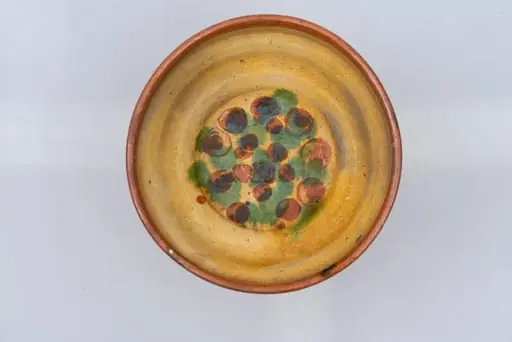 Farfurie adâncă de tip castron, cu corp tronconic ușor concav și buză dreaptă, verticală. Suprafața interioară a farfuriei este acoperită cu un strat de angobă galbenă, peste care, în zona centrală, este pictat decorul realizat din pete neregulate de culoare maro și verde, realizate prin picurarea culorii cu pensula. Muchia buzei este marcată cu o dungă de culoare maro. Suprafața ornamentată a farfuriei este acoperită cu un strat de smalț transparent. Cromatica: galben, verde, maro.
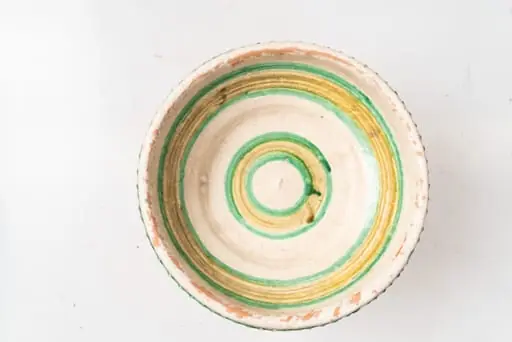 Farfurie adâncă de tip castron, cu bază largă și corp tronconic ușor concav spre interior, buză îngustă cu muchia decorată pe exterior cu mici zimți incizați în pasta lutului. Piesa este modelată la roata olarului și angobată cu humă albă pe fața interioară. Decorul este realizat prin pictare cu pensula cu pigmenți (două nuanțe de verde) și constă în două registre (unul central pe fundul farfuriei și unul pe peretele acesteia) formate din câte o dungă de culoare verde încadrată între două linii groase sub formă de cerc. Zona de decor cu zimți de pe muchia buzei este marcată cu o linie de culoare verde. Cromatica: alb, verde (două nuanțe). Fața ornamentată a farfuriei este acoperită cu un strat de smalț transparent.
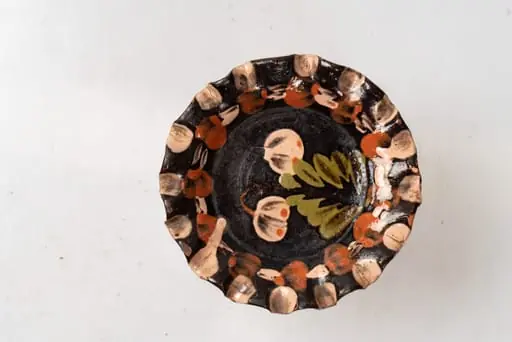 Farfurie mică, de formă aplatizată, cu buza ondulată. Piesa este modelată la roata olarului și acoperită pe fața interioară cu un strat de angobă de culoare maro închis. Decorul este realizat prin pictare cu pensula și constă în motive florale și fitomorfe (două flori semănând cu florile de ghiocel, și frunze) și puncte mari de culoare, pictate neglijent. Cromatica: maro, verde, siena arsă, bej-roz. Pe fața ornamentată farfuria este acoperită cu un strat de smalț transparent.
 Farfurie mare, semi-adâncă, cu buza răsfrântă; piesa este modelată la roata olarului și angobată cu humă albă pe fața interioară. Decorul este realizat prin sgrafitare în pasta albă de angobă și prin pictare cu pensula și cu cornul și se compune din motive decorative vegetale (o floare foarte stilizată, cu patru petale, dispusă în registrul central de pe fundul farfuriei) și geometrice (linii circulare, de culoare verde și siena arsă, pe buza farfuriei). Cromatica: alb, verde, siena arsă, maro. Fața ornamentată a farfuriei este acoperită cu un strat de smalț transparent.
 Farfurie mare, adâncă, de tip castron. Piesa este modelată la roata olarului și este angobată pe fața sa interioară. Decorul este pictat cu pensula și cu cornul și se compune din motive decorative florale (buchet de flori, în zona centrală a farfuriei) și geometrice (linii hașurate, linii sub formă de cercuri concentrice) situate pe buza farfuriei. Cromatica: alb, albastru, siena naturală, verde. Farfuria este acoperită, pe fața sa interioară, de un strat de smalț transparent.
 Farfurie adâncă, cu buza răsfrântă; piesa este modelată din lut la roata olarului și angobată cu humă albă pe fața interioară. Decorul este realizat prin pictare cu cornul și constă în motive geometrice (linii hașurate, puncte, linii circulare, linii dispuse sub formă de raze, linii în V). Cromatica: alb, albastru, verde, siena arsă. Fața ornamentată a farfuriei este acoperită cu un strat de smalț transparent.
 Farfurie adâncă, cu corp mic și buză lată, evazată; piesa este modelată la roata olarului și angobată cu humă albă pe fața interioară. Decorul este realizat prin pictare cu pensula și se compune din motive decorative florale și vegetale stilizate, dispuse central, pe fundul vasului (o floare albastră cu frunze verzi) și pe buza farfuriei (4 flori albastre alternate cu 4 grupuri de frunze). Fața decorată a farfuriei este acoperită cu un strat de smalț transparent. Cromatica: alb, albastru, verde.
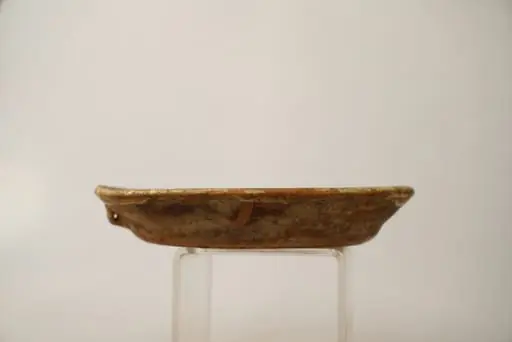 Farfurie semi-adâncă, cu buza evazată și foarte ușor concavă spre interior și cu muchia buzei rotunjită; este modelată la roata olarului și angobată cu humă albă pe fața interioară. Decorul este pictat cu cornul și cu pensula și se compune din motive florale stilizate (registrul decorativ de pe fundul farfuriei conține o tulpină cu o floare de lalea cu două petale verzi și centrul format din linii hașurate intersectat, de culoare maro, și cu patru frunze de culoare galbenă; de o parte și de alta a florii de lalea este pictată câte o floare cu petale rotunde în culorile maro, galben, verde și cu centrul format din linii hașurate intersectat, de culoare maro) și motive decorative geometrice (cinci grupuri, inegale ca lungime, formate din linii paralele drepte, de culoare maro, intercalate cu cinci grupuri de câte 2-3 linii maro sub formă de semicercuri umplute cu culorile galben și verde), dispuse pe buza farfuriei și încadrate de linii paralele sub formă de cerc, de culoare maro. Două grupuri de linii maro paralele, crescătoare și descrescătoare ca mărime, dispuse sub formă de triunghi, completează decorul central de pe fundul farfuriei. Piesa este acoperită pe suprafața ornamentată cu un strat de smalț transparent. Cromatica: alb, verde, maro, galben.
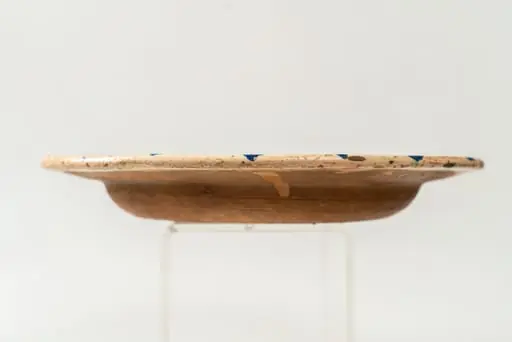 Farfurie semi-adâncă, cu buza răsfrântă; piesa este modelată la roata olarului și este angobată pe fața interioară cu humă albă. Decorul este realizat prin pictare cu pensula și se compune din motive decorative florale și vegetale stilizate, dispuse pe întreaga suprafață a piesei. La baza motivului decorativ central se află înscris anul fabricării piesei, 1782. Buza farfuriei este decorată cu un șir continuu de frunze de culoare verde și albastră. Cromatica: alb, verde, albastru. Fața decorată a farfuriei este acoperită cu un strat de smalț transparent.
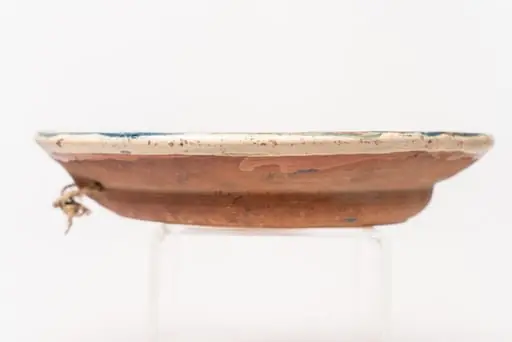 Farfurie semi-adâncă, cu răsfrântă; piesa este modelată la roata olarului și angobată cu humă albă pe fața interioară a acesteia. Decorul este realizat prin pictare cu cornul și cu pensula și constă în motive decorative florale și vegetale stilizate (flori de culoare galbenă cu contur albastru și frunze, dispuse în șir continuu pe fundul farfuriei și pe toată buza acestei), un motiv zoomorf (un cerb pictat central și înscris într-un cerc albastru cu puncte) și motive geometrice (linii sub formă de cerc și linie vălurită, sub bordura interioară a farfuriei; muchia buzei este marcată cu o linie albastră). Cromatica: alb, albastru, galben. Farfuria este smălțuită pe interior, cu smalț transparent.