Open full image Pin
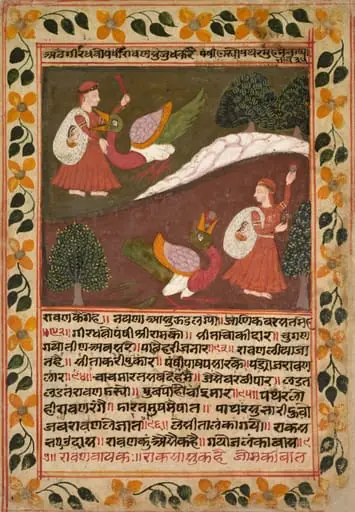
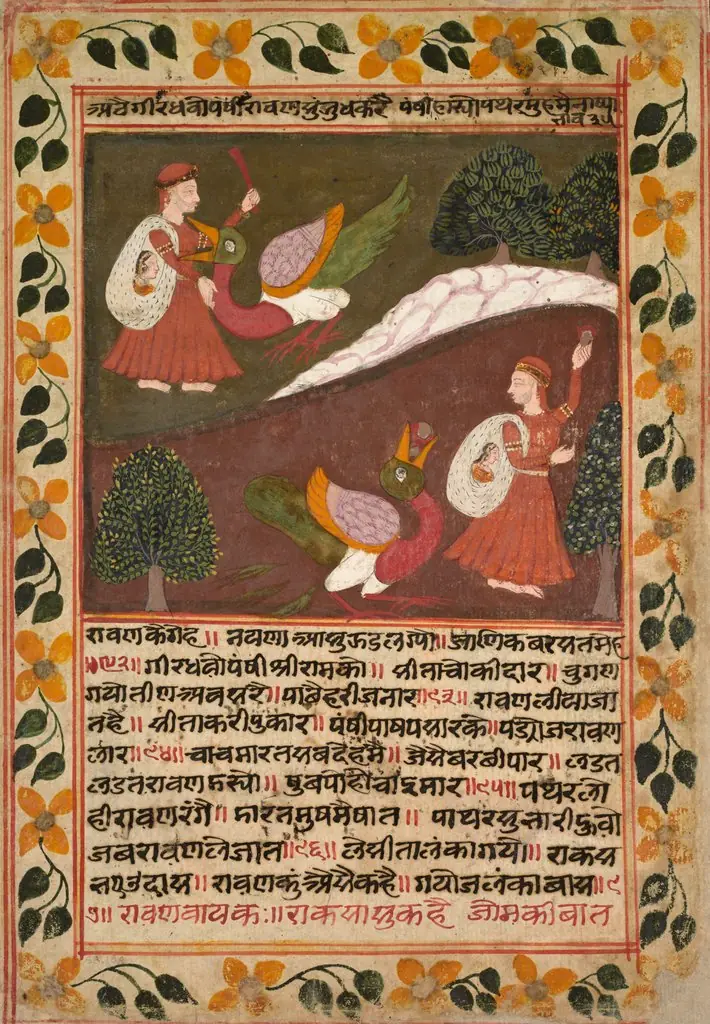
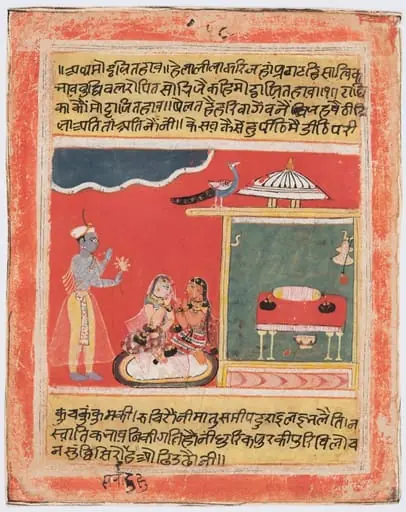
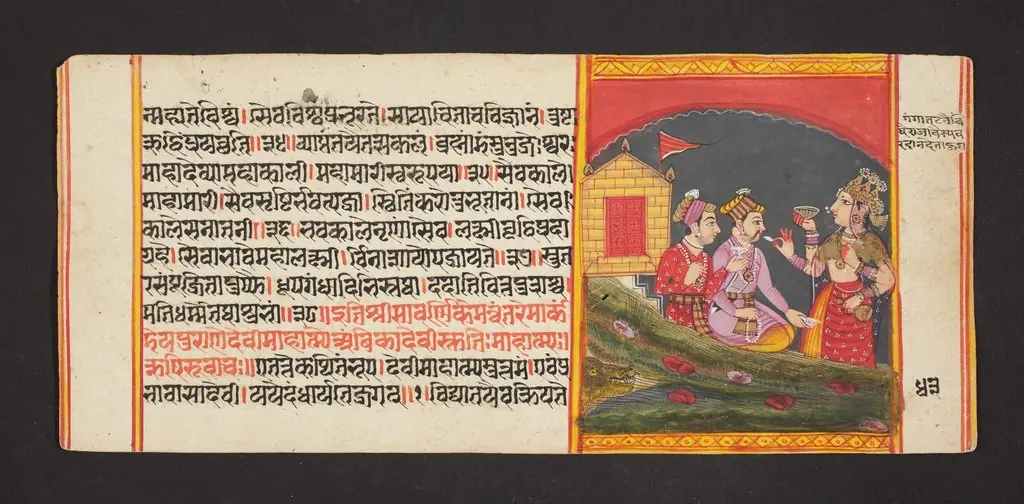
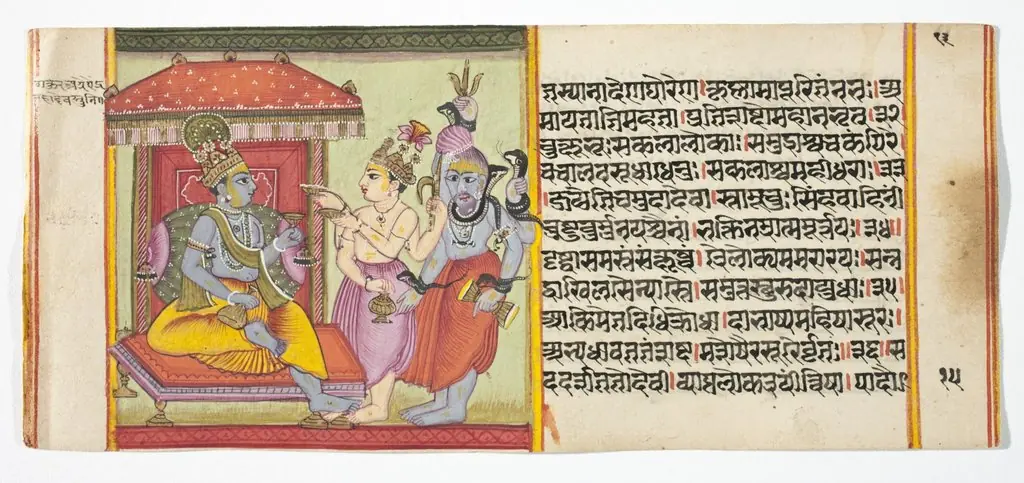
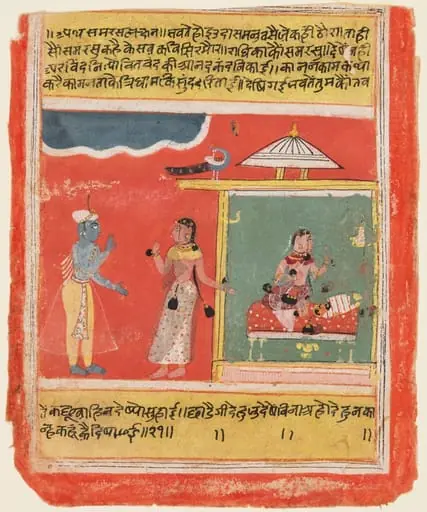
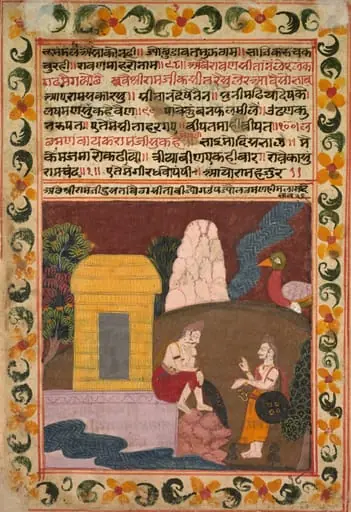
Folio 18 from a Chandana Malayagiri Varta (Story of King Chandana and Queen Malayagiri) of Karamachand: Ravana battles the great vulture Jatayu and defeats him by throwing stones in his mouth (recto); Jatayu approaches Rama and Lakshmana who are wondering where Sita could be (verso), by Unknown, unspecified, 1744

Folio 18 from a Chandana Malayagiri Varta (Story of King Chandana and Queen Malayagiri) of Karamachand: Ravana battles the great vulture Jatayu and defeats him by throwing stones in his mouth (recto); Jatayu approaches Rama and Lakshmana who are wondering where Sita could be (verso)

Unknown

1744

unspecified

From the collection of Cleveland Museum of Art

Dominant colour

Overview

Folio 18 from a Chandana Malayagiri Varta (Story of King Chandana and Queen Malayagiri) of Karamachand: Ravana battles the great vulture Jatayu and defeats him by throwing stones in his mouth (recto); Jatayu approaches Rama and Lakshmana who are wondering where Sita could be (verso) is a 1744 unspecified by Unknown, a Baroque work, held at Cleveland Museum of Art.

Who painted this?
Unknown
When & what style?
1744 · Baroque
Where can I see it?
Cleveland Museum of Art

About this work

You see two scenes side by side: a demon hurling stones into a giant bird’s mouth, and the same wounded bird later talking to two princes in a forest. The pages come from a handwritten book made in 1744 for a small royal court in Kishangarh. Each picture is packed with bright colors and tiny patterns—like a comic strip for a king. If you like these bold, storybook images, look up the subject rajput kingdom of kishangarh.

The story of this work

Overview

Scenes pertaining to the loss and rescue of Sita have been embedded in a popular tale written by Bhadrasena (active c. 1620), and expanded by the poet Karamacand in 1629–30. The pages from this manuscript are dispersed among many collections. Its last page, known from a photograph provided by Arun Bharany in New Delhi, includes a colophon statement. It informs us that the manuscript was written in Samvat 1802 (equivalent to 1744–45) in Kishangarh for five patrons named Rikhaji, Karamchandji, Mahataji, Shri Jagamalaji, and his son Motichandji. The scribe was a monk named Udayasagar in the…

Did you know?

Reciting, hearing, and meditating on this story was thought to bring merit for ten million eons (a crore of kalpas).

Read the full account in the museum source.
About the artist

More by Unknown

Artifact World Gallery — 100,000 artworks Get the app