Artwork
Glass Fragment
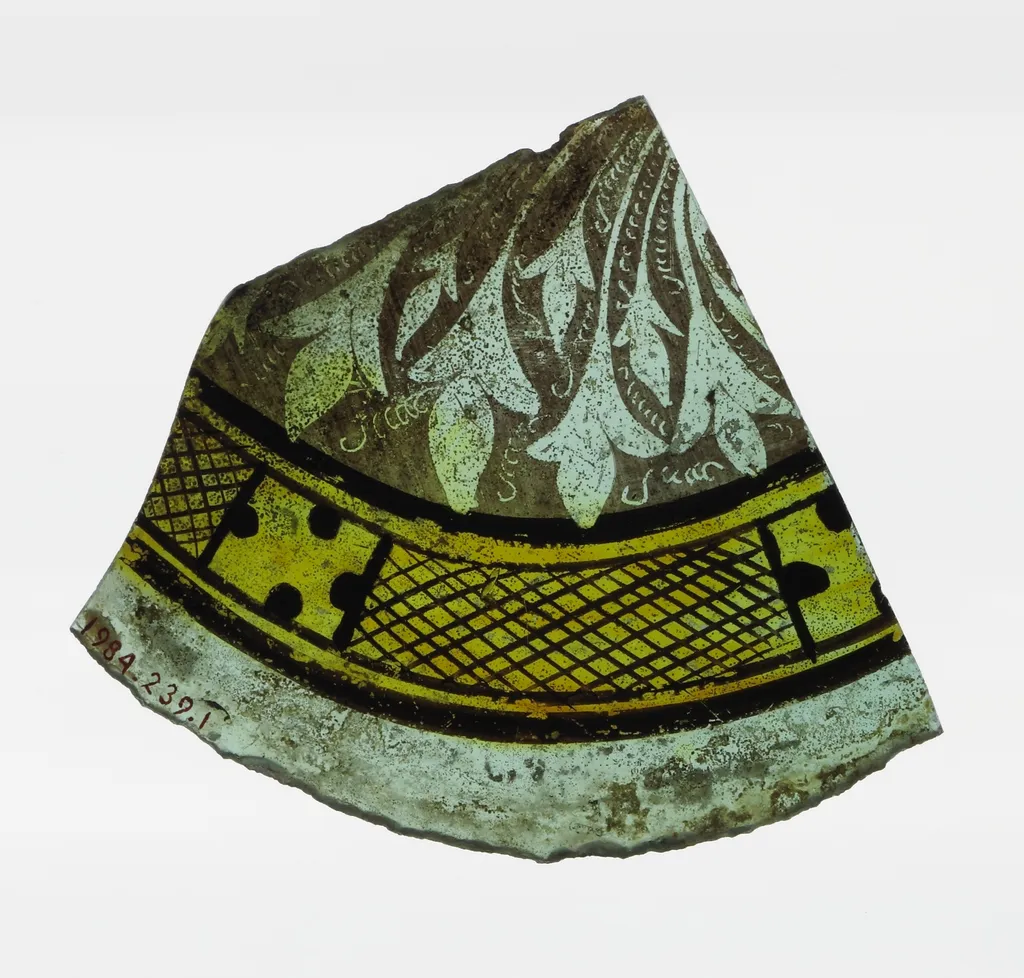
Glass Fragment is an unspecified painting. It dates from 1349 and is held in the collection of the Metropolitan Museum of Art. The object is a fragment of glass that has been painted with decorative motifs.
About this work
Technique & Style
The artwork is classified as a painting created on glass support, dating to 1349. Its formal qualities reflect the stylistic characteristics of 14th-century painting, though specific details of execution are not elaborated in the provided sources. The work is part of the Metropolitan Museum of Art's collection and is housed in New York.
History & Provenance
Provenance and ownership: the painting was acquired by the Metropolitan Museum of Art and has been part of its holdings since its inception on 1349-01-01.
The work was created in 1349 and classified as a painting. It entered the collection of the Metropolitan Museum of Art, where it remains on view.
Provenance and ownership: the painting was acquired by the Metropolitan Museum of Art and has been part of its holdings since its inception on 1349-01-01.
Commission and creation history: the work is attributed to an anonymous artist and was produced in 1349, reflecting the artistic practice of that period.
The Glass Fragment is held in the collection of the Metropolitan Museum of Art, where it is catalogued under the accession number 1984.239.1. The work entered the museum's holdings in 1984 and is classified within the Met's holdings as a painting, dated to 1349. No exhibition history is documented in the available sources.
Overview
The object is a fragment of glass that has been painted with decorative motifs. The piece is irregular, with chipped edges and areas where the paint has faded. Its dimensions are modest, and the surface bears a pale, elongated figure that could be interpreted as a bird or a hand, set above a yellow band featuring a woven pattern and scattered black dots.
Subject & Meaning
The central pale shape, rendered in simple lines, suggests a stylized bird or perhaps a hand with elongated, feather‑like extensions, a motif common in ancient decorative arts. The surrounding yellow field with its interlaced design and punctate accents may have functioned as a background that emphasized the figure’s symbolic or ornamental role.
Context
Glass objects bearing painted designs were common in antiquity for both functional and decorative purposes, often incorporated into temples, public buildings, or elite residences. The bird‑like motif could relate to local mythological or religious symbolism, while the geometric background reflects broader aesthetic trends of the period.
Legacy
Fragments such as this contribute to the understanding of early glass painting techniques and the visual language of ancient decorative arts. Their study helps scholars trace the diffusion of glassworking skills and the evolution of symbolic imagery across regions.
Artist & collection

 Painting
 Bol (fragment)
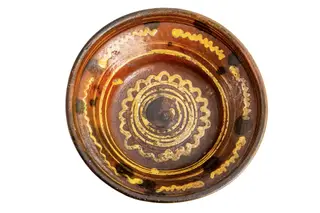 Formă tronconică; fond cărămiziu; culori: galben, verde, brun. În centru este amplasată o spirală de culoare galbenă trasată cu cornul înscrisă într-un val circular de culoare similară care sugerează un soare; pe perete strachinei sînt amplasate șase segmente de linie vălurită de culoare galbenă și pete de culoare brună.
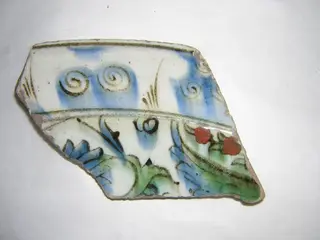 Farfurie (fragment)
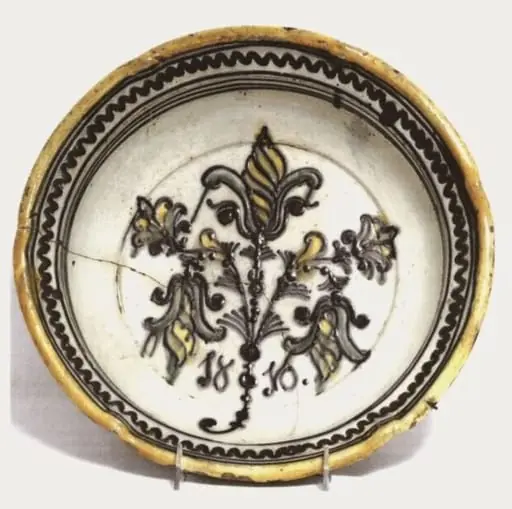 farfurie
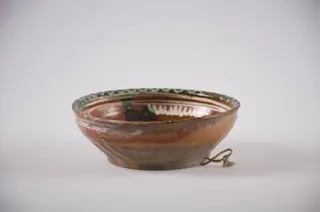 Blid de formă tronconică, adânc cu pereți ușor evazați și buza dreaptă, Decor cu motive geometrice: linie ondulată pe buză; cercuri concentrice pe trei câmpuri pe fundul blidului. În centru avem o floare stilizată; pete stropite pe vas. Smălțuit maro. Cromatică: fond: maro; motive: verde; alb. Prezintă două găuri pe fundul vasului pentru atârnare.
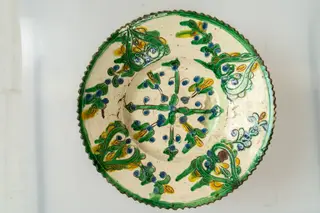 Farfurie mare, de formă semi-adâncă, cu buză răsfrântă, foarte lată, cu muchie ondulată (zimți). Piesa este modelată la roata olarului, angobată cu humă albă. Decorul este realizat prin sgrafitare în angoba crudă, peste care se aștern cu pensula culorile de smalț: verde, galben, albastru. Motivele decorative sunt florale și vegetale stilizate, dispuse pe toată suprafața farfuriei. Cromatica decorului: alb, albastru, galben, verde.
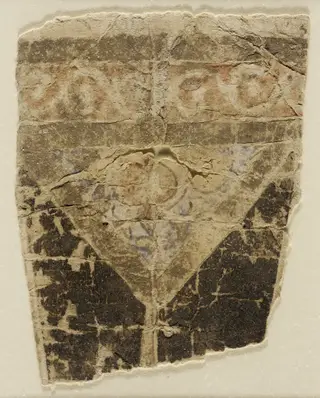 Fragmentary Playing Card
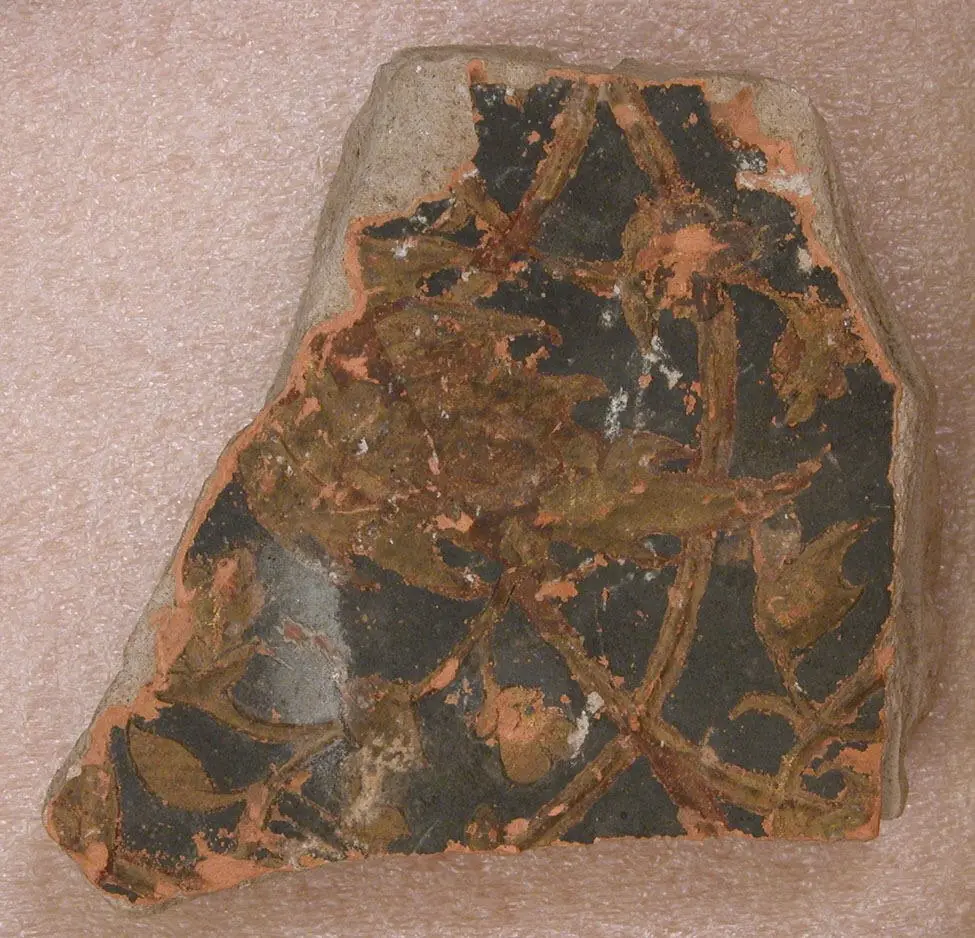
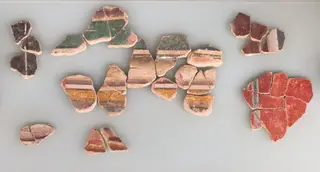 Fragments of wall painting
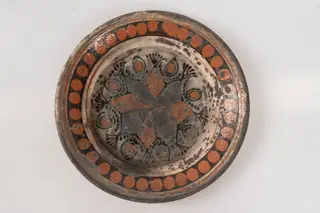 Farfurie semi-adâncă, cu buză evazată; este angobată pe fața interioară cu humă albă, peste care este pictat cu pensula și cu cornul decorul format dintr-un motiv floral geometrizat, realizat cu contur maro din romburi, linii în formă de V, cercuri și puncte pe fond alb; buza este decorată cu un șir de puncte groase de culoare roșu-cărămiziu pe o dungă de culoare maro. Farfuria este acoperită pe suprafața ornamentată cu un strat de smalț transparent. Cromatica: alb, maro, roșu-cărămiziu, urme de verde.
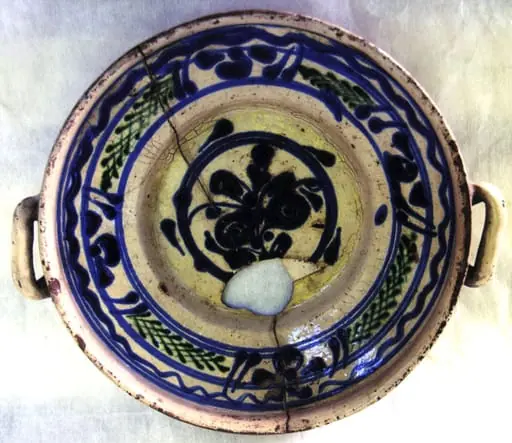 Blid cu toarte
- Fragment of a Wall Painting