
Movement
Gothic painting
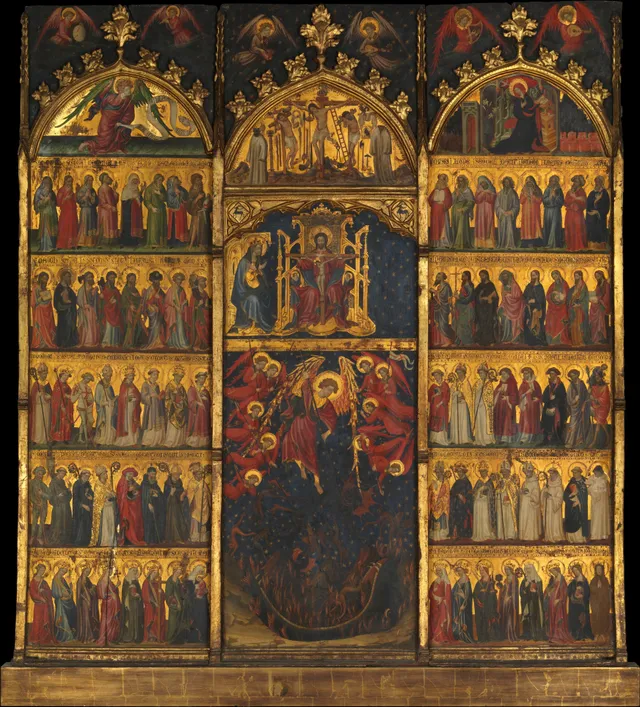
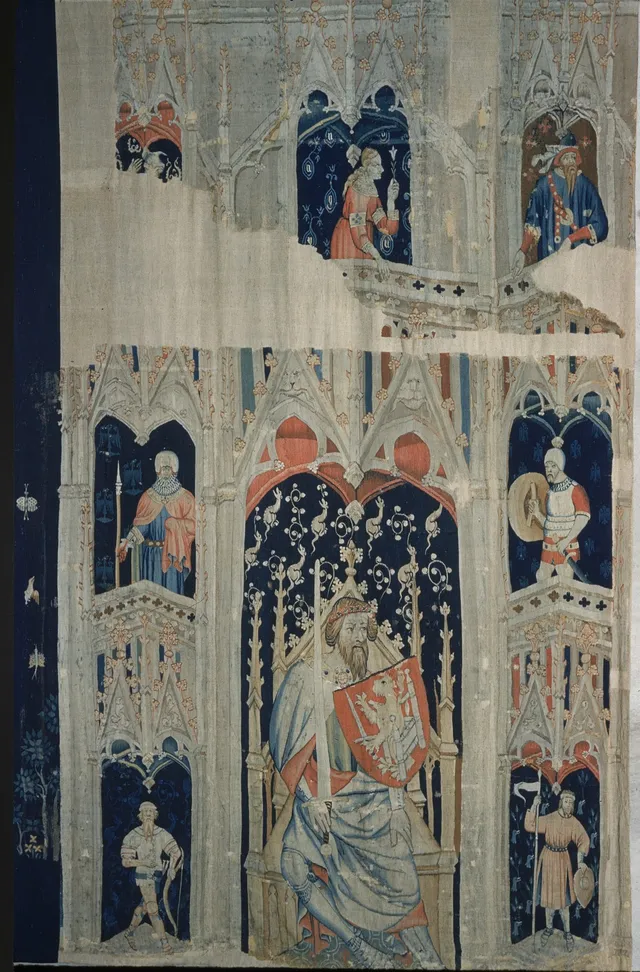
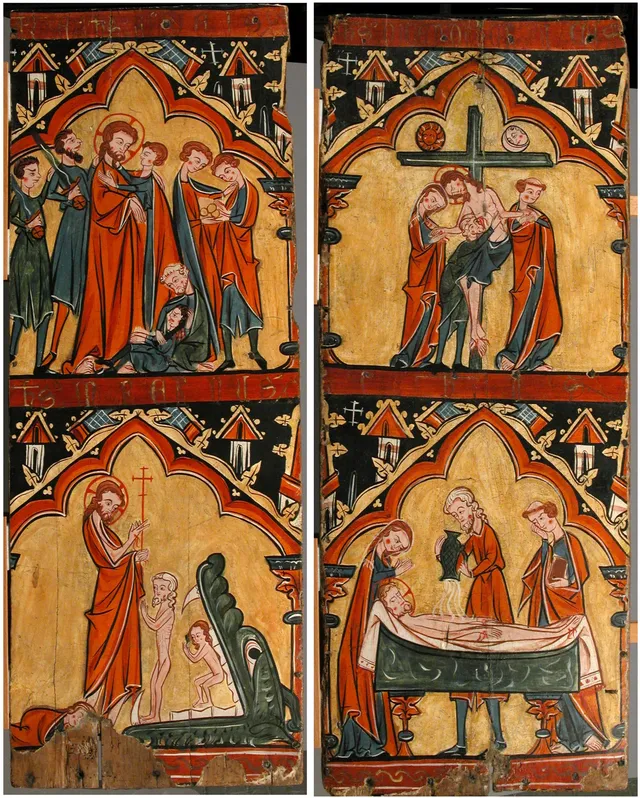
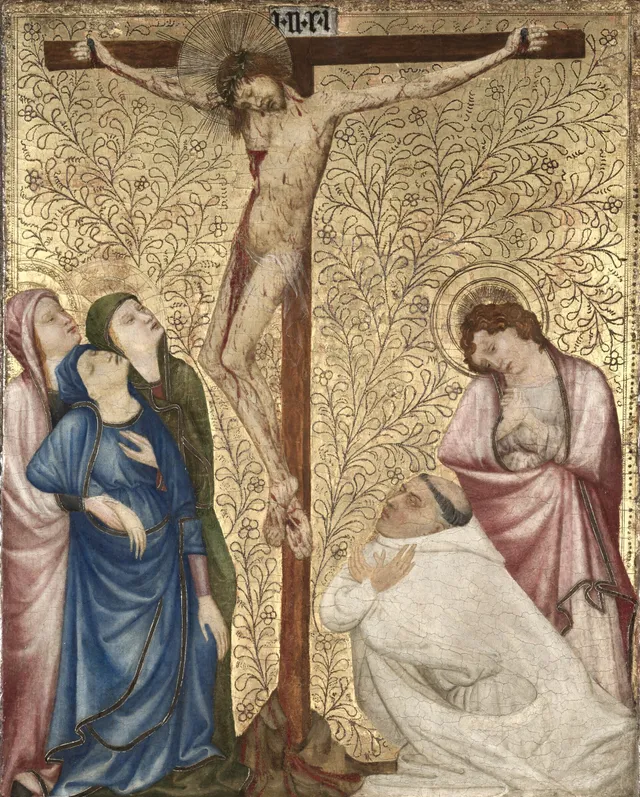
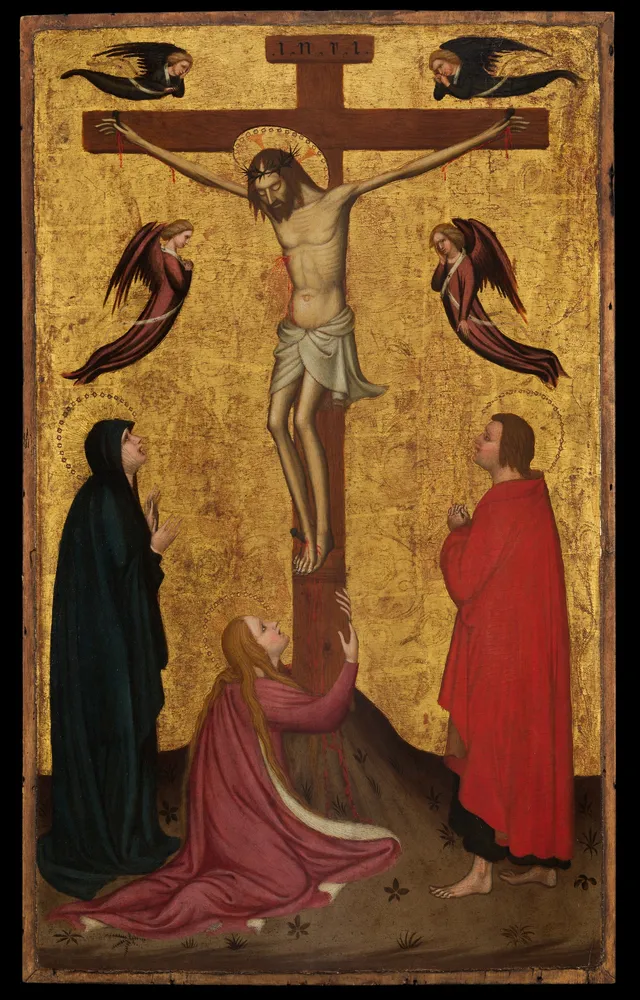
Gothic painting is an art movement of the 1200–1500 period. The gallery holds 118 works in this movement, including works by Jean de Beaumetz, Giotto and Upper Rhenish Master. Browse Gothic painting paintings, portraits, pictures and artworks from the world's public-domain museum collections.
Gothic painting is the style of pictorial art that flourished across Western Europe from roughly the mid-thirteenth century to the mid-fifteenth, emerging out of the Romanesque tradition and unfolding in parallel with the soaring cathedrals of Gothic architecture. Where Romanesque and Byzantine painting had favoured flat, hieratic figures set against abstract gold grounds, Gothic painters gradually pursued greater naturalism, narrative warmth and emotional immediacy. The style first took shape in France—encompassing illuminated manuscripts, stained glass and panel painting—but its most consequential developments in painting occurred in central Italy, where Cimabue and his pupil Giotto di Bondone began to soften the rigid conventions of the Italo-Byzantine maniera greca.
Giotto's fresco cycle in the Arena (Scrovegni) Chapel in Padua, executed between 1303 and 1305, is the pivotal monument of the early phase: its weighty, three-dimensional figures, convincing settings and genuine human feeling decisively broke with the flat, symbolic manner of his predecessors. In Siena, Duccio di Buoninsegna and his follower Simone Martini pursued a more lyrical, decorative line; Simone's luminous *Annunciation* of 1333, painted in tempera and gold on panel with Lippo Memmi, epitomises the elegance of the Sienese school. Bernardo Daddi carried Giotto's manner into smaller, refined Florentine devotional panels.
Technically, Gothic panel painting was dominated by egg tempera on wood, set against burnished gold-leaf grounds often tooled and embossed into low relief. Characteristic features include elongated, gracefully swaying figures, flowing drapery, jewel-like colour, and a tender attention to plants, animals and costume. These qualities crystallised around 1375–1450 in the courtly idiom known as International Gothic, or the "Soft Style," which spread widely as portable works and manuscripts circulated among Europe's aristocratic patrons.
The International Gothic produced some of the period's most sumptuous images, from Gentile da Fabriano's gold-laden *Adoration of the Magi* (1423), commissioned by the Florentine banker Palla Strozzi, to the work of painters such as Lorenzo Monaco and Jean de Beaumetz, whose *Calvary with a Carthusian Monk* belongs to this devotional tradition. Even as Florentine naturalism gave rise to the Renaissance, the Gothic spirit endured: Carlo Crivelli (c. 1430/35–1494) fused Renaissance perspective with persistently Gothic gold grounds and decorative intensity, demonstrating how long the style's refined, otherworldly sensibility outlasted its medieval origins.
Key artists

Works
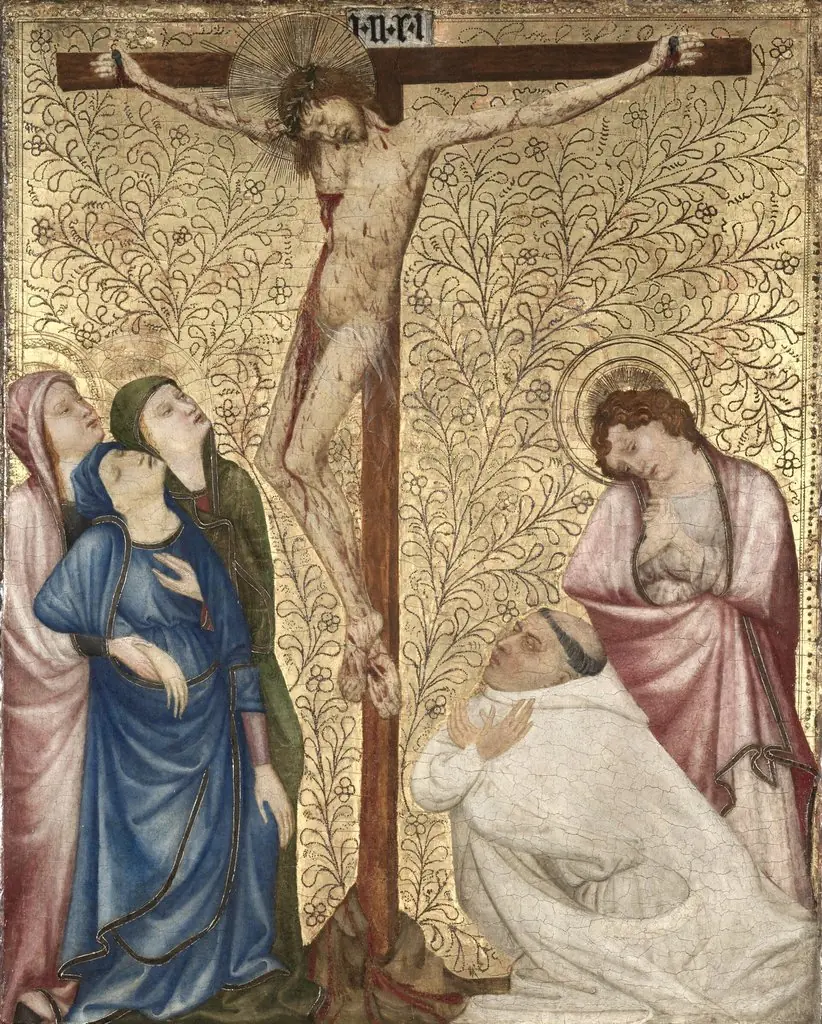 Calvary with a Carthusian Monk
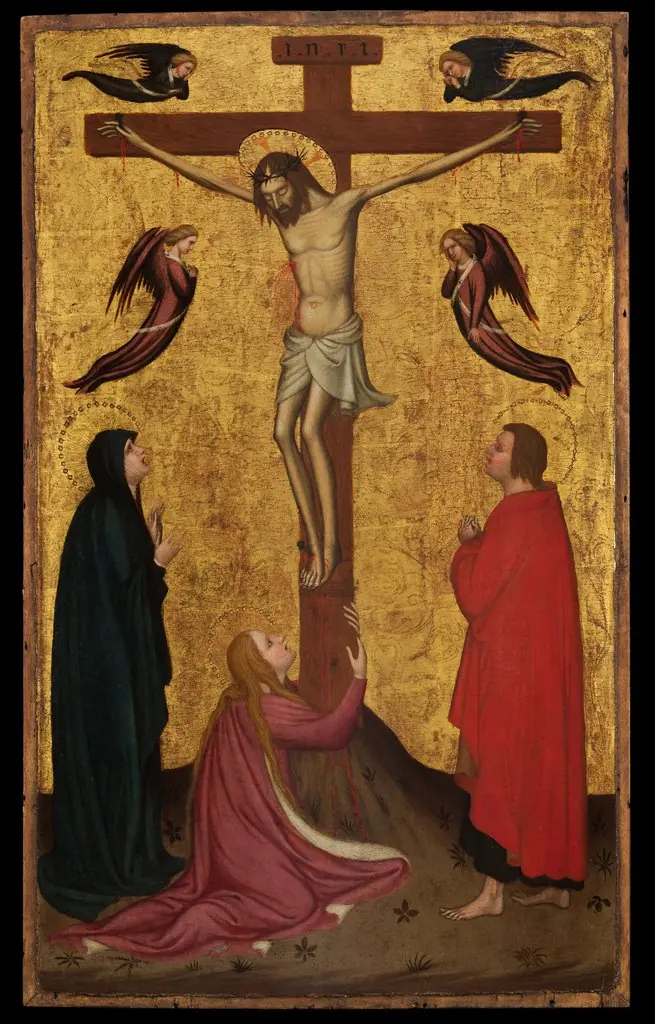 The Crucifixion
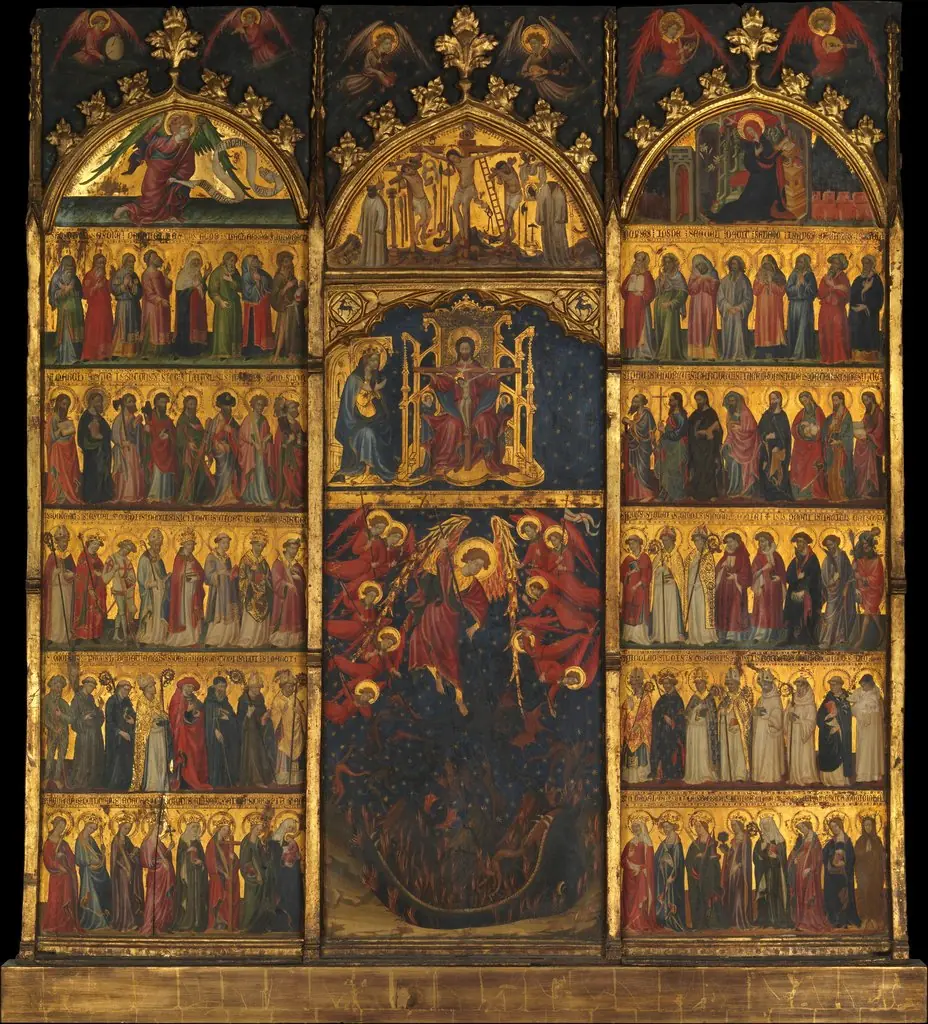 The Trinity Adored by All Saints
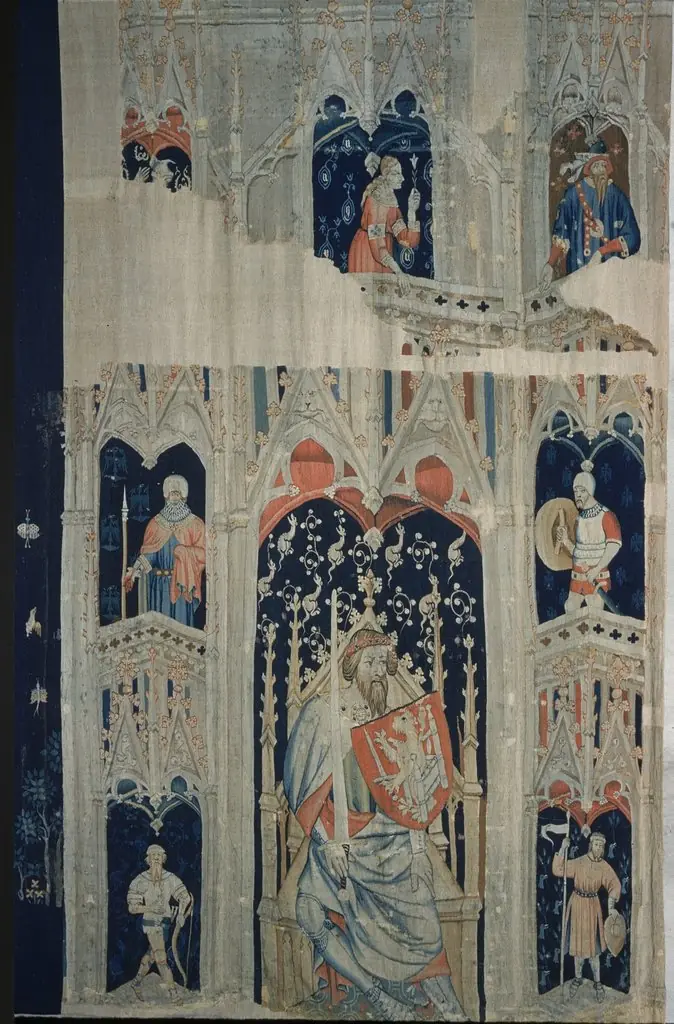 Alexander the Great or Hector of Troy (from The Nine Heroes Tapestries)
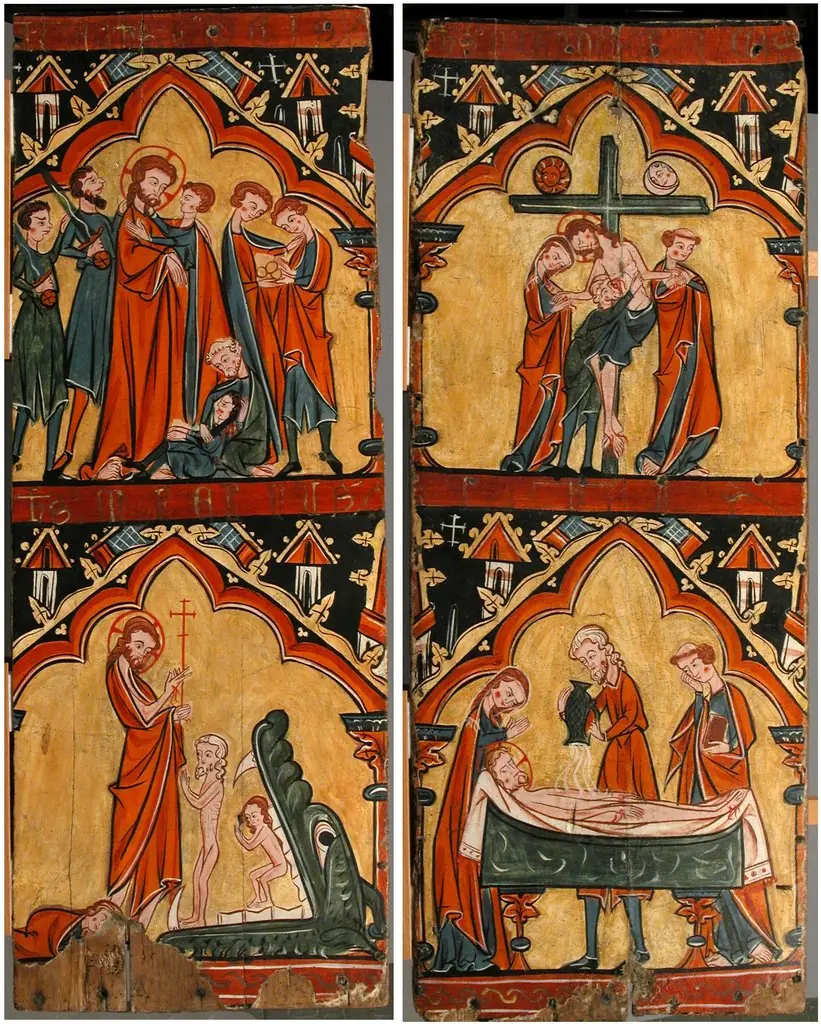 Scenes from the Life of Christ: Arrest of Christ, Christ in Limbo; Descent from the Cross, Preparation of Christ’s Body for His Entombment
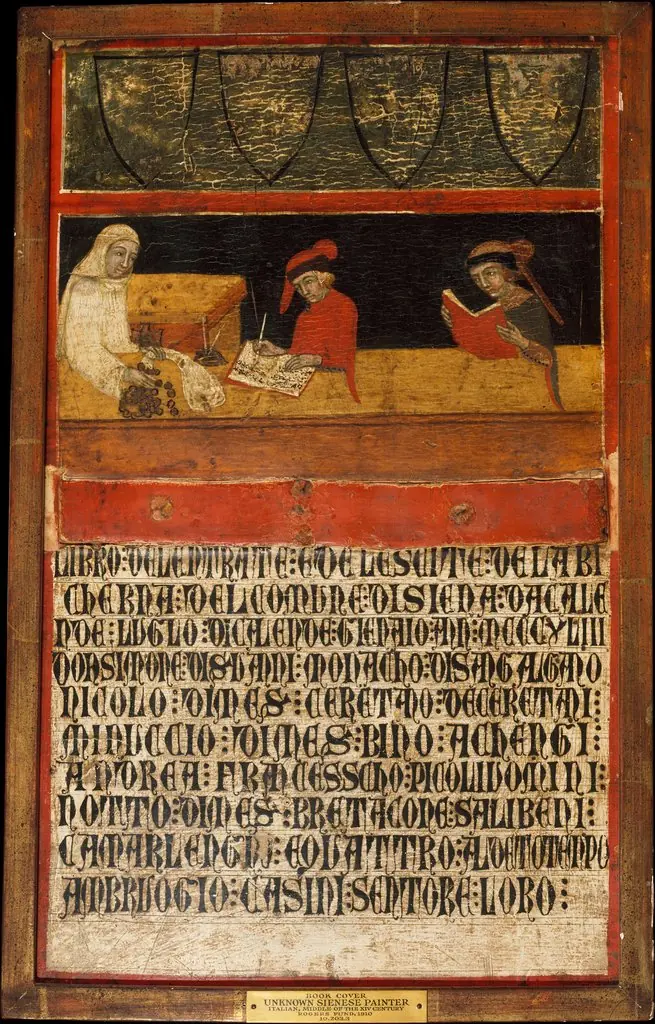 Book Cover
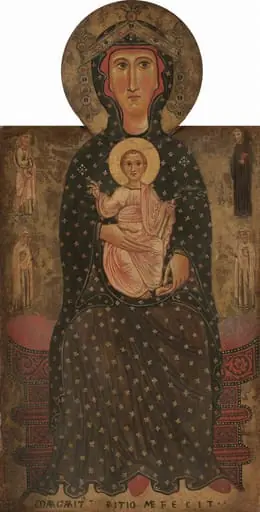 Madonna and Child Enthroned with Four Saints
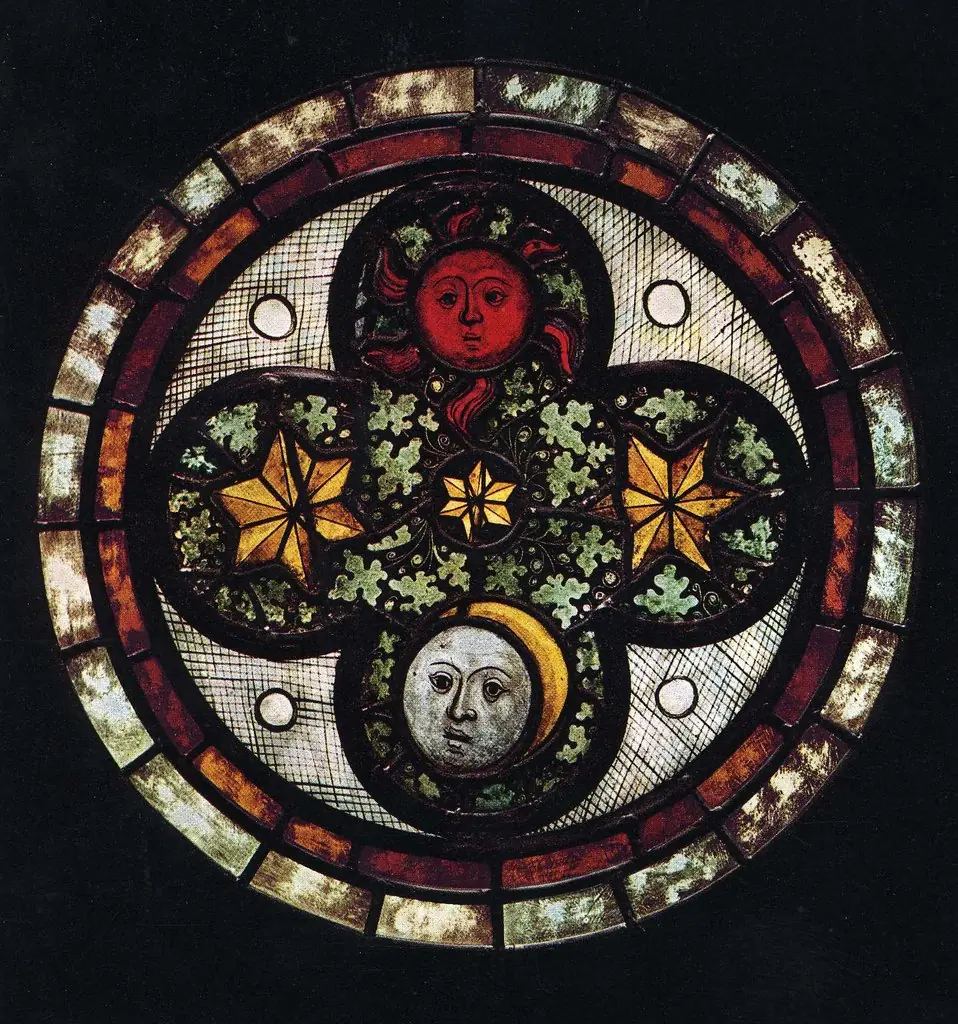 Roundel
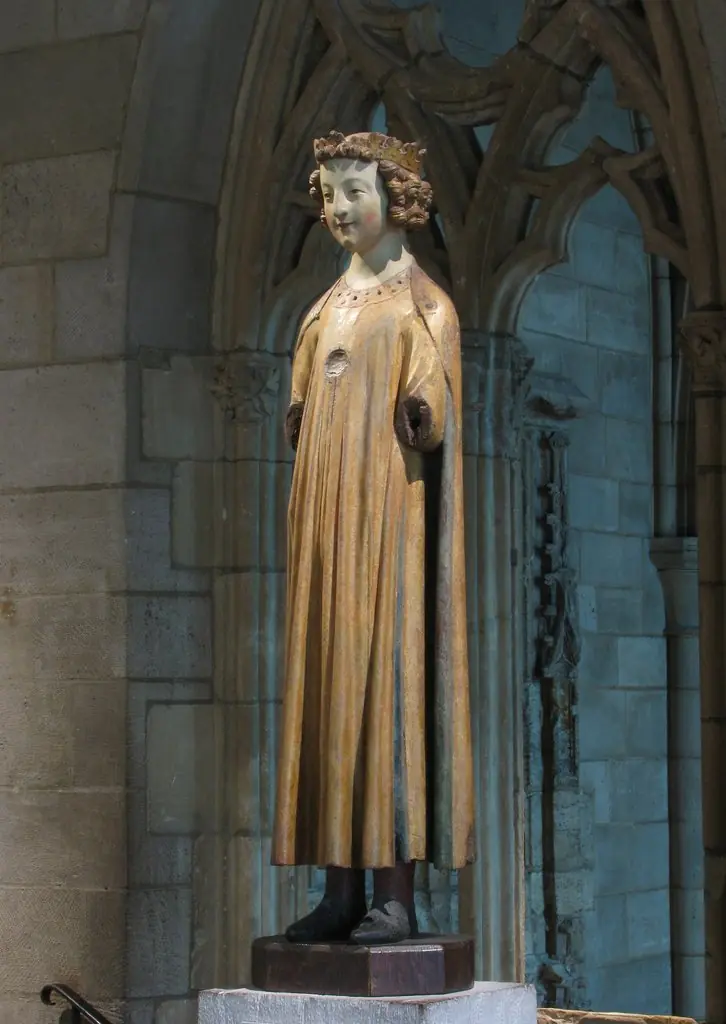 Figure of a King
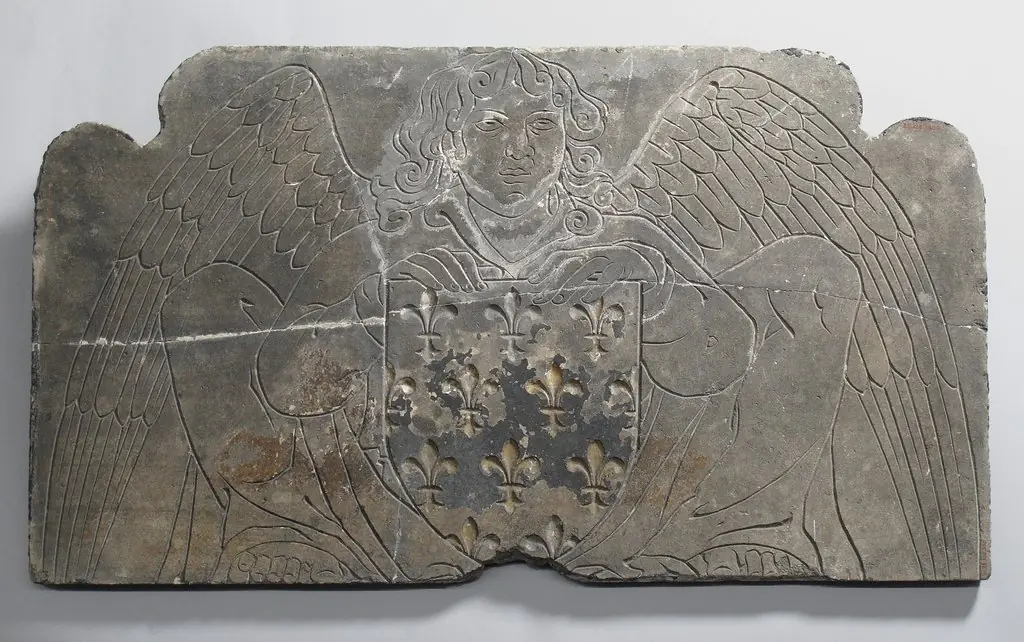 Tomb Slab of Madame Blanche of France, Duchesse d'Orléans
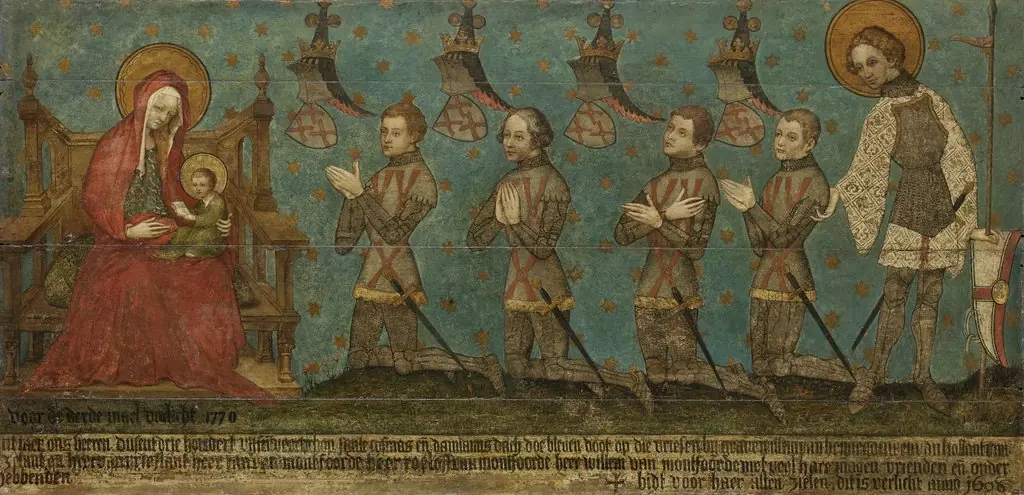 Memorial tablet for the lords of Montfoort
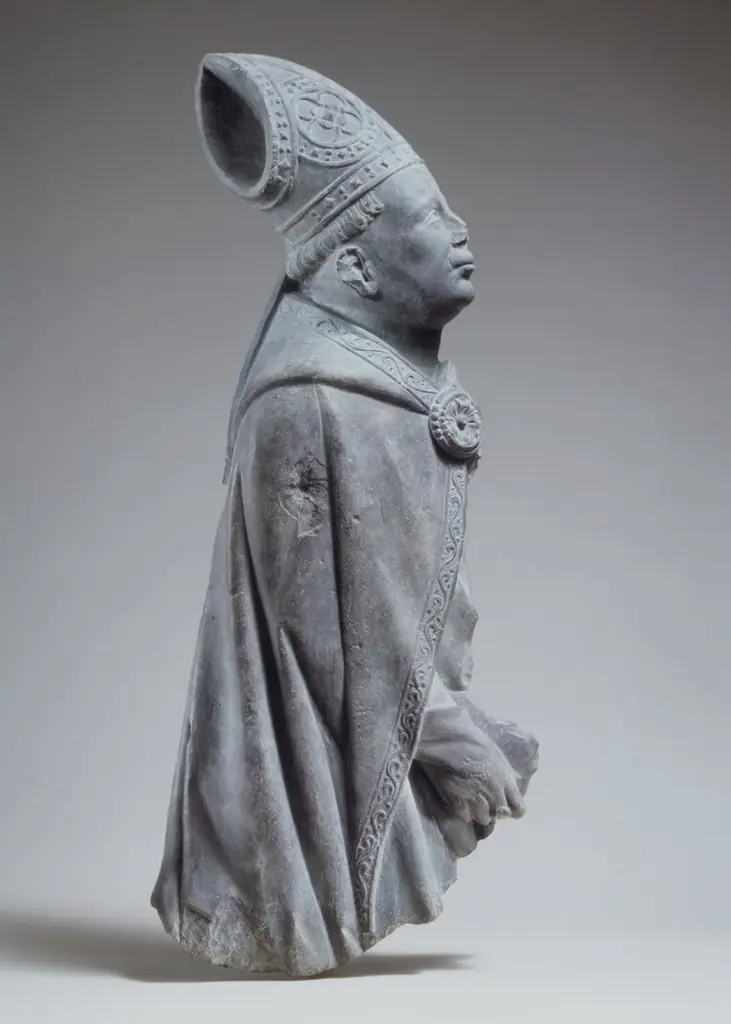 Relief of a Bishop
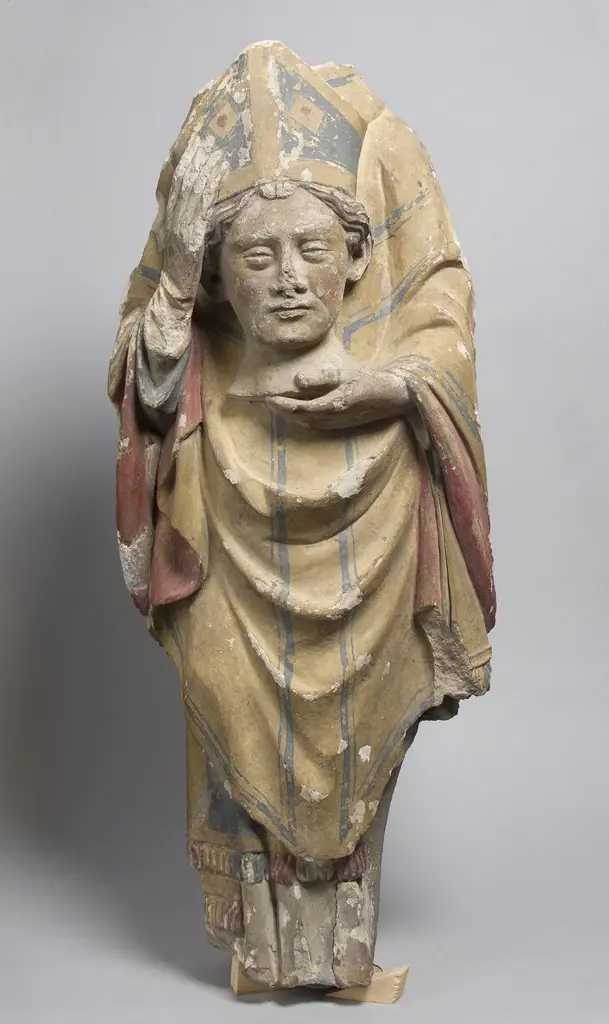 Saint Denis
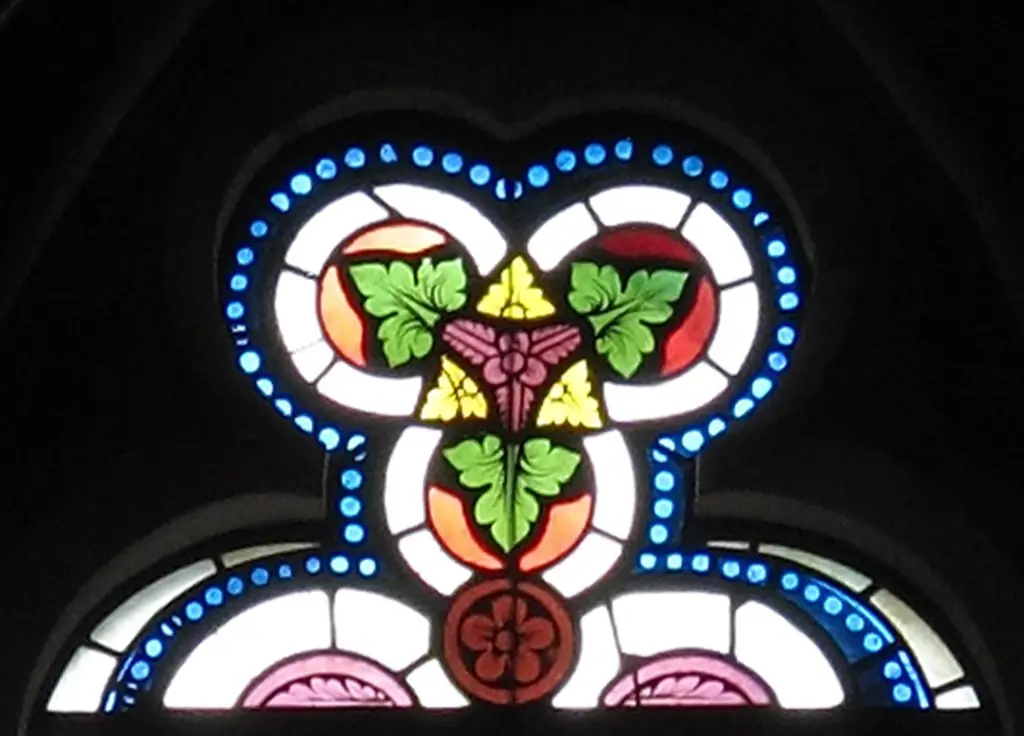 Ornamental Lancet Heads
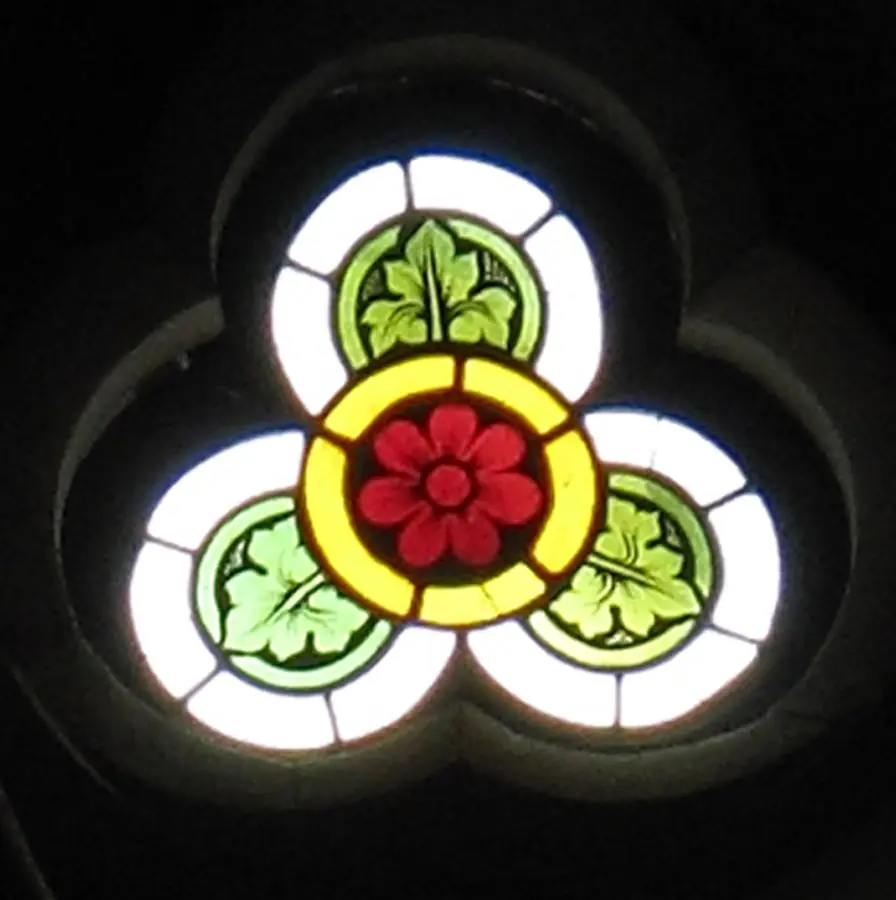 Trefoil-shaped Tracery Light
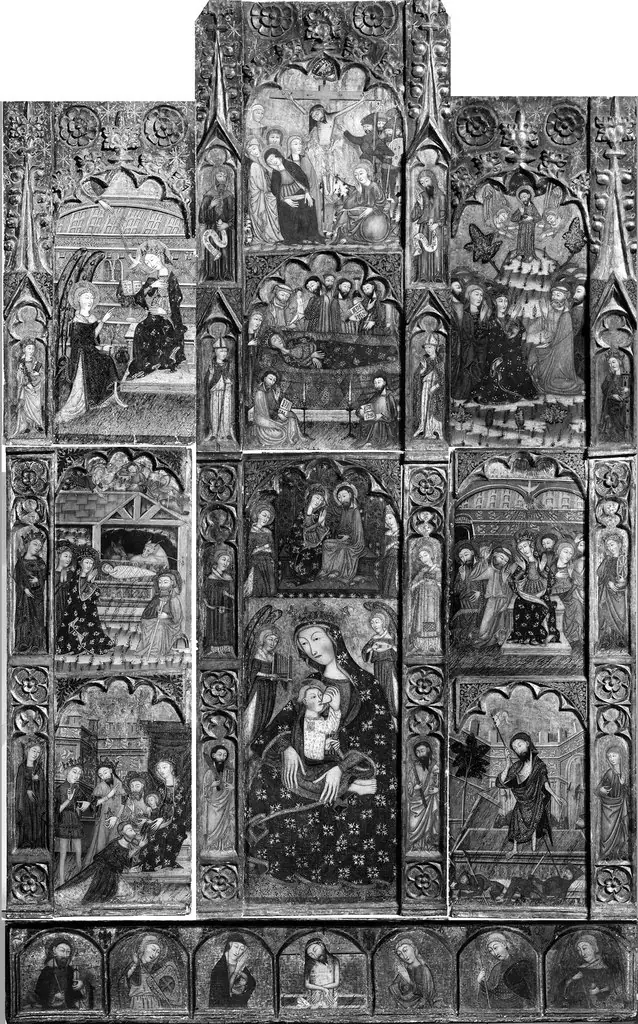 Retable
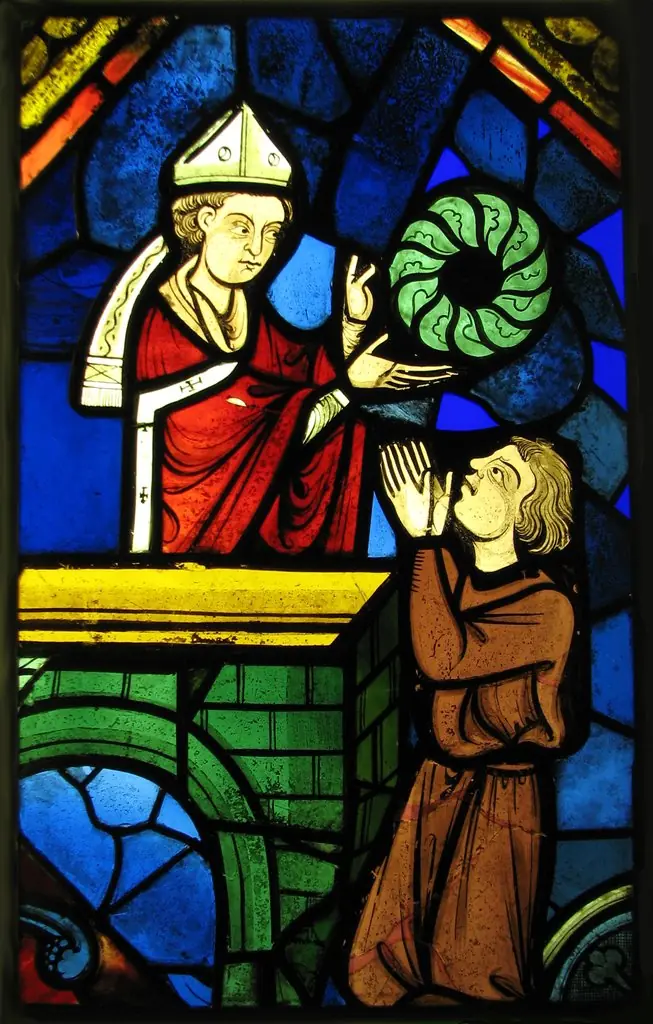 Archbishop Gauthier Cornut of Sens Displaying the Crown of Thorns
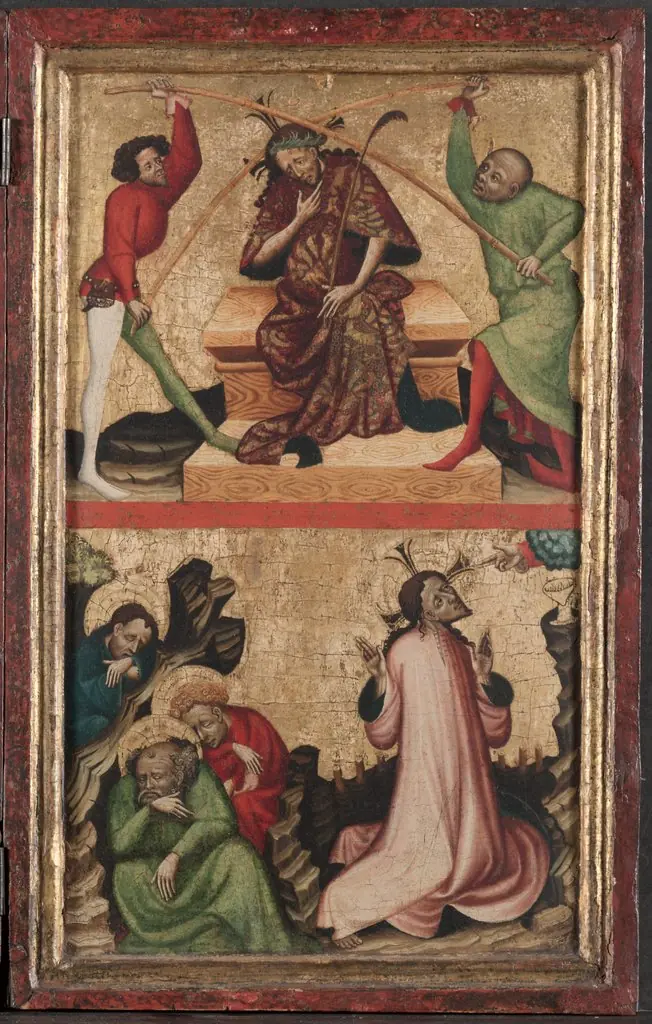 Diptych with the Passion of Christ (right wing): Crowning with Thorns and Agony on the Garden
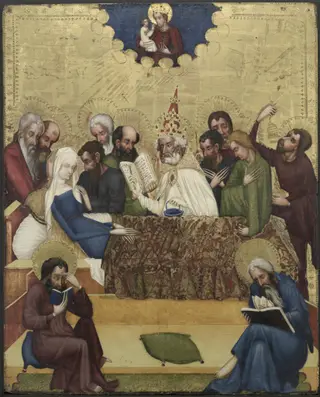 Death of the Virgin
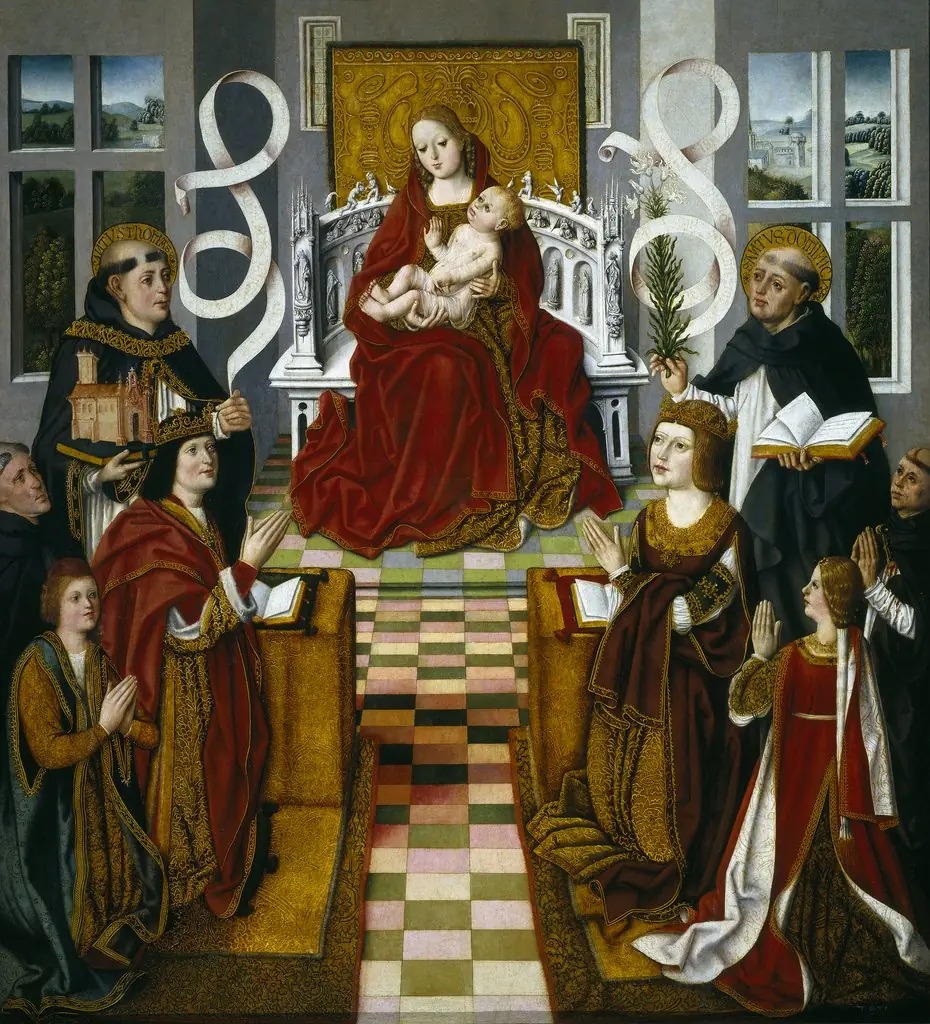 Madonna of the Catholic Monarchs
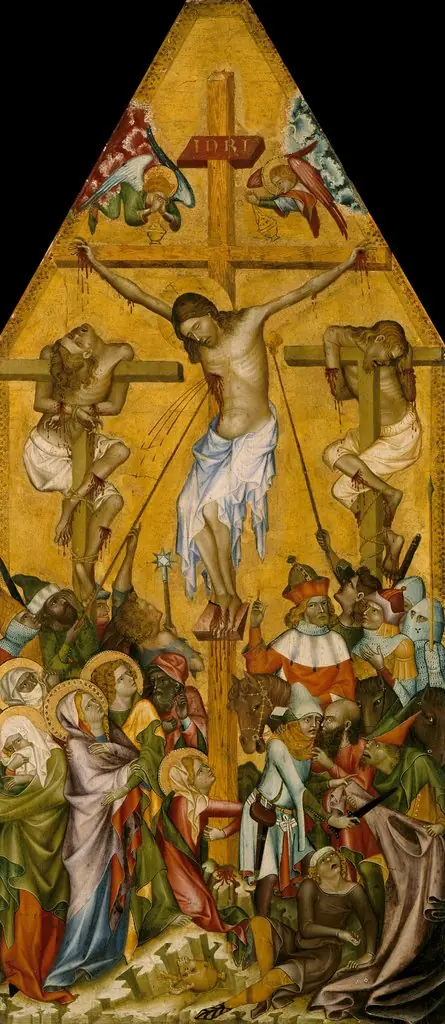 The Crucifixion of Christ
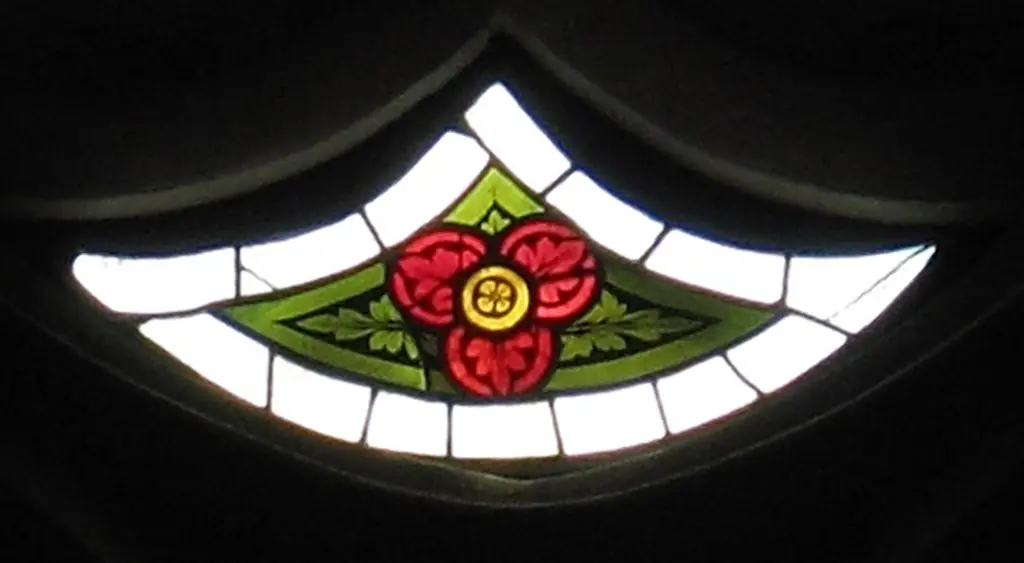 Triangular-shaped Tracery Light
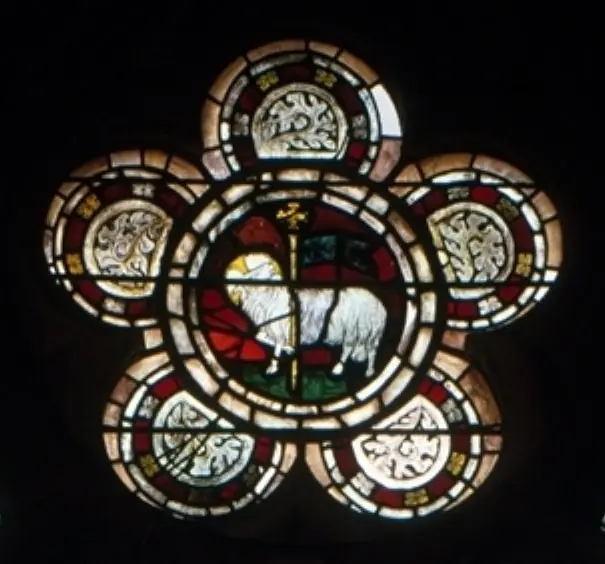 Tracery Light
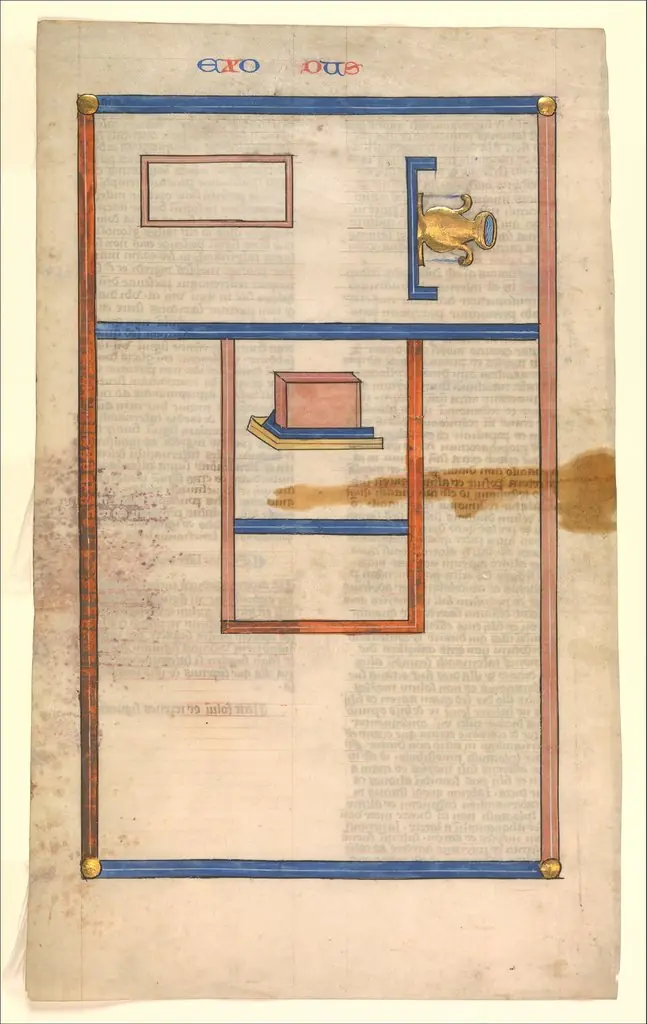 Floor Plan of the Tabernacle, one of six illustrated leaves from the Postilla Litteralis (Literal Commentary) of Nicholas of Lyra
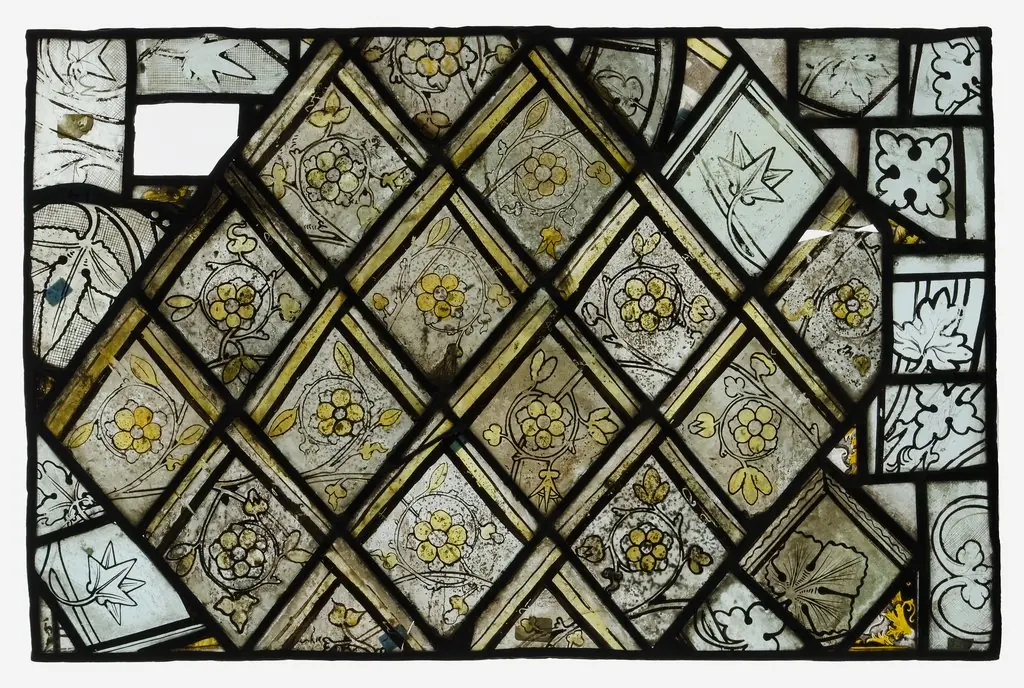 Glass panel
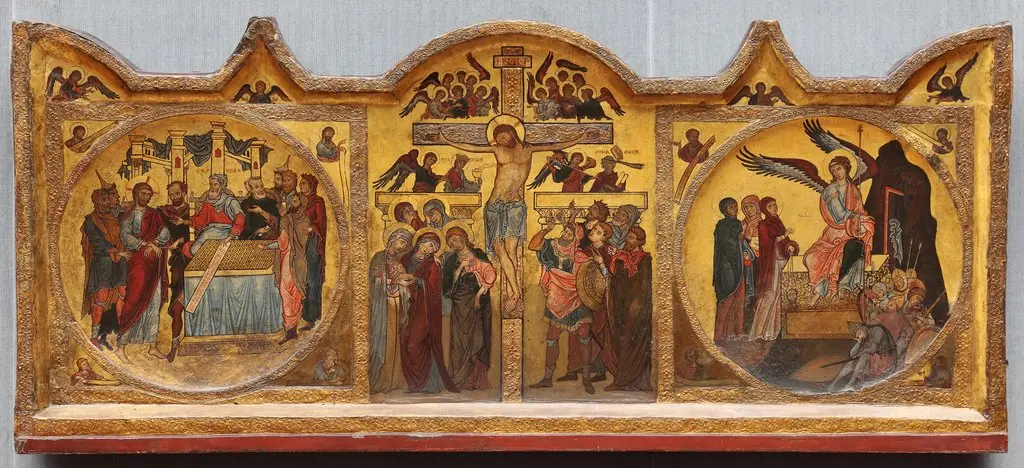 Crucifixion retable from Soest
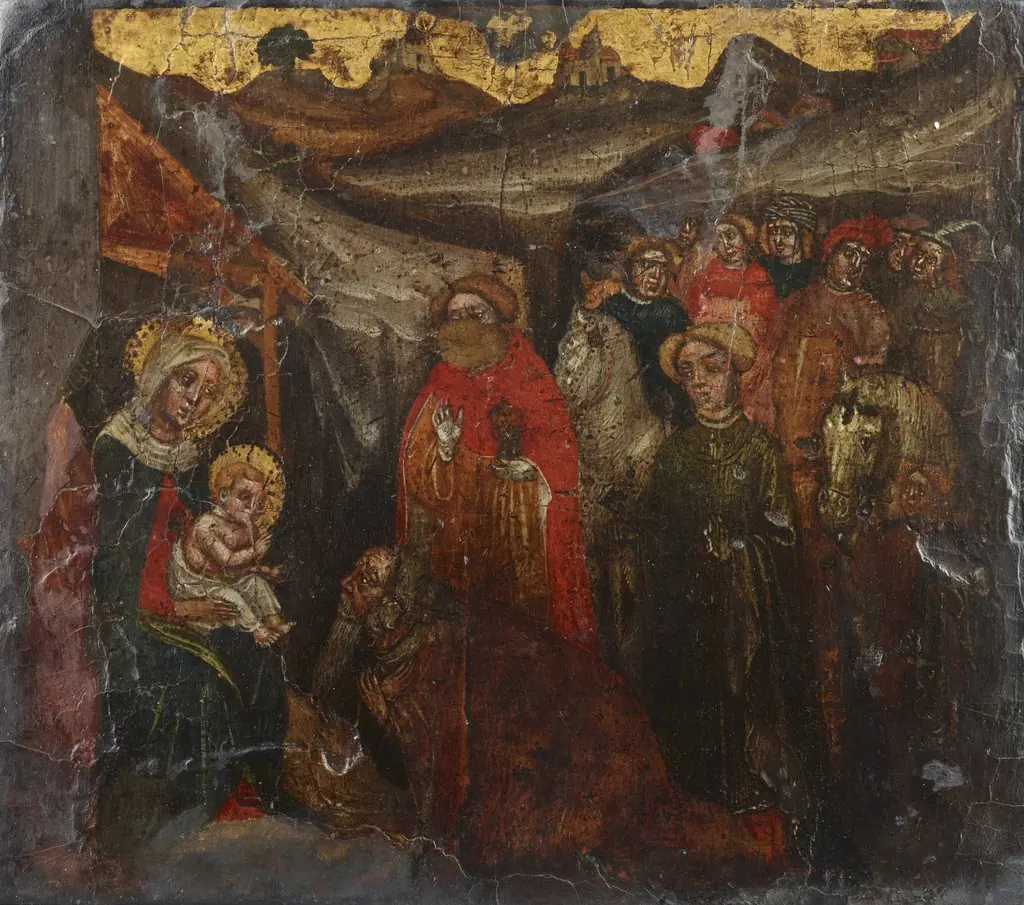 Adoration of the Magi
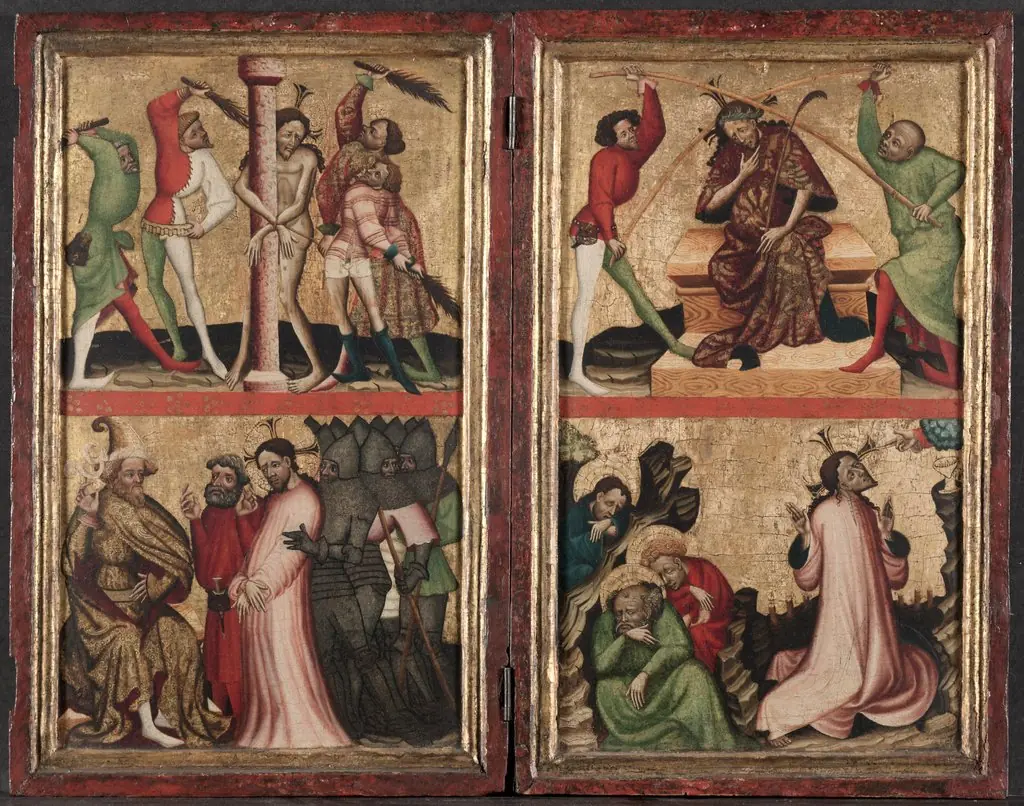 Diptych with the Passion of Christ
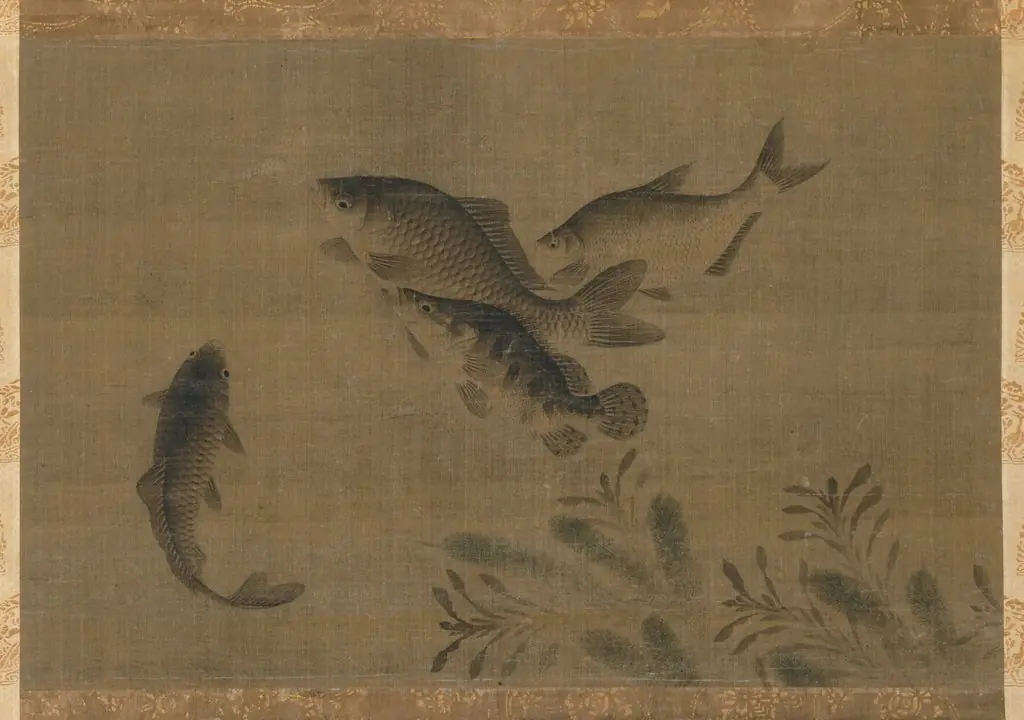 Fish
Fish A Pastoral Scene
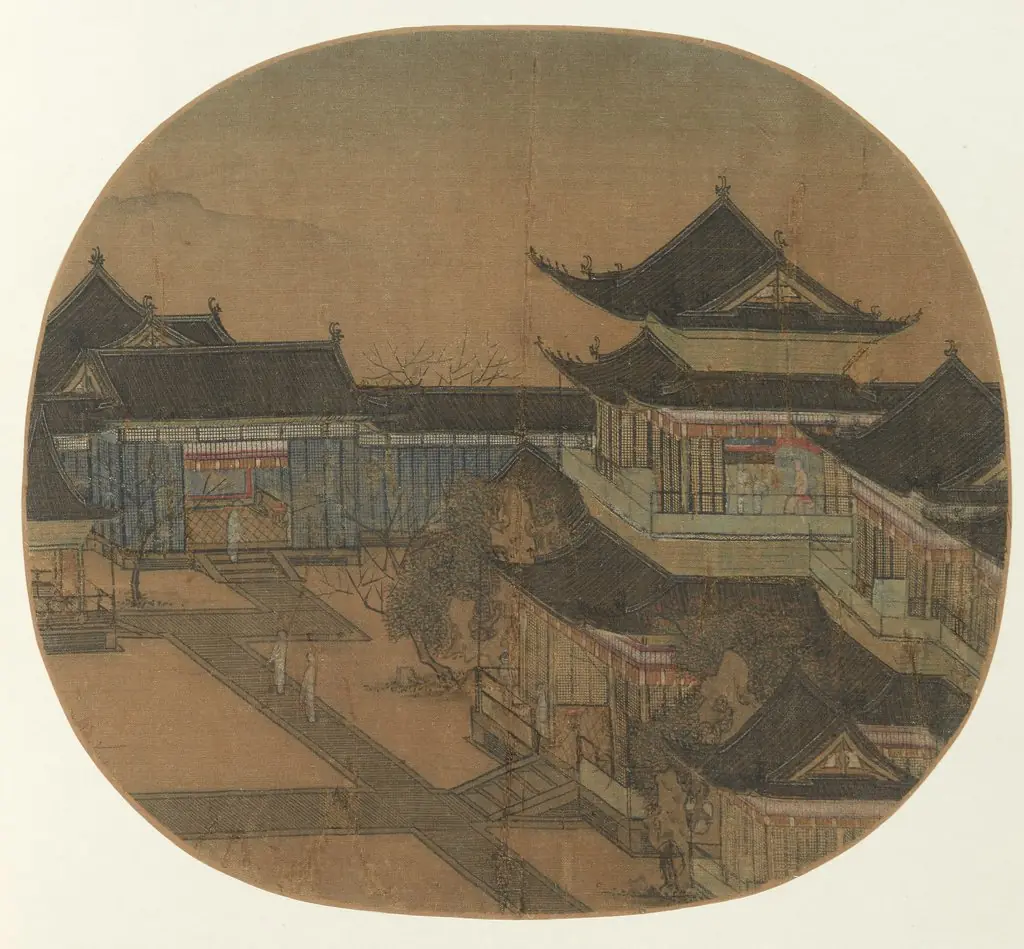 A Palace
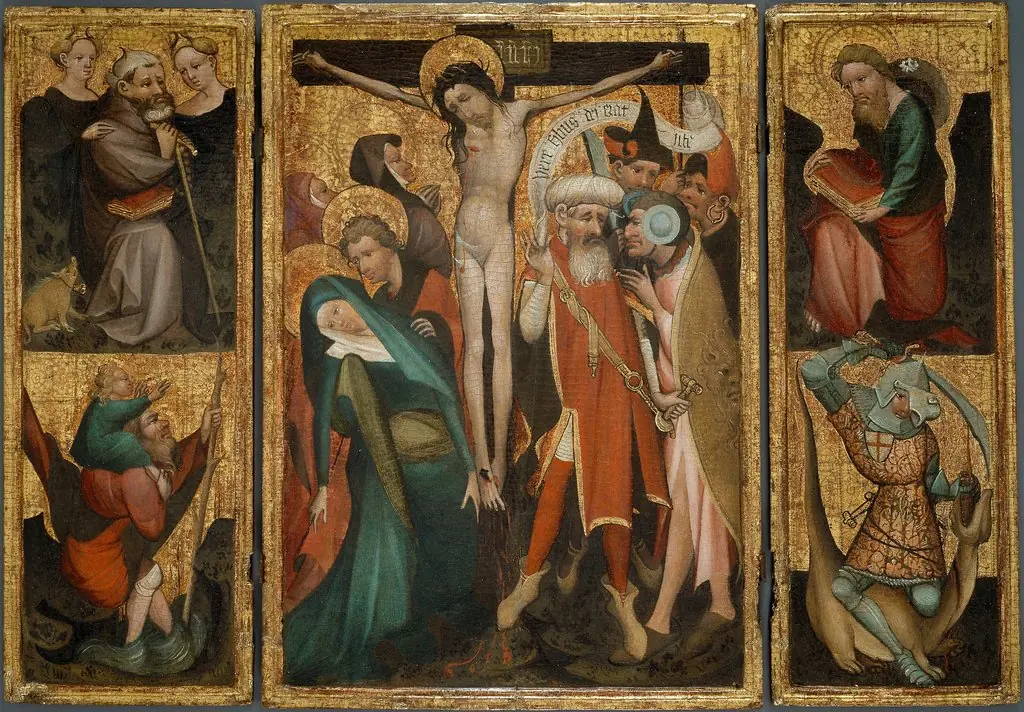 Triptych of the Crucifixion with Saints Anthony, Christopher, James and George
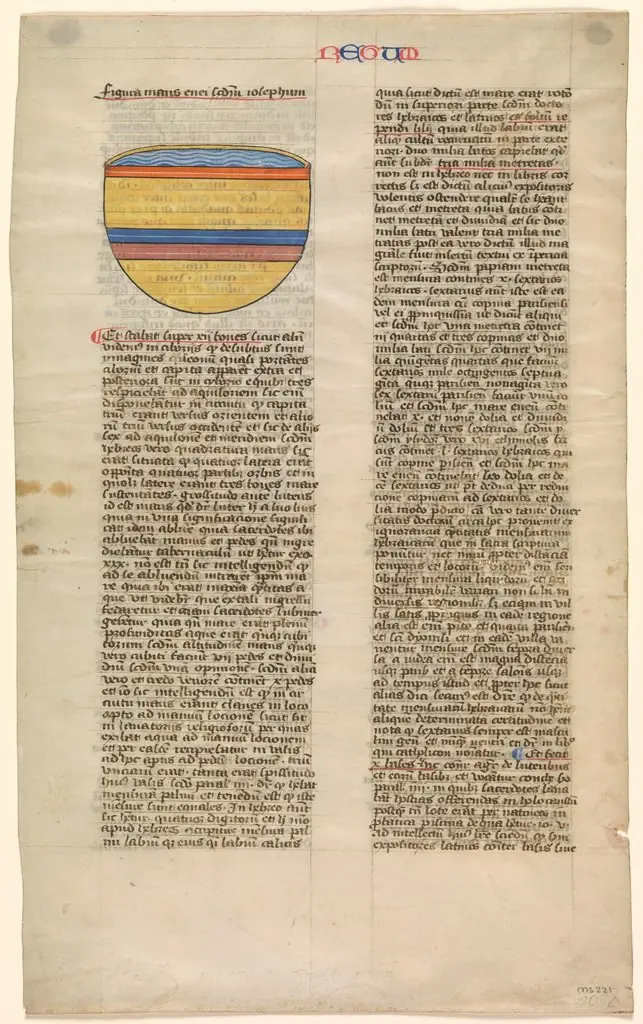 Brazen Sea, one of six illustrated leaves from the Postilla Litteralis (Literal Commentary) of Nicholas of Lyra
 Triangular-shaped Tracery Light
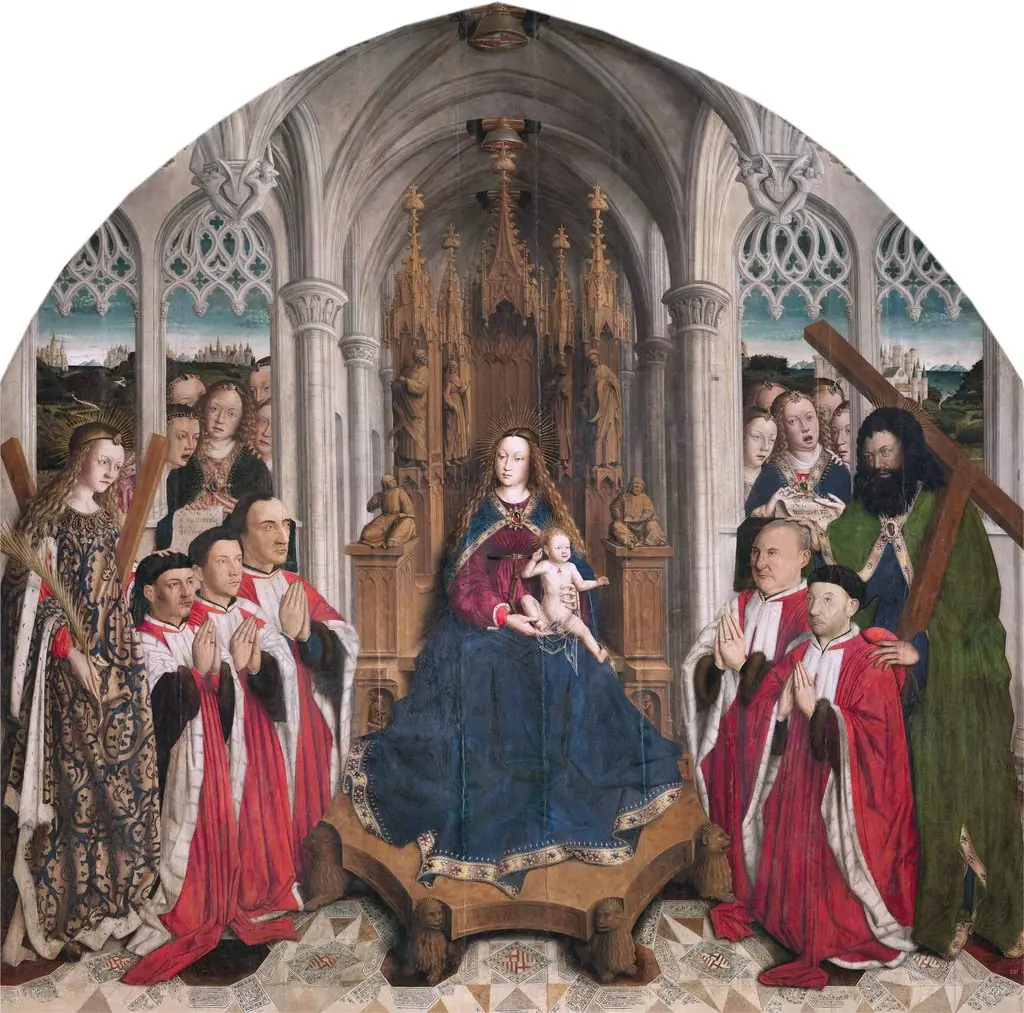 Virgin of the Councillors
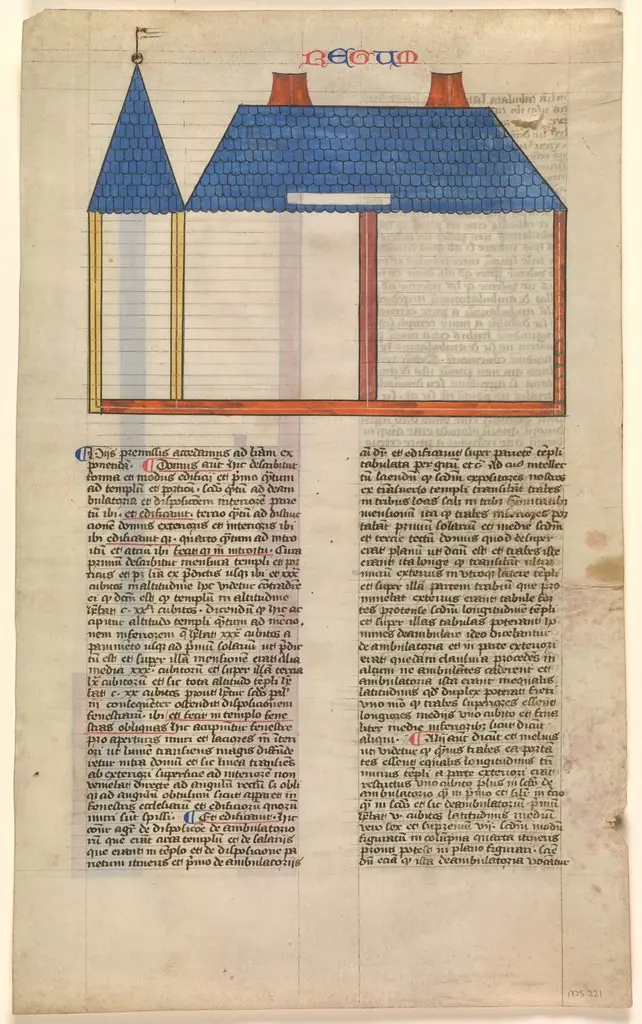 Elevation of Solomon's Temple, one of six illustrated leaves from the Postilla Litteralis (Literal Commentary) of Nicholas of Lyra
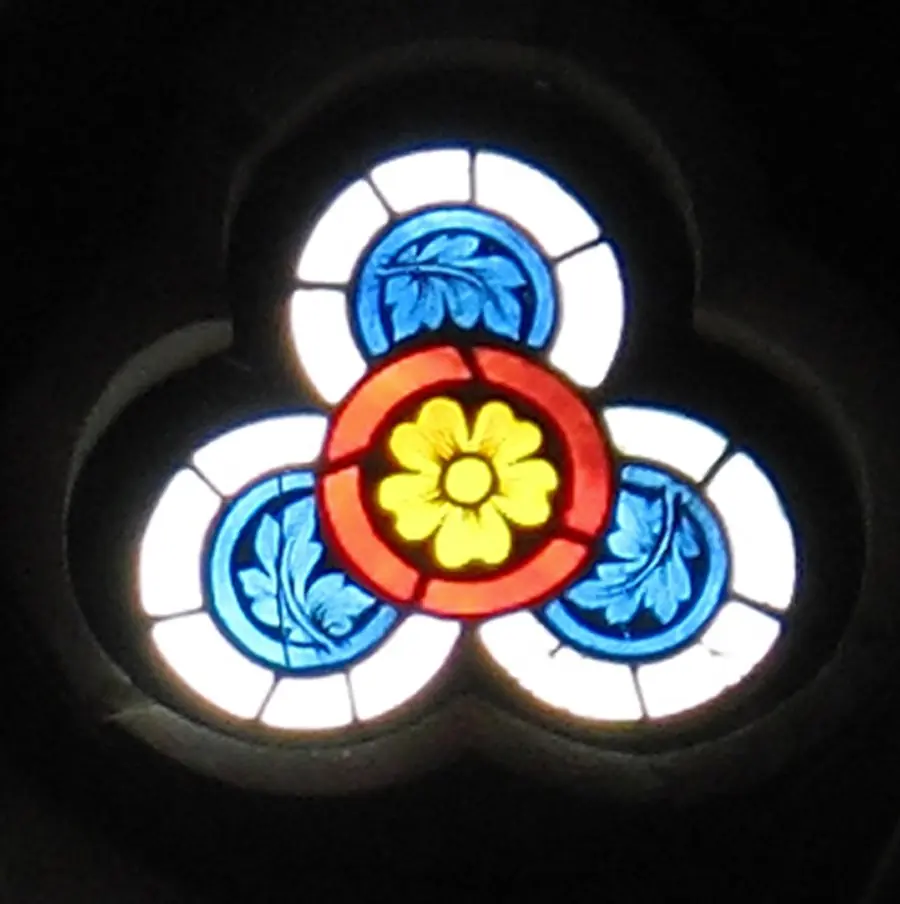 Trefoil-shaped Tracery Light
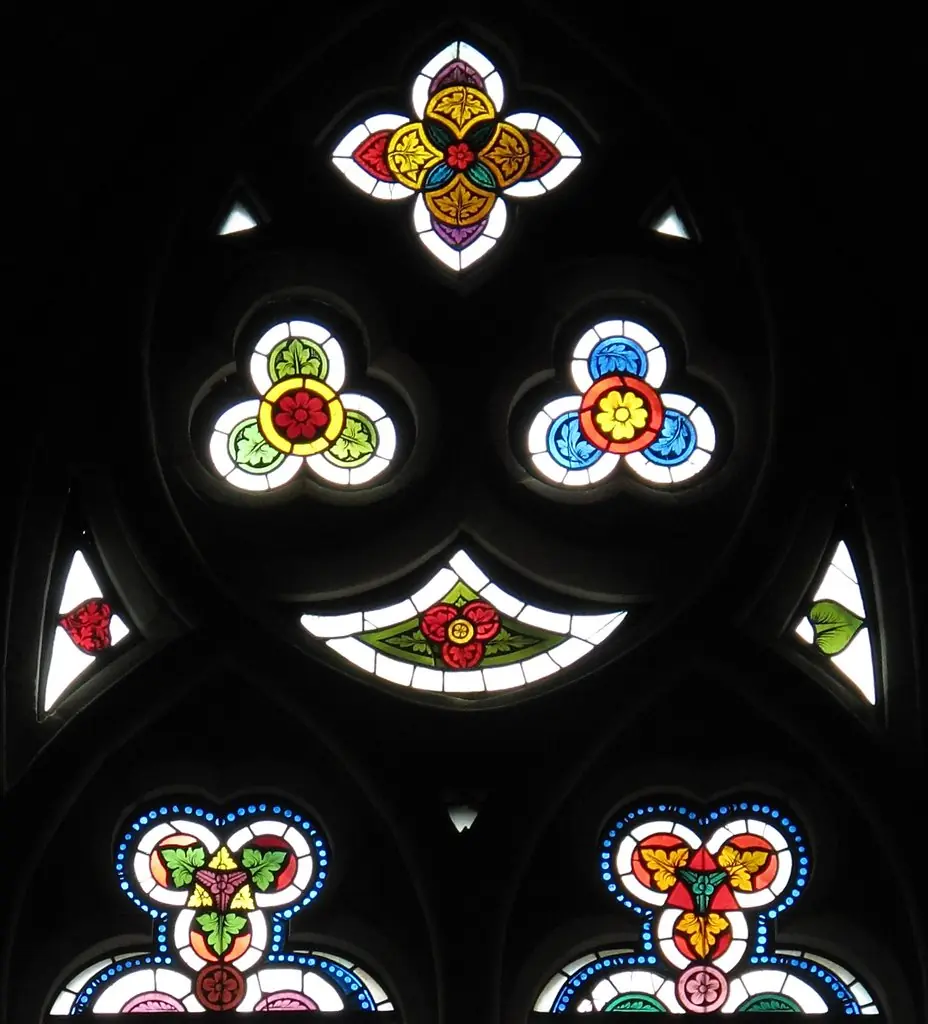 Ornamental Lancet Heads
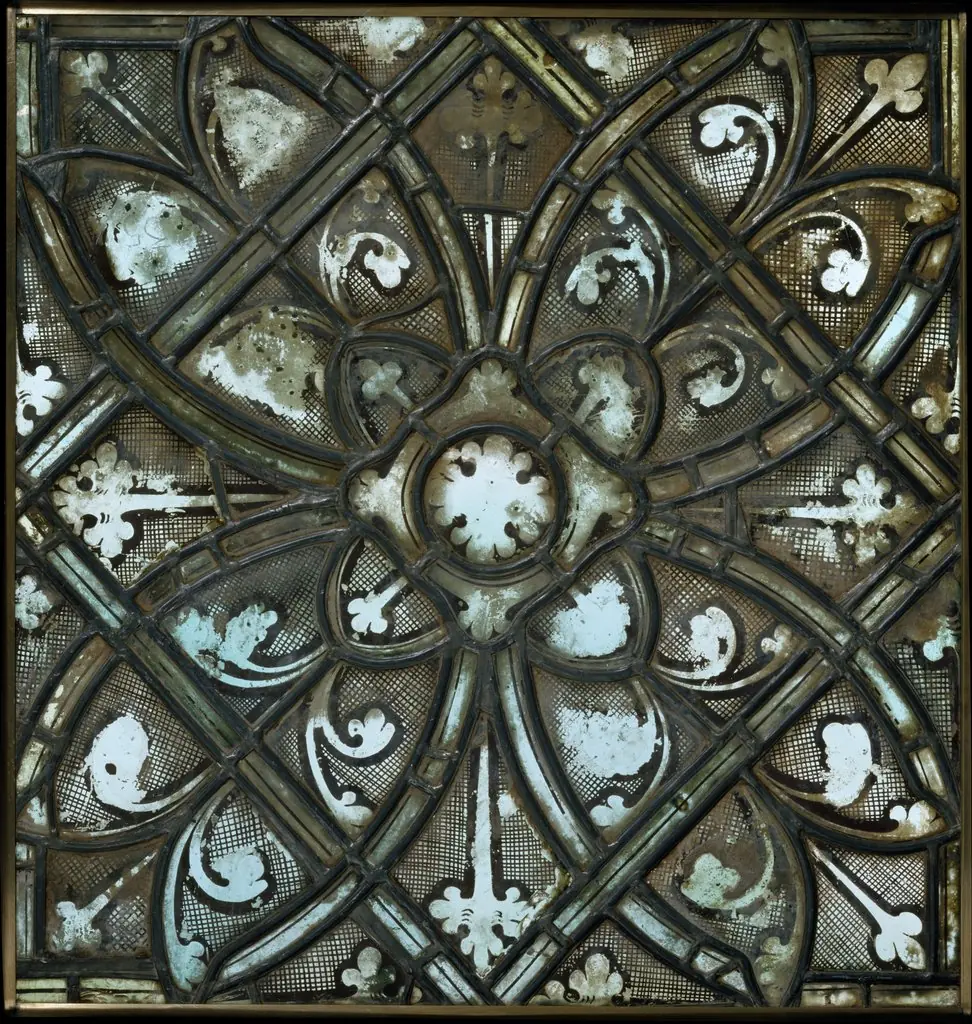 Grisaille Panel
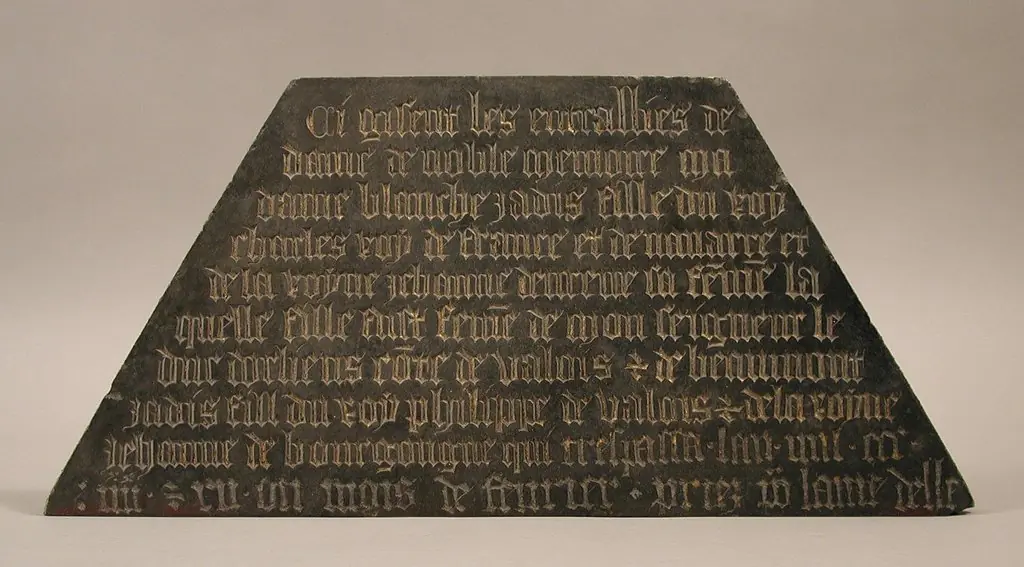 Tomb Plaque of Blanche of France (1328–92), daughter of Charles IV of France and Jeanne d'Evreux
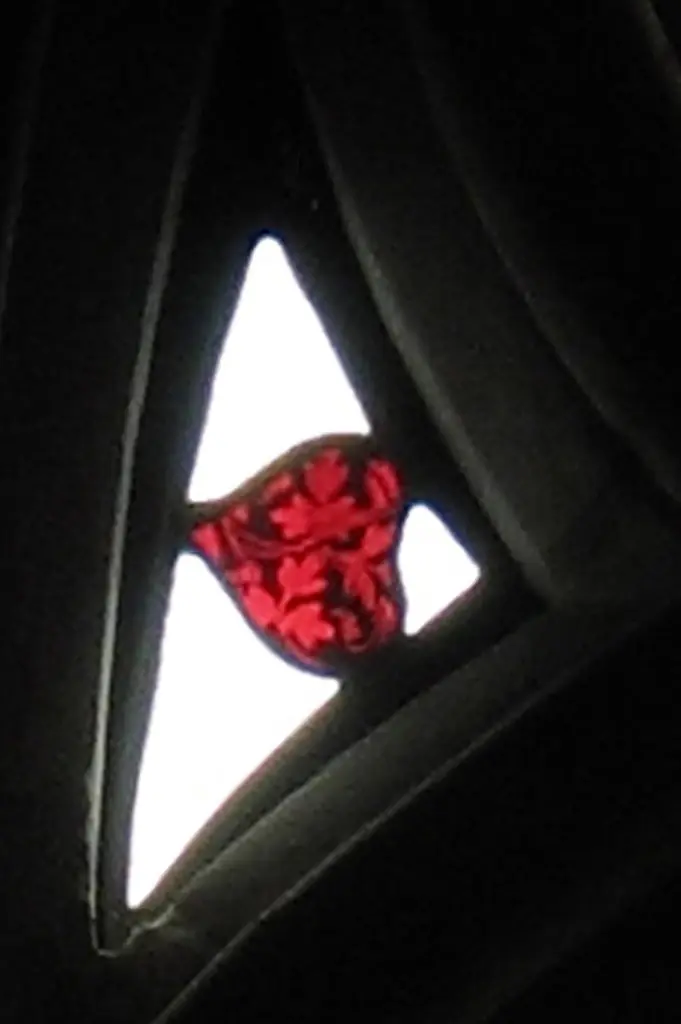 Triangular-shaped Tracery Light
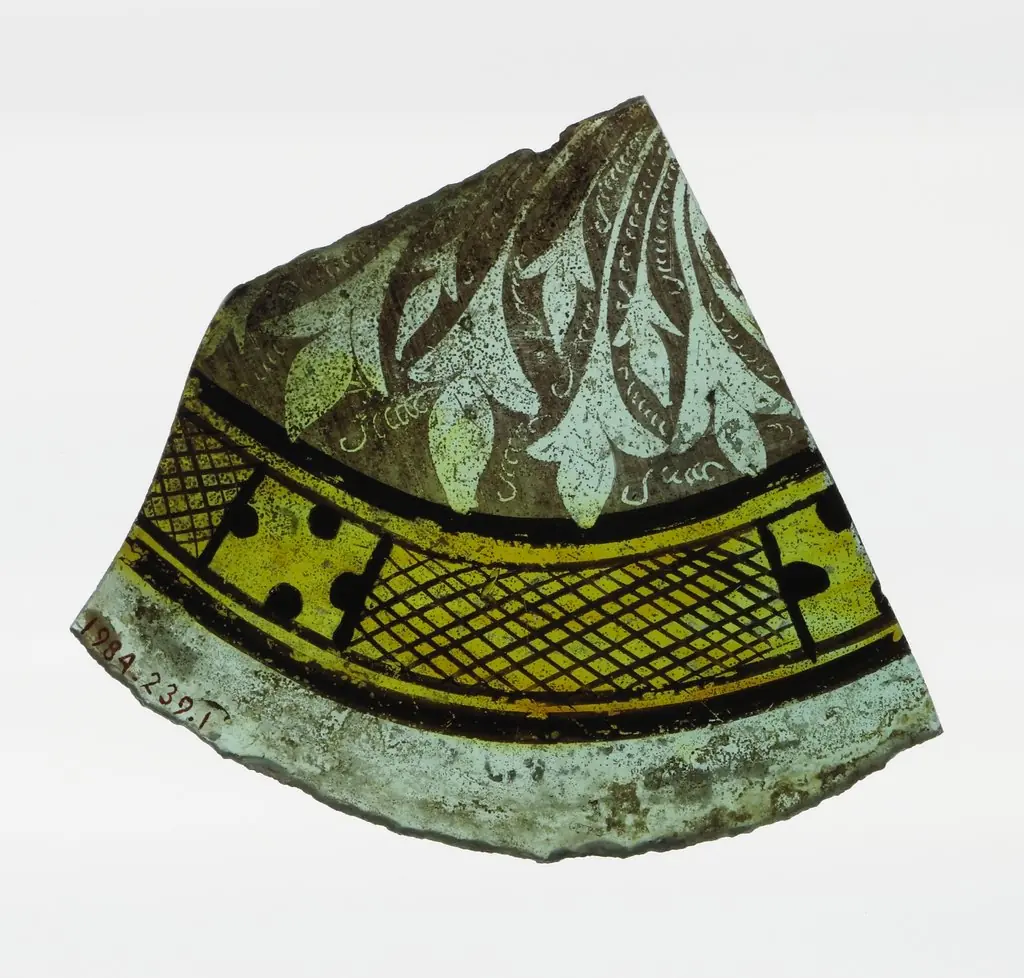 Glass Fragment
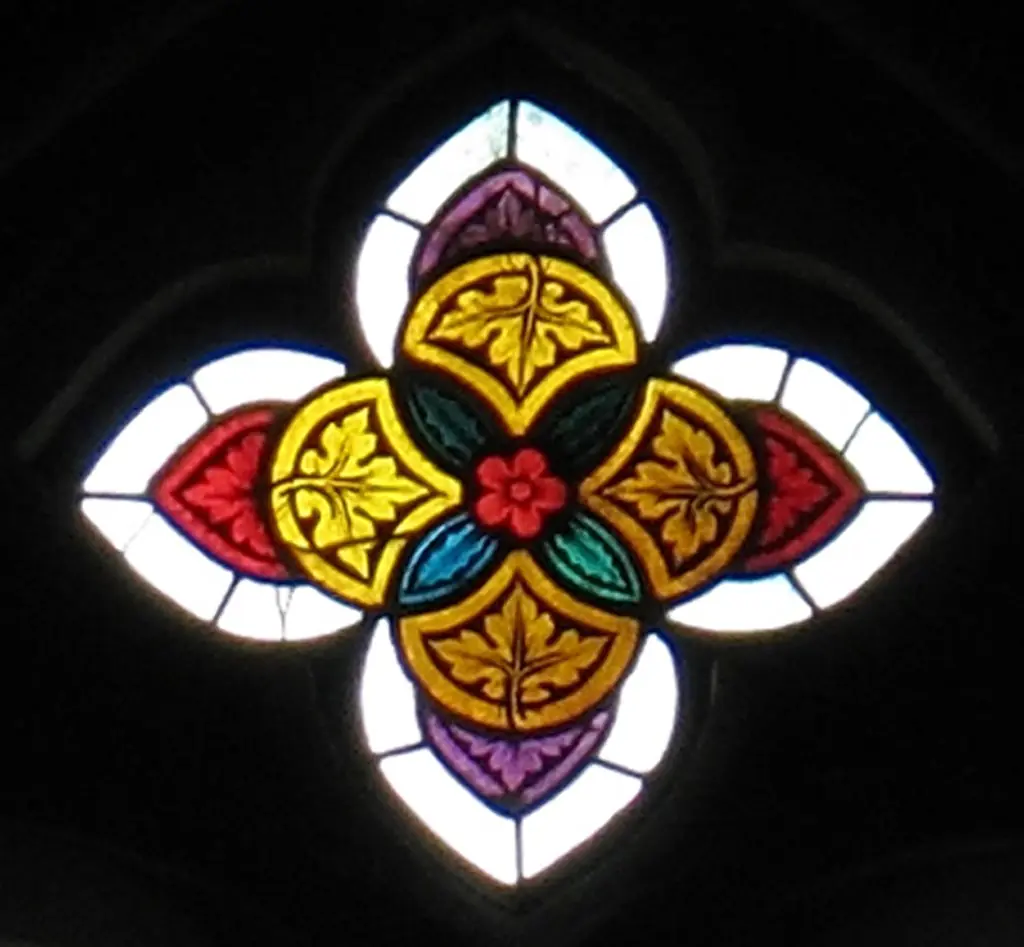 Quatrefoil-shaped Tracery Light
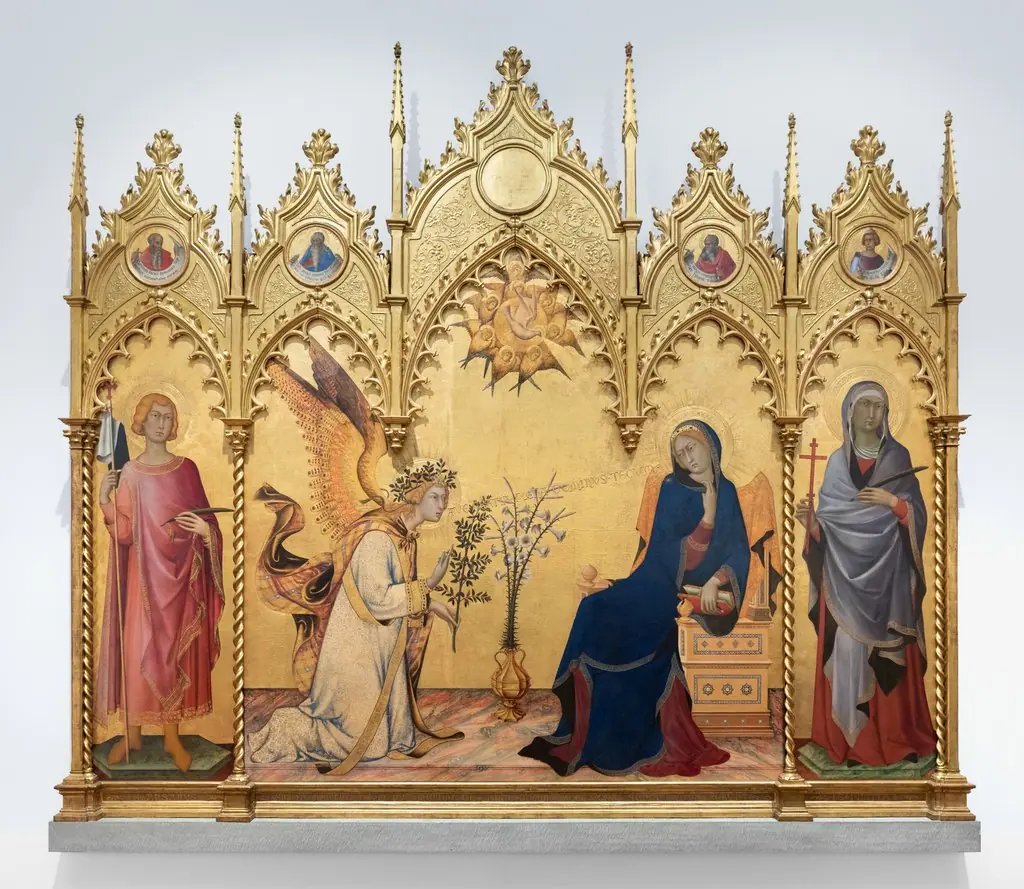 Annunciation with Saints Maxima and Ansanus
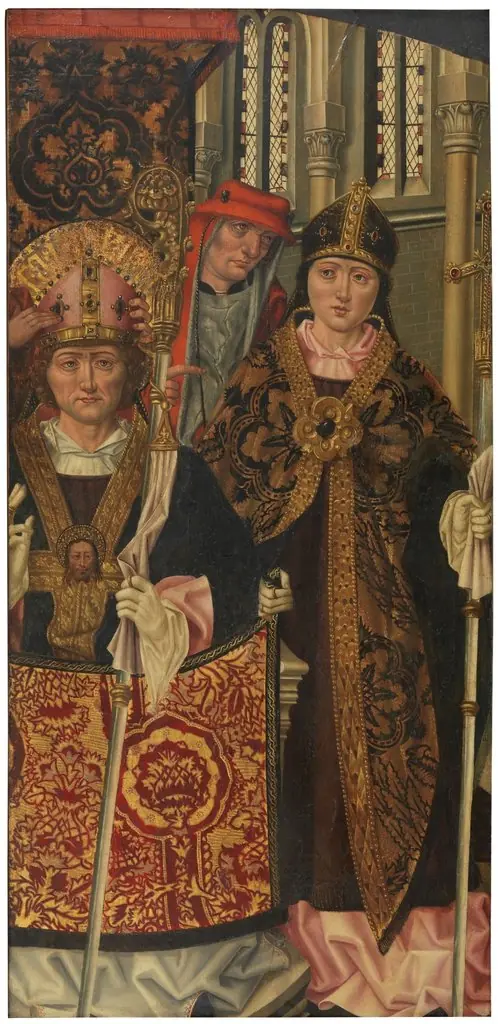 San Agustín de pontifical
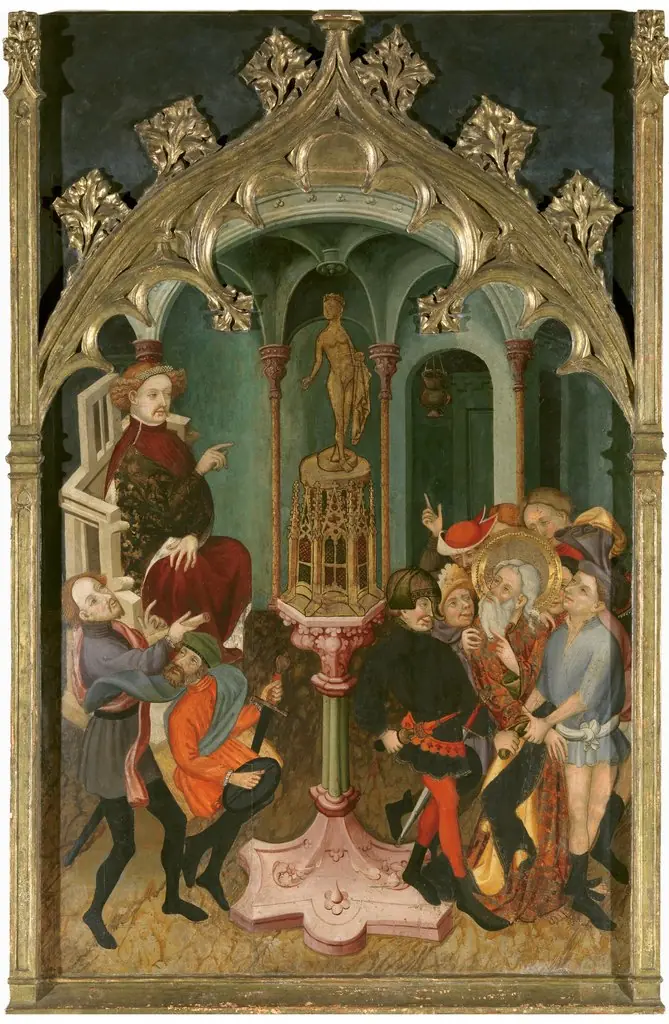 Saint Andrew refusing to worship the Idol
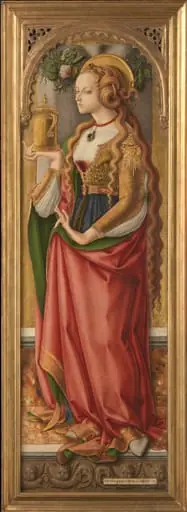 Maria Magdalena
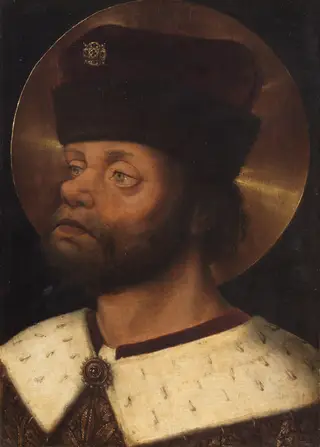 Saint Maurice
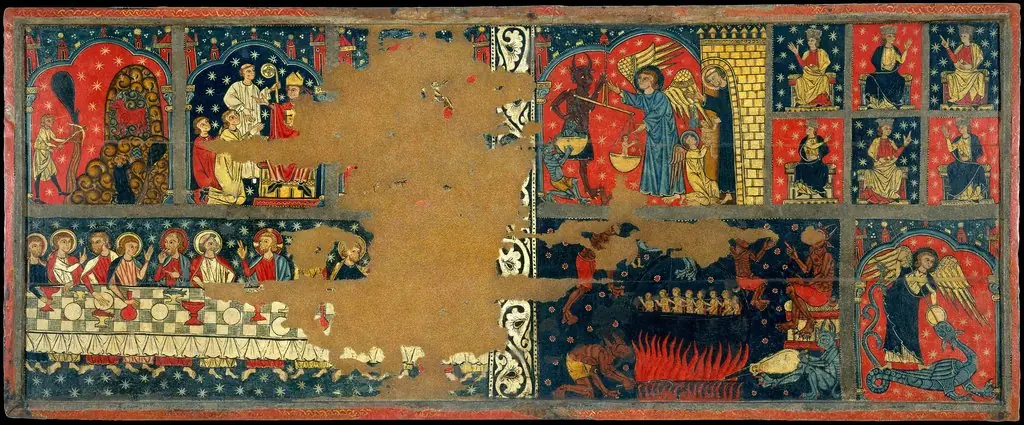 Panel of Saint Michael
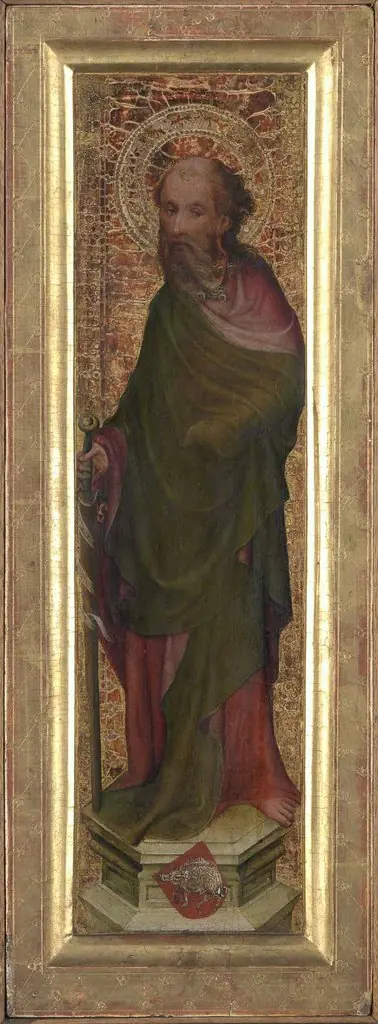 Hl. Paulus Rückseite: Hl. Reinoldus
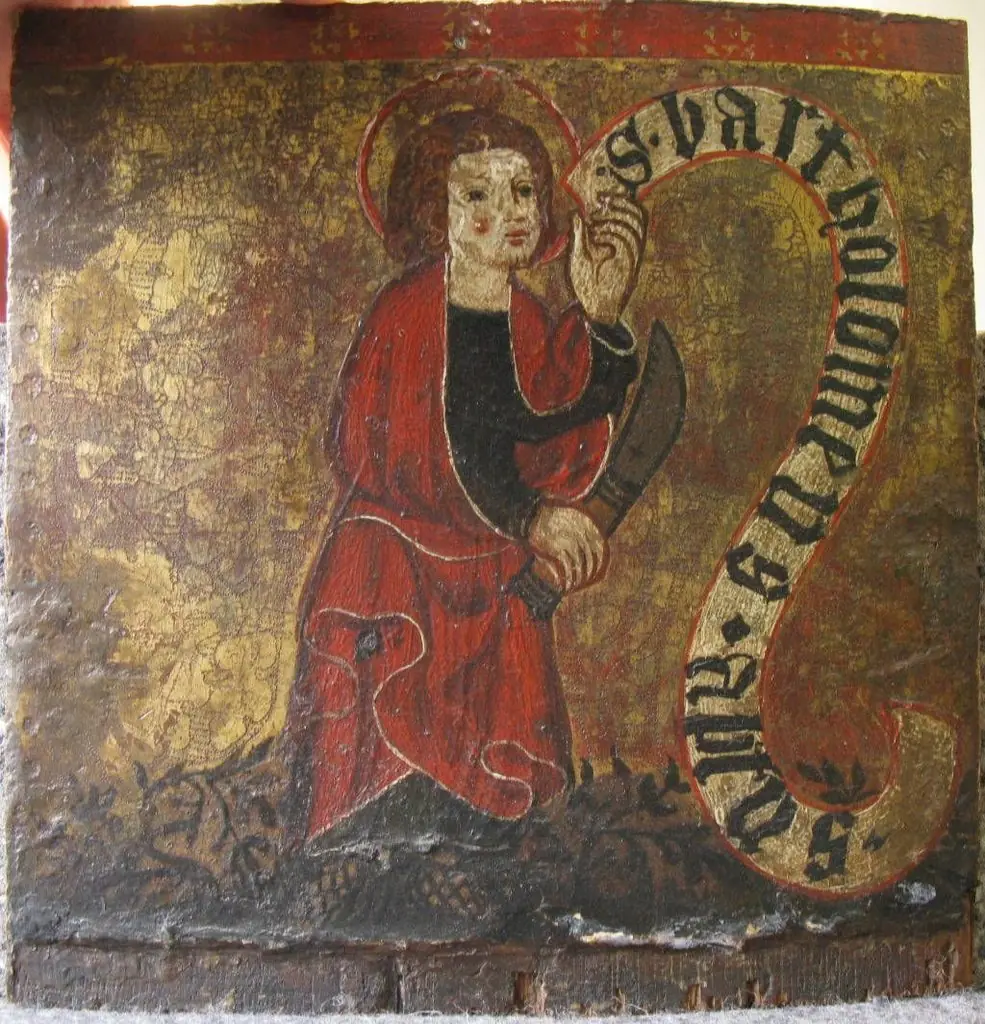 De heilige Bartholomeus
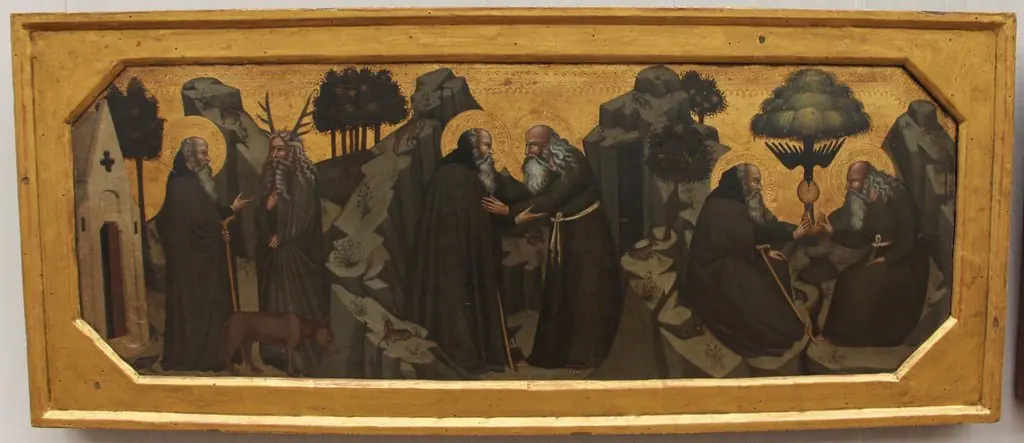 Scenes from the Life of Sacred Hermits
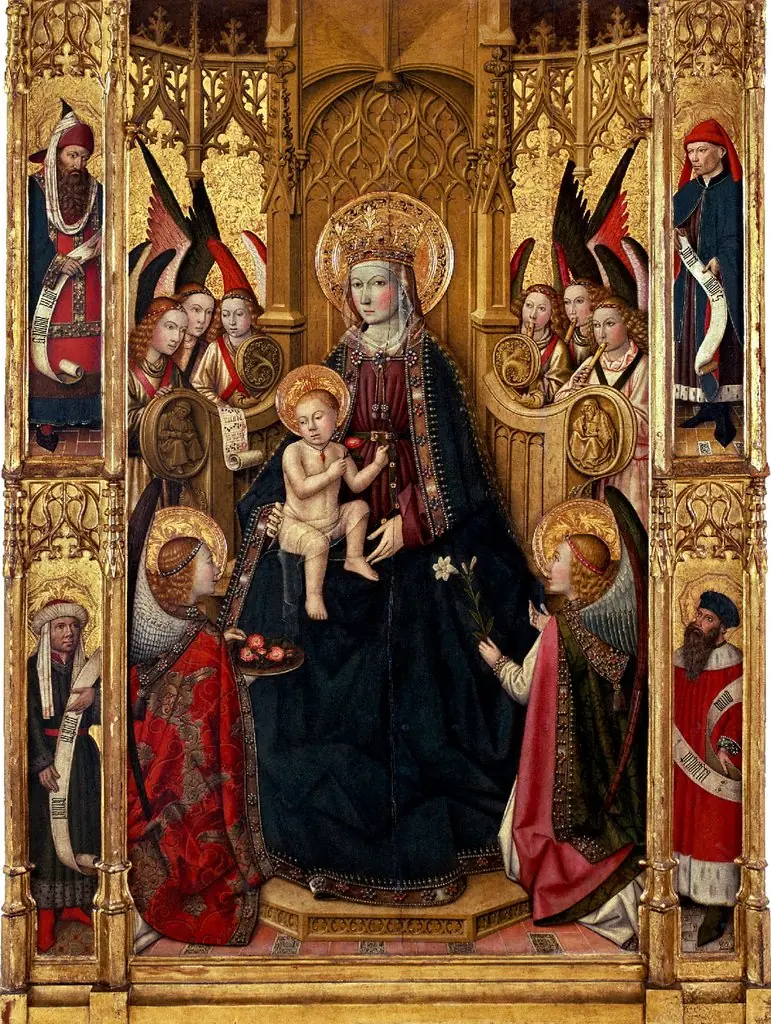 Madonna with child
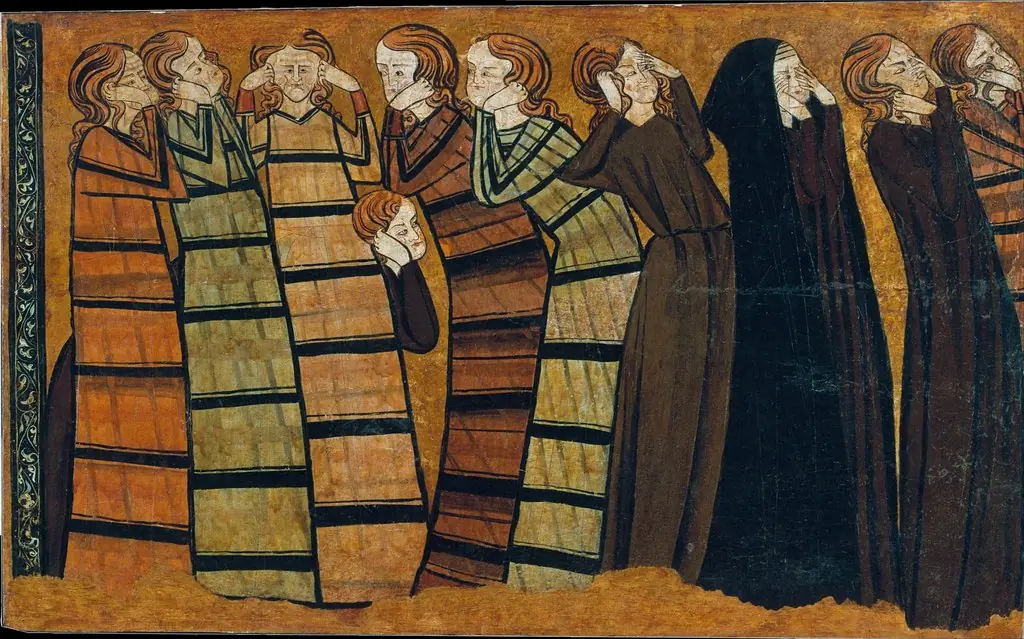 Pleurants
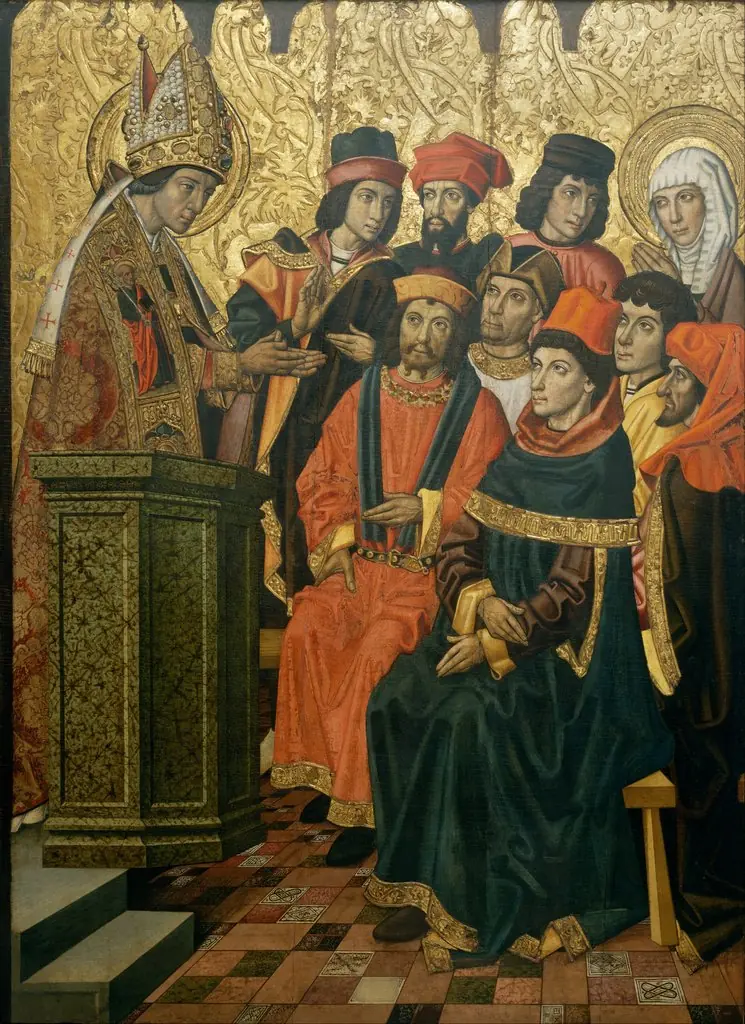 Saint Augustine and Saint Monica in a Sermon by Saint Ambrose
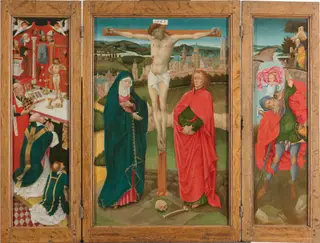 Drieluik met de kruisiging
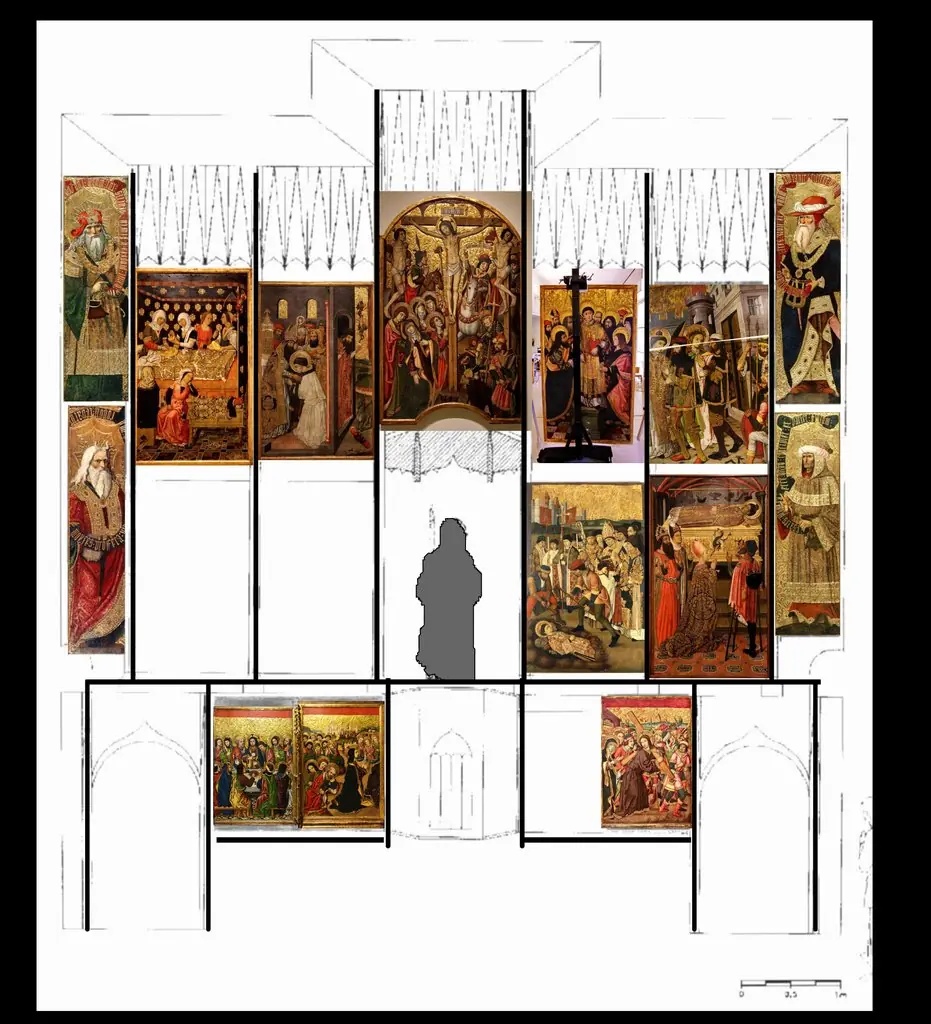 Altarpiece of Saint Stephen
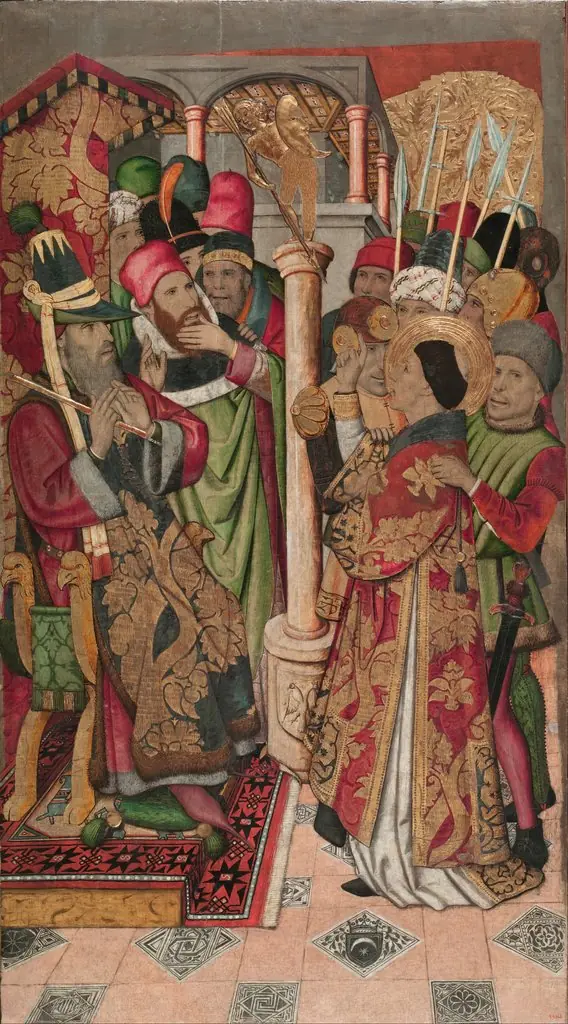 Saint Vincent before Dacian
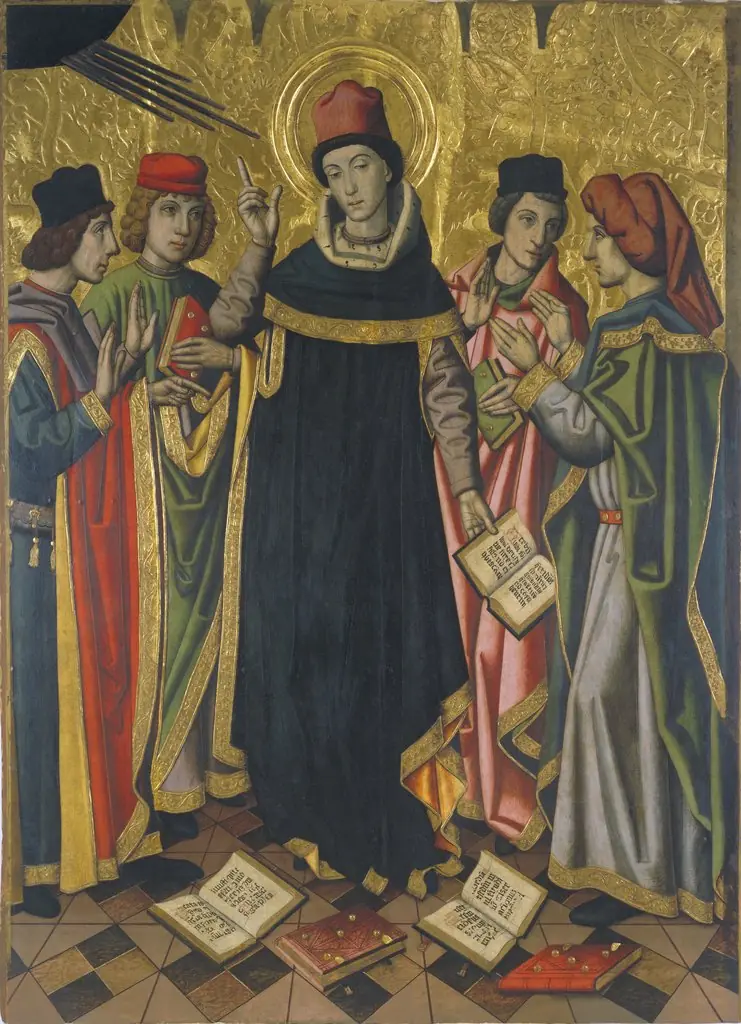 The Conversion of Saint Augustine
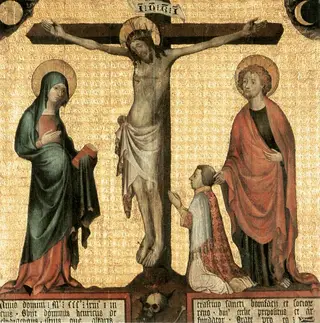 Calvary of Hendrik van Rijn
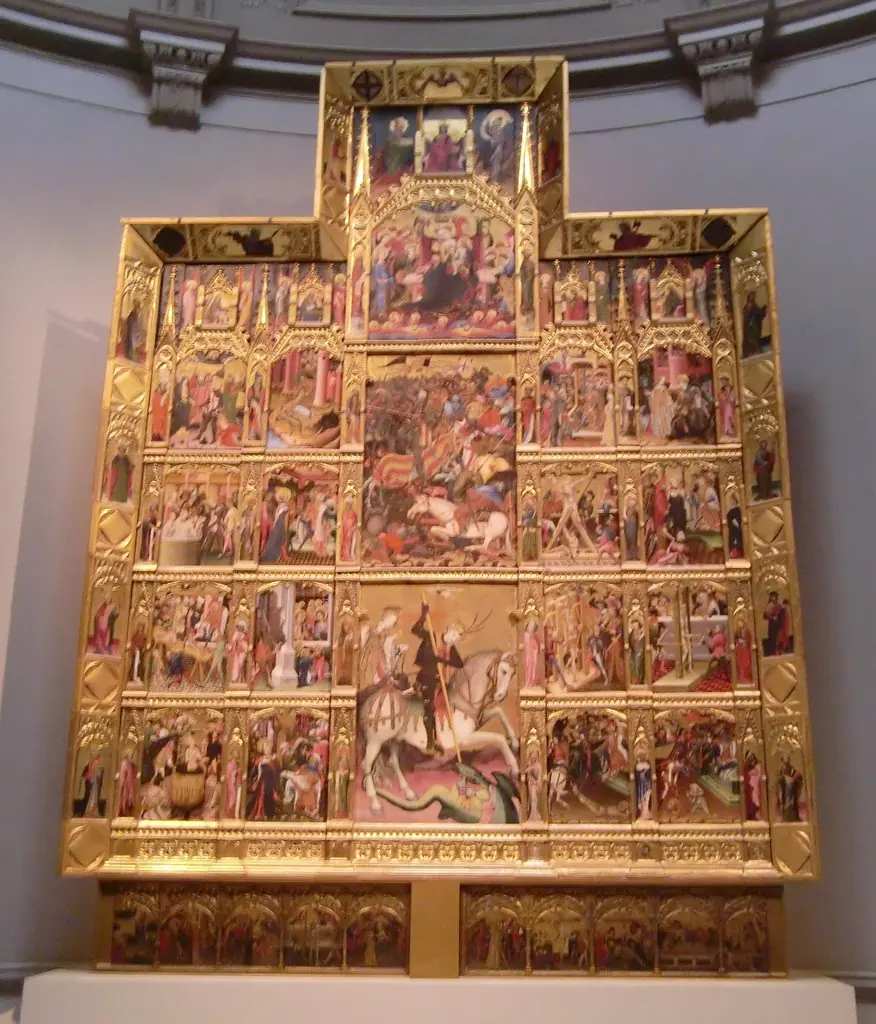 Altarpiece of Saint George
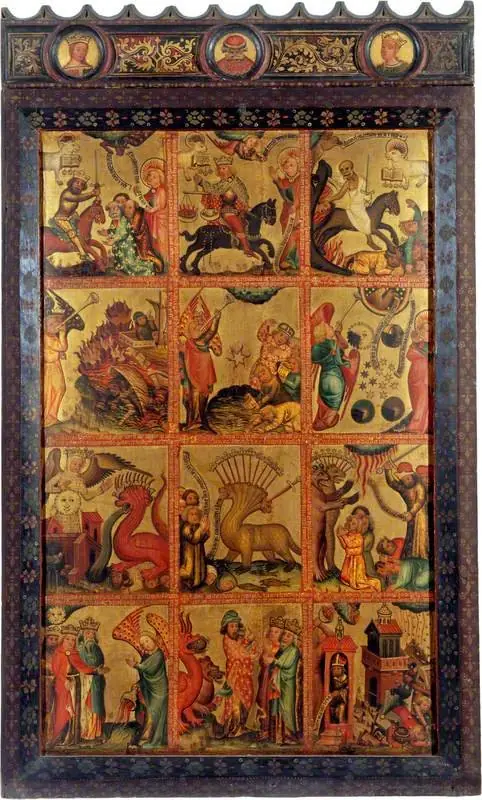 12 Scenes of the Apocalypse (triptych altarpiece, right wing, inner)
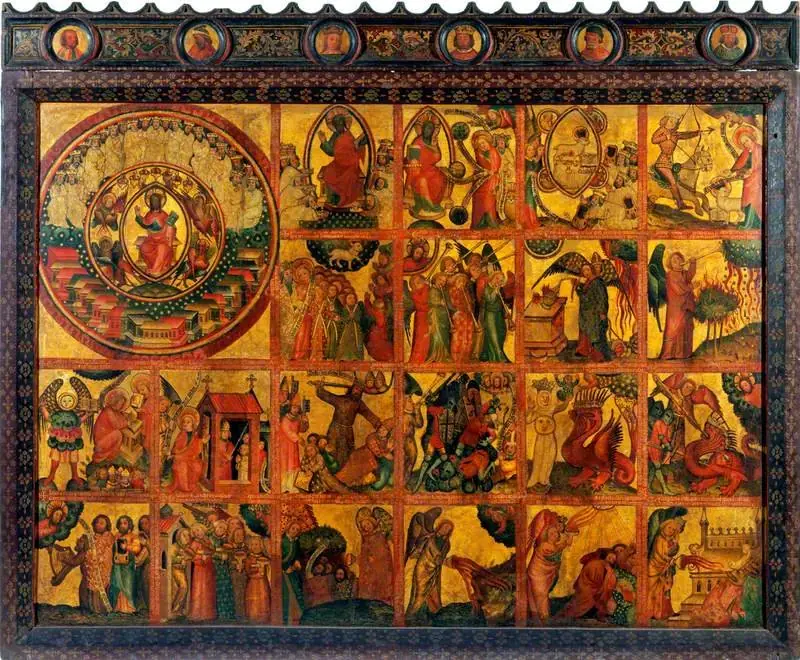 21 Scenes of the Apocalypse (triptych altarpiece, centre panel)
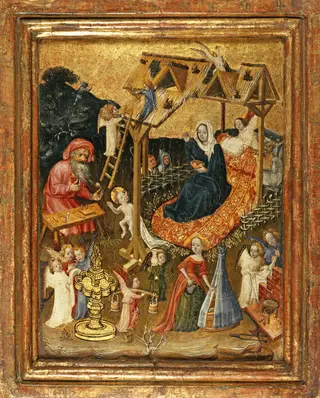 The Holy Family in the stable with angels
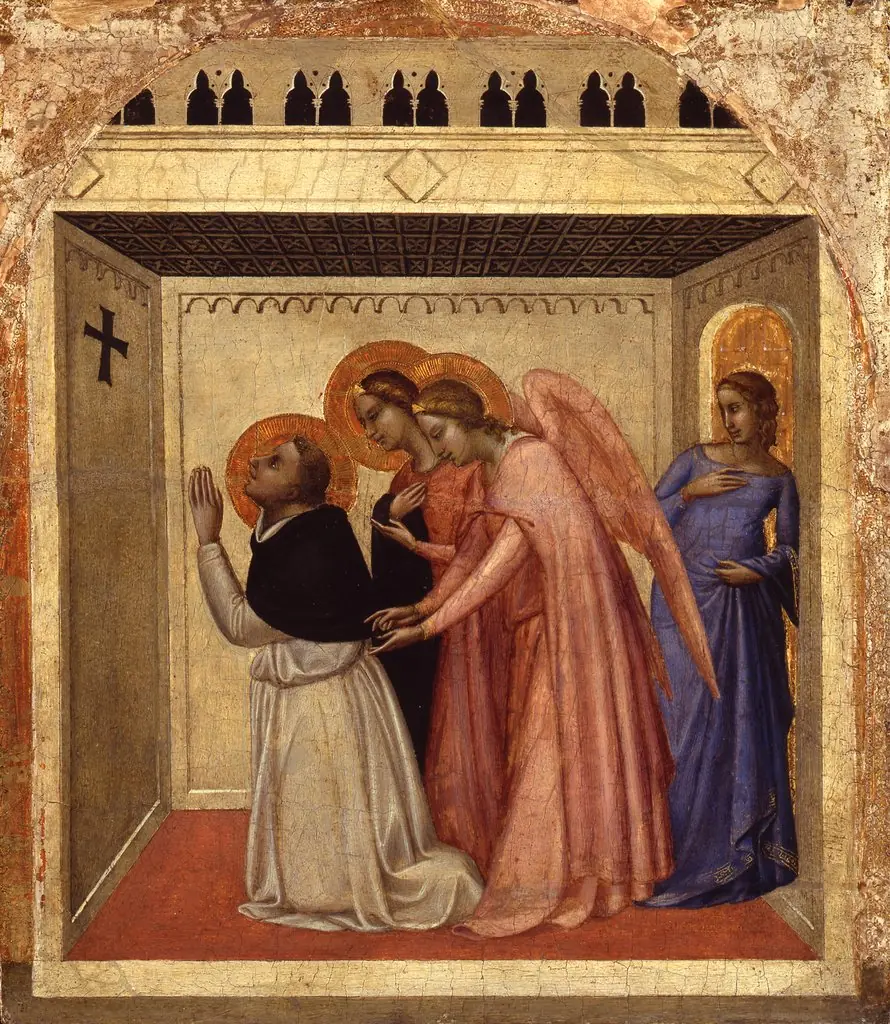 The temptation of Thomas of Aquinas
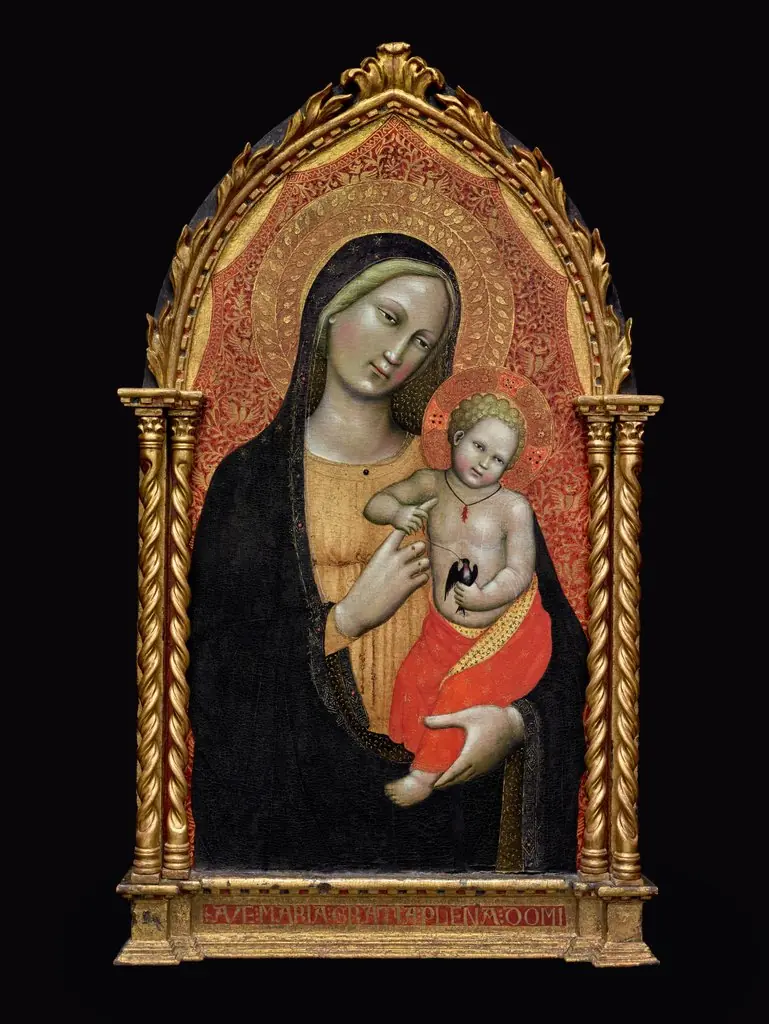 Virgin and Child
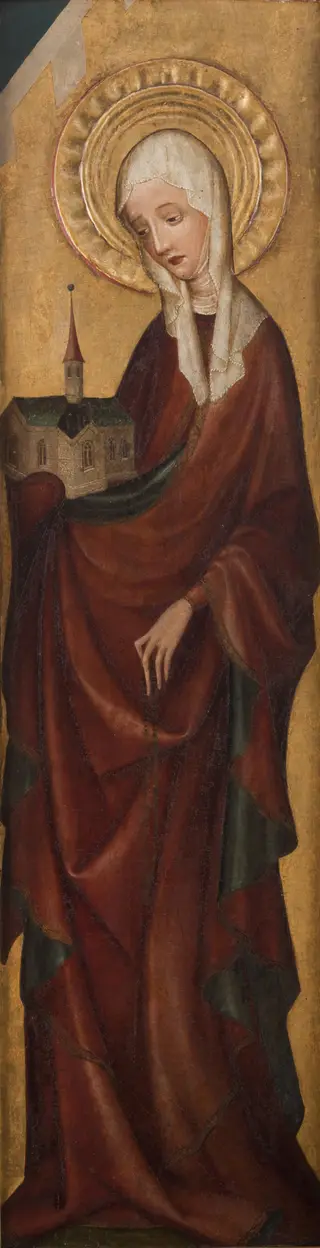 St Hedwig of Silesia. The wing from the altar retable from Trzebunia
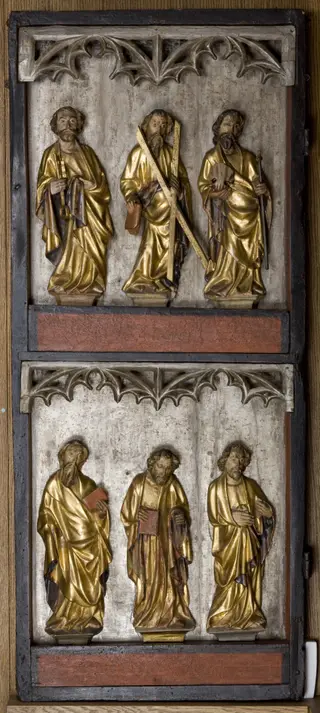 Saint Apostles (reverse: Christ – Man of Sorrows). The left panel of the retable from Stary Żywiec
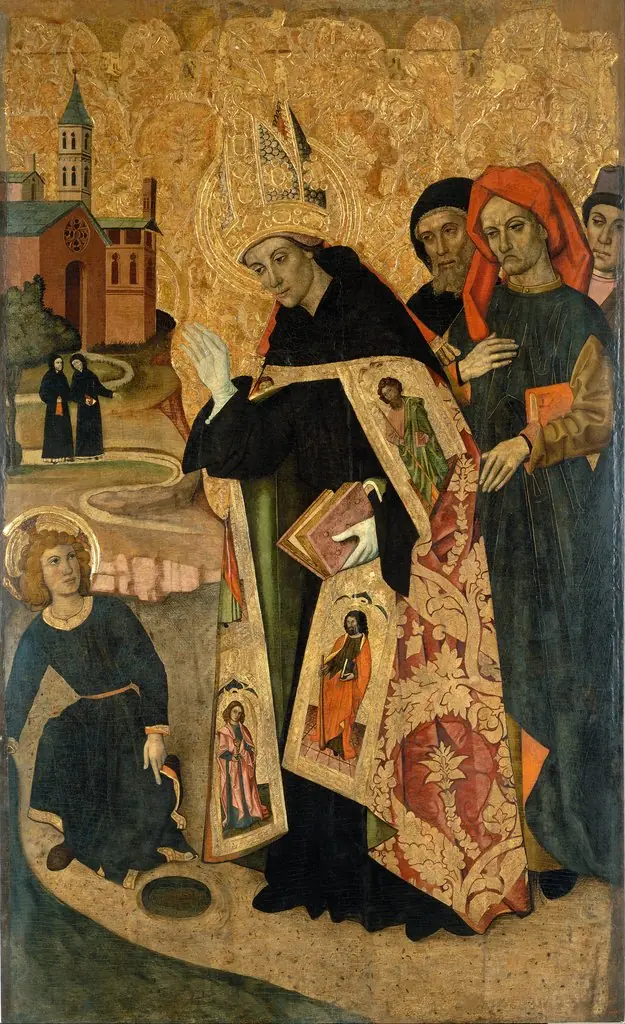 Saint Augustine Meditates on the Trinity when the Child Jesus Appears before him
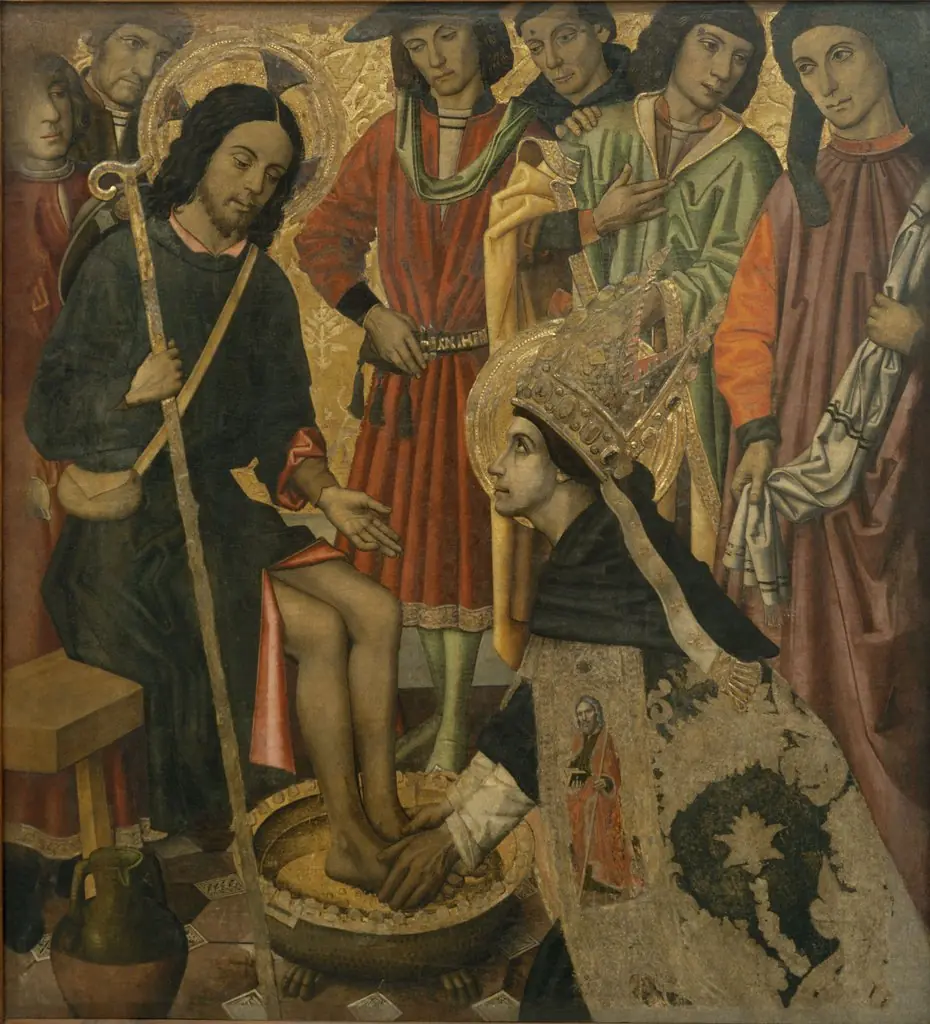 Saint Augustine washing the feet to Pilgrim Jesus
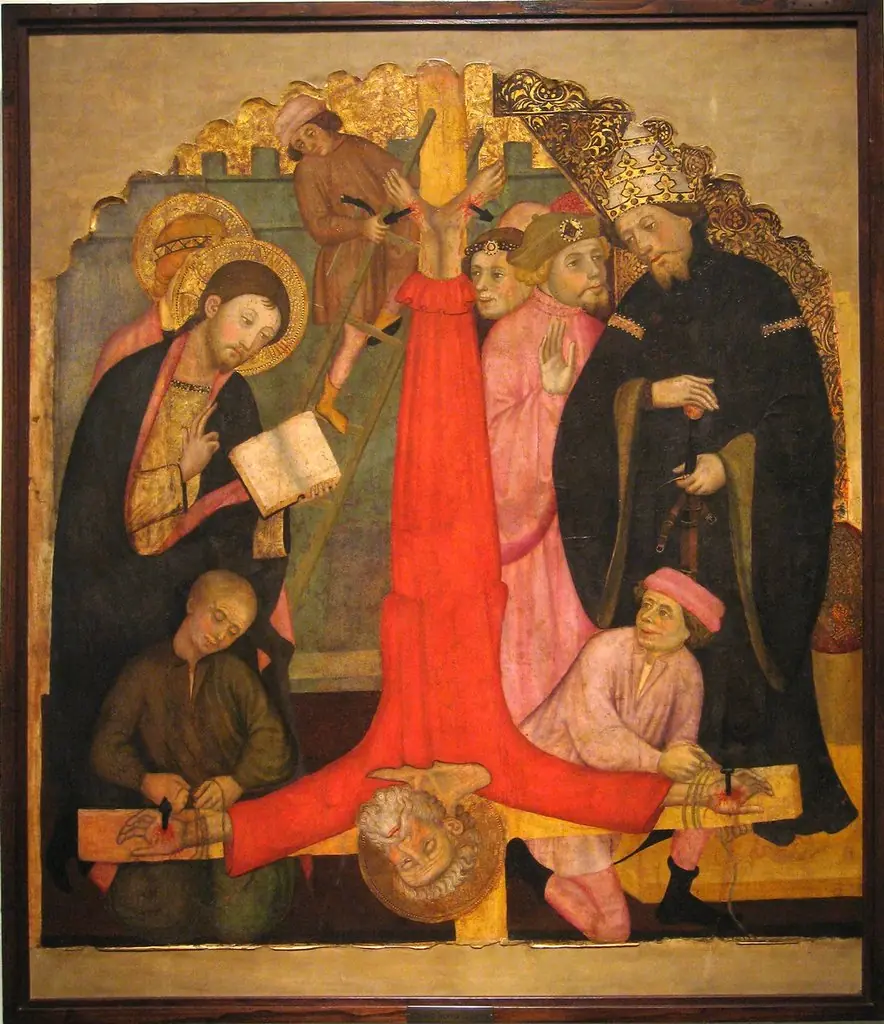 Crucifixió de Sant Pere
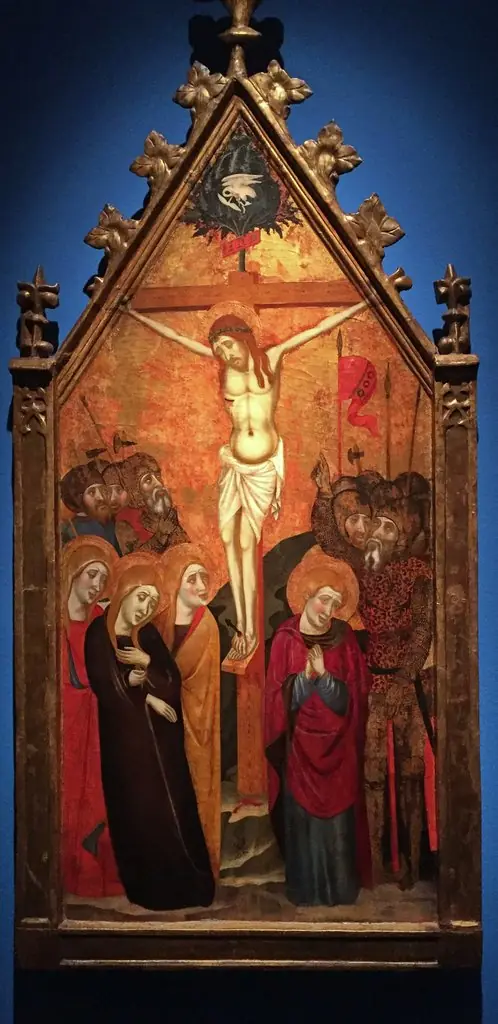 Calvari
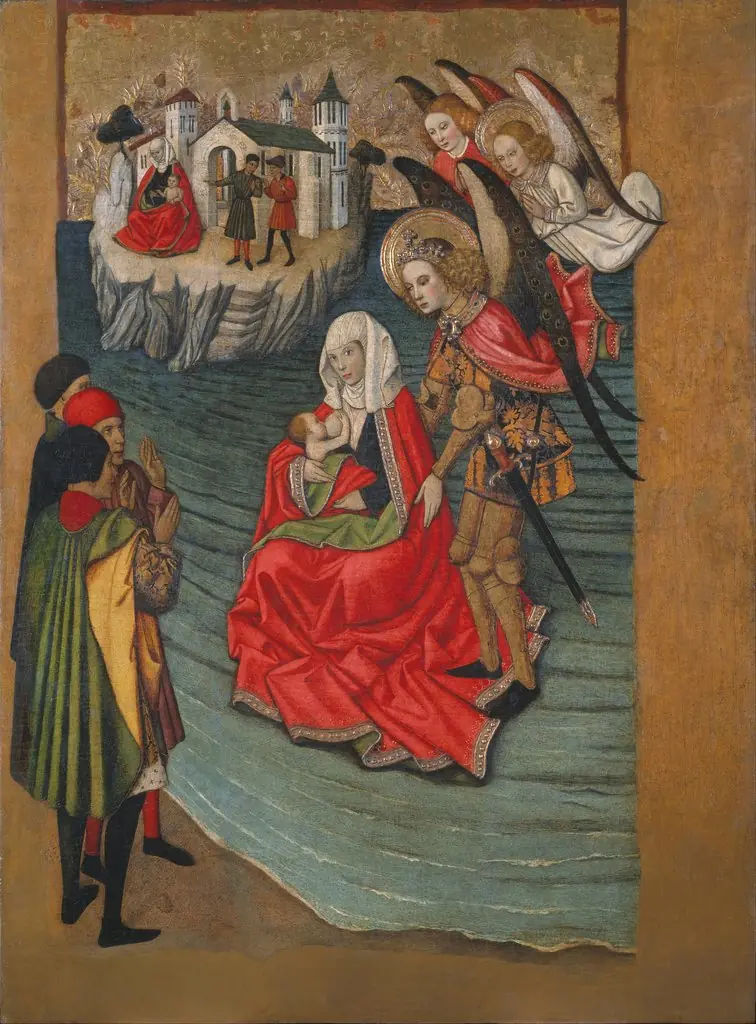 Miracle of Mont Saint-Michel
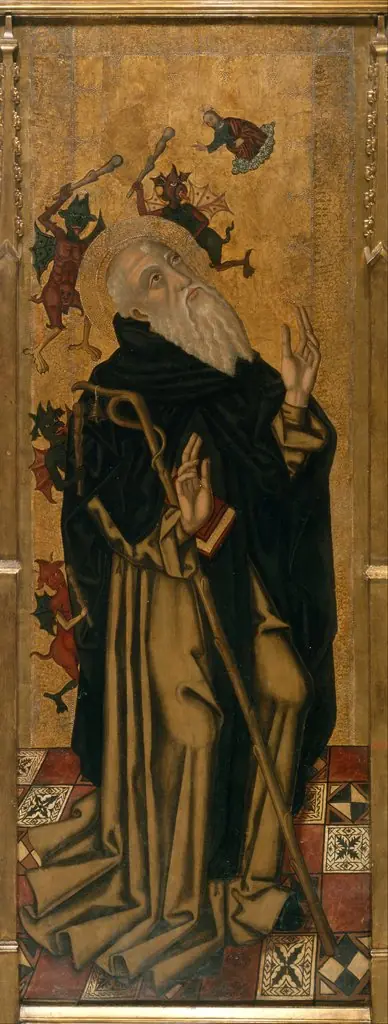 Saint Anthony the Abbot Tormented by Demons
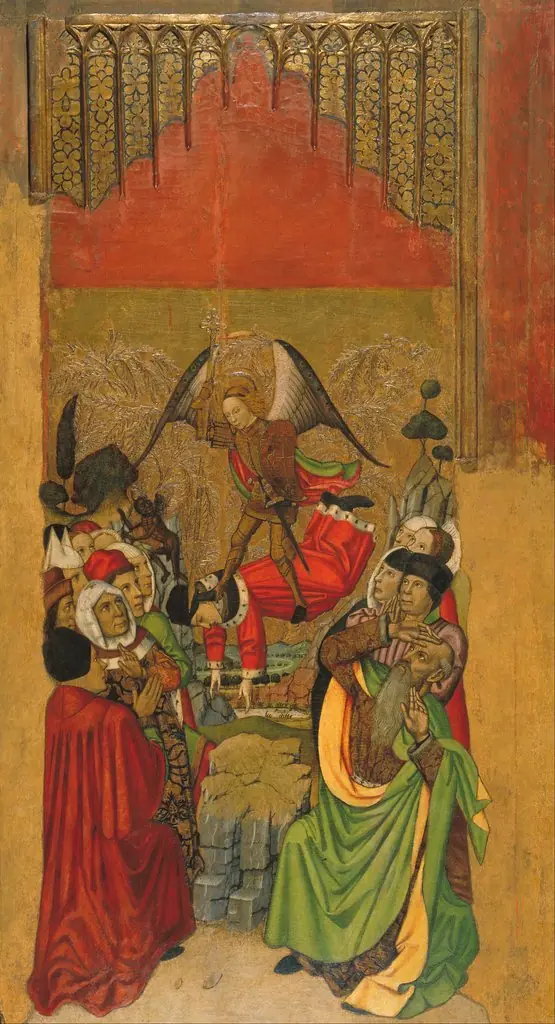 Saint Michael Vanquishes the Antichrist
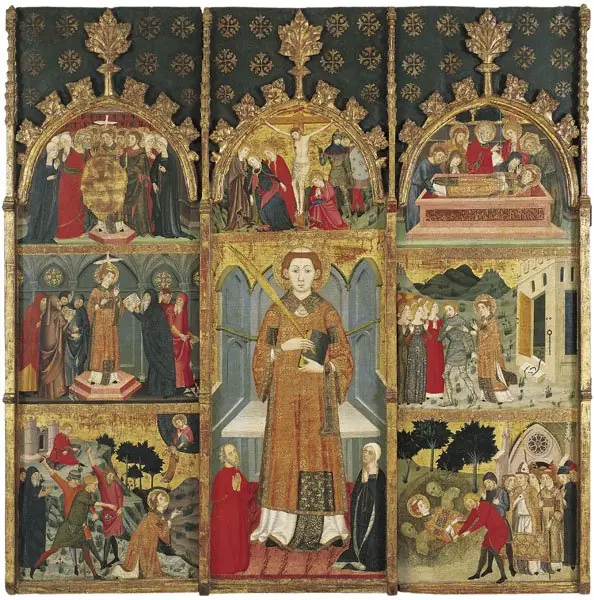 Altarpiece of Saint Stephen
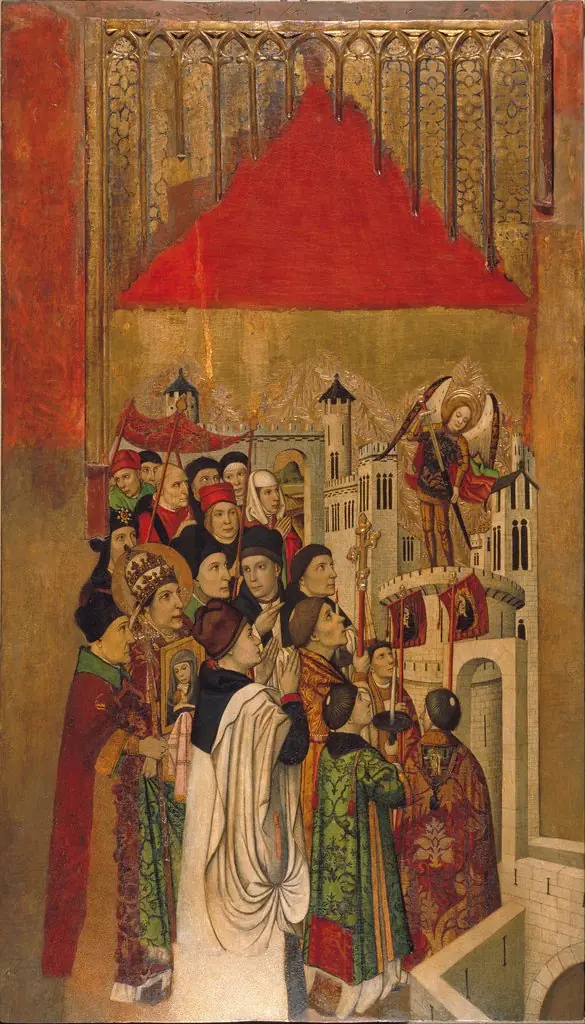 Apparition of Saint Michael at the Castle of Sant'Angelo
 The Consecration of Saint Augustine
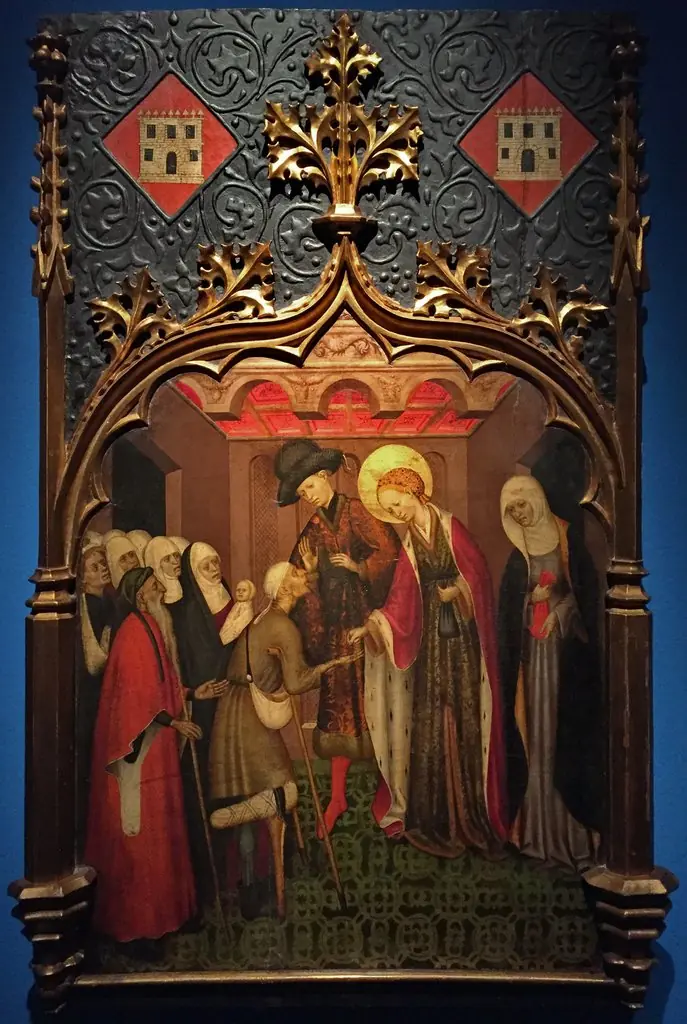 Santa Llúcia repartint almoines
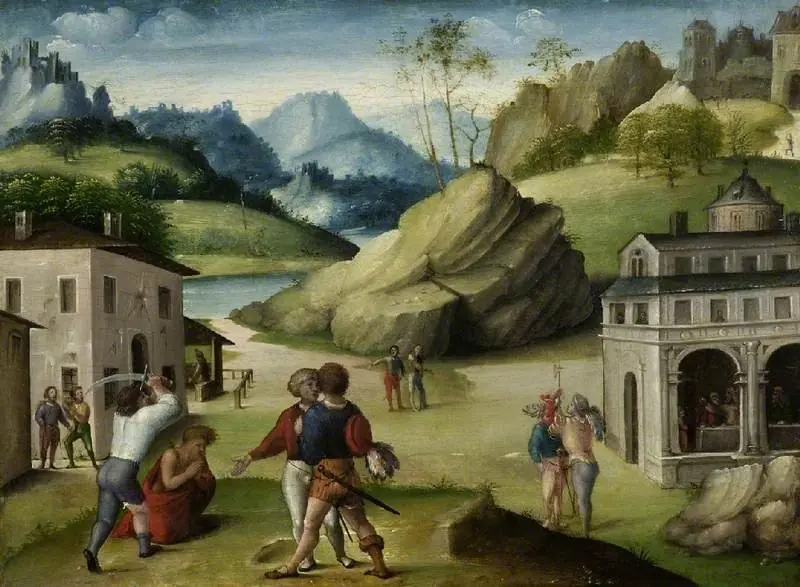 The Beheading of St John the Baptist
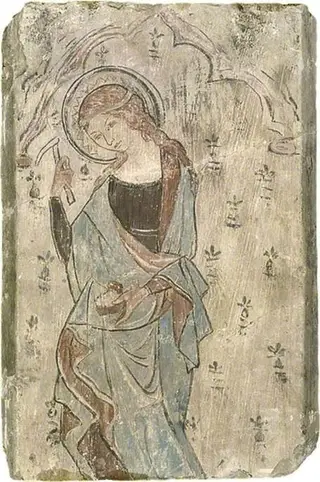 St Sidwell ? (or St Juthwara)
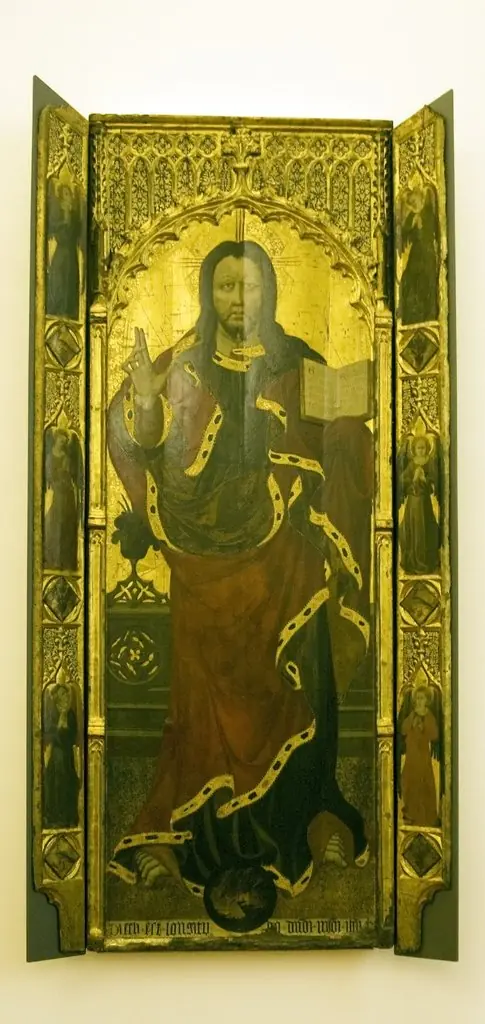 Der segnende Christus auf der Weltkugel (3 Tafeln)
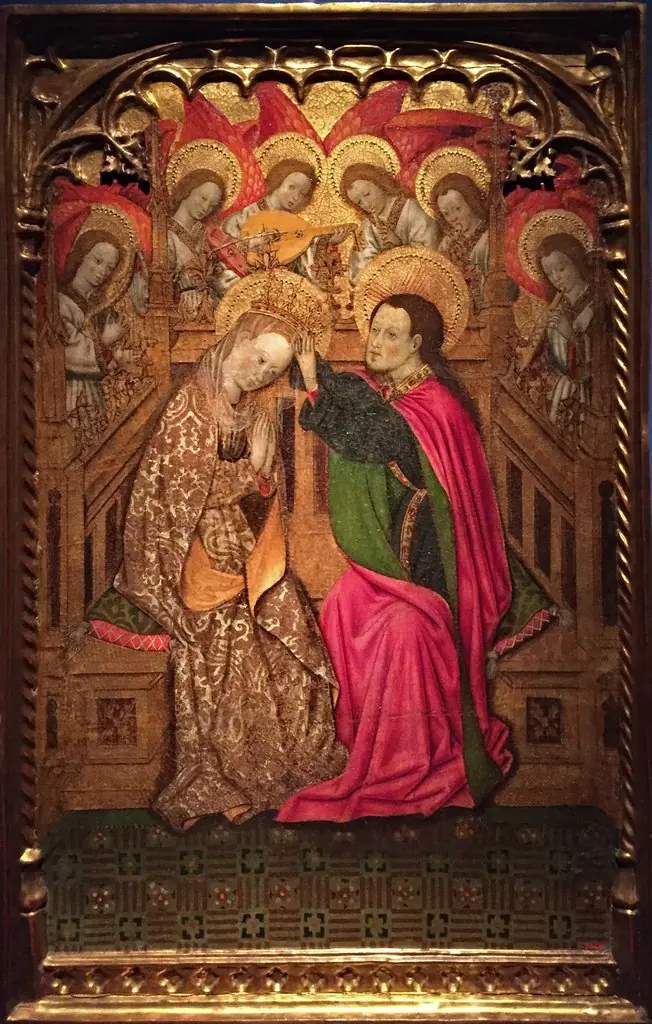 Coronació de la Mare de Déu amb àngels músics
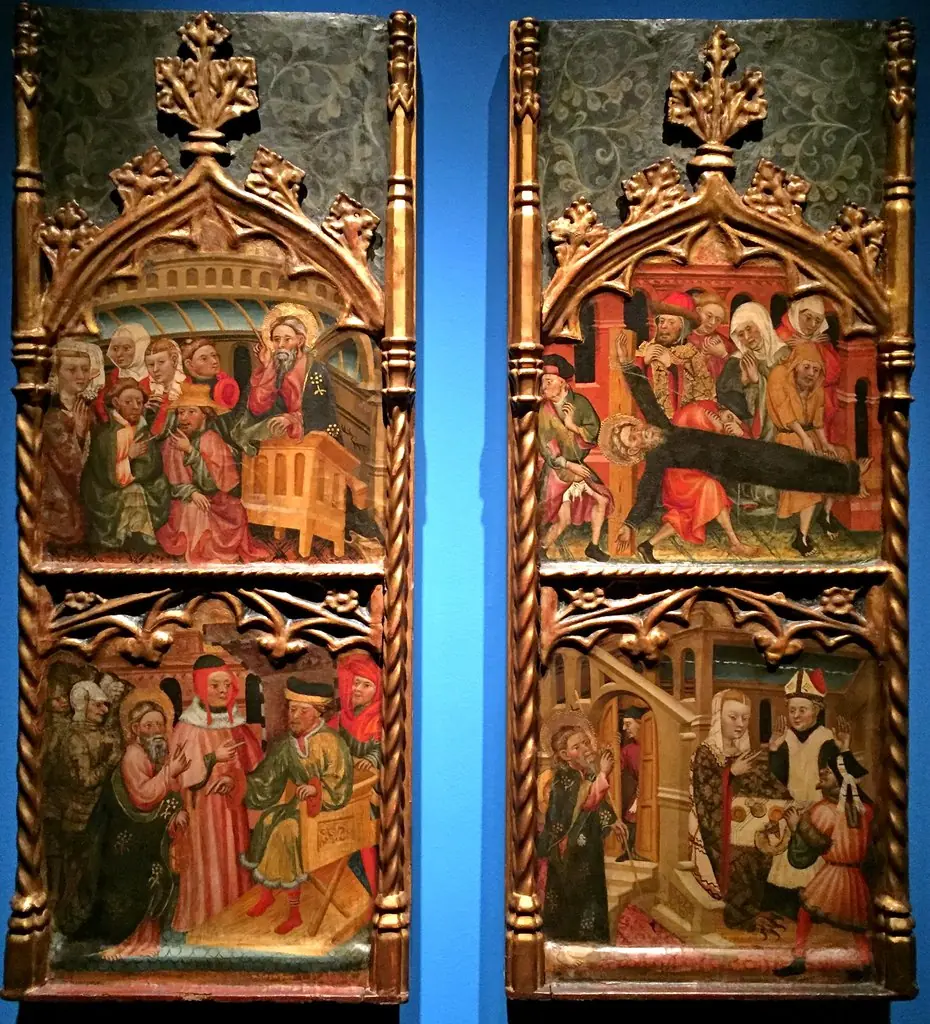 Carrers laterals del retaules de Sant Andreu de Pere Teixidor
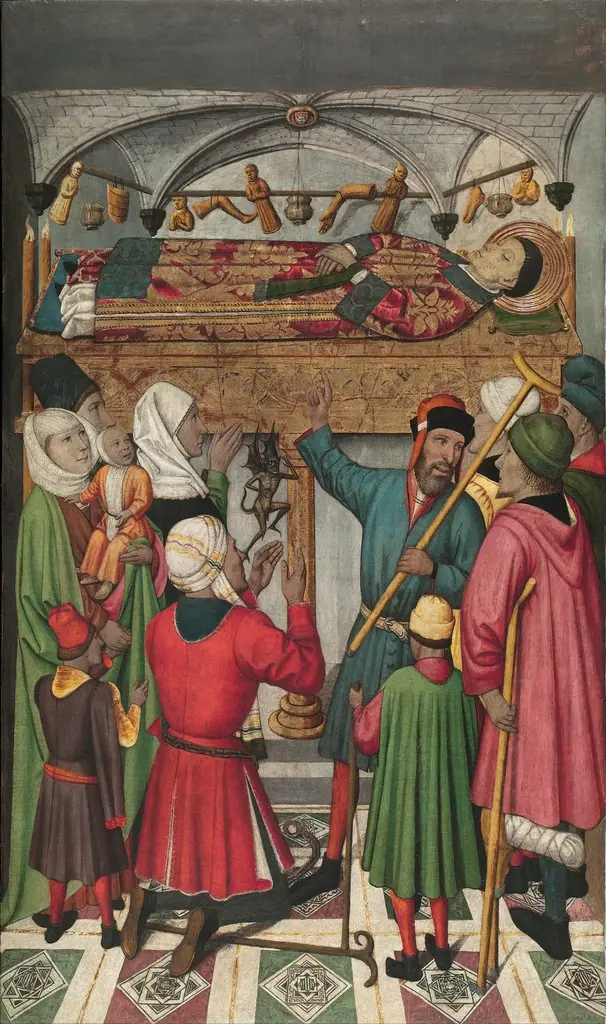 Posthumous Miracles by Saint Vincent
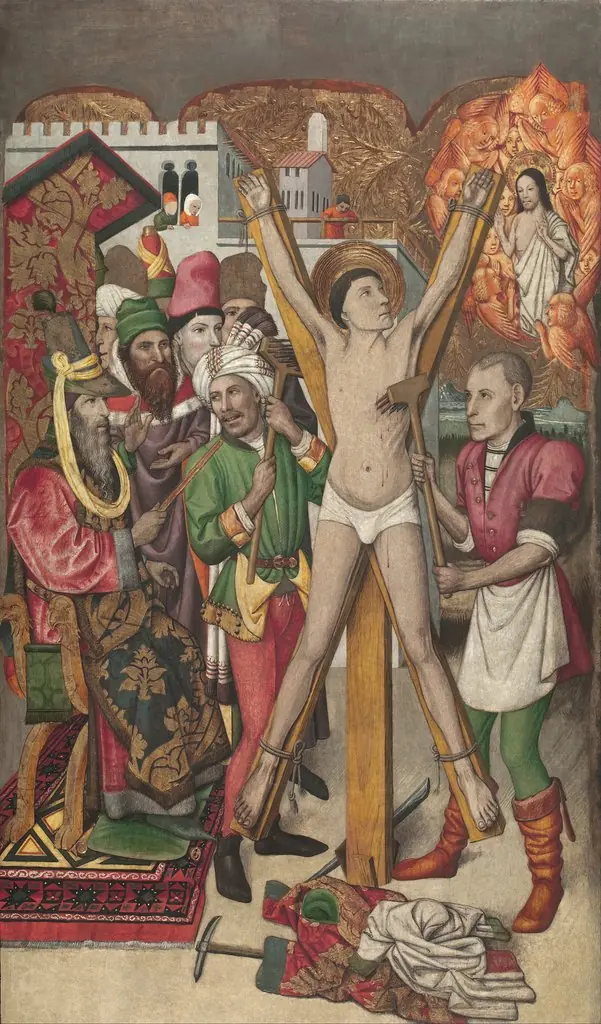 Saint Vincent on the Rack
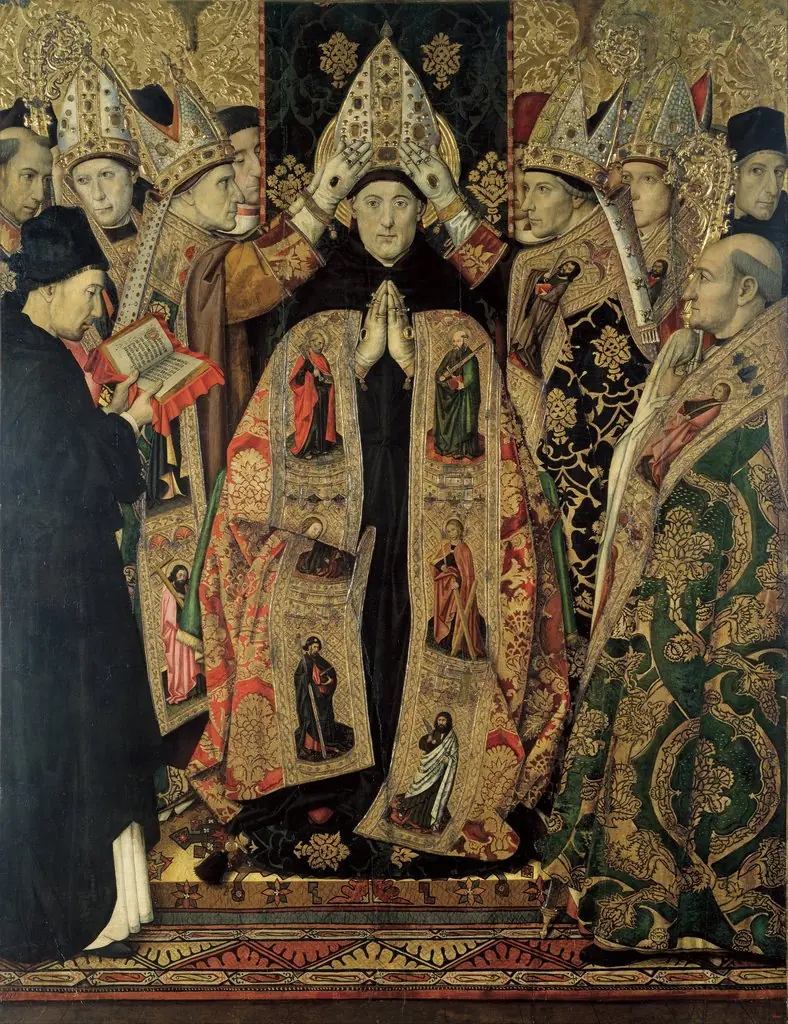 Consecration of Saint Augustine
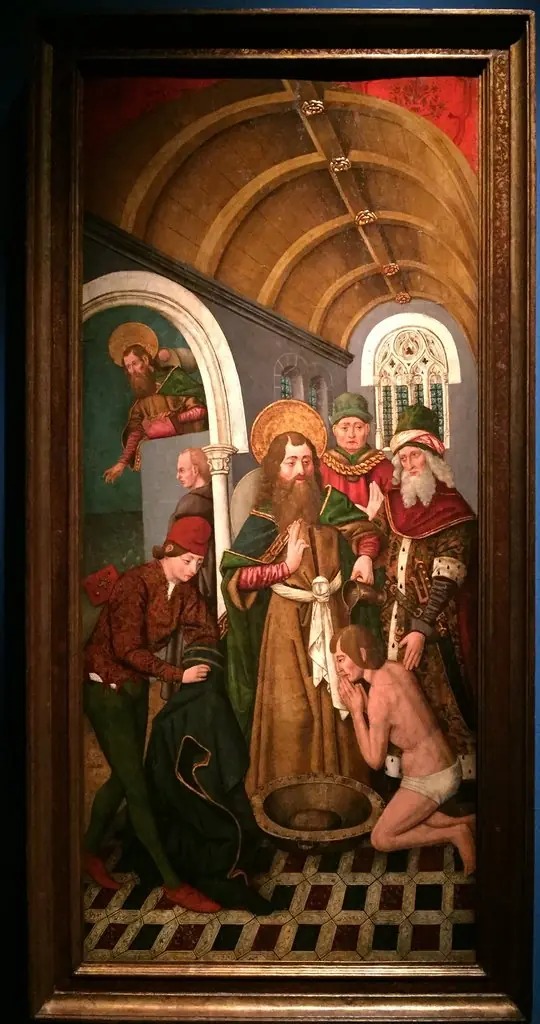 Sant Jaume el major bateja el mag Hermògenes
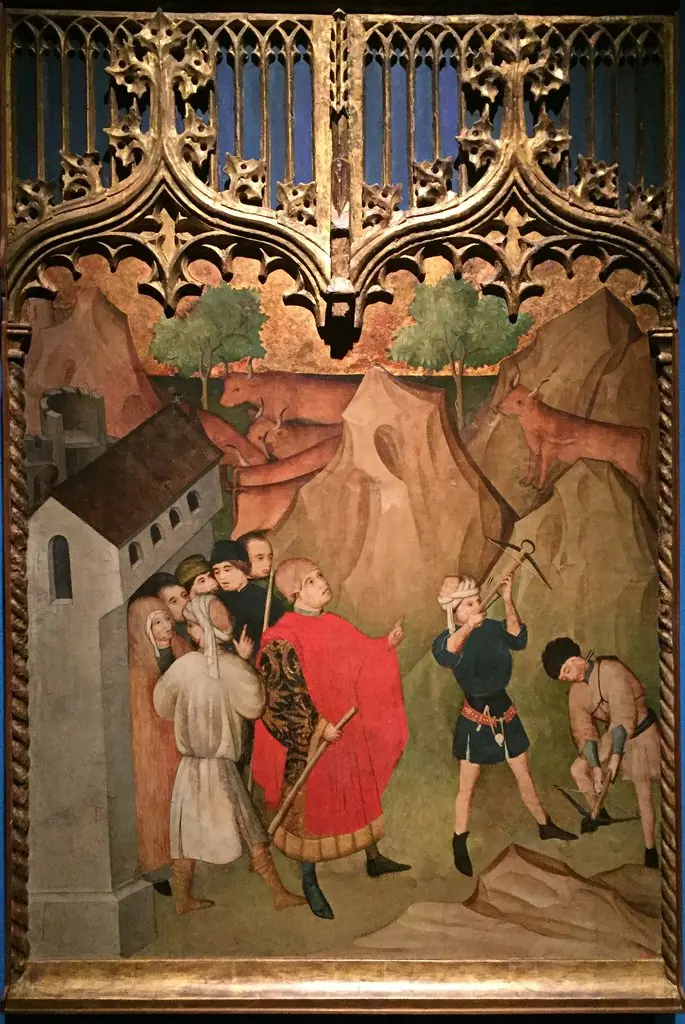 Miracle del mont Gargano
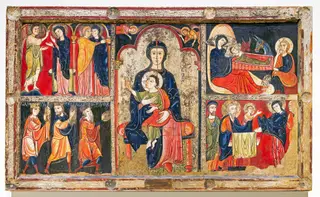 Altar frontal from Avià
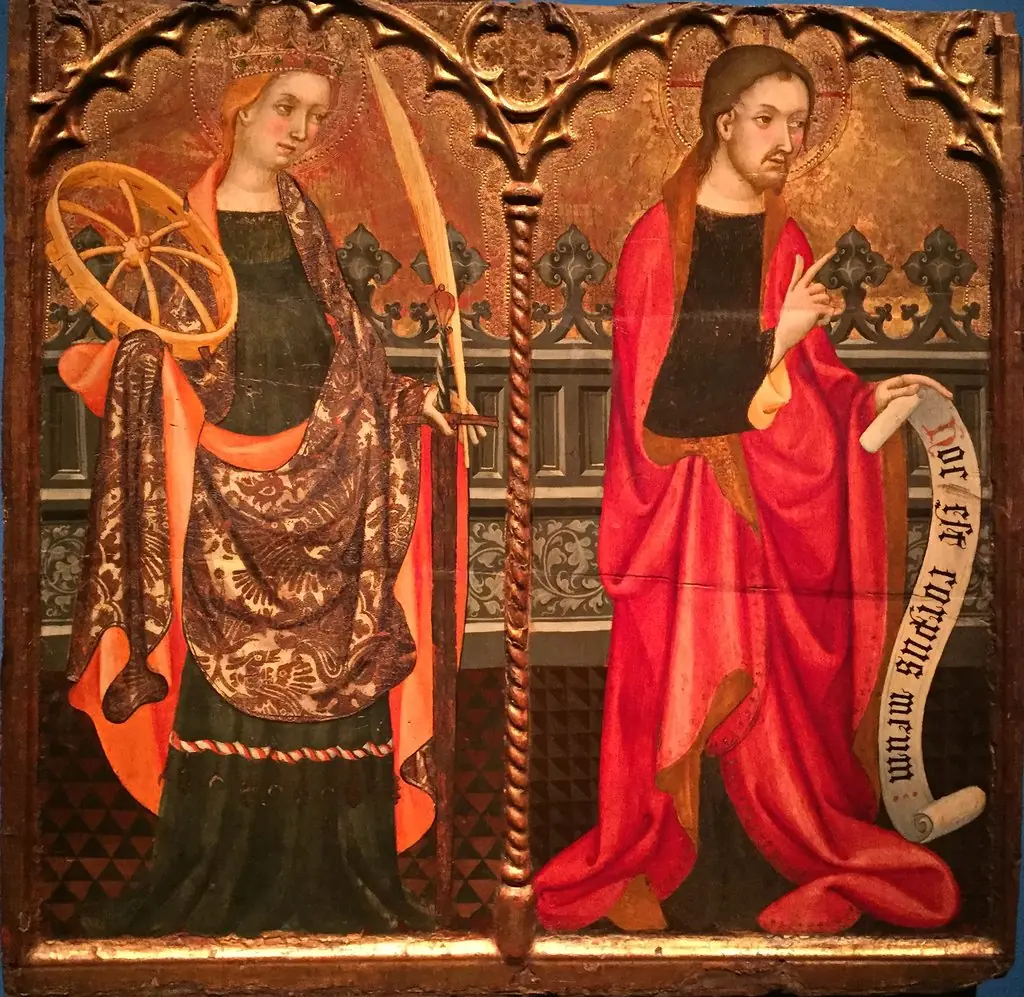 Santa Caterina d'Alexandria i Jesucrist
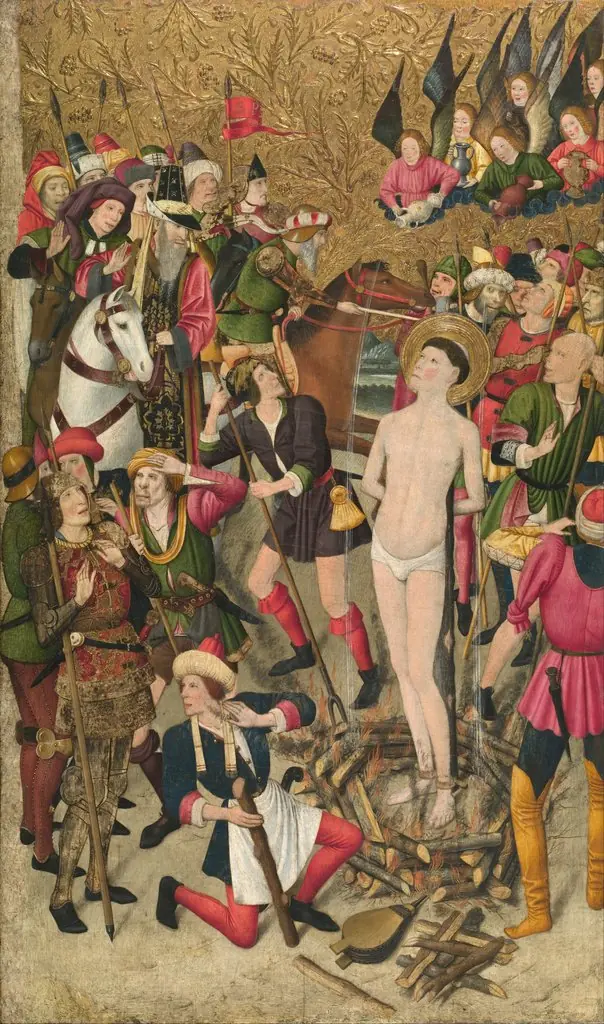 Saint Vincent at the Stake
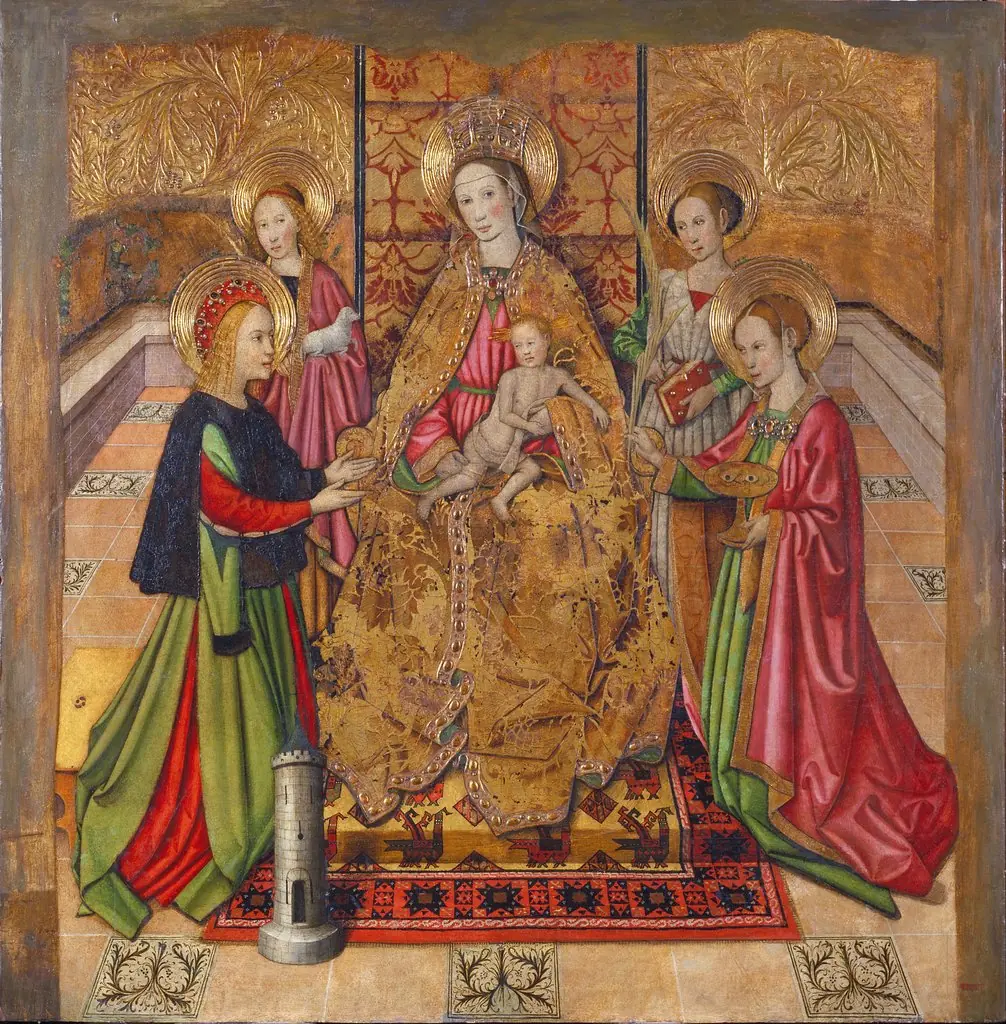 Virgin and Saints
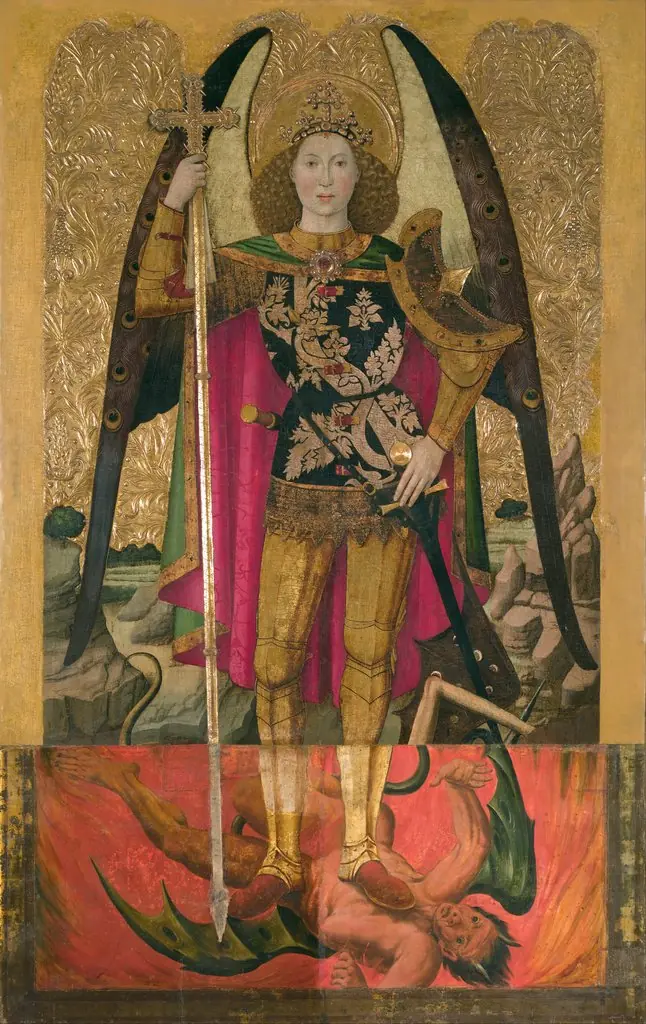 Saint Michael
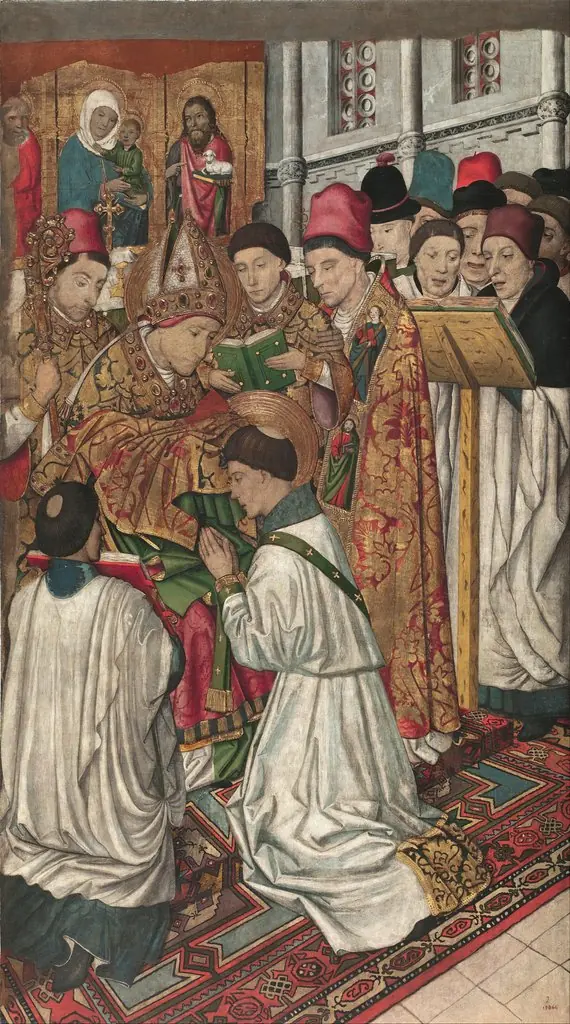 Saint Vincent Ordained by Saint Valerius
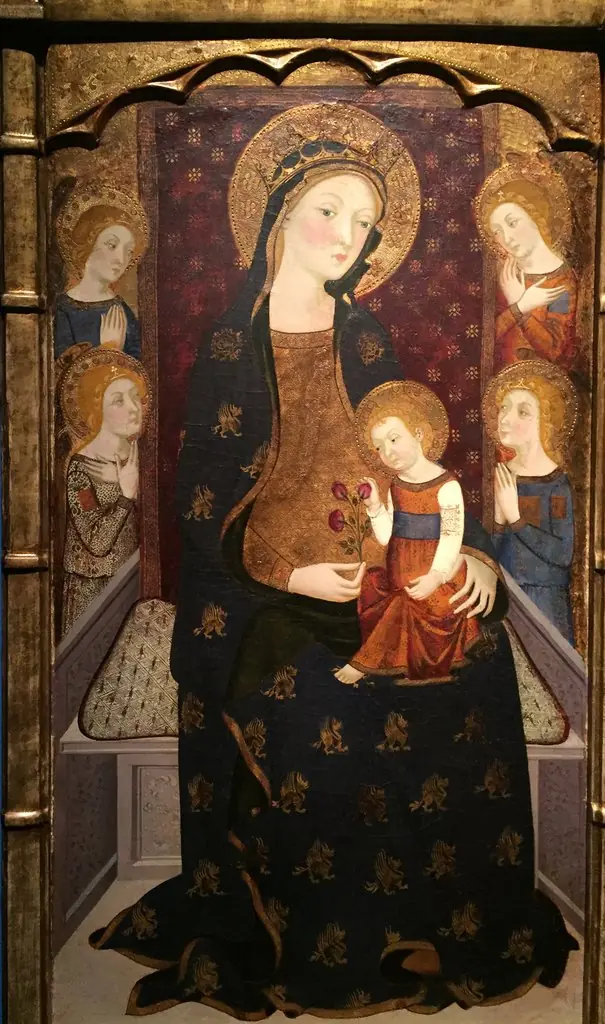 Mare de Déu amb Nen i àngels
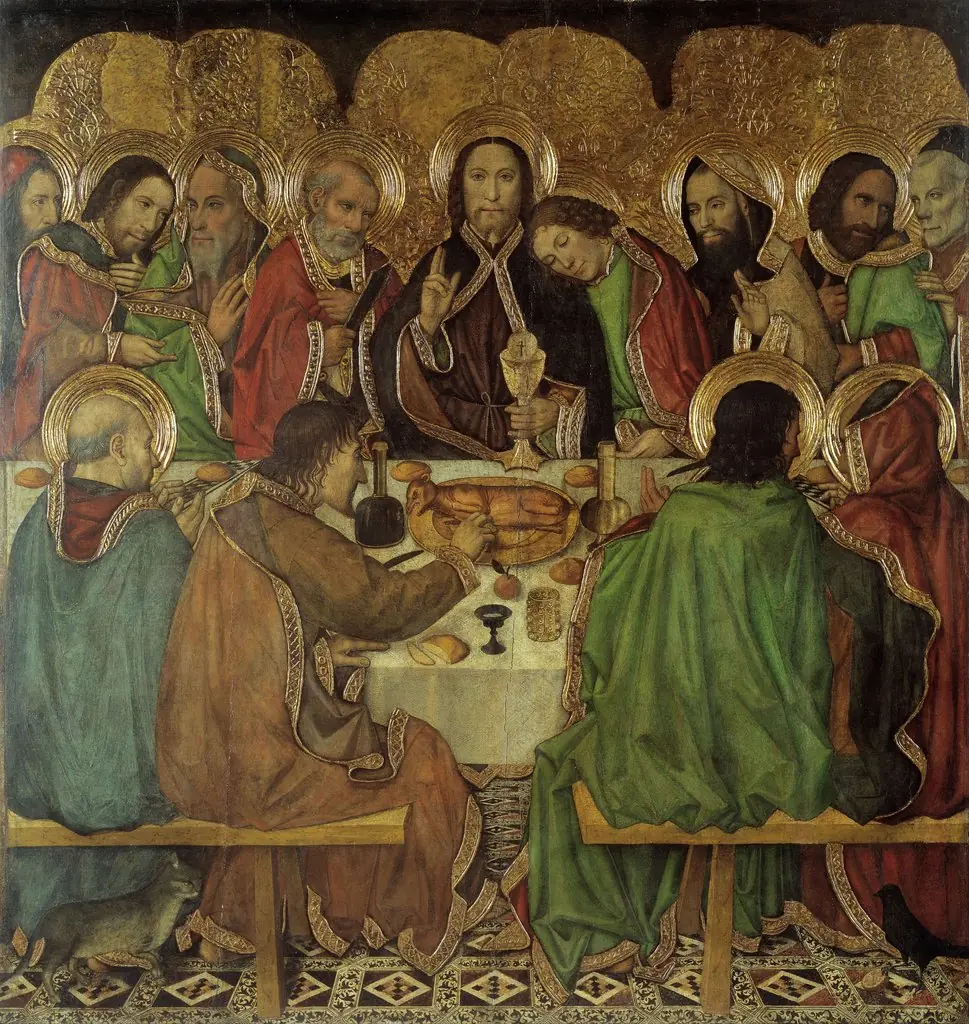 Last Supper
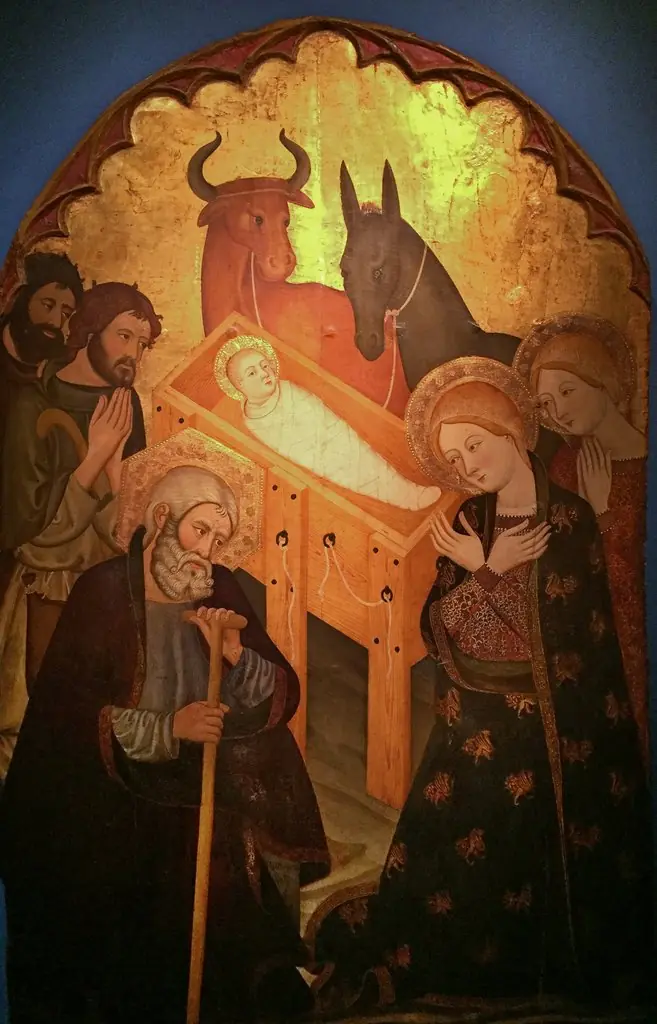 Adoració dels Pastors
 Ofrena de sant Joaquim i santa Anna al Temple
 Pleurants
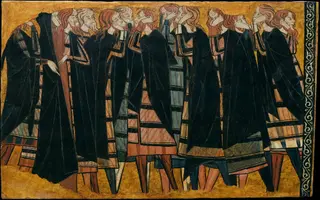 Pleurants
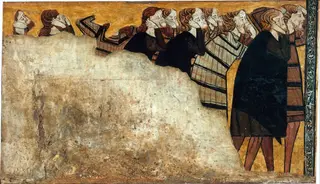 Pleurants
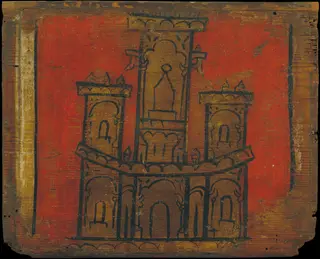 Small coffered ceiling panel with castle
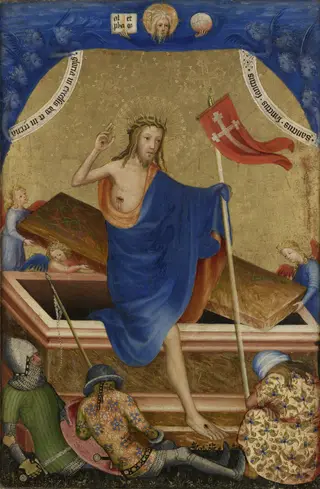 Antwerp-Baltimore Quadriptych
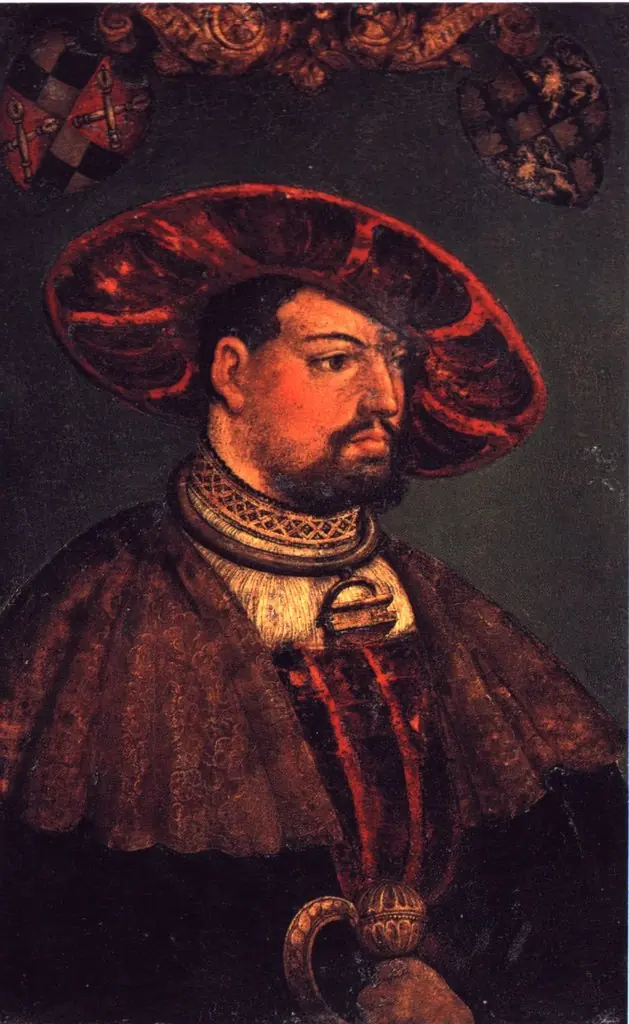 Painting of Eitelfriedrich III von Zollern (1520)
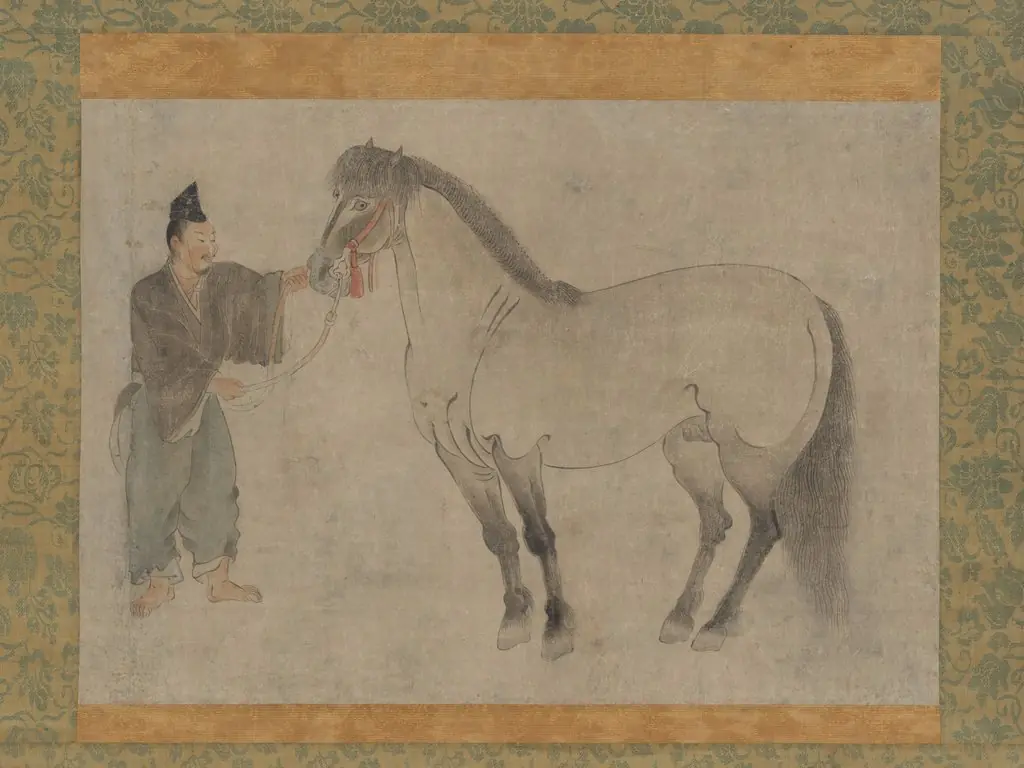 Horse and Groom
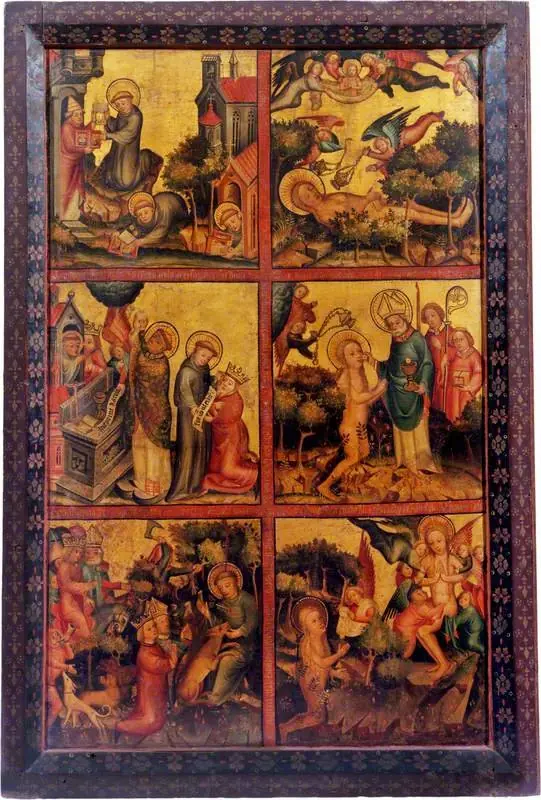 3 Scenes from the Life of St Giles; 3 Scenes from the Life of Saint Mary Magdalen (triptych altarpiece, right wing, outer)
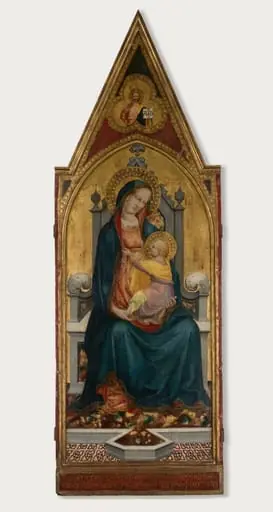 Virgin and Child Enthroned
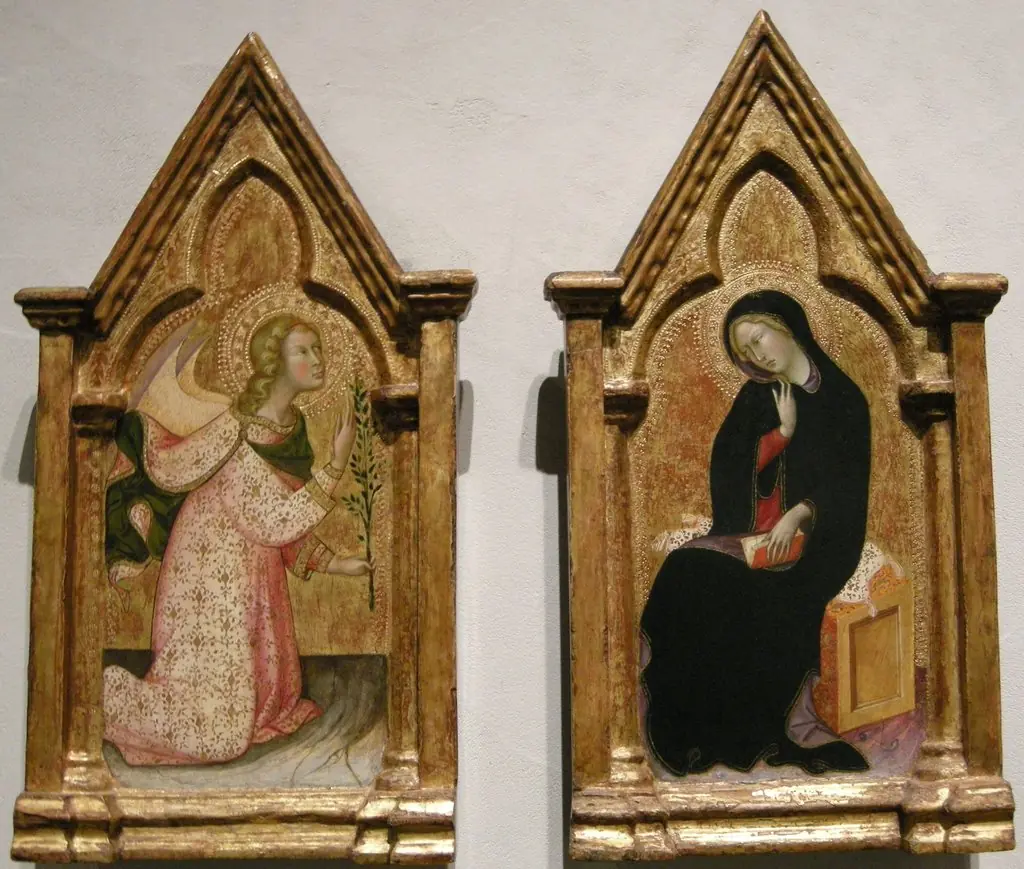 Untitled
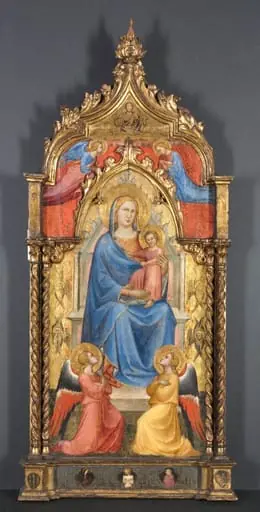 Virgin and Child with Angels
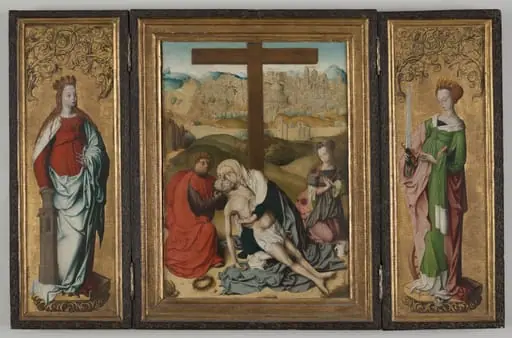 Triptych with The Lamentation of Christ (center), St. Barbara (left wing), St. Catherine of Alexandria (right wing), The Annunciation (reverse wings)
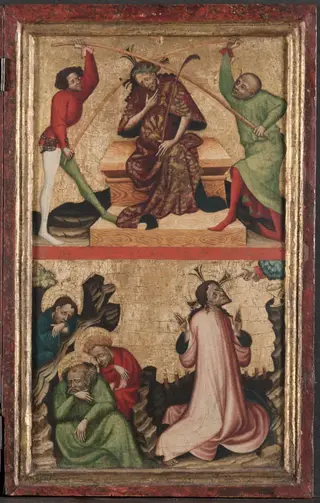 Diptych with the Passion of Christ (right wing): Crowning with Thorns and Agony on the Garden
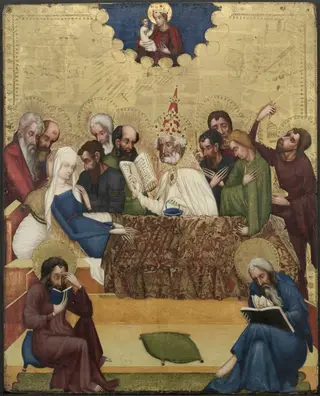 Death of the Virgin
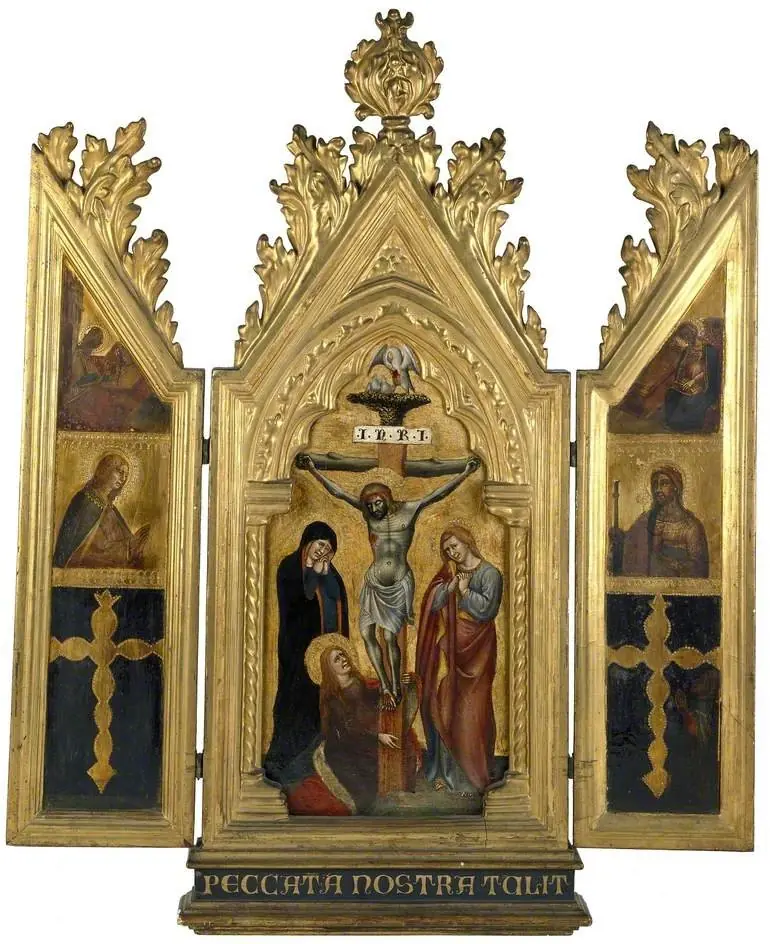 The Crucifixion (centre); The Angel Gabriel and a Saint (left); The Virgin and St James (right)
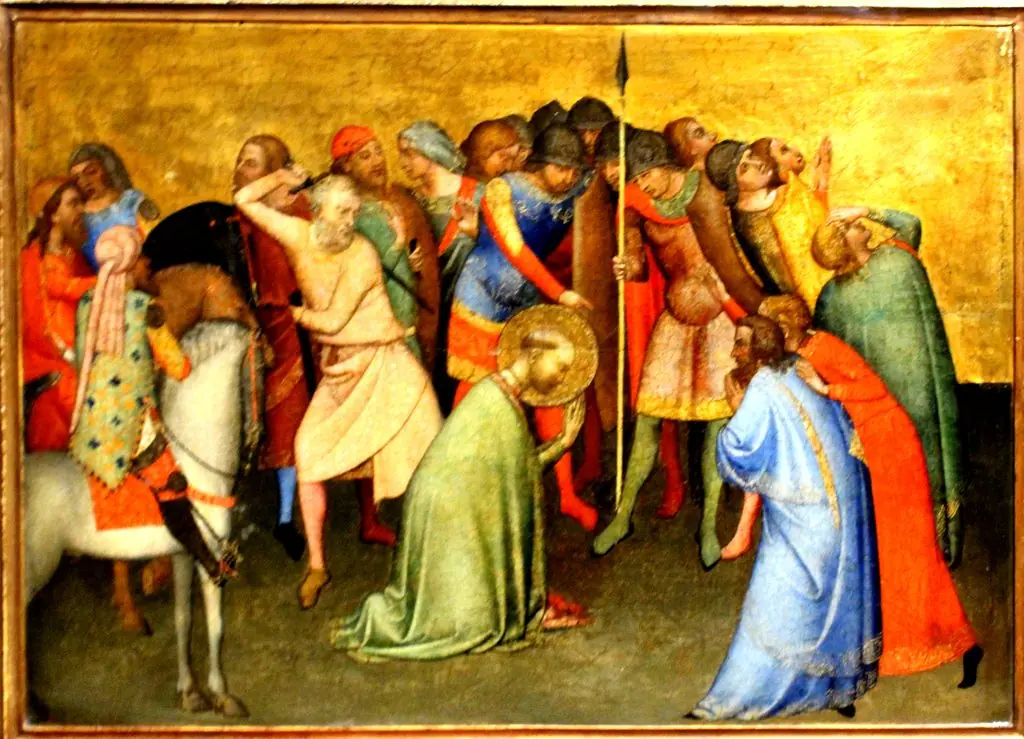 Enthauptung des hl. Reparata
 Scenes of Country Life: Fishing
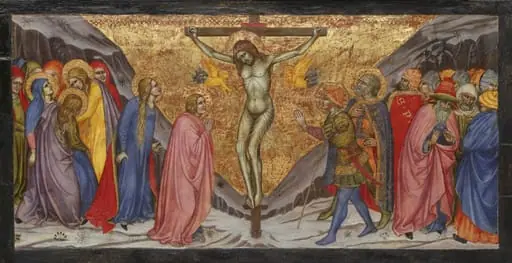 The Crucifixion
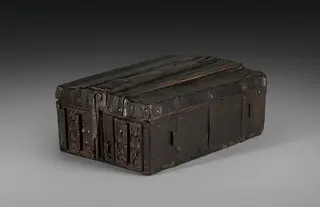 Coffret with Woodcut of Saint Veronica's Vernicle
Frequently asked questions
What is Gothic painting?
Gothic painting is an art movement. The dominant visual style of Western Europe from the 12th through 15th centuries, associated with pointed arches, elaborate decoration, and soaring verticality in architecture.
How many Gothic painting works does Artifact World Gallery have?
Artifact World Gallery holds 118 public-domain Gothic painting works, all free to view and download.
Who are the key Gothic painting artists?
Key Gothic painting artists in the collection include Jean de Beaumetz, Giotto and Upper Rhenish Master.
When did Gothic painting take place?
Gothic painting dates from 1200–1500.
Where can I see Gothic painting works?
Gothic painting works in the collection are held by Museu Nacional d'Art de Catalunya, Metropolitan Museum of Art and Cleveland Museum of Art.