Artwork
Head of Christ
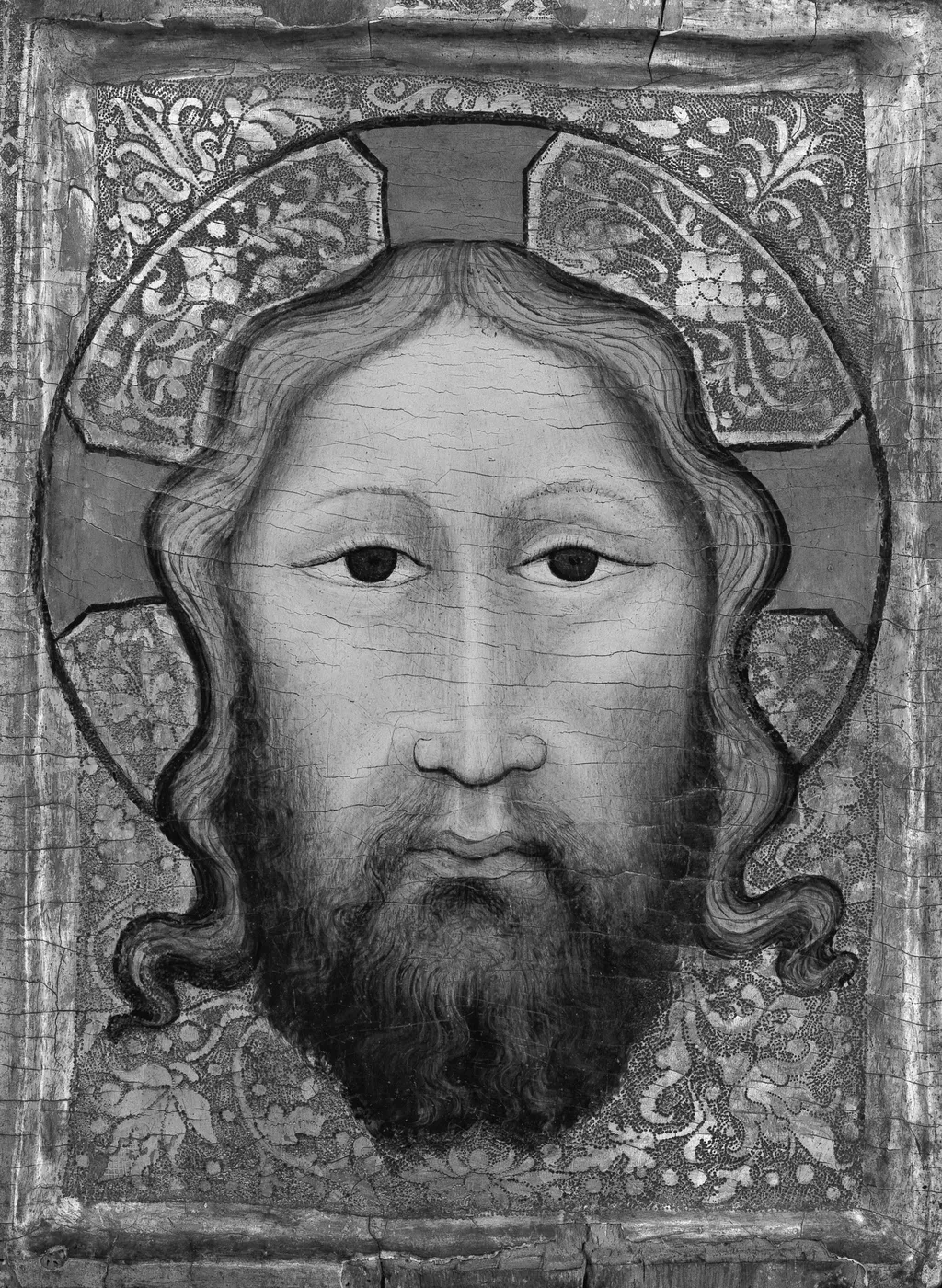
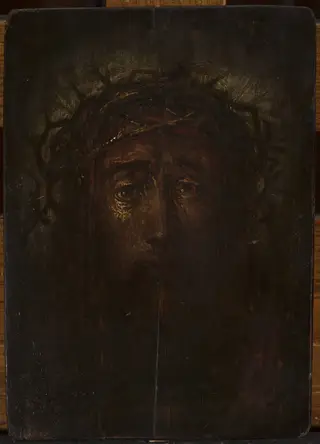
Head of Christ is a tempera painting. It dates from 1500 and is held in the collection of the Metropolitan Museum of Art.
About this work
Subject & Meaning
The work is a religious painting whose principal subject is Jesus Christ, depicted as a Head of Christ.
The work is a religious painting whose principal subject is Jesus Christ, depicted as a Head of Christ. The image isolates Christ's head as the sole focus, a devotional format common in late medieval and early Renaissance Christian art, intended for personal contemplation and veneration rather than narrative storytelling. By concentrating on the face alone, the composition directs the viewer toward the spiritual presence of Christ, emphasizing his identity as the central figure of Christian devotion rather than situating him within a particular biblical episode.
Technique & Style
The Head of Christ is executed in tempera on a wooden panel, a common support for small devotional works in early sixteenth-century Europe. The painting measures approximately 42.5 cm in height and 31.8 cm in width and dates to around 1500. As a religious panel depicting Christ, it exemplifies the modest-scale, frontal imagery typical of contemporary devotional art.
History & Provenance
Head of Christ is an anonymous European painting dating to around 1500, executed in tempera on a wood panel and measuring 42.5 × 31.8 cm. It depicts Jesus Christ and is catalogued as a religious work within the European paintings holdings of the Metropolitan Museum of Art. No documentation survives regarding its original commission or earlier owners prior to its arrival at the museum, and the available records do not specify an accession number or any exhibition history.
Overview
This tempera painting, titled Head of Christ, presents a focused depiction of a male figure. The artwork features a close-up of a bearded face, rendered with a serious yet composed expression. A dark background frames the subject, accented by a decorative border that suggests a textile or lace pattern. The piece exemplifies a traditional painting type, emphasizing the subject's countenance.
Artist & collection

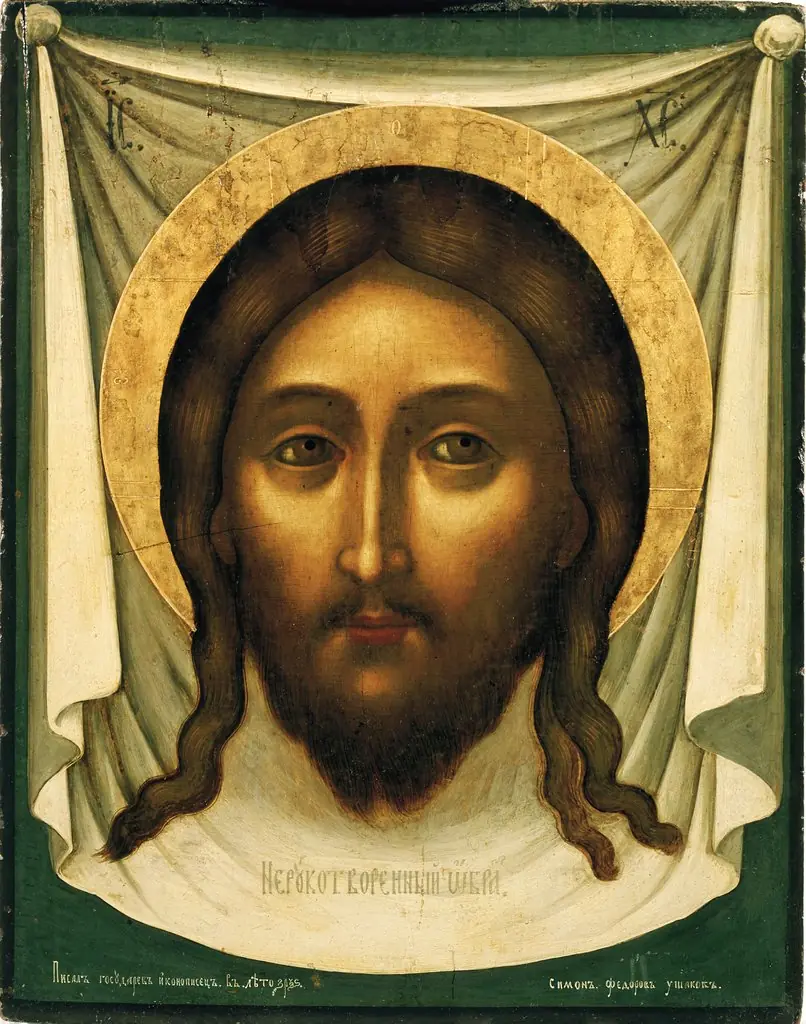 Saviour Made Without Hands
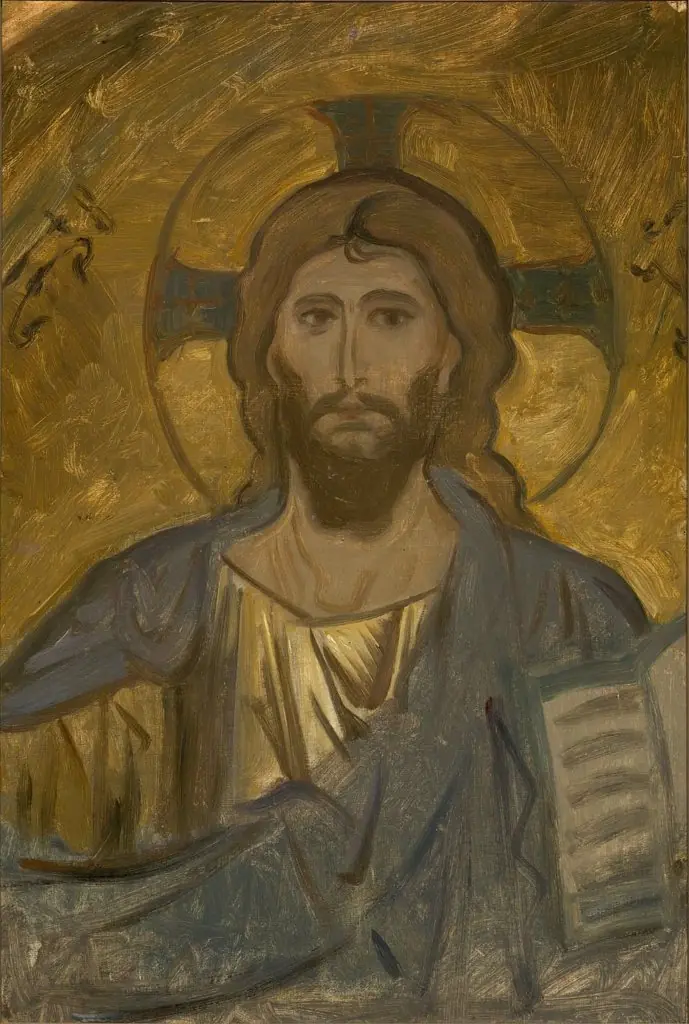
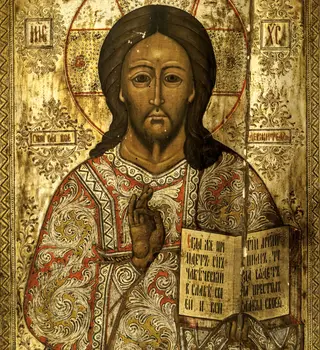 Isus Pantocrator, redat 3/4, binecuvântând cu mâna dreaptă(prin unirea degetului mare cu cel inelar), în stânga ținând cartea sfântă cu textul consacrat, în slavonă(Veniți la mine toți cei oropsiți...).această reprezentare a lui Iisus binecuvântând, cu Evanghelia deschisă, corespunde în iconografia bizantină lui Iisus Învățător, sau Hristos Ușa, icoană amplasată în stânga ușilor împărătești. Conform erminiilor, Iisus Pantocrator este redat cu Evanghelia închisă.Expresia sobră, tristă, ochii mari, părul castaniu, lung, cu cărare pe mijloc, lăsat inegal pe umeri, mustățile și barba scurte. Poartă un veșmânt cu mâneci largi cu motive florale ample, în volute(foiță argintată), interstiții umplute cu portocaliu și galben. La mâneci, klav și la gât motive geometrice în formă de zigzag și val. Aureola (nimb cruciger) depășește spațiul chenarelor, trasată cu o linie de culoare roșie, dublată pe unele porțiuni cu o altă linie de culoare albă, în interior cu motive florale și puncte incizate în stratul de foiță metalică aurită. Inscripțiile consacrate: "eu sunt alfa și omega". Dublu chenar, motive geometrice: linii, puncte și zigzaguri între două linii fin incizate pe marginea foiței, la exterior bandă vișinie cu linii albe. Inscripțiile în chenare dreptunghiulare însoțite de motive fitomorfe incizate. Cromatica: alb, galben, roșu, auriu, brun, negru, foiță metalică; Bordura o înscrie în icoanele tip Krashnuska(înroșitele).
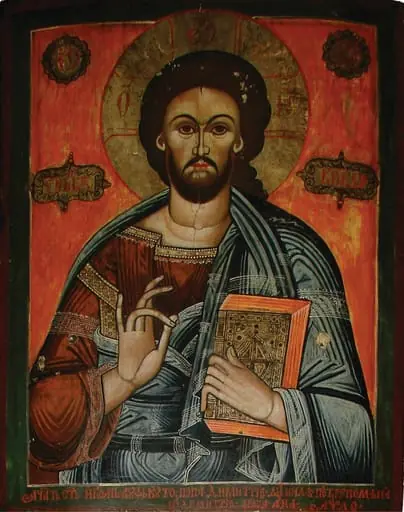 Iisus Hristos Învățător
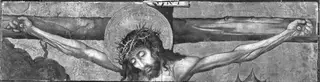 Fragment einer Kreuzigung Christi
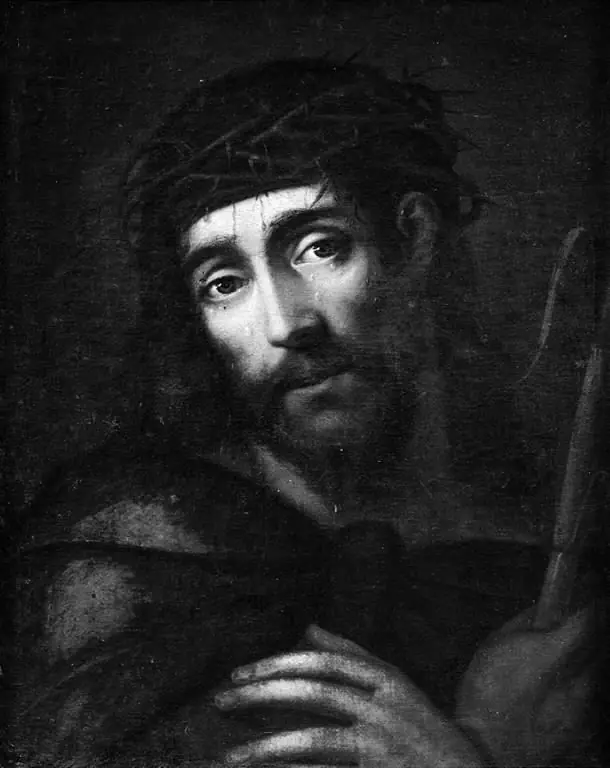
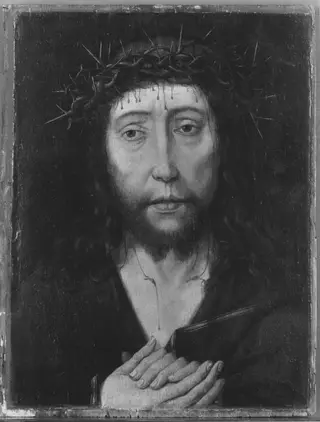 Christ with crown of thorns
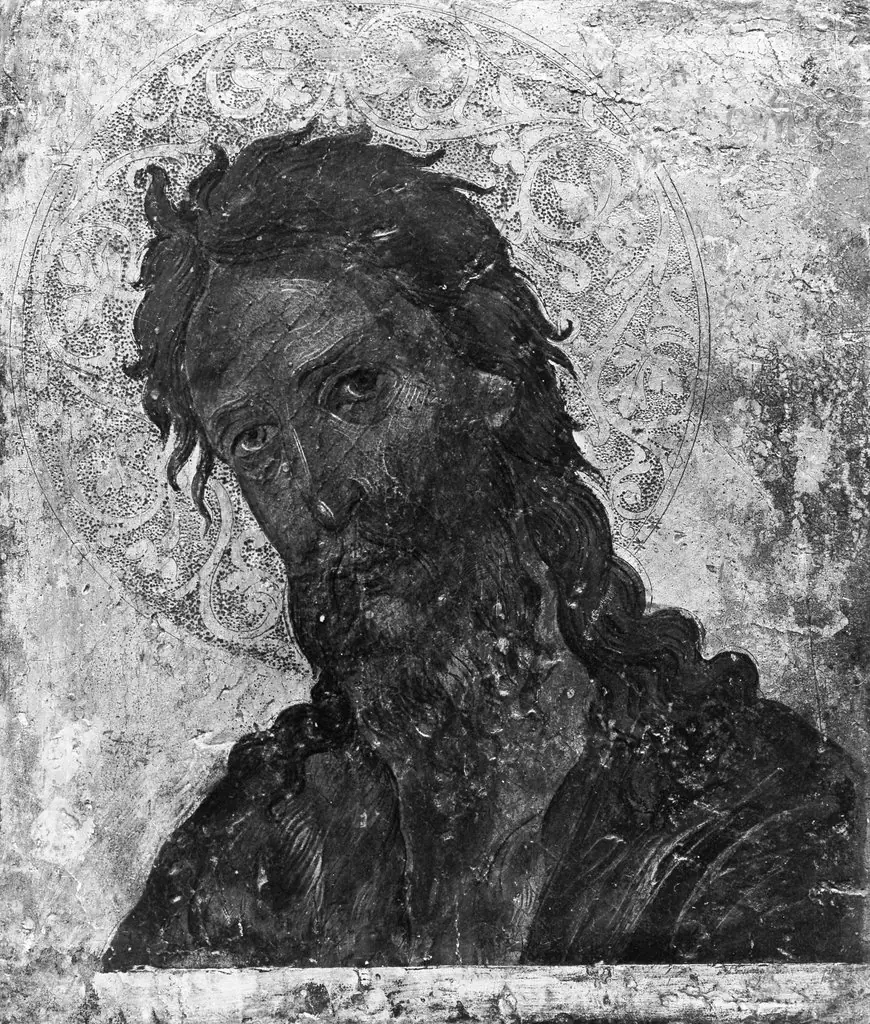 Head of Saint John the Baptist