Artwork
Icoana este pictată pe sticlă. Imaginea o înfatișează pe Maica Domnului cu Iisus în brațe, cu doi îngeri de o parte și alta printre flori, cu excepția părții de jos. Pe părțile laterale se află un chenar de flori și frunze. Cromatica: fond: albastru deschis; alb; maro; negru; verde; galben.
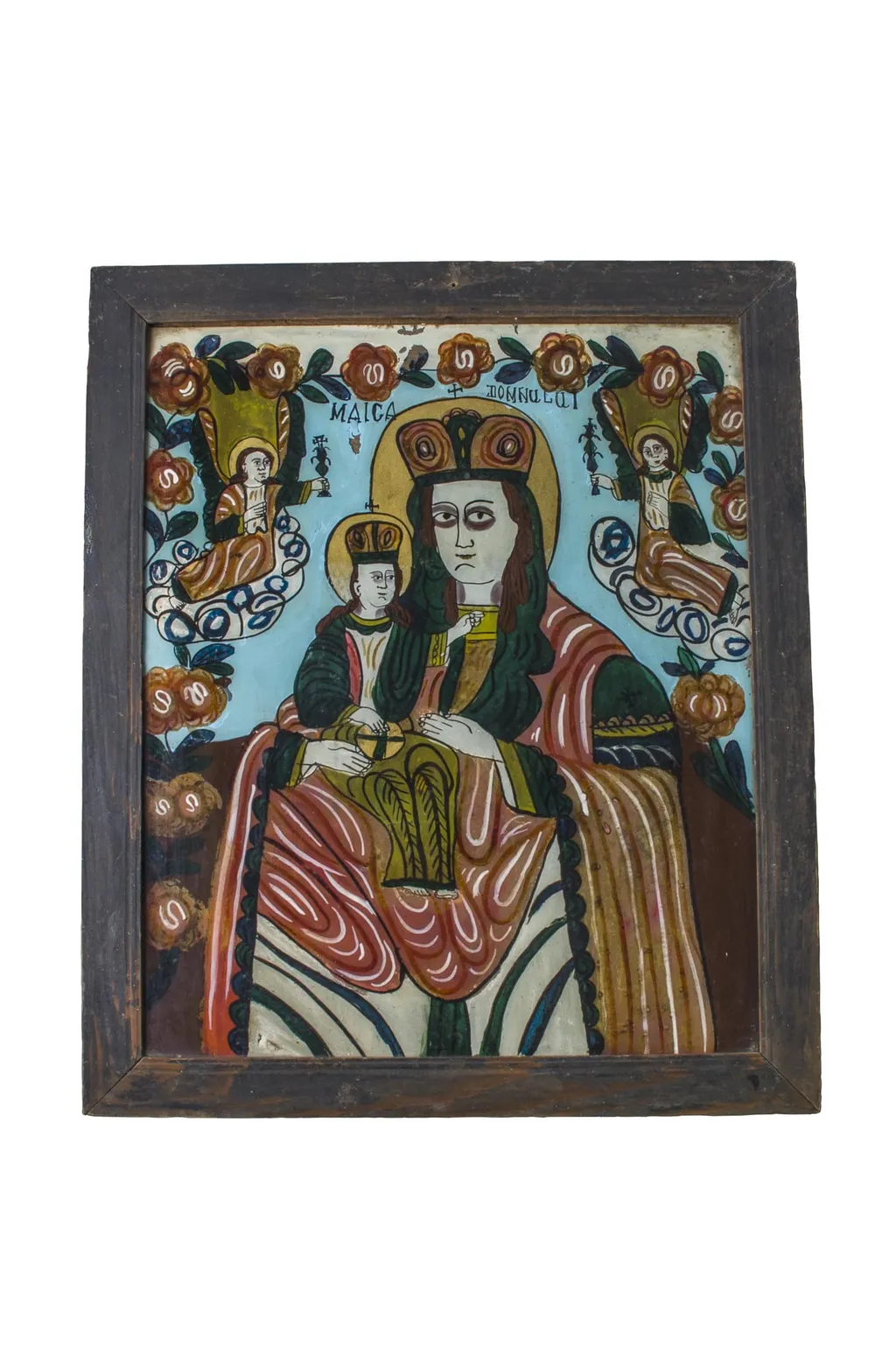
Icoana este pictată pe sticlă. Imaginea o înfatișează pe Maica Domnului cu Iisus în brațe, cu doi îngeri de o parte și alta printre flori, cu excepția părții de jos. Pe părțile laterale se află un chenar de flori și frunze. Cromatica: fond: albastru deschis; alb; maro; negru; verde; galben. is a print by Unknown. It dates from 1850 and is held in the collection of the ASTRA National Museum Complex. The work is a painted glass panel depicting a mother figure cradling a child, flanked by two winged beings amid stylized floral motifs.
About this work
Overview
The work is a painted glass panel depicting a mother figure cradling a child, flanked by two winged beings amid stylized floral motifs. The composition is set against a uniform light‑blue background and is framed on the sides by a decorative border of flowers and leaves. Bright hues—white, brown, black, green, and yellow—accentuate the figures, giving the surface a luminous quality.
Subject & Meaning
The central figures are identified as the Virgin Mother and the infant Jesus, indicated by the inscription “MAICA” and the presence of halos. The accompanying angels, positioned on either side, reinforce the devotional theme, while the surrounding flora suggests a heavenly garden, a common symbolic setting for Marian iconography in Eastern European religious art.
Technique & Style
Executed on glass, the painting employs opaque pigments that adhere to the smooth surface, allowing the colors to appear radiant as light passes through.
Executed on glass, the painting employs opaque pigments that adhere to the smooth surface, allowing the colors to appear radiant as light passes through. The style is characterized by flat areas of color, bold outlines, and a lack of modeling, reflecting a folk‑art aesthetic rather than academic realism. The use of vivid primary tones and simplified forms enhances the visual impact on a liturgical setting.
History & Provenance
The panel originates from a Romanian tradition of glass painting used in churches and private devotional contexts. While the precise date and creator are not documented, such works were commonly produced from the 18th to early 20th centuries for use as portable icons or altar pieces, often commissioned by local parishioners.
Context
Glass icons like this one served both liturgical and instructional purposes, providing a durable, luminous image for worshippers. The integration of floral borders aligns with broader Eastern Orthodox iconographic conventions, where nature motifs symbolize paradise and divine abundance.
Artist & collection

 Domestic Scene
 Giacomo and Cardinal Marco, investing Andrea, Abbot of San Zeno, with his Benefice
 The Nymph of Fontainebleau
 Portrait of a Woman
 Madonna and Child with Saints in the Enclosed Garden
 Venus and Minerva
 Family Group of Four on Sofa
 Wall painting from Room H of the Villa of P. Fannius Synistor at Boscoreale
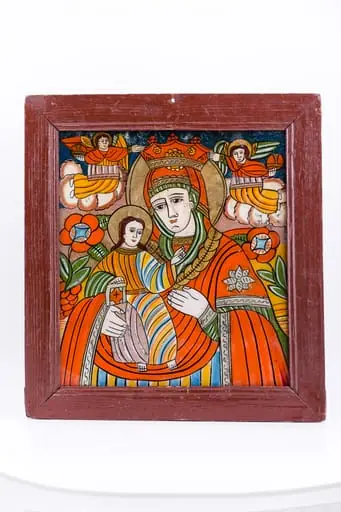 Maica Domnului este reprezentată ținând în brațe Pruncul Iisus Hristos care ține cu mâna dreaptă Sfânta Scriptură pe genunchi și Binecuvântează cu mâna stângă, arătându-ne-o pe Maica Domnului. Maica Domnului arată calea cu mâna stângă, deci este Hodighitria. Maica Domnului este înveșmântată în mantie cu maforion roșu vermillon, cu interiorul verde fin-dungat cu alb, are coroniță de Împărăteasa Cerurilor, salbă de aur și aureolă. Pruncul Iisus Hristos este înveșmântat în auriu ocru-brun-bronziu, cu fine nervuri-striații verzi și alb-albastre, are părul mai lung, până la umeri și are aureolă. Fondul icoanei este cerul de culoarea albastru ultramarin bleumarin. În registrul superior, de o parte și de alta, sunt Sfinții Arhangheli Mihail și Gavriil, susținând coronița de Împărăteasă. Sfinții Arhangheli au și globul pământesc cu crucea, simbolul chivotului sfințit. Au aripile verzi și stau îngenuncheați pe mandorle de nouri rotunzi albi-crem. Cromatica este armonioasă și caldă: roșu vermillon, alb, albastru bleu-ciel, verde kaki, auriu, ocru-brun-bronziu. Icoana este de Țara Oltului.
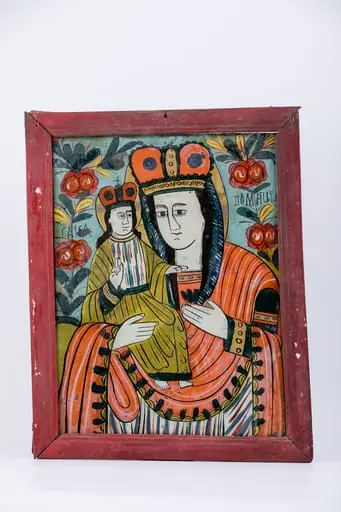 Maica Domnului este înveșmântată în maforiom roșu vermillon, cu interiorul albastru ceruleum cu dungulițe subțiri albe, cu franjuri verzi-galbene, cu aureolă aurie împodobită cu coroană orange de Împărăteasa Cerurilor. Sacos-ul Maicii Domnului este alb cu dungi roșii-albaste. Pruncul Iisus Hristos este înveșmântat în ocru-kaki-verde olive și are, de asemenea, coroană și aureolă aurie. Pruncul Iisus Binecuvântează cu mâna dreaptă, și arată înspre Maica Domnului cu mâna stângă. Fondul icoanei este albastru bleu-ciel senin, în registrul superior și galben-ocru, în registrul inferior. Întreaga tematică iconografică este încadrată de un chenar decorativ fitomorf, format dintr-o ghirlandă de bujori-trandafiri, 4 ruje roșii, mari, cu frunze verzi smarald și galbene. Cromatica este armonioasă: roșu vermillon, roz-trandafiriu, galben-ocru, crem, bej, verde brad, smarald, alb, negru. Inscripția din româno-chirilică se traduce Maica Domnului. Icoana este din Nicula.
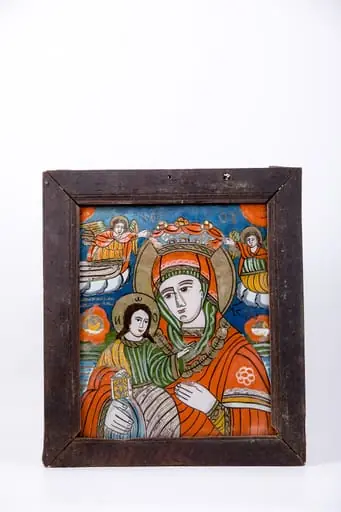 Maica Domnului Împărăteasă ține în brațe lipit pe umărul drept, pe Pruncul Iisus Hristos, care are în mâna dreaptă Sfânta Evanghelie închisă și cu mâna stângă arată înspre Maica Domnului. Maica Domnului arată calea cu mâna dreaptă, deci este Hodighitria. Maica Domnului este înveșmântată în mantie cu maforion roșu vermillon, cu interiorul verde și sacos cu mânecile galbene, poartă coroniță de împărăteasă și aureolă. Pruncul Iisus Hristos este înveșmântat în verde kaki și auriu ocru-brun-bronziu, cu coroană și aureolă. Maica Domnului poartă la gât o salbă din bănuți de aur. În registrul superior, de-a dreapta și de-a stânga Maicii Domnului, sunt Sfinții Arhangheli Mihail și Gavriil, pe câte o mandorlă de nouri rotunzi albi-crem, susținând dimpreună cu mâinile coroana de Împărăteasă a Maicii Domnului. Fondul icoanei este cerul de culoarea albastru regal. Cromatica este luminoasă, vie și armonioasă: roșu vermillon, alb, albastru regal și bleu-ciel, verde-văratic și spanac-avocado, kaki, auriu, ocru-brun-bronziu, galben-chihlimbar, negru. Inscripția din româno-chirilică se traduce MP IC XC Maica Domnului Iisus Hristos. Icoana este de Șcheii Brașovului, Țara Oltului.
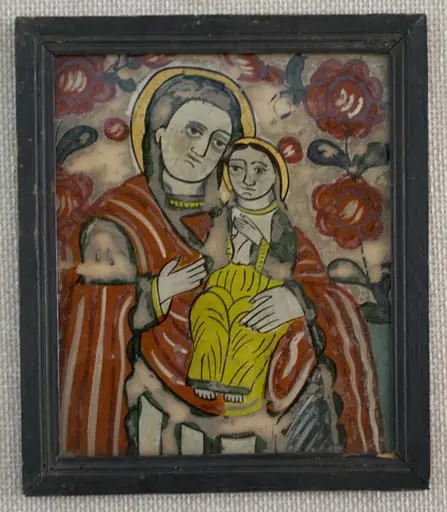 Icoana o reprezintă pe Maica Domnului cu Pruncul, tipul Hodighitria(Arătătoarea Căii). Cu mâna stângă susține Pruncul, cu dreapta arată către El. Maica are părul acoperit cu un văl verde.Veșmintele multicolore,(specific fazei de decadență a picturii de icoane pe sticlă)-roșu-mantia, cămașă, albă vrâstată cu verde, mâneci verzi, borduri diverse. Chipul cu umbre gri deschis, bărbia groasă, buze subțiri. Pruncul, cu amândouă mâinile la piept, are părul lung, castaniu și fața feminină. Aureolele sunt diforme, umplute cu bronz auriu. Câmp alb murdar decorat cu două ramuri cu flori roșii și boboci(ruje) care se unesc deasupra capului Maicii - 3/4 superior, bleu(1/4 inferior).Cromatica este dominată de roșu culorile stridente :alb, bleu, roșu, verde închis, ocru galben, brun, negru. Icoana are trăsăturile specifice picturii târzii din zona Nicula -Gherla: supraabundența detaliului, a decorului vegetal, apariția bronzului în locul foiței de aur, câmpul bicolor, sticla de proveniență industrială. Rama profilată este vopsită cu negru și încheiată oblic;dosul este din lemn subțire de brad;
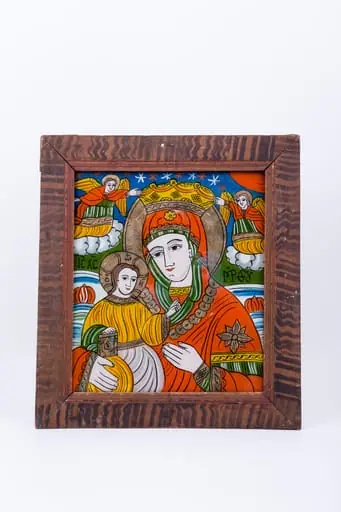 Maica Domnului Împărăteasă a Cerurilor, pe tron așezată, îl ține în brațe pe Pruncul Iisus Hristos. Maica Domnului este îmbrăcată cu mantie cu maforion roșie vermillon, cu interiorul căptușit cu verde și cu marginile manșetelor galben-aurii. Poartă aureolă și coroniță de împărăteasă, salbă aurie la gât. Pruncul Iisus Hristos este îmbrăcat cu ocru, verde și gri, are aureolă și ține pe genunchi Sfânta Evanghelie închisă și arată către Maica Domnului. În registrul superior îndepărtat sunt ocrotitori și păzitori Sfinții Arhangheli Mihail și Gavriil, așezați cu picioarele pe nori rotunzi, albi. Tematica este deosebită și frecvent întâlnită în Țara Oltului. Cromatica este armonioasă, caldă și luminoasă: roșu vermillon, verde spanac-avocado, galben-ocru, albastru bleu-ciel, alb, negru. Inscripția din româno-chirilică se traduce Maica Domnului MP Iisus Hristos IC XC
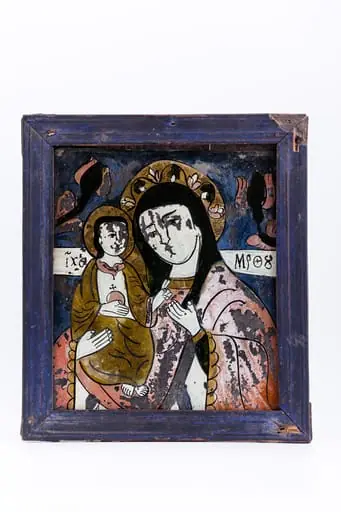 Maica Domnului Îl ține în brațe pe Pruncul Iisus Hristos care are în mâna dreaptă globul pământesc cu crucea deasupra, asemenea unui chivot de biserică, și cu mâna stângă arată înspre Maica Domnului. Maica Domnului arată calea cu mâna stângă deci este Hodighitria. Maica Domnului este înveșmântată în mantie cu maforion roșu vermillon și sacos negru-crem-ocru, cu dungi albe, cu interiorul cenușiu, are peste maforiom coroniță și aureolă. Veșmântul are broderie aurie. Pruncul Iisus Hristos este înveșmântat în ocru-alb, cu gulerașul roșu-roz și are aureolă. Fondul icoanei este cerul albastru ultramarin bleumarin închis. Icoana este încadrată în registrul superior de o ghirlandă de boboci de ruje - 2 trandafiri mari roșii. Cromatica este armonioasă, tomnatică-sobră, specifică Niculei: roșu vermillon, roz, alb, albastru ultramarin bleumarin, kaki, auriu, ocru-brun-bronziu, brun, alb, negru. Inscripția din româno-chirilică se traduce IC XC MP Iisus Hristos Maica Domnului. Icoana este de Nicula, fiind deosebită prin desenul minuțios, detalile delicate ale veșmintelor și expresivitatea chipurilor, remarcându-se tristețea și profunzimea privirilor.
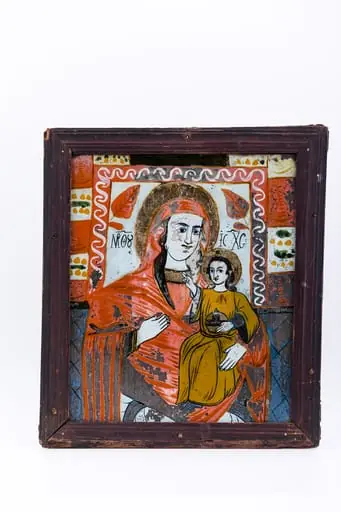 Maica Domnului este reprezentată ținând în brațe Pruncul Iisus Hristos care are în mâna stângă o sferă-globul pământesc și Binecuvântează cu mâna dreaptă. Maica Domnului arată calea cu mâna dreaptă, deci este Hodighitria. Maica Domnului este înveșmântată în mantie cu maforion roșu vermillon și sacos gri-negru, are aureolă. Pruncul Iisus Hristos este înveșmântat în verde kaki și auriu ocru-brun-bronziu, cu aureolă. Fondul icoanei este cerul de culoarea albastru bleu-ciel alburiu, senin, ca într-o fereastră adâncă. Cromatica este armonioasă și caldă: roșu vermillon, alb, albastru bleu-ciel, verde kaki, auriu, ocru-brun-bronziu. Inscripția din româno-chirilică se traduce MP IC XC Maica Domnului Iisus Hristos. Icoana este încadrată de un chenar decorativ geometrizant, format din segmente cromatice, alternativ expuse, cu elemente decorative punctiforme și linia albă șerpuită, specifică picturii de Nicula. Icoana este de Nicula, Crișana - Nordul Transilvaniei.
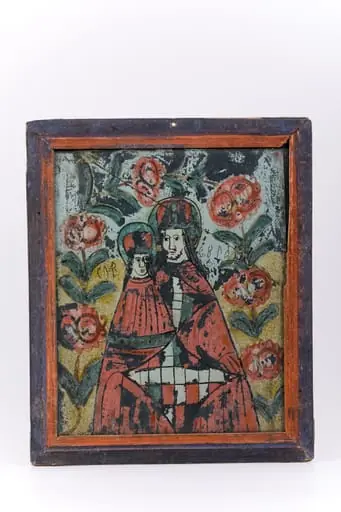 Maica Domnului este înveșmântată în maforiom roșu vermillon, cu mantia lungă, acoperitoare, strânsă în josul poalei, asemenea ca la arhierei și este împodobită cu un ornament dintr-un caroiaj alb-negru. Are mâinile ascunse, sub mantie și Pruncul Iisus Hristos este, de asemenea, învelit, ocrotit de mantia maforiomului. Pruncul Iisus Hristos este înveșmântat în roșu vermillon și gri antracit și are, de asemenea, aureolă aurie. Fondul icoanei este cerul albastru bleu-ciel alburiu, în registrul auperior. În registrul inferior, este un câmp luminos de grâu copt de culoarea galben-chihlimbar. Întreaga tematică iconografică este încadrată de un chenar decorativ fitomorf, format dintr-o ghirlandă de 6 ruje roșii, cu interiorul format dintr-o zăluță neagră. Inscripția din româno-chirilică se traduce MP IC XC Maica Domnului Iisus Hristos. Tematica este mai rară, fiind inspirată dintr-o icoană rusească Maica Domnului „Sporirea minții”. Cromatica este armonioasă: roșu vermillon, albastru bleu-ciel, galben chihlimbar, gri antracit, bronziu, alb, negru. Icoana este din Nordul Transilvaniei, Nicula.
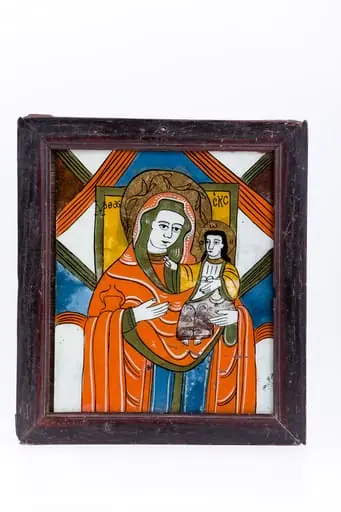 Maica Domnului îl ține în brațe pe Pruncul Iisus Hristos care Binecuvântează cu mâna dreaptă și arată înspre Maica Domnului. Maica Domnului arată calea cu mâna dreaptă, deci este Hodighitria. Maica Domnului este înveșmântată în mantie cu maforion roșu vermillon și sacos albastru, cu interiorul verde, are peste maforiom aureolă. Maforiomul este împodobit cu puncte mici albe. Pruncul Iisus Hristos este înveșmântat în gri și auriu ocru-brun-bronziu, cu interiorul căptușit cu verde și are aureolă. Fondul icoanei este format dintr-un caroiaj alb-albastru, cu marginile verzi și acajou-cărămizii. Compoziția geometrică, formată din romburi suprapuse, ne trimite gândul la nimbul de Slavă de Lumină de la Schimbarea la Față a Mântuitorului Iisus Hristos pe Muntele Tabor. Cromatica este armonioasă, tomnatică, specifică Niculei: roșu vermillon, alb, albastru cobalt, verde, kaki, auriu, ocru-brun-bronziu, brun, alb, negru. Inscripția din româno-chirilică se traduce MP IC XC Maica Domnului Iisus Hristos.