Artwork
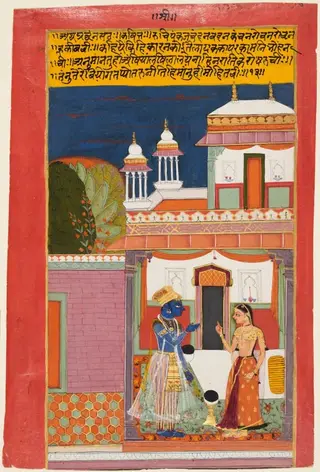
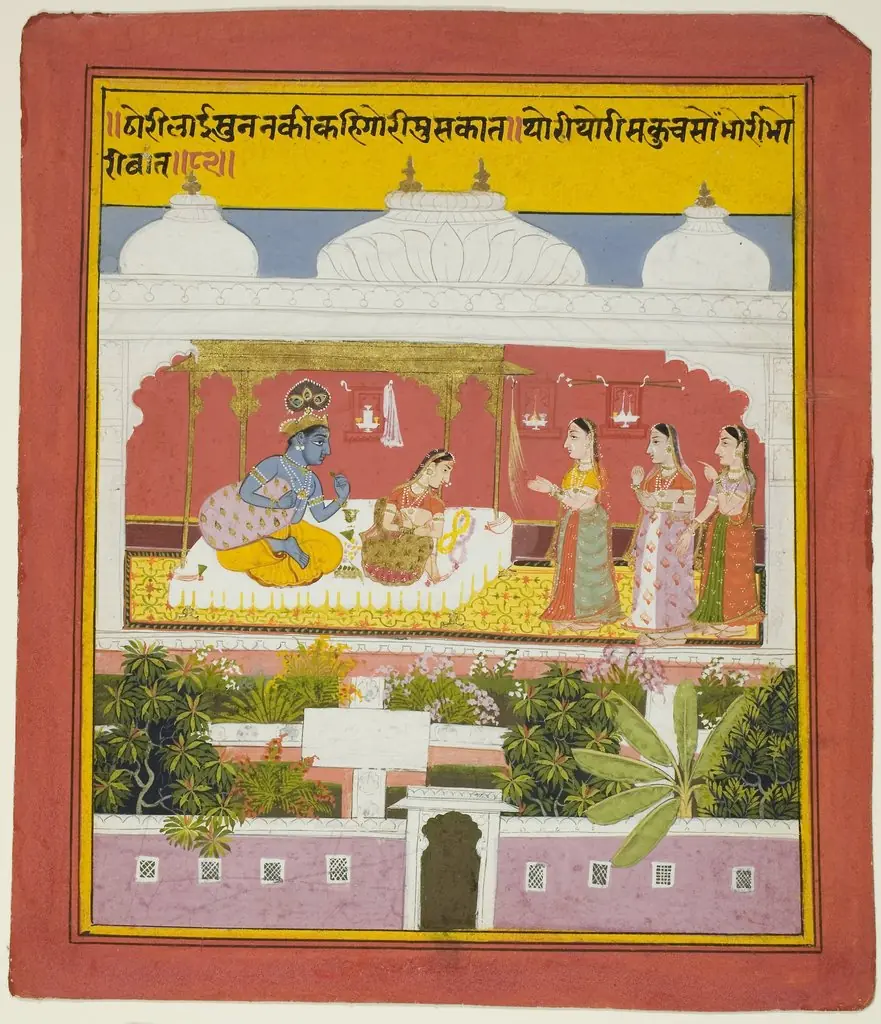
Krishna and Radha Quarreling: Shatha Nayaka, from a Rasikapriya
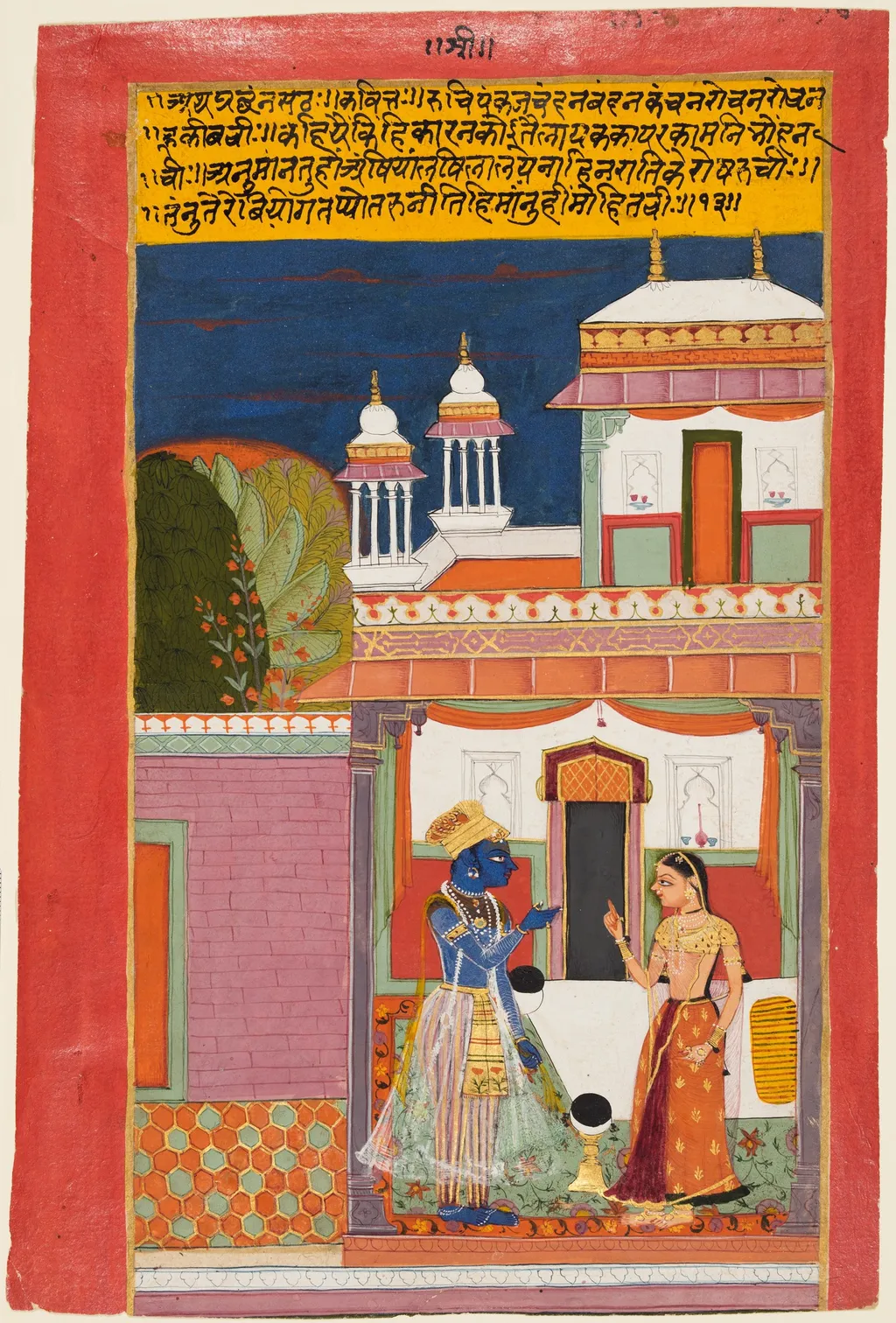
Krishna and Radha Quarreling: Shatha Nayaka, from a Rasikapriya is an unspecified painting. It dates from 1690 and is held in the collection of the Cleveland Museum of Art.
About this work
Subject & Meaning
The scene reflects the thematic focus of the Rasikapriya on the interplay of affection and conflict within celestial relationships.
The painting, dated 1680 and housed in the Cleveland Museum of Art, portrays Krishna and Radha in a moment of playful dispute known as Shatha Nayaka, taken from the literary work Rasikapriya.
In this composition Krishna is identified by his dark complexion and regal attributes, while Radha is shown in traditional dress, together embodying the relational dynamics of divine love. The scene reflects the thematic focus of the Rasikapriya on the interplay of affection and conflict within celestial relationships.
History & Provenance
The Krishna and Radha Quarreling (Shatha Nayaka) folio from a Rasikapriya series is dated to 1680 and attributed to an unknown artist. The painting’s provenance prior to its entry into the Cleveland Museum of Art is not documented in the available sources. It is presently held by the Cleveland Museum of Art under accession number 2018.158, reflecting its acquisition in 2018. No records of earlier ownership, commission, or exhibition history are provided in the sources.
Krishna and Radha Quarreling: Shatha Nayaka, from a Rasikapriya is held by the Cleveland Museum of Art in Cleveland, Ohio. The work is accessioned under the number 2018.158, which serves as its inventory identifier in the museum’s collection. It is classified as a painting within the museum’s catalog.
The painting dates to 1680, as recorded in its provenance documentation. No exhibition history for this piece is documented in the sources consulted.
Overview
This painting, titled Krishna and Radha Quarreling: Shatha Nayaka, depicts a vibrant scene featuring two central figures in a detailed architectural setting. The artwork is characterized by its rich palette and intricate decorative elements, typical of historical Indian painting traditions. It illustrates a specific narrative moment, likely drawn from a larger literary work, capturing an emotional exchange between the divine lovers.
Technique & Style
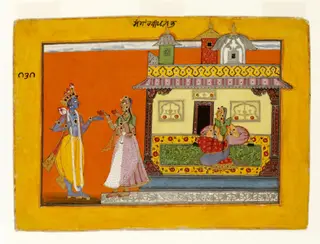
The artwork employs a vivid color scheme, with striking contrasts such as Krishna's blue skin against his white-and-gold robe, and Radha's rich red sari. Fine details are evident in the textiles, architectural elements, and the figures' adornments. The background features a red building with white doors and windows, framed by a temple structure with white domes and spires, all rendered with precision. An old Indian script is visible at the top, indicating its textual origin.
Context
This painting is identified as originating from a Rasikapriya, a renowned poetic work by Keshavdas that explores the various moods and types of lovers (nayakas and nayikas) in classical Indian aesthetics. Such texts often served as inspiration for miniature paintings, providing detailed descriptions that artists would visually interpret. This particular illustration likely corresponds to a specific verse or chapter within the Rasikapriya, bringing its literary narrative to life.
Artist & collection

 Krishna and Radha
 Krishna and Radha
 Krishna and Radha
 Untitled
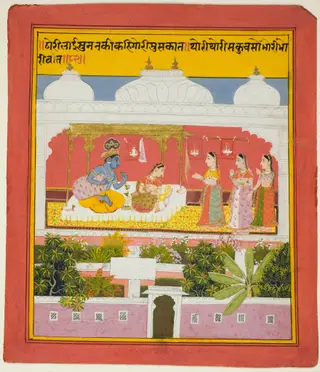 Krishna and Radha in a Pavilion, from a copy of the Seven Hundred Verses (Sat Sai) of Bihari
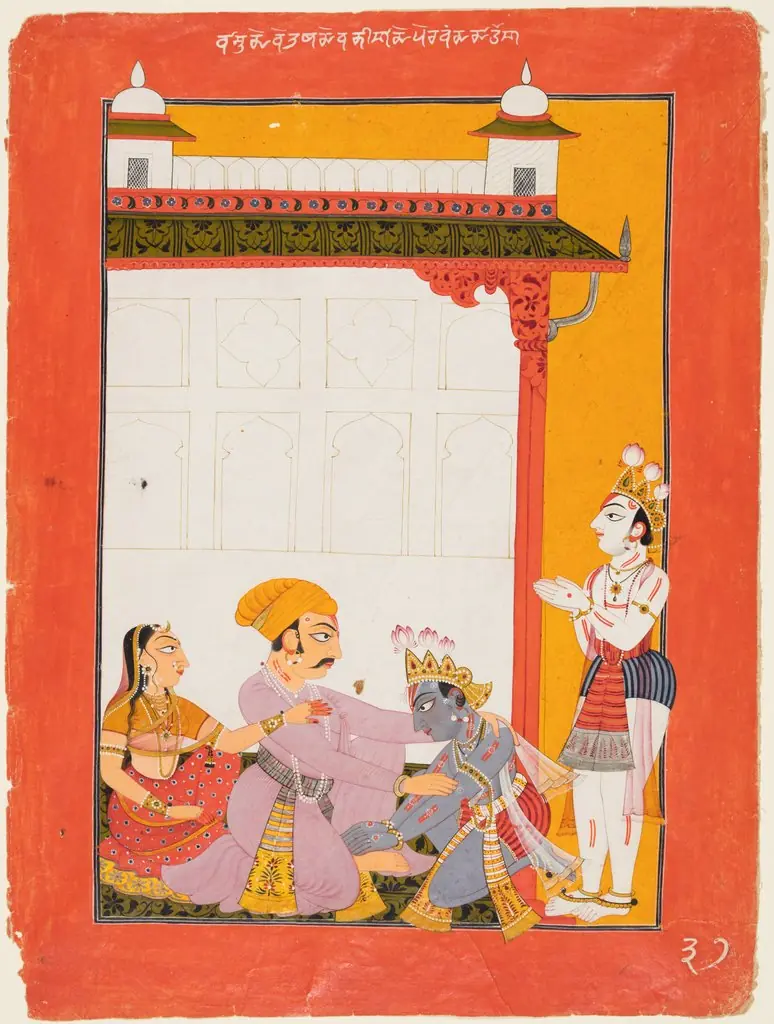 Krishna and Balarama Touching the Feet of Vasudeva and Devaki
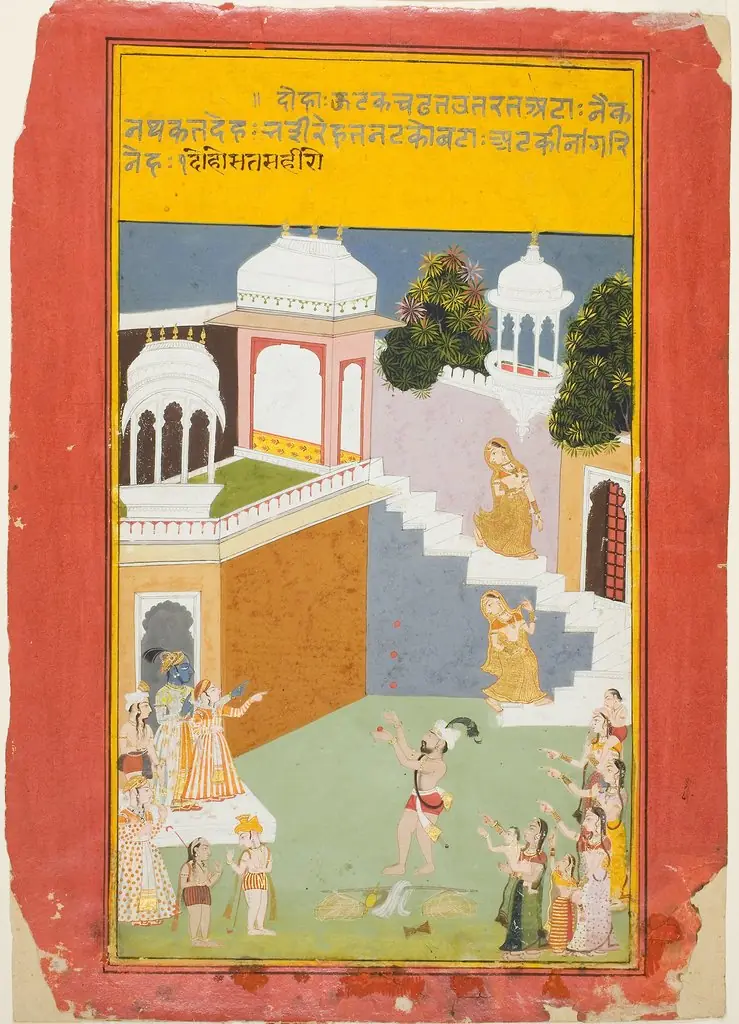 Krishna Watches A Juggler, from a copy of Bihari's Sat Sai
 Krishna and Radha in a Pavilion, page from a copy of the Sat Sai Seven Hundred Verses)