Artwork
Manjushri
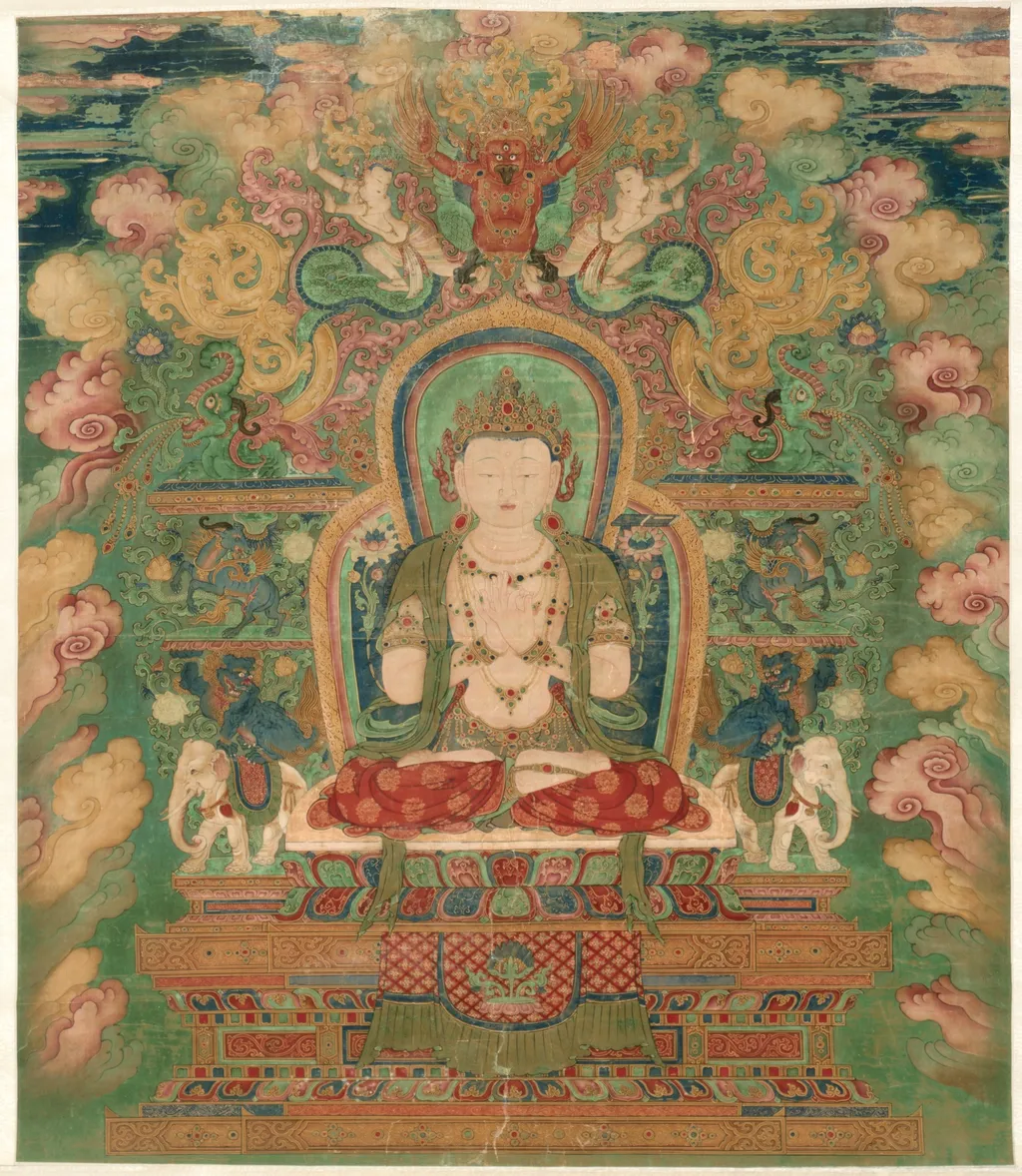
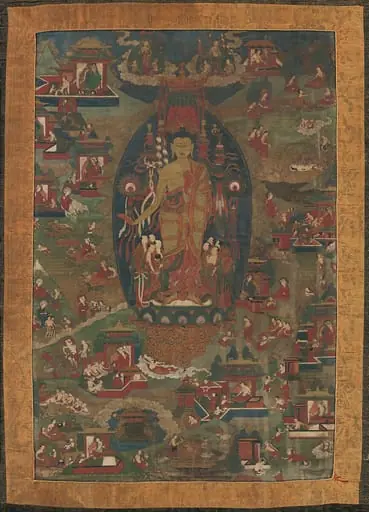
Manjushri is an unspecified painting. It dates from 1525 and is held in the collection of the Cleveland Museum of Art. The work portrays a seated figure on a richly adorned throne, flanked by two white elephants.
About this work
History & Provenance
67, as recorded for an unattributed work of religious art dated 1525 and made in China.
Manjushri, a religious painting created in 1525 in China, was produced by an unknown artist and entered the collection of the Cleveland Museum of Art, where it remains on display.
The work entered the museum's holdings at an unspecified date after its creation, but its provenance records a continuous presence within the institution since acquisition. It is classified as a painting within the broader category of religious art, reflecting devotional practices associated with the bodhisattva Manjushri in Tibetan Buddhist tradition.
The painting is held in the collection of the Cleveland Museum of Art. Its inventory number is 1989.67, as recorded for an unattributed work of religious art dated 1525 and made in China. No exhibition history is documented in the available sources.
Overview
The work portrays a seated figure on a richly adorned throne, flanked by two white elephants. The central figure wears a green robe, a crown, and elaborate jewelry, and holds a sword in the right hand. Above the scene a red, bird‑like creature with spread wings hovers, while two diminutive figures stand on either side of the throne. The background is a vivid green field punctuated by pink and yellow cloud motifs.
Subject & Meaning
The seated individual is identified as Manjushri, the Buddhist bodhisattva of wisdom. The sword, a common attribute, symbolizes the cutting through of ignorance, while the green robe and crown denote spiritual authority. The surrounding elephants and the winged bird may represent strength and transcendence, reinforcing the figure’s role as a guide toward enlightenment.
Technique & Style
Executed in a highly decorative manner, the painting employs a palette dominated by greens, reds, golds, pinks, and yellows. Intricate patterns decorate the throne and the surrounding space, and the figures are rendered with fine line work that emphasizes jewelry and textile details. The composition balances symmetry, elephants and attendant figures on either side, with a dynamic vertical element provided by the soaring bird.
Context
Manjushri iconography often appears alongside other bodhisattvas and deities within thangka paintings, serving as a visual aid for meditation and instruction. The inclusion of elephants, a symbol of mental strength, and the bird, possibly a garuda, aligns with broader South Asian artistic conventions that blend indigenous motifs with Buddhist symbolism.
Legacy
Paintings of Manjushri continue to inform contemporary understandings of Buddhist visual culture, offering insight into the symbolic language used to convey doctrinal concepts. The work’s elaborate detailing and vibrant coloration exemplify the enduring aesthetic values of the tradition, influencing modern reproductions and scholarly interpretations of Himalayan religious art.
Artist & collection

 Green Tara
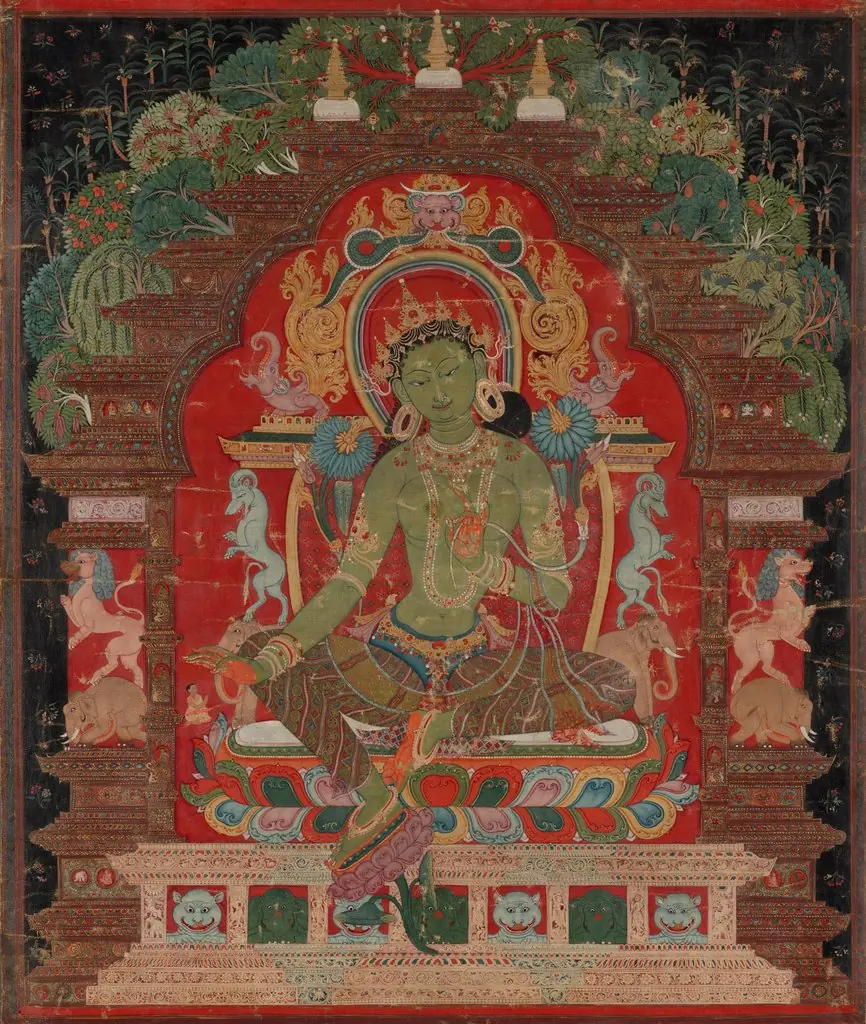 Green Tara
 Shakyamuni with the Thirty-Five Buddhas of the Confession of Sins and the Eighteen Arhats
 The Jina Buddha of Infinite Light (Amitabha) in His Pure Land Paradise (Sukhavati)
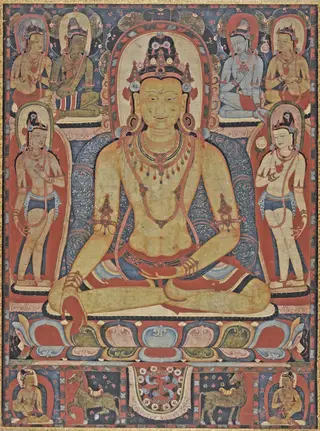 The Jina Buddha Ratnasambhava
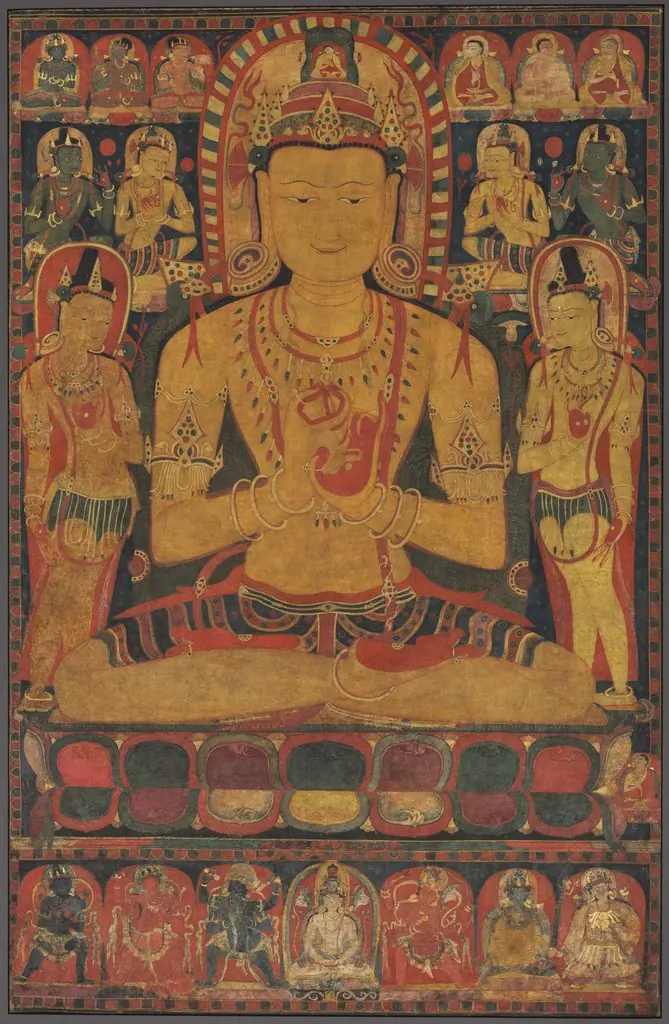 Tantric Buddha Vairochana as Vajrasattva
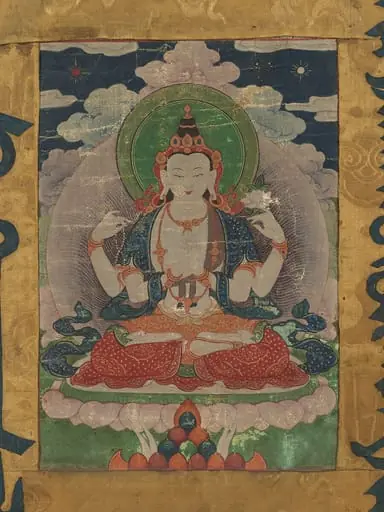 Untitled
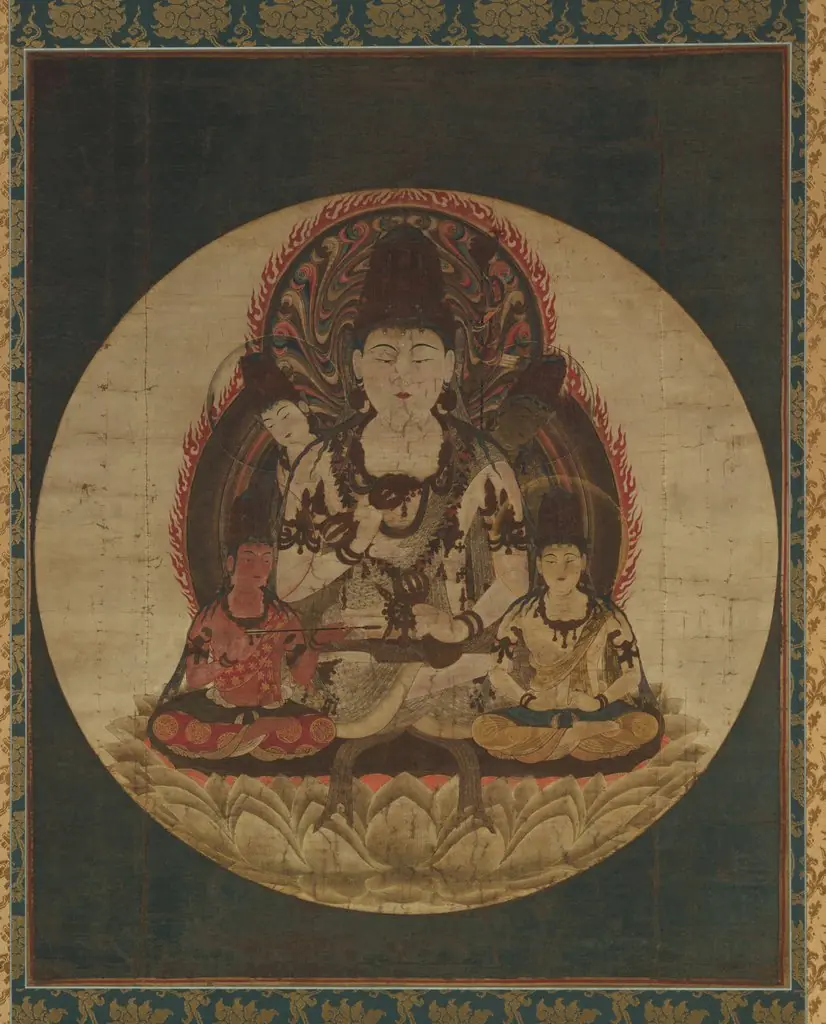 The Secret Five Bodhisattvas (Gohimitsu Bosatsu)
 Untitled