Artwork
Untitled
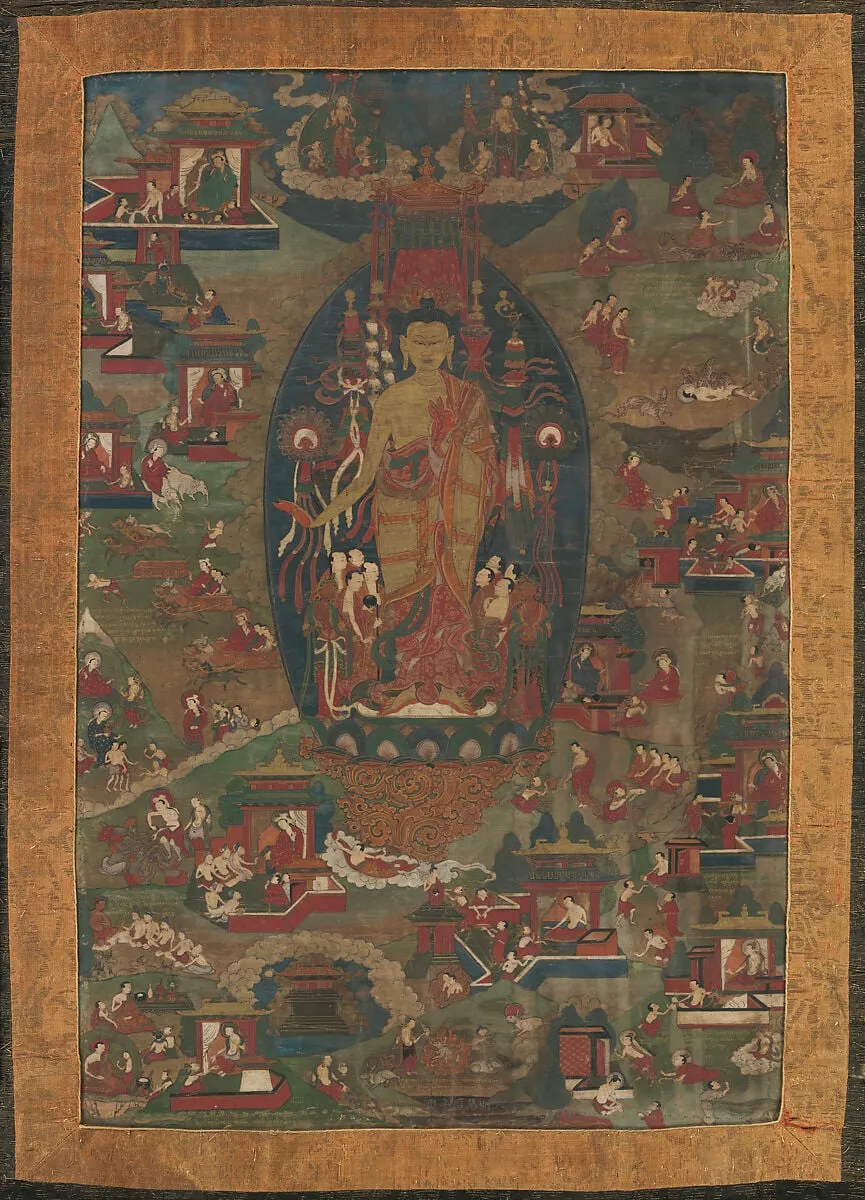
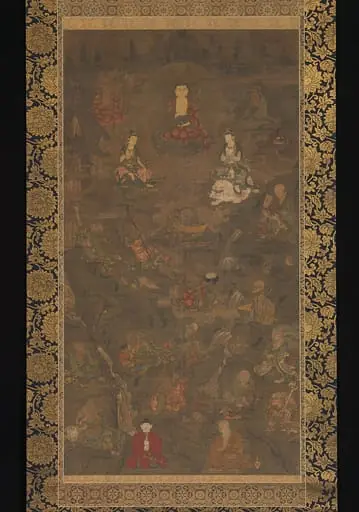
Untitled is a distemper painting. It dates from 1596 and is held in the collection of the Metropolitan Museum of Art.
About this work
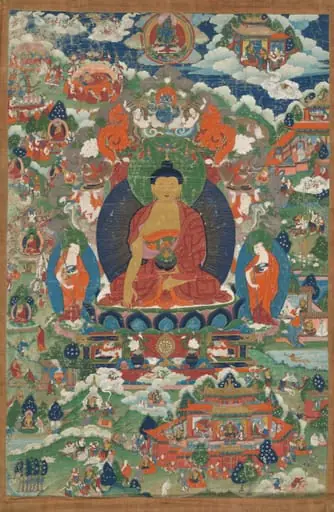
A Chinese inscription dates the Tibetan thangka to the reign of the Ming emperor Wanli, who ruled from 1573 to 1619. Around a radiant central Buddha, the cloth unfolds episodes from the Jataka tales of the Buddha's past lives, including the prince Sattva offering his body to a starving tigress and her cubs. Tibetan glosses label each scene, marking it as work made for a Tibetan patron.
Subject & Meaning
In Buddhist iconography, such animal motifs often allude to the Jataka tales, which recount the Buddha's previous lives as various beings.
This religious painting of 1596 depicts the Buddha surrounded by distinct animals: an elephant, a horse, a rabbit, and a tiger. In Buddhist iconography, such animal motifs often allude to the Jataka tales, which recount the Buddha's previous lives as various beings. The elephant may symbolize strength or a specific Jataka, such as the one where the Buddha as an elephant sacrificed himself.
The horse could reference the great departure from palace life, while the rabbit is associated with a Jataka about selfless giving. The tiger might represent danger or a particular birth story. The combination of these animals with the central Buddha suggests the painting functions as a visual narrative of moral and spiritual lessons, emphasizing compassion, sacrifice, and the interconnectedness of all life within a Buddhist worldview.
Technique & Style
The work is a distemper painting on cloth support, a technique characteristic of religious paintings from the late 16th century. Distemper, a water-based medium using pigments bound with glue or size, produces a matte finish and was commonly employed for devotional works. The cloth support marks a departure from panel painting, offering flexibility but also greater fragility.
No further formal or stylistic details, such as handling, brushwork, or condition, are recorded in the available sources.
History & Provenance
The work is dated to 1596, based on internal records and Wikidata metadata. It is executed in distemper on cloth and classified as religious art. The painting is currently held in the collection of the Metropolitan Museum of Art in New York.
No information is available regarding its commission, early ownership, or provenance chain beyond its current institutional location; the artist remains unknown.
Overview
This untitled Tibetan thangka, rendered in distemper on cloth, presents a distinctive subject in Tibetan art: the life of Buddha Shakyamuni combined with narratives from the Jataka tales. These canonical stories recount the Buddha's previous incarnations, making this a rare thematic pairing. An inscription dates the painting to the reign of the Ming Emperor Wanli (1573–1619), placing its creation in the late Ming period. The work measures 27 3/8 by 18 1/2 inches.
Artist & collection

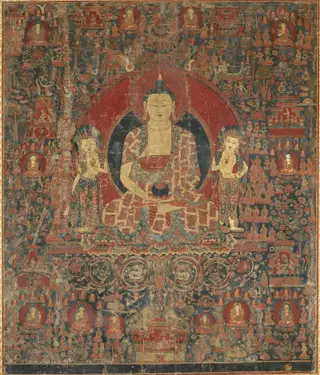
- The Jina Buddha of Infinite Light (Amitabha) in His Pure Land Paradise (Sukhavati)
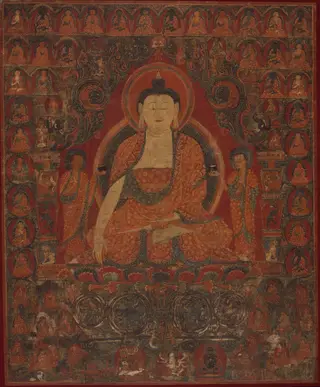 Shakyamuni with the Thirty-Five Buddhas of the Confession of Sins and the Eighteen Arhats
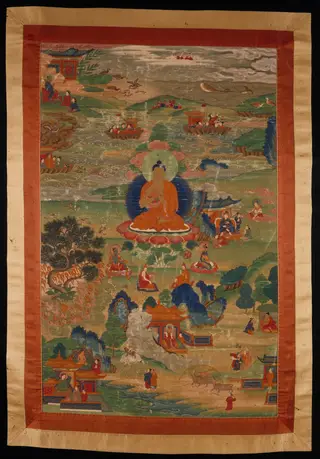 Previous Birth Stories of the Buddha
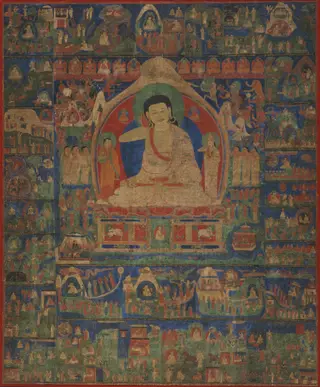 The Life of Milarepa (1040-1123)
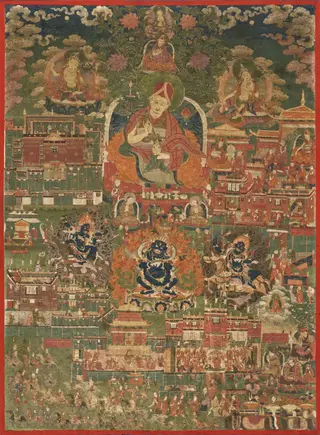 Kunga Tashi and Incidents from His Life (Abbot of Sakya Monastery, 1688-1711)
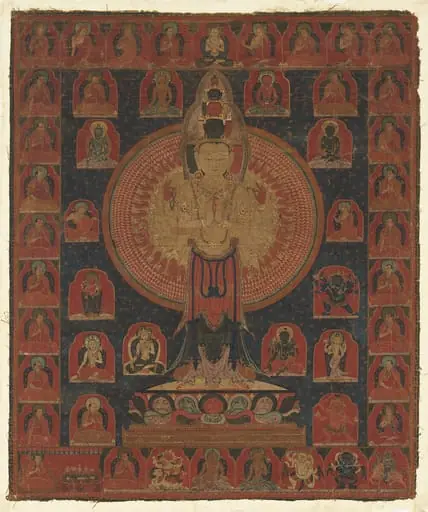 Untitled
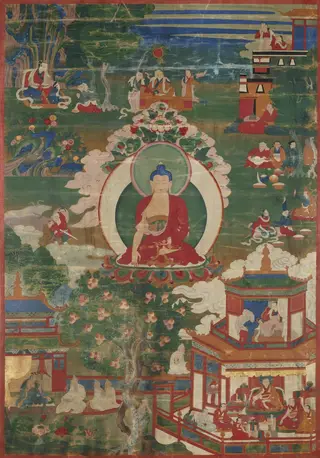 Buddha Shakyamuni and Narrative Scenes
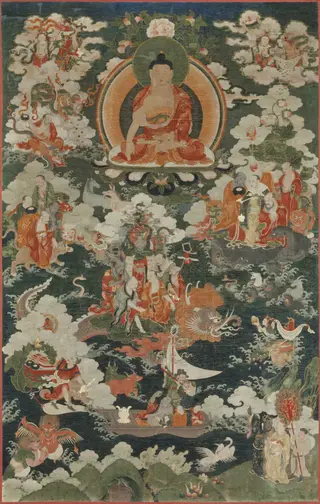 Buddha Shakyamuni and the Eighteen Arhats
 Bejeweled Buddha Preaching
 Milarepa on Mount Kailash
 Untitled
 Shakyamuni Buddha with scenes from his life story