Artwork
Margaretha Louisa von Orleans
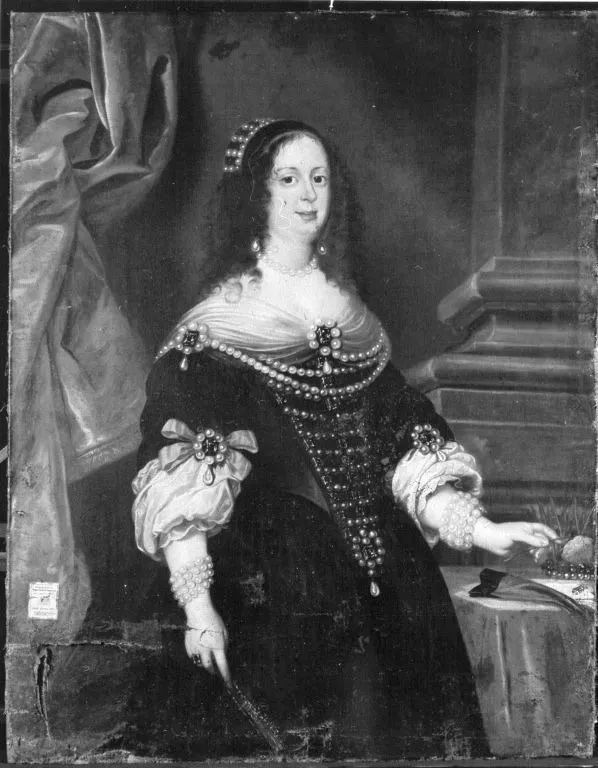
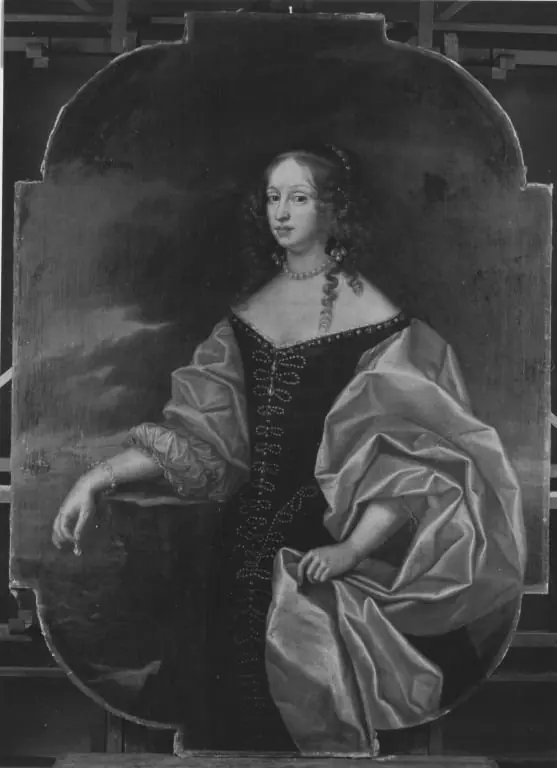
Margaretha Louisa von Orleans is an unspecified painting. It dates from 1700 and is held in the collection of the Bavarian State Painting Collections.
About this work
Subject & Meaning
The painting's primary meaning lies in its documentation of the sitter's identity and status through the medium of oil painting.
Created in 1700, this portrait depicts Marguerite Louise d'Orléans, also known as Vittoria della Rovere. The work functions as a formal representation of the subject, adhering to the conventions of portraiture from the period. It is identified as being based on an earlier portrait of Vittoria della Rovere, suggesting the image serves to preserve or reinterpret her likeness within the Bavarian State Painting Collections.
The painting's primary meaning lies in its documentation of the sitter's identity and status through the medium of oil painting.
History & Provenance
The portrait of Margaretha Louisa von Orleans was created in 1700. This work, classified as a painting, is attributed to an Italian artist and is currently held by the Bavarian State Painting Collections at the Alte Pinakothek. The piece depicts Marguerite Louise d'Orléans alongside Vittoria della Rovere and is based on a prior portrait of Vittoria della Rovere.
While the specific commission details are not recorded in the available sources, the work's inception is firmly dated to the year 1700.
The portrait of Margaretha Louisa von Orleans is housed in the Bavarian State Painting Collections, specifically at the Alte Pinakothek. It was created in 1700 and entered the collection under inventory number 1700-1. The work has been part of the exhibition 'Portraits of the Rovere Family' at the Alte Pinakothek in 1998 and featured in the traveling exhibition 'Baroque Portraits from Bavaria' in 2005.
Context
Margaretha Louisa von Orleans is a portrait held in the Bavarian State Painting Collections, displayed at the Alte Pinakothek in Munich. The work depicts Vittoria della Rovere alongside her daughter Marguerite Louise d'Orléans, reflecting dynastic connections within European aristocracy. Executed in 1700, the painting exemplifies late Baroque portraiture through its refined composition and restrained palette.
Its attribution to an Italianate circle underscores transnational artistic exchange in the German Rococo period. The work's provenance and scholarly attention highlight ongoing interest in portraiture as a medium for documenting elite social networks.
Overview
The work portrays a woman dressed in a dark gown trimmed with a white collar and cuffs, adorned with abundant jewelry including a necklace, bracelets, and a decorative headpiece. She stands before a table that holds a crown, her right hand resting on the surface while her left hand hangs at her side. The background is sombre, marked by draped fabric folds.
Technique & Style
Executed in oil on canvas, the painting employs a restrained palette of deep tones contrasted with the crisp white of the collar, creating a chiaroscuro effect that emphasizes the figure's three‑dimensionality. Fine brushwork renders the texture of silk and jewelry, while the subdued background recedes to focus attention on the portrait's dignified presence.
Artist & collection

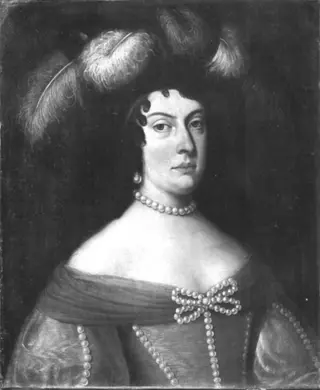 Maria Magdalena, Farnese von Parma
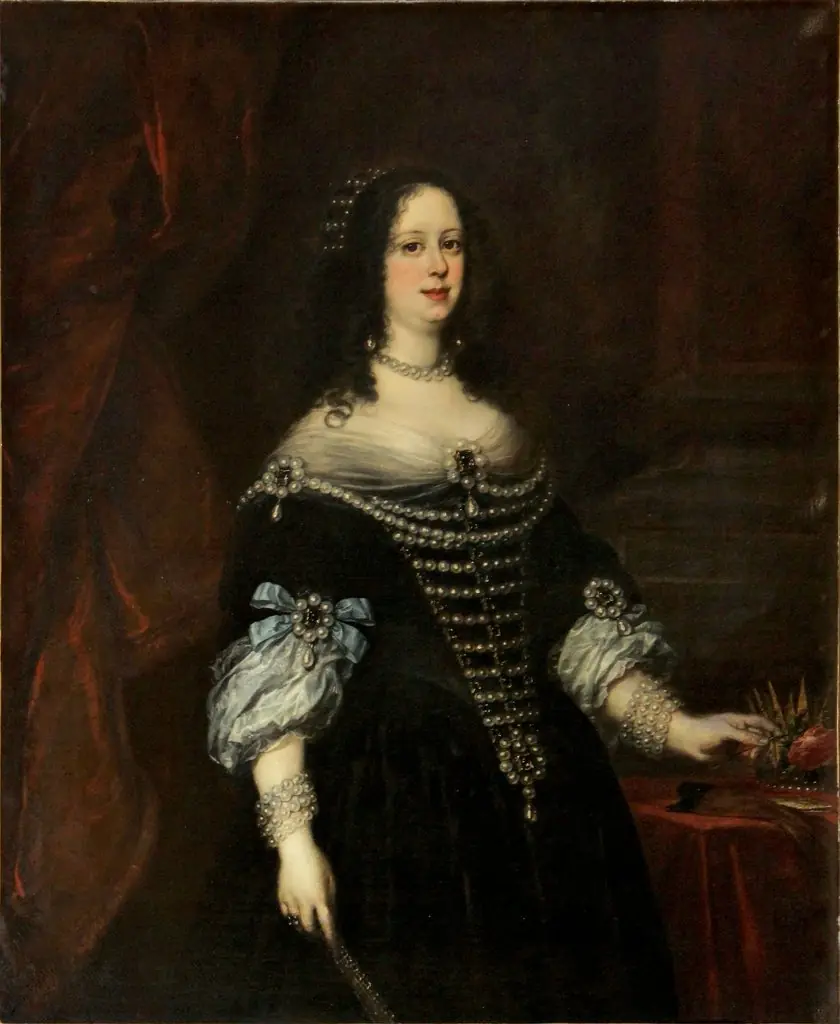 Portrait of Vittoria della Rovere
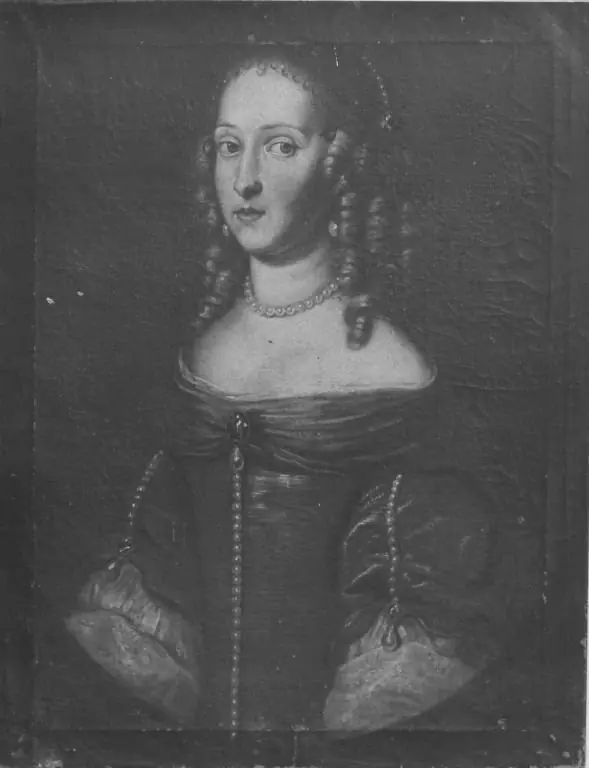 Bildnis der Landgräfin Marie Hedwig von Hessen-Darmstadt, Tochter des Landgrafen Georg II., Herzogin von Sachsen-Meiningen (1647-1680) (?) (?)
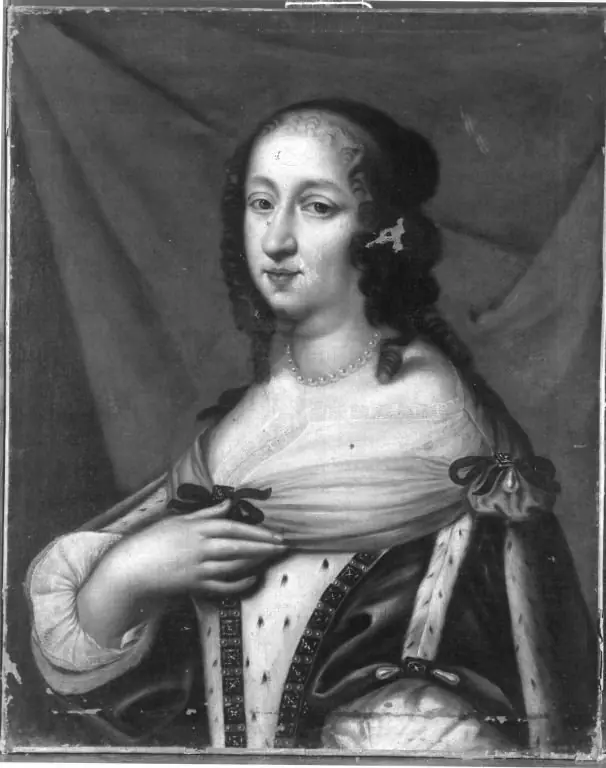 Portrait of a Woman
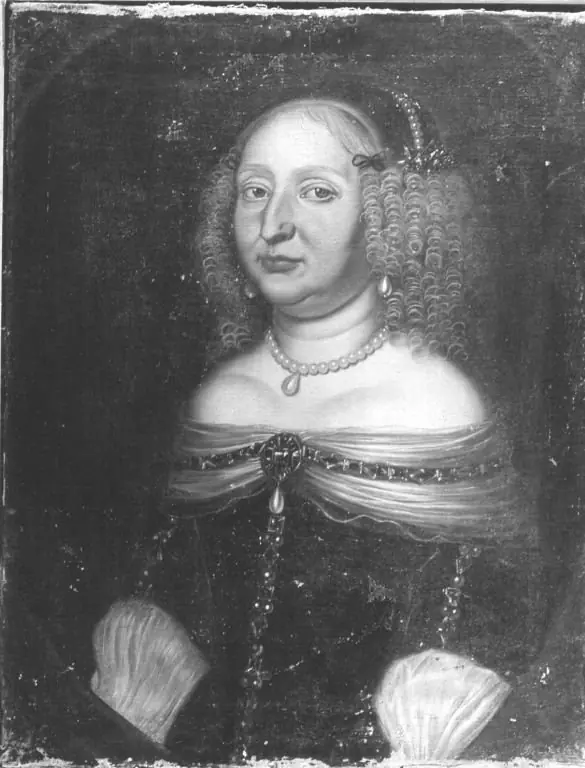 Bildnis der Sophie Eleonore von Sachsen, Landgräfin von Hessen-Darmstadt, Gemahlin des Landgrafen Georg II. (1609-1671) (?)
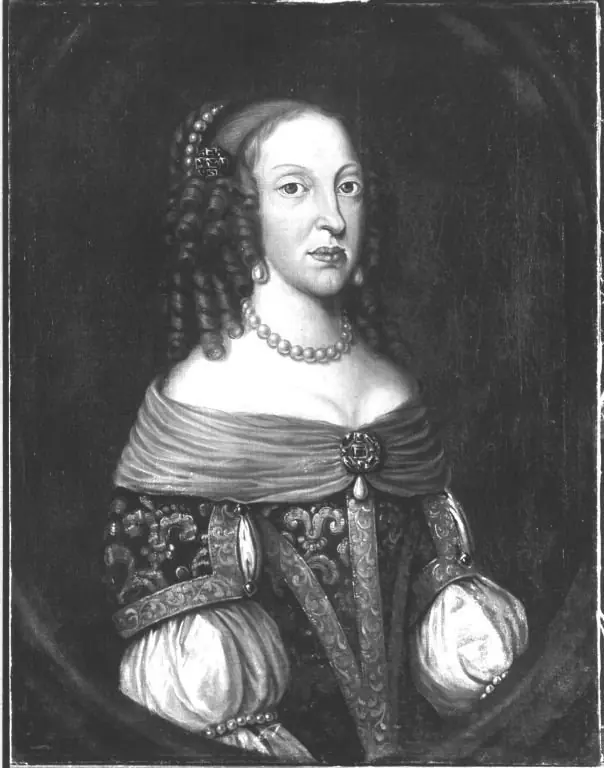 Portrait of Anna Sophie von Hessen-Darmstadt, Abbess of Quedlinburg (?)
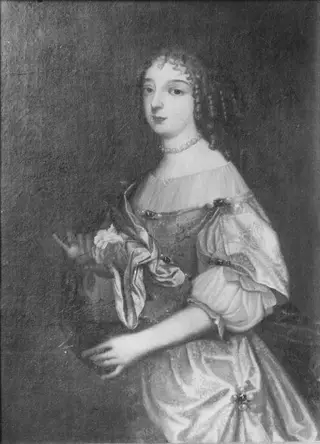 Bildnis der Luise Maria, Tochter des Kurfürsten Friedrich V. von der Pfalz
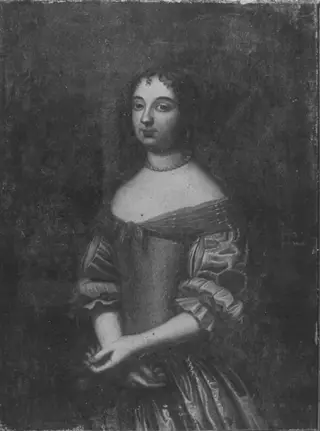 Hedwig Eleonore, Tochter des Herzogs Friedrich von Holstein-Gotdorp (?)
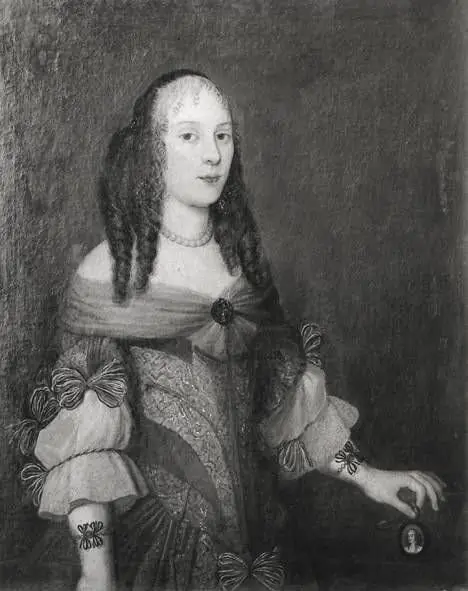 Unbekannte Dame
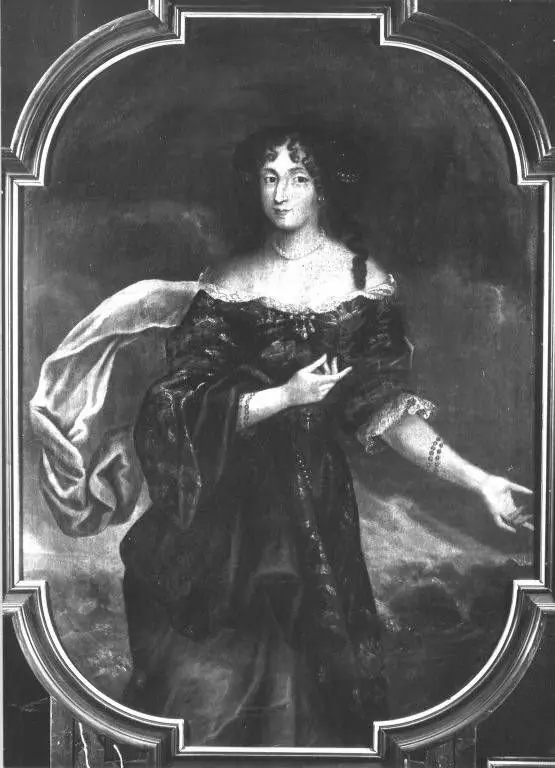 Bildnis einer Hofdame
 Bildnis einer Hofdame
- Bildnis einer Hofdame