Movement
Late Baroque
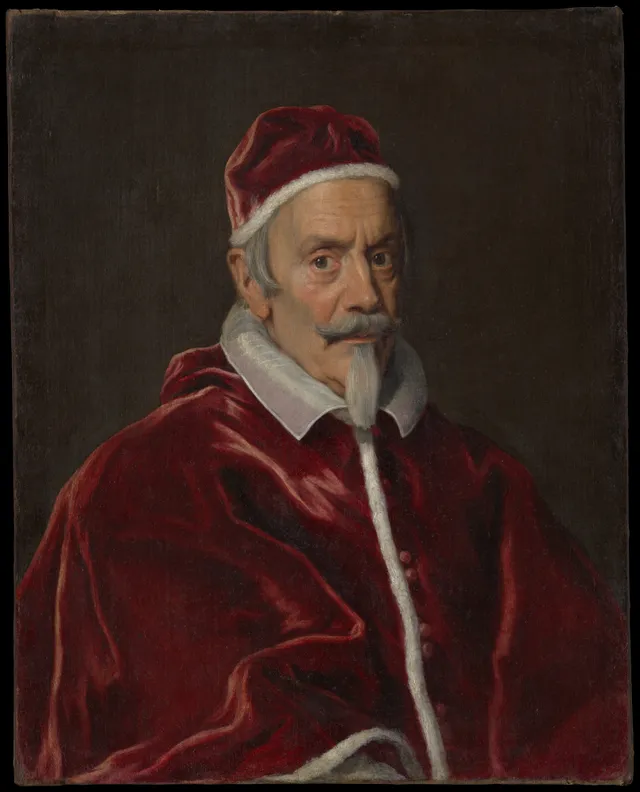
Late Baroque is an art movement of the 1675–1715 period. The gallery holds 1 work in this movement. Browse Late Baroque paintings, portraits, pictures and artworks from the world's public-domain museum collections.
Late Baroque names the final phase of the Baroque, roughly 1675 to 1715, when the dramatic visual language forged in early seventeenth-century Rome by Caravaggio, Bernini, and Pietro da Cortona reached its most expansive, virtuosic, and theatrical maturity. Its engine remained Rome, where Counter-Reformation Catholicism and the patronage of the papacy and the Jesuit order demanded art that overwhelmed the senses in the service of faith. By this date, however, the style had become genuinely international, radiating across Catholic Europe and into the secular courts of Louis XIV, where it lent grandeur to royal rather than religious power.
The defining achievement of the period is the illusionistic ceiling fresco. Painters dissolved the boundary between real and painted space using quadratura—feigned architecture extended overhead—and di sotto in sù foreshortening that opened vaults onto swirling visions of heaven. Painting, sculpture, stucco, and architecture were fused into unified, light-filled spectacles charged with movement, emotional exuberance, and a sense of infinite space. Compared with the gravity of the early Baroque, the late phase prized radiant brilliance and dynamic flourish.
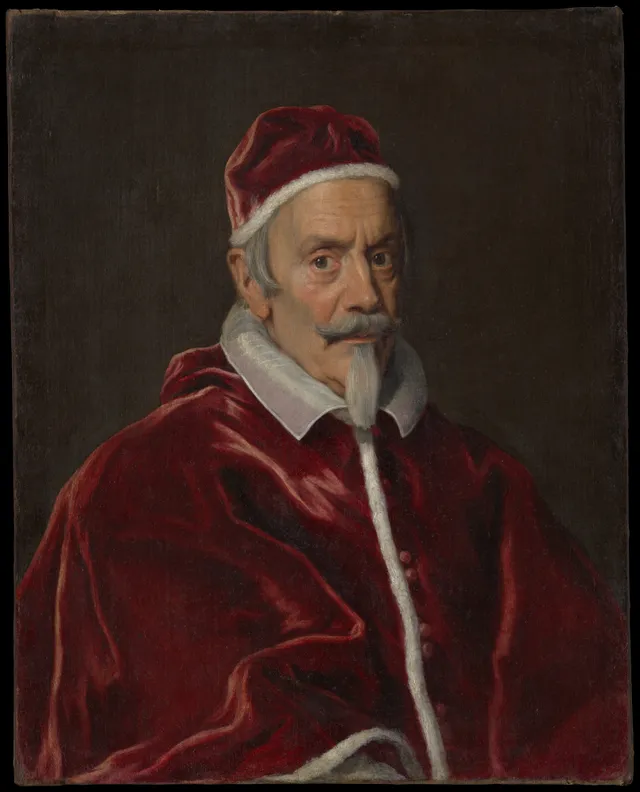
Giovanni Battista Gaulli, called Baciccio (1639–1709), epitomizes the moment. Recommended by Bernini, he painted the Triumph of the Name of Jesus (1678–79) on the nave vault of the Gesù in Rome, one of the most radiant visions of triumphant Catholicism, where gilded stucco and figures appear to spill beyond the frame. Our own collection holds his Pope Clement X (1590–1676), a portrait drawing on Bernini and Velázquez and the finest of seven known versions. Andrea Pozzo, a Jesuit lay brother and master of perspective, carried the technique further in the ceiling of Sant'Ignazio (1685–1694) and its astonishing trompe-l'œil dome painted on a flat surface—works that set the standard for ceiling decoration across Catholic Europe for generations.
In France the impulse turned monumental and secular: Jules Hardouin-Mansart shaped Versailles, the dome of Les Invalides (1690), and the Place Vendôme, projecting absolutist splendor. The death of Louis XIV in 1715 closed the era, ushering in the lighter, more intimate Rococo through the Régence and architects such as Robert de Cotte and Germain Boffrand. Late Baroque thus stands as both the culmination of a century of grandeur and the threshold of the style that succeeded it.
Works
Frequently asked questions
What is Late Baroque?
Late Baroque is an art movement. The final, often more ornate phase of Baroque style (roughly 1675–1715), shading into Rococo.
When did Late Baroque take place?
Late Baroque dates from 1675–1715.
Where can I see Late Baroque works?
Late Baroque works in the collection are held by Metropolitan Museum of Art.